
These ideas range from a basket you can carry home today to a chest you’ll measure twice for, with the real question being whether you want your storage to show or disappear.
1. Blanket Ladder
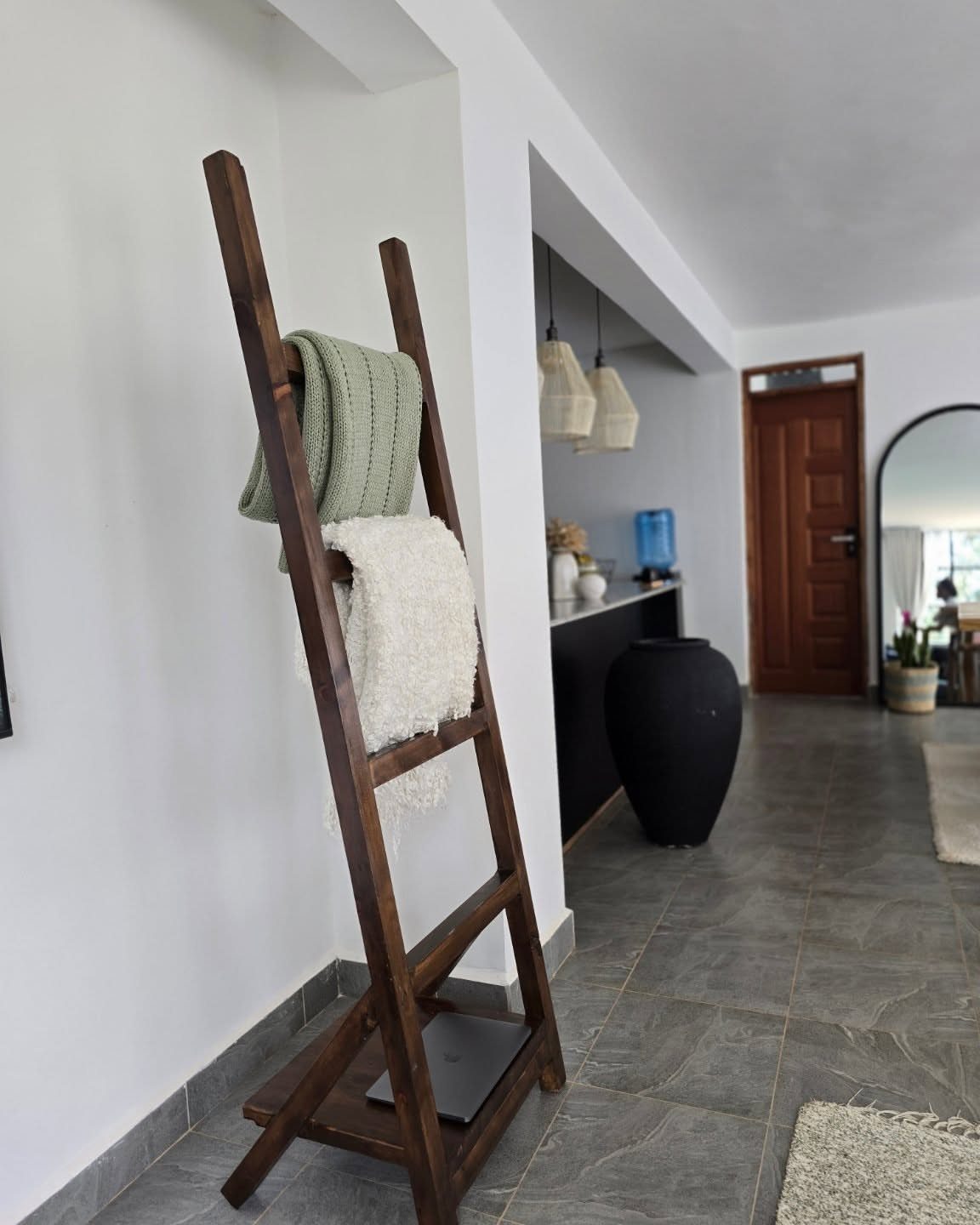
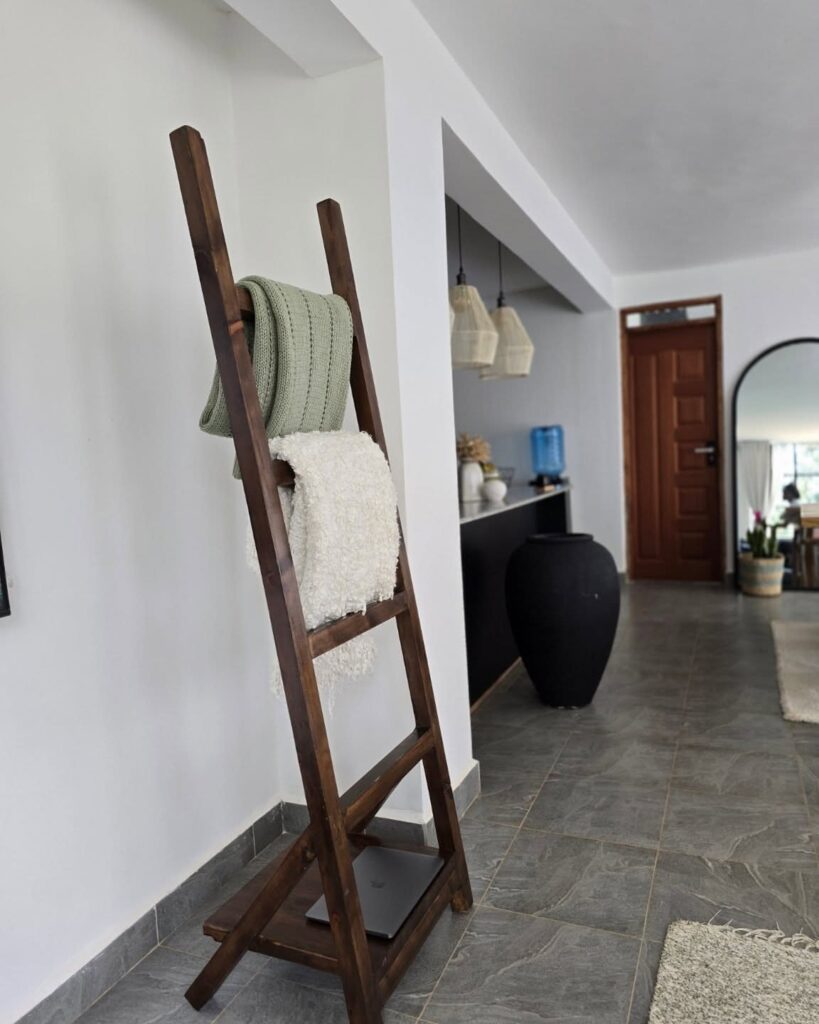
A blanket ladder turns an ordinary wall into storage without a single screw. A blanket ladder leans against drywall, tile, or paneling; throws drape over the rungs and stay within arm’s reach.
Wood ladders warm up a modern space; metal ones fit tighter corners and carry less visual weight. Most rungs hold two or three folded blankets, and the whole thing slides aside when you need the floor for something else.
Stability matters more than style. A ladder that rocks when you grab a blanket will end up in the garage.
Test the lean before you load it, and keep the base a few inches out from the wall so the weight sits back, not forward.
Mine lives in the living room corner where it catches the light from a window and actually gets used.
2. Storage Ottoman
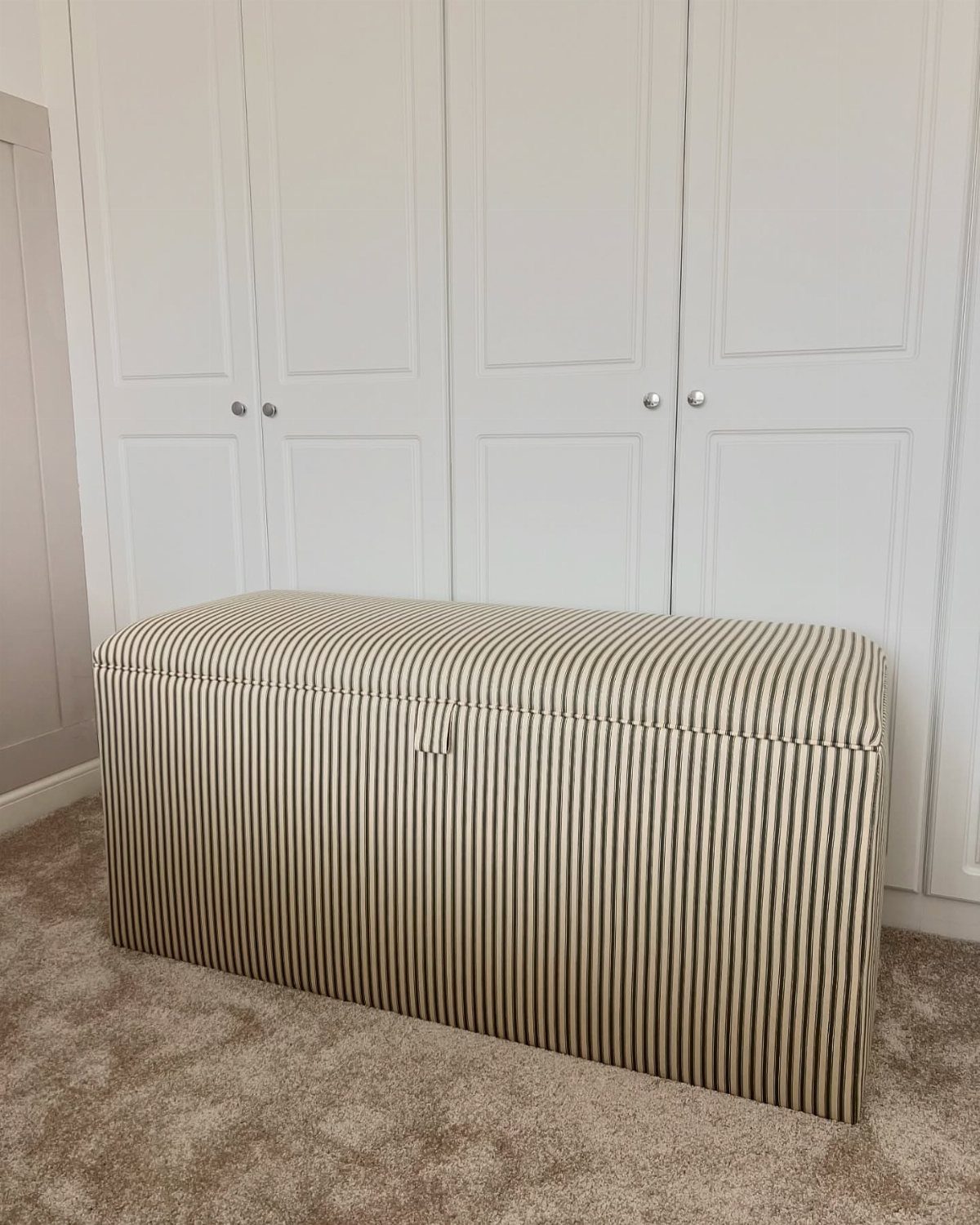
The storage ottoman I bought for our first apartment still sits at the foot of our bed, now stuffed with quilts instead of moving blankets. Upholstered with a lift-top lid, it reads as furniture first and hides everything inside.
Individual sections help if you store pillows with blankets; otherwise, one open cavity works fine for folded throws.
This one trades display for discretion. Guests see seating, not storage, and blankets stay clean behind fabric.
Ottomans work on hardwood too; just check that the feet won’t scratch. For small living rooms, this is often the only piece that earns its floor space twice.
3. Wall-Mounted Racks or Hooks
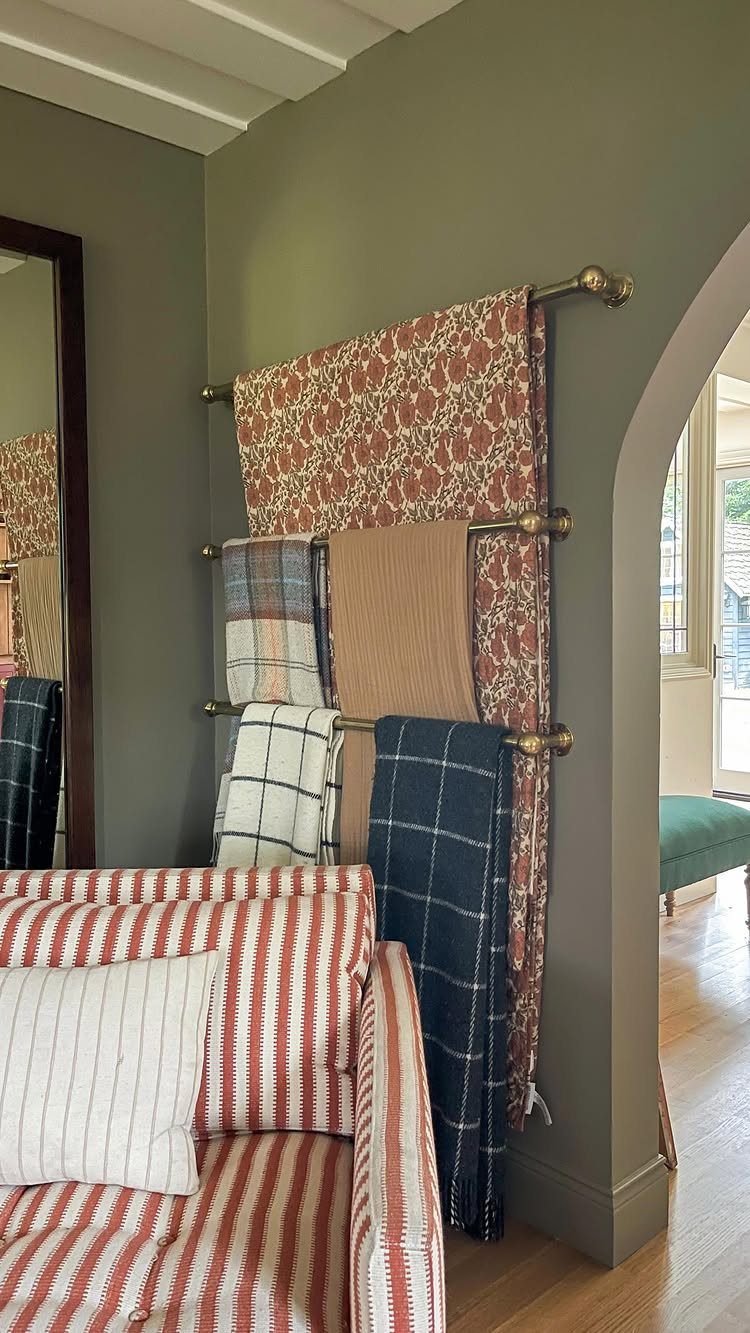
Brass rods mounted to that olive wall turn blankets into something between storage and art. The vertical arrangement saves every inch of floor space, which matters in apartments where square footage goes to the couch, not the closet.
Roll blankets tightly rather than folding them; a cylinder hangs cleaner than a rectangle and takes up less depth off the wall.
Hardware choice changes the whole mood. Brass reads vintage, black iron goes modern, and painted wood disappears against white walls.
I would keep one texture family if your blankets already fight with the sofa. This solution suits renters who can patch nail holes easier than they can add furniture.
4. Use a Quilt Rack
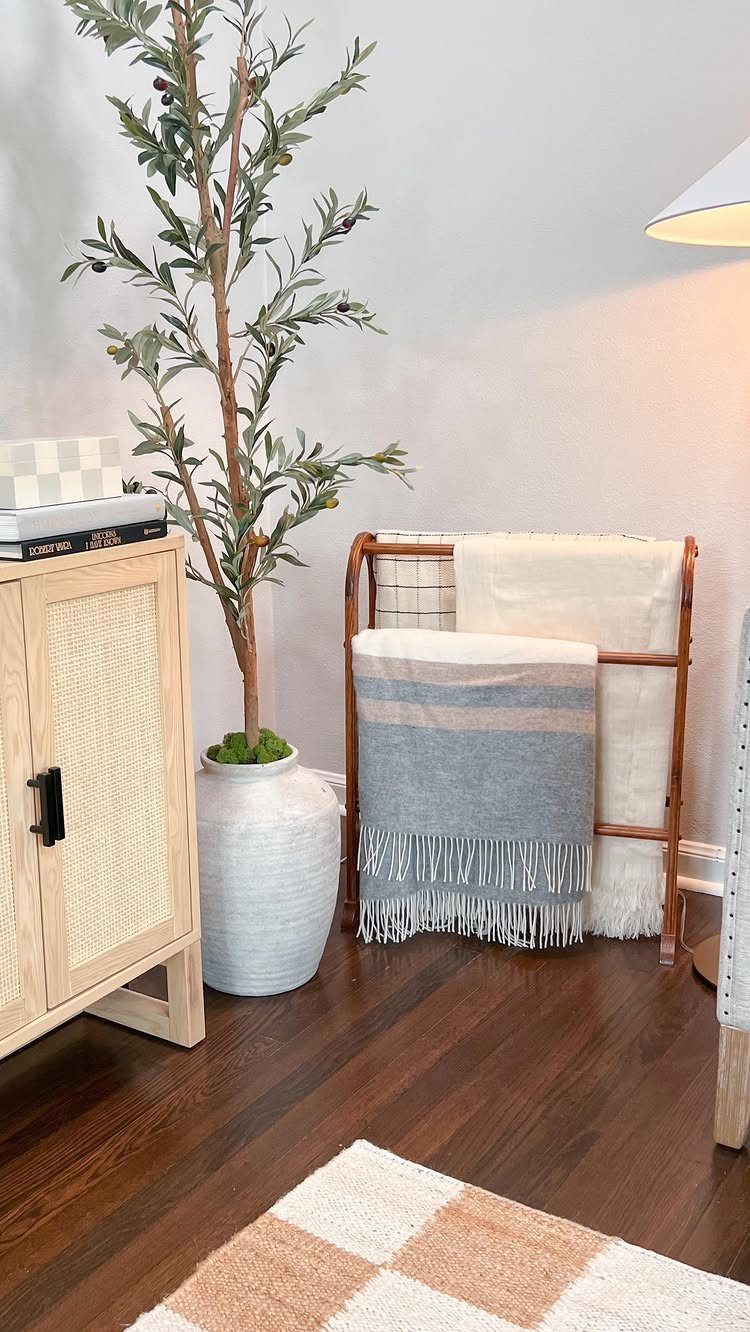
A quilt rack stands free in corners that otherwise collect nothing but dust. A quilt rack holds folded blankets using vertical space without leaning on the wall.
Multiple rungs let you layer weights: a light cotton throw above, a heavy wool blanket below, so you grab the right one for the temperature.
Air circulation keeps blankets fresher than a closed bin, which matters if you store seasonal quilts for months. Wood racks carry a farmhouse warmth; metal ones read cleaner in modern rooms.
This needs floor space a ladder or wall mount doesn’t. I would choose this for a bedroom corner near the bed, where reaching down beats reaching up at midnight.
5. Vacuum Storage Bags
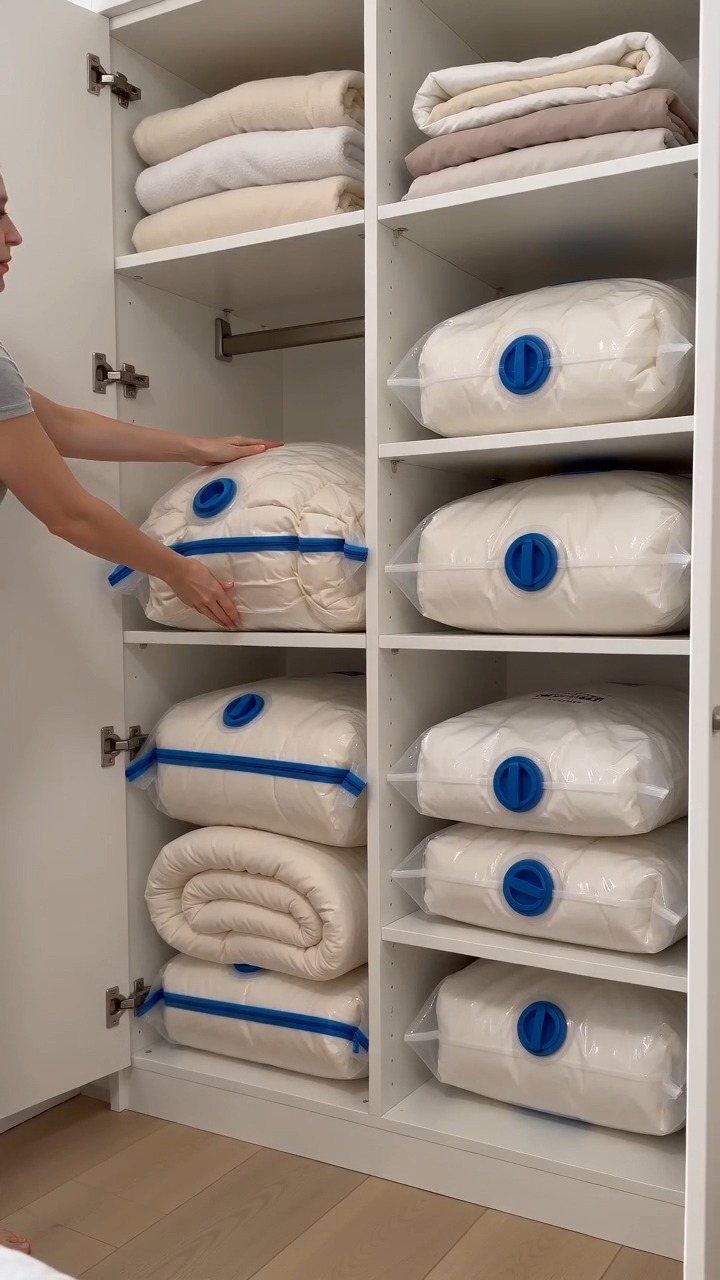
Vacuum bags shrink bulky comforters to the thickness of a board, which changes where you can store them.
Under the bed, behind closet shelves, or slid between the couch and the wall; spaces too shallow for a folded blanket suddenly hold two or three.
The sealed plastic keeps dust and moisture out, so blankets come out smelling like they went in, not like the basement.
Access is harder than with open storage. Breaking the seal, waiting for the blanket to expand, then resealing everything else takes longer than grabbing from a basket.
This suits blankets you use twice a year, not the throw you reach for every evening. Check your vacuum hose fits the bag valve before you buy; some handheld models don’t seal properly.
I use mine under the guest bed for bedding that only sees holiday weekends.
6. Decorative Baskets
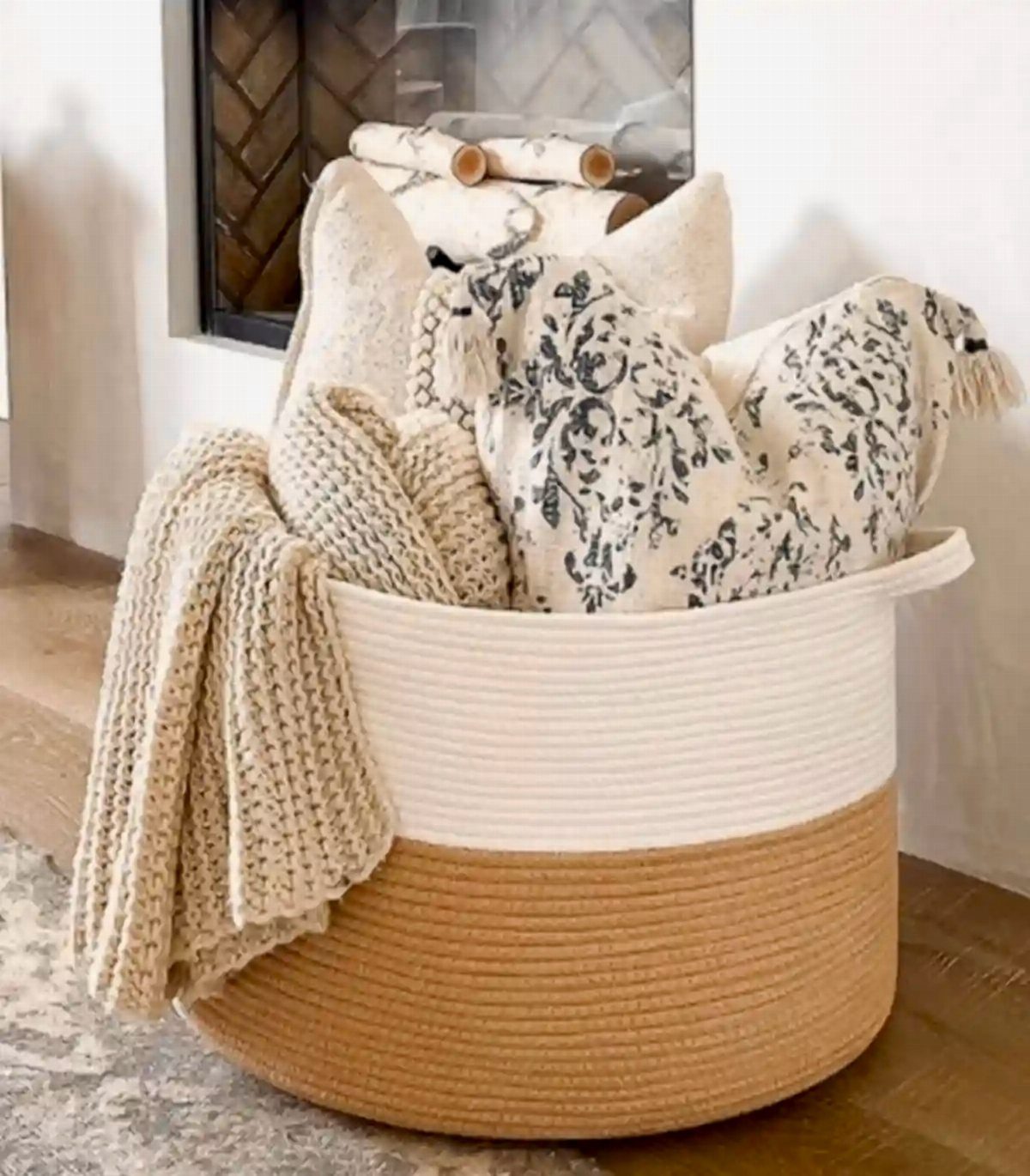
A rope basket beside the fireplace holds blankets at arm’s length without looking like storage. Handles let you drag it closer to the couch for movie night.
Roll throws rather than folding them; a basket of cylinders looks fuller and lets you pull one without disturbing the rest.
Natural fiber baskets cost less than upholstered furniture and move where you need them. Open storage means washing throws more often, which actually suits synthetic fibers better than heirloom wool.
I would size the basket to the space, not the collection; a too-large basket looks empty and sad, while a packed one invites use. Pick a size that matches how many throws your household actually rotates.
7. Knot Pillow Storage
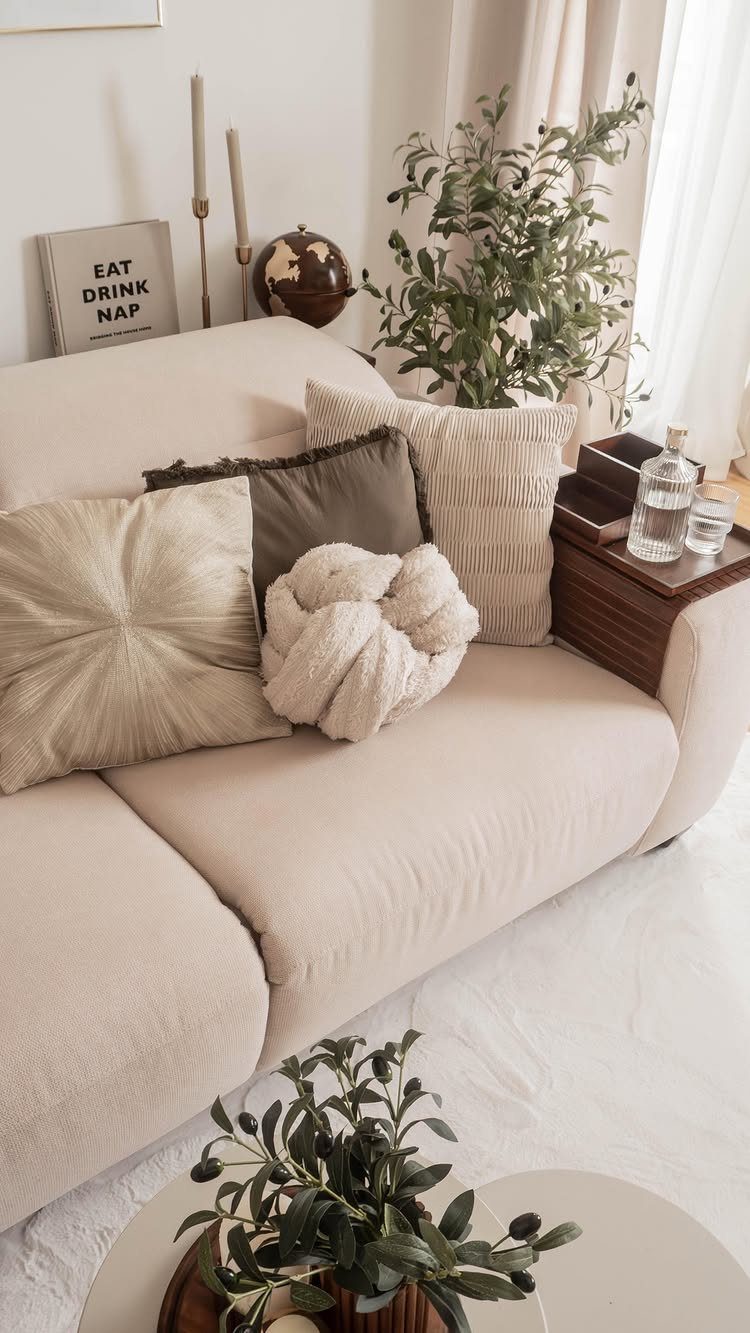
A throw blanket folded into a knot pillow lives on the couch instead of hiding in a closet.
Fold it in half widthwise, roll it tight lengthwise into a tube, then knot it through itself and tuck the loose ends into the pockets that form.
Thicker blankets hold the shape better; thin ones may need a tighter roll to keep from sagging. This works for standard throws, though oversized ones fight back during rolling.
A cushion reads as intentional decor and releases a whole blanket when guests stay over or the temperature drops. I’d reach for this in a small apartment where every item needs to earn its floor space twice over.
8. Use a Blanket Chest
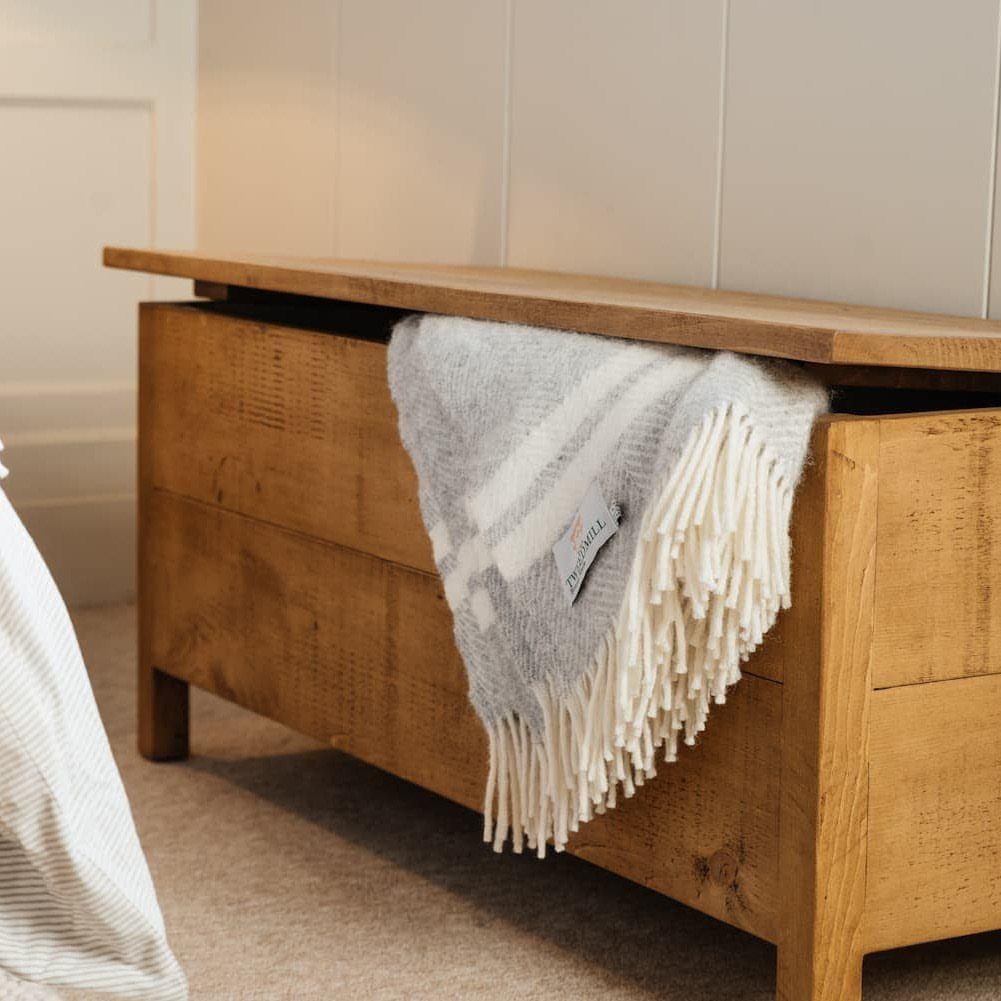
A blanket chest at the foot of the bed stores the winter weight you are not using and gives you somewhere to sit while tying shoes.
Wood tone changes the whole room: painted finishes read cottage, raw or stained grain reads collected-over-time, and a lid that lifts instead of hinging forward saves wall space in tight quarters.
Check that the inside is unfinished or lined; finished wood can trap moisture against wool and cotton.
This suits someone with a modest blanket collection rather than a large one. If the closet is already full and floor space is not, the chest wins.
For a rental you may not keep long, it is furniture worth measuring before you buy.
9. Zippered Fabric Storage Bags
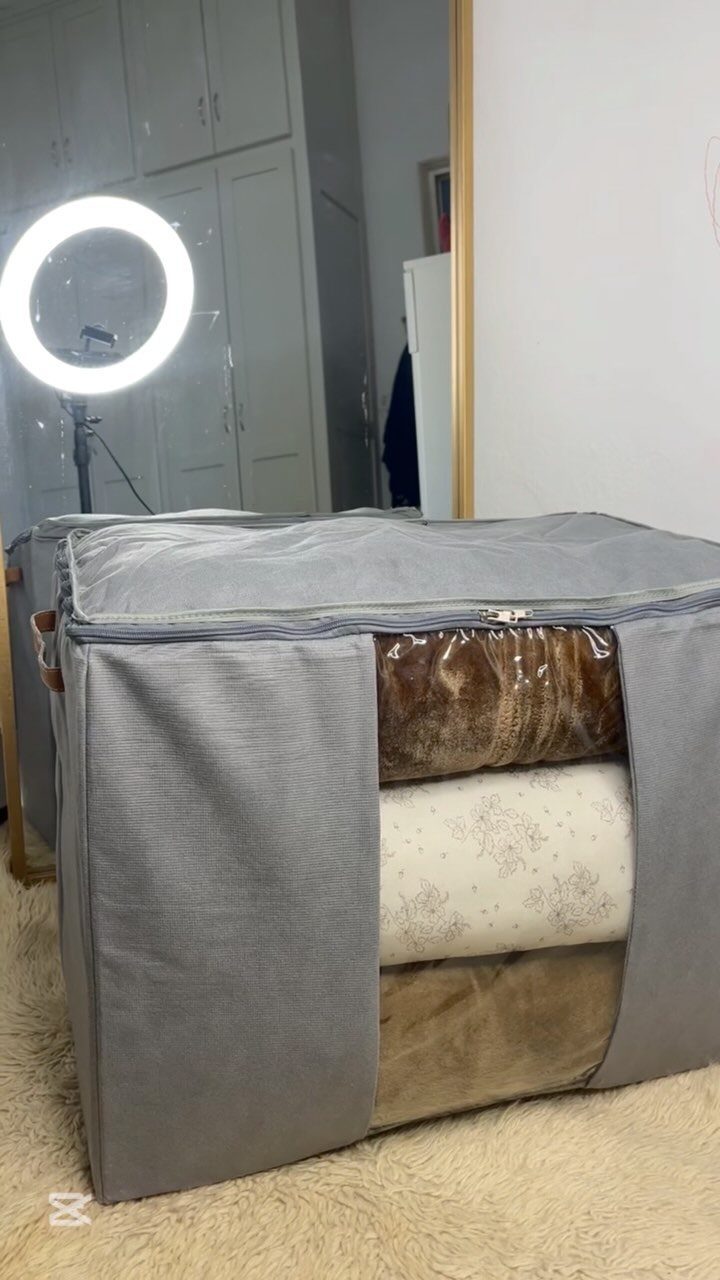
Zippered fabric bags keep blankets visible without leaving them exposed to dust. The clear front panel means I can spot the throw I want without unstacking three others first.
These work best for closets or under-bed storage where a solid bin would hide everything. Look for a bag that stands upright on its own; the soft-sided ones that collapse are cheaper but frustrating to load.
A full-length zipper beats a top flap for getting bulky items in and out.
This is my pick for seasonal blankets that sit unused for months. It trades the compression of vacuum bags for accessibility, which matters more for anything I reach for even twice a year.
10. Plastic Storage Trunk
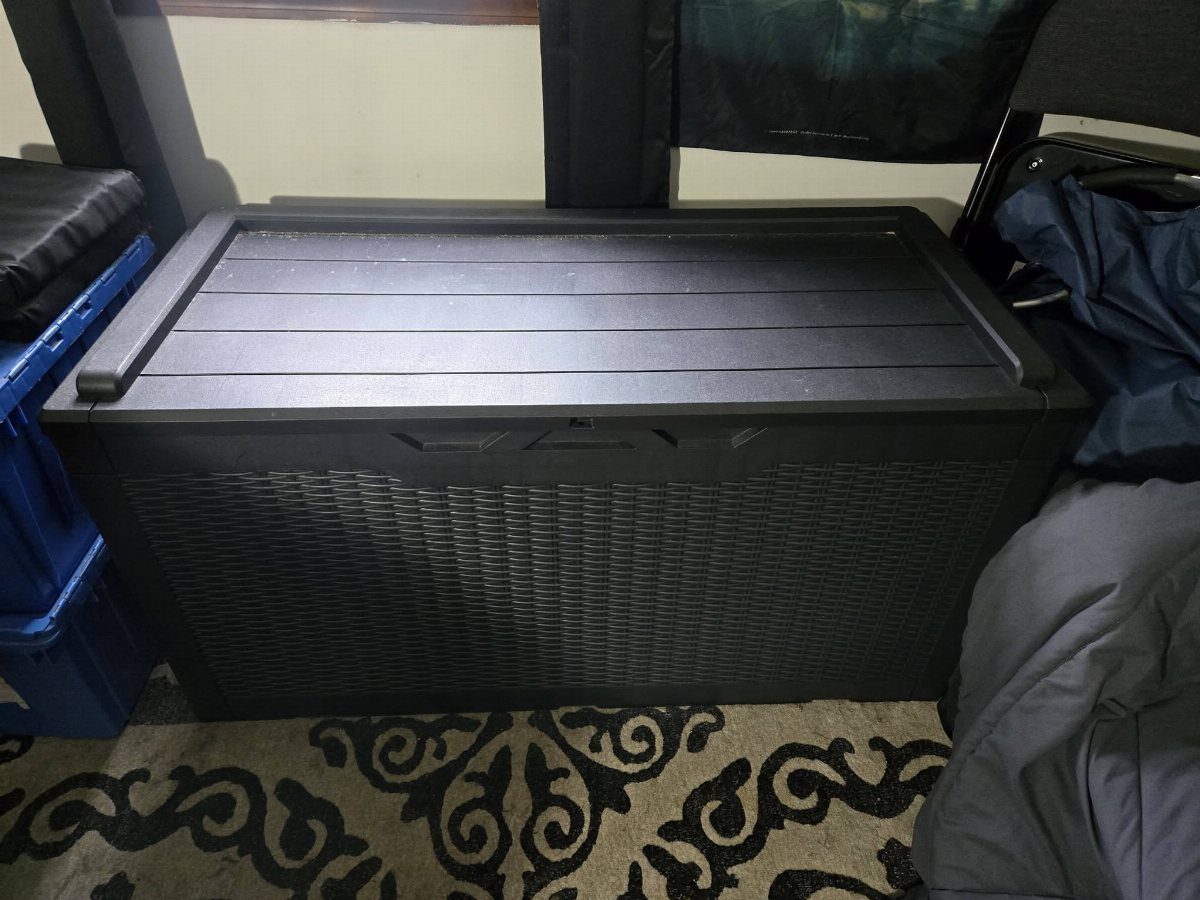
A plastic trunk with a slatted lid reads as furniture from across the room and survives real abuse. I have seen these hold up through moves, basement humidity, and kids using them as forts.
A plastic storage trunk in faux wicker still hides blankets out of sight, but the texture warms it up enough to sit in a living room instead of a closet.
Weight matters more than I expected: an empty trunk light enough to drag around becomes a headache once it holds three wool blankets. Check that the lid latches flat and tight if you plan to stack anything on top.
This suits anyone who needs one solution to do two jobs.
It stores bulkier than a fabric bag and costs more than a basic bin, but it earns back the space it takes by doubling as a coffee table or bench.
Importance of Blanket Storage
Blankets left on chair arms or stuffed into closets end up collecting dust and losing shape. Proper storage keeps fabrics clean and ready to use, which matters more for sentimental pieces like custom photo blankets or gifts from family.
A stored blanket also stops being clutter; it becomes part of the room instead of something you move to sit down.
Sentimental blankets need the same care as useful ones. A folded quilt in a chest or a throw on a ladder stays accessible without getting handled roughly.
For gifts received during holidays, having a spot ready means the new blanket lands somewhere planned instead of adding to a pile.
Seasonal Storage Considerations
Seasonal switching matters most in fall, when lightweight cottons go away and wool or weighted blankets come out. I would keep the current season’s throws in open storage; a ladder, basket, or wall rack near the couch sees actual use.
The off-season batch moves to sealed bags, a chest, or under-bed space.
Holiday weekends and cold snaps both call for quick access. Guests arriving for Christmas or a January storm should find extra bedding without watching you dig through a closet.
Plan the swap so winter-weight blankets live closer to where people sleep or sit.
DIY Options
A blanket ladder needs only two uprights and rungs cut to length. Pine 1x3s and dowels run cheap at any hardware store, and a hand saw finishes the job.
Sand the edges so throws don’t snag, and add rubber feet or felt pads to protect floors.
Wall-mounted racks work from pipe fittings or simple wood brackets. A brass curtain rod with end caps reads the same as specialty hardware for half the price.
Paint wood to match your wall color if you want it to disappear.
Maximizing Small Spaces
Vertical storage wins in small spaces because floor area goes to living, not storage. Wall-mounted rods and leaning ladders use height that was empty anyway.
In apartments where the couch claims most of the room, that matters.
Hidden options fill gaps furniture leaves behind. Under-bed bags slide into inches of clearance; ottomans hide contents inside seating you already needed.
I would measure the dead space behind doors or beside the bed before buying anything new. A basket that fits a narrow gap beats a larger one that blocks walking room.
Form and function go hand-in-hand when finding the perfect furnishings for your home. Purchasing fun decor items that can add pizzazz to a room and function as hidden storage solutions is ideal for homeowners that want to maximize their space without sacrificing design and aesthetics.