The ideas below cover a pallet wall sanded by hand at one end and LED-backlit slats with warm strips wired behind them at the other, and the wall itself decides which one fits.
A wall interrupted by a TV or a run of shelves does better with a quieter pattern, like plain vertical planks, while the geometric slats and the 3D wood block wall belong on a wall with few interruptions.
Dark paint behind the wood, like the navy behind a headboard, makes the grain look warmer.
1. Horizontal Reclaimed Planks
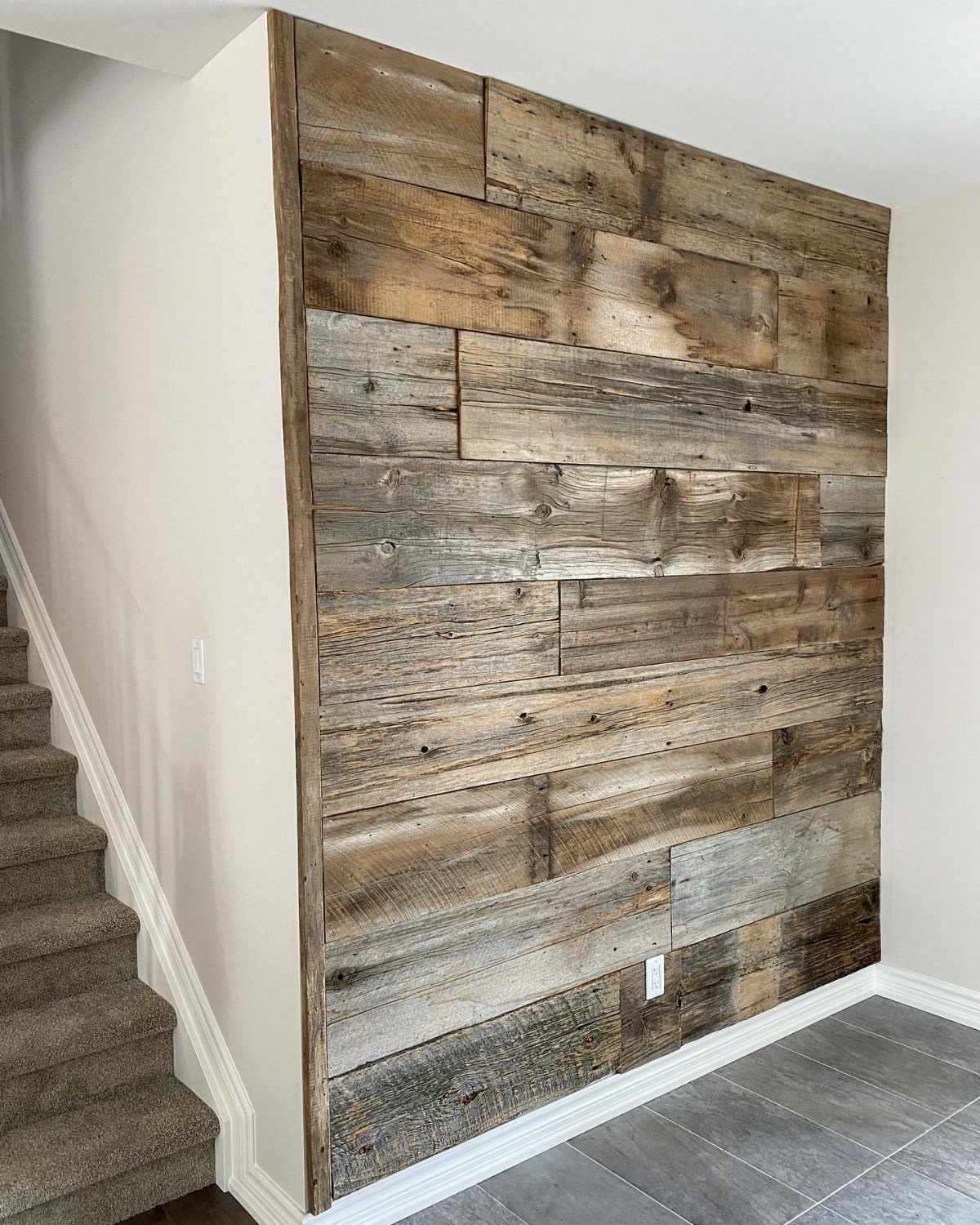
Mixed tones do the work here. Boards running horizontally in light honey, mid brown and weathered gray give a wall depth that one stain never could.
I like the staggered version best, with butt joints landing in different spots row to row, because it looks like an old barn wall rather than a pattern. Edge-to-edge is tidier but reads flatter.
A stairwell is a smart place for it: a tall, plain wall that needs texture and rarely gets bumped by furniture.
2. Vertical Wood Slats
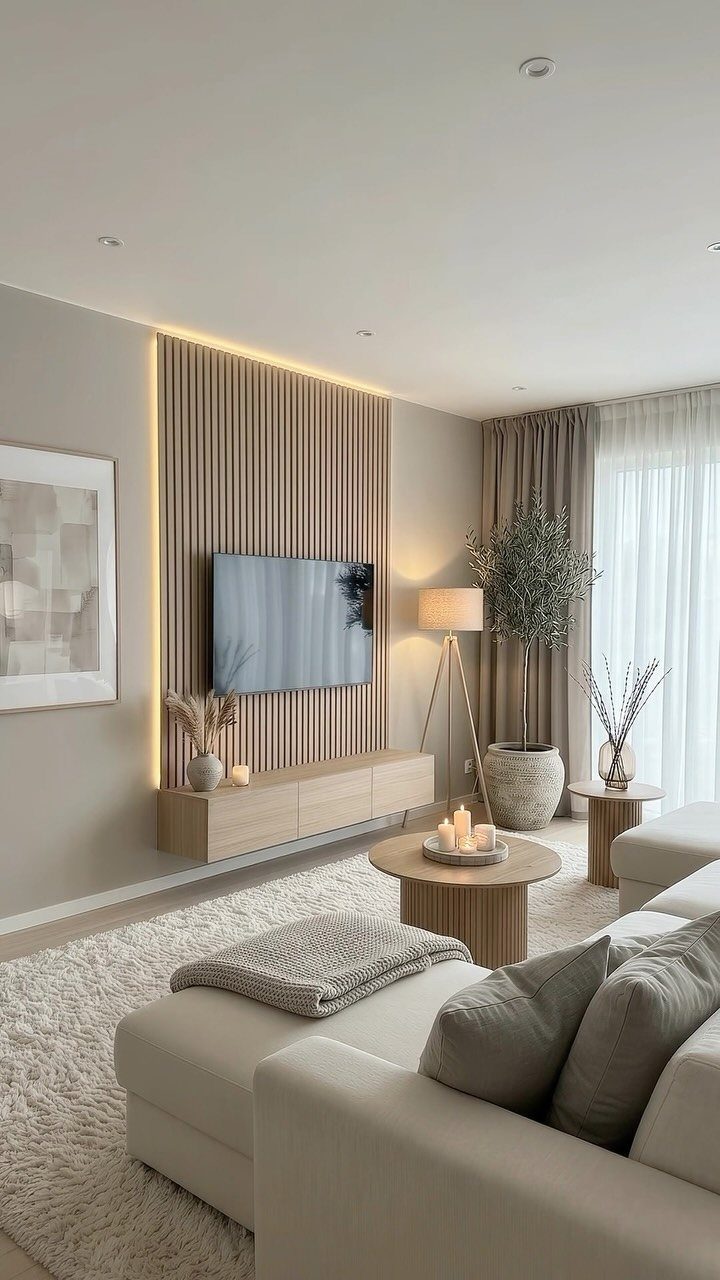
A row of narrow vertical slats pulls the eye up and gives a TV wall a clean, linear look without adding any color.
Keeping the slats in one tone suits a neutral room like this one, where the sofa, rug and decor are already quiet. The wood then becomes the single warm note.
Vertical lines also make a ceiling feel taller, so I’d choose this over horizontal boards in a room with a standard-height ceiling.
3. Reclaimed Chevron Planks
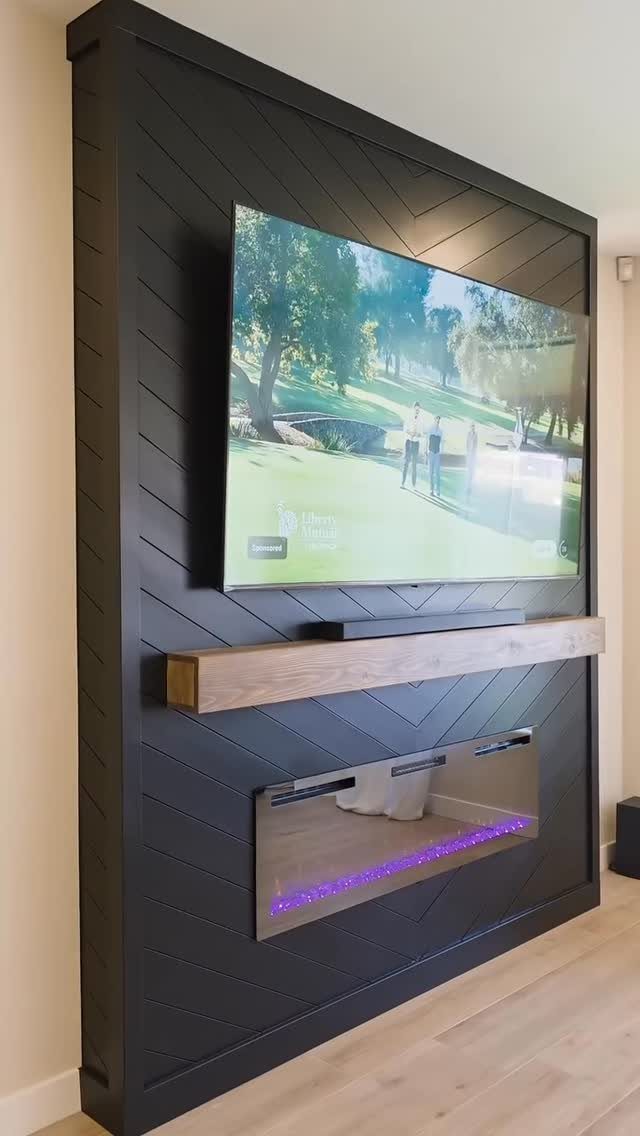
Chevron turns plain boards into a pattern, and dark gray paint keeps it from feeling busy beside a TV and fireplace.
Reclaimed boards suit it because their uneven edges and color shifts soften a very precise layout. Each board meets its neighbor at an angle, so expect extra cuts and more waste than with straight runs.
I’d plan the point of the V to land at the center of the wall, then work outward in both directions.
4. Unfinished Red Oak Planks
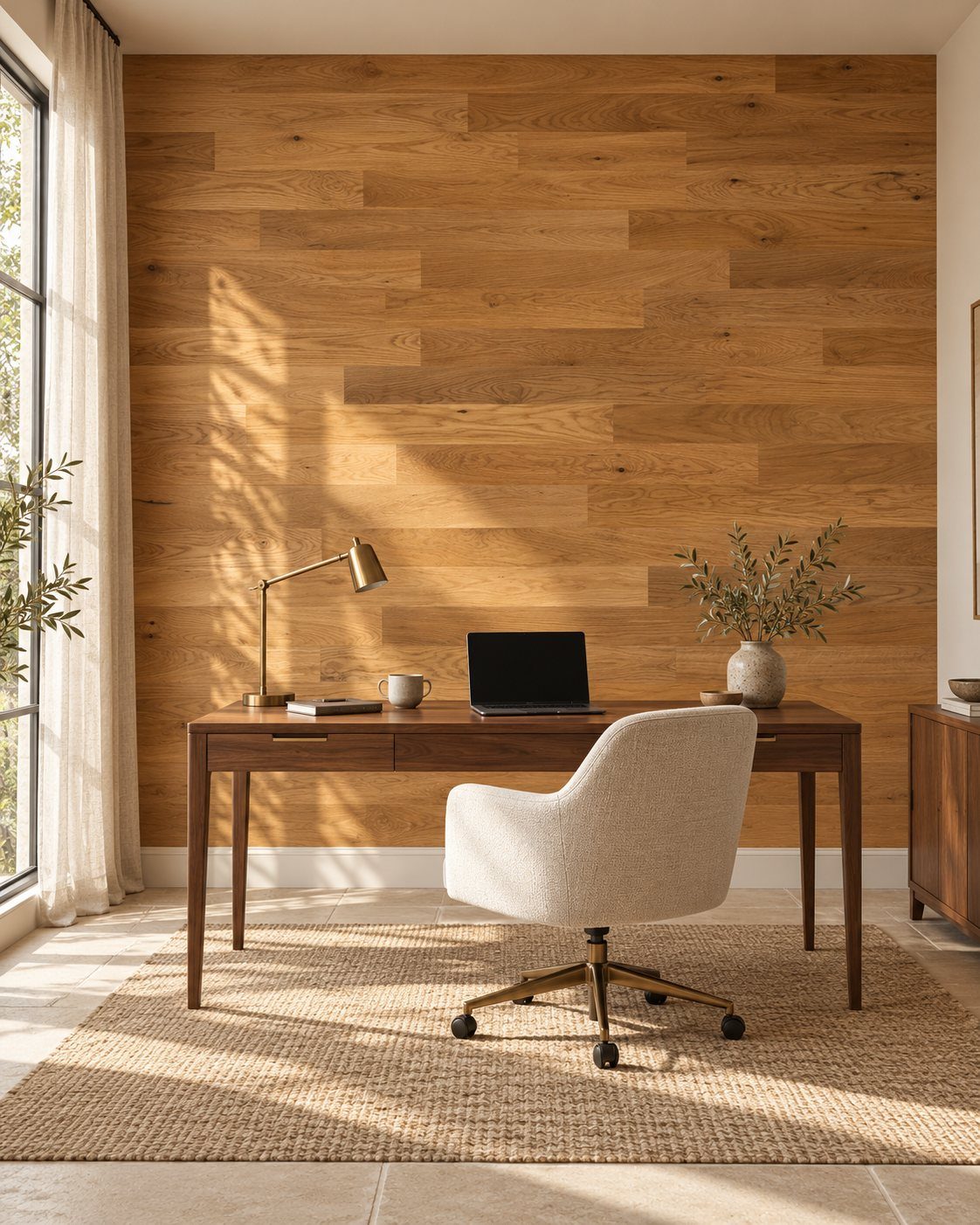
Tongue-and-groove red oak is real solid wood, and it locks together board to board, which makes the install easier to keep straight than loose planks.
Leaving it unfinished keeps the warm, reddish grain in full view, a good match for a home office desk and lamp. Seal it, though, or it will collect fingerprints and dust.
Run the boards horizontally to widen a narrow room.
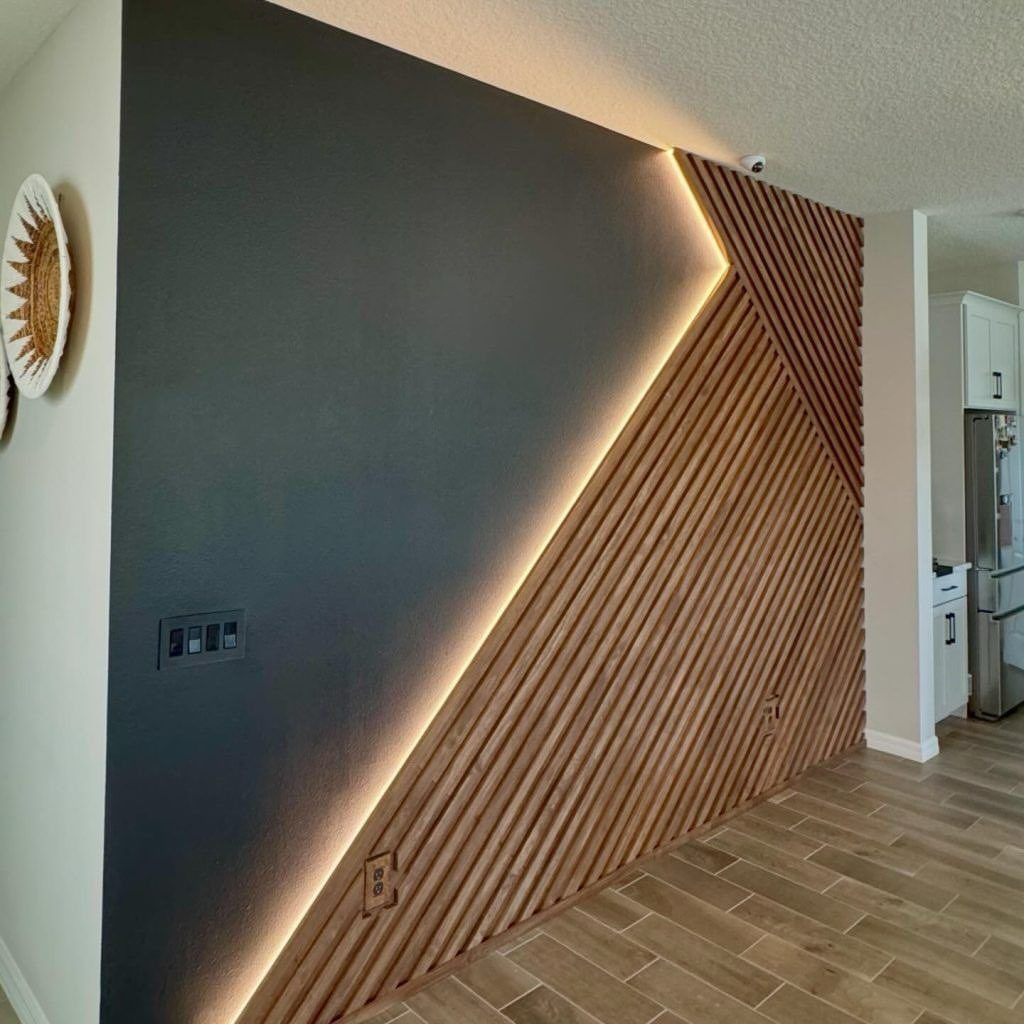
5. Geometric Wood Slats
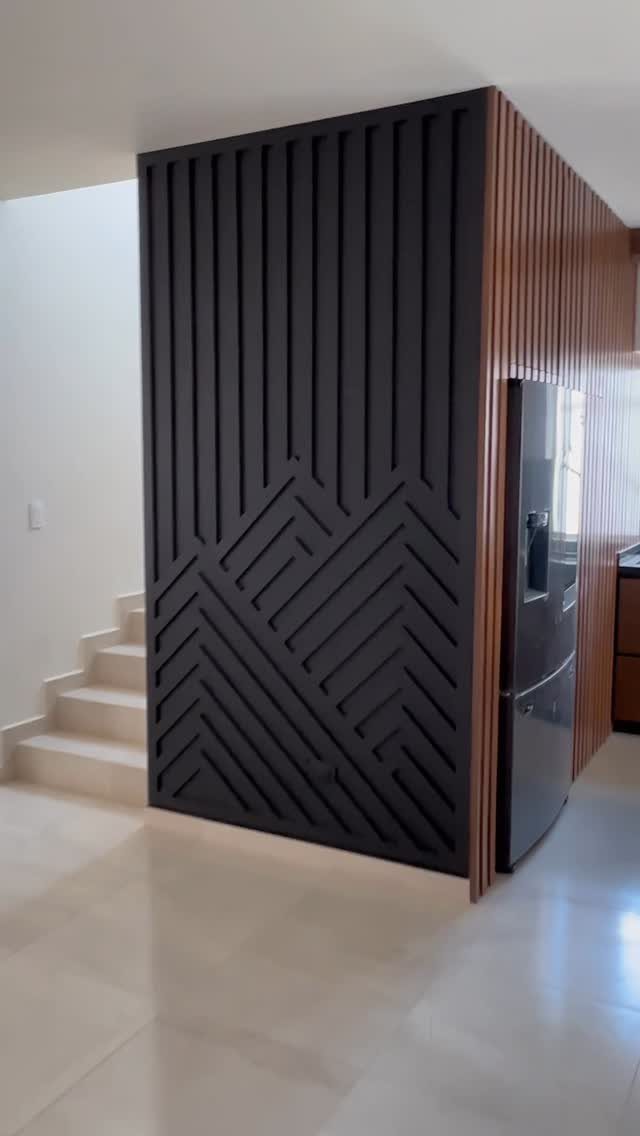
Slats set at an angle against vertical ones create a pattern with real movement, and a dark gray backdrop makes every edge stand out.
This is the bold option on the list, so I’d give it a wall with few interruptions. Beside a staircase and appliances, as here, the pattern holds its own.
Sketch the layout on paper first and cut a test run of slats before you commit to the full wall.
6. Poplar Paneling Entryway
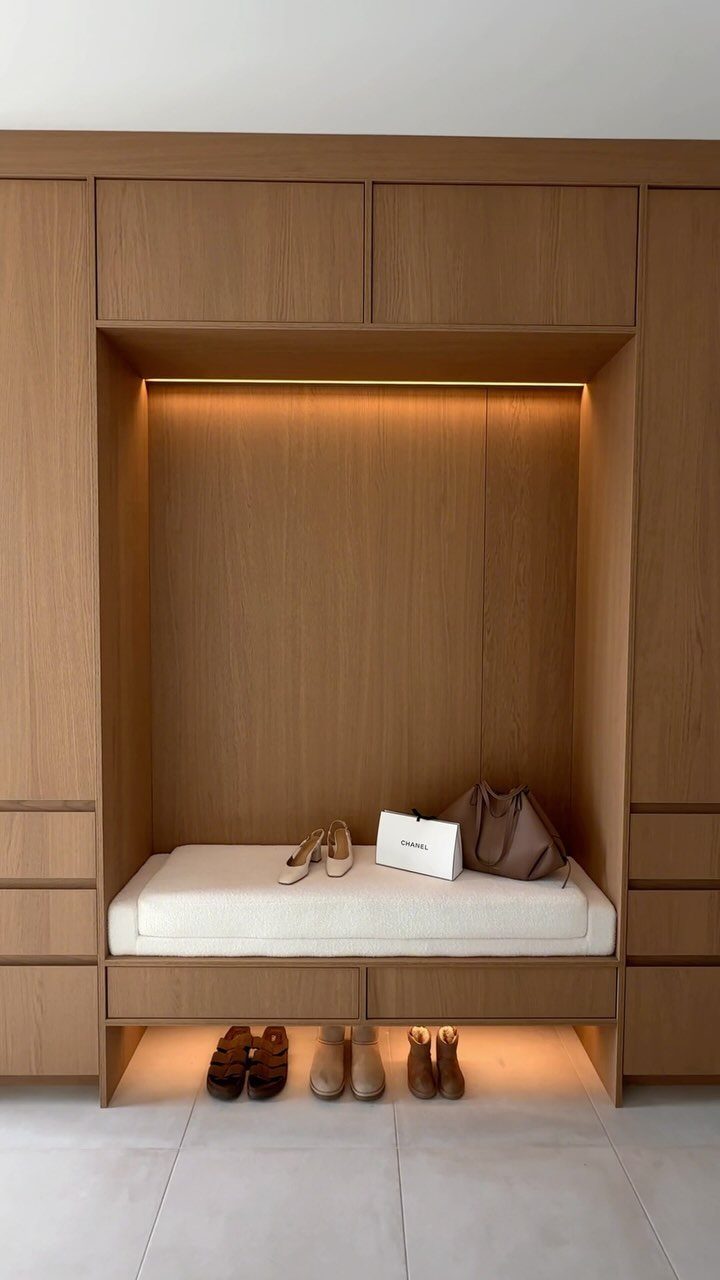
Wood paneling around a built-in bench turns an entryway into a small, finished room rather than a hallway where shoes pile up.
Thermal poplar adds a toasted tone and visible texture, and warm recessed lighting plays across it nicely. I’d include drawers under the bench so the paneling stays uncluttered.
A cushioned seat makes lacing up shoes easier, too.
7. Wood and Black Grid Wall
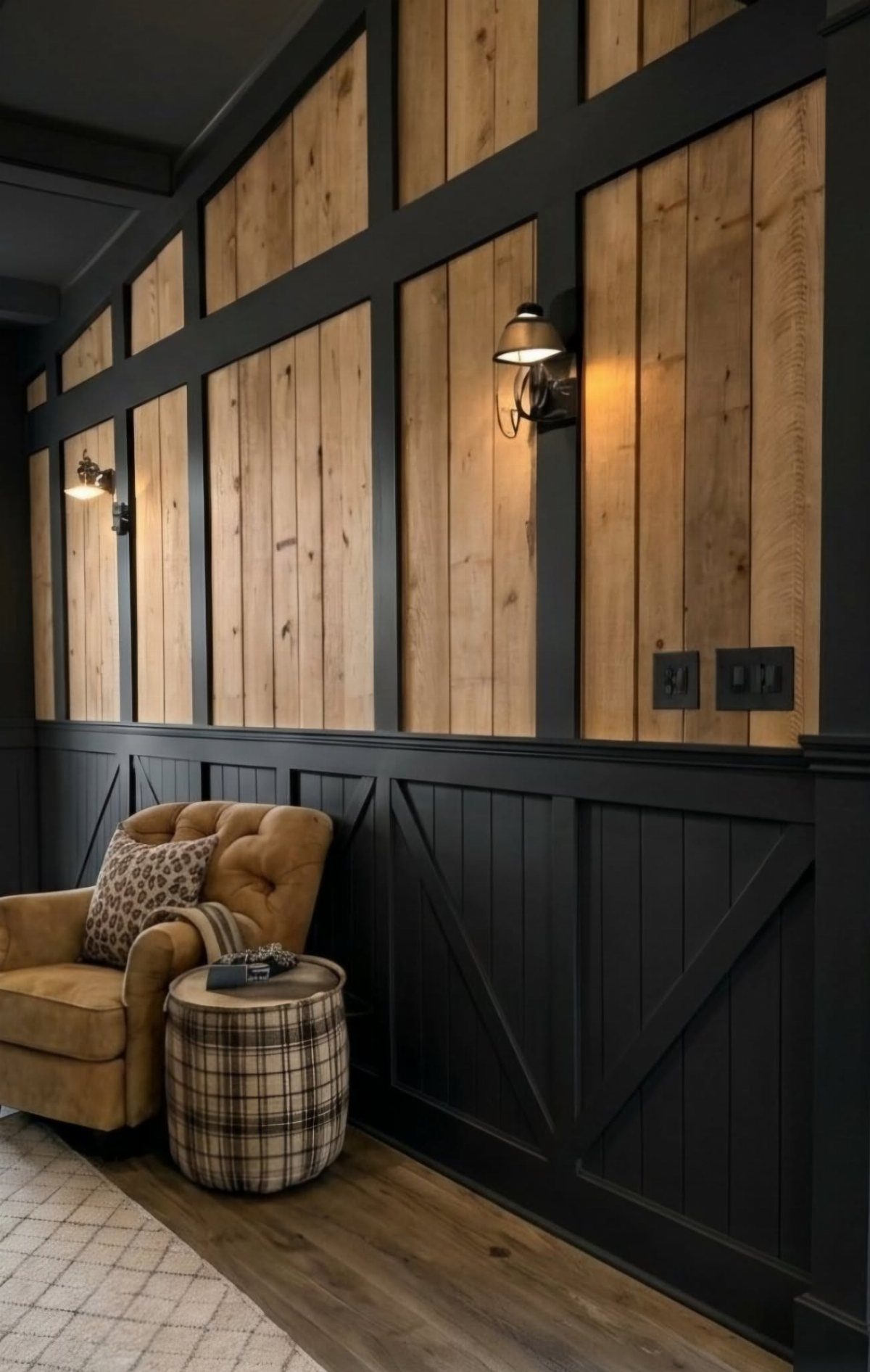
Black paint turns a plain grid into a graphic frame, and light vertical planks inside it keep the wall from feeling heavy.
I’d keep the wood pale like this so the black lines read crisp. A tan chair and a patterned side table then soften it without competing.
8. Wood Slats on Navy Wall
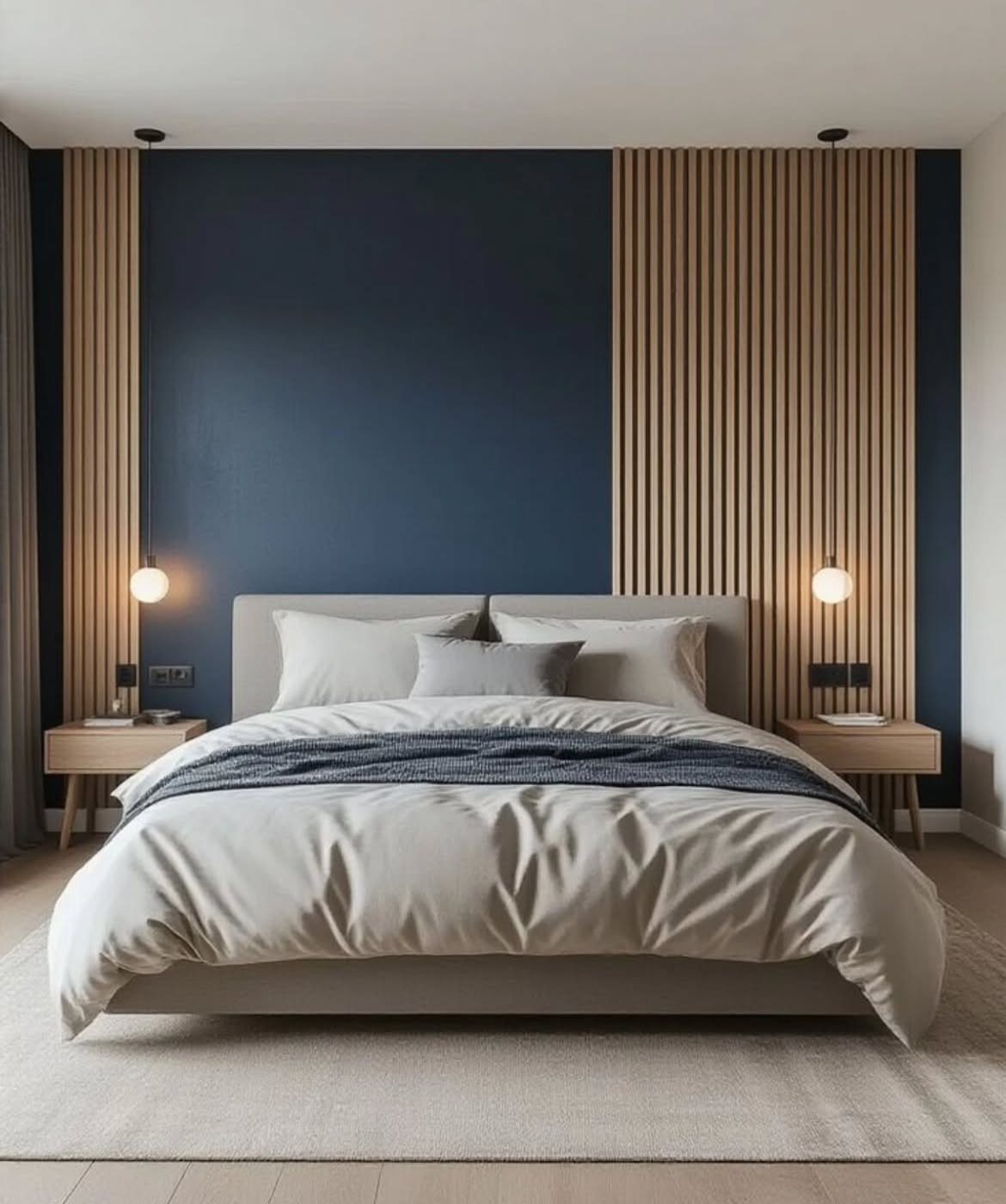
Navy is the right backdrop when you want natural wood to look warm. Behind the headboard, the slats stand out against the dark paint without needing any extra color.
Paint the wall first, then fix the slats over it, so no bare gaps show between boards. I’d keep the wood in its natural tone and leave the bedding white.
Pendant lights hung close to the wall add a soft glow across the grain.
9. LED-Backlit Slats
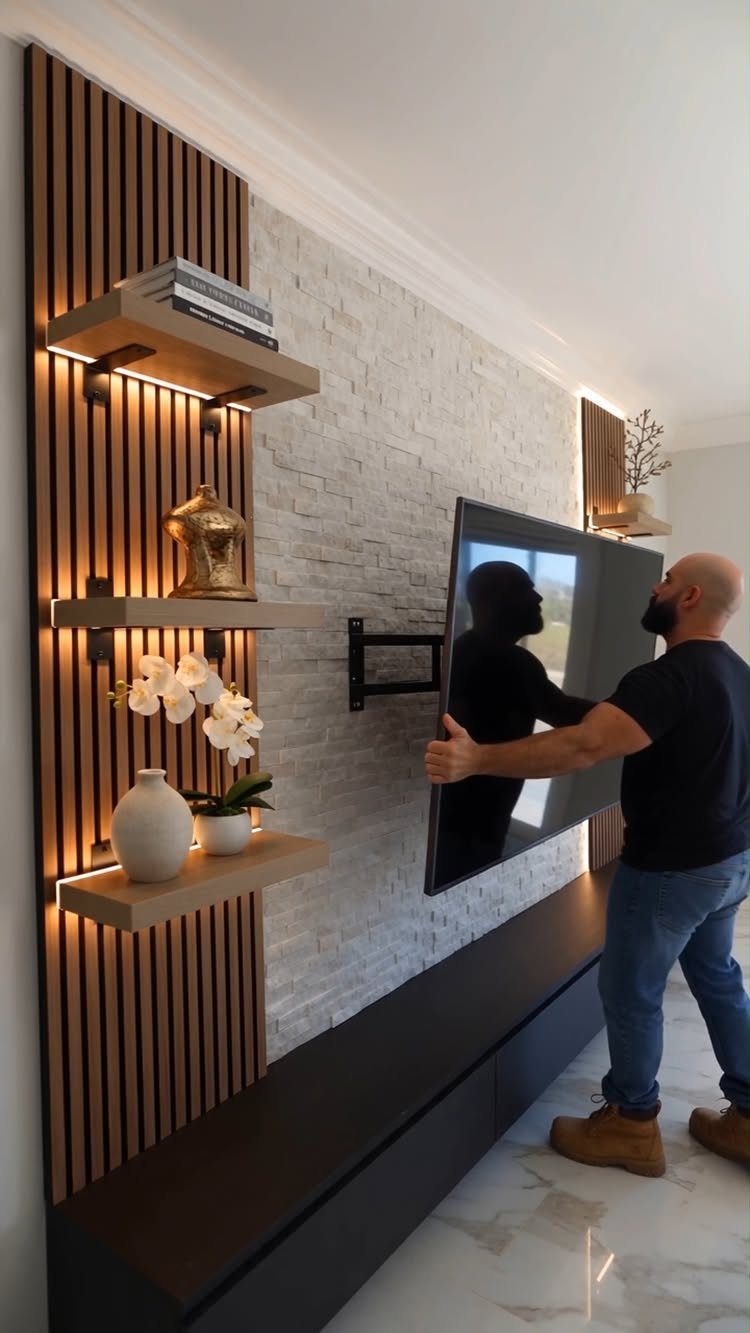
Spacing the slats apart and running warm LED strips behind them makes the wood glow at the edges, so the wall looks lit from within.
Place the strips before the slats go up, and keep the gaps wide enough for light to escape. Warm white suits wood better than cool white, which turns the grain flat and gray.
Floating shelves beside the TV fit well here. Plan where the power cable will run before you mount anything.
10. Wood Slat Shelves with Greenery
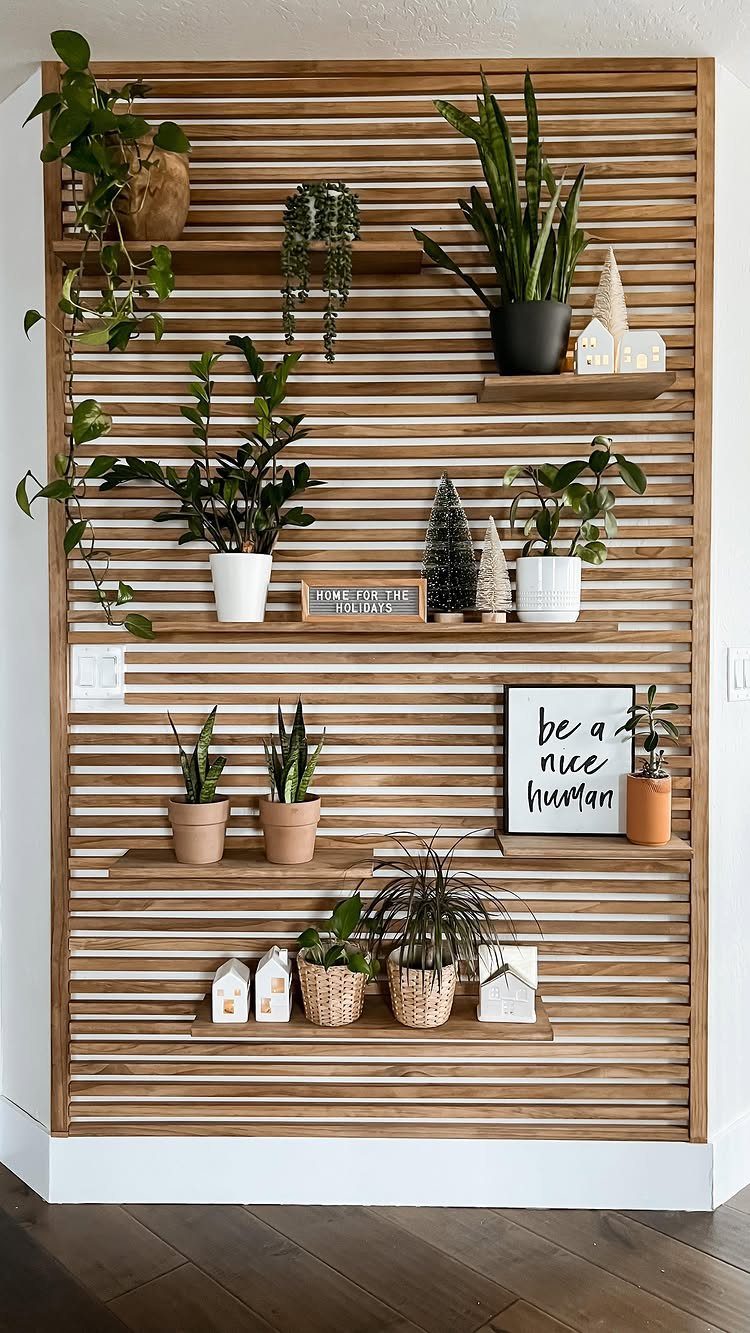
Shelves float best against slats when the brackets stay out of sight, so the plants appear to sit right on the wood. Green leaves look sharp against the straight vertical lines.
I’d group pots of different heights on each shelf and leave a little empty wood showing between them. Small signs and decor work as accents, but a few go a long way.
11. Reclaimed Media Wall with Console
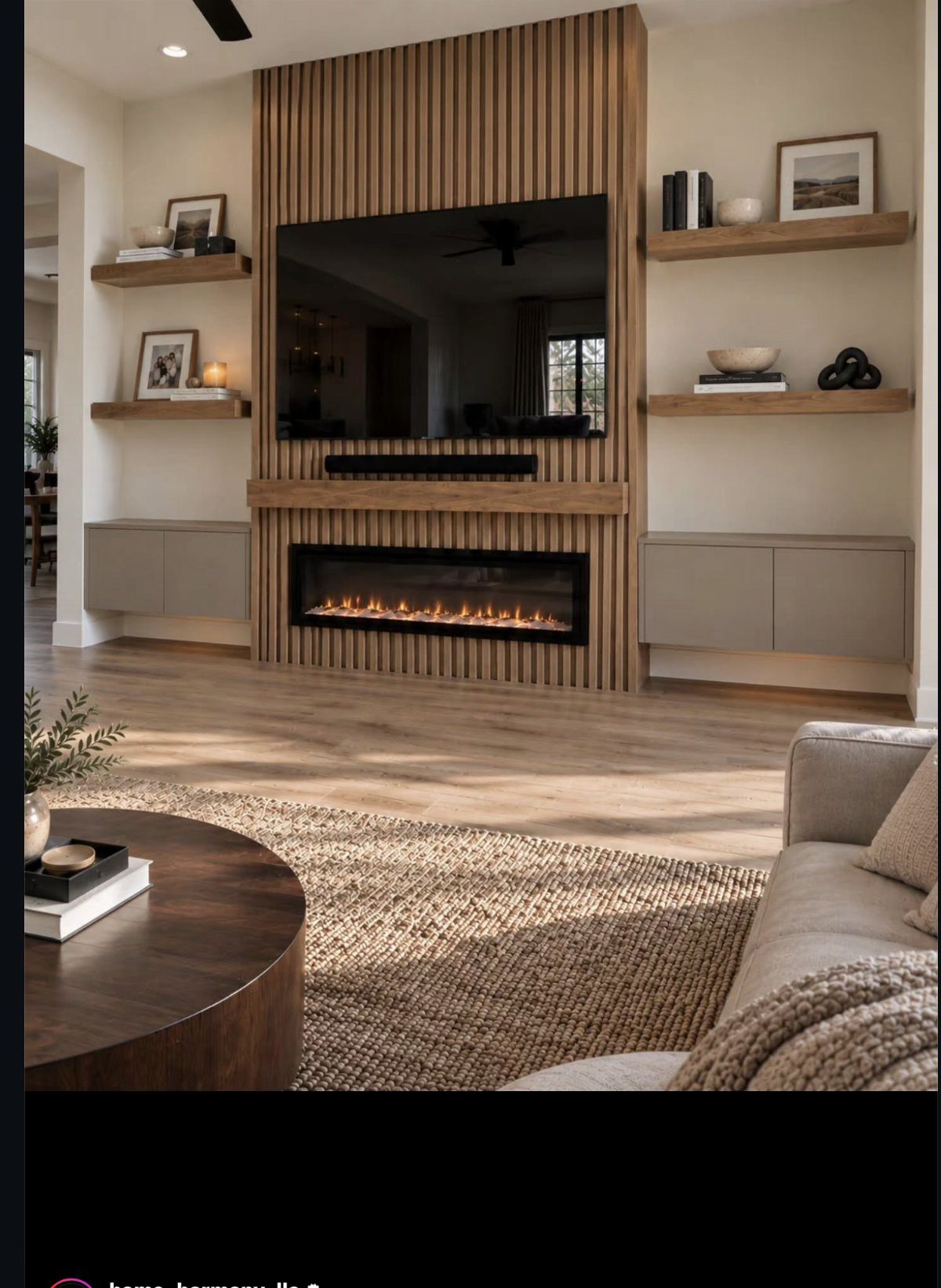
A media wall pulls the TV, fireplace and storage into one wood surface, so the room has a single clear focal point. Vertical slats above and gray cabinets below keep the lower half practical.
Floating shelves break up the tall wood run and give you a place for books or a lamp. I’d choose this when the whole wall will carry the room, not just one corner of it.
12. Pallet Plant Wall with Shelves
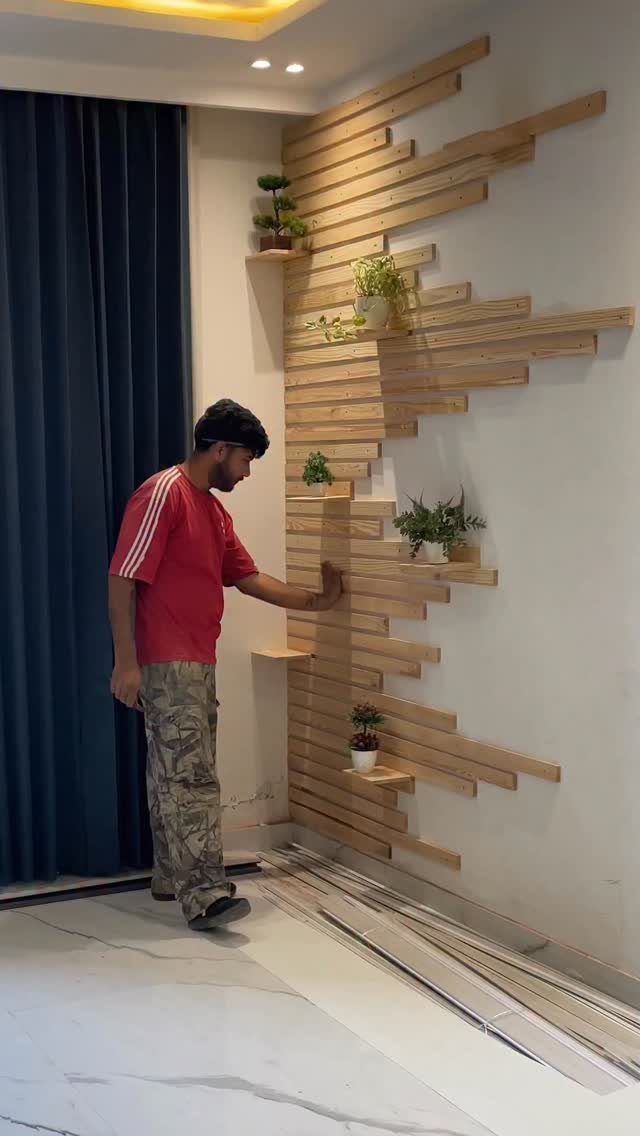
Pallet boards are the budget route to a wall like this, and the built-in shelves let the wood do double duty as a plant display. Light-toned boards keep small green pots front and center.
Sand the boards well before they go up, since pallet wood is rough. I’d size the shelves to the pots in your collection now so the wall looks planned, not crowded.
13. Blue-Toned Pallet Wall
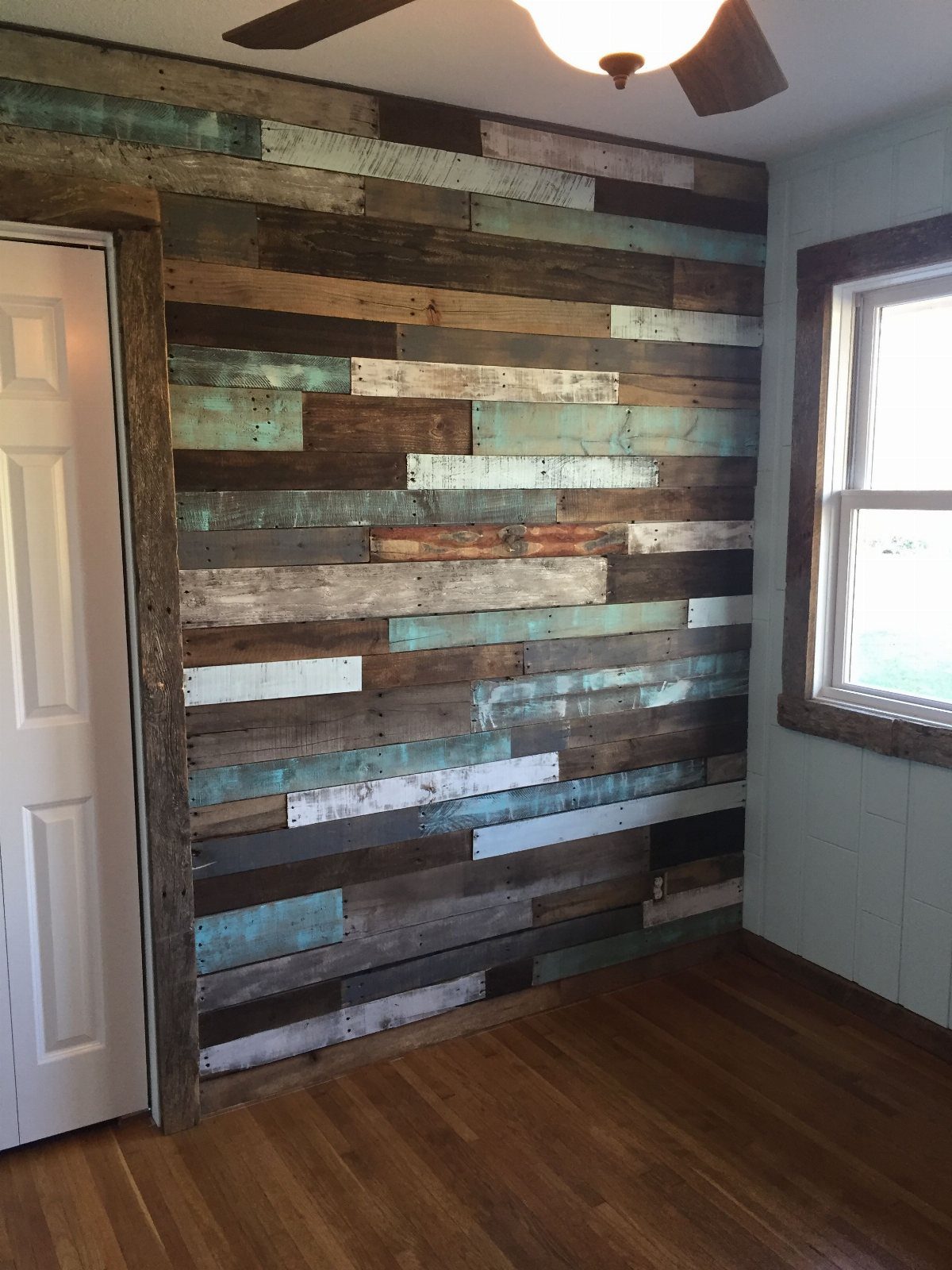
Pallet planks in brown, gray, blue and teal give a wall color without a single can of paint on the whole surface. Mixing the tones board to board keeps the blue from reading as a stripe.
I’d scatter the bluest boards across the wall rather than grouping them, so the eye moves around. Against a white door and plain window trim, the wall can carry all the color in the room.
Sort the planks on the floor first and rearrange until no 2 similar boards touch.
14. 3D Wood Block Wall
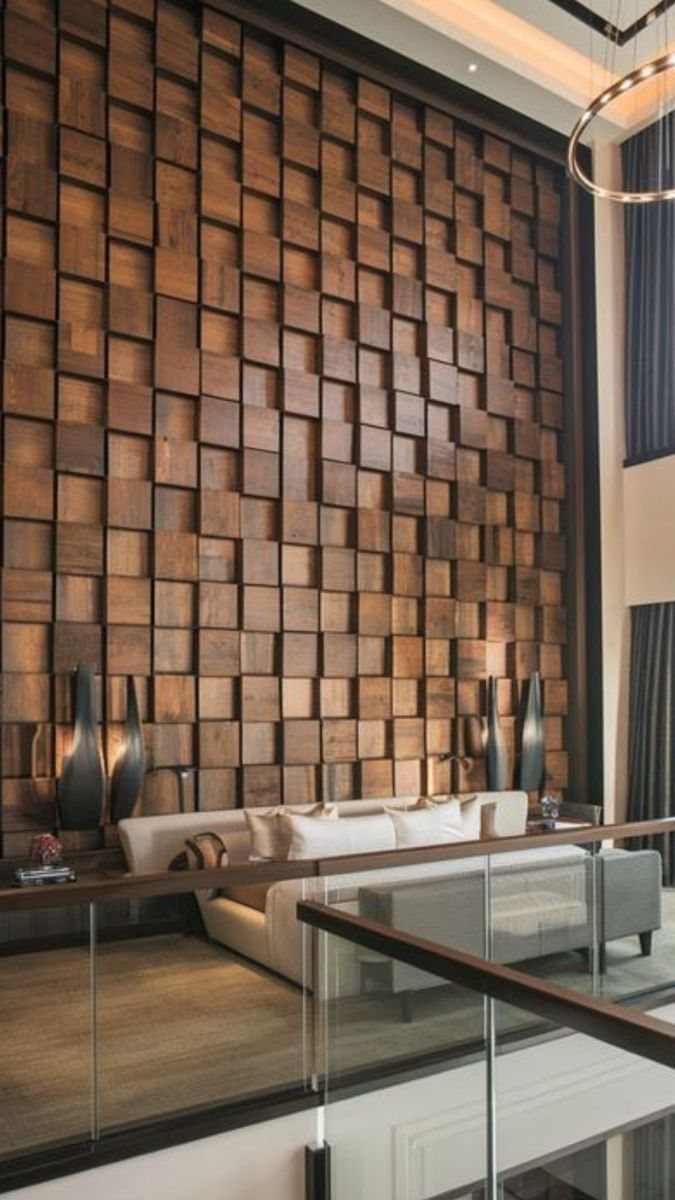
Small square wood blocks set at different depths turn a flat wall into a grid of light and shadow. The relief does the decorating, so the wall needs no paint or pattern.
A white sofa suits it, since the shadows between blocks stay easy to read. Expect a slow install: each block is fixed one at a time, and a layout drawn on paper first saves guessing.
I’d keep the blocks one wood tone and let depth supply the variety.
Frequently Asked Questions
How do you accent a wall with wood?
Pick one layout and fit it to the room: vertical slats in a single tone suit a quiet, neutral TV wall, while horizontal reclaimed planks in mixed tones add depth to a tall, plain wall like a stairwell.
Slats look best over a coat of navy or dark gray, since the dark base hides the seams between boards and lets the wood read as the star.
Sketch the layout on paper before you fix anything, especially for chevron or angled patterns.
Which wood accent wall suits other areas of the home?
Wood walls work well beyond the living room. Match the boldness of the pattern to how many interruptions the wall has, since busy layouts need a clear wall.