These ideas run from a couple gallons of matte paint to real stone that needs structural checking, and the right one depends on whether your wall can take weight or only surface adhesive.
Wavy 3D panels stick on with adhesive and peel off clean when the lease ends; built-ins and recessed mounts need studs, time, and a saw.
1. Textured Paneling
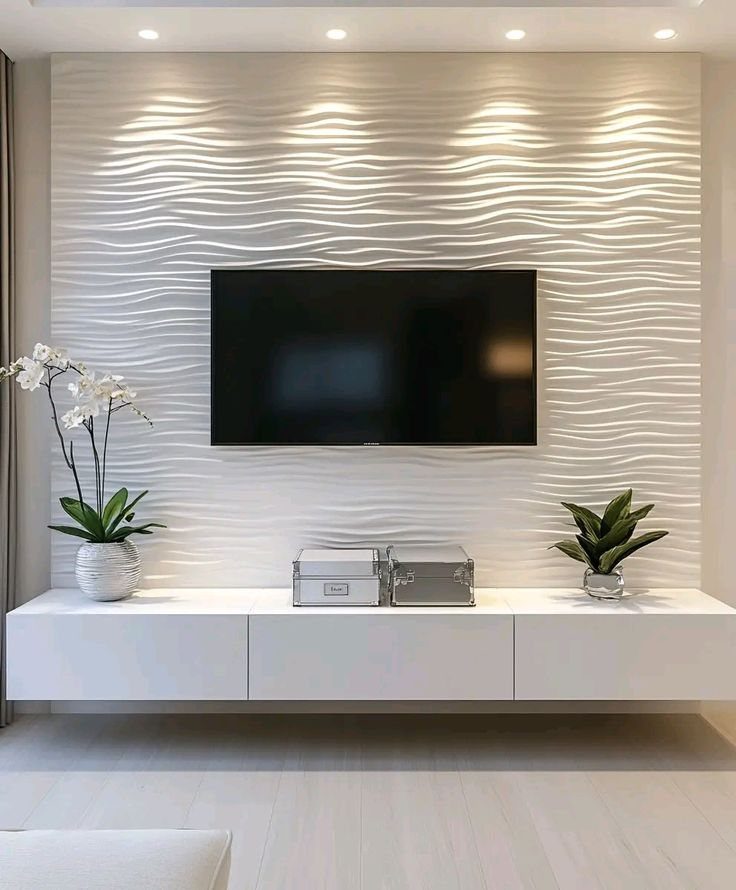
Wavy 3D panels turn a flat wall into something that catches light differently as the day moves.
I’d pick this for renters who can’t commit to permanent texture; lightweight panels go up with construction adhesive and come down again when the lease ends. Shiplap works too, though it reads more cottage than contemporary.
Dark wood paneling draws the eye away from the black TV rectangle more aggressively than a pale finish, though it does close the room in.
That same density also absorbs sound, which matters more than people think until they fix the echo.
Paint color changes everything here. White keeps it airy; navy or forest green turns the same panels into a completely different mood.
Either way, the TV mount needs to hit studs through whatever thickness you’re adding.
2. Built-In Media Wall
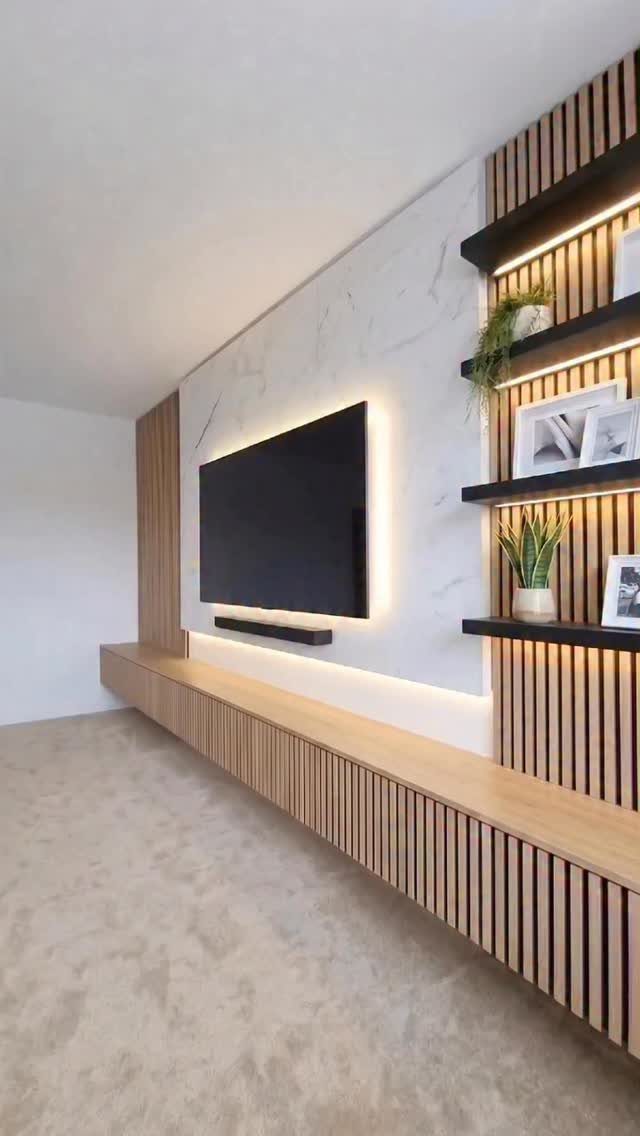
A media wall that swallows the clutter is the difference between a living room that looks finished and one that looks lived-in.
Custom cabinetry around the screen hides the router, the gaming console, the rat’s nest of HDMI cables that otherwise colonizes the floor.
I’d build around IKEA frames if I were doing this myself; the hardware stays affordable and the finished result reads as bespoke once the faces match.
You save money by building the unit yourself and spend the savings in time instead. A weekend of measuring, leveling, and scribing to uneven walls buys you a wall that looks intentional long after the paint dries.
Floating shelves keep the upper half airy; closed lower cabinets handle the ugly stuff. Check your TV’s ventilation requirements before boxing it in, and plan cable routing before you cut anything.
3. Stone or Brick TV Accent Wall
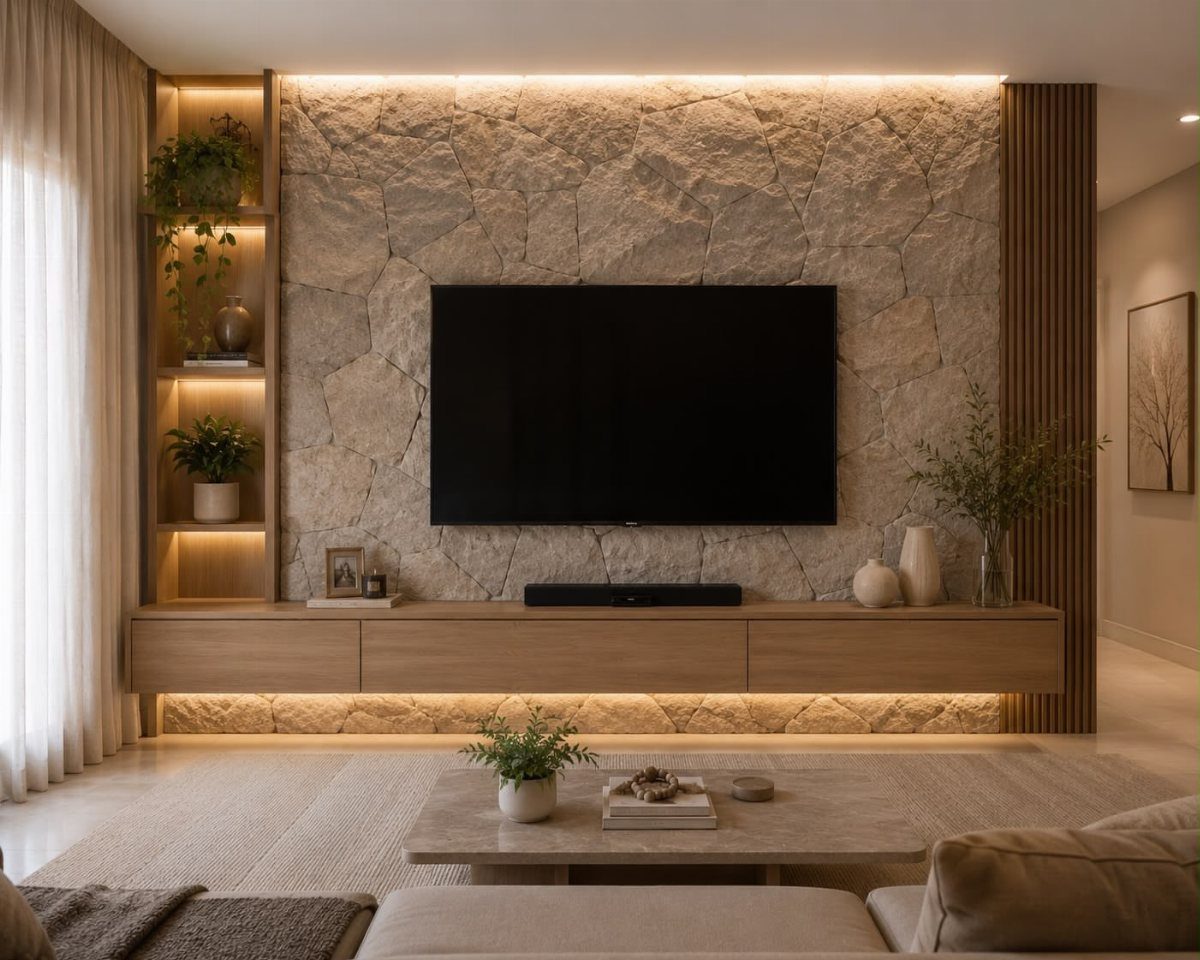
Stone carries weight that paint never will. The rough face catches shadow, the beige tone warms up the light from the screen, and the whole wall stops feeling like electronics mounted on drywall.
Faux panels get you most of the way there for less weight and less hassle; real stone demands you verify the wall can take the load and that you’ve got the right anchor system.
Mounting through stone is its own project. The integrity of the stone face, the depth to solid backing, the torque on the mount: these need checking before you drill.
I’d call a pro for real stone unless I’ve hung heavy things through masonry before. A wood console below picks up the warm tone without competing; that’s the pairing that makes this work.
4. Wall Shelving
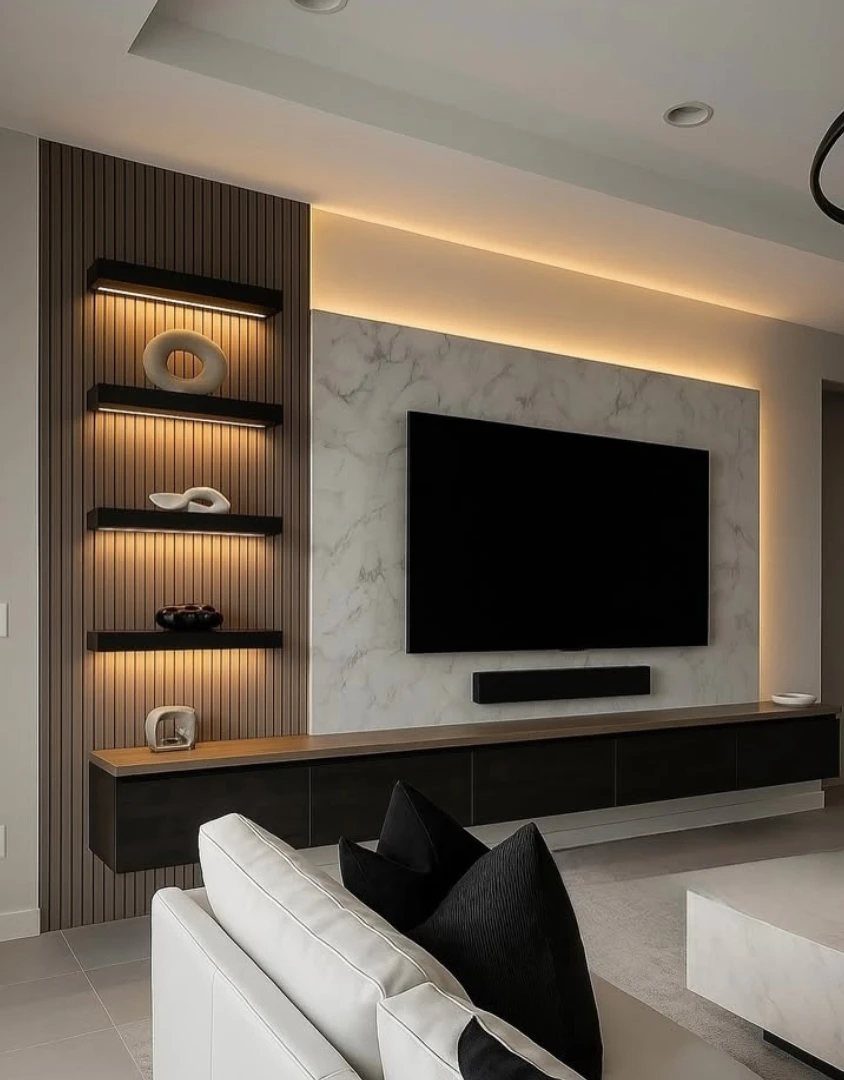
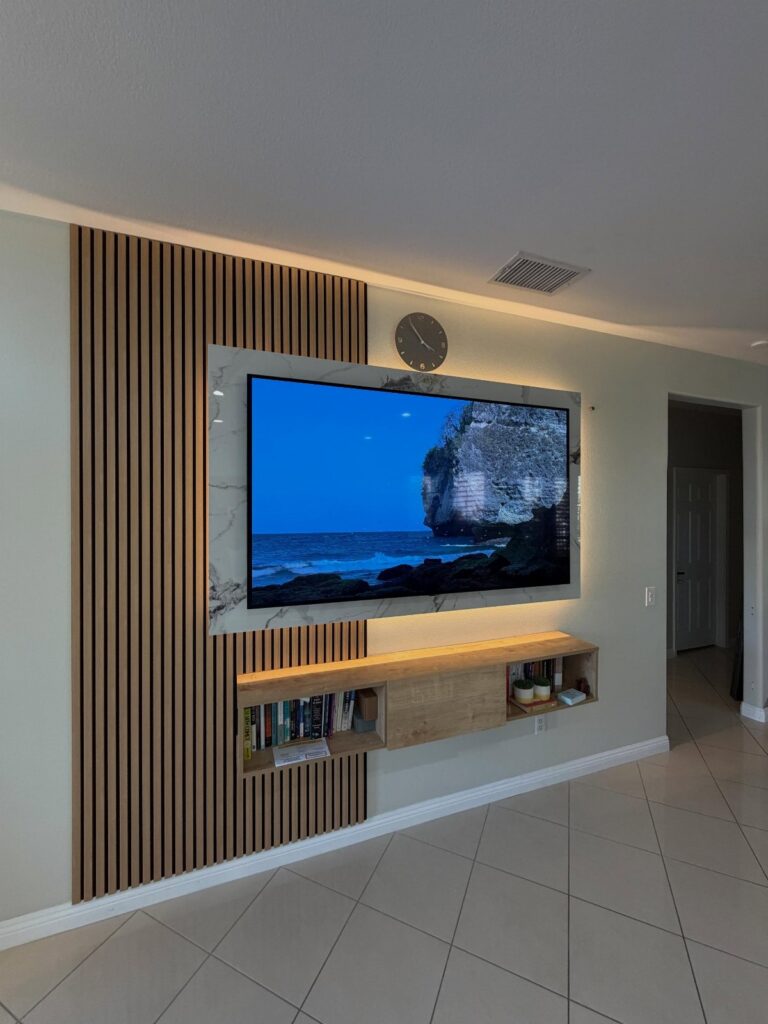
Open shelving flanking the TV turns dead wall into usable space without the commitment of full built-ins. Vertical slats behind shelves add rhythm; LED strips underneath make the objects glow rather than the wall itself.
I’d use this in a narrow room where cabinets would feel bulky.
Restrain yourself to a few objects that matter. Four shelves per side, not eight; objects with some breathing room, not a museum case.
Closed storage below handles the functional stuff, open above handles the pretty stuff. Mixing the two is what keeps it from looking like a showroom.
Check that your wall can take the cantilever if you’re loading art books or ceramics; floating hardware has limits.
5. Wood Slat
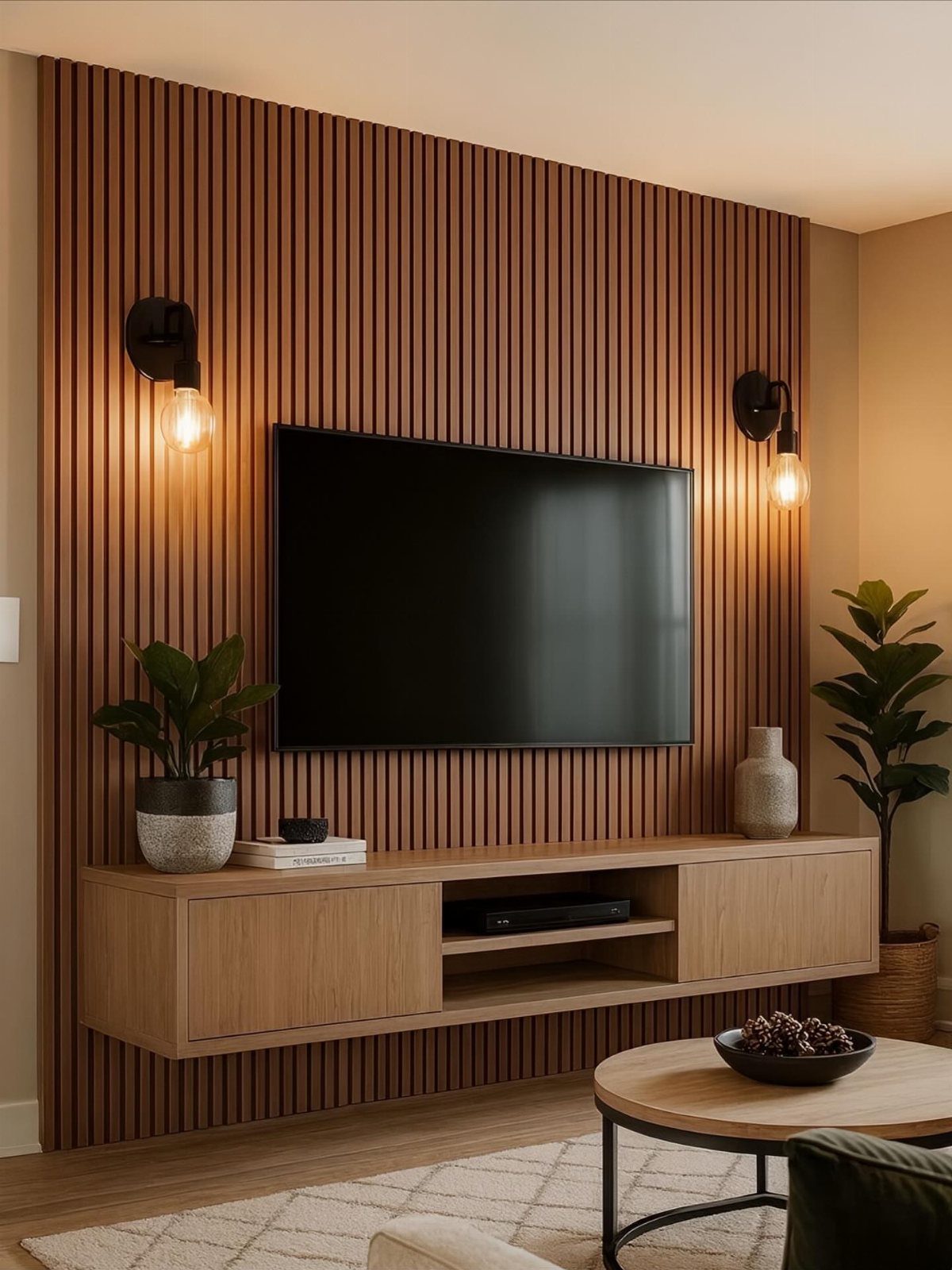
Vertical slats behind the TV do two things at once: they add texture that reads as warmth, and the lines stretch the ceiling higher.
Black slats keep a dark room coherent without going flat; natural oak or walnut warms up a pale space. The panels that have caught on lately come pre-finished, which saves the sanding and staining stage.
Sconces tucked between slats only work because the spacing was planned for it. Standard slat spacing won’t necessarily fit your light fixture of choice; check that before you order.
A slat wall also tolerates a TV mount better than something precious; if you misdrill, the next slat over hides the mistake.
6. Gallery Wall
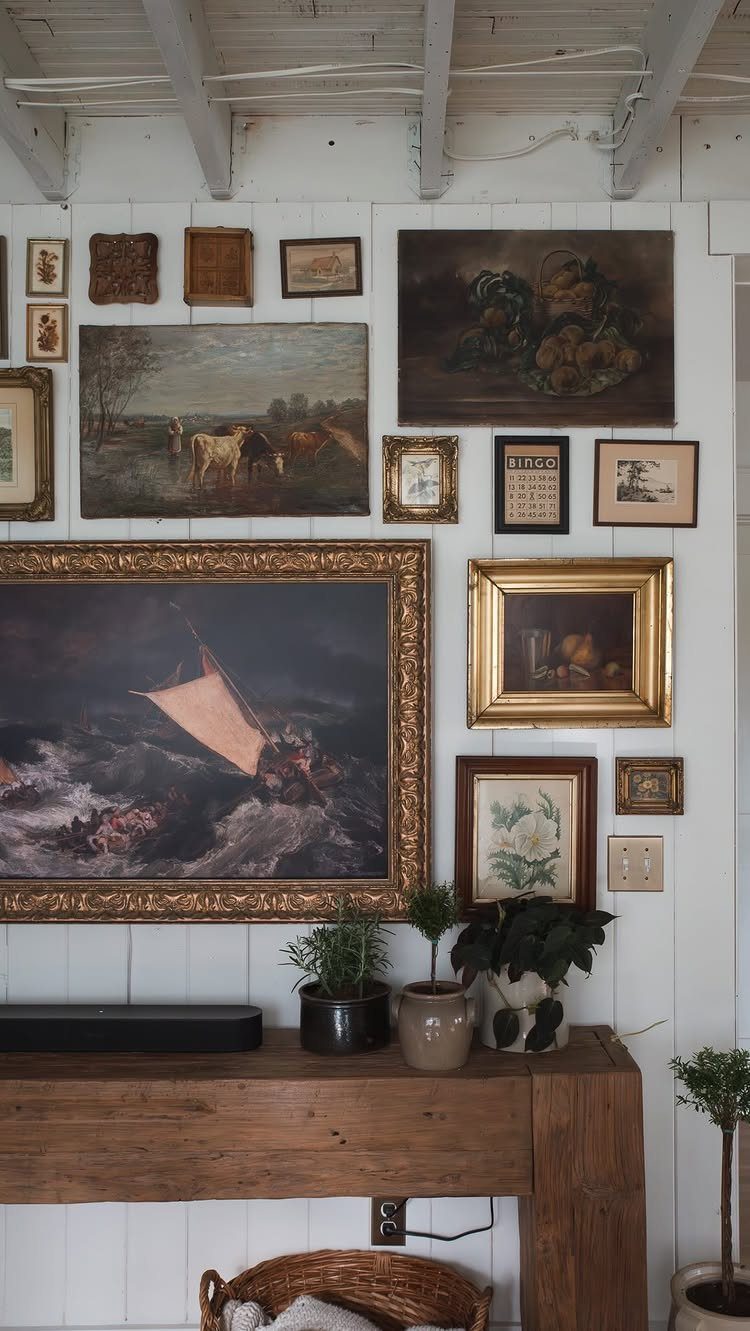
A TV that disappears into art only works if the surrounding frames are generous enough to absorb it. Varied sizes, mixed gold and dark wood, and enough density let the eye travel rather than settle on any single rectangle.
I’d build this slowly, starting with three or four pieces and adding over months; a forced gallery wall looks like a hotel corridor.
The Frame TV makes this easier but isn’t required. Any flat screen with a narrow bezel can sit among frames if you keep the matting and spacing consistent.
The console below grounds the arrangement; without it, the whole thing floats. Tight grouping between frames reads as intentional, scattered reads as unfinished.
7. Fireplace Integrated TV Wall
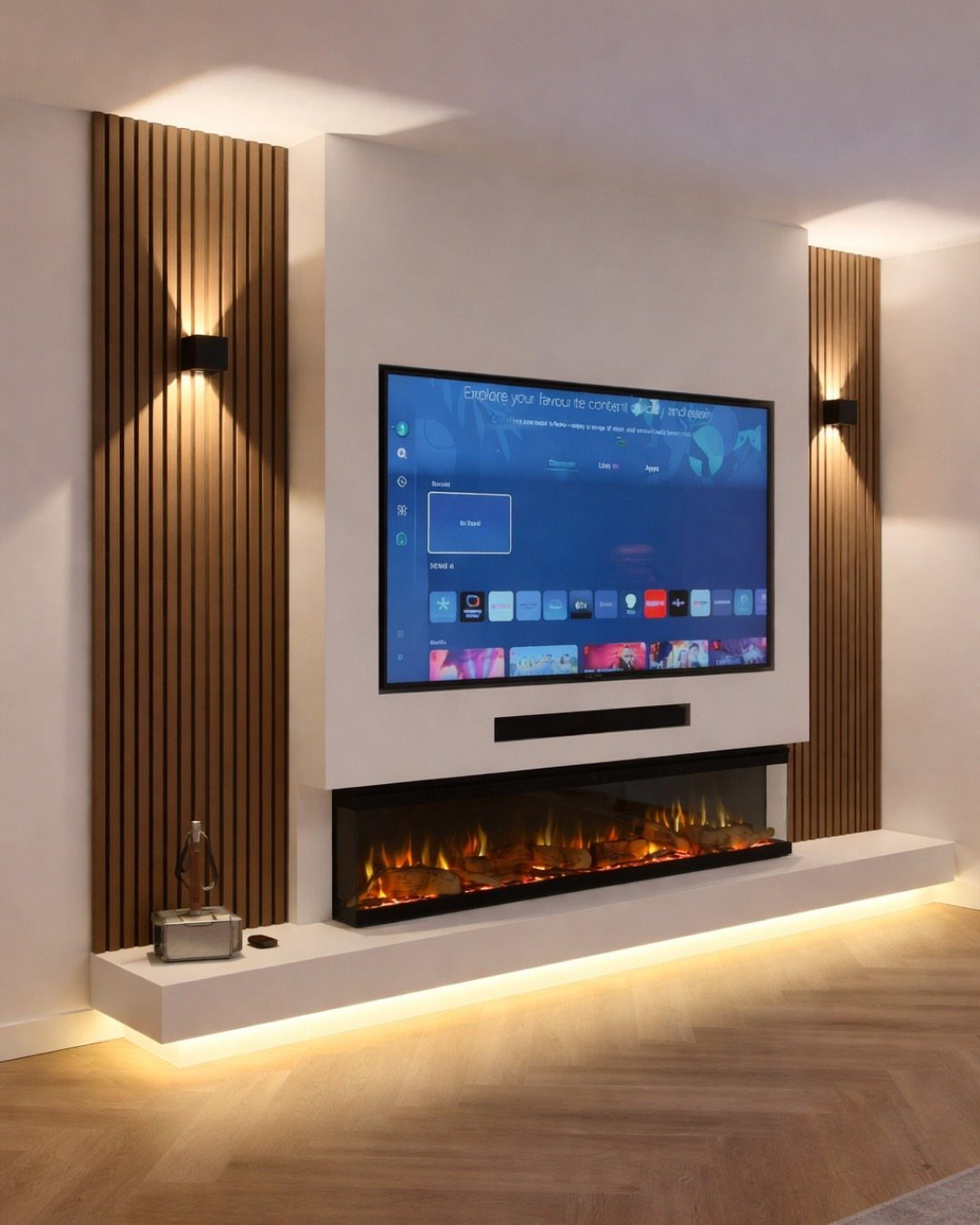
A fireplace integrated TV wall turns two focal points into one, which keeps the television from dominating the room.
A long, low electric fireplace beneath the screen with vertical wood slat panels on each side keeps your neck at a comfortable angle; that low horizontal line matters more than the materials.
Electric fireplaces remove the heat and soot worry entirely, and a mantel shelf does the same job with gas or wood.
This suits anyone whose sofa sits well back, since too close and you are tilting your head up no matter how low the fireplace goes. The tradeoff is permanence: this wall becomes the room’s center and stays there.
8. Marble Accent Wall
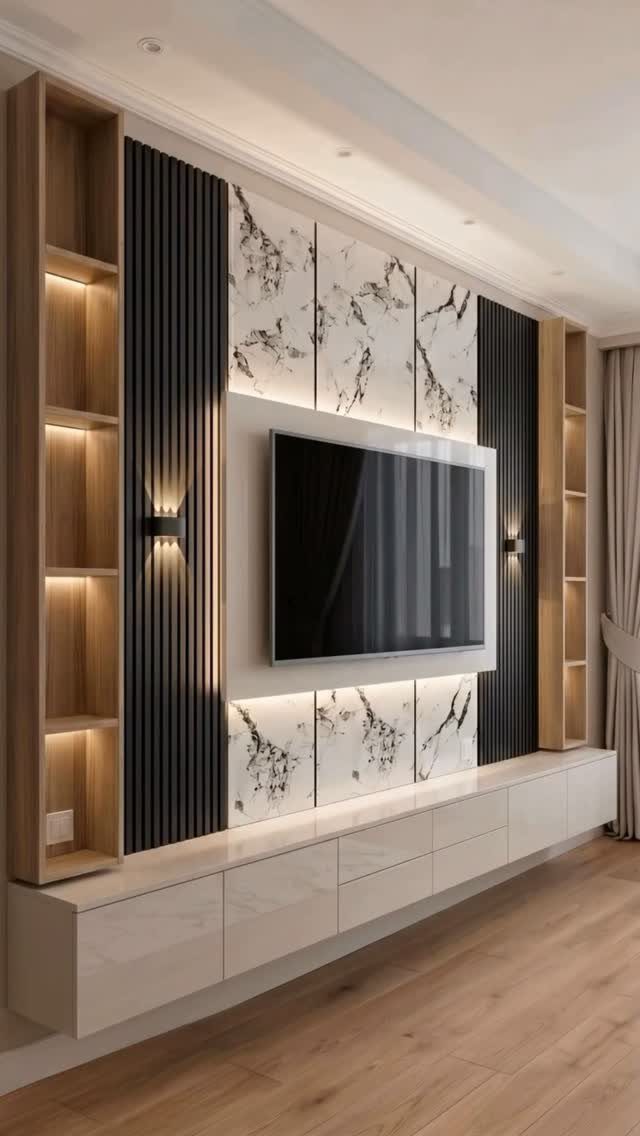
Marble behind a television reads expensive even when it is not.
White marble-look panels with dark veining, black vertical slats, and built-in shelving grab attention while the wood breaks up the brightness so the screen does not look like a dark hole in a bright field.
Real marble runs about a hundred times the cost of porcelain panels from a big-box store, so budget drives that choice more than appearance does at a distance.
This works best in a room that already has warm wood tones elsewhere; without them, the wall can feel cold. The shelving adds needed warmth if your floors and furniture do not.
9. Add a Recess
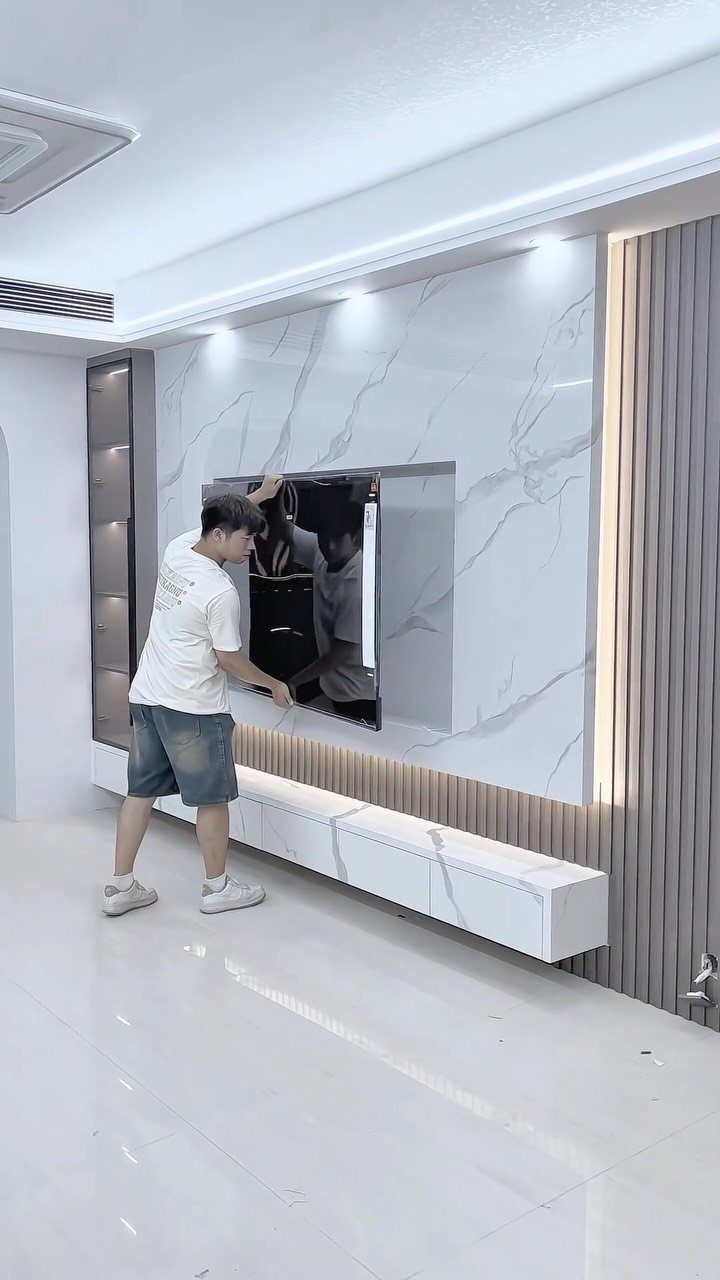
Recessing a television into the wall changes how the screen reads in a room. Instead of a black rectangle pushing forward, it sits in shadow and becomes almost incidental, framed by the surrounding surface.
A marble-patterned wall with the TV set into a rectangular cutout has to match your specific television and mount, so the cutout dimensions come from measuring your setup, not from a standard figure.
Check whether your wall can take the recess; a load-bearing wall or one packed with utilities may not. This is the right choice if you want the wall, not the technology, to lead.
10. LED Backlit TV Wall
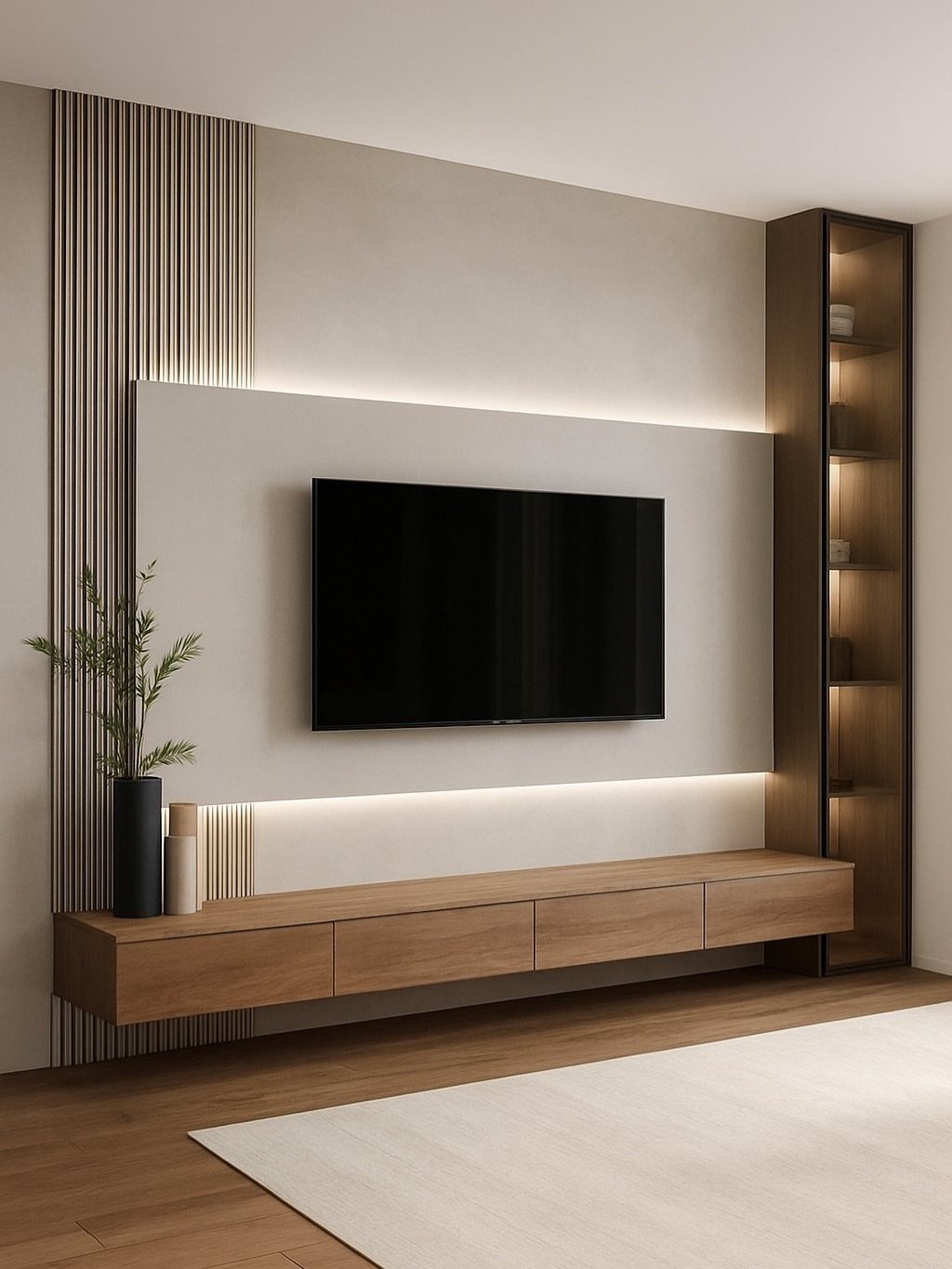
LED backlighting behind a television softens the contrast between a bright screen and a dark room, which matters more than the futuristic look.
A recessed beige panel with light pooling around the screen’s edges reduces eye strain during long watching sessions and makes the screen feel larger than it is.
Color-adjustable strips let you shift from warm white for regular viewing to something playful for parties, though most people settle on one temperature and leave it.
Placement matters: the light should hit the wall behind, not leak around the edges of the television itself. This suits renters who cannot alter walls deeply, since peel-and-stick strips remove clean.
11. Wall Frame Molding
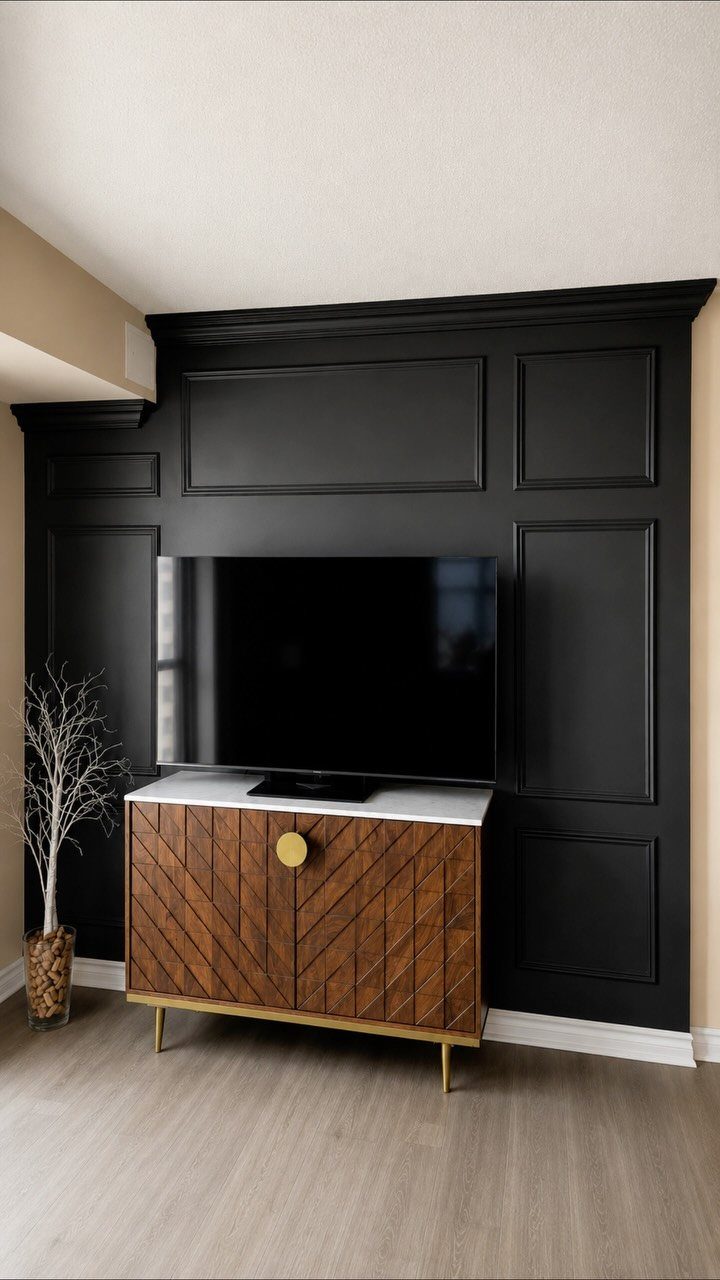
Wall frame molding brings a 1750s detail to a television wall and makes the screen read as framed art rather than appliance.
Matte black panels with molding grids and a wooden credenza below keep the wall from feeling like a museum piece, and the molding itself is simple enough to cut and install over a weekend.
Picture-frame molding kits run cheap enough for a weekend project, and installation needs only a miter saw, adhesive, and patience with leveling.
This suits a reader who wants character without rustic texture; the grids collect dust and the look is deliberate enough that the rest of the room needs to keep up.
12. Black TV Accent Wall
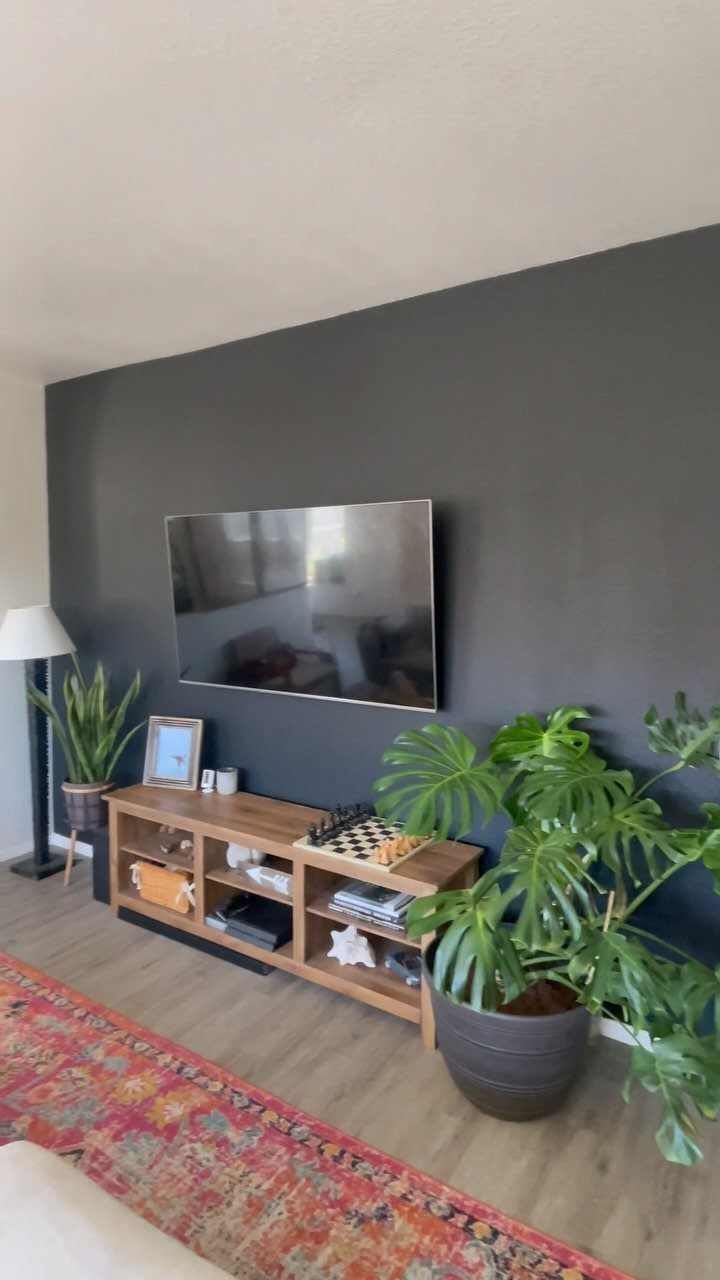
A black wall behind a television erases the screen when it is off and deepens the colors when it is on.
Charcoal black with a light wood console and green plants works because black walls swallow light and need something alive or bright nearby to keep the room from flattening out.
Matte paint hides imperfections better than eggshell or semi-gloss, which matters on a wall this dark.
This is the cheapest idea on the list, a gallon or two of paint and an afternoon, and it suits anyone whose television is large enough that it otherwise becomes a black void on a paler wall.
The risk is that the room can feel smaller; compensate with light floors and warm wood.
Hiding Cords and Wires
Cable trunking is the renter’s friend: paintable plastic covers stick to the wall surface and disappear under a coat that matches whatever finish you chose for the accent wall.
Running cables inside the wall is cleaner but demands planning before you close up any paneling or drywall.
A recessed box behind the television handles power for newer sets that run on Wi-Fi; if you are still wrangling HDMI and the rest, trunking inside the wall is the route that keeps the face looking built, not patched.
Importantly, always consider your cables, says Gary Walmsley, managing director at Designer Walls: ‘Often modern TVs only require power as they work on Wi-Fi – a recessed box behind the TV is very helpful when tidying up cables.
Choosing the Right Height
I measure from the seat cushion up to where my eyes land when I’m actually sitting, and that is where the middle of the screen goes. Any higher and your neck pays for every episode.
Room layout matters as much as height: keep the wall out of paths where people walk past, since traffic breaks the picture and risks a knock. Daylight is another variable.
Sun hitting the screen washes out color and sharpness, so test your spot at the hours you actually watch.
A recessed box behind the set tidies the power cable; anything more and you are back to planning trunking before the wall goes up.
Selecting Colors
Bold reds, yellows, or blues wake a room up if that is the energy you want. Deep blues, charcoal grays, forest greens, or black do something different: they make the television read as intentional, not parked where it fit.
The darker shades pull attention to the screen and shrink the space around it, which suits a room meant for settling in. Pastels and muted tones move the other way, adding contrast without the drama.
Either choice needs to talk to what is already in the room; an accent wall that ignores your sofa and rug becomes a stage set, not a space.
Incorporating Lighting
Spotlights along the accent wall add another layer, but the same rule applies: light the wall, not the screen.
Frequently Asked Questions
What is the best accent wall color for behind a TV?
Black, navy, and forest green all work well because they absorb the black rectangle of a turned-off screen rather than framing it like a hole in the wall.
Darker colors also deepen the picture when the TV is on, and they hide the bezel so the screen reads as intentional rather than appliance.
Matte finish is the safer call for a dark wall behind a screen; it catches less glare and forgives the bumps you only notice once the TV is mounted.
What is the rule for accent walls?
The accent wall should be the one your eye lands on naturally, which means the wall with the television already qualifies in most rooms. One bold wall anchors the space; more than one and the room loses its center.
An accent wall falls flat if nothing else in the room answers it, so I pull the same wood, metal, or paint tone onto a shelf, a frame, or the opposite side of the room.
Are accent walls out of style for 2026?
Accent walls around televisions are holding steady because the problem they solve, the black rectangle dominating the room, has not gone away.
The finishes shift, slats and textured panels replacing flat paint in popularity, but the principle of one deliberate wall behind the screen remains current.
What dates a room is the accent wall that fights the furniture rather than the idea itself.