
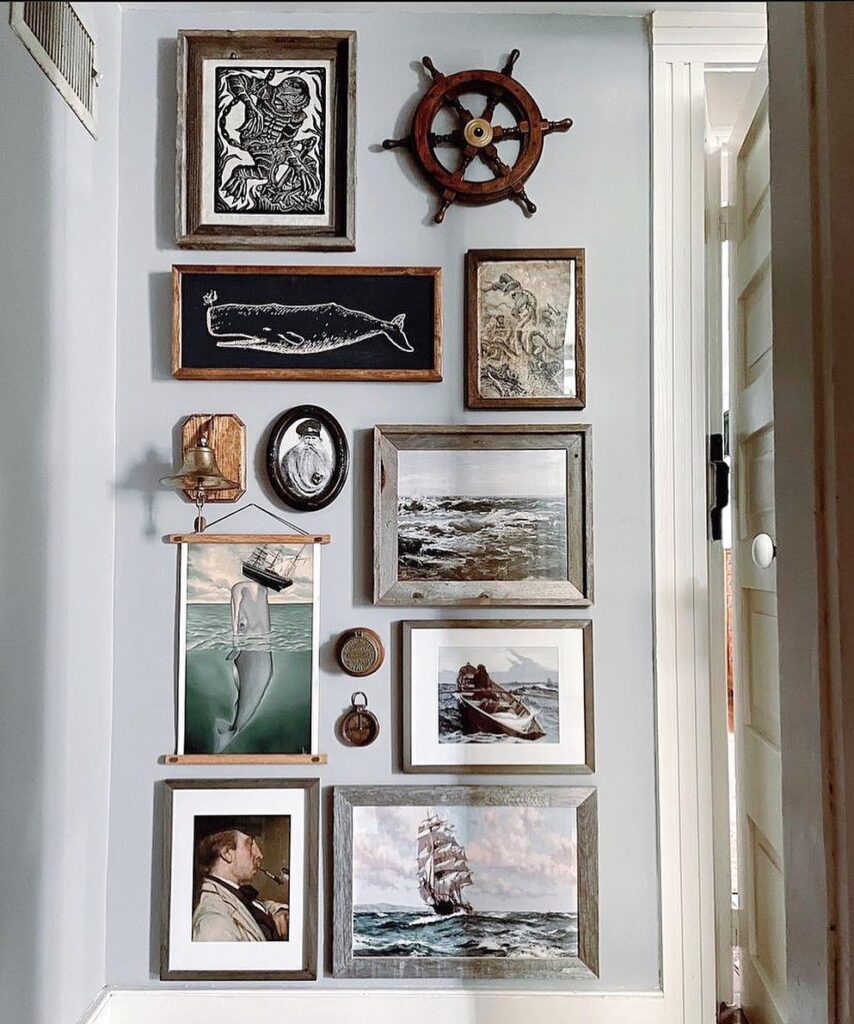
Lake house decorating ideas run from a small brass bell by the door to the serious cost of folding glass walls that erase the threshold entirely.
Some of these take a season to gather; others you could finish before the weekend is out.
I would test paint in three different lights before committing, since lake light shifts more than city light and the wrong blue turns muddy by dusk.
1. Nautical Touches
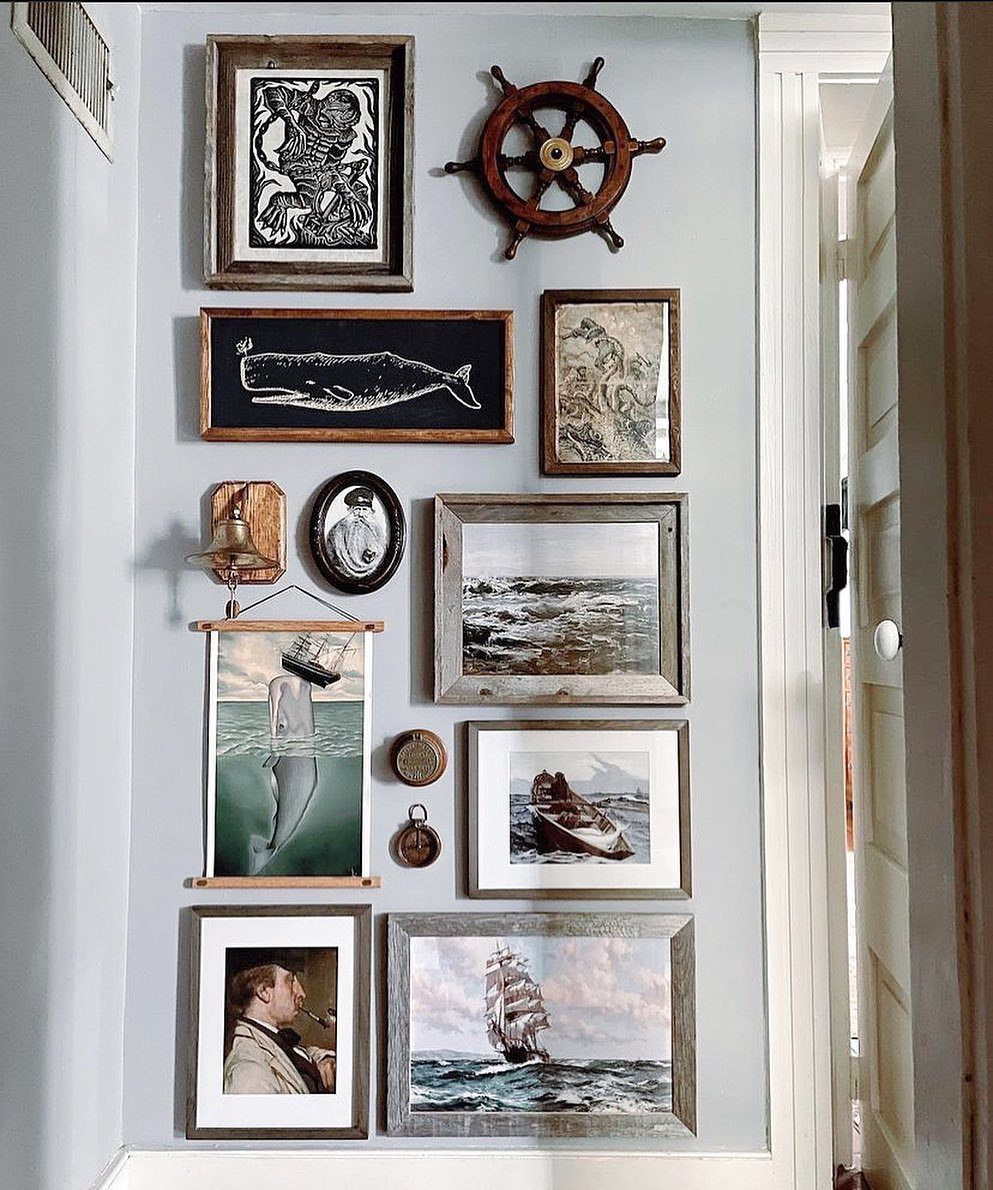
A ship’s wheel and brass bell on a light blue wall do not have to shout "yacht club."
I like the look best when one or two pieces carry the whole theme: a framed whale print, maybe a coil of rope around a glass jar.
Blue and white stripes work on a throw pillow or a single armchair, not every surface in the room.
Conch shells and driftwood fit the same mood without buying new. I found my best pieces walking the shoreline after a storm, though garden centers sell them too.
A small brass bell by the door costs less than most door chimes and sounds better than all of them.
This suits someone who wants the lake feeling inside without turning the place into a restaurant. Skip the red accents unless you already own a lot of navy; the soft turquoise route is easier to build over time.
2. Unique Decorative Accents
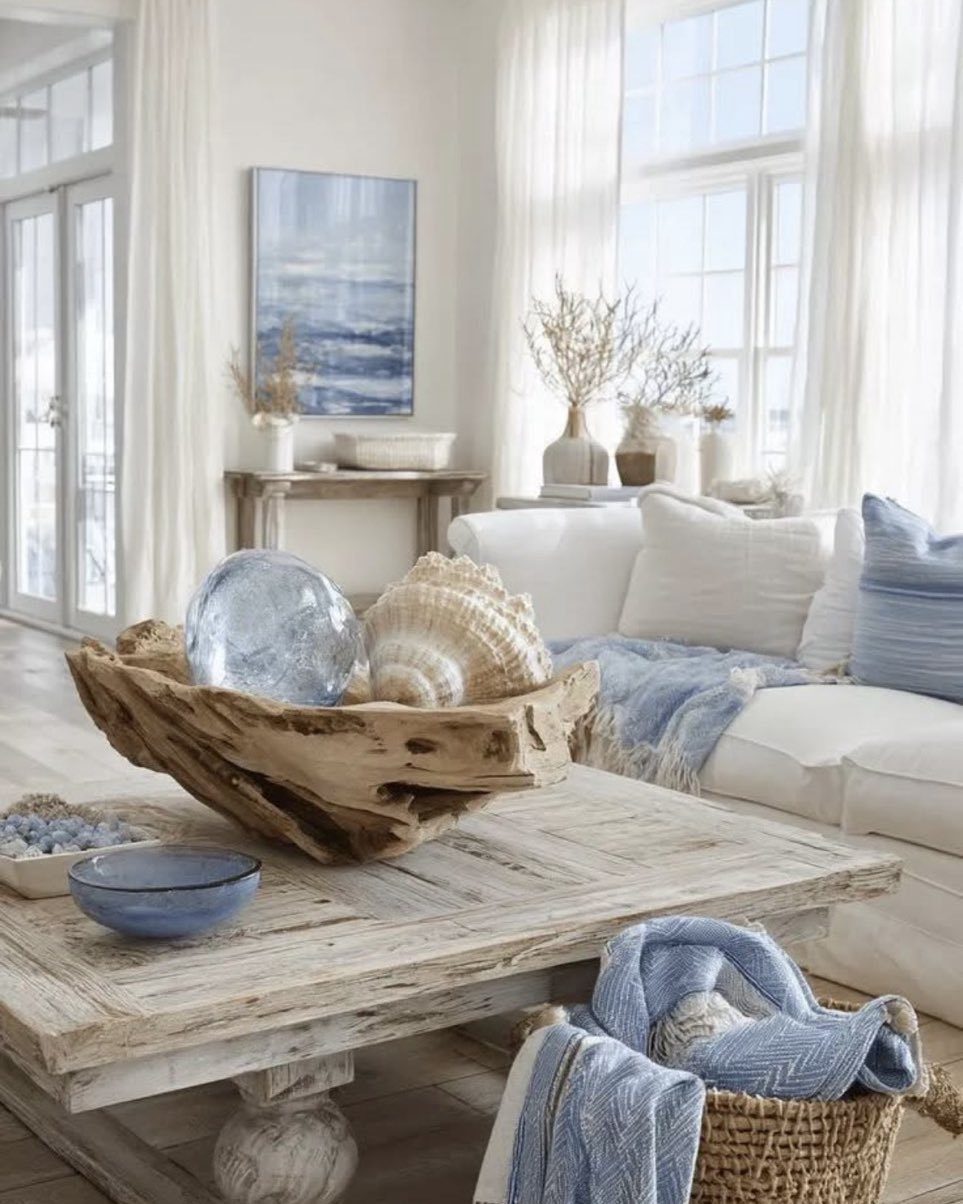
A driftwood bowl with one good shell and a glass sphere says more than a shelf of matched souvenirs.
Found objects carry the story better than anything shipped from a catalog: local stones from the beach path, a minnow bucket turned vase, a hand-painted sign from a yard sale up the road.
Vintage fishing gear works if it still has its patina. A rusted lure in a shadow box beats a reproduction any day.
Family heirlooms do the same work for free; my grandfather’s Navy dishes sit out all summer, and guests always ask about them.
This approach takes longer than buying a set, but the result looks collected, not decorated. Best for someone who visits the same lake often enough to gather pieces over seasons.
3. Mixing Modern and Rustic Styles
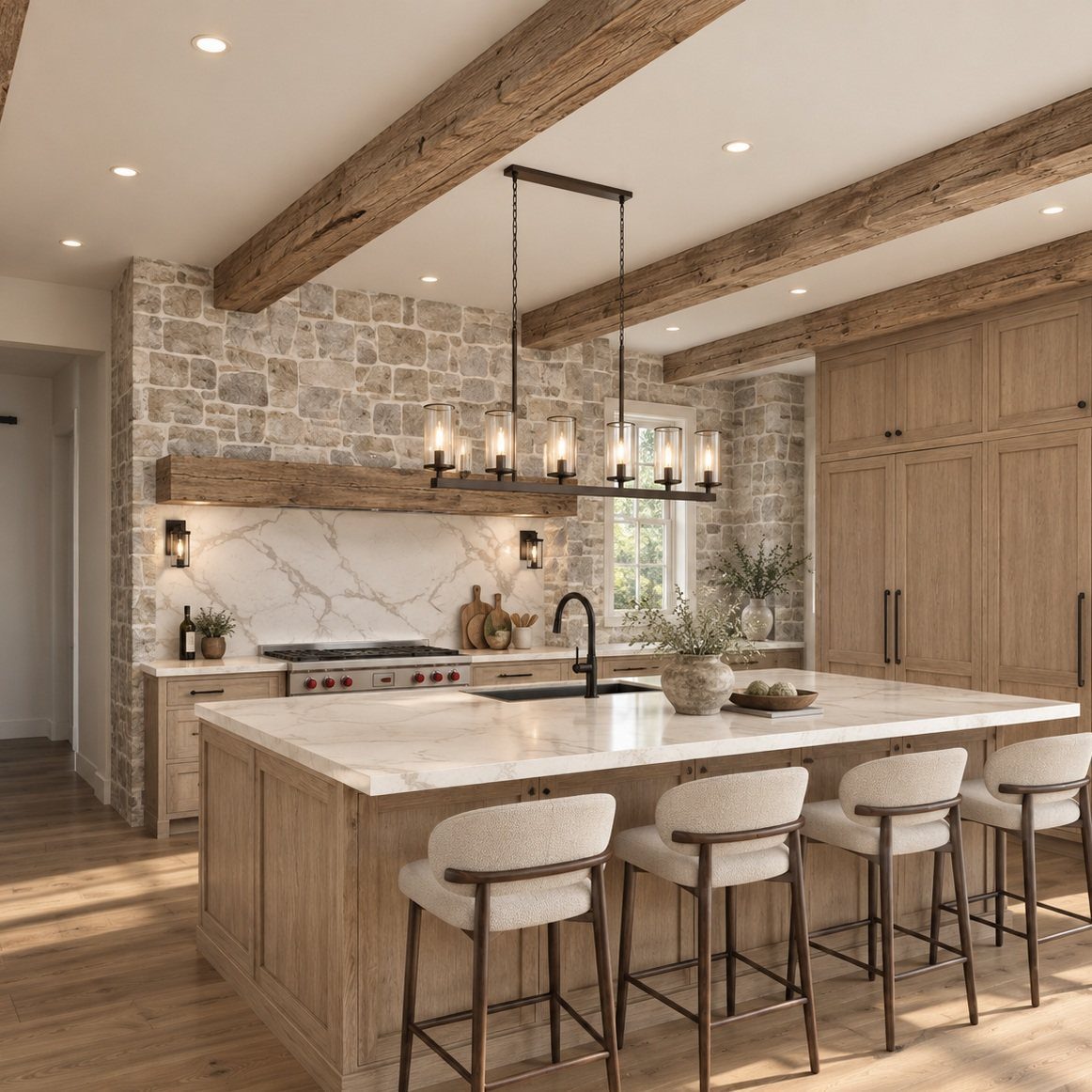
Exposed beams and a stone wall do not mean you are stuck with rough-hewn everything. Marble and upholstered seating pull it off when they read as deliberate, not apologetic.
I would add one modern piece per room: a geometric mirror, a single abstract canvas, a linear chandelier.
The balance matters. Too much rustic and the place feels like a set; too much modern and the beams look like a mistake.
I aim for about 60/40 either way, depending on which style I started with.
Stone and wood do the heavy work so the rest does not have to. Let the modern elements come in lighter: metal, glass, a bold color on one chair.
This works for someone who inherited the cabin’s bones but wants to actually live there, not time-travel.
4. Functional Mudroom Space
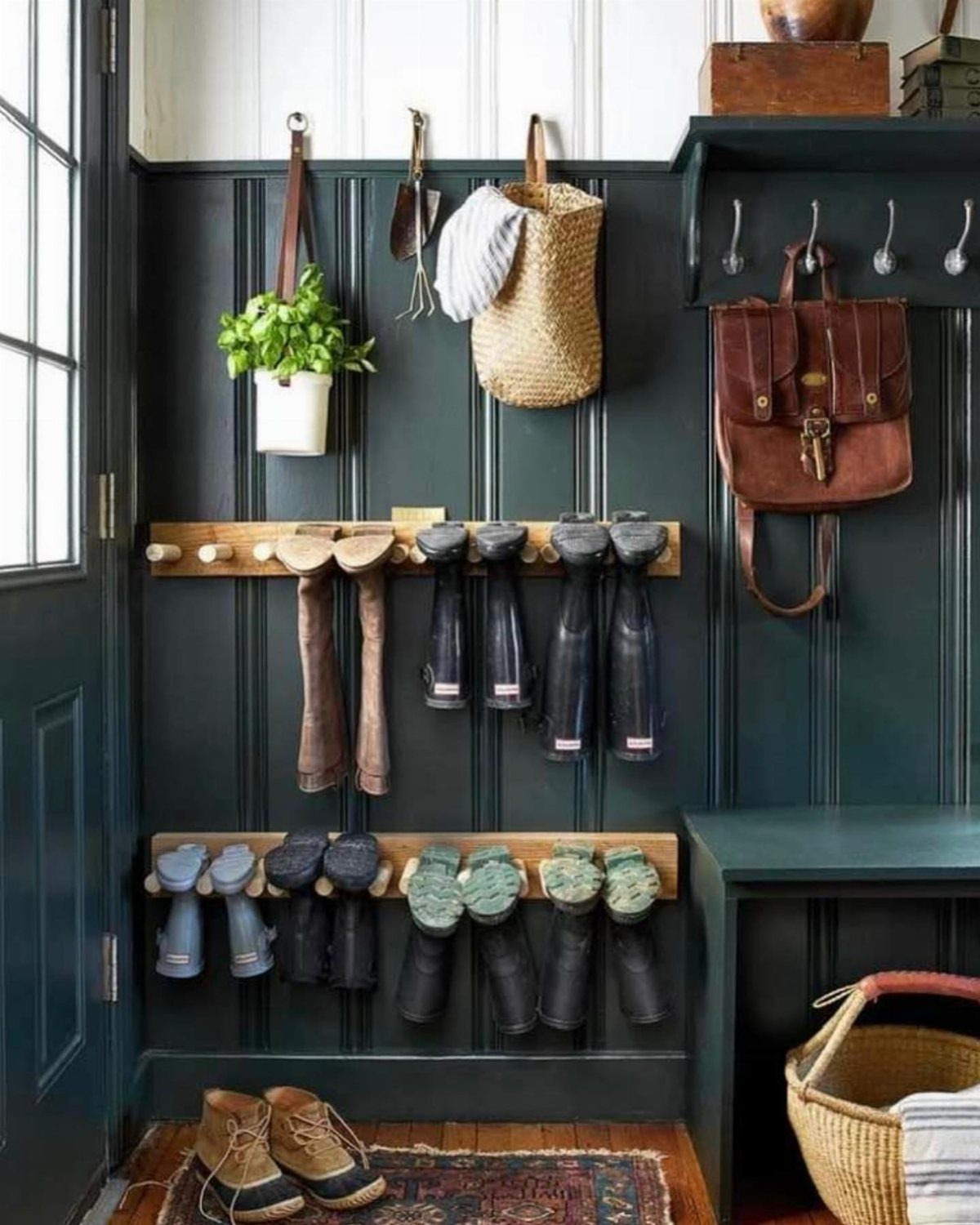
Painted paneling makes a boot rack look intentional, not like an afterthought. I would copy that color choice; it hides scuffs and pairs well with wood tones.
Two racks, one high for bags and one low for boots, keep the floor clear enough to actually walk through.
A bench is non-negotiable for pulling off wet footwear. Add a washable rug underneath; mine is a cheap cotton flatweave I replace every other year.
The pet shower mentioned in some lake house builds sounds nice, but a hose bib outside the door and a towel hook inside handle the same problem for a fraction of the cost.
This matters most for a house you use year-round or one that sees a lot of weekend guests. A summer-only place can get by with a covered porch and a mat.
5. Creating a Serene Atmosphere
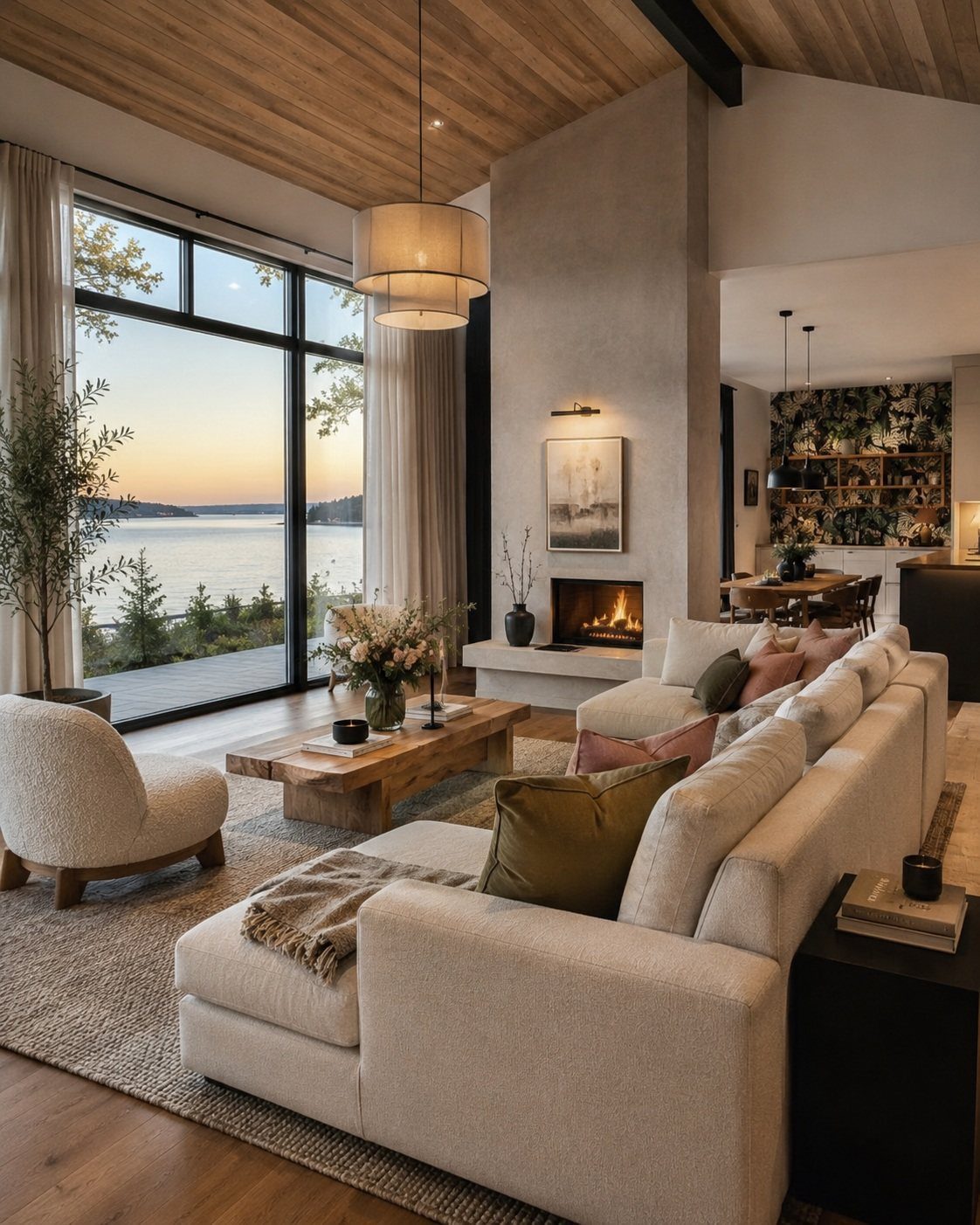
A wood ceiling and a neutral sofa frame the view instead of fighting it. I think the calm comes from keeping the interior quiet: no busy patterns, no colors that compete with the water.
A low console table with a single lamp achieves the same horizontal rest as a fireplace.
Soft furnishings do the actual work of relaxation. A deep sofa you can nap on, a wool throw in a tone that matches the stone outside, maybe two pillows total.
I would rather spend on one good linen curtain that moves in the breeze than on wall art for this room.
This suits anyone whose lake time is about recovery, not entertainment. A quiet space can feel too still for a crowd; add a second, brighter sitting area if you host often.
6. Using Seasonal Decor
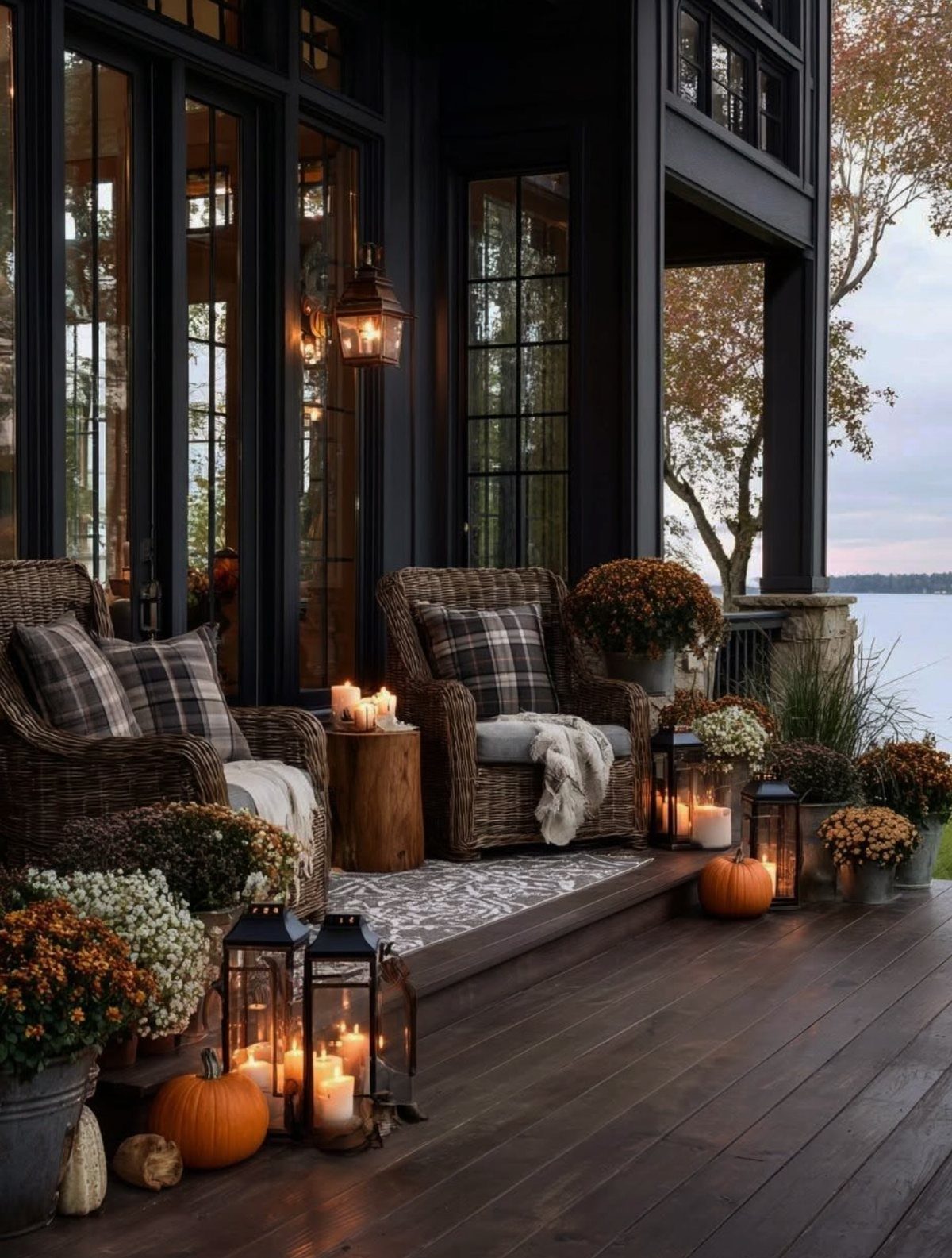
I change out pillows and one lantern arrangement with the seasons; the rest stays put. Mums in canvas pots last long enough for the season without asking much of you.
I would buy those in a neutral and rotate the cheaper pieces around them: a red-white-blue scheme from Memorial Day to Labor Day, the warm tones after that. A single strand of white lights stays up through winter.
This keeps the place feeling tended without much money or storage. Best for someone who visits the lake house often enough to enjoy each shift, not for a rental you stage once and forget.
7. Screened in Porch
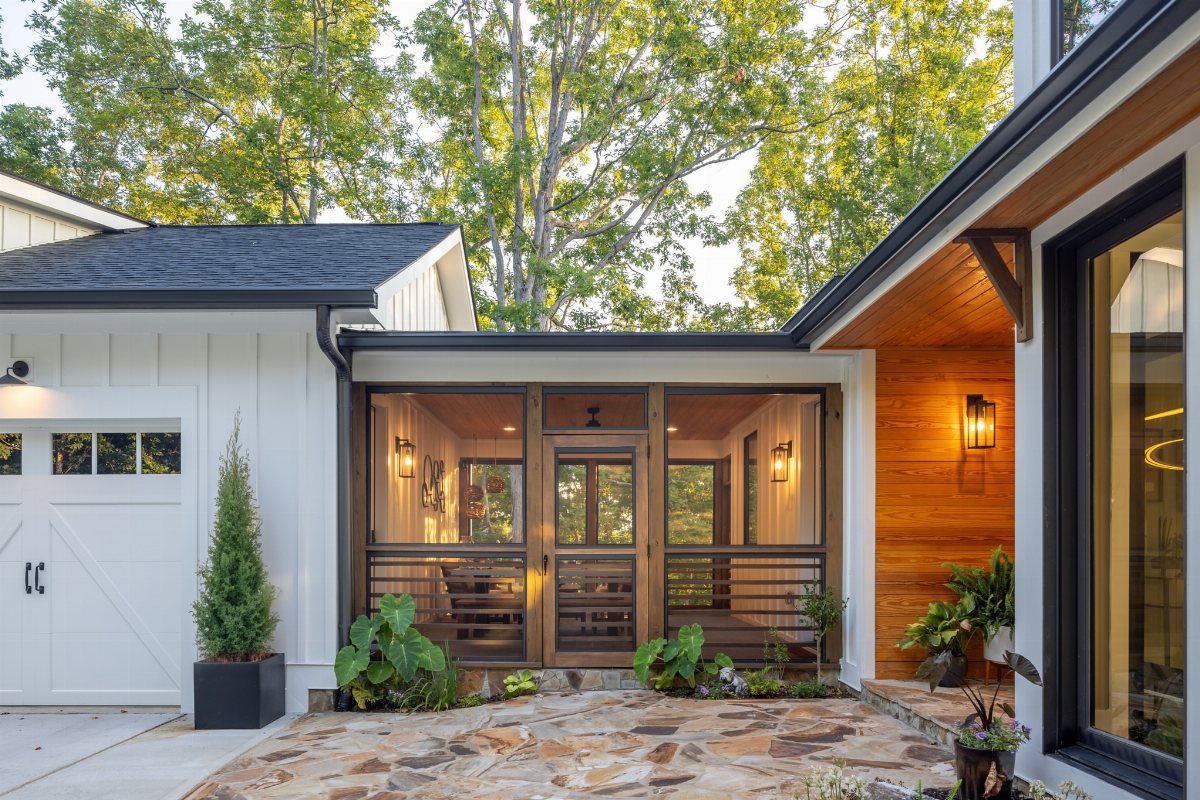
A screened-in porch buys you full evenings outside without the mosquito tax. Dark framing against white siding keeps it modern, and a porch swing gives you one seat that actually makes you slow down.
Cafe lights strung overhead turn the space useful after sunset. One builder I know runs them along the screen frame so the glow stays soft, not interrogation-grade.
Stone or brick underfoot handles wet boots better than wood, and a small table with chairs covers both morning coffee and a late dinner.
This suits anyone who keeps ending up back inside once evening hits because the bugs won. Cleaning pollen off screens each spring takes an afternoon and a hose.
8. Nature-inspired Color Palette
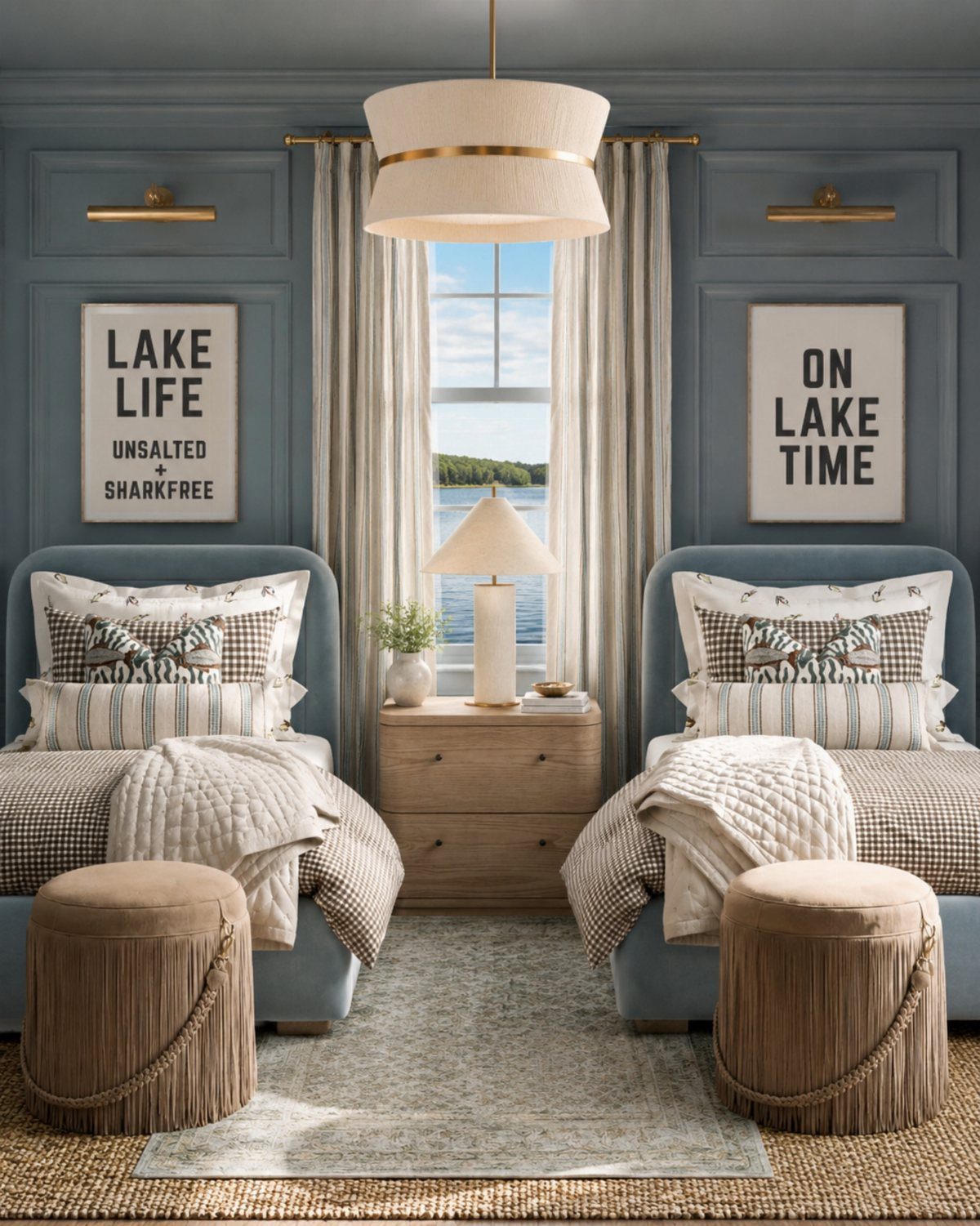
Blue walls in a lake bedroom work because the color already exists outside your window; you are not inventing a mood, just continuing one.
Leafy greens, warm beiges, and the odd berry tone do the same, pulled from whatever landscape you actually have.
Stay quiet enough with color that the view outside still reads as the main event. Too many competing colors and the room starts shouting over the water.
I’d test paint samples in morning sun, overcast afternoon, and lamplight after dark, since lake light shifts more than city light.
Crisp white trim or soft gray furniture keeps earthy walls from going muddy. Check your own shoreline before buying: a pine-heavy property carries different tones than open water or red clay banks.
9. Cozy Gathering Spaces
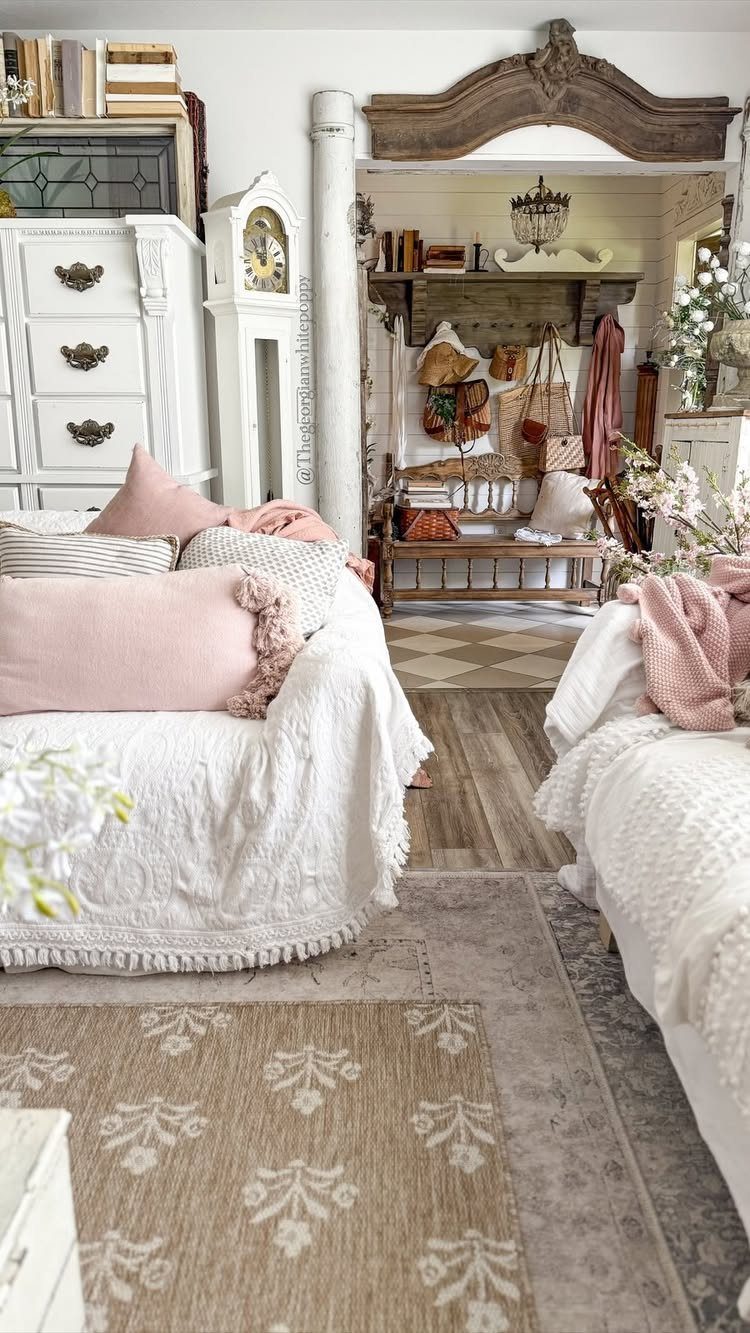
Soft area rugs over hardwood keep the room from echoing when a crowd is talking at once.
Plush pillows in mixed fabrics let guests rearrange without everything looking staged. Quilt throws stacked within arm’s reach mean someone can grab warmth when the group moves outside after dinner.
One host I follow keeps hers in a wooden bench by the door, ready for the deck or the dock.
The fireplace or lake view is your anchor; everything else faces it. This setup suits people who host long weekends and need the living room to still feel welcoming at hour four of conversation.
The cost lands in textiles, not furniture.
10. Water-inspired Bedding
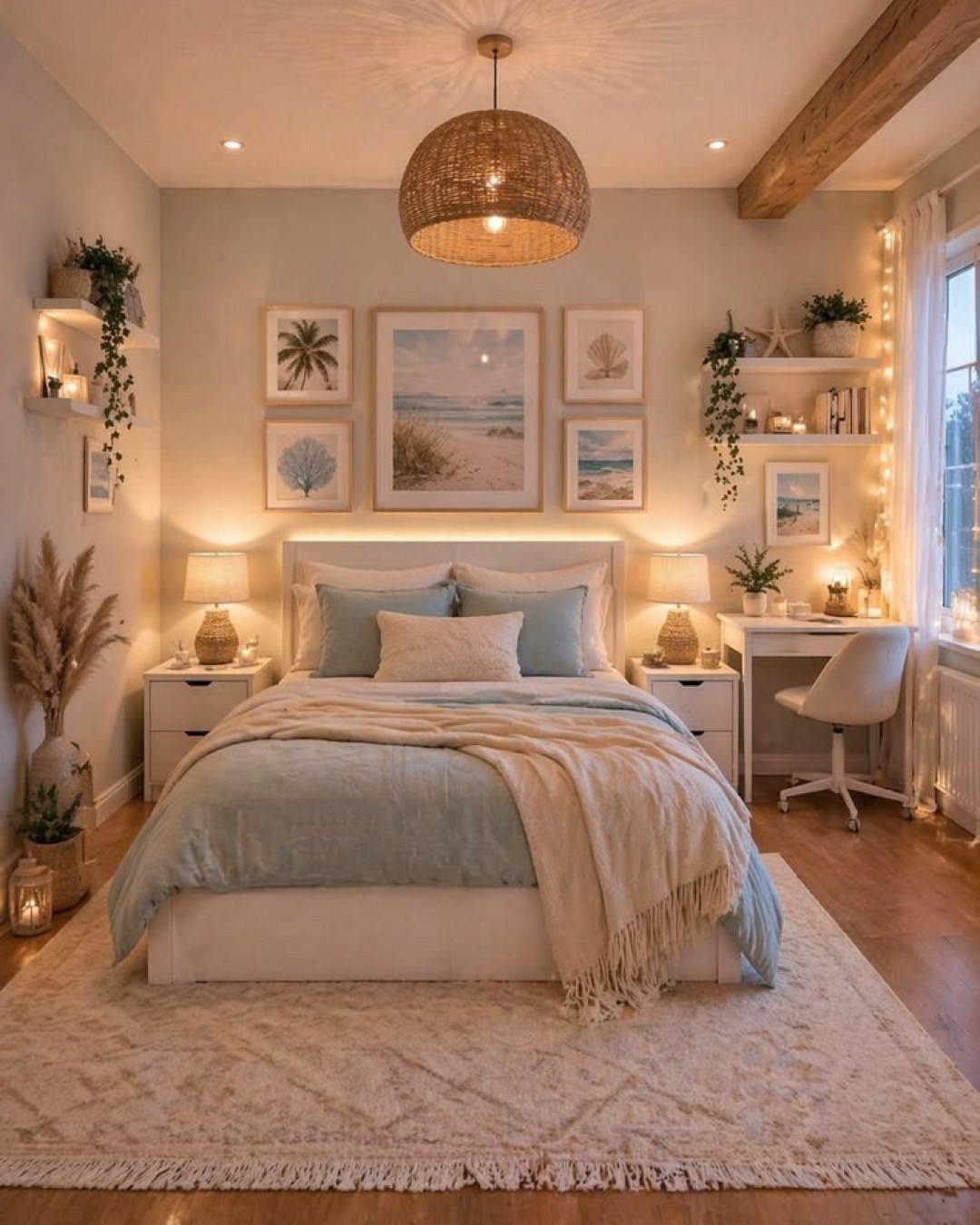
Light blue bedding with cream layers reads lake without needing literal boat prints. The water-inspired part is the color story, not the novelty motif; seashell or coral patterns work only if they match your actual shoreline.
Plush textures matter more than pattern. A textured throw or seagrass-woven details give you the sense of soft movement without literal wave stripes across the bed.
I’d start with solid linens in a blue that matches your morning water, then add one patterned piece if the room still feels flat.
Crisp, clean edges on the pillows keep it from going beach-kitsch. Check your light: north-facing lake bedrooms stay cooler in tone, so a warmer cream balances better than gray.
South-facing rooms can handle bluer whites without feeling cold.
11. Revamped Outdoor Living Space
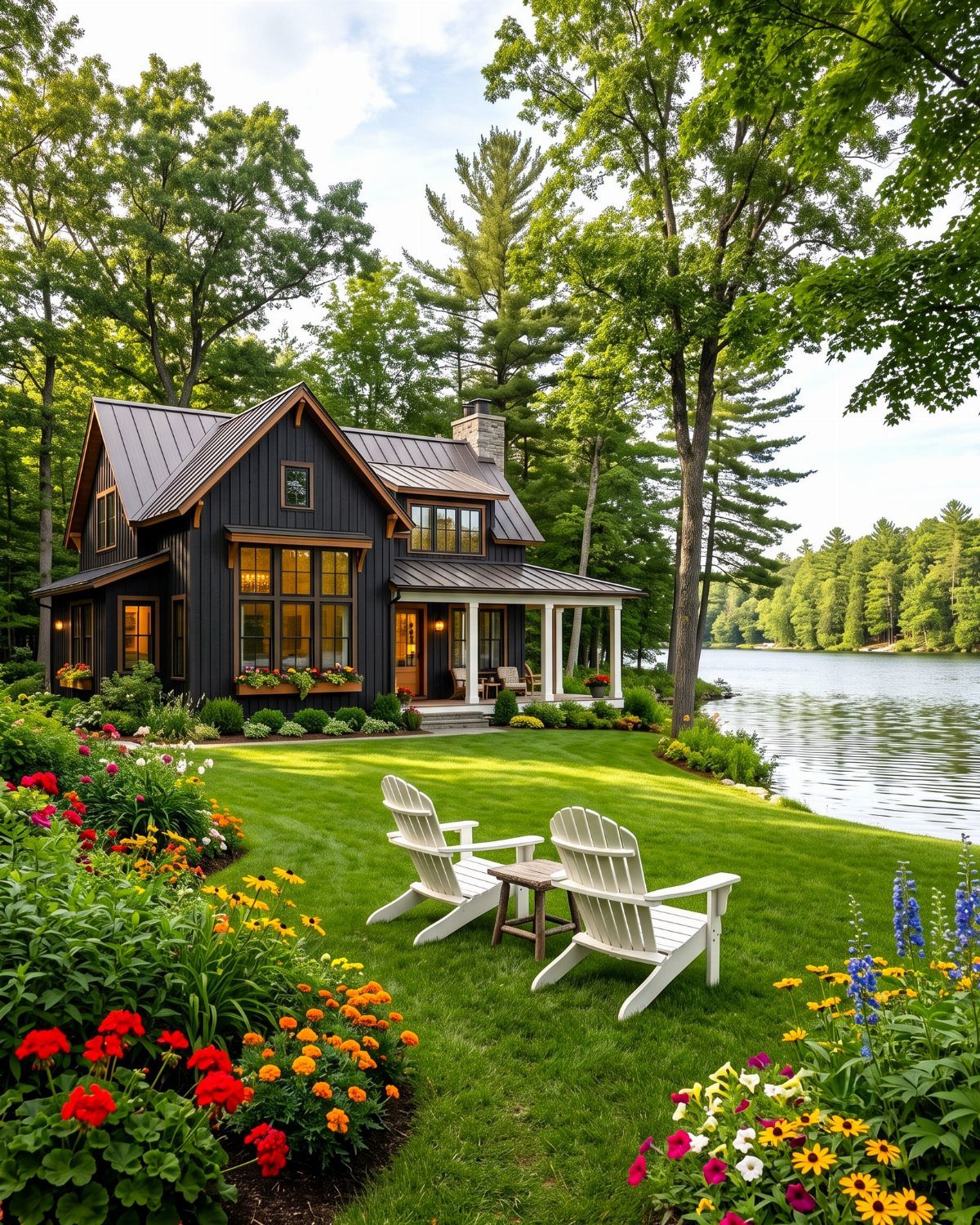
Two white Adirondack chairs facing calm water is the whole idea in miniature: seating aimed at the lake, not at each other, because the view is the host.
A rustic table or fire pit between them gives you somewhere to set a drink without everyone twisting around.
Cozy cushions and quilted throws extend the usable hours past sunset. String lights overhead, not wrapped around trees where they attract bugs to your head; a single strand along a branch or pergola edge keeps light soft and low.
Running the same flooring material from inside to the patio edge keeps the threshold from interrupting the flow.
This works best for people who entertain in shifts, some inside, some out. Cushions need a dry bin or they mildew once summer humidity sets in.
12. Wall Art Celebrating Nature
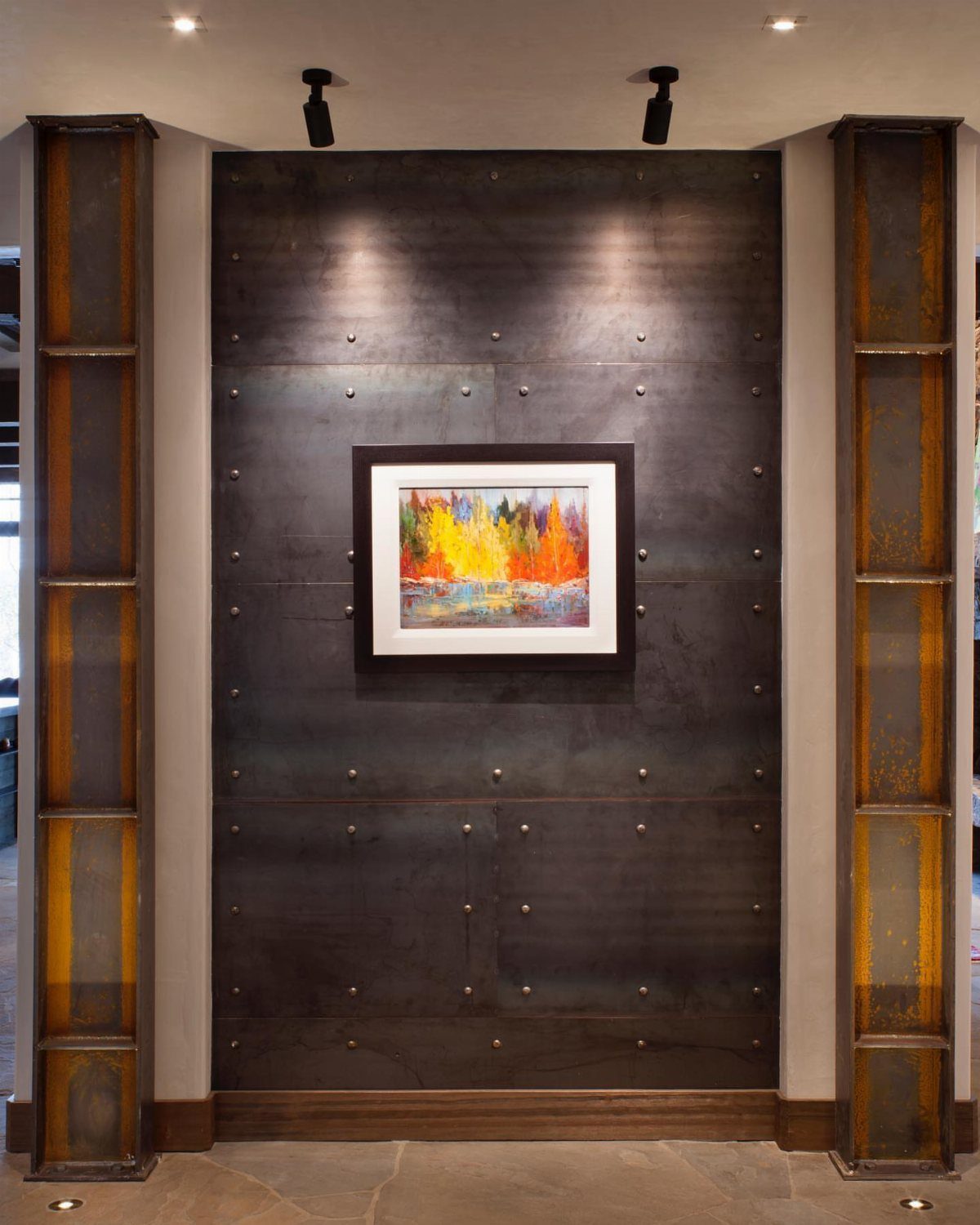
A single landscape painting hung on dark metal, flanked by nothing fussy, is how nature art works when the piece itself has weight.
Panoramic photography at dawn or sunset captures the lake’s color shifts without competing with the actual window views.
Local wildlife or flora pieces, kept small and grouped, highlight details guests might miss from the dock: the heron that fishes the north cove, the particular fern that carpets the shallows.
One builder I follow pairs wooden frames with industrial backdrops so the art does not read as cabin kitsch.
Mixing textures matters more than matching subjects. A rusted steel beam beside a framed watercolor keeps both honest.
This suits owners who want the walls to say something specific about this lake, not any lake. The risk is over-curation; one strong piece usually wins over a wall of similar prints.
13. Creating Indoor-outdoor Flow
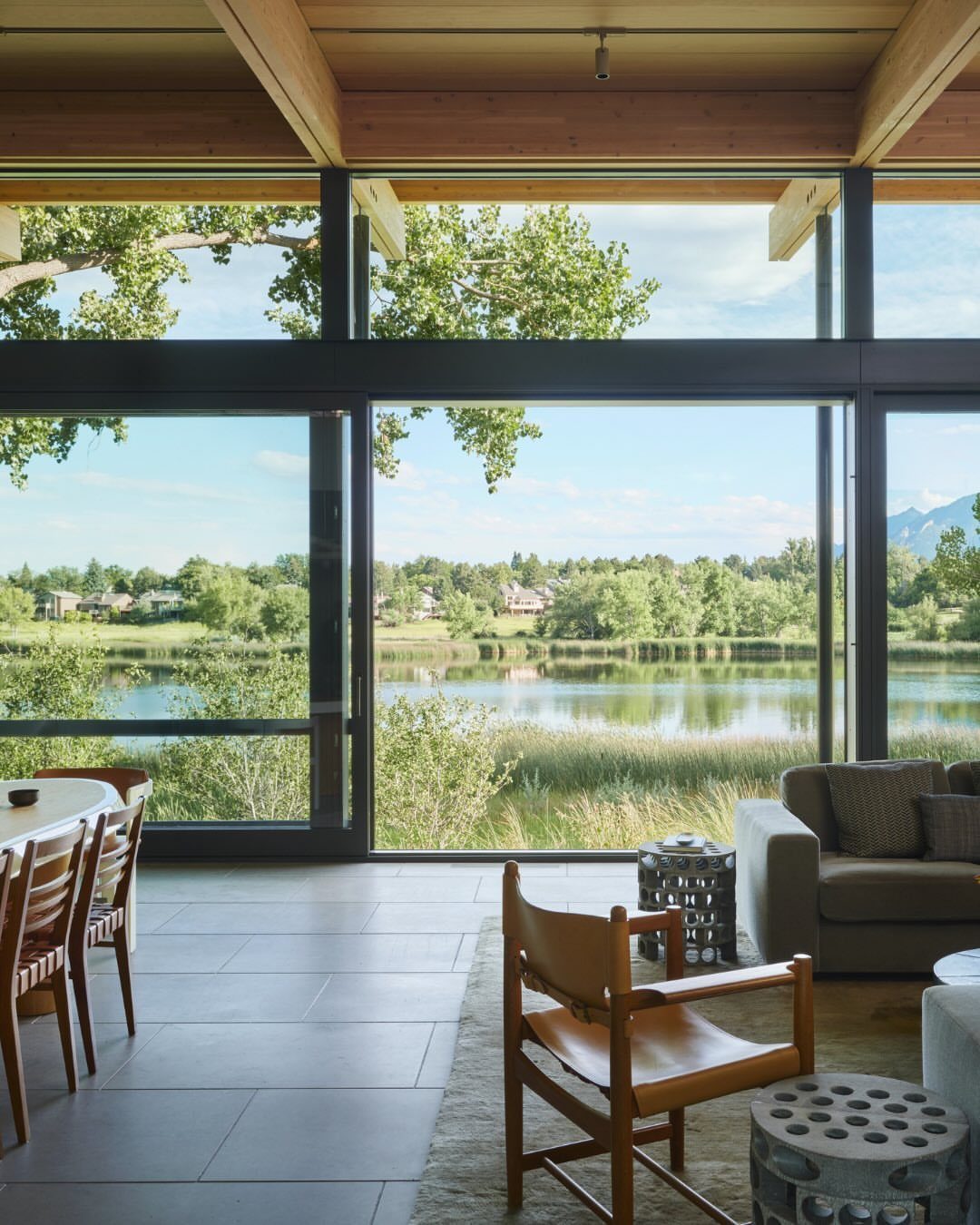
Glass walls that actually open change how you live in a lake house. On calm mornings I slide ours back and the living room becomes a covered porch with the same stone tile running straight through.
Matching the floor level and the material does the work; even a close color match reads as two zones instead of one stretch of space.
If your doors are standard height, the effect still works with a wider slider and a deck built flush to the threshold. Continuity matters more than square footage.
Best for: new builds or serious renovations. Retrofitting floor levels gets expensive fast, and the hardware for quality folding walls runs higher than standard sliders.
A pocketing multi-slide door gives most of the feel at a lower cost.
14. Layering Textures
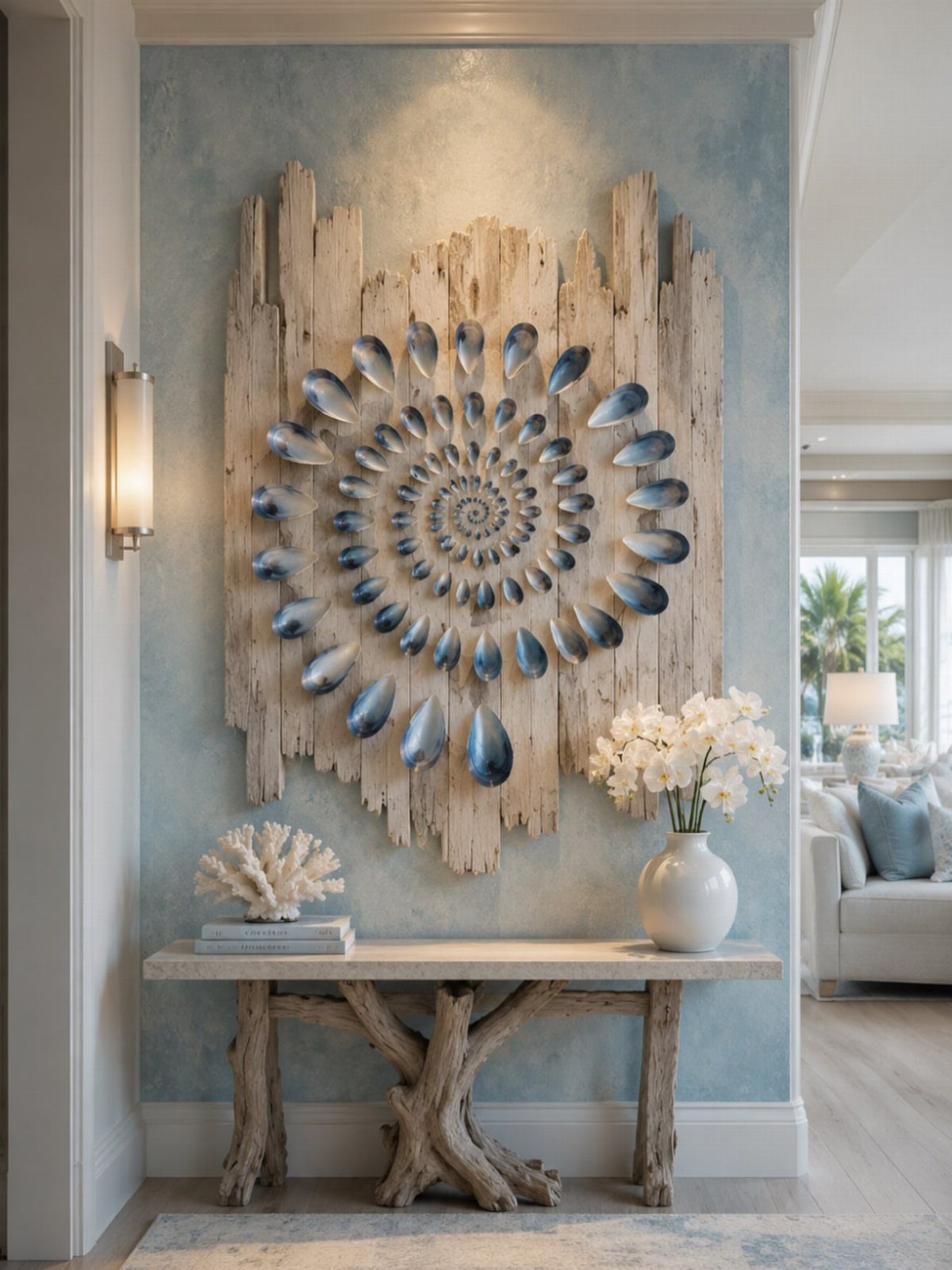
A lake house can feel flat fast, all that open light and bare wood.
I build depth by stacking materials that read differently up close than from across the room: nubby linen on the sofa, a tighter cotton weave on pillows, a single heavy wool throw folded at the arm.
A driftwood-and-stone console carries the same principle into hard surfaces; rough against smooth, matte against slight sheen.
Start with one anchor texture, usually the biggest piece, then add contrast in smaller doses. Three distinct weaves in one sightline is about my limit before it turns busy.
Skip this if you prefer a cleaner, more modern look. Layering reads cozy; it can also read cluttered in a small room with too many competing surfaces.
15. Use of Natural Materials
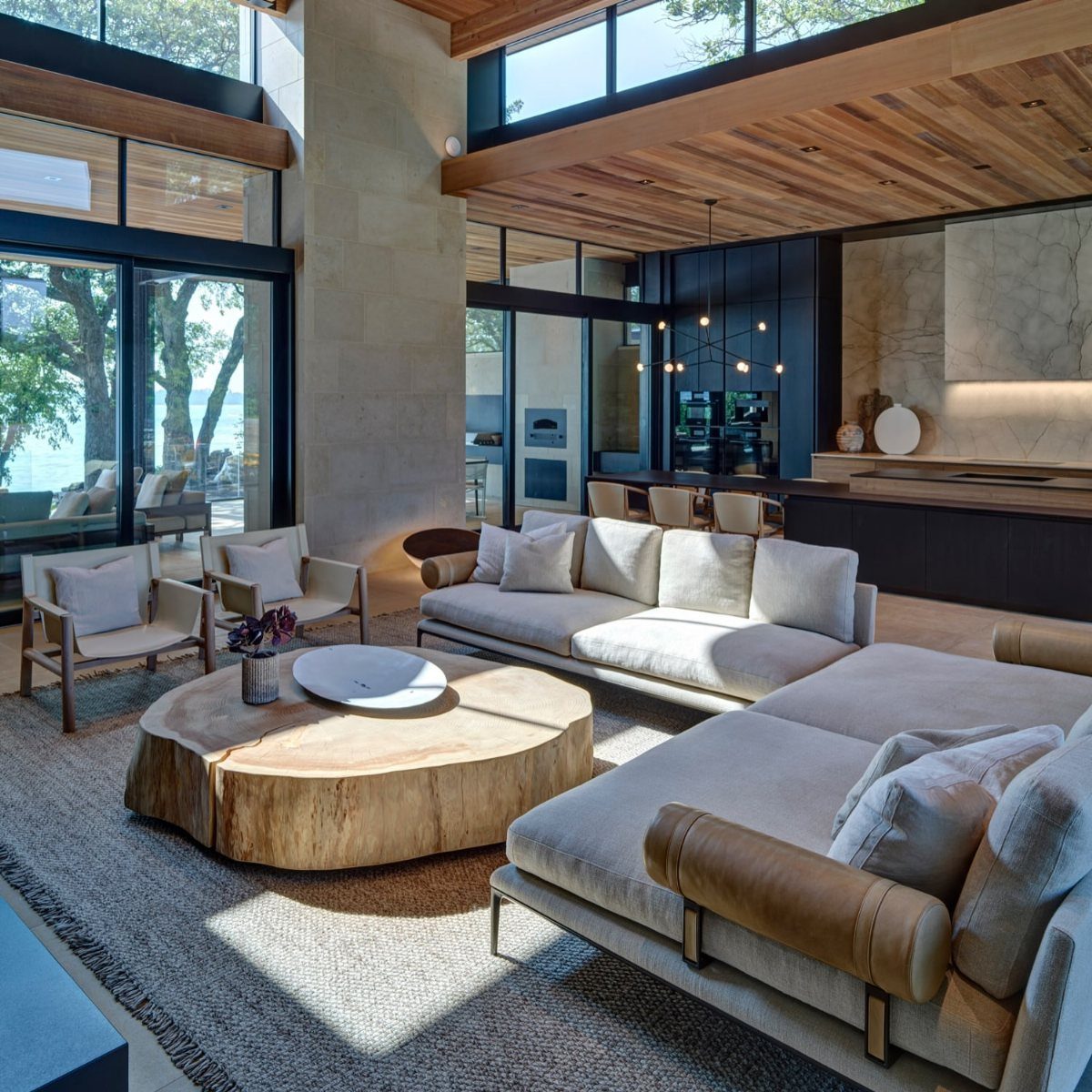
Wood and stone do the heavy lifting in a lake house because they already belong outside the window.
I look for live-edge slabs with the bark line still visible, or ceiling planks with enough grain variation that no run matches the next.
Stone works best when it has some heft: a full wall, a massive column, a hearth you could sit on. Thin veneer over drywall catches light wrong and ages poorly around lake humidity.
Exposed beams are the classic move, though faking them with boxed lumber rarely fools anyone who looks up.
If your ceiling won’t take the weight or the budget, a plank ceiling in the same tone gives much of the warmth without the structural work.
Wicker and rattan fit the same mood in lighter pieces, chairs and pendants that let air through. They also travel better than solid wood if this is a second home you close up for months.
Even new lake houses should feel a little old, and the materials used in new builds and remodels alike should age gracefully over time—think classics like knotty pine walls, beadboard paneling in an entryway, and wonky wood floors scattered throughout.
16. Incorporating Rustic Elements
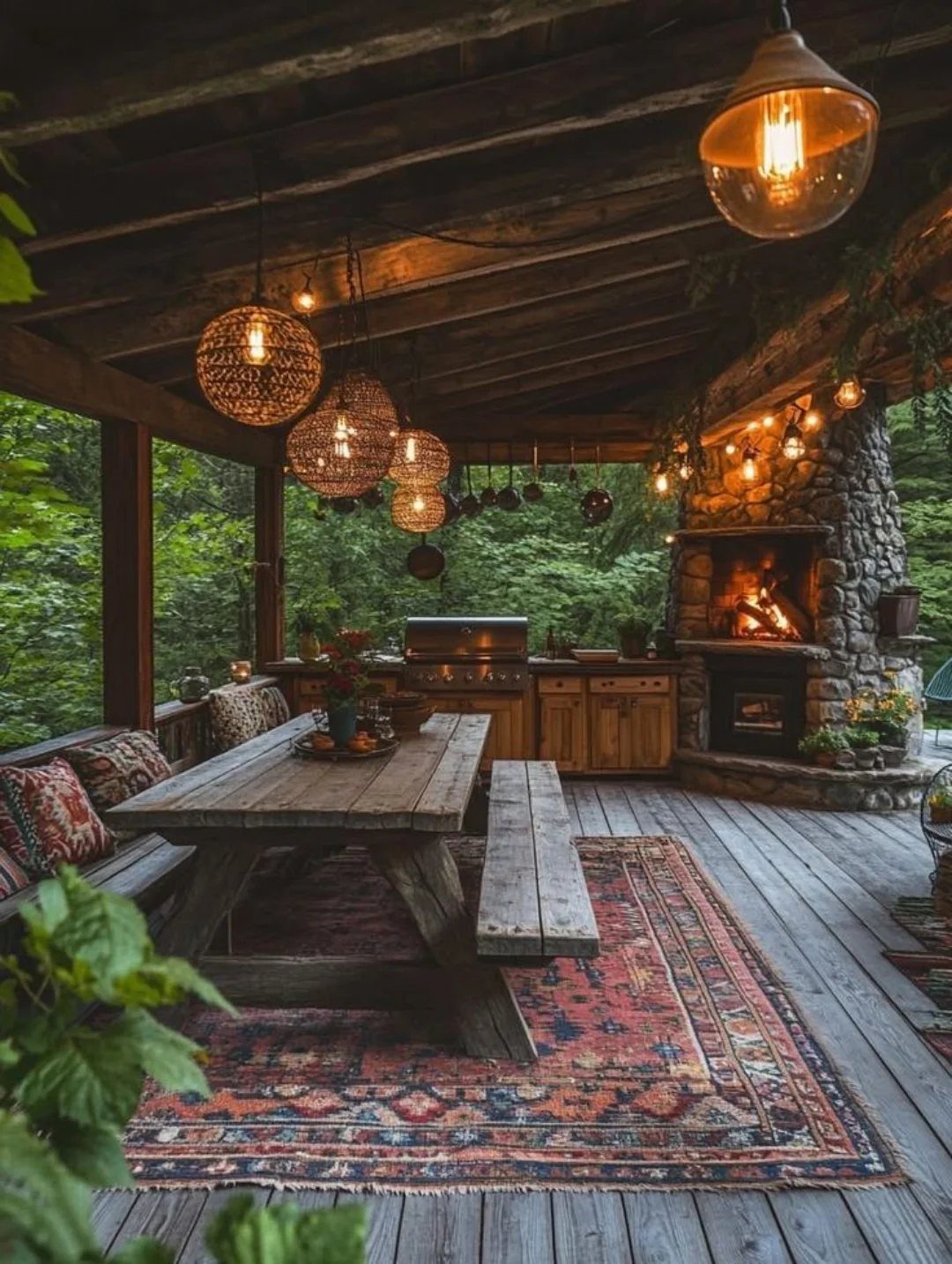
Reclaimed wood carries instant history that new lumber spends years trying to fake. I hunt for barn siding with the original paint still clinging in patches, or joist beams rough-sawn enough to show circular saw marks.
A hand-built picnic table gets it right; the boards are thick enough to cup slightly, the joints are visible, nothing is sanded to furniture-shop smoothness.
Metal accents keep rustic from sliding into pure cabin cliché. A galvanized pendant, iron shelf brackets, or a patinated steel fireplace surround adds the workshop note that makes the wood feel chosen rather than default.
Vintage finds should earn their place functionally, not just as props. An old wooden oar works as a wall piece if you actually row; otherwise it is theme-park decor.
The same rule applies to metal signs, buoys, and all the easy lake-house kitsch. One or two pieces with real use behind them beat a shelf of purchased nostalgia.
Budget-friendly Decorating Tips
Secondhand artwork costs a fraction of gallery prices and often carries the patina that fits a lake house better than something new.
I would check local thrift stores and yard sales near the water; lake communities clear out cabins every spring and the pieces that surface there already match the mood.
A fresh wall color changes the whole room for the price of a few gallons. Upcycling old decor works the same way: an ottoman recovered in striped canvas, a minnow bucket scrubbed and planted, a wooden ladder turned towel rack.
Portable seating, especially ottomans, let you shift the gathering outside without dragging fixed furniture around.
Removing clutter costs nothing and reads as intentional in a small space. New linens finish the look without the commitment of reupholstering; cotton or linen in a solid lake color refreshes a bedroom in an afternoon.
Maximizing Natural Light
Seating aimed at the window rather than the wall changes how a room feels.
I would place the sofa and the main chair to face the largest glass, not the fireplace or the TV, so the water sits in your peripheral vision even when you are not looking directly at it.
Light colors on walls and floors bounce what daylight you have deeper into the room. White or pale gray trim around the windows reads as part of the view rather than a frame competing with it.
This matters most in rooms that face north or sit under deep porch overhangs, where the light stays soft all day.
The payoff is not just the look. Morning sun on the water through a window you are actually facing beats a mood lamp for waking up in a good head.
Creating a Welcoming Atmosphere
Beige and wood, the blues and greens of water and shore, let the outside set the palette instead of forcing one on top of it.
I would add one brighter note, something like sunflower yellow or a pink pulled from a local sunset, in a pillow or a small vase that can move around.
Thick pillows, soft rugs, fabrics that invite you to collapse into them, comfort comes from these more than from how the furniture is arranged.
The seating should invite rearrangement; guests at a lake house tend to shift with the light and the conversation, and a room that resists that starts to feel like a showroom.
Personal touches matter, but I would keep them specific to this place: a stone from the beach path, a photo taken from this dock, not generic "lake" signs shipped from anywhere.
Frequently Asked Questions
What colors are good for a lake house?
Blues, leafy greens, warm beiges, and berry tones pulled from your actual shoreline work best because they continue the view outside rather than inventing a new mood. White trim or pale gray furniture keeps earth tones clean instead of heavy.
What are some must-haves for a lake house?
Comfortable furniture aimed at the view, cozy textiles for when temperatures drop, and a functional mudroom or entry for wet boots and gear.
A screened porch stretches the evening outside, and a hose bib by the door with a towel hook just inside handles muddy feet without building a dog wash. Deep seating you can nap on matters more than matching sets.
How to decorate a lake house on a budget?
Found objects carry the story better than catalog pieces: local stones from the beach path, a minnow bucket turned vase, driftwood and conch shells gathered after a storm.
One big piece on a wall beats a grid of matching prints, and a brass bell by the door rings louder than anything battery-powered.