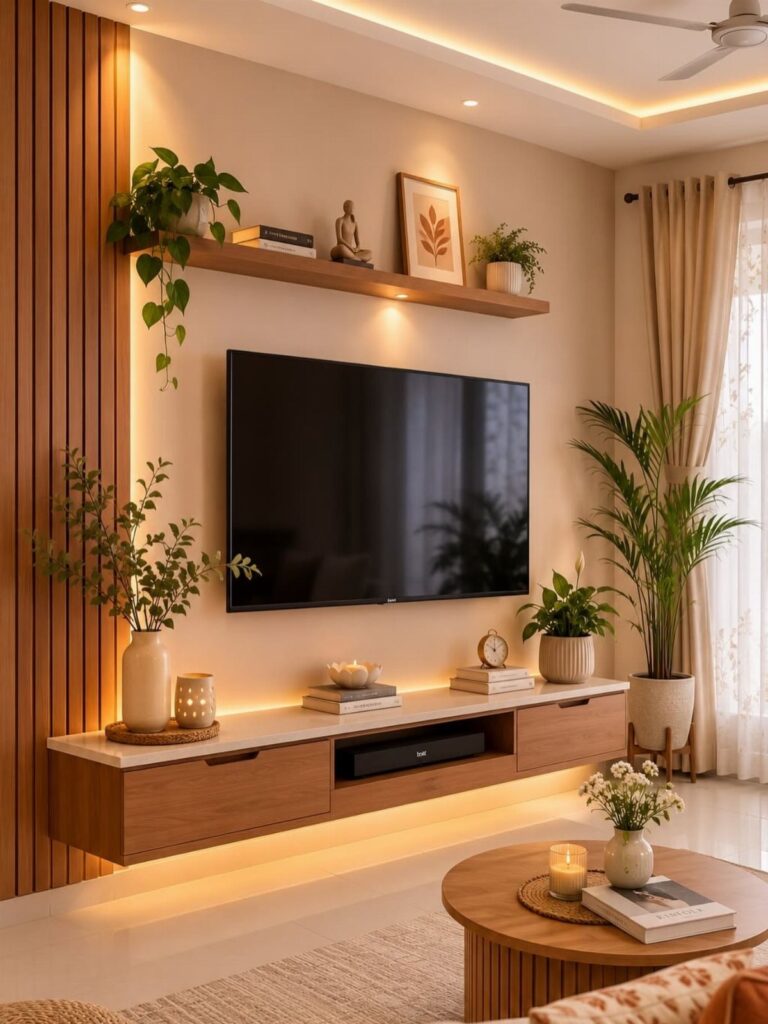
These ideas run from a simple LED strip to a full lumber-and-drywall build, and the one that fits you depends on whether you own the wall you’re drilling into.
1. Embrace Corners
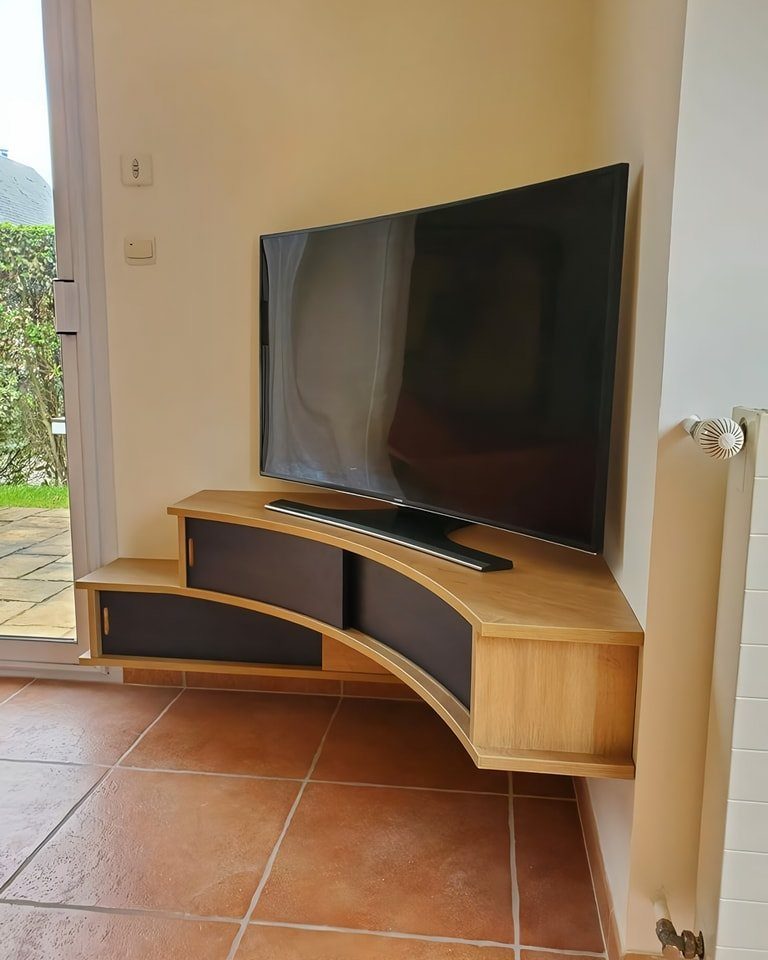
A corner console angles the screen toward your seating without eating the wall you might need for a sofa. Most corner units tuck wires behind curved backs so the mess disappears.
I like ones with a cabinet or two underneath for the router and remotes, since corner space is awkward for anything else anyway.
This works best when your room is basically a box and the only open wall faces a window or a door you can’t block. Viewing angle matters; sit too far off-center and the picture washes out.
If you watch mostly at night from one main spot, though, a corner mount buys you back real estate for an extra chair or a wider rug.
2. Accent Wall Behind TV
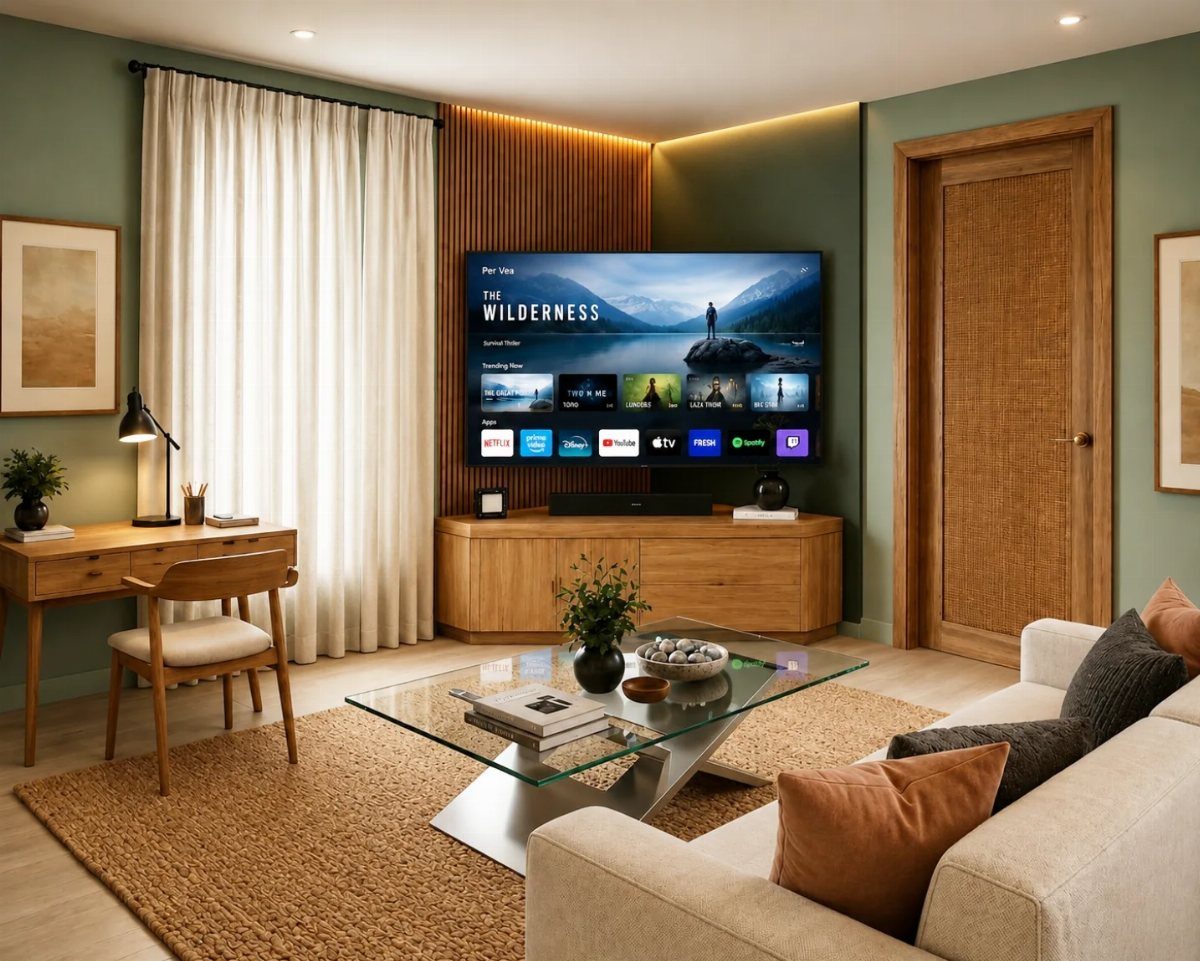
Paint or paper behind the TV turns the black rectangle into something intentional. Matte finishes and low-contrast patterns keep the screen from fighting its background; vertical panel lines or simple wood slats read as texture, not distraction.
Peel-and-stick wallpaper in a geometric print takes an afternoon and comes back off when you move.
What changes the answer is how much wall you have. A full accent wall needs enough space to look deliberate, not accidental.
In tighter spots, I paint just the panel or shelf zone and flank it with a couple framed prints in black-and-white or brass sconces. Stop before it becomes a gallery wall competing with whatever’s on screen.
3. Statement Sofa
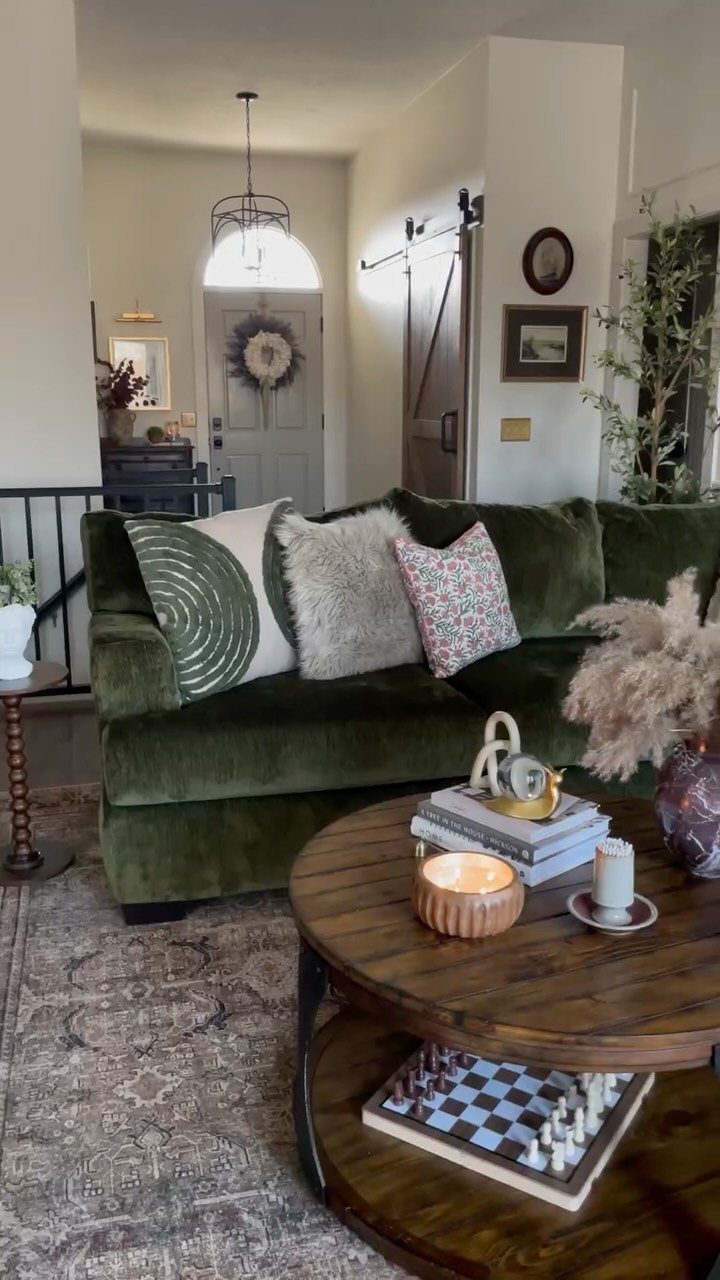
A bold sofa steals focus from the television by default. Velvet in olive or deep green, tufting, a curve to the back: these read as the room’s personality, not its furniture budget.
A three-seater fills most of one wall, paired with a round wood coffee table light enough to move when you need floor space.
For renters or anyone who might need that room to sleep a guest, a sofa bed in a statement fabric does both jobs.
The one I keep in mind converts without looking like it converts, which matters when the living room is also what people see first.
Either way, let the sofa anchor and keep the TV wall simple; two fights for attention in one small room and both lose.
4. Wall-mounted TV
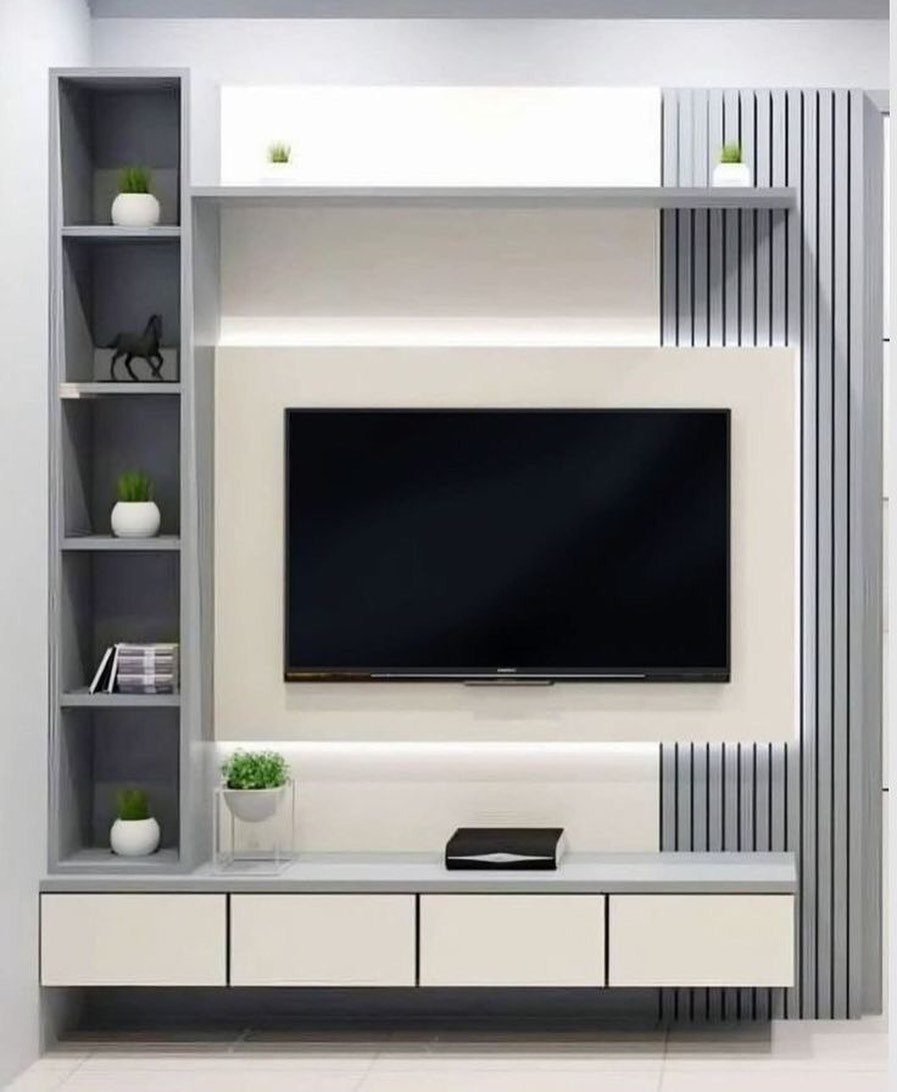
Wall-mounting lifts the screen off the furniture entirely, which means the console underneath can be narrow, floating, or skipped. The bracket itself is cheap enough that finding studs matters more than the brand.
I mounted mine at seated eye level and found I gained back floor depth where the old stand’s legs used to sprawl.
What opens up underneath is up to you. A single floating shelf for the soundbar, a slim cabinet for games, or nothing at all if you stream everything.
Cables route through the wall or a paintable channel; the channel costs less and installs fast. This suits anyone whose small room also serves as a walkway to somewhere else.
5. Open Shelving
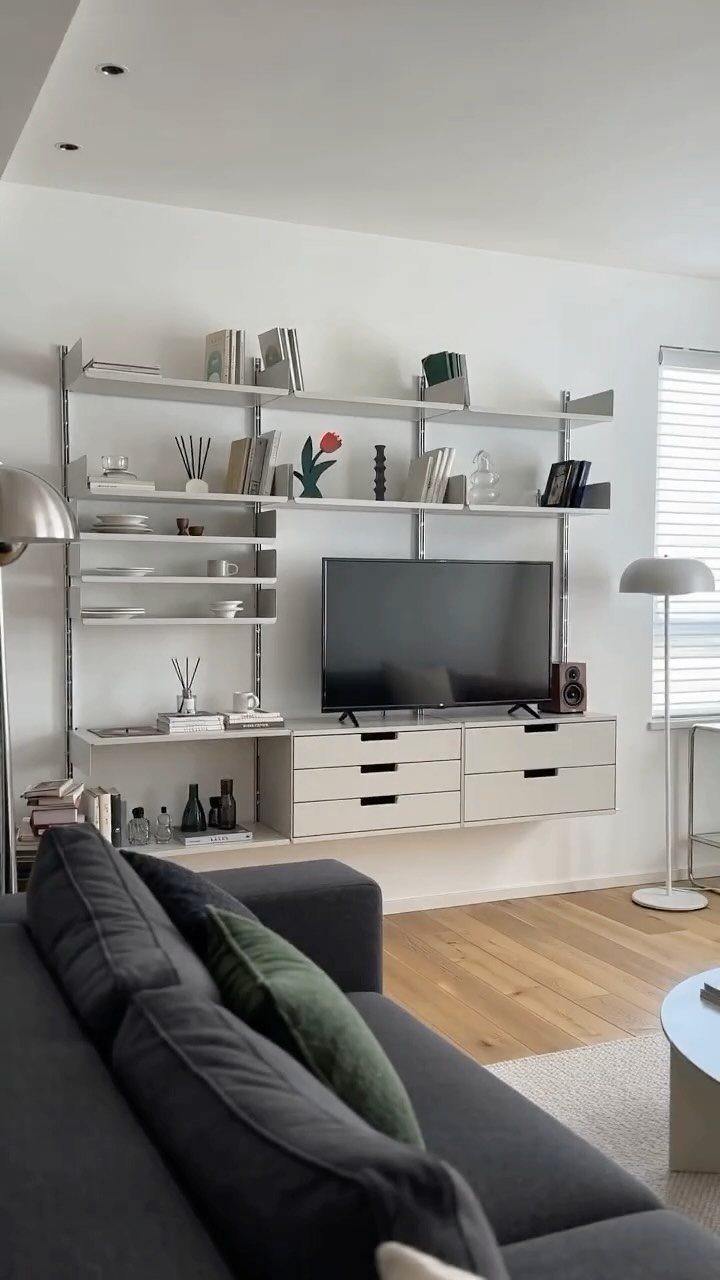
Open shelving wraps the television into the wall’s rhythm so the screen reads as one object among books and ceramics, not a black hole. Keep the shelves thin; deep ones collect clutter and shadow.
Metal brackets in black or brass with wood or white lacquer boards stay visually light, which matters when the whole unit spans most of a wall.
I arrange objects by height, lower near the screen so nothing blocks the remote sensor, and leave more empty space than feels right at first. The eye needs rest.
Baskets on the lowest shelf hide routers and spare cables. This idea trades some storage privacy for airiness; if you own a lot of small electronics with blinking lights, a cabinet door or two helps.
6. Floating TV Stand
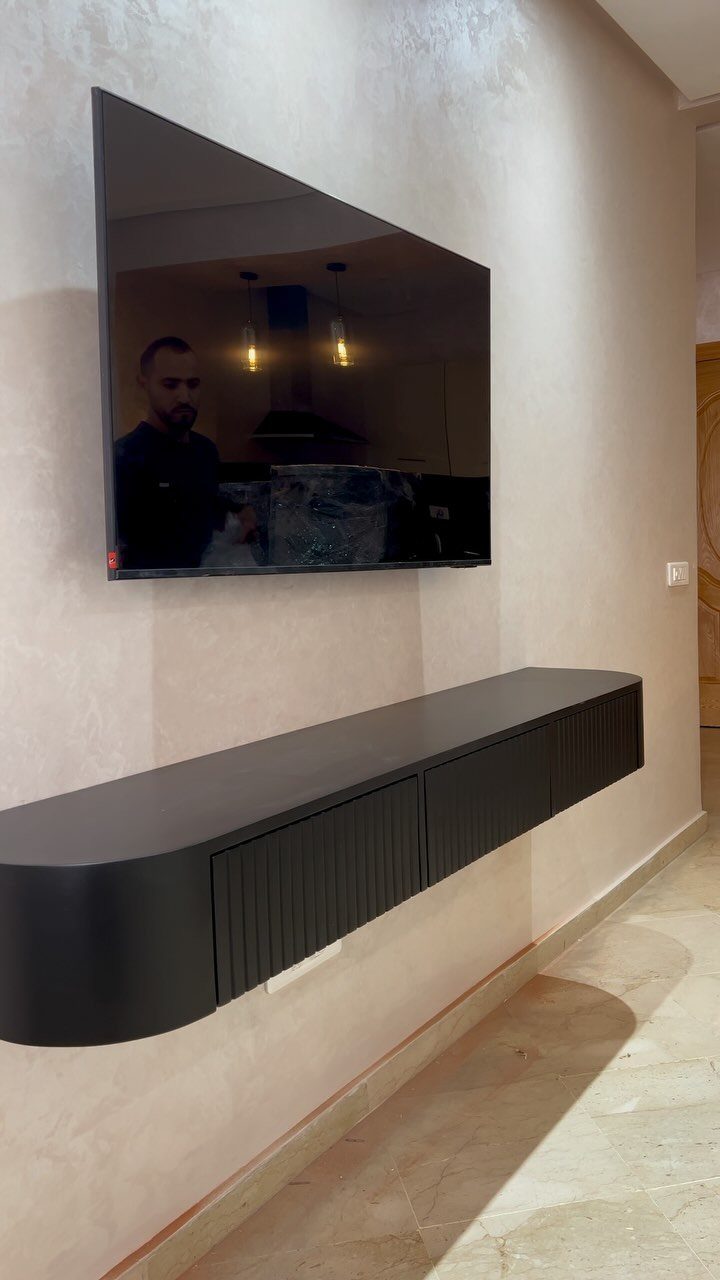
A floating console bolts to studs and leaves the floor entirely open underneath, which makes a small room feel like it breathes.
The ones I see most often are wide and shallow, with drawers or a flip-down door for the stuff you don’t want seen. Rounded edges catch fewer hips in tight quarters.
Installation takes a level, a stud finder, and an hour if the wall cooperates. Tile or plaster behind it complicates things, so check what you’re drilling into first.
The open stretch below is perfect for a slim basket of blankets or just kept clear for vacuuming ease.
This suits renters less, unless you’re willing to patch bolt holes later; for owners in studios or narrow railroad layouts, it’s hard to beat.
7. Lighting Around TV
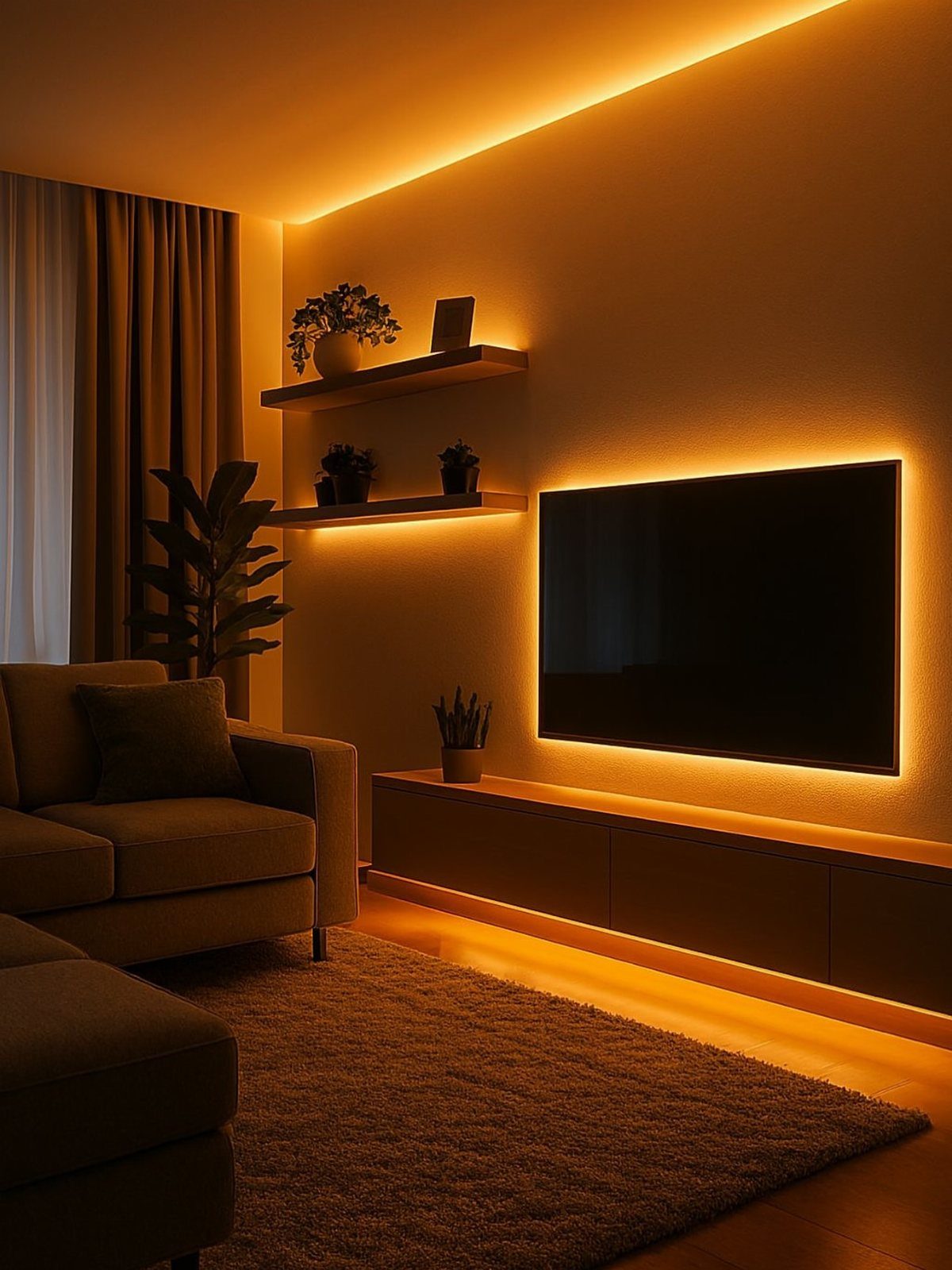
A warm glow behind the screen turns an ordinary TV into something that feels intentional. LED strips tucked along the back edge cast light onto the wall itself, which softens the contrast between a bright screen and a dark room.
That alone cuts the eye strain you get from watching at night.
The strips come in a few lengths and the adhesive backing means no tools beyond a pair of scissors. Most plug into the TV’s USB port so they turn on with the set itself.
Light behind the TV, along the ceiling edge, and under the console all work; the console strip is the one I’d add last since it shows dust.
This suits renters best. Nothing permanent, nothing that leaves a mark when you move.
If your lease runs short, skip the ceiling channel and keep it to the screen.
8. Bespoke Entertainment System
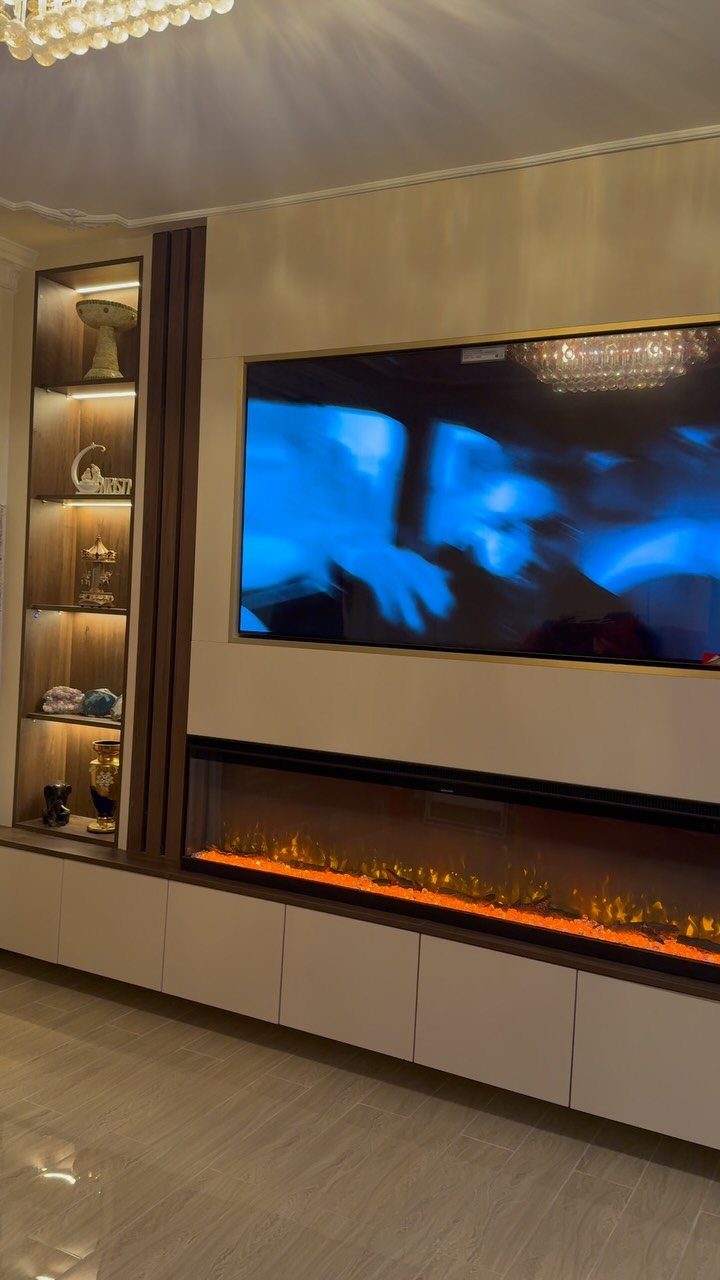
A full wall of built-ins looks like a contractor’s job, but the bones of it are simpler than you’d guess.
A frame of 2x4s faced with drywall or painted plywood builds out from the existing wall just deep enough to recess the TV and hide cables.
The electric fireplace sits where a false wall created that cavity; the heat vents forward, not into the structure, so the surrounding shelves stay cool enough for books or display pieces.
Budget two weekends and a lumber run plus a fireplace insert if you’re starting from scratch. The LED strips that backlight each shelf are the finishing touch that makes raw carpentry read as design.
This trades away floor space permanently, so measure twice. It suits the owner who knows where the sofa will sit long-term.
Renters or anyone who rearranges quarterly should look back at the floating stand instead.
9. Sectional Sofa Facing TV
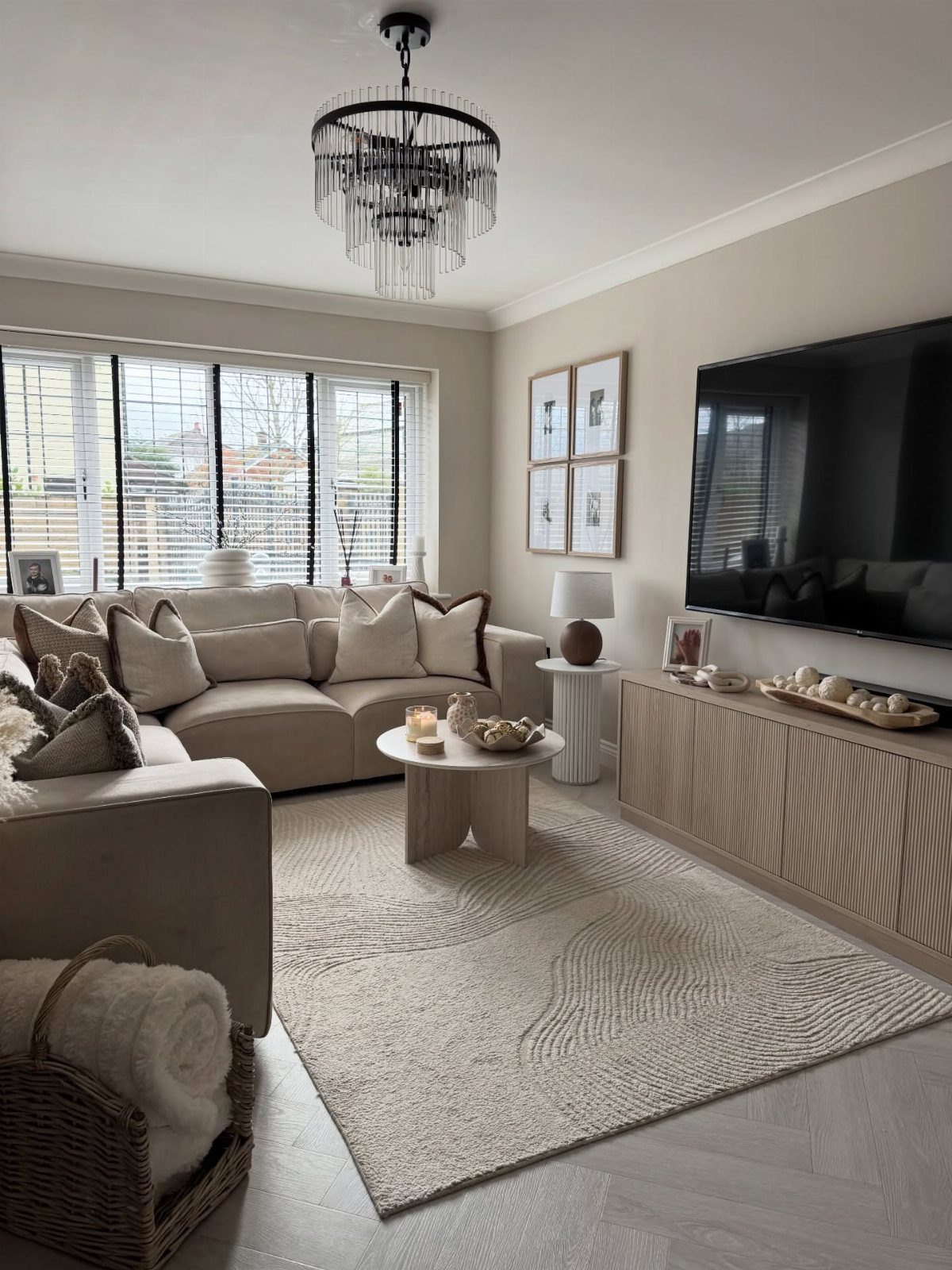
A sectional facing the TV beats two chairs and a sofa in most small living rooms. The shape wraps seating into one piece instead of three, and an L-form pushed to a corner leaves the center open for traffic.
I like a round coffee table inside the L; squares fight the angles. Keep the chaise on the side where people walk least, or the path through the room pinches.
Sectionals read as one mass from behind, so this works best when the sofa faces the TV wall with its back to nothing, or to a dining area you do not mind defining.
10. Low Profile Wooden Media Console
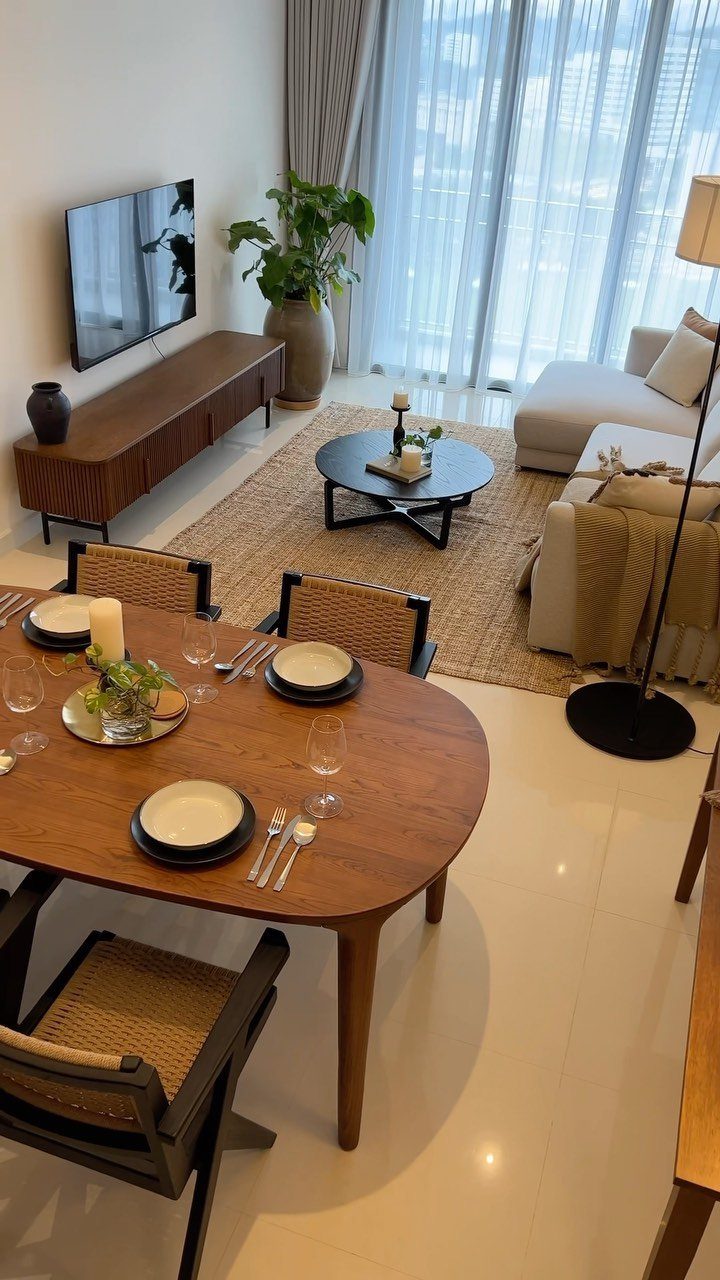
Mounted TVs free floor space, but a low wooden console underneath still earns its place when you need to hide remotes, a router, or game gear. A low console keeps sightlines open and the screen at a natural angle.
I look for closed storage, not open shelves. Small rooms clutter fast, and a drawer swallows what a shelf displays.
A slatted or legged base helps the piece float visually, so the wall behind still reads.
Skip this if your console would sit in a walkway; that extra depth matters in a small room.
11. Built in Storage Beneath TV
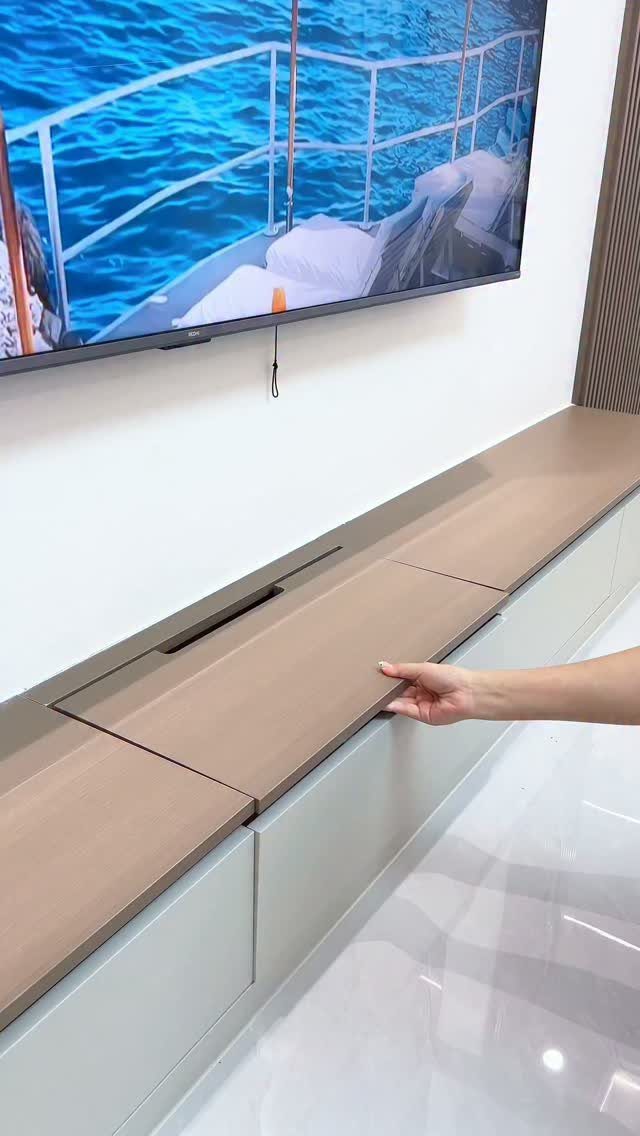
Drawers built into the wall beneath a mounted TV turn dead space into hidden storage. The face reads as one long plane, so the room stays calm even when the drawers hold a tangle of cables and controllers.
Depth is the limit. Shallow storage fits most gear; deeper and you lose knee room or walkway.
I would rather have two shallow drawers than one deep one; layers keep things findable.
This asks for carpentry or a lucky existing recess. The clean front means no legs, no gap, no dust trap.
For a rental, a low credenza slid into place fakes the look without the commitment.
12. Built in Alcove Cabinet Unit
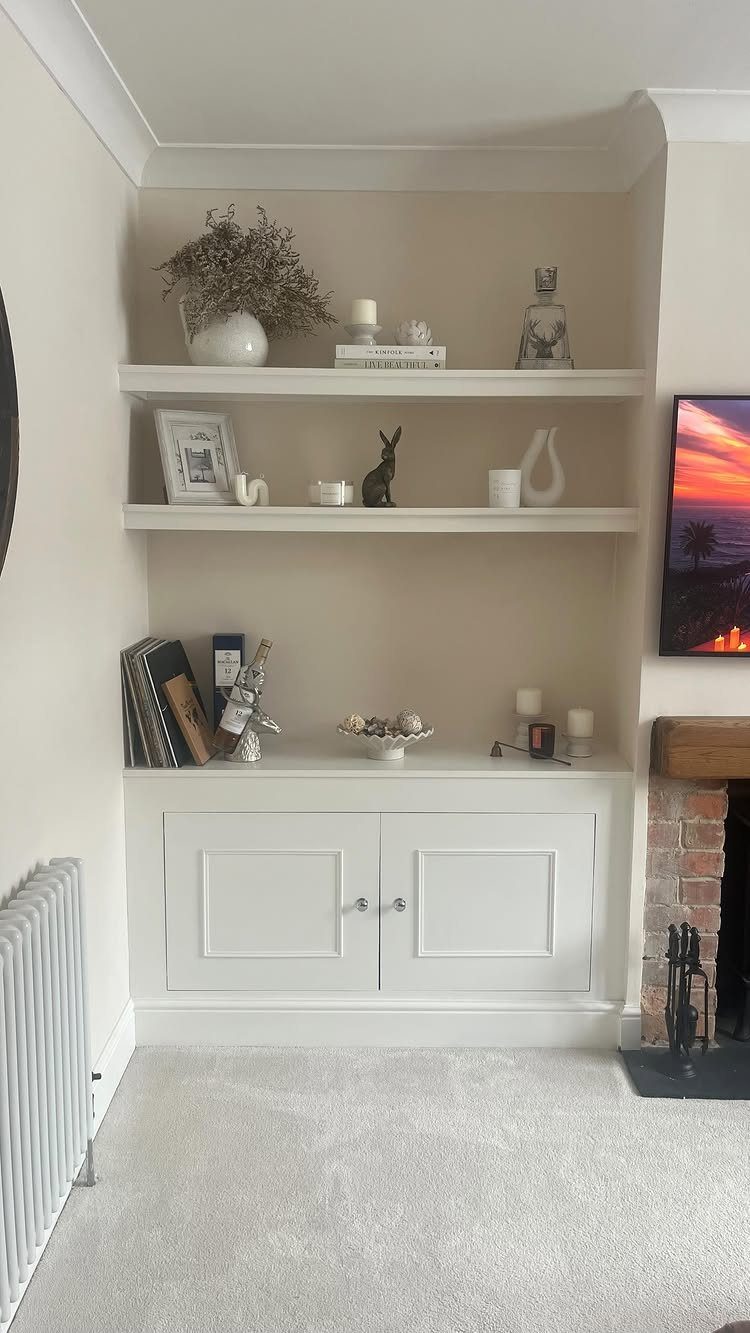
An alcove beside the fireplace, fitted with shelves above and a cabinet below, gives the TV a frame without stealing floor space. The niche does the containing; you add the function.
I have seen this work with the TV centered in the alcove and the cabinet offset, or the TV mounted on the chimney breast with the alcove as pure storage.
Either way, the shelves want editing: three objects per shelf, not fifteen, or the eye bounces and the room shrinks.
Paint the unit the wall color and the recess goes quiet; contrast the inside and it becomes an event. The second route suits a room with little else going on.
Choosing the Right TV Size
A 42–55" screen hits the right scale for most small living rooms. Sit about 1.5 times the diagonal away from it; at 8–10 feet back, a 55" set fills your view without swallowing the wall.
Anything larger than 55" starts asking for more distance than a tight room can give.
For seating pulled in tight, under six feet from the screen, a 32"–43" set keeps the space feeling open. A 50"–55" screen suits the more common six-to-eight-foot gap.
The point isn’t the biggest picture you can afford; it’s the one that balances with the sofa, the console, and the walking path you still need.
Lighting Considerations
Layer your light so the TV isn’t the only glow in the room.
A floor lamp in a far corner, wall sconces flanking the screen, and a small lamp on the coffee table give you dimming options: brighter for games, lower for movies.
Bias lighting behind the set is only one layer; without the others I still get that cave-at-midday feeling.
Monochromatic walls in cream or light gray help the light bounce, which matters when the room is small to begin with. A pendant overhead with a dimmer rounds out the setup.
I want to be able to adjust, not flip one switch that leaves everything either too bright or too dark.
Creating a Cozy Atmosphere
Textiles do the heavy lifting for warmth once the layout is fixed.
A solid-color sofa in velvet or a heavy weave reads as the invitation to sit down; add a rug underfoot that has some thickness to it, not the thin flatweave that skates across the floor.
Leather poufs or a woven throw across the arm give the eye something soft where the electronics read hard.
Window treatments in a heavy linen, double-lined if you watch during the day, add the same weight as old rugs on stone walls. They block light for screen glare and hold heat in the room.
Blank walls aren’t a problem to solve; in a small room, that empty space can be the rest your eye needs between the sofa pattern, the shelving, and the screen.
Frequently Asked Questions
How to style a small living room with TV?
Start with a simple console that has closed storage, then draw attention elsewhere through a bold sofa, open shelving, or texture on the wall behind the screen.
Angling the TV into the room from a corner keeps the main walls free for your sofa and side tables.
Keep the TV wall low-contrast so the screen doesn’t fight its background, and let one piece, usually the sofa, carry the personality.
What size TV should I get for a small living room?
A 42 to 55 inch TV fits most small living rooms without overwhelming the space. I figure screen size by seating distance: about one and a half times the diagonal.
Eight to ten feet back, a 55-inch set has always felt right to me. Since a wall mount keeps the screen off the floor, I can push a size or two larger than I could with a stand.
Is it better to mount a TV or use a console in a small living room?
In a small room, I mount the TV almost every time. The floor stays clear and the space just breathes better.
When I need to stash remotes or a gaming console, a slim low-profile cabinet with doors is my backup plan. A swivel mount in the corner has saved me more than once when the only open wall was already taken.