The ideas below run from a clean frameless install you can do yourself to a thick wood frame that just needs a stud, so the deciding factor is what your wall can handle and whether you need the mirror to travel with you.
A frameless wall-to-wall install reads twice the room size but needs careful measuring if the wall isn’t square; a thick wood farmhouse frame just needs a stud.
1. Frameless Elegance
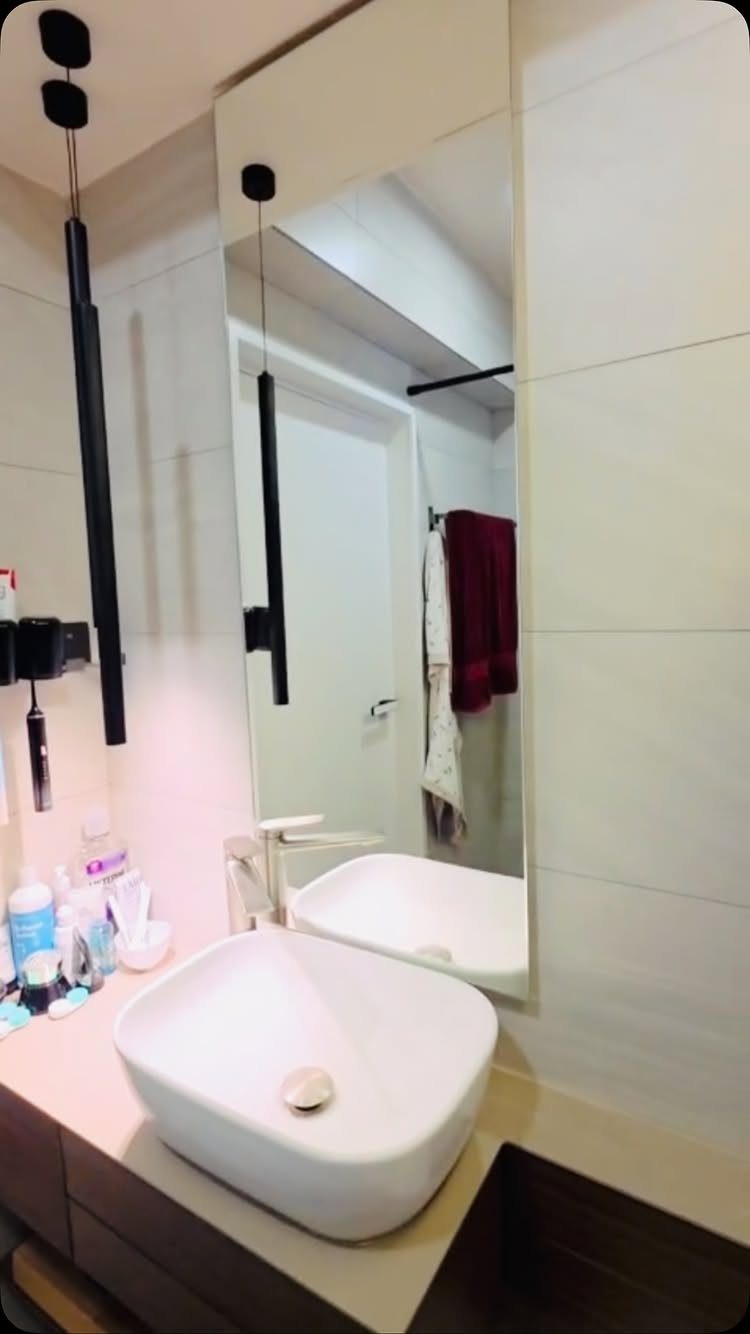
A frameless mirror strips away every edge and border so the glass itself becomes the architecture.
Running the mirror wall-to-wall or floor-to-ceiling turns a small bathroom into something that reads twice its size, especially against marble or large-format tile where nothing competes for attention.
The clean edge needs precise installation; any gap or uneven cut shows immediately, so budget for a pro cut if your wall isn’t perfectly square.
I’d go full-bleed only on a flat wall, never one with outlets or odd angles to work around.
Best for: renters who want spa vibes without drilling into something ornate they can’t take with them.
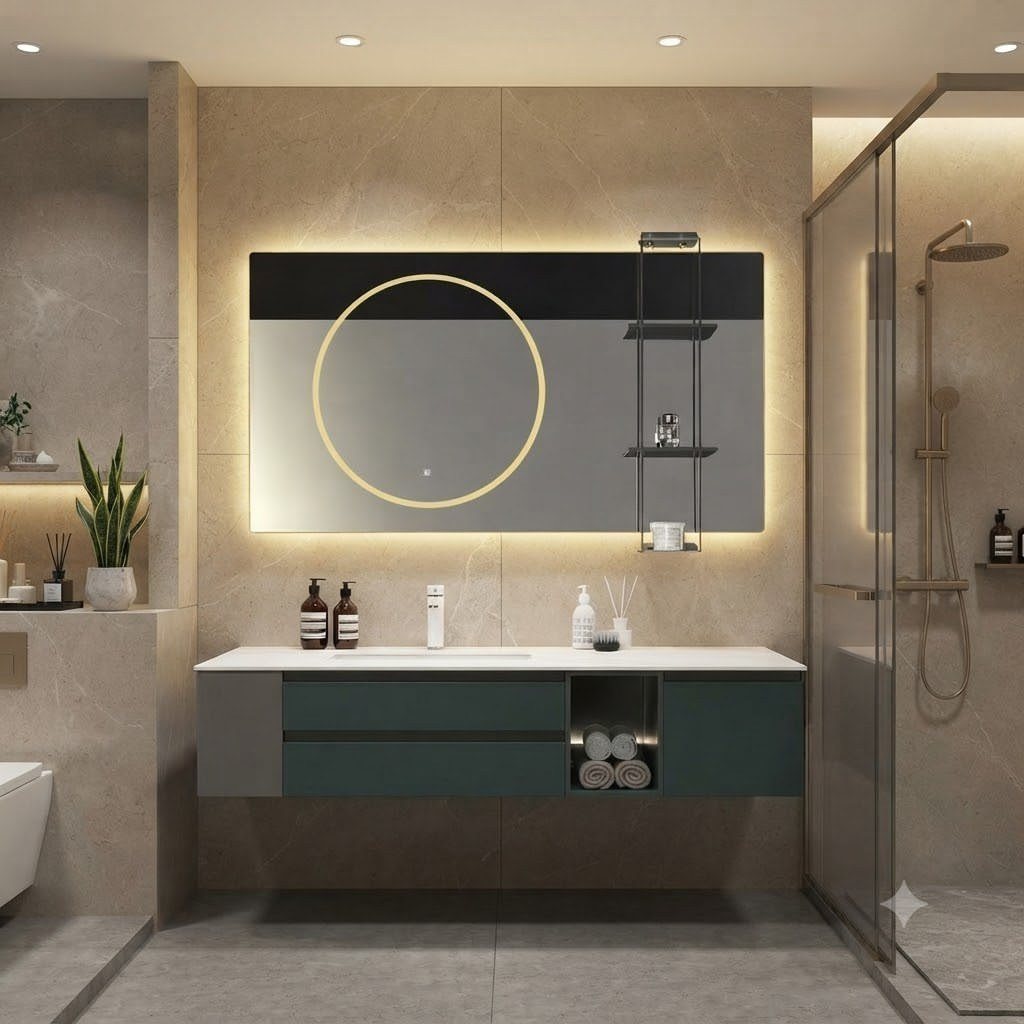
2. Backlit & LED Mirrors
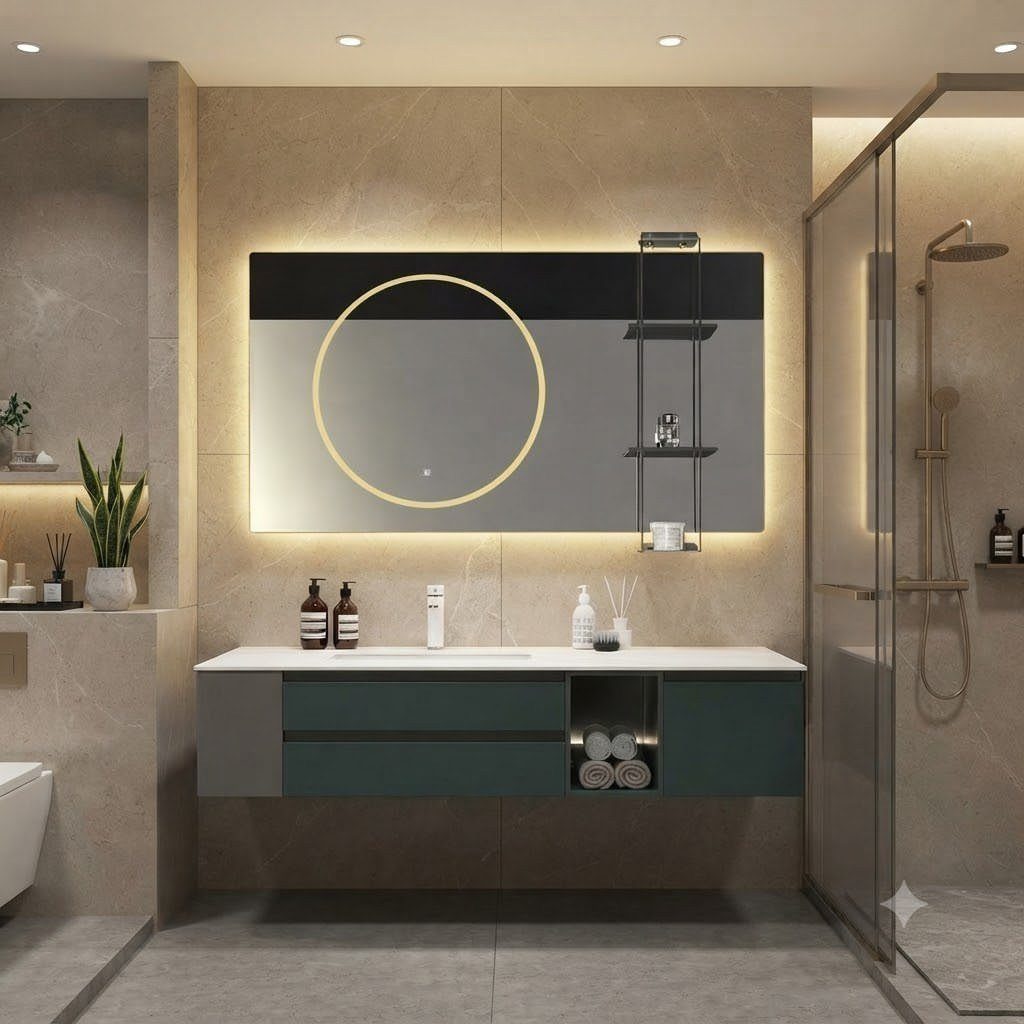
Built-in lighting around the mirror face fixes the shadow problem that overhead fixtures always create.
The glow sits behind the glass or in a ring, bouncing soft light back at your face instead of down from above, which matters when you’re actually trying to see your skin or line up a shave.
Most units need a dedicated outlet or hardwiring, so this isn’t a Sunday swap unless you’re comfortable with electrical.
The circular accent in some designs reads more decorative than functional; I’d skip that detail in a guest bath where no one applies makeup.
Best for: bathrooms with no window and no space for sconces on either side.
3. Farmhouse Chic
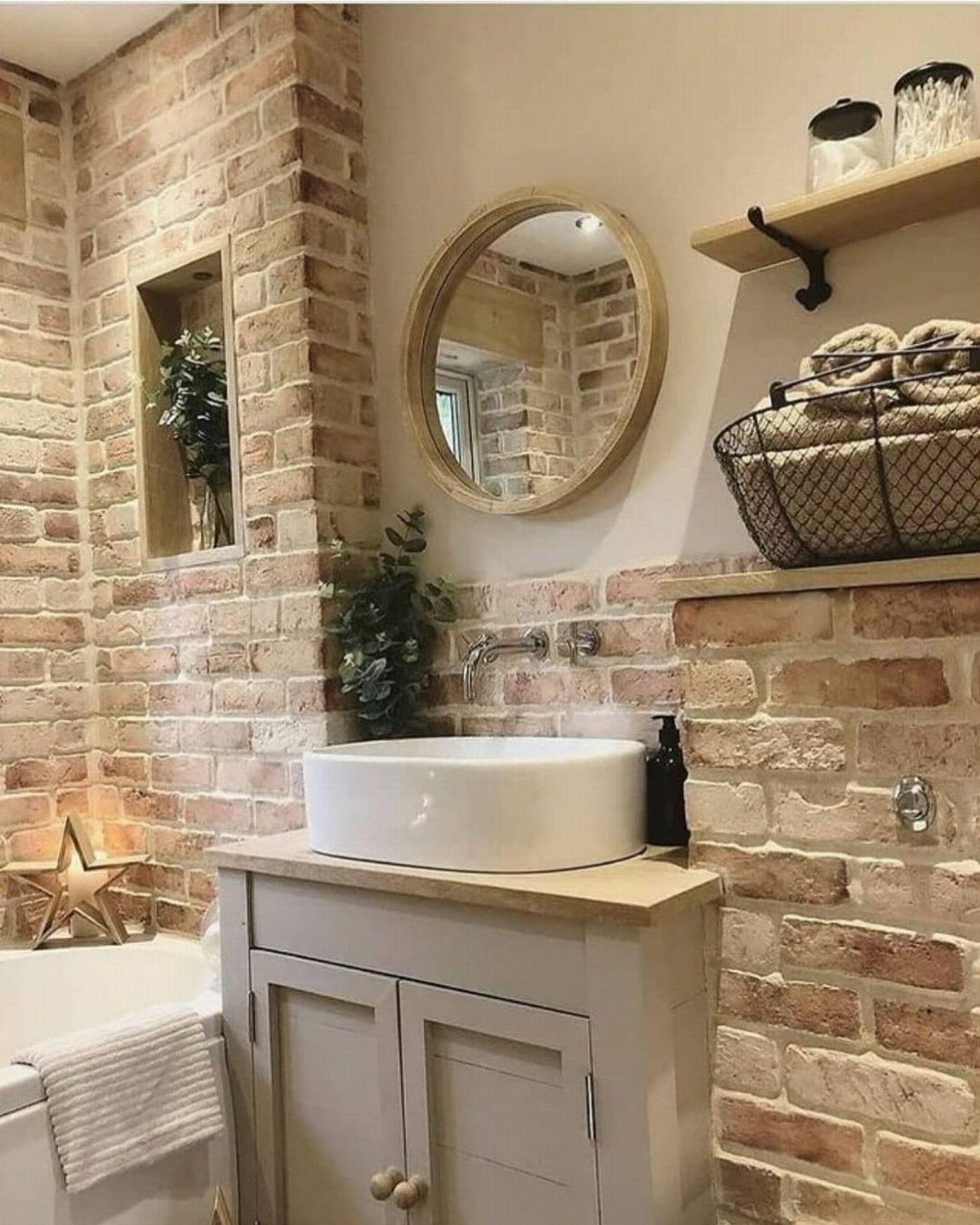
Thick wood frames, usually whitewashed or left raw, warm up a room full of hard surfaces. A round shape softens the straight lines of shiplap or subway tile that usually comes with this style.
A vessel sink underneath, white or light, keeps the rustic-meets-modern balance from sliding too country. The frame width matters: a narrow one looks skimpy against textured walls, and a thick one competes with the sink for attention.
Whitewash lets the grain show through; paint hides it entirely.
Best for: first-home owners who want character without hunting actual antiques.
4. Round Mirrors
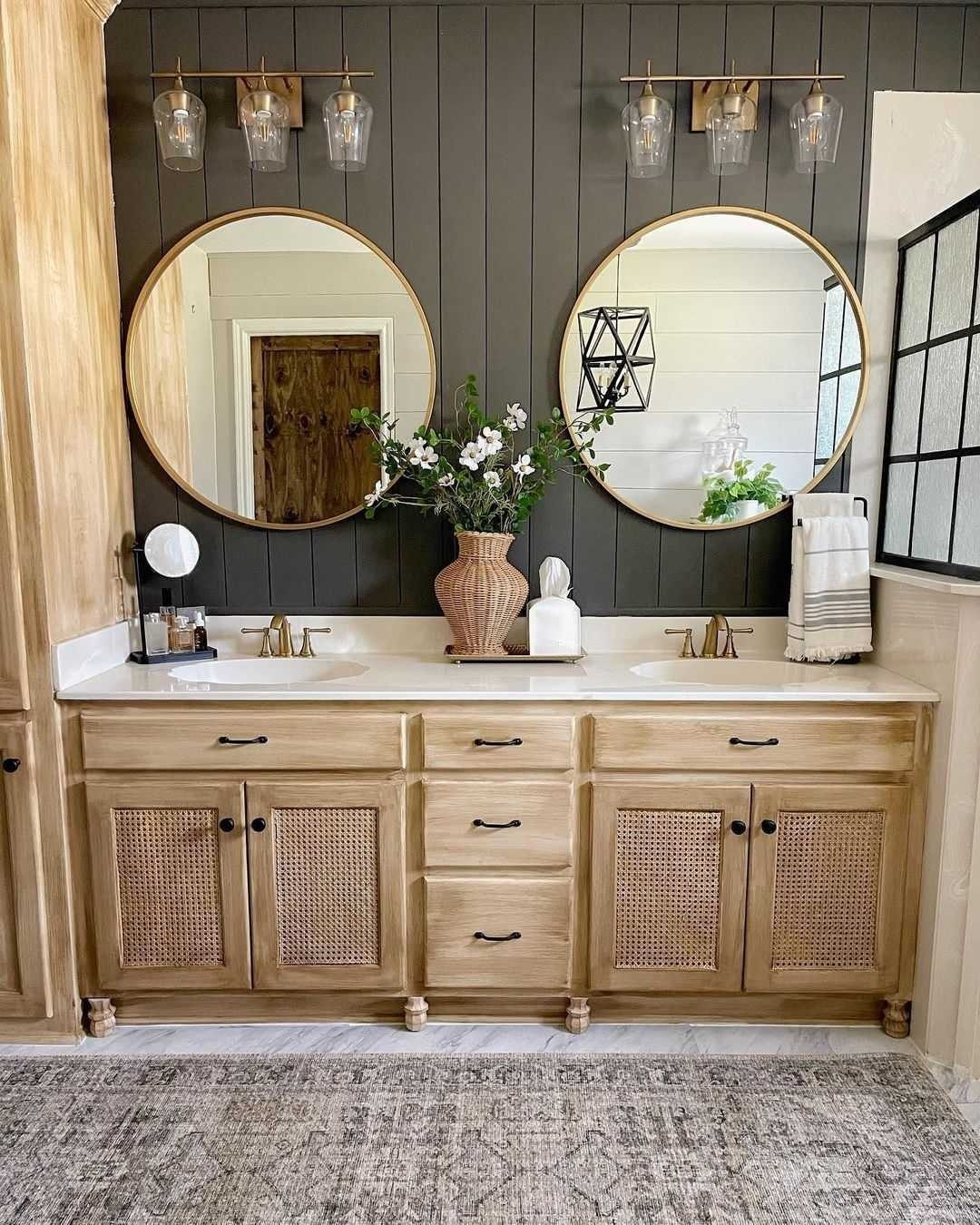
Circles break up all the rectangles in a bathroom: the tiles, the vanity, the shower door, the light switches. Two matching rounds over a double sink, gold-rimmed or otherwise, turn the mirrors into intentional sculpture rather than afterthought.
The size should span most of the vanity width without touching the sconces or faucet hardware. In a single-sink small bath, one medium round opens the wall visually without the sharp corners that make tight spaces feel boxed.
Thin metal frames keep it light; thick ones read more traditional than the shape suggests.
Best for: anyone whose bathroom feels like a grid and needs one curve to soften it.
5. Vintage Vibes
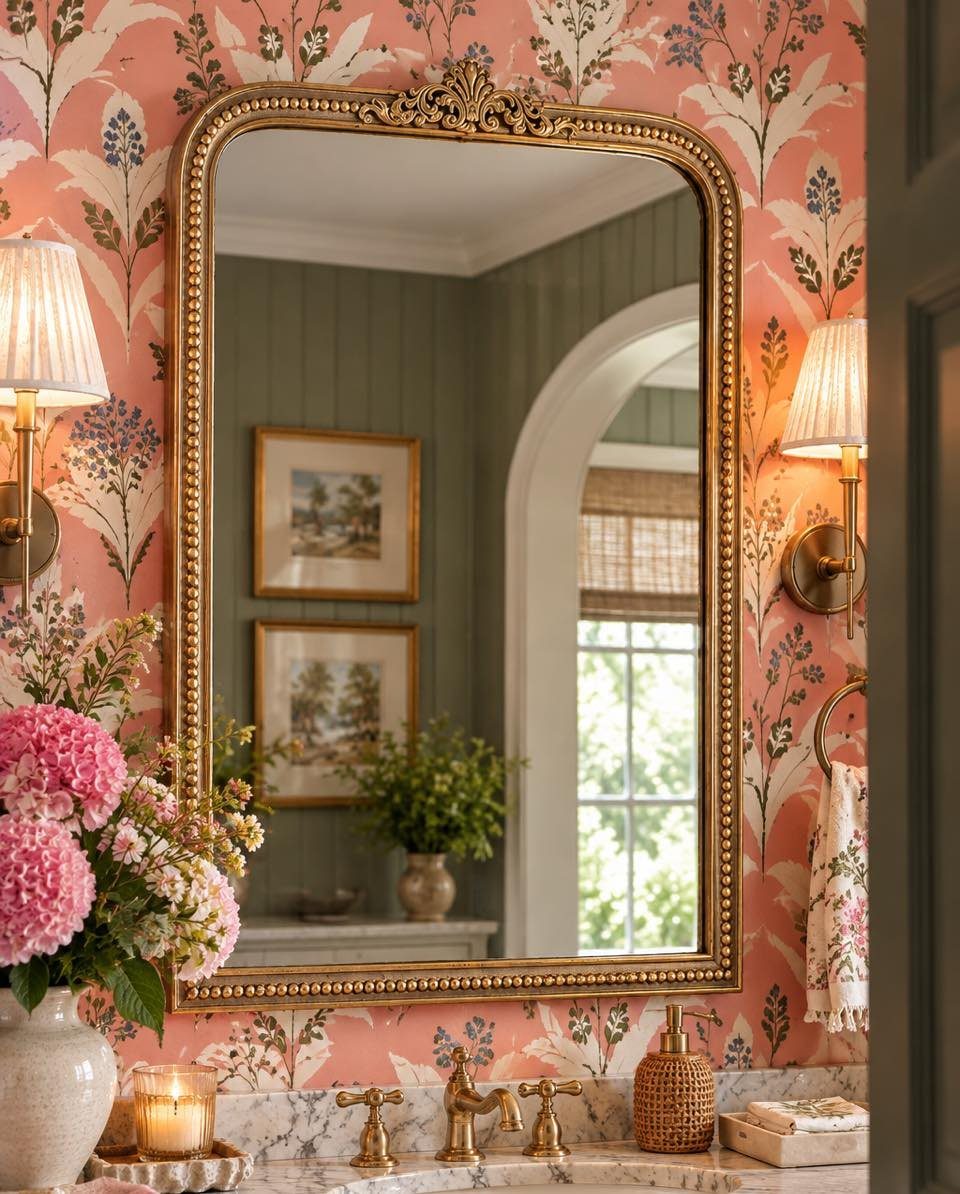
Ornate gold framing and beveled edges bring in the kind of detail that makes a bathroom feel collected over time rather than installed last month.
The patina, real or applied, matters more than perfection; a mirror that looks too new fights against the style.
In a builder-grade white box, the mirror reads as costume instead of character. I’d pair it with modern plumbing to keep the mix alive, not match every metal to the frame.
Best for: renters or owners who found one great piece and want to build around it.
6. Clever Corner Mirrors
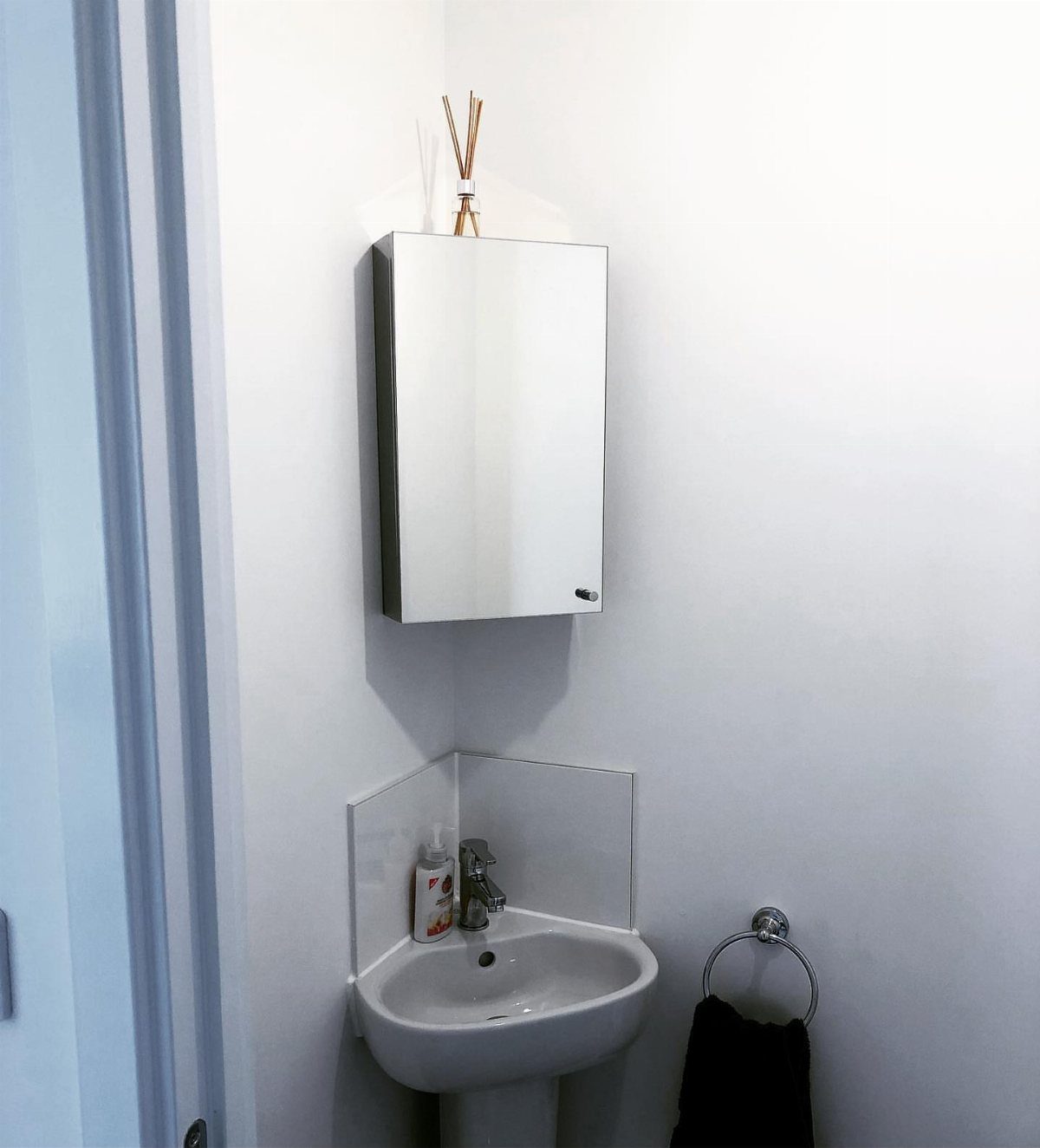
A corner-mounted cabinet or mirror turns the dead space where two walls meet into usable real estate.
A triangular or angled shape fits above a corner sink, which itself saves space in a powder room where a standard vanity won’t clear the door swing.
Many corner units include shallow shelving inside the cabinet, enough for daily toiletries without the depth that standard medicine cabinets require.
The trade is mirror size: you sacrifice width for the angle, so this works when you need storage more than a full-face view.
Best for: L-shaped layouts or half baths where every wall counts.
7. Experiment with Mirror Shapes
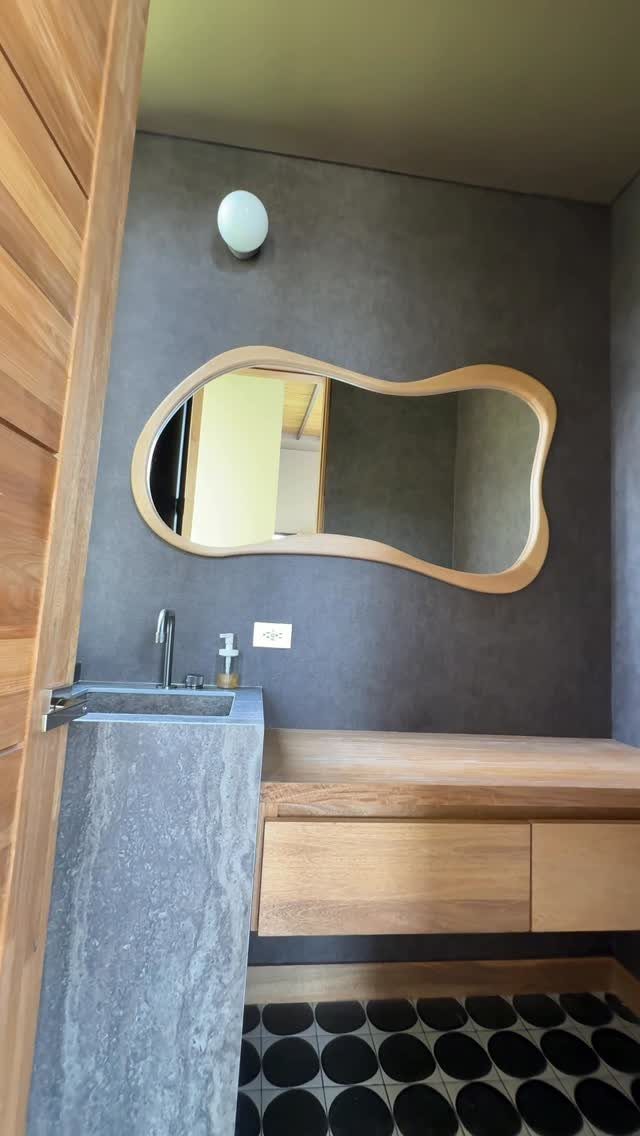
A wavy, asymmetrical frame turns the mirror itself into the room’s focal point rather than just a reflective surface.
This works best in bathrooms that already feel a little too straight-edged; tile grids and boxy vanities soften against an organic shape.
Light wood keeps it warm and approachable for a first project, though a painted version in matte black or deep green reads more dramatic.
I would hang it so the widest curve sits above the faucet, not centered by the wall. That offset is what makes it look intentional rather than crooked.
Skip this if your vanity has an unusual countertop edge; two competing shapes fight each other.
8. Add Contrast with Your Mirror
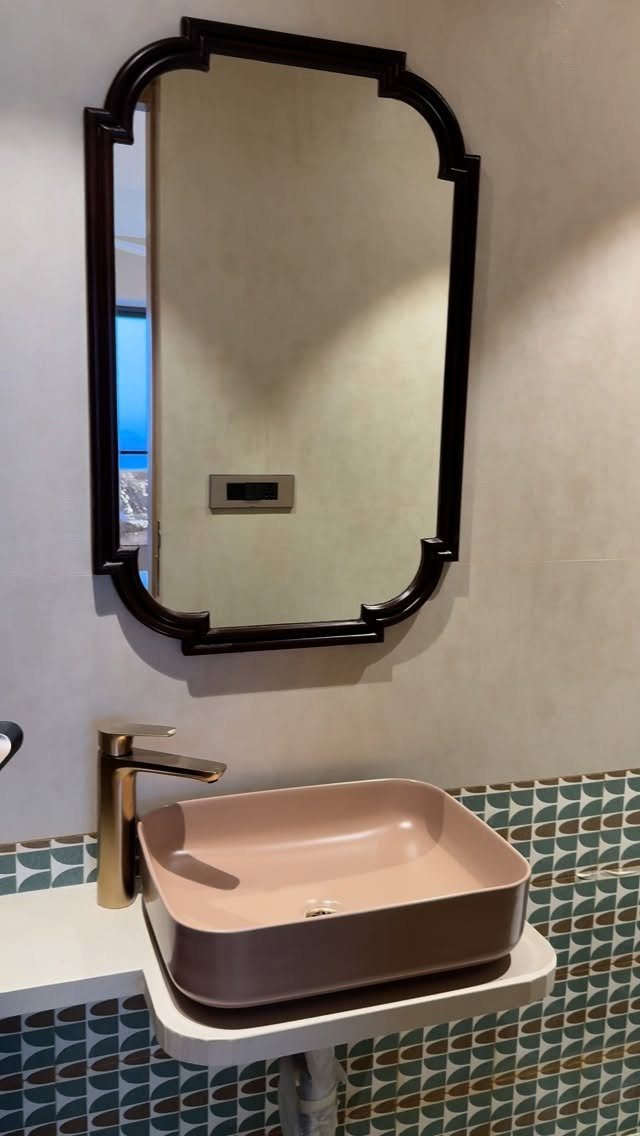
A black ornate frame against pale walls and a pink sink creates tension that makes both elements sharper.
Pair the mirror finish with one other metal in the room, not every metal. Here the brass faucet repeats in the sconces, and the black frame stands alone as the dark accent.
That restraint keeps it from feeling like a costume.
For a budget version, a thrifted mirror in spray-painted wood or resin gives the same silhouette without the antique price. Check the weight; older plaster frames need heavier anchors than modern hollow ones.
This suits renters who can swap hardware back later. The mirror moves with you.
9. Play Around with Height
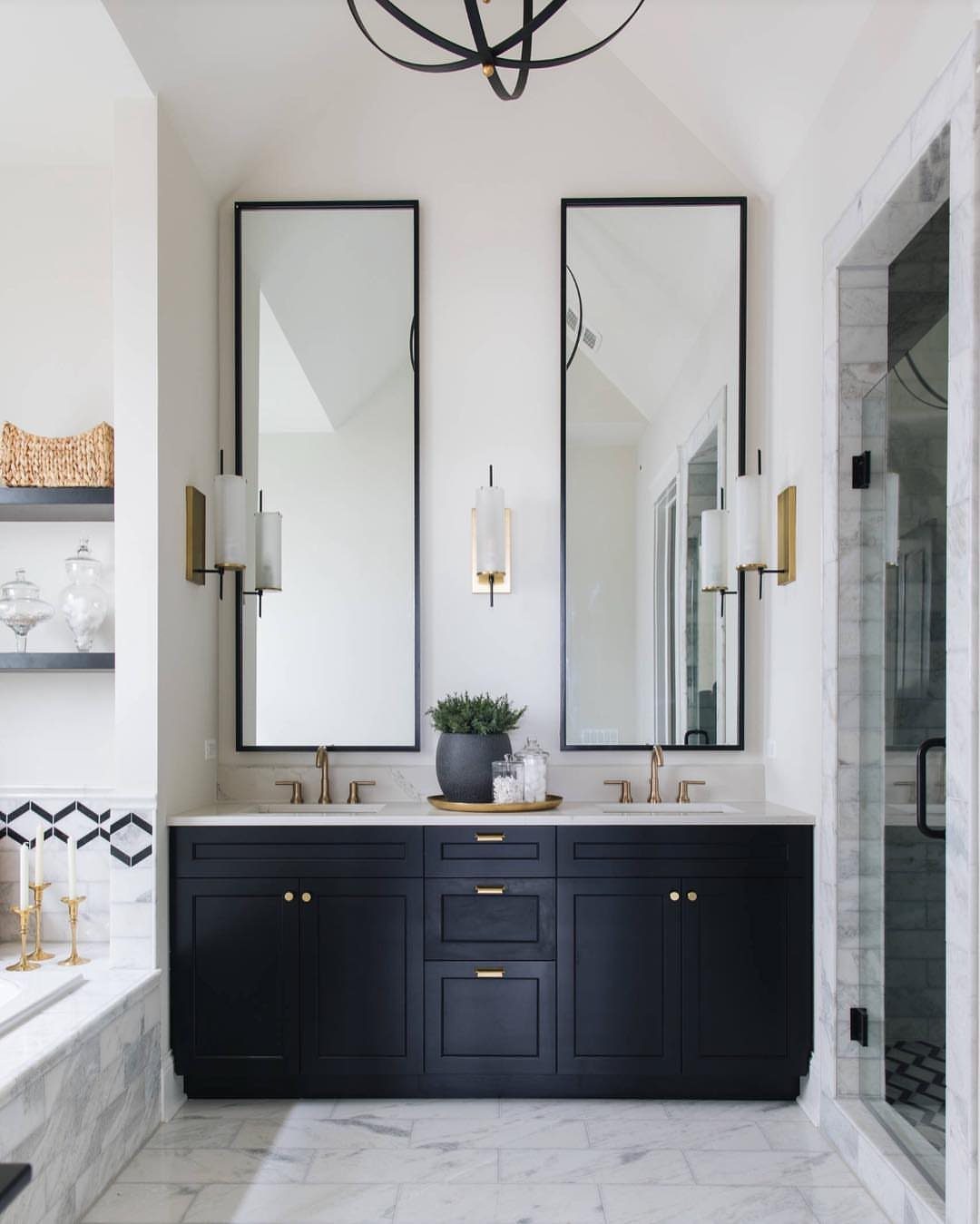
Tall mirrors that reach toward the ceiling pull the eye up and make standard walls read higher than they are.
Matching vertical frames create rhythm over a double vanity; sconces between them break the black so it does not go flat. I would keep the frame thin, or the scale starts to feel like a door rather than a window.
Measure your ceiling height before ordering. A mirror that stops well below the crown leaves breathing room; one that nearly touches reads more dramatic but needs precise leveling.
Best for bathrooms with overhead light that can reach the lower face; tall mirrors shadow easily from above.
10. Add Some Texture
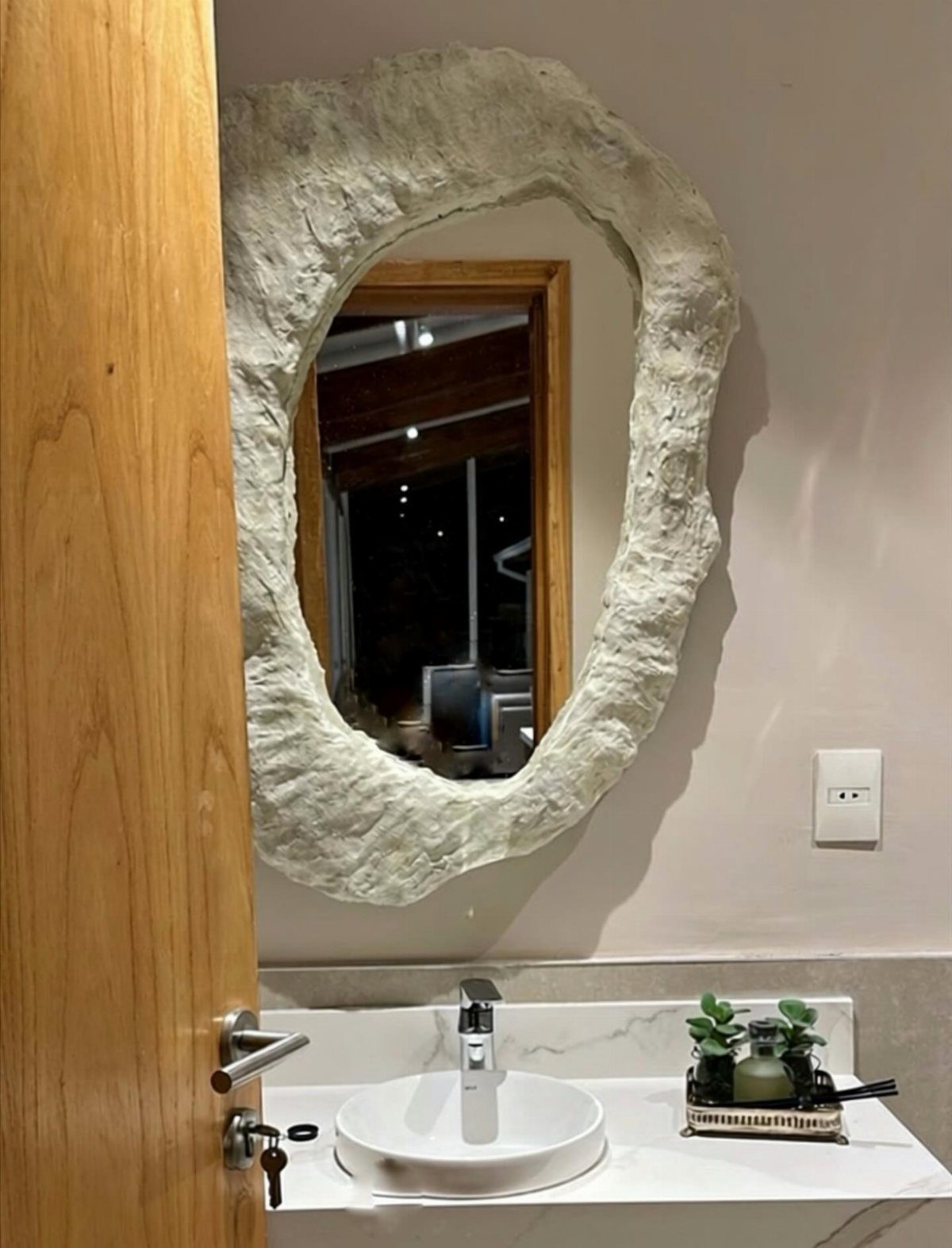
A thick, irregular frame in stone or plaster adds the kind of depth that flat walls cannot give on their own.
This texture suits clean, modern bathrooms that risk feeling sterile; the organic edge and weighty material warm up white surfaces without adding color.
I have seen similar frames in lightweight resin for less, though real stone or hand-troweled plaster runs higher and needs solid blocking behind the drywall.
Hang it with the bottom edge closer to the sink than a standard mirror, almost hovering over the backsplash.
Ideal for a beach or desert aesthetic where imperfection feels intentional.
11. Arched Vanity Mirror
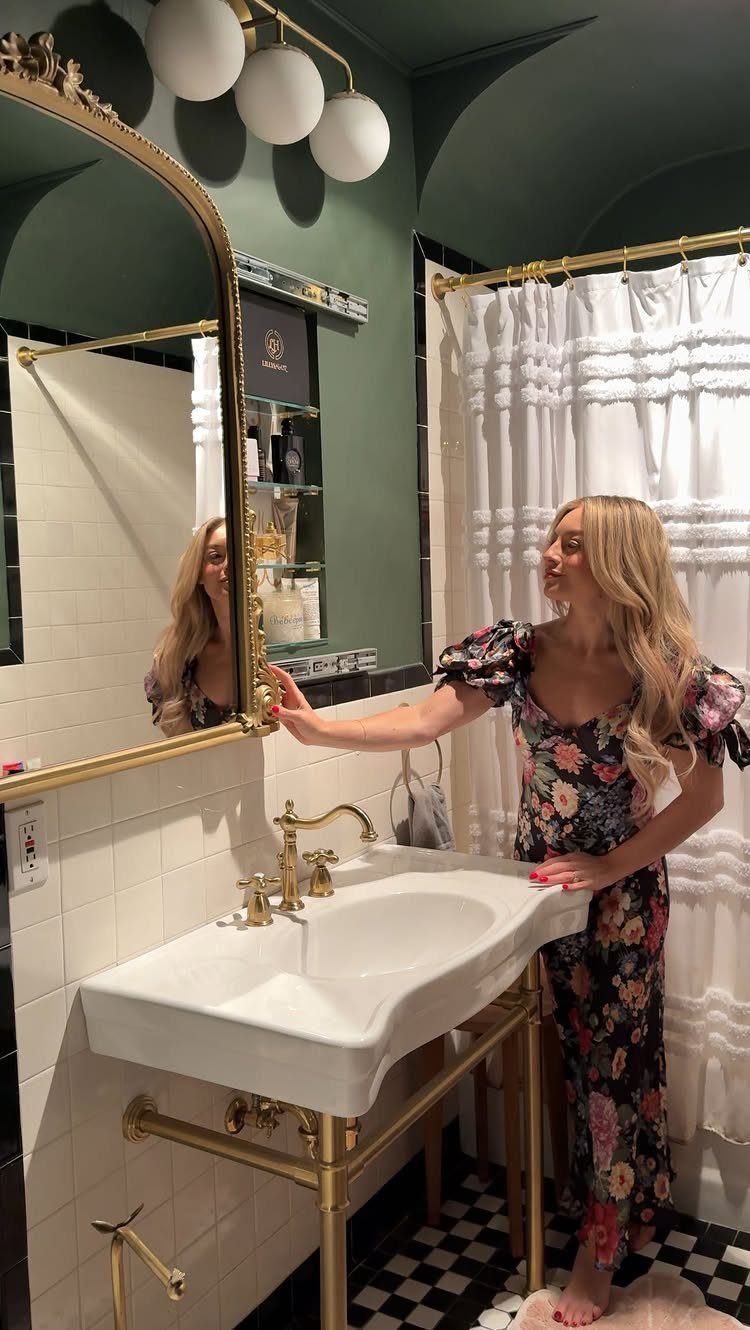
Curved tops do what rectangles cannot: they soften a bathroom’s edges without trying too hard. A brass frame reads traditional, but an arched mirror in black metal or thin wood works just as well in a cooler palette.
Mount it so the arch clears your tallest faucet by at least 6 inches, or the curve fights the hardware.
Pedestal sinks pair naturally with this shape because both pieces stand alone as statements; a bulky vanity underneath can crowd the effect.
I would pick this for a small powder room where one strong piece substitutes for clutter. The trade is function: no cabinet behind, no shelf below.
Store your clutter elsewhere, or choose a different idea.
12. Dual Mirrors for Double Vanity
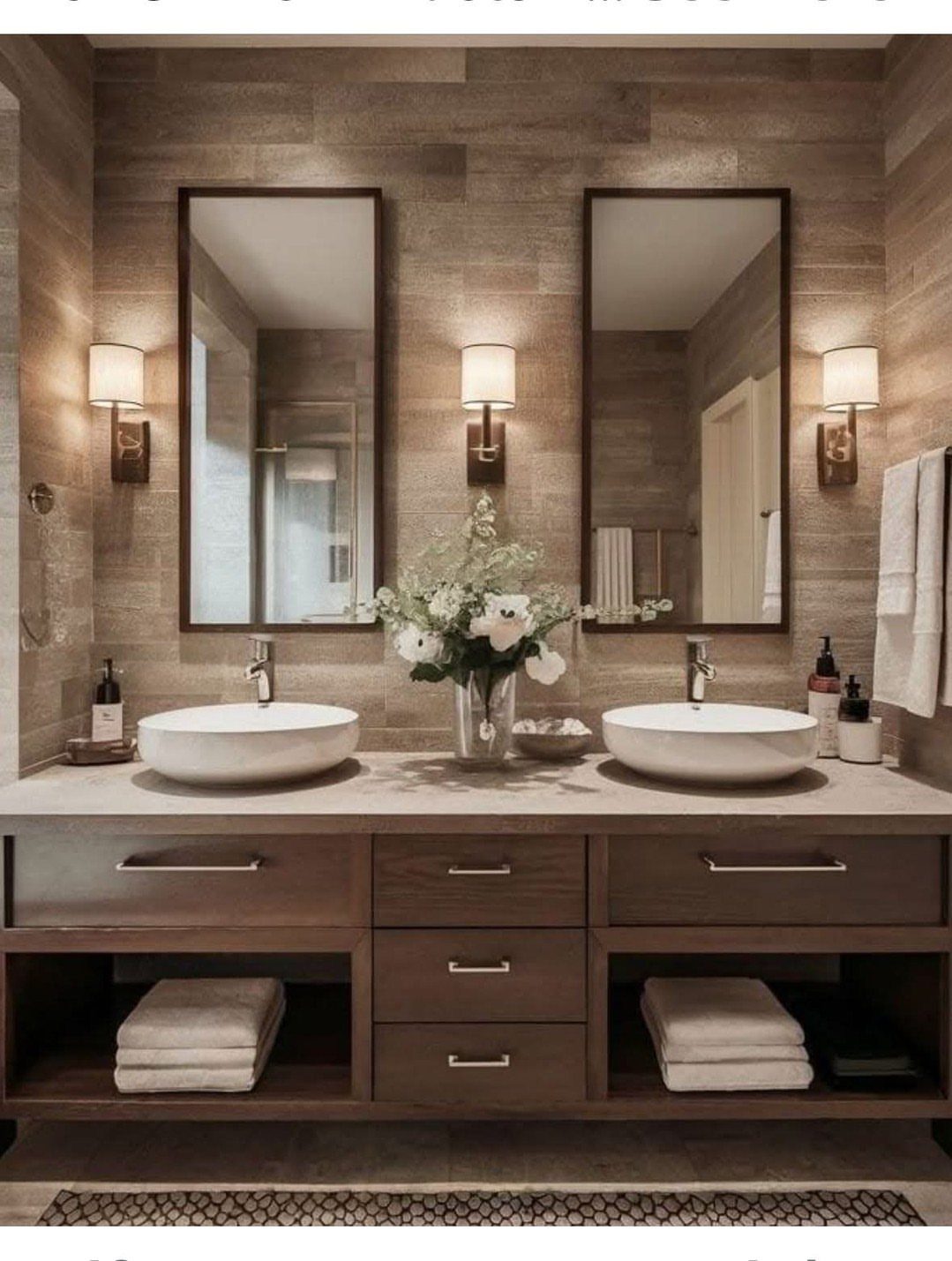
Two mirrors above two sinks let each person own their space. Dark frames and vessel sinks give a clean, divided look that reads intentional, not like you ran out of mirror.
Spanning one giant mirror across the full width is the alternative, and it wins for natural light: a single surface bounces more around the room. Twin mirrors win for couples who share badly.
Either way, hang sconces between or beside, not above, or you get shadowed cheeks at shaving time.
The frames need not match your faucet finish exactly. The photo goes dark-on-dark with wood between; I think mixing metals here looks collected rather than mismatched if you repeat each metal twice elsewhere.
13. Mirror Above the Bathtub
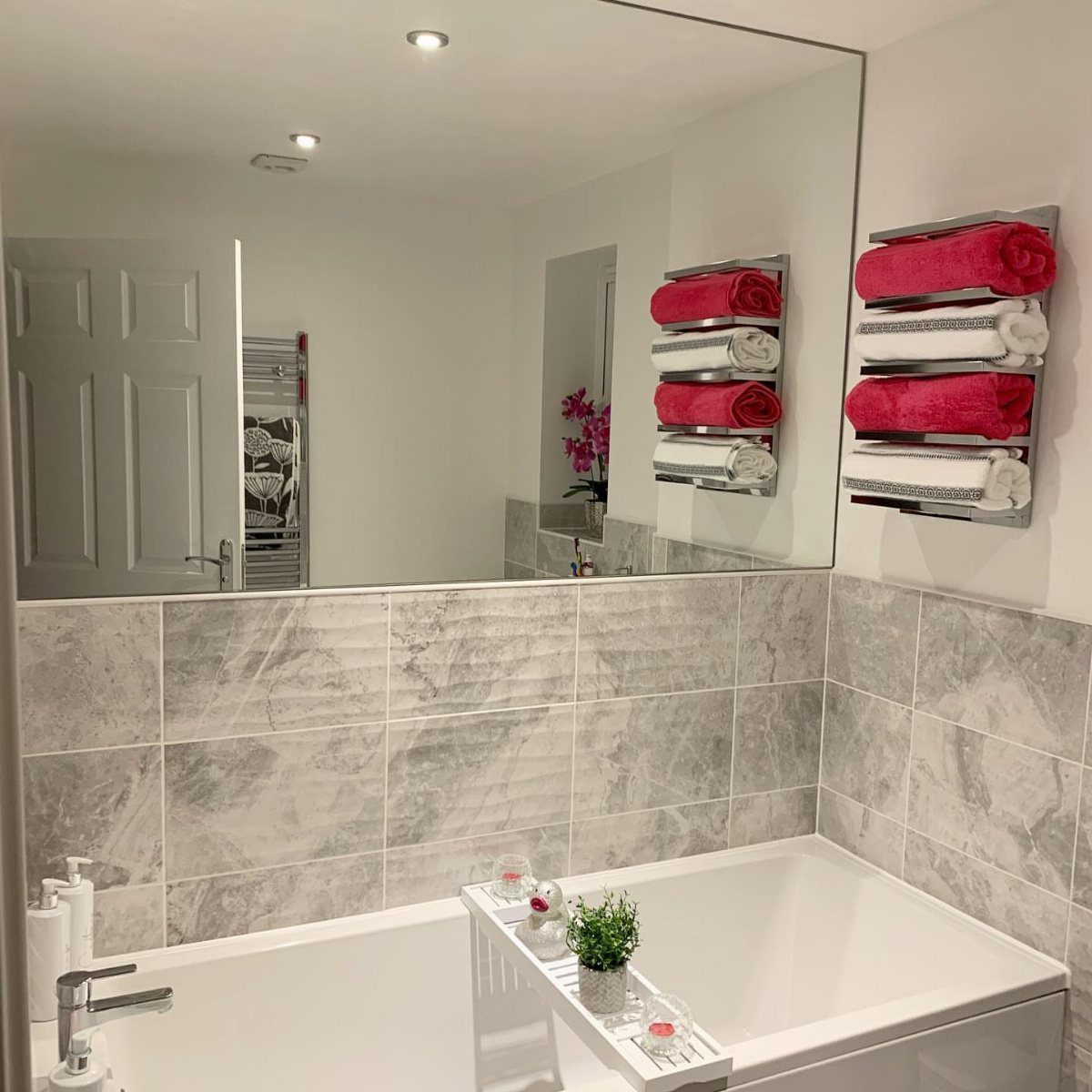
A mirror facing the tub turns bathing into an event, or a reckoning, depending on your self-image that day. Marble-look tile and pink accents keep it from feeling like a gym locker room.
Steam is the real enemy. Standard mirrors fog and eventually fail above a tub that gets regular use.
Budget for a heated demister pad stuck to the back, or accept wiping with a towel. Either way, the bottom edge should sit well above your faucet height, not right at it, or the proportions go squat.
This works best in a bathroom you actually soak in. If your tub is for the kids’ Wednesday bath, the mirror watches nothing worth framing.
14. Black Framed Rectangular Mirror
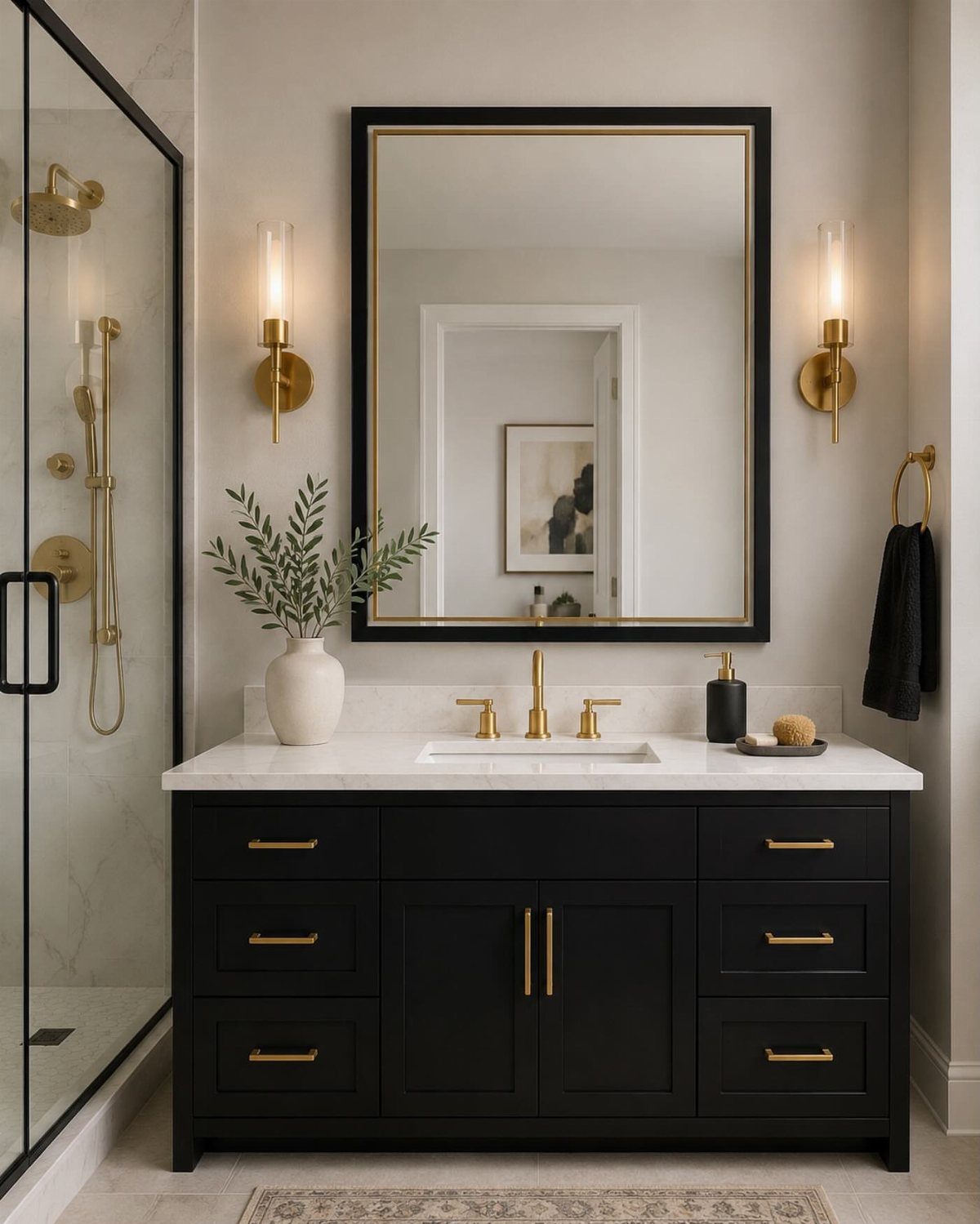
Black framing against white walls is the easiest contrast to get right, which is why it keeps showing up.
The gold inner detail in this version keeps it from reading too office-building; without that warm line, the effect turns institutional fast.
Industrial finishes run to black iron, brushed nickel, and aged bronze. I like the double-frame trick for bathrooms that mix periods: the outer black speaks modern, the inner gold nods traditional.
Edison bulbs and matte black faucets push further toward loft style if that is your direction.
This mirror size suits a single vanity comfortably without crowding the wall. Go bigger only if your wall can take the weight and your studs cooperate.
15. Mirrored Medicine Cabinet
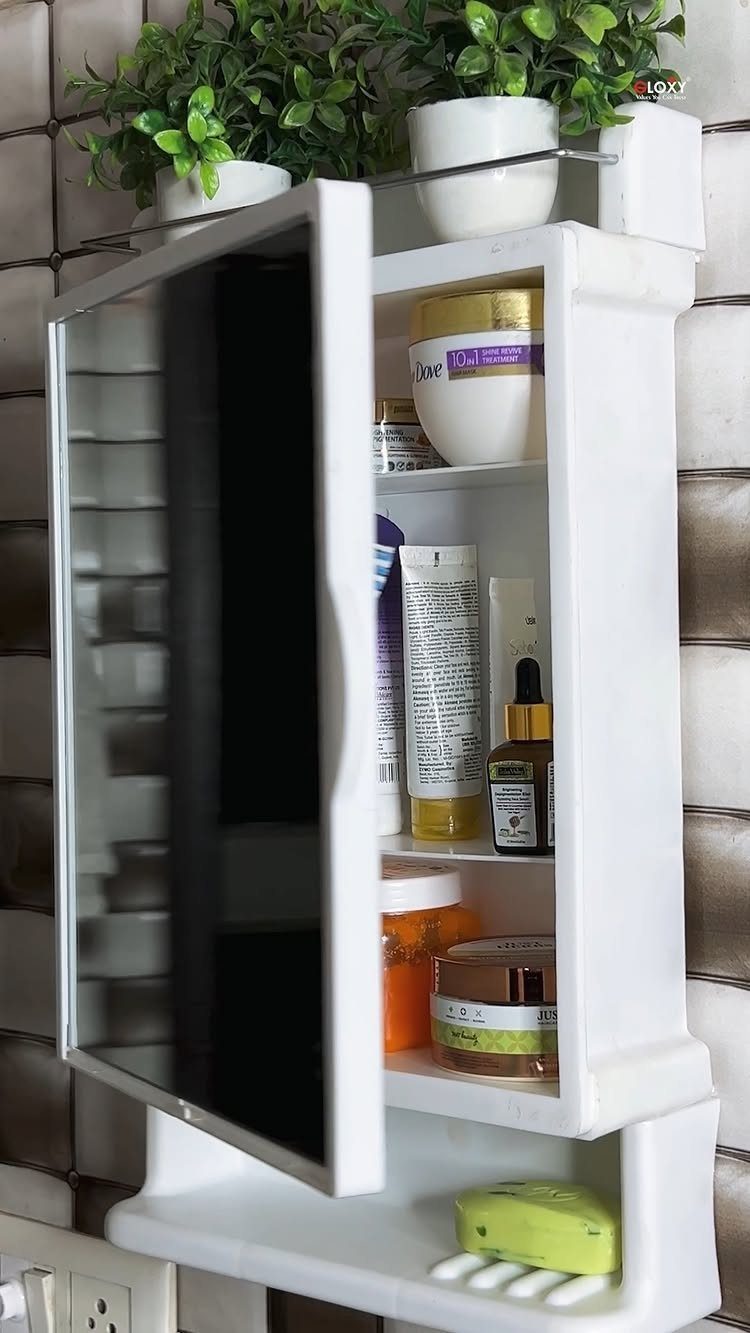
Recessed or surface-mounted, a mirrored cabinet hides what no one needs to see. The open door shows the usual jumble: creams, bottles, the Dove tub you bought on sale.
Close it and the room looks like you tried.
Touch-to-open panels and soft-close hinges are available now if you are upgrading from the rattling plastic builder-grade version. The trade for all that hidden storage is depth: these cabinets project farther than a flat mirror, which interrupts a mirror wall.
In a truly tiny bath, that bump steals elbow room at the sink.
I would install this where counter space is nil but wall space exists. Scandinavian and minimalist rooms handle it best because the clean front face keeps the secret.
16. Mirror with Integrated Glass Shelves
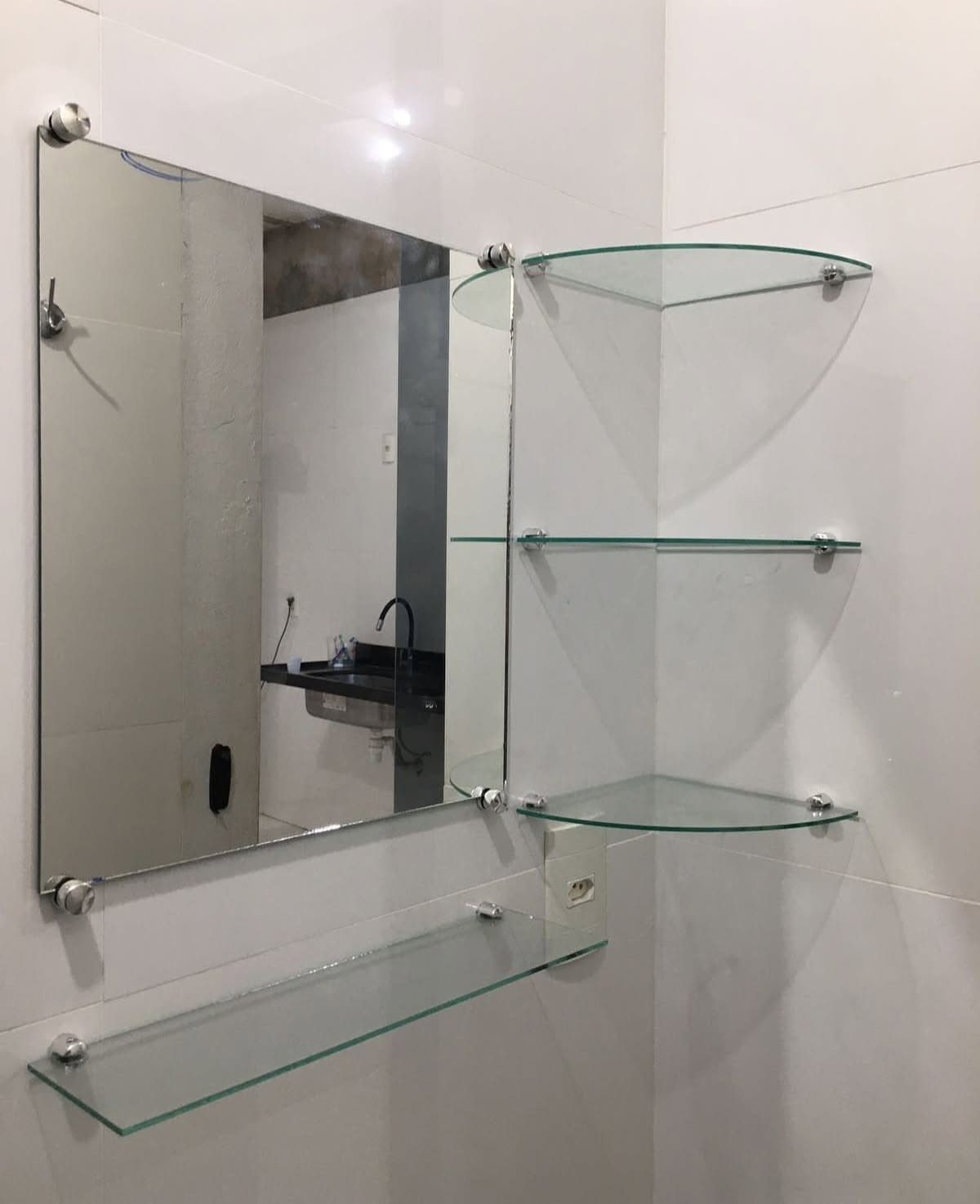
Glass shelves built into or against the mirror keep daily items off the counter without a cabinet’s bulk.
Silver clips and corner shelves read older installation, but the idea translates: one long shelf below for the toothbrush cup, shorter corners for the face wash you grab half-asleep.
The mirror itself stays frameless, which keeps the wall feeling open. Water spots on glass show immediately, so this setup demands a squeegee or tolerance for cloudiness.
I would not do corner shelves if my sink splashed hard; the lower edge catches spray.
Best for a secondary bath or a powder room where storage pressure is light and the look matters more than hiding everything.
Choosing the Right Mirror
Size is the detail that makes or breaks the choice. A mirror narrower than the vanity leaves the sink looking undersized; one that runs past the edges feels like an afterthought.
Round mirrors suit small bathrooms because the curve opens the wall visually. Pendant lights or sconces layered beside them complete the look without competing for wall space.
Shape should answer what the room lacks. Straight lines everywhere call for something with curve.
Maximizing Space with Mirrors
A large frameless mirror anchored to the vanity wall draws the eye upward and adds scale that reads as luxury.
Placement matters as much as size. A mirror hung opposite a window bounces daylight deeper into the room and doubles whatever greenery sits outside.
Combining Styles
A vintage vanity light next to a plain modern mirror hits a middle ground that does not feel like a museum piece. The tension between old and new keeps the room from feeling installed all at once.
A vintage mirror with ornate framing or beveled edges works best when something else in the room contradicts it. Brass fixtures or distressed wood nearby add warmth without turning the space into a set.
Patina matters more than perfection. A mirror that looks too new fights the style.
Gold or copper nearby highlights the old-world appeal without requiring every element to match. The goal is collected-over-time, not decorated-in-a-weekend.
Lighting Considerations
Overhead fixtures cast shadows down the face that make shaving or applying makeup harder than it needs to be.
Backlit or LED mirrors fix this by surrounding the glass with soft, diffused light that bounces back at skin level rather than from above.
The light quality mimics daylight close enough for detail work: lining a beard, blending foundation, checking skin.
A backlit mirror also brightens dark corners and enhances whatever sits below it, sink or countertop, with a glow that flatters the whole wall.
Frequently Asked Questions
What is the current trend in bathroom mirrors?
Frameless designs, backlit LED mirrors, and bold black or brass frames are leading right now.
A mirror that stretches the full width of the wall tricks the eye into seeing more space, and the LED strips built into the glass itself light your face evenly without the dark patches ceiling cans leave.
Bold frames in textured finishes add contrast against plain tile.
What kind of mirror is best for a bathroom?
The best mirror answers what your specific room lacks. The mirror should match the vanity width almost exactly; anything noticeably shorter shrinks the sink, and anything that overhangs looks tacked on.
Round mirrors open small bathrooms visually, while backlit or LED options solve lighting problems in windowless rooms.