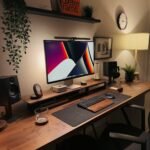
The right idea depends on whether your office has its own room or shares space with a bed or a sofa.
The 60-inch width and 84-inch depth designers recommend sounds generous until you measure your spare bedroom, so I built this list around pieces that scale down to a corner without losing their purpose.
1. Include Plants
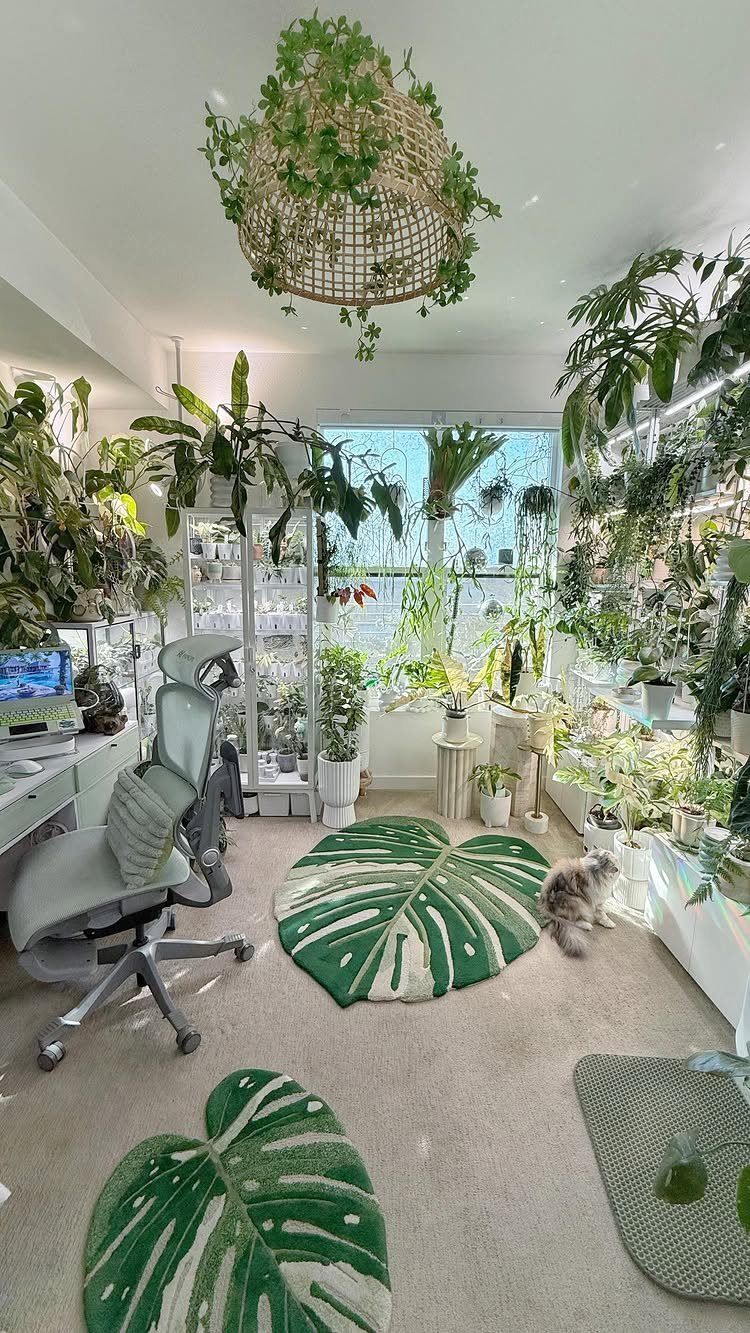
A room full of plants reads as ambition, but three well-placed ones do the same work for a renter who moves every few years.
I keep a dragon tree on the floor beside my desk where it catches indirect light, and a peace lily on a shelf to handle the dim corner.
Both tolerate the kind of north-facing window common in apartments, and both actually clean the air rather than just looking like they might.
One big plant by the window does more for the room than a crowd of small ones on a shelf.
One large-leaf plant at desk height softens the boxy feel of a spare bedroom office better than a dozen small pots scattered around.
Hanging vines in a basket overhead work if you have a hook in the ceiling; otherwise they become one more surface to dust.
Skip the grow lights and the humidifier unless you already own them. Start with one plant that can survive your actual light, see if you remember to water it, then add.
2. Prioritize Your Comfort
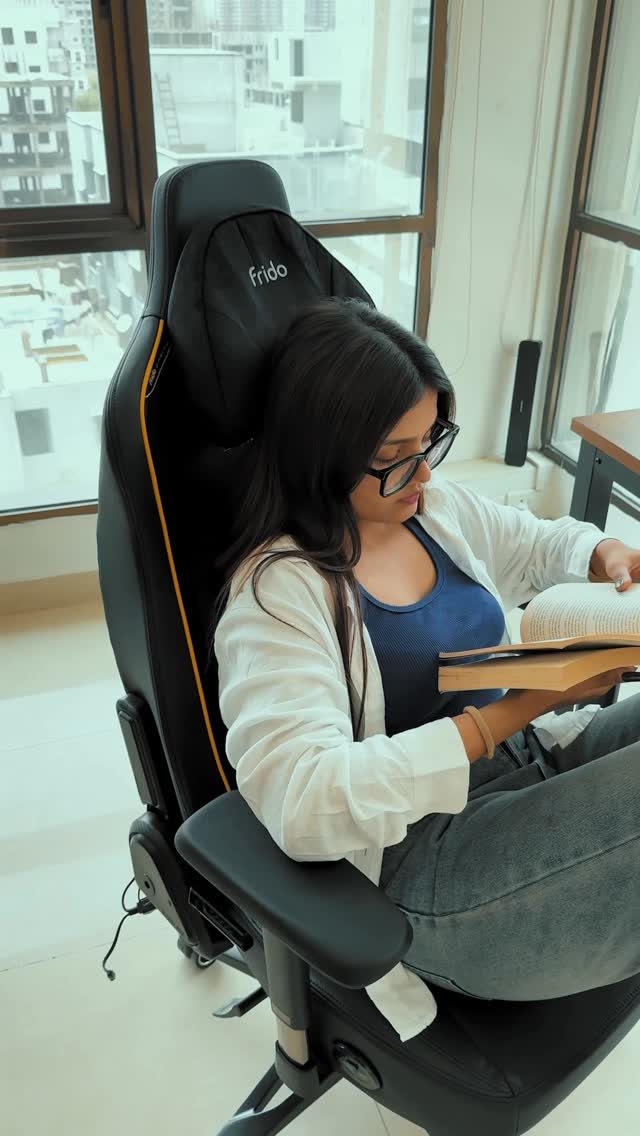
The neck pillow in that chair has a name, Frido, which tells you something: support has gone mainstream enough to brand.
I sit long hours, and the difference between a chair that fits and one that almost fits shows up in my shoulders by midafternoon.
The 60-inch width and 84-inch depth designers recommend sounds generous until you measure your spare bedroom. My first office was narrow, wall to doorframe, and I made it work by skipping the side table and mounting a narrow shelf instead.
The posture rules still apply: feet flat, screen at eye level, keyboard low enough that my elbows hang relaxed. A laptop stand and a separate keyboard cost less than a new chair and fix more problems.
A footrest sounds like an extra until you are short-legged in a standard desk. I use a cardboard box covered in fabric; it works the same as the store version.
3. Clever Storage Solutions
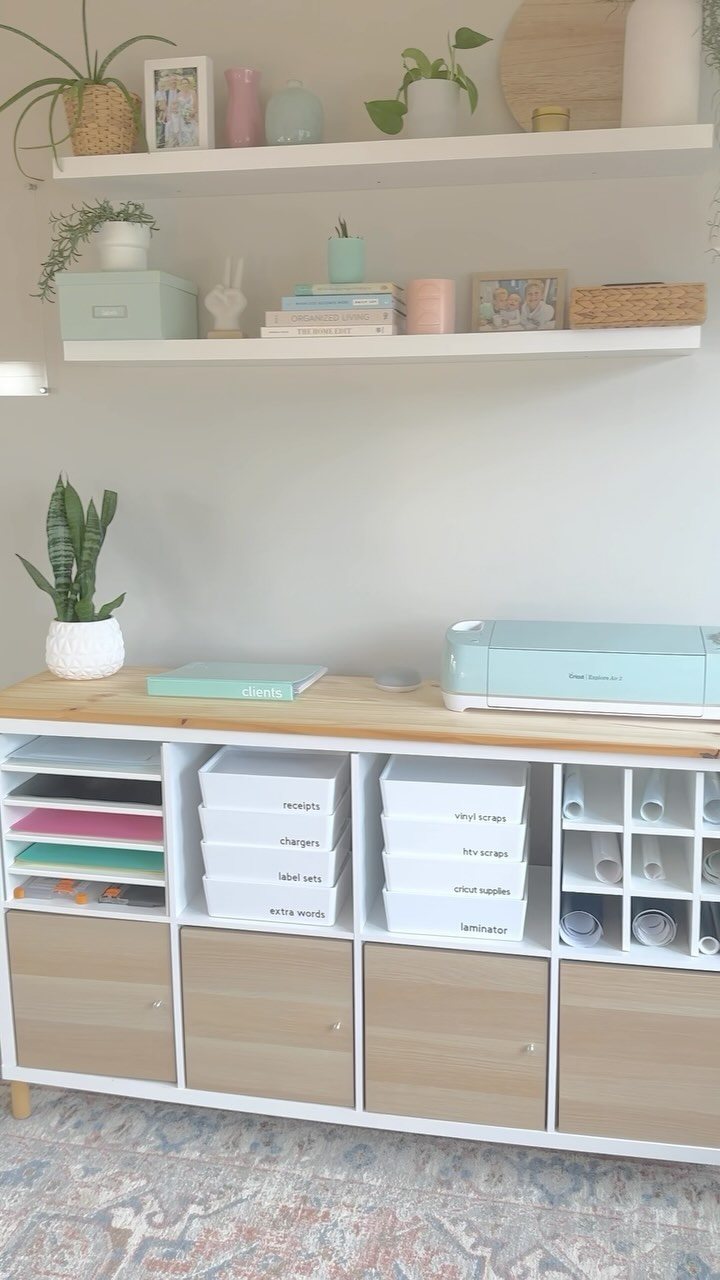
Labeled bins with paper rolls sorted upright is the dream version, but the principle scales down to a single drawer. I work best when my active projects live within arm’s reach and everything else hides.
A desk with built-in shelving underneath keeps supplies accessible without the visual noise of open storage. If your desk lacks it, add a rolling cart that slides underneath when company comes.
Floating shelves above work for reference books or the one decorative object that makes the room feel intentional, not for daily clutter.
Bins you can see into matter more than the labels themselves. Handwritten tape means you can rename a bin next month without guilt.
I sort by project, not by supply type; it saves the step of gathering scattered materials every Saturday morning.
4. Select a Sleek Desk
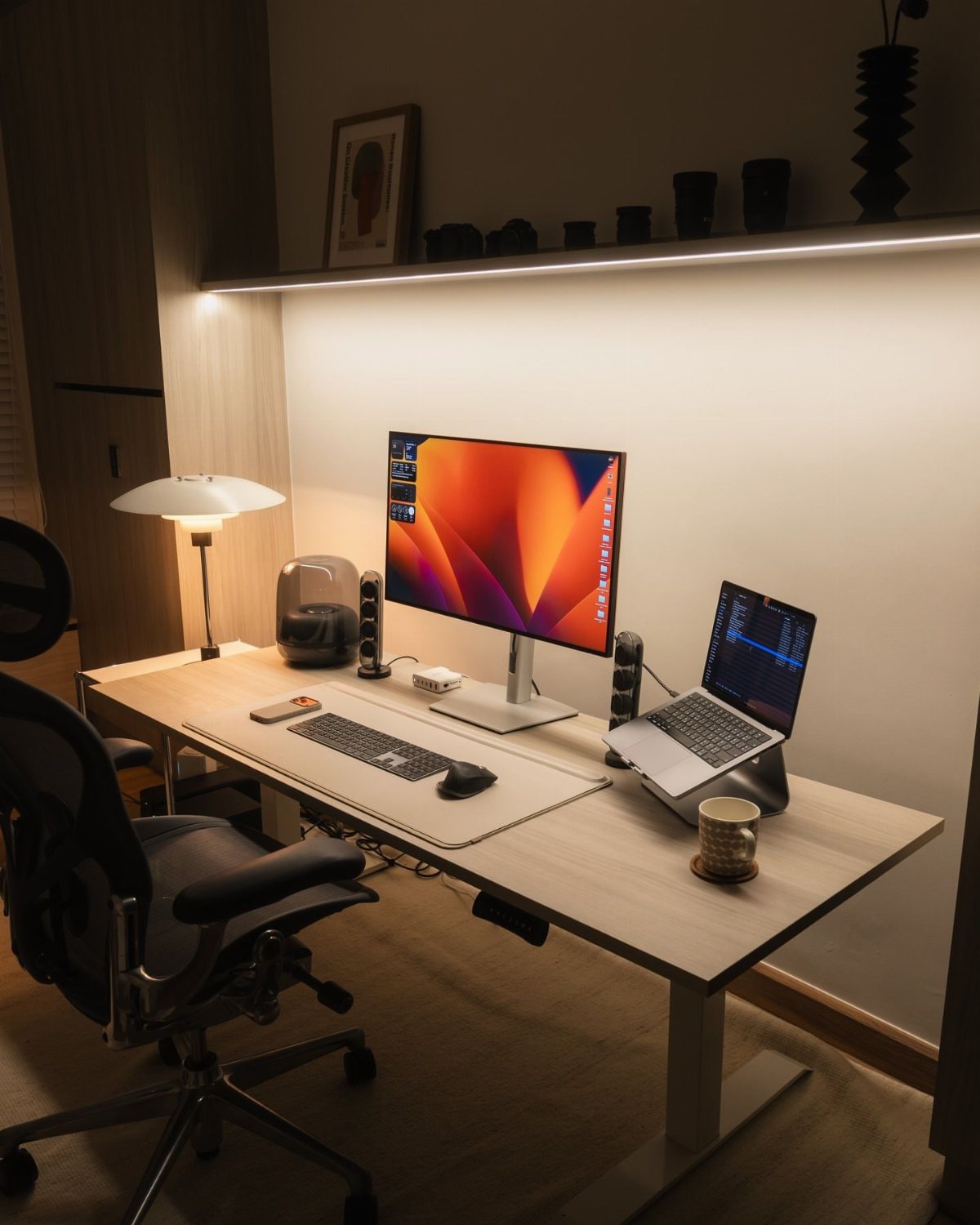
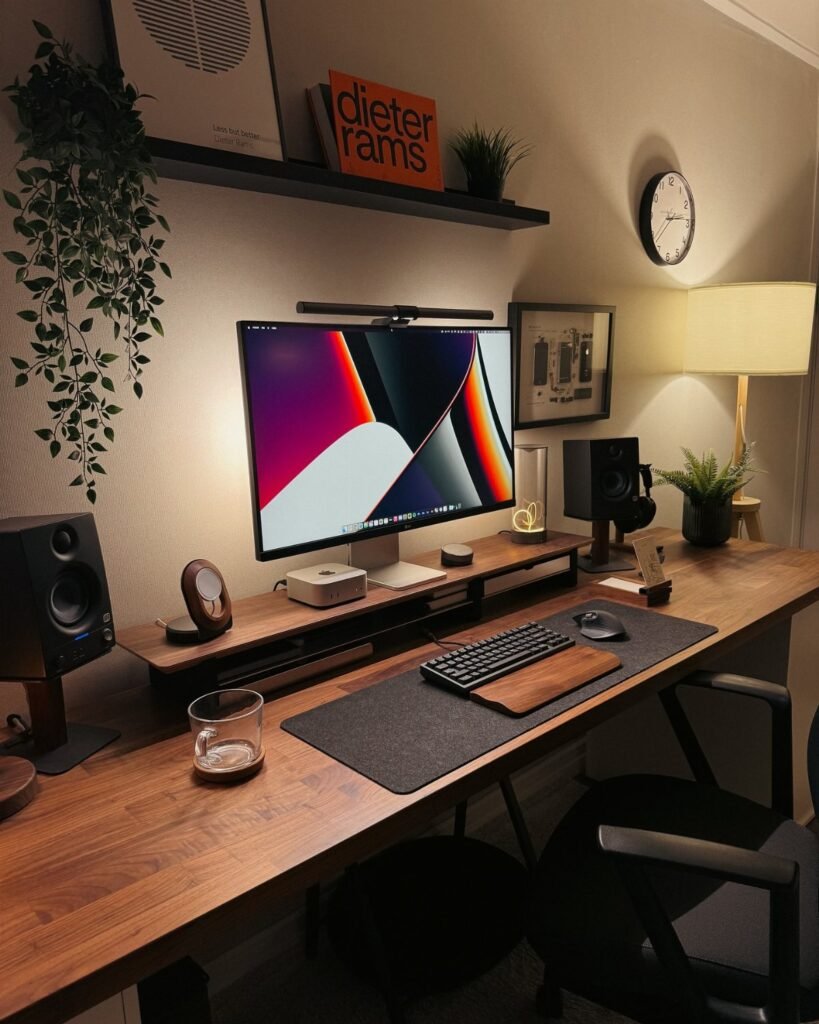
That light wood standing desk with the warm overhead strip reads as designed space, not improvised corner. The standing feature matters if you pace while on calls; skip it if you never remember to raise it.
I bought a fixed-height desk and added a monitor arm instead, which gave me the posture adjustment for less.
An L-shaped desk claims corner space efficiently in a dedicated room. In a multi-purpose space, the second wing becomes a landing pad for laundry and kills the work mood.
Measure your wall, then subtract enough space for chair clearance and circulation.
The mushroom lamp and the light strip do different jobs. The strip washes the wall evenly for video calls; the lamp pools light on paperwork.
I run both on warm bulbs because cool white makes a home office feel like a clinic. Check your actual tasks before you buy either.
5. Hang Artwork
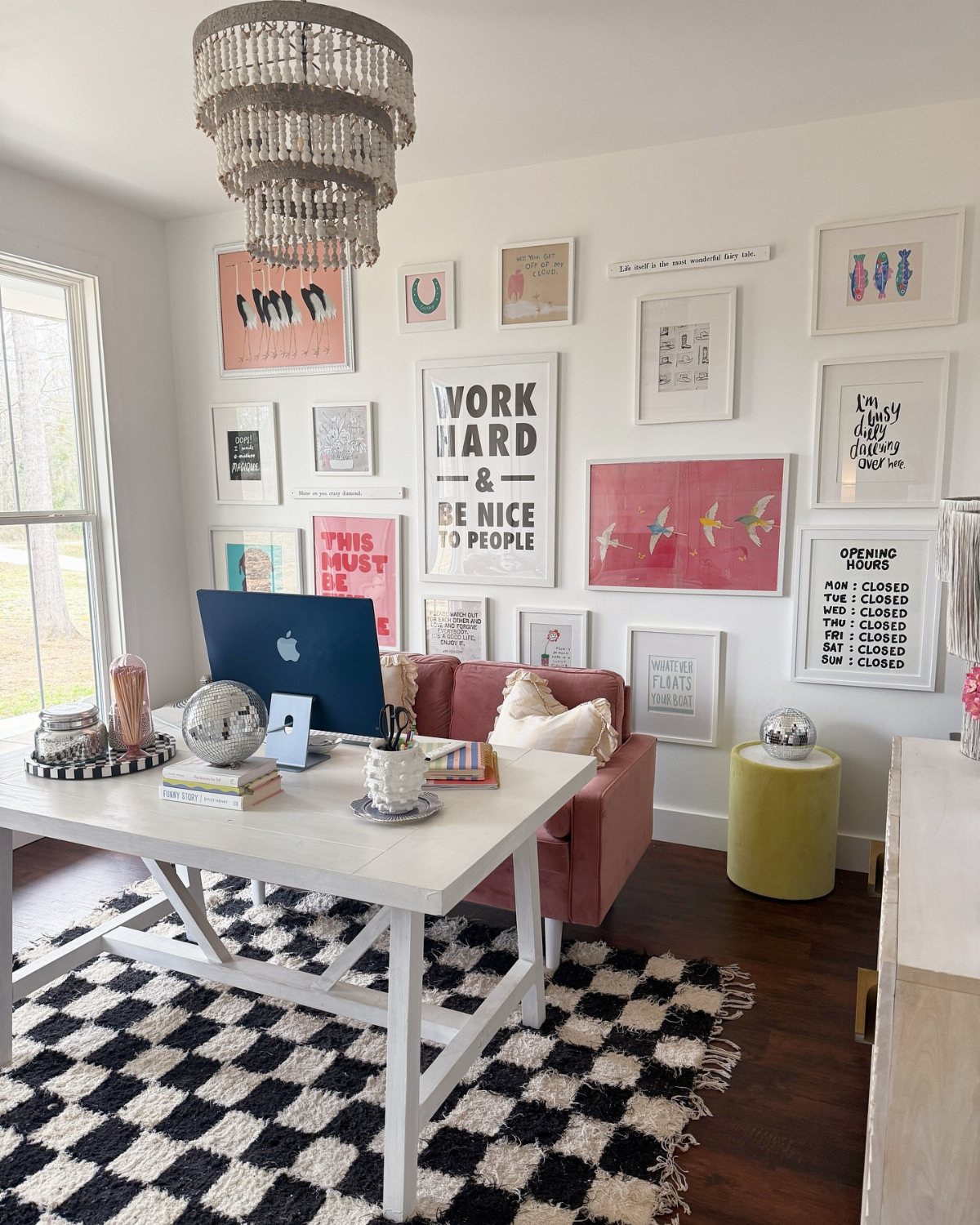
A single bold print in a gallery wall does specific labor: it reminds the room’s owner why they sit down here each morning. Art in a home office fails when it is too polite to interrupt your thoughts.
I hang pieces at sitting eye level, not standing, because that is the position I am in.
A single large print over the desk anchors the space with less effort than a gallery wall, which requires spacing math and multiple frames.
Color matters more than content for mood; I keep one energizing piece in my sightline and calmer tones where I glance less often.
If you have space for a place to read away from your desk, the art can be quieter. If your office is the corner of your bedroom, choose one piece with enough presence to define the zone.
Creating a Distraction-free Environment
Position your desk where movement through the house does not cross your sightline.
A corner of the living room works if it faces the wall, not the kitchen; the dining table works if you sit with your back to the hallway.
Place yourself so no one walking past becomes a reason to look up.
A window at your side gives natural light and a view without the glare of a window straight ahead. Translucent shades soften it if the light hits your screen.
If the room has no window at all, a lamp with a warm bulb and a light-colored wall behind your desk do similar work; mirrors opposite the lamp spread what light you have.
The room does not need to be large. Light colors on the wall you face make the space feel bigger than its measurements, which matters in a spare bedroom or a converted closet.
Frequently Asked Questions
What is a good home office setup?
A good setup centers on a chair that actually fits your body, a desk at the right height, and lighting that matches your tasks.
A laptop stand and separate keyboard cost less than a new chair and fix more problems than you’d expect.
How to make a home office nice?
Three well-placed plants do the work of a roomful, and one bold piece of art at sitting eye level reminds you why you sit down here. Warm bulbs throughout keep the space from feeling like a clinic.
What’s an alternative for a home office?
A dedicated workspace inside your home beats trying to work from a coffee shop or library, even when square footage is tight.
If your office must share a bedroom, one piece of art with real presence can define the zone, and a desk with built-in shelving or a rolling cart keeps work supplies from taking over the room.