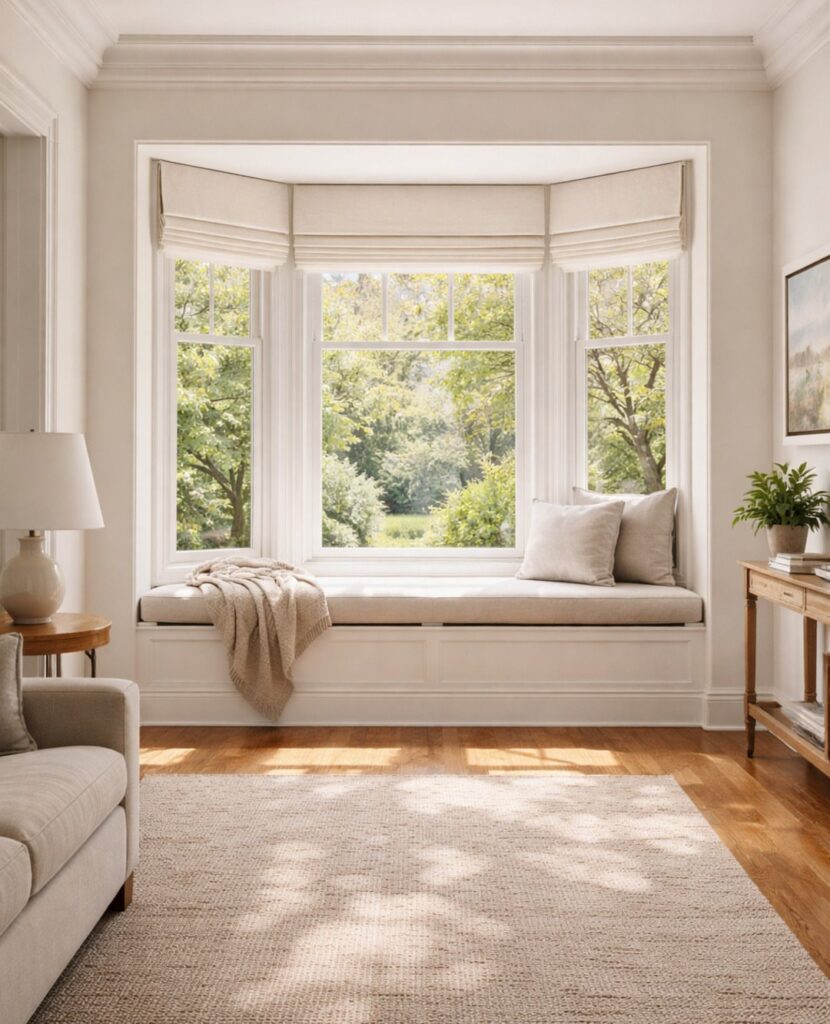
Bay window treatment ideas range from Roman shades that fold flat in neat stacks to floor-length drapery panels that frame the whole opening.
What decides which one is yours is whether you want the glass covered completely or left partly open, and how much of the wall you want the fabric to take up.
1. Roman Shades
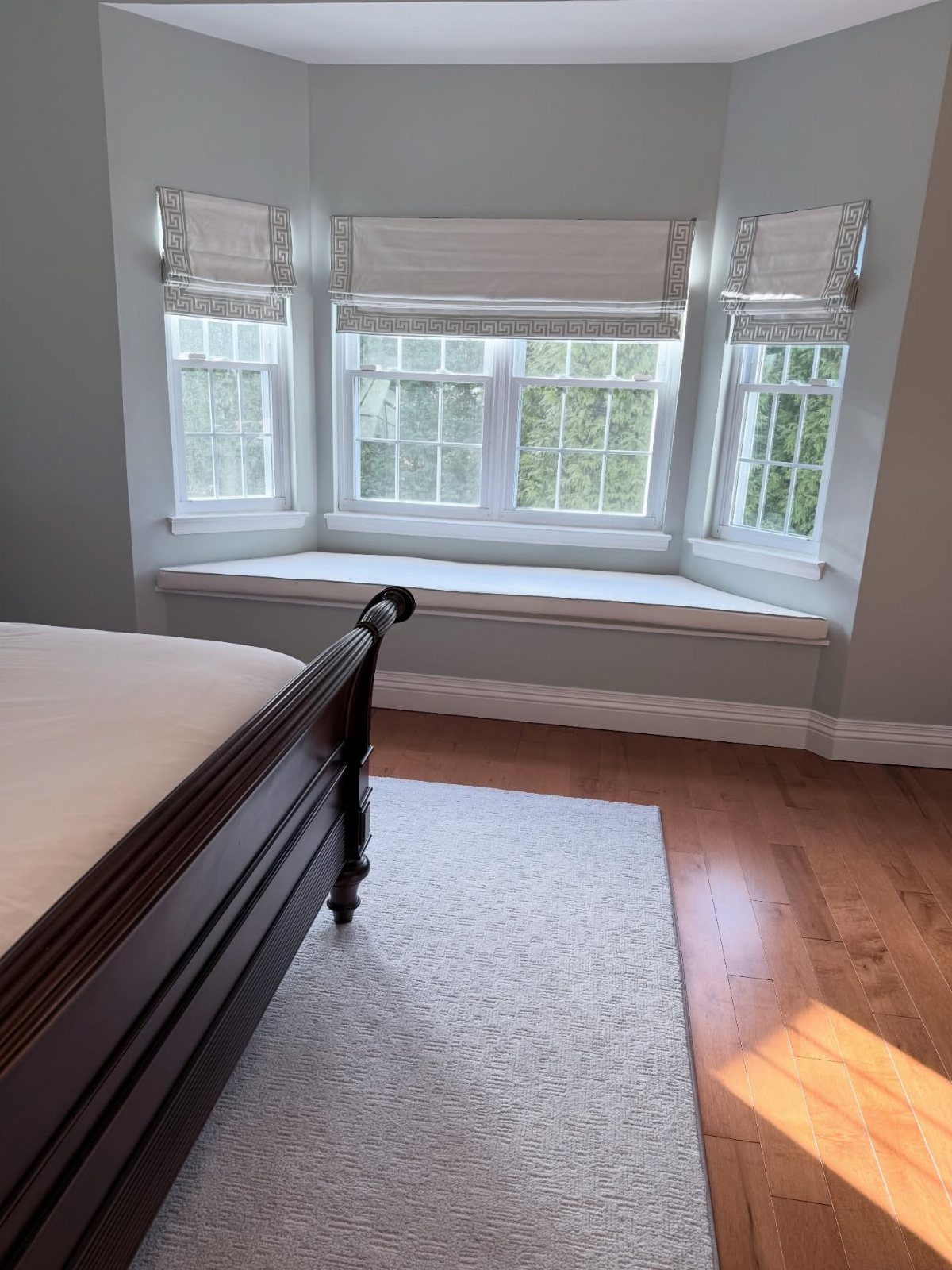
Roman shades fit inside each window frame for a neat, built-in look that keeps the seat or sill below clear. The flat fold reads modern; a hobbled fold adds soft texture for traditional rooms.
Mount them close together with a bold pattern and narrow bays look like one wide unit. Lining options run from privacy to blackout, so the same fabric can handle a bedroom or a south-facing living room.
I would pick these first for any bay with a window seat where floor-length fabric would pile up on the cushion.
2. Floor-Length Drapery Panels
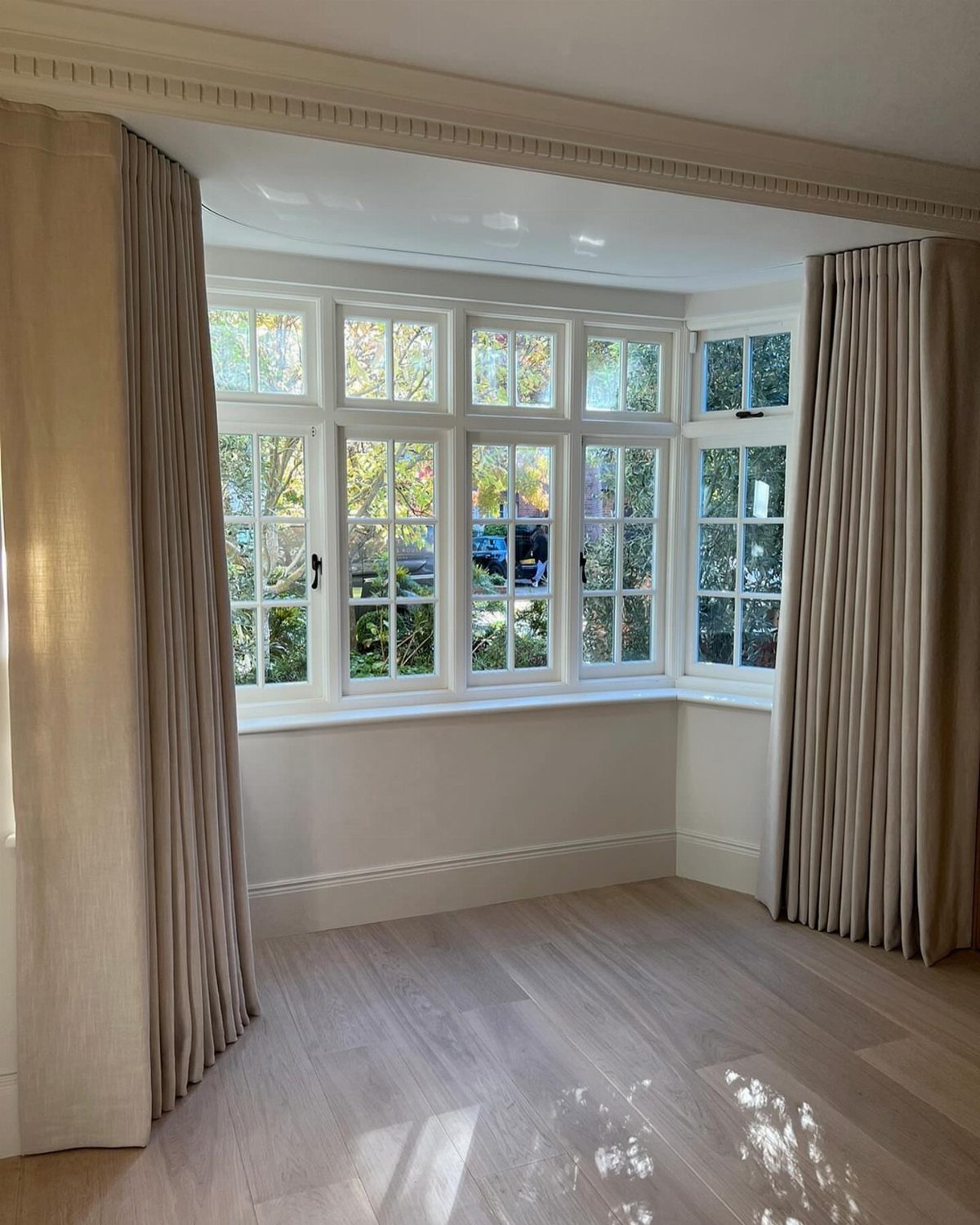
Panels that run floor to ceiling pull the gaze upward, which helps a low ceiling read as higher than it is. A ripple fold pleat keeps the look clean; pinch pleat or goblet styles add more formality.
Linen gives a relaxed finish, velvet adds weight and texture. The tailored length should just touch the floor, not pool, for the cleanest line.
Three individual rods, one per window section, follow the angles better than fighting a single bent rod into place.
This option needs space on both sides of the bay for the stackback, so skip it if furniture sits tight against the wall.
3. Stationary Drapery Panels
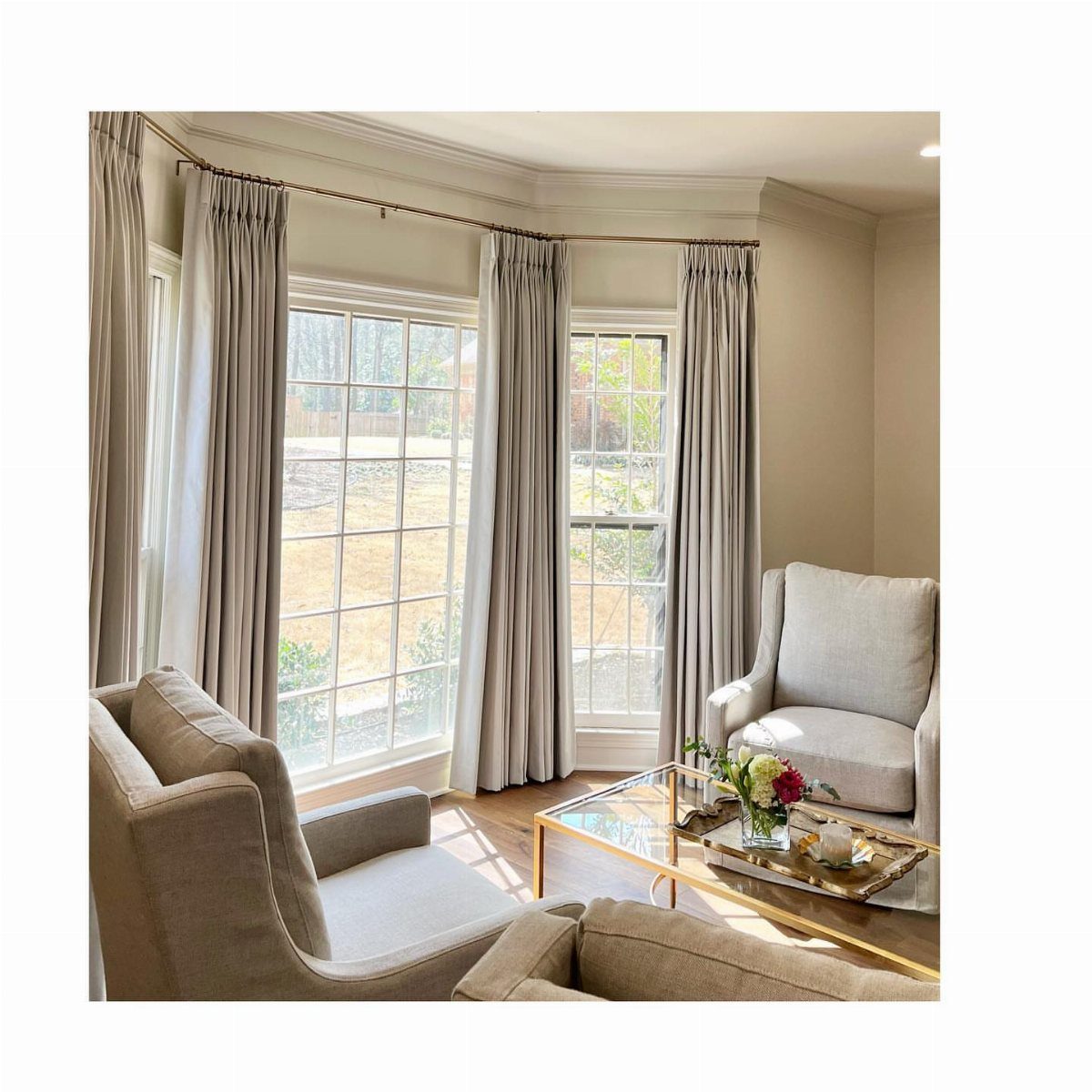
Stationary panels stay fixed at the outer edges of the bay and never slide. They frame the glass like soft brackets while shades or blinds inside handle light and privacy.
The window itself stays mostly exposed, which matters when the trim or frame is worth showing off. This is the right choice when you want the decorative presence of drapery without giving up square footage to stackback space.
Pair with a simple roller or Roman shade in a matching tone and the whole assembly feels intentional, not like a compromise.
4. Choose Hardware That Follows the Bay
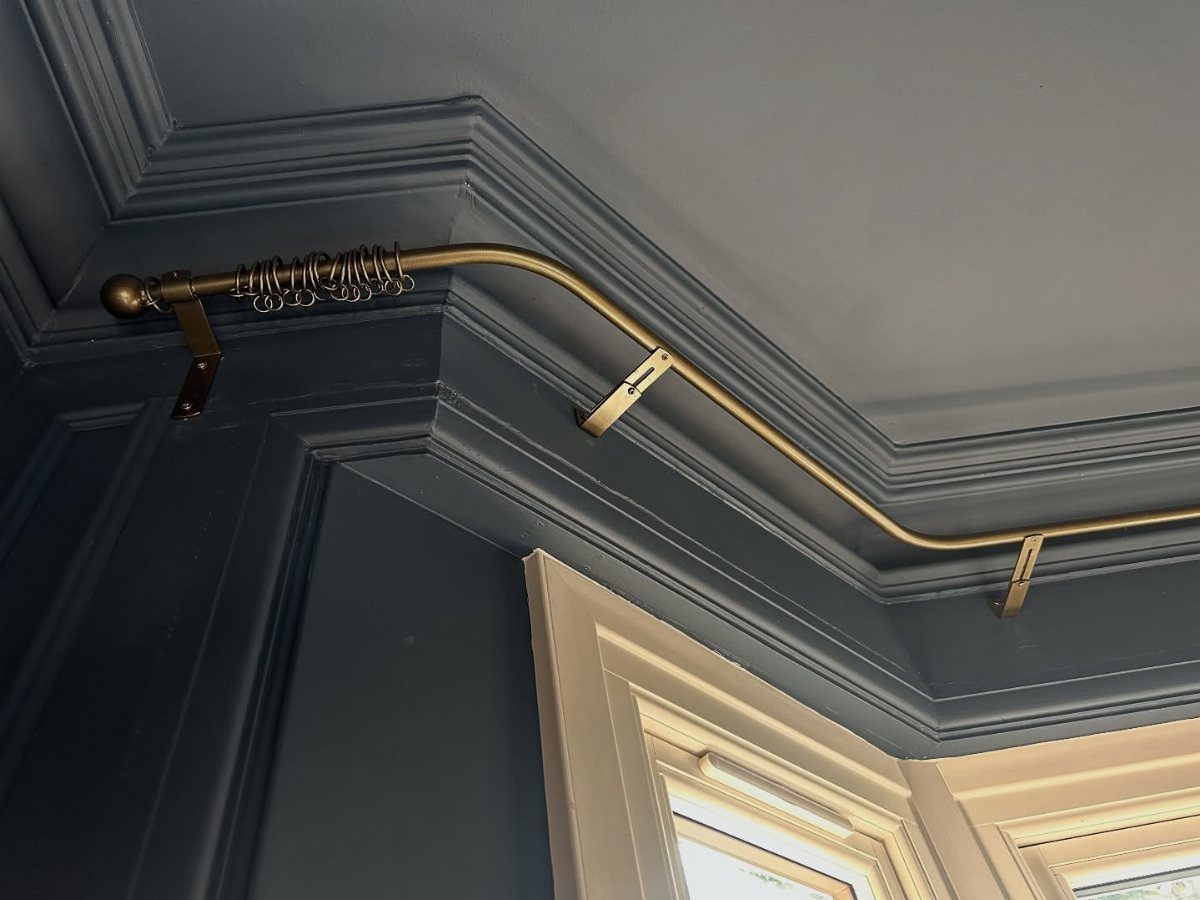
Standard straight rods fight bay angles and leave gaps at the corners. A continuous curved or cornered rod, brass or steel, lets rings travel smoothly around the bend so curtains move as one line across all three sections.
Ceiling-mount brackets suit bays where the frame sits tight to the crown molding and there is little wall space above to work with.
The hardware costs more than off-the-shelf straight rods, and specialty bends need exact measurements, but the result keeps the architecture visible instead of breaking it into three separate boxes.
5. Valances
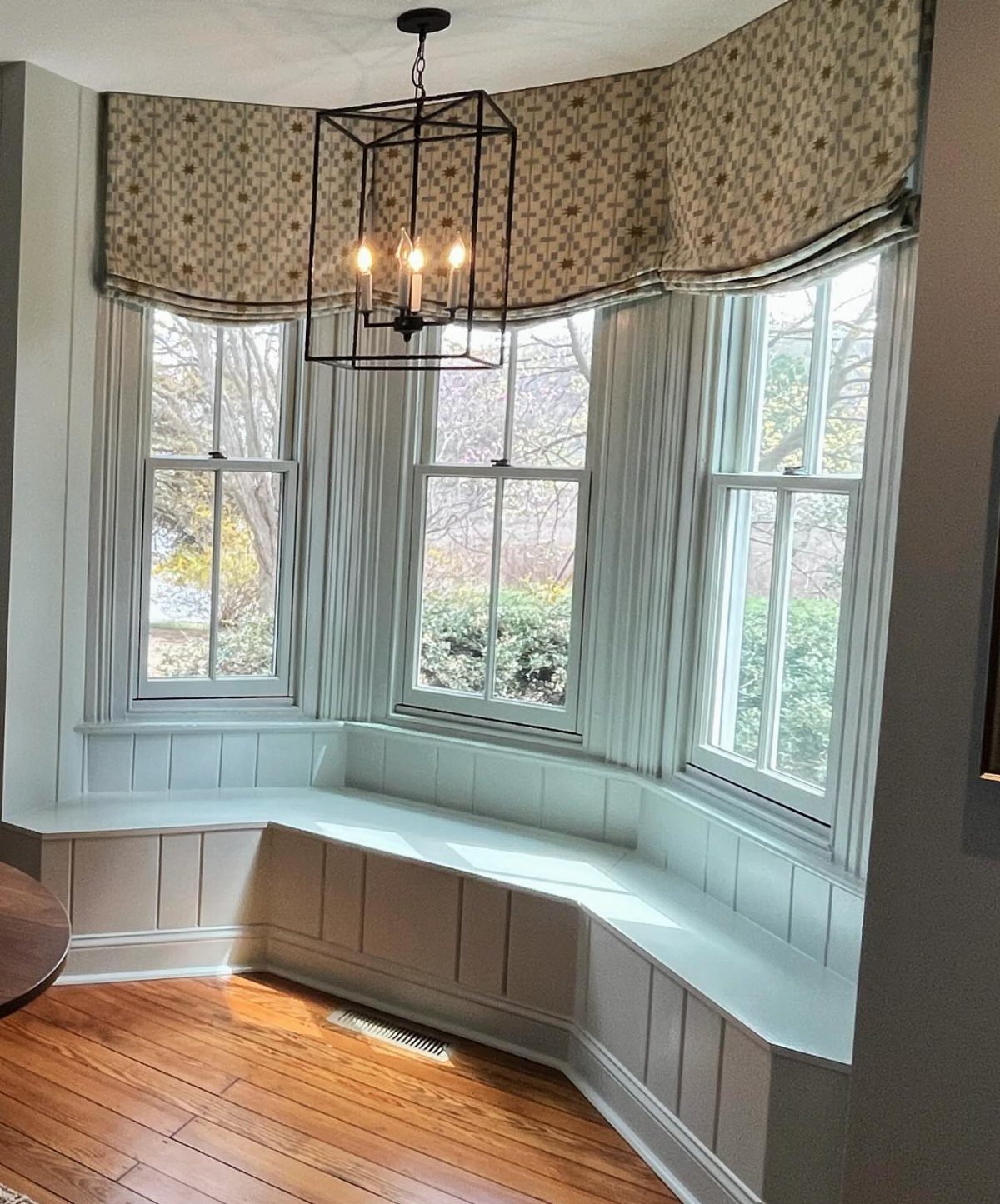
A valance caps the top third of the window and leaves the lower glass open, which keeps a small room from feeling draped to death.
A straight, tailored shape suits modern spaces; a scalloped or shaped bottom edge reads more traditional. Add shades below for privacy at night and the combination still reads lighter than full curtains.
This is the best route when the bay looks onto a garden or street you want to see, or when the bench below means any long fabric ends up sat on and crushed.
6. Velvet Curtains
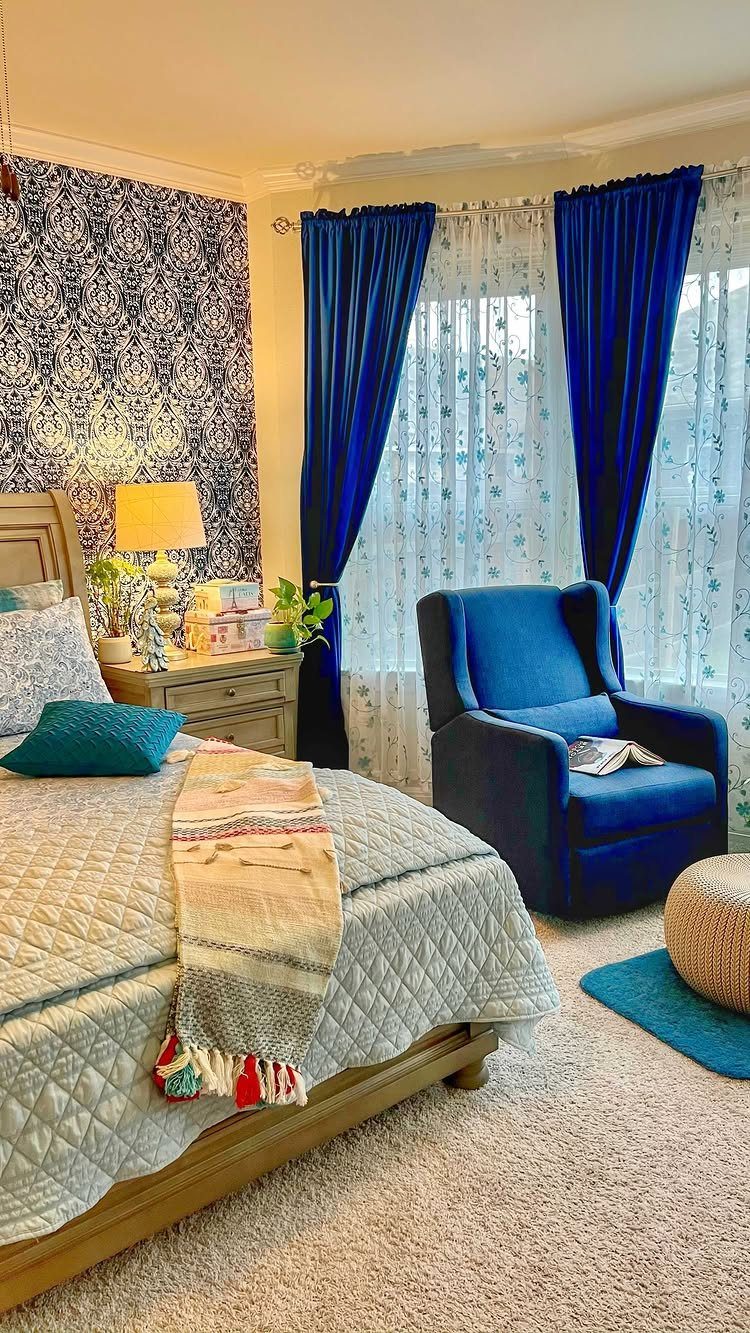
Velvet frames a bay with weight and softness that flattens harsh angles into something rounded and comfortable. The fabric insulates against winter cold and summer heat, and the dense weave blocks more light than linen or cotton sheers.
Hang it as stationary panels to keep the luxury without the daily handling, or layer it over sheer white panels for a bedroom where you want light in the morning and darkness at night.
The deep pile shows every brush mark, so vacuum with an upholstery attachment and steer the steamer downward to keep the nap uniform.
7. White Plantation Shutters
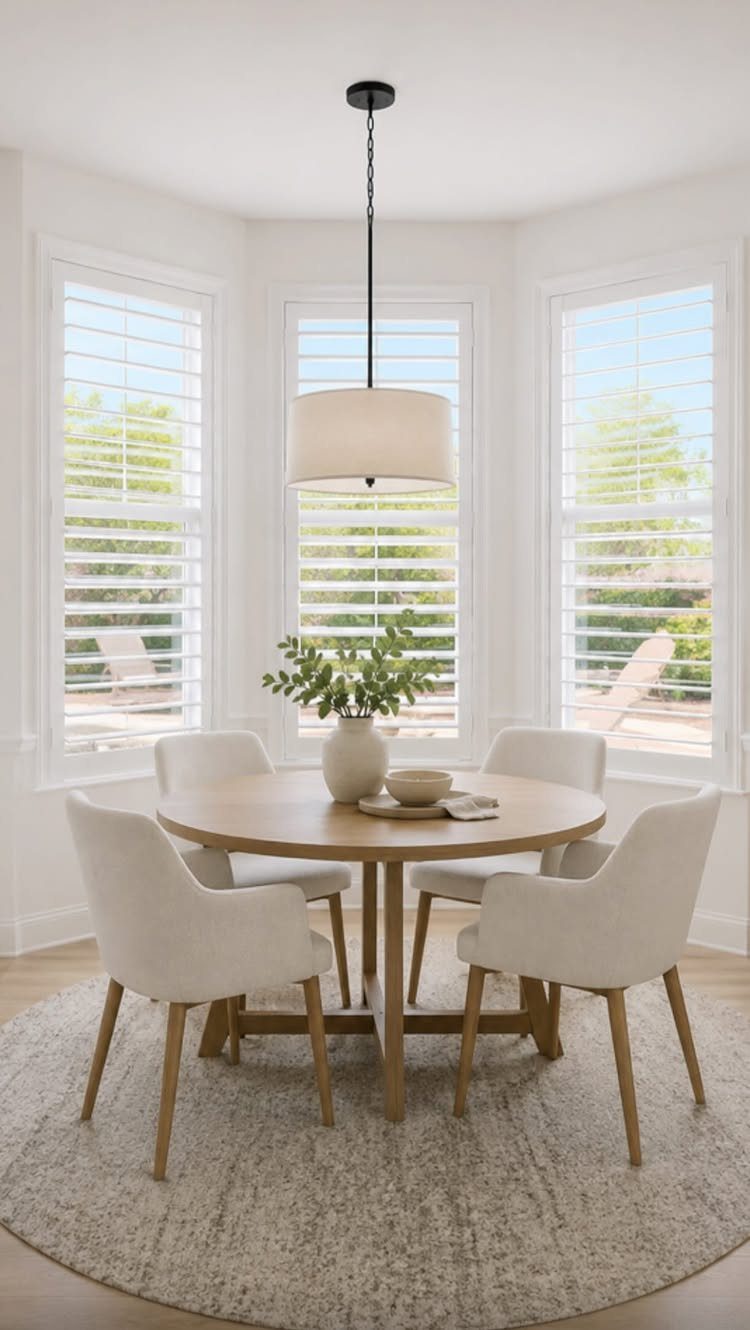
White plantation shutters sit inside each bay panel on its own frame, so the angled joins stay clean and the louvers tilt in unison or separately. The look reads permanent and tailored, more built-in than hung.
They suit a reader who wants one treatment to last and who would rather wipe dust off slats than haul panels to a cleaner.
Poly or composite holds up to kitchen grease and bathroom steam without warping; wood gives a warmer edge but asks for gentler conditions.
Budget runs higher than fabric from the start, and the custom frame for a three-section bay adds labor.
A center opening with hidden tilt bars keeps the face minimal, which is the version I would pick for a dining nook like this one.
8. Layered Sheers Over Shutters
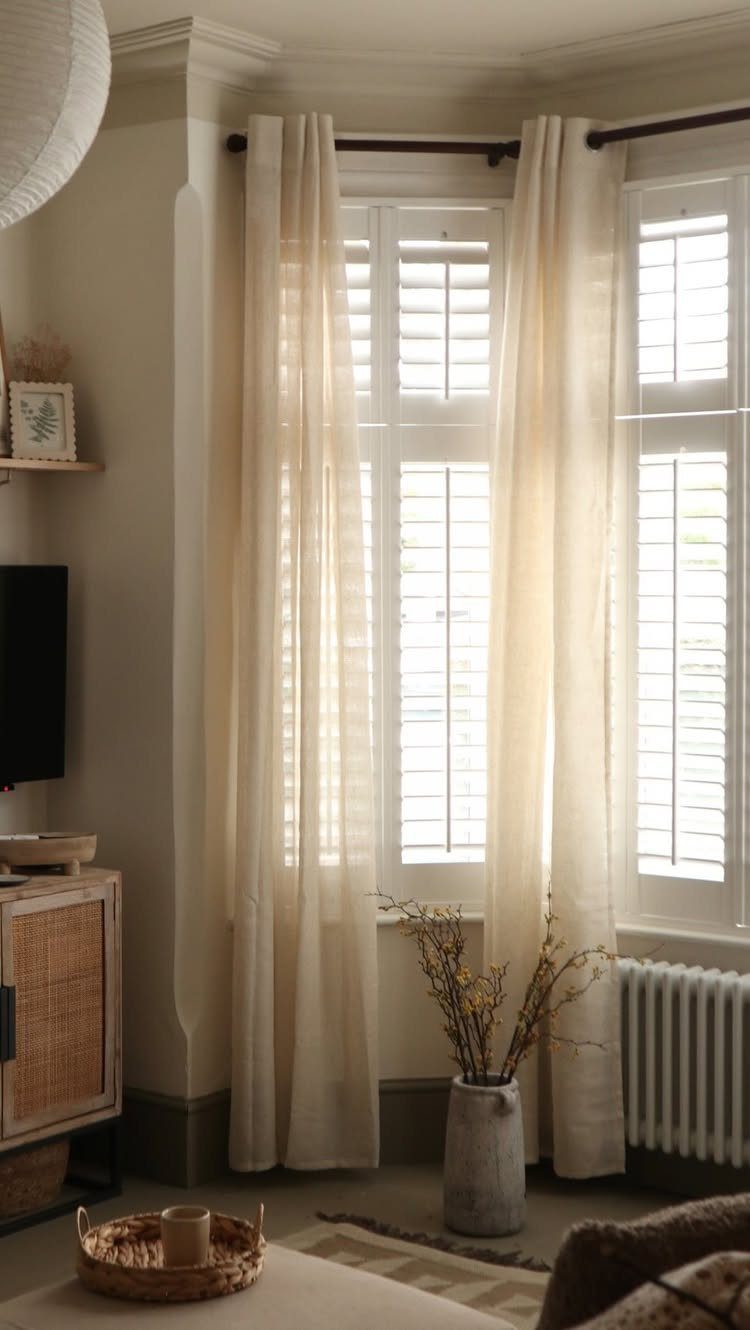
The pairing works best in a room that faces the street or a close neighbor, where you want privacy without committing to a wall of solid fabric.
Hang the sheers on their own rod, set forward enough that both layers operate without catching. A light cream or warm white keeps the glow from turning cold; anything darker starts reading as a costume instead of a filter.
At night the sheers do little, so this combination suits someone who already owns the shutters and wants daytime texture more than evening coverage.
Add a third layer of heavier drapes on an outer rod if you need the room fully dark for sleeping.
Measuring for Bay Windows
I measure each flat section of the bay on its own; three separate widths and drops, not one big shape that makes my head hurt.
Measure the width of the left, center, and right panes separately with a metal tape, and check each measurement twice. For a continuous rod, add the bracket depth at the corners into your total.
The drop depends on the finish you want: rod to just above the floor for something current, or an inch or two longer if you prefer a slight puddle.
Most bays angle at 90 or 135 degrees, and that number matters when you order corner connectors. If the math makes you nervous, a pro measurement takes the risk out of it.
Light Control and Privacy
A sheer base layer on an inner rod keeps the room bright during the day and blurs the view from outside.
A sheer layer in white or natural linen on the inner rod softens the light all day, while heavier drapes on the outer rod pull across for privacy after dark.
Swap the pairing to textured linen against smooth curtain fabric, or add a subtle trim to solid panels, and the combination still works. The sheer stays fixed; the heavier panel draws across at night for darkness and full privacy.
This is the setup for a south-facing living room or a bedroom where you want the light in the morning and the blackout after.
Choosing the Right Fabric
Velvet is dense enough to insulate against the heat loss and gain that comes with all that glass.
Use it as stationary panels at the outer edges or in the corners between windows to soften the angles without blocking the view.
Silk needs more upkeep than a synthetic like Sunbrella, so match the fabric to how much maintenance you will actually do.
Custom Treatments
Premade treatments rarely fit a bay’s exact angles and widths, and gaps at the corners look worse than bare glass. Custom work is made to the measurements you took and cut for the specific pleat, fabric, and lining you chose.
Board-mounted shades with L brackets, set right under the crown molding, give the cleanest proportions when floor-length panels are not practical. A Roman or London shade fixed in place reads as a working shade without the daily motion.
The upcharge over off-the-shelf rods or panels is real, but so is the difference between hardware that follows the bend and hardware that fights it.
Frequently Asked Questions
What is the best window treatment for a bay window?
What works best changes with what your bay looks out on and what you actually do in that room.
Roman shades fit inside each frame and keep a window seat clear, while floor-length panels draw the eye up to help a low ceiling feel taller.
Blackout shades or heavy drapery will kill the light when you need to; if your old house runs cold, cellular shades catch air in those honeycomb pockets and slow the draft.
Made-to-measure fits matter more than off-the-shelf sizes, since premade treatments tend to gap or overlap on angled bay windows.
Are blinds or curtains better for bay windows?
Either can work, and many bays use both. Blinds or shades inside the frame handle privacy and light control, while curtains add softness, frame the view, or help with insulation.
The right pairing depends on whether you need the glass fully open during the day or want the option to black out a bedroom at night.