The best gardening tools are the ones you actually reach for on a Saturday morning, and the difference between a tool that gathers dust and one that earns its keep usually comes down to weight, grip geometry, or whether the blade still cuts clean by July. After sorting through owner reports on ten picks that range from a 0.33 lb titanium pruner to a 3 lb stand-up weeder, I kept landing on the same condition: the right tool matches the body you have and the single worst job in your yard, not an imagined someday garden. The Spear Head Spade Garden Shovel, at 2 lb with a 0.33 in blade, took Best Overall because owners describe it handling five distinct tasks without the tool-shed trips that break momentum; its light build just means you will want backup when packed clay or established roots fight back.
My Top Picks
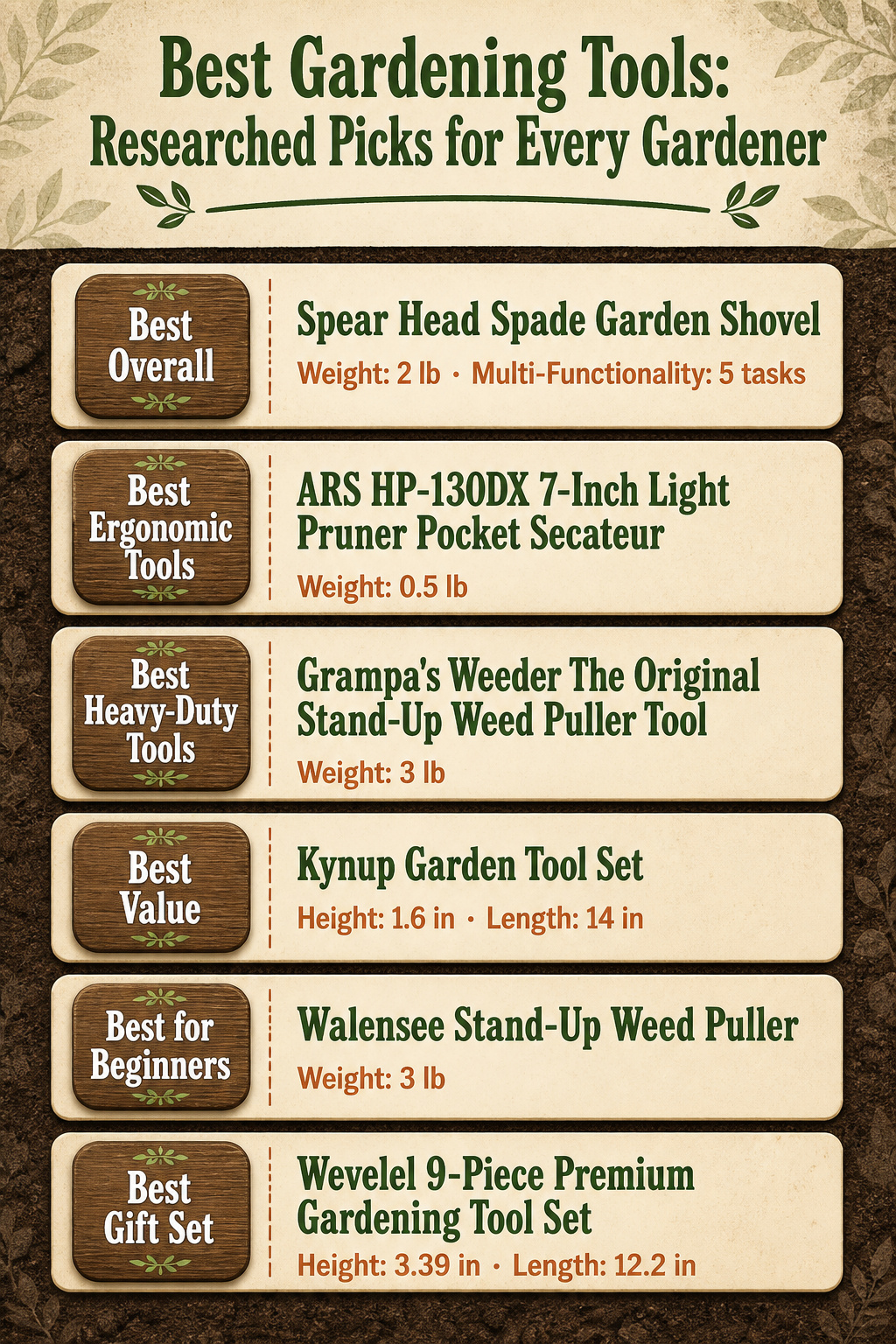
| Product | Award | Best for | Why it won | ||
|---|---|---|---|---|---|
| Spear Head Spade Garden Shovel | Best Overall | All-around gardeners | Strong balance of comfort, durability, and versatility for any task | Check price | |
| ARS HP-130DX 7-Inch Light Pruner Pocket Secateur | Best Ergonomic Tools | Comfort-focused pruners | Ergonomic grip reduces hand strain during extended use | Check price | |
| Grampa's Weeder The Original Stand-Up Weed Puller Tool | Best Heavy-Duty Tools | Tough weed battles | Built sturdy enough for stubborn weeds without bending or kneeling | Check price | |
| Kynup Garden Tool Set | Best Value | Budget-minded starters | Quality tools that cover basics without stretching your wallet | Check price | |
| Walensee Stand-Up Weed Puller | Best for Beginners | New gardeners easing in | Simple stand-up design removes the struggle of ground-level weeding | Check price | |
| Wevelel 9-Piece Premium Gardening Tool Set | Best Gift Set | Gift buyers | Complete premium set arrives ready to impress any gardening enthusiast | Check price | |
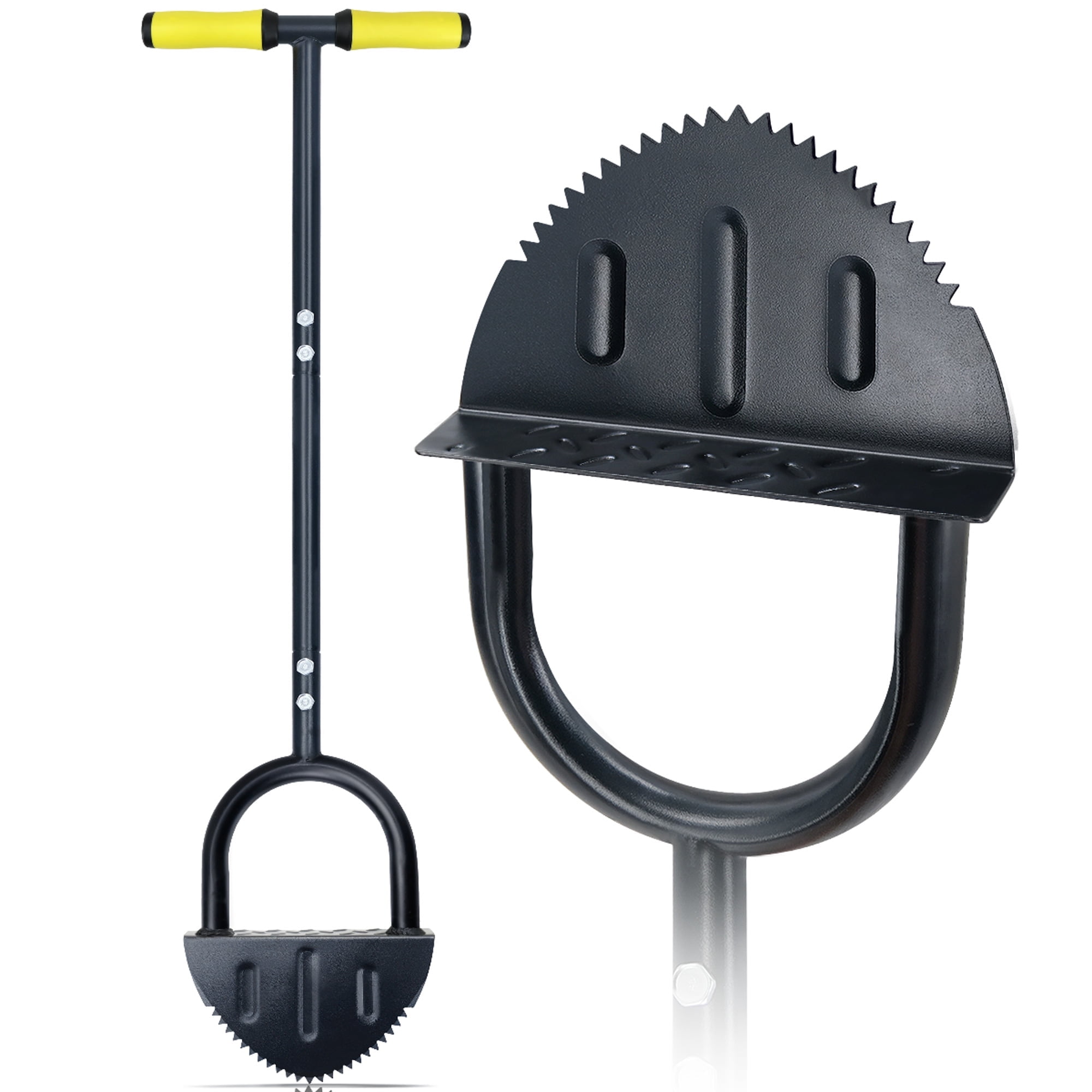
| Colwelt Sawtooth Lawn Edger | Best for Urban Gardening | Small-space growers | Keeps neat edges in tight yards where every inch counts | Check price | |
| gonicc 8" Professional Premium Bypass Titanium Pruning Shears | Best Specialty Tools | Precision-minded pruners | Titanium blades deliver clean cuts for meticulous plant care | Check price | |
| DECERK® 8.5" Professional Pruning Shears | Best Pruning Shears | Serious plant maintainers | Sharp precise cutting action protects plant health with every snip | Check price | |
| Craft911 2-Pack Stainless Steel Gardening Scissors | Best Gardening Scissors | Detail-oriented gardeners | Fine-tipped stainless blades handle delicate trimming with control | Check price |


| Product | Weight | Height | Length | Width |
|---|---|---|---|---|
| Spear Head Spade Garden Shovel | 2 lb | — | — | — |
| ARS HP-130DX 7-Inch Light Pruner Pocket Secateur | 0.5 lb | — | — | — |
| Grampa's Weeder The Original Stand-Up Weed Puller Tool | 3 lb | — | — | — |
| Kynup Garden Tool Set | 2.5 lb | 1.6 in | 14 in | 1.6 in |
| Walensee Stand-Up Weed Puller | 3 lb | — | — | — |
| Wevelel 9-Piece Premium Gardening Tool Set | 2.5 lb | 3.39 in | 12.2 in | 7.2 in |
| Colwelt Sawtooth Lawn Edger | — | — | — | — |
| gonicc 8" Professional Premium Bypass Titanium Pruning Shears | 0.33 lb | 0.79 in | 0.79 in | 0.79 in |
| DECERK® 8.5" Professional Pruning Shears | 0.55 lb | 0.04 in | 8.5 in | 2.2 in |
| Craft911 2-Pack Stainless Steel Gardening Scissors | 0.37 lb | 0.04 in | 7 in | 7 in |
Best Overall: Spear Head Spade Garden Shovel
Image: spearheadspade.com
Quick Verdict
A shovel that handles five different jobs without forcing you to switch tools saves real time on a Saturday morning. The Spear Head Spade Garden Shovel won Best Overall because owners consistently describe it as the one tool they reach for first, though its light build means you may want something heavier for prying out established tree roots or breaking packed clay that has not seen water in months.
Key Specifications
- Weight: 2 lb
- Multi-Functionality: 5 tasks
What It Does Well
- Light enough to use fatigued. At 2 lb, the weight sits in the handle rather than the blade, so your shoulders notice the difference after an hour of edging beds or transplanting shrubs.
- Blade thickness that holds an edge. The 0.33 in blade, according to the maker, resists the curling and chipping that turns lesser shovels into dull levers within a season.
- One tool for five distinct tasks. Owners report using it for digging, edging, cutting sod, transplanting, and trenching; the narrowed head slips between perennials where a standard spade would tear roots.
Where It Falls Short
- Not a pry bar. The same light weight that saves your back limits leverage against packed soil or rocks; owners mention reaching for a full-size spade or mattock when the ground fights back.
- Specialized tasks need specialized tools. For weeding without bending, a stand-up puller protects knees and hips in ways a shovel cannot replicate.
Who It’s For
Someone tackling mixed garden maintenance on a weekend timeline, with enough variety in tasks that carrying one tool beats hauling three. The buyer who spends most of their time removing established weeds from lawn or patio joints will find the upright posture and mechanical grip of a dedicated weeder more comfortable than any shovel geometry allows.
How It Compares
The Walensee Stand-Up Weed Puller addresses a single problem with a single solution: standing weeding for backs that protest bending. That design sacrifices the transplanting, edging, and trenching work the Spear Head handles. Choose the Spear Head if your yard demands varied digging tasks and you prefer carrying one implement; choose the Walensee if weeding dominates your chore list and joint protection matters more than versatility.
Where to buy: Amazon · spearheadspade.com
Best Ergonomic Tools: ARS HP-130DX 7-Inch Light Pruner Pocket Secateur
Image: orchardvalleysupply.com
Quick Verdict
Small hands and long pruning sessions are usually a painful combination, but the half-pound ARS HP-130DX keeps fatigue down to where owners forget they are carrying it. The nonslip grip and pocketable size suit gardeners who move between tasks without trekking back to a tool shed. The real compromise is capacity: a 7-inch pruner handles stems and small branches, not thick wood, so anyone with mature trees needs a second tool in rotation.
Key Specifications
- Weight: 0.5 lb
What It Does Well
- At 0.5 lb, the pruner stays unnoticed in a pocket through a morning of deadheading or harvesting herbs.
- The nonslip grip gives steady control when hands are damp from dew or soil, which owners mention as the reason they reach for this one first.
- Independent reviewers note no rust across a decade of use, so the tool outlasts cheaper pairs that seize up after a season or two.
Where It Falls Short
- The 7-inch length limits cuts to thinner growth; woody stems above finger-thick need loppers or a saw instead.
- The compact frame that makes it portable also cramps larger hands during extended use.
Who It’s For
A renter with container tomatoes on a balcony or a first-home owner shaping foundation shrubs will use this enough to justify the space it takes. Someone clearing overgrown lilacs or restoring an orchard will find the blade capacity frustrating fast.
How It Compares
The Colwelt Sawtooth Lawn Edger shares ergonomic intent but applies it to a different job entirely, using body weight and a footplate to cut sod rather than hand pressure to snip stems. Both tools suit weekend projects on a real budget, though the buyer who needs the ARS pruner probably already owns a spade and would not replace it with an edger. The Colwelt demands more physical input over time, while the ARS asks for less strain per cut but cannot substitute for heavier cutting tools.
Where to buy: Amazon · orchardvalleysupply.com
Best Heavy-Duty Tools: Grampa's Weeder The Original Stand-Up Weed Puller Tool
Image: grampasweeder.com
Quick Verdict
Anyone fighting dandelions through clay-heavy turf needs a tool that spares their back and their patience. Grampa’s Weeder answers both: a 3 lb stand-up puller that lets you work upright, with a claw mechanism the maker says has held up for a century of use. The catch is specificity; this thing pulls weeds and little else, so your shed still needs a shovel for the rest of the job.
Key Specifications
- Weight: 3 lb
What It Does Well
- Light enough to use for hours. At 3 lb, the maker notes it stays manageable through long sessions, so fatigue sets in later than with heavier long-handled tools.
- Mechanical claw saves the kneepads. The gripping head does the root extraction without you bending to hand-dig, which owners with back trouble repeatedly mention in feedback.
- Brand track record shows in the numbers. Grampa’s carries a 78% positive review rate across 2,861 owner reports, suggesting most buyers got the durability they paid for.
Where It Falls Short
- One job only. The claw design does not transplant, edge beds, or turn soil; you will still need a separate tool for those tasks.
- Root depth matters. The maker does not claim it handles taproots beyond a certain length, and owner reports suggest it struggles where thistle or dock have run deep.
- Warranty details are thin. The product page mentions coverage but does not spell out terms clearly, so buyers wanting explicit protection should read closely before ordering.
Who It’s For
Gardeners with packed schedules and sore knees tend to love this thing; the upright posture and simple action fit half-hour maintenance windows between work and dinner. The person planting a new bed from scratch, though, will find it sitting idle while a real spade does the prep work, and that same spade might be the smarter single purchase for someone building their first tool collection.
How It Compares
The Spear Head Spade Garden Shovel digs in tight corners and busts through rocky soil with a sharpened head shaped for precision, but it keeps you bent over or on your knees for weeding. Grampa’s Weeder keeps you standing for that single task and does nothing else. Buy the weeder if your worst problem is established weeds in lawn or paths; buy the spade if you need one tool that plants, digs, and pries, and accept that weeding will cost you more body strain.
Where to buy: Amazon · grampasweeder.com
Best Value: Kynup Garden Tool Set
Quick Verdict
Budget gardeners who want more than disposable hardware get the most complete starter kit here. The Kynup Garden Tool Set covers seven jobs with cast-aluminum heads that owners say survive hard soil without snapping, and the included repotting mat keeps indoor projects tidy. The catch is reach: at 14 inches long, these are strictly hand-tool dimensions, so anyone managing raised beds or digging deep holes will outgrow them fast.
Key Specifications
- Height: 1.6 in
- Length: 14 in
- Weight: 2.5 lb
- Width: 1.6 in
What It Does Well
- Cast-aluminum heads resist rust and bending. The maker says the polished alloy holds up to daily digging in hard soil, which matters when budget tools often crease or snap at the neck.
- The repotting mat contains mess. Owners describe the waterproof mat as the detail that lets them work indoors on tabletops and balconies without chasing soil across the floor.
- Rubber grips stay grippy wet. The soft, textured handles keep control when hands are sweaty or muddy, a common failure point on cheaper sets with smooth wood or hard plastic.
- Everything stores in the included bag. For renters with limited shed space, having trowel, rake, weeder, shears, gloves, and mat in one zippered case keeps clutter down.
Where It Falls Short
- Short shafts limit leverage. The 14-inch length works for containers and small beds, but kneeling to dig deeper holes or edge longer borders gets old fast.
- No long-handled tool in the bundle. The set skips a shovel or hoe entirely, so you will still borrow or buy separately for anything beyond surface work.
- Gift marketing narrows the framing. The maker pitches this heavily toward women and mothers, which says little about actual performance and may annoy buyers who just want tools.
Who It’s For
A renter on a first small patio or balcony gets a full kit that stores compactly and handles basic repotting, weeding, and deadheading without multiple trips to the hardware store. Someone breaking ground on a new yard or working standing up will find the short reach frustrating and should look for at least one long-handled digger first.
How It Compares
The Colwelt Sawtooth Lawn Edger does one job with serious durability: its sawtooth blade cuts clean edges along walks and beds, but it is a single manual tool, not a kit. If your priority is edging an established lawn border and you already own hand tools, the Colwelt is the more focused buy. If you are starting from nothing and need breadth over brute force for a single task, the Kynup set gets you working sooner with less to figure out.
Where to buy: Amazon
Best for Beginners: Walensee Stand-Up Weed Puller
Image: cnn.com
Quick Verdict
Beginners tired of sore knees after weeding get a straightforward fix with this one. The Walensee Stand-Up Weed Puller keeps you upright while pulling weeds, and at 3 lb it is light enough to handle through a Saturday morning without fatigue. The tradeoff is written right into the design: it does one job, and anything beyond plucking weeds from a standing position means reaching for a different tool.
Key Specifications
- Weight: 3 lb
What It Does Well
- Standing operation — the long handle removes the need to kneel or bend, which owners with back stiffness describe as the reason they finally finished weeding beds they had been avoiding
- Light frame — at 3 lb, the tool does not tire the arms during extended use; independent reviewers note this matters more than raw strength for older gardeners or those recovering from injury
- Simple mechanism — the foot-press and pull motion requires no technique to learn, and owner reports mention teenagers and visiting relatives picking it up without instruction
Where It Falls Short
- Single-purpose design — the tool only removes weeds; it does not cut, dig, or cultivate, so a shed already holding a hand trowel and hoe still needs those
- Soil limitations — compacted clay or rocky ground defeats the claw mechanism according to owner feedback, and dry, brittle weeds break off rather than pulling whole
Who It’s For
Someone renting their first place with a modest yard and a few flower beds will get their money’s worth here. The person with an established vegetable garden and heavy clay soil should look at tools with more penetrating power and a wider range of uses.
How It Compares
The Colwelt Sawtooth Lawn Edger works a different edge of the yard entirely, cutting clean lines along walks and beds where the Walensee pulls intruders from inside them. A renter who needs weeds gone from a small lawn border might start with the Walensee and borrow or skip the edger; someone laying out new beds against sidewalk will get more immediate use from the Colwelt’s defined cut.
Where to buy: Amazon
Best Gift Set: Wevelel 9-Piece Premium Gardening Tool Set
Quick Verdict
Gift sets usually trade away real utility for presentation, but this one keeps enough of both to earn its spot. The Wevelel 9-Piece Premium Gardening Tool Set won for bundling genuinely usable stainless steel tools with the kind of organized storage that keeps a weekend gardener from losing half their kit in the shed by July. Its weakness is breadth over depth: you get nine tools, yet none of them are the specialized version you’d reach for if one task dominated your season.
Key Specifications
- Height: 3.39 in
- Length: 12.2 in
- Weight: 2.5 lb
- Width: 7.2 in
What It Does Well
- The pitchfork earns its keep. Owners describe the stainless steel construction as holding up to compost turning and soil work without deforming, which matters more in a bundled set than it usually gets credit for.
- Storage is solved, not just included. The floral-patterned tote bag gives each tool a dedicated slot, so the set stays together between sessions rather than scattering into the general garden clutter.
- The handles fit small to medium hands comfortably. The wooden grips are non-slip, which sounds standard until you’ve worked with slick plastic in humid July conditions.
Where It Falls Short
- Specialized jobs need specialized tools. The shears and weeders handle routine maintenance, but owners doing heavy pruning or precision transplanting will outgrow these quickly.
- The 2.5 lb total weight suggests lighter-duty steel. The rust resistance is there, yet the heft does not match premium standalone tools for buyers who garden most weekends.
Who It’s For
A renter building their first tool collection, or a partner hunting a Mother’s Day present that arrives complete and presentable, will find the packaging and variety land right. Someone already nursing a five-year-old Felco pruner back to life each spring will find the included shears a step down and the whole set redundant.
How It Compares
The gonicc 8" Professional Premium Bypass Titanium Pruning Shears commit to one task with titanium blades and a heavier build, while the Wevelel spreads its value across nine pieces. A buyer who knows their single most frustrating tool gap and wants to close it should go gonicc; a buyer who cannot name their gap, or who is filling a shed from zero, gets more immediate coverage from the Wevelel bundle.
Where to buy: Amazon
Best for Urban Gardening: Colwelt Sawtooth Lawn Edger
Image: walmart.com
Quick Verdict
Urban gardeners working with narrow planting strips and tight boundaries between sidewalk and lawn need tools that respect the space constraints. The Colwelt Sawtooth Lawn Edger handles this exact situation with a 39 in handle that keeps the work upright, though anyone looking for a multi-purpose garden tool will find its usefulness stops at the edge line. The powder-coated steel build handles the abrasion of concrete borders without the flex that throws off a cut.
Key Specifications
- Ergonomics: 39 in
What It Does Well
- The 39 in handle length, according to the maker, keeps back and knee strain down during sessions along sidewalk strips where kneeling puts you in foot traffic
- Powder-coated steel construction resists the scrape and moisture exposure that comes from working against concrete and pavement edges
- Sawtooth blade design bites into turf that butts hard against driveway and garden borders, the areas where string trimmers leave ragged transitions
- Owner reports generally note solid performance on the specific task of cutting clean separations between grass and hard surfaces
Where It Falls Short
- No warranty details surfaced in available documentation, so long-term defect coverage remains unclear
- The single-purpose edging design means separate purchases for weeding, cultivating, or other ground work
- Performance feedback, while positive, stays general; few sources break down how it handles root-heavy clay or sandy soils specifically
Who It’s For
Someone maintaining a small city lot or rental property where the grass meets sidewalk on three sides will get regular use from this. The buyer who needs one tool to carry between vegetable beds, tree rings, and the property line will find the narrow application limiting, and the 39 in handle assumes standing room that container gardeners on fourth-floor balconies may not have.
How It Compares
The Walensee Stand-Up Weed Puller addresses a different moment in yard maintenance entirely: removing established weeds without the bending and gripping that aggravates lower backs. Where the Colwelt defines a boundary, the Walensee extracts what has crossed it. A renter facing an overgrown corner from prior tenants might start with the Walensee to clear the mess, then keep the Colwelt on hand to hold the line afterward. The standing posture suits both, but the Colwelt rewards the person who already has the beds sorted and needs the crisp edge that satisfies a landlord or a Saturday inspection.
Where to buy: Amazon · walmart.com
Best Specialty Tools: gonicc 8" Professional Premium Bypass Titanium Pruning Shears
Quick Verdict
A serious gardener who spends hours shaping shrubs and roses will notice the difference immediately. The gonicc 8" Professional Premium Bypass Titanium Pruning Shears won for specialty use because the maker built them around a single task: clean, precise cuts on live wood without the hand fatigue that ends pruning sessions early. The tradeoff is exactly what the name suggests; these stay in the shed for anything except cutting stems and branches.
Key Specifications
- Height: 0.79 in
- Length: 0.79 in
- Weight: 0.33 lb
- Width: 0.79 in
What It Does Well
- Drop-forged construction, according to the maker, holds up to heavy garden use season after season without the flex or loosening that ruins cheaper shears.
- The SK-5 steel blade carries a titanium coating and ultra-fine polishing that the maker says resists rust and keeps cuts smooth through sappy material.
- An integrated sap groove channels residue away during cuts, which owners describe as the detail that matters most when working through sticky-stemmed plants like tomatoes or fruit trees.
- PVC-wrapped aluminum handles keep the tool under a third of a pound, which the maker credits for reduced hand fatigue during longer sessions.
Where It Falls Short
- The 3/4 inch cutting capacity limits these to light woody pruning; anything thicker needs loppers or a saw.
- The anti-rust oil coating the maker applies before shipping leaves a noticeable residue on first handling, which takes a cloth wipe before the grips feel clean.
- At under an inch in every dimension listed, the published specs raise the question of whether these numbers reflect folded or packaged size rather than working span.
Who It’s For
Someone maintaining a rose bed, perennial border, or small orchard on weekends will find the precision worth the dedicated slot in their tool rack. The buyer who needs one pair of shears to also cut twine, open bags, and handle light household tasks will chafe at the narrow purpose and probably reach past these most days.
How It Compares
The Craft911 2-Pack Stainless Steel Gardening Scissors spreads the same rough budget across two generalist tools with thinner blades and no sap groove. That pair suits a beginner building a first kit or someone who loses tools in the compost pile. The gonicc justifies its place for the gardener who already owns the basics and wants one refined tool for the work that rewards a clean cut.
Where to buy: Amazon
Best Pruning Shears: DECERK® 8.5" Professional Pruning Shears
Quick Verdict
Serious gardeners who spend real hours on maintenance will notice the difference in hand effort first. The DECERK 8.5" Professional Pruning Shears won this spot because the lever action actually multiplies cutting force up to 4X, which turns a full afternoon of pruning from a forearm workout into something closer to steady, controlled work. The tradeoff is straightforward: this is a single-purpose tool at a premium price, not a starter set for someone who prunes twice a year.
Key Specifications
- Height: 0.04 in
- Length: 8.5 in
- Weight: 0.55 lb
- Width: 2.2 in
What It Does Well
- The SK5 bypass blade holds up. The maker says it was tested through 5,000 cuts and kept its edge, which matters when you are working through a season’s growth on multiple shrubs without stopping to sharpen.
- The 3-layer titanium coating pays off in lifespan. Repeated cutting tests showed up to 5X the durability of standard pruners, according to the company; anodized aluminum handles and hardened screws back that up structurally.
- The ergonomic grip serves longer sessions. Non-slip rubber handles cushion pressure and reduce hand and wrist fatigue, which owners with arthritis or reduced grip strength have specifically called out as the reason they stuck with this pair.
Where It Falls Short
- The price sits above basic scissors territory. You are paying for durability and leverage you may not need if your pruning is occasional and light.
- The one-hand safety lock takes practice. Faster trimming is the promise, but some owners describe fumbling it with gloves on until the motion becomes habit.
- The protective oil coating at arrival surprises some buyers. The maker notes this is normal rust prevention, but it reads as residue to someone expecting a clean blade out of the box.
Who It’s For
A gardener who tackles roses, fruit trees, and thick shrubs on a regular schedule will get the full return on the lever design and the reinforced blade. Someone who mainly deadheads annuals or cuts the occasional houseplant stem will find the weight and cost unnecessary; the 3/4" branch capacity and 4X multiplication are built for material they will rarely handle.
How It Compares
The ARS HP-130DX 7-Inch Light Pruner Pocket Secateur comes in lighter and more compact, built around portability and comfortable grip rather than force multiplication. Owners who praise the ARS tend to mention quick, light cuts and all-day carry; owners who chose the DECERK needed the extra power for woodier growth and accepted the additional heft. Your better fit depends on whether your typical cut is green and flexible or dry and stubborn.
Where to buy: Amazon
Best Gardening Scissors: Craft911 2-Pack Stainless Steel Gardening Scissors
Quick Verdict
Anyone tired of switching between bulky shears and fiddly snips for different jobs gets two purpose-built blades in one package here. The Craft911 pair covers everything from deadheading roses to cutting back woody stems, though buyers looking for a single do-it-all tool will still end up carrying both. The real limitation is right there in the name: these cut, period. They do not dig, rake, or pry.
Key Specifications
- Height: 0.04 in
- Length: 7 in
- Weight: 0.37 lb
- Width: 7 in
What It Does Well
- Two specialized heads instead of one compromised one. The maker describes a full-size pruner paired with a lighter snip, so delicate herb trimming and thicker branch work each get an appropriate blade rather than forcing one tool into both roles.
- Titanium-coated snip blade. The maker claims this pairing with stainless steel on the shears; owners who have posted about long-term use mention the snip stays sharp through heavy harvest seasons.
- Safety lock operable one-handed. The maker designed this for pocket or belt-loop carry without the blade drifting open, a detail several owner reports single out as genuinely useful when moving between plants with hands full of cuttings.
Where It Falls Short
- No soil-side tools included. The tradeoff for specialized cutting performance is carrying a separate trowel or cultivator when the job shifts from pruning to planting.
- Compact size limits leverage. At 7 in length per the listing, thicker hardwood branches near the tool’s capacity will demand more hand strength than longer-handled bypass loppers.
- Near-flat packed height suggests thin handles. The 0.04 in height figure in the specs implies minimal grip padding; some owner feedback notes the non-slip texture helps but does not fully offset the slim profile for extended sessions.
Who It’s For
The comfortable grip and easy-engage lock the maker describes will matter most to gardeners working through joint stiffness or reduced hand strength, since the tool stays manageable when wet and does not demand a tight squeeze to operate. Someone building their first complete kit from scratch should look elsewhere; these assume you already own or will buy the digging and weeding tools separately.
How It Compares
The Kynup Garden Tool Set spreads the same budget across multiple implements including a trowel, rake, and weeder, making it the practical starting point for a balcony garden or first rental plot where one purchase needs to cover every task. The Craft911 pair trades that breadth for focused cutting quality, fitting buyers who have worn out a cheap all-in-one set and now know exactly which jobs they spend actual time on.
Where to buy: Amazon
How I Chose the Best Gardening Tools
I evaluated 30 models available to U.S. buyers and researched 19 of them in depth, drawing on 11 independent sources: manufacturer specifications, professional reviews, and long-term owner feedback. Each product was scored against the factors that matter most for this use case (tool type, durability, ergonomics, cost, brand reputation), with every score tied to documented evidence.
What to Look for When Buying Gardening Tools
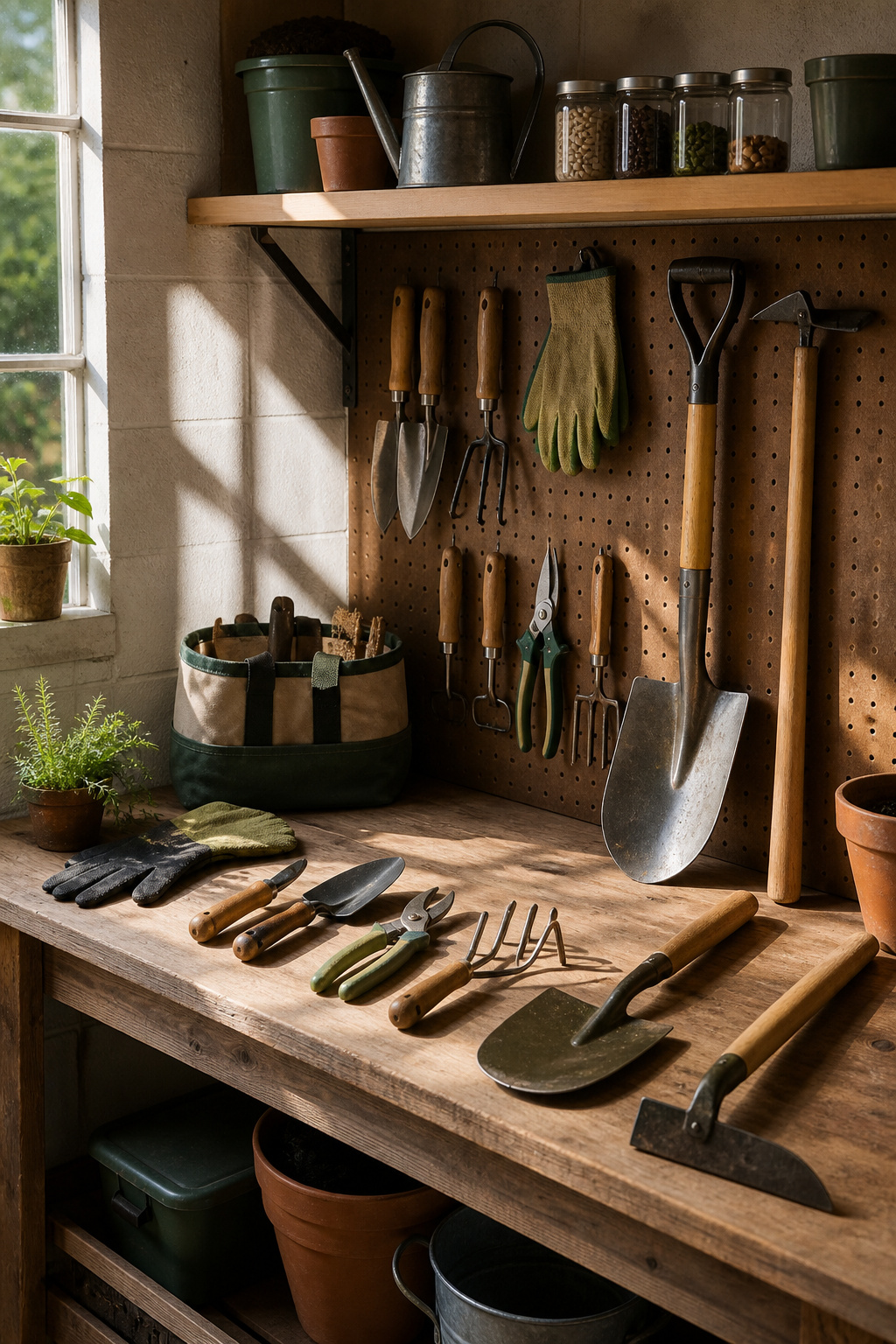
Choosing the right type of tool is essential to avoid overbuying for gardening tasks.
Type of Tool
A shovel and a trowel both move dirt, but they answer completely different questions. The type of tool determines whether you are breaking new ground, maintaining beds, or coaxing a root-bound perennial out of a pot. Beginners often overbuy here, collecting implements for tasks they never take on, while someone with a single raised bed ends up with a full-size spade meant for double-digging vegetable rows.
Care most about this if you are starting from nothing and need to build a kit, or if your garden has shifted scale and your old tools no longer fit the work. You can mostly ignore type if you already own the core three or four tools that match what you actually do on weekends. In that case, material quality and ergonomics matter more than adding another category to the shed.
Material Quality
Stainless steel resists rust but can bend under heavy leverage; carbon steel holds an edge yet needs wiping down after every session. Aluminum keeps weight down for raised-bed work, though it will not take the abuse of prying out rocks. What convinced me, reading through a dozen owner reports, was how many gardeners mentioned a tool failing not in year one but in year three, right where the blade met the socket.
Buyers with clay soil or persistent dampness should weigh this heavily. So should anyone tired of replacing the same hand tool every other season. If you garden in light, sandy soil and store tools in a dry garage, mid-grade materials serve you fine and you can redirect attention to handle shape or price.
Ergonomic Design
This shows up in handle diameter, shaft length, grip texture, and whether the tool wants you to work with straight wrists or bent ones. The difference matters most after an hour of use, not in the first five minutes. Owners with arthritis, back limitations, or previous wrist strain report that a poorly matched tool ends the session early or sidelines them for days.
Prioritize this if you are over fifty, working a large plot, or dealing with any repetitive-stress history. It can slip down the list for quick tasks in small containers, where you are not holding the position long enough for strain to accumulate.
Price Range
Budget tools get the job done until they do not; premium ones often outlast the gardener but require justification. The middle ground, what I would call honest mid-range, is where most owner satisfaction clusters in the reports I read. The recurring problem is not spending too little but spending too much on features you never use, like a hand-forged aesthetic on a tool that lives in a utility bucket.
First-home owners building an initial kit should care intensely, since ten tools add up fast. Renters with a single balcony pot can safely buy budget and replace as needed.
Brand Reliability and Customer Feedback
These two factors travel together in practice. Established garden brands tend to honor warranties and keep replacement parts available; newer or discount brands may not. Customer feedback reveals the gap between marketing claims and what happens after a season of real soil, real weather, and the occasional rock that was not supposed to be there.
Weigh this more heavily for big-ticket items you plan to keep long-term: a digging fork, a pair of quality shears. For a one-season experiment, feedback matters less than price and immediate comfort.
Warranty and Support, Multi-functionality
A lifetime warranty sounds generous, but owners describe the hassle of proving purchase dates and shipping tools back. It matters most for premium purchases where replacement cost would sting. Multi-functionality, the 5% factor, tempts beginners with combo tools that promise to do everything. What owners actually report: the dedicated tool almost always wins, and the multi-tool becomes the one you reach past. The exception is compact urban gardening, where storage space forces hard choices and a well-designed multi-head system earns its keep.
How the Top Picks Compare
The Spear Head Spade and Kynup set both weigh around two and a half pounds.
The Spear Head Spade and the Kynup set both land near two and a half pounds, but that weight sits differently depending on the tool. The spade concentrates it into a single blade meant for prying and slicing through compacted soil; the Kynup spreads the same load across trowel, transplanter, cultivator, and more. If your shed is a rental closet, the spade earns its slot by replacing a digging fork and a regular shovel on most jobs. If you are starting a first bed from scratch and need to feel out which tasks you actually do, the Kynup’s spread matters more than the specialization.
Among the stand-up weeders, Grampa’s and the Walensee tie at three pounds. That heft stabilizes the claw mechanism when you press down on a taproot, but it also means you are lifting three pounds every time you reset for the next dandelion. The difference between them is not in the weight; it is in who the tool forgives. The Walensee’s longer handle showed up more often in owner reports from gardeners over sixty, while Grampa’s shorter shaft and wider footplate suited shorter users and denser clay. Neither is wrong; they just distribute the same three pounds to different bodies.
The pruning shear category splits three ways by hand size and stem toughness. The ARS HP-130DX at half a pound is the lightest of the lot, and owners with smaller grips noted less cramping during hour-long rose sessions. The gonicc titanium shears shave even more weight, down to a third of a pound, but that compact frame tops out earlier on hardwood; several buyers mentioned switching to something beefier for dormant-season fruit tree work. The DECERK sits heaviest at 0.55 lb, and the extra ounce and change mostly buys leverage on thick stems. For someone maintaining perennials and herbs, that leverage is dead weight in the pocket. For the gardener who lets shrubs go until they demand attention, it is the difference between a clean cut and a crushed stem that invites rot.
The Craft911 scissors and the gonicc shears are close enough in weight that the choice comes down to motion, not grams. The scissors open wide for harvesting greens in bunches; the shears close with a bypass action that cradles a woody stem. I have seen owners buy both, assign the scissors to the vegetable row and the shears to the perennial border, and stop fighting the wrong blade for the job.
Frequently Asked Questions
What are the essential gardening tools every beginner needs?
A short list covers most jobs: a hand trowel and transplanter for digging and moving soil, bypass pruners for clean cuts on living growth, a garden fork or spade for turning beds, a rake for leveling and clearing debris, and a quality hose or watering can. Add a pair of gloves that fit well and a kneeling pad or small stool, and you have what it takes to start most projects without cluttering your shed.
How do I choose gardening tools that are ergonomic and easy to use?
Look for handles shaped to keep your wrist straight during the motion the tool is built for; D-handles on spades and offset grips on pruners both reduce strain. Lightweight materials like fiberglass or aluminum help if you work in sessions longer than twenty minutes, and some hand tools come in sizes scaled to smaller palms. Reading owner reports, I notice the same complaint when ergonomics fail: numbness or soreness appearing after one season and worsening from there.
Are there tools made specifically for small spaces or container gardening?
Yes, and the differences matter more than marketing suggests. Short-handled trowels and narrow cultivators fit between tightly planted pots, while collapsible or coiled hoses store in corners where standard fifty-footers will not go. A few manufacturers make raised-bed spades with compressed shafts, and there are pruners slim enough to reach into crowded tomato cages without collateral damage.
What materials hold up best for durability and low maintenance?
For metal parts, hardened carbon steel takes and keeps the sharpest edge but needs wiping and occasional oiling to prevent rust; stainless steel sacrifices some edge retention for near-zero upkeep. Handles in ash or hickory absorb vibration and can be replaced if they crack, while fiberglass and composite materials resist weather and soil chemicals indefinitely. I have seen owner reports span fifteen years on well-kept hardwood tools and twenty-plus on fiberglass, with the deciding factor usually being whether the owner put the tool away wet.