Bay window ideas run from simple window treatments to built-in seating with lumber and foam, and the deciding factor is whether you own the place or rent it.
A built-in window seat or plantation shutters suits homeowners; renters get the same function from a pedestal table, Roman shades, or patterned window film that peels off when the lease ends.
Thicker foam is what I’d use for any seat where you’ll actually sit and read.
1. Built-In Window Seat
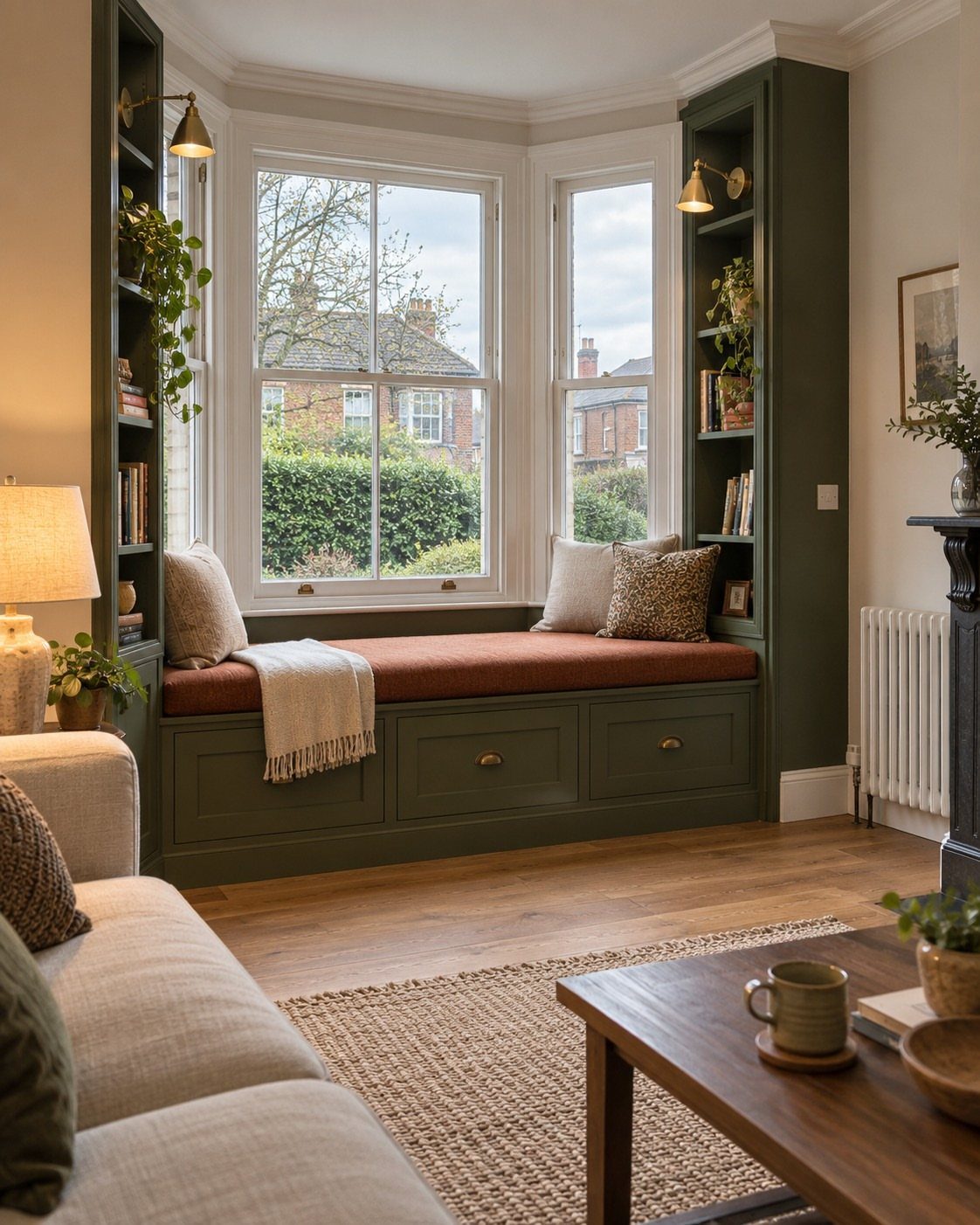
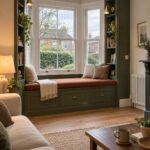
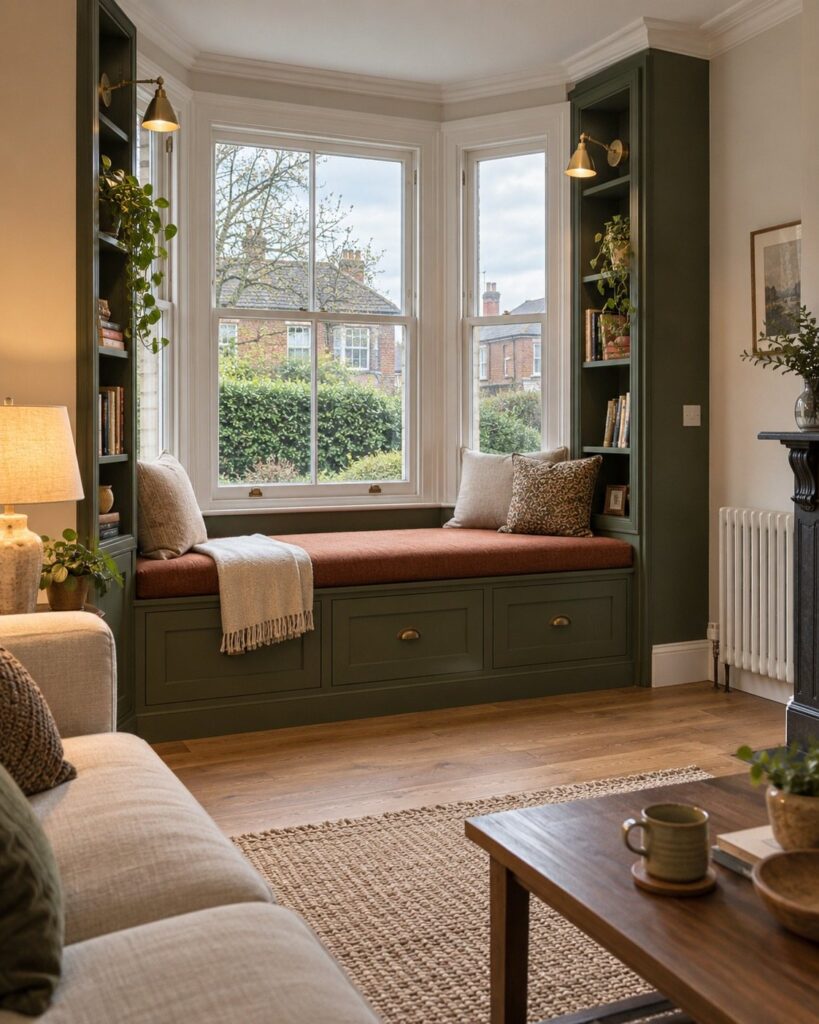
A built-in window seat turns the bay’s awkward angles into usable square footage. Framing the bench with 2×4 lumber and plywood runs $150 to $300 in materials, and a hinged lid underneath stores seasonal gear or extra blankets.
Standard seat height is 18 inches, matching a dining chair; if your sill sits lower, that gap below becomes a shelf for books or display pieces.
I’d top it with three-inch foam in an indoor/outdoor fabric, since the spot catches sun and the occasional spilled coffee. Storage drawers under the seat cost more than a hinged lid but open easier; either approach works.
2. Bay Window Reading Nook
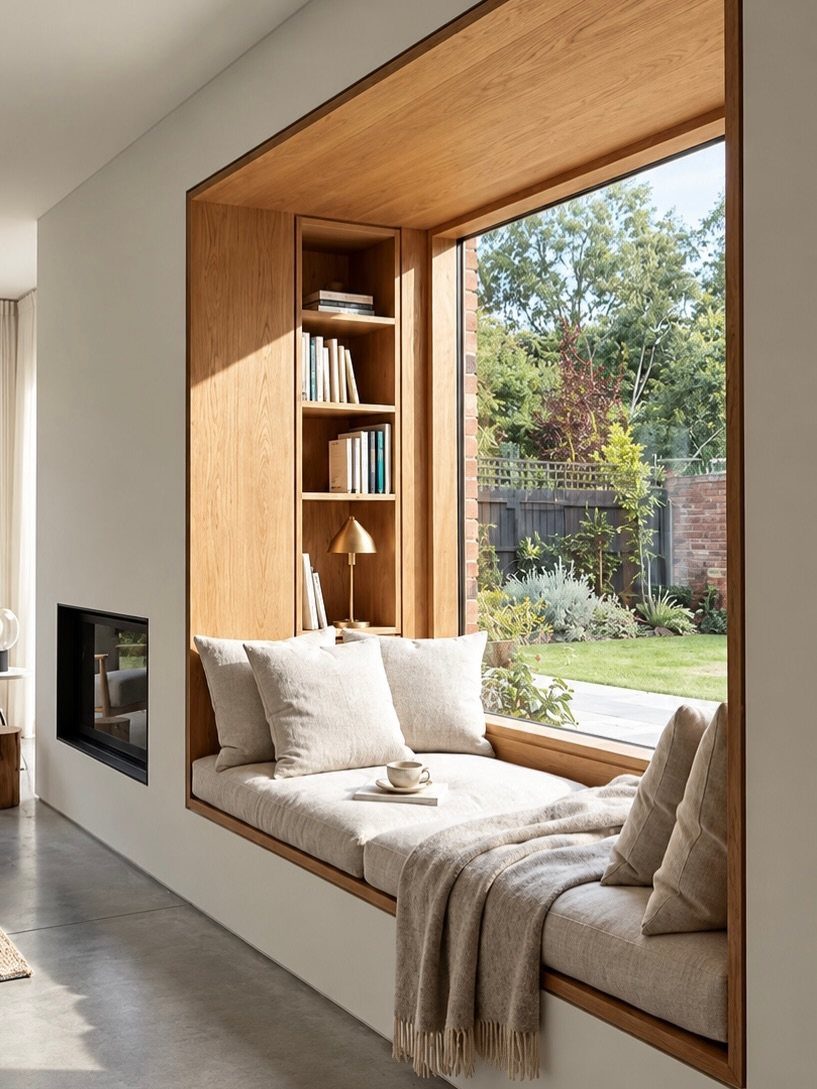
Wood-lined walls and built-in shelves help, but the retreat feeling comes from being able to draw that fabric and shut out the rest of the house. Four-inch high-density foam beats three here, you’ll sit longer.
3. Bay Window as Dining Area
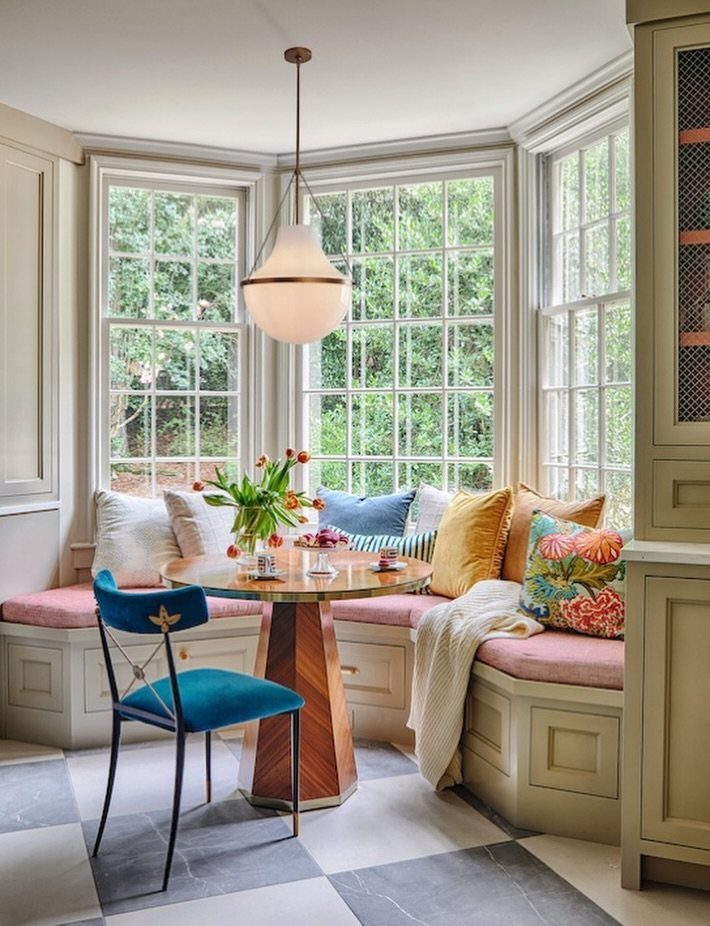
A round pedestal table centered in the bay makes the space work harder at breakfast than at any other meal.
Built-in seating wrapping two sides with a single chair on the third squeezes in an extra place where standard chairs would crowd. Storage under the banquette seats swallows tablecloths and the stand mixer you use twice a year.
An L-shaped bench fits most three-panel bays without custom carpentry; U-shaped needs more width but gains another seat.
4. Curtain and Blind Options
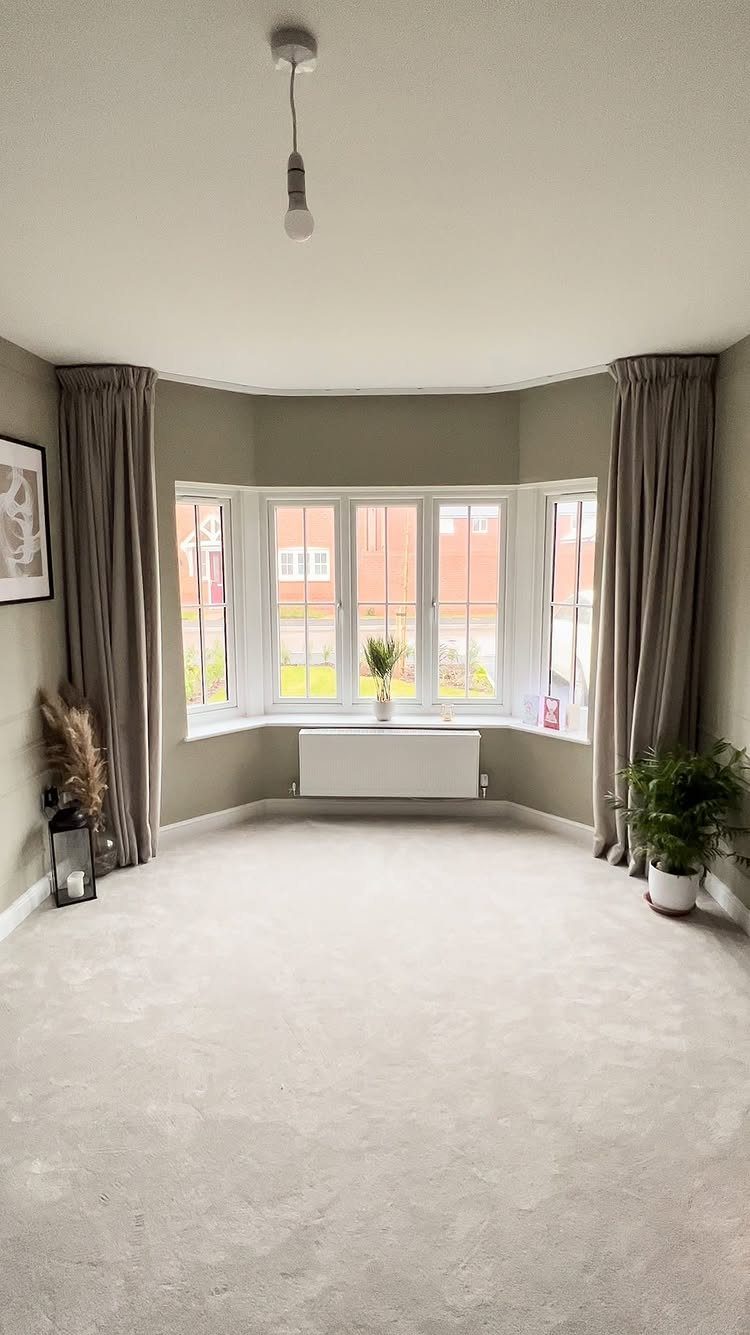
Hardware that follows the angle matters more than the fabric choice. Roman shades mounted inside each section give a tailored look at $80 to $200 per window.
Plantation shutters run $200 to $400 installed and add actual architecture. Sheers soften light without killing the view, cellular shades add insulation that large bays need, budget $50 to $120 per window.
I’d pick sheers for living rooms, cellular for bedrooms facing east or west.
5. Bay Window Office Desk
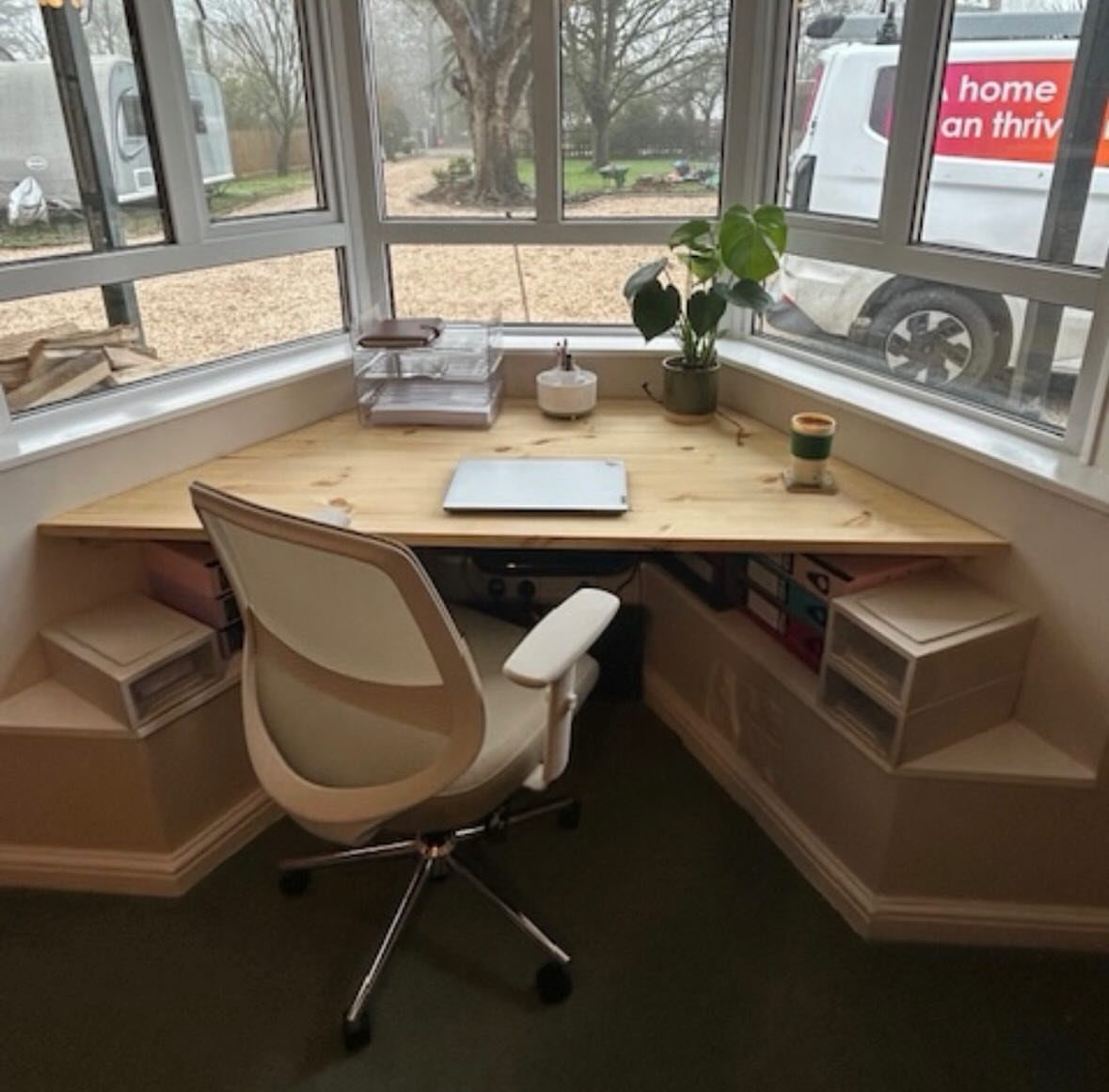
Forward-facing light cuts screen glare while the side windows give ambient brightness that keeps your eyes from locking up after long sessions.
A light wood slab with a laptop and a white chair shows the idea; any material works, just keep the depth shallow or you lose knee room.
This setup suits work-from-home days best, not heavy paperwork that needs filing cabinets nearby.
6. Decorating Tips for Bay Windows
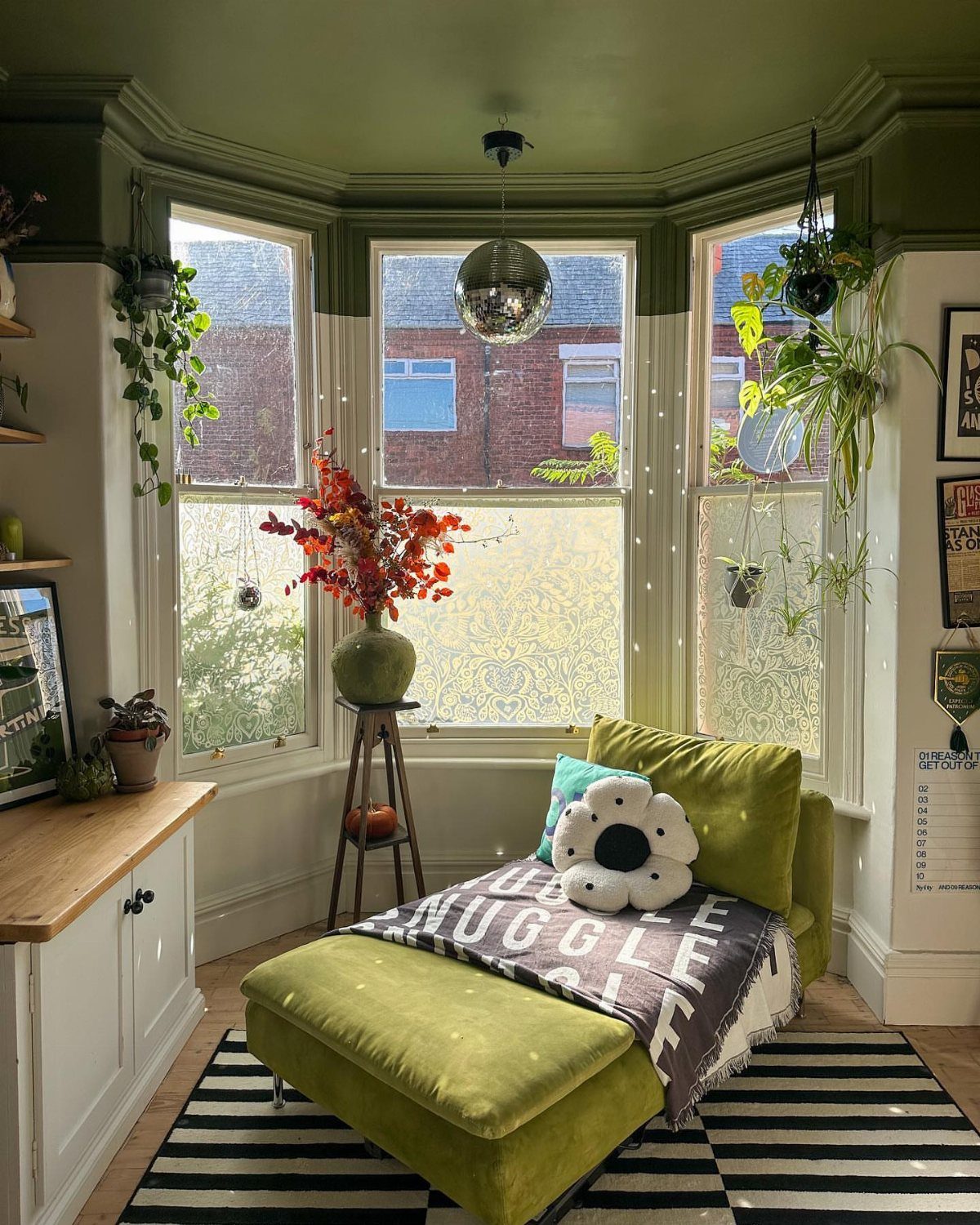
Plants on tiered stands or the sill itself turn the multi-directional sun into a small indoor garden; south- and west-facing bays support succulents, herbs, and anything needing steady direct light.
Patterned window film adds privacy without blocking light, a renter-friendly move I’d try before committing to permanent treatments.
7. Armchair Conversation Area
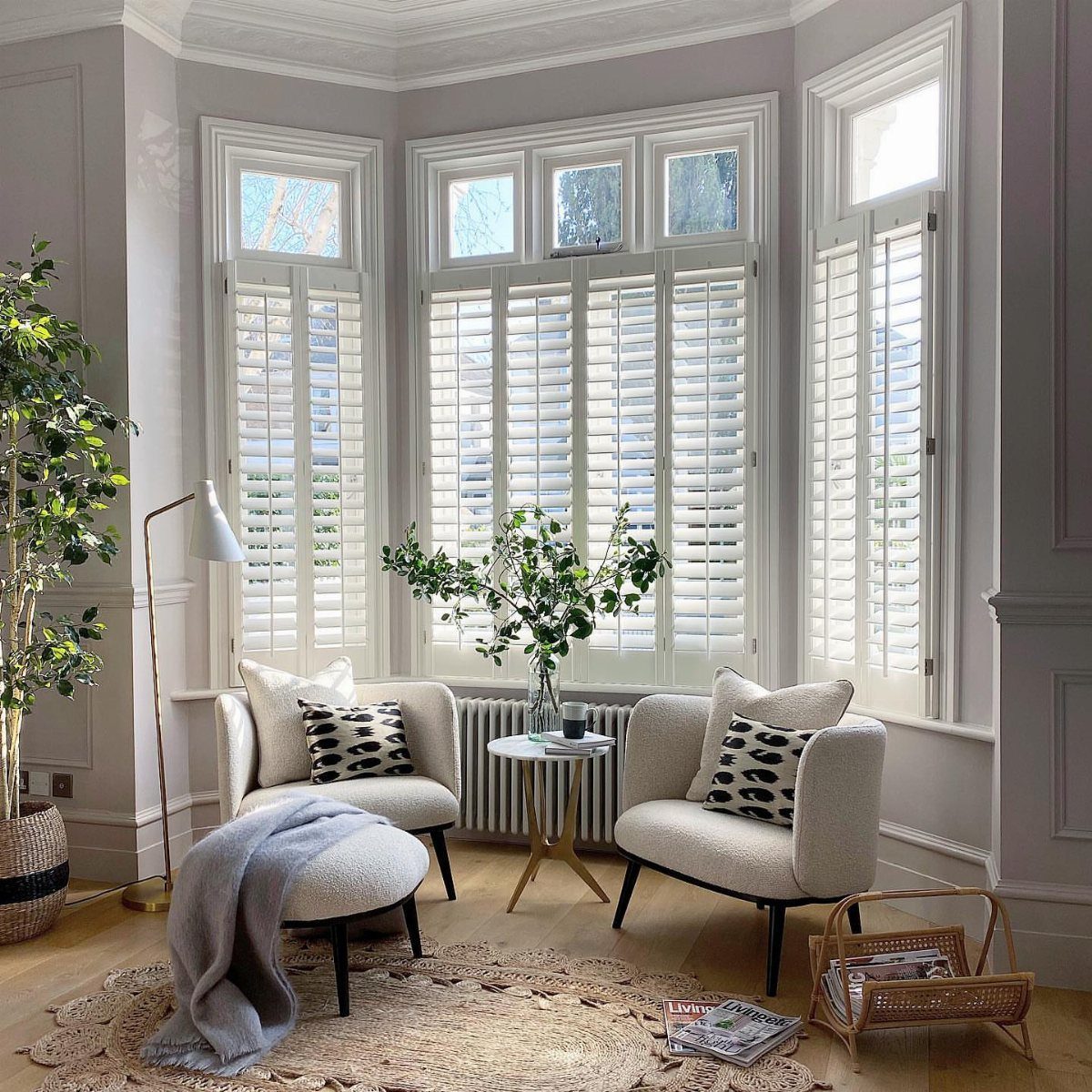
A pair of armchairs facing each other turns a bay window into a quiet spot for conversation that does not depend on a television or a dinner table.
White upholstered chairs with a small round table between them and a floor lamp to one side hit the right scale for most three-panel bays.
I would pick chairs with arms for this arrangement; they frame the space better than armless slipper chairs and give you somewhere to rest a mug or a book when the table is full.
This setup trades away lounging space. You are not stretching out or napping here, so it suits adults more than families with small children who need floor play area.
A side table that is too wide will have you twisting around it to sit down, so keep the piece narrow enough to move past easily.
8. Storage Ottoman Seating
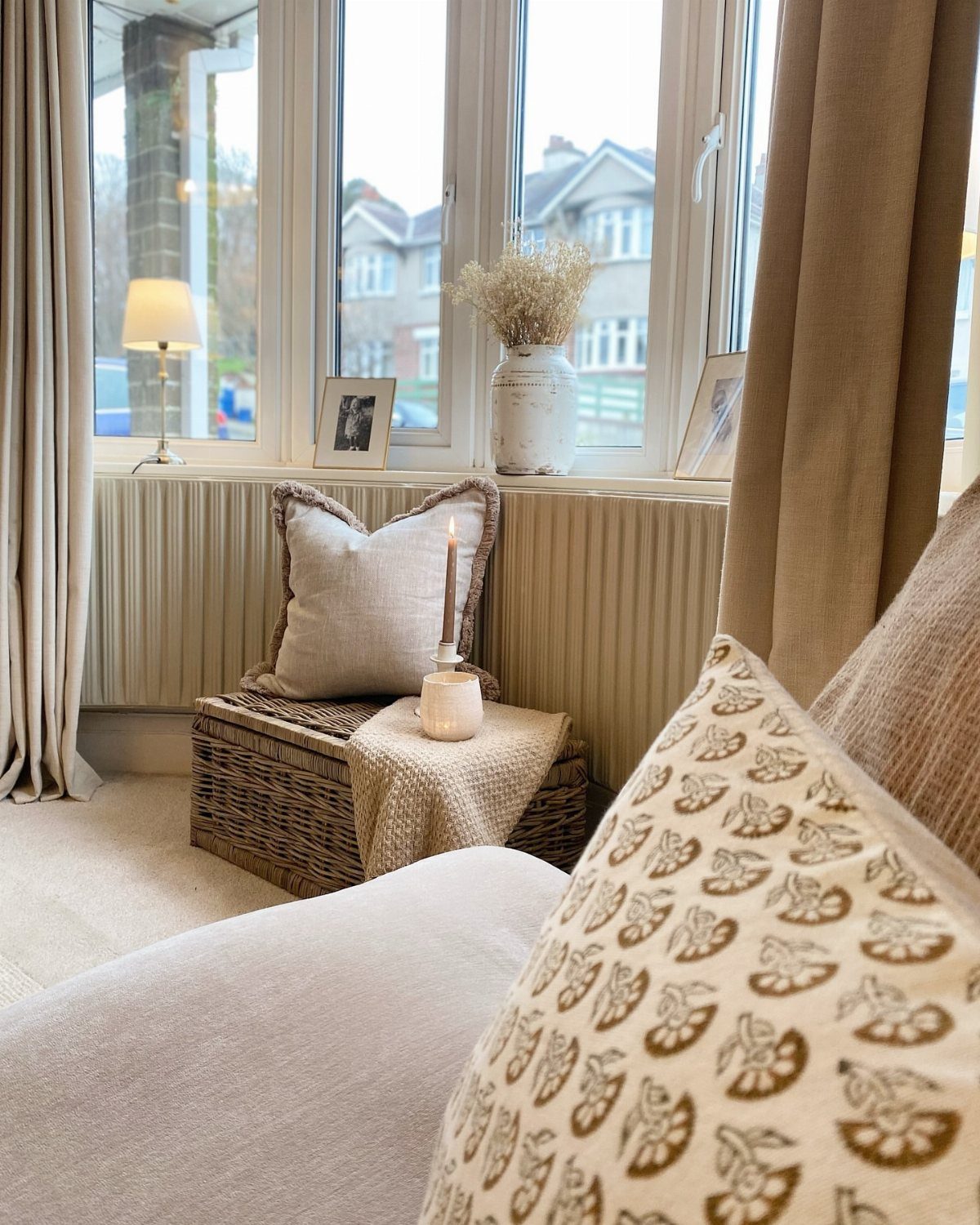
A wicker storage chest with a cushion on top gives you seating that hides the clutter this reader already has. An ottoman shallow enough to sit against a curved radiator will work in awkward bays where built-ins would block heat.
A candle and cloth left on top read as intentional furniture, not a basket that wandered in from another room.
Check that the chest is shallow enough for the lid to open without hitting window trim.
Pull-out drawers beneath built-in benches store blankets and games neatly, and you can get the same result by choosing an ottoman with a hinged top over a removable one.
This is the choice for renters who cannot install drawers but still need the storage.
Curtain Ideas for Bay Windows
Top-down, bottom-up shades solve the privacy-versus-light problem by letting you drop the top rail to eye level while the bottom stays open.
That setup works well in bedrooms where you want morning sun without putting on a show for the neighbors.
Heavy drapes over a radiator trap heat against the glass instead of letting it circulate into the room.
If your bay sits above baseboard heating, keep the fabric ends well clear of the unit, or switch to a shorter panel that hits the sill.
For blackout without the bulk, a roller shade mounted at the bay’s ceiling point drops straight to where the well ends. Motorized versions run on timers; open at sunrise, close after dark, no cords snagging on the seat below.
In-pane blinds inside triple-pane units skip hardware entirely, though that means replacing the window itself.
Frequently Asked Questions
How to make a bay window look nice?
Pale paint, gauzy curtains, and a mirror or two bounce the light around rather than swallowing it. I’d avoid heavy, dark furniture that visually closes off the alcove.
What is the difference between a bay window and a bow window?
A bay window has three distinct panels set at angles, usually with a larger center window flanked by two narrower ones, creating a sharp projection from the wall.
A bow window uses four or more panels of equal width curved gradually, giving a softer, rounded shape.
What are common bay window styles?
Built-in window seats with storage underneath, reading nooks with wood-lined walls and curtains for retreat, dining areas with pedestal tables and banquette seating, and small office setups with forward-facing light all rank as common uses.
Each style solves a different daily need rather than treating the bay as display-only space. A weekend project with $150 to $300 in lumber and plywood can turn the awkward angles into the most functional spot in the house.