
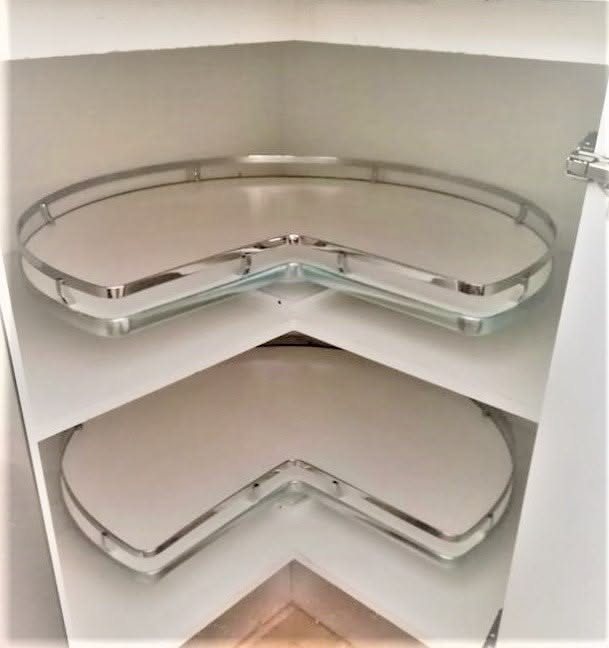
Corner cabinet ideas run from a free afternoon sorting what you already own to a hardware install that carries cast iron.
The right match depends on whether you want something you can lift out when you move, or you are ready to bolt tracks into the cabinet for good.
A two-tier wooden lazy Susan sits on the shelf and goes; a full pull-out with sliding tracks shifts sideways to expose the blind corner behind it.
1. Lazy Susan
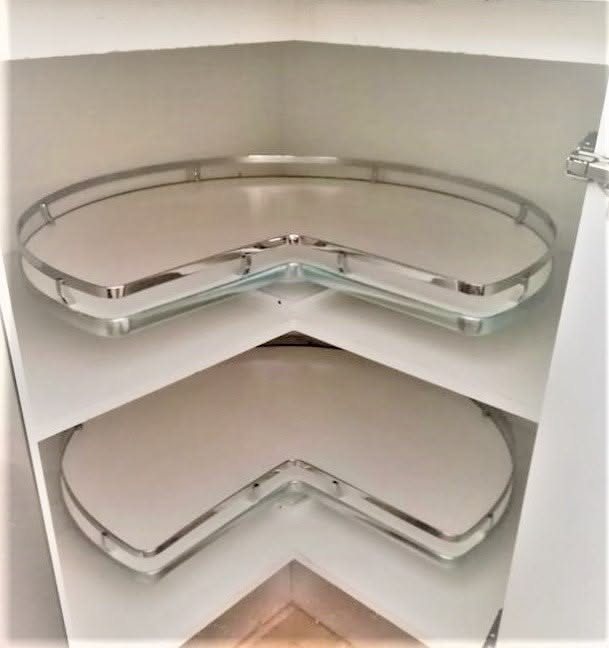
A lazy Susan spins the back corner to the front so you stop crouching after lost bottles. Oils and vinegars live on one tier, nut butters and the stuff I reach for every morning on the other.
Wooden trays run quieter than plastic and hold up to a heavy jar of coconut oil. Two tiers fill a standard base corner without custom install; you set it on the shelf and go.
This is my pick for renters or anyone who wants the fix today and the option to take it along later. It does not solve deep storage, but it ends the daily digging.
2. Swing-Out Baskets
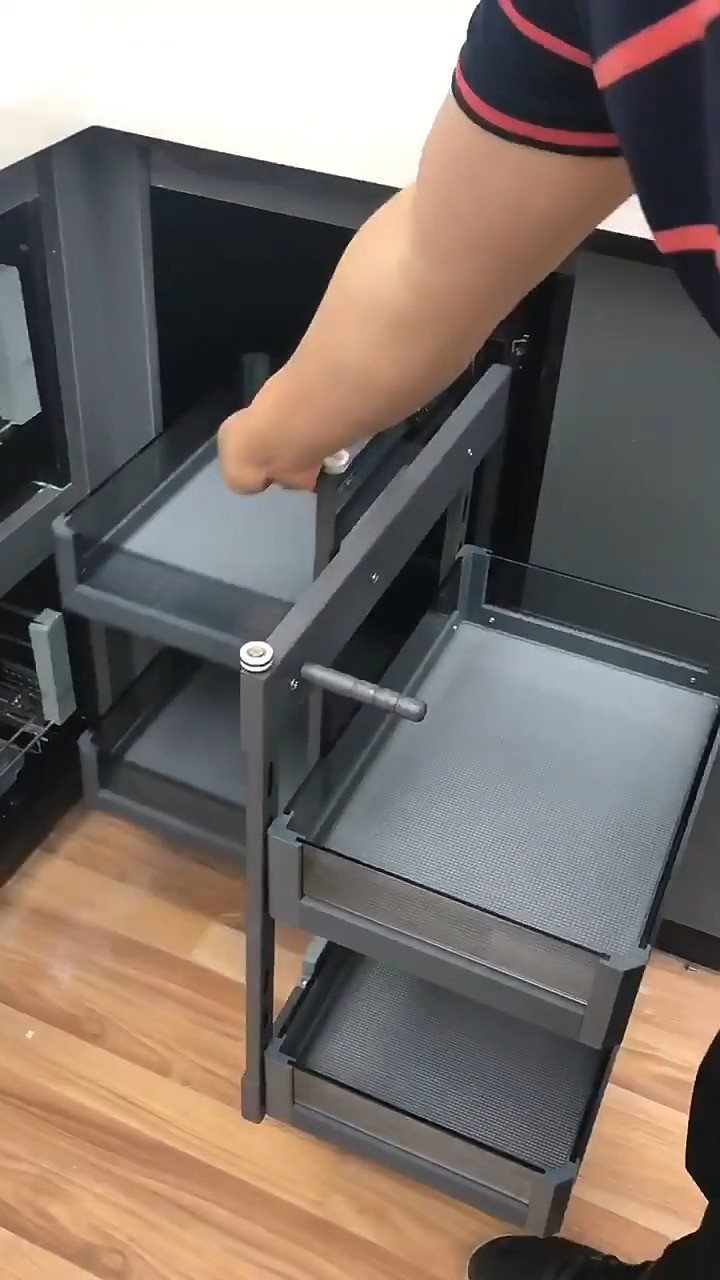
Swing-out baskets pivot the whole corner out into the room so nothing hides behind anything else. I recommend this route when you have lost one too many lids to the black hole behind the first row.
The basket depth and rail quality change the answer more than brand name. Check that the glide extends fully without tipping; a shallow basket on a weak arm still blocks itself.
This suits lower cabinets where you can spare the floor space for the swing arc. Upper corners need a different solution; the weight and the reach do not pair well.
3. Pull-Out Shelves
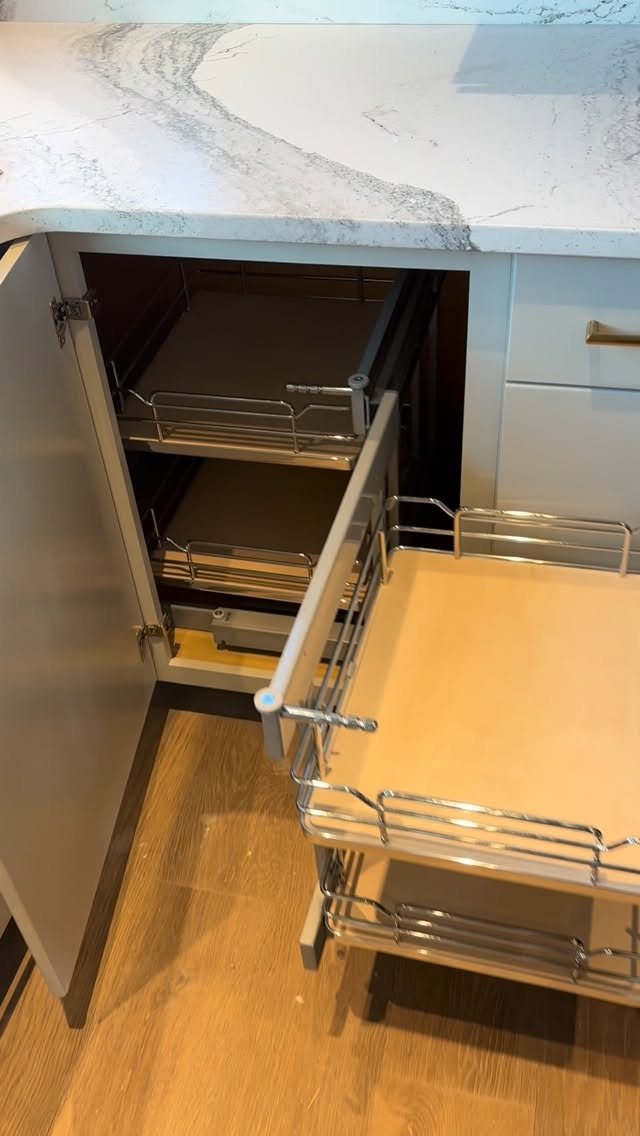
Sliding tracks let you roll heavy pots out instead of crawling in after them.
I installed mine for blind corner bases where the door opens to a dead stretch of cabinet. The shelf slides out, then the front tier shifts sideways to expose what sits behind it.
This is the upgrade for cooks with cast iron or a full set of stainless who feel the strain. It costs more than a lazy Susan and takes longer to install, but it carries weight the others cannot.
4. Tiered Organizers
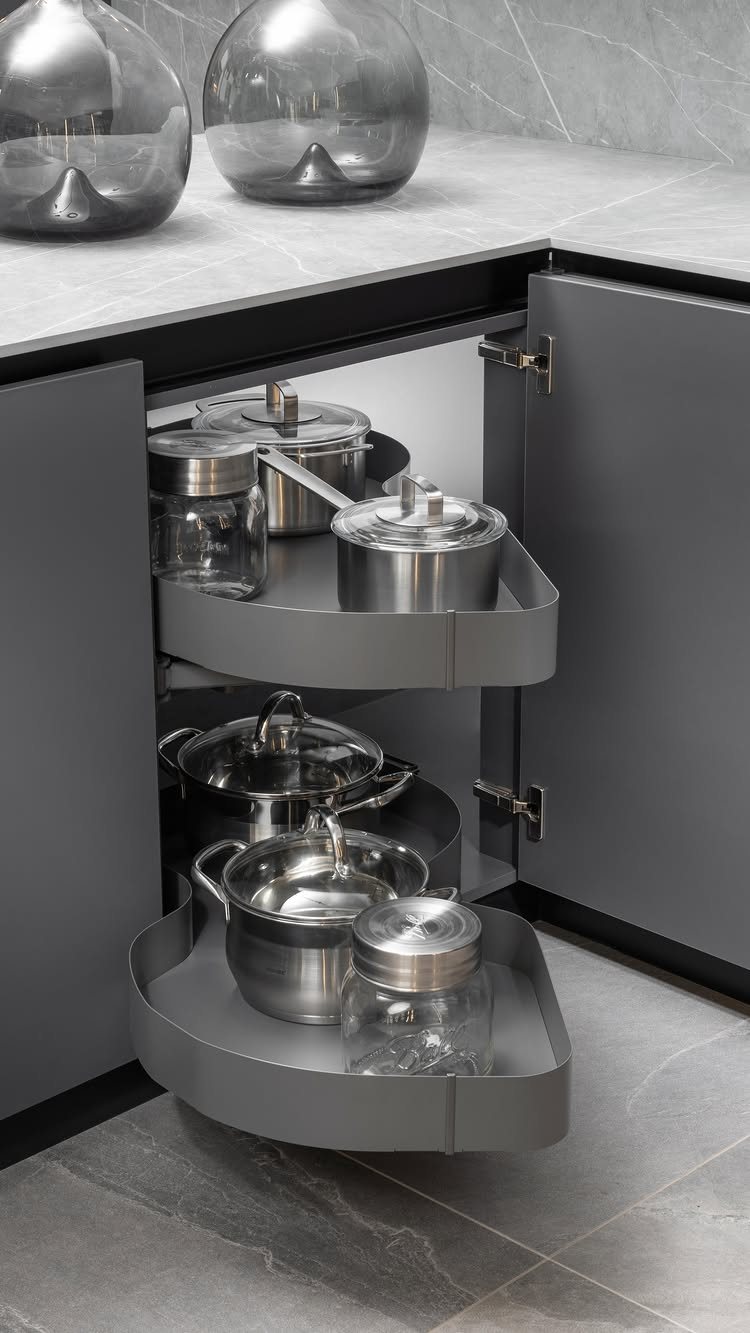
Tiered organizers stack visibility so small jars do not vanish behind taller bottles. I use a two-tier turntable in upper corner cabinets where spices and baking extracts used to disappear.
Semi-circular trays in the same shape work for dry goods and jars too, keeping the back row visible. A riser works too if you already own one.
This is my choice for upper corners and light items. Heavy loads strain the spin or the tier, and a full pantry rebuild is overkill when the problem is just seeing what you own.
5. Full Pull-Out Reset
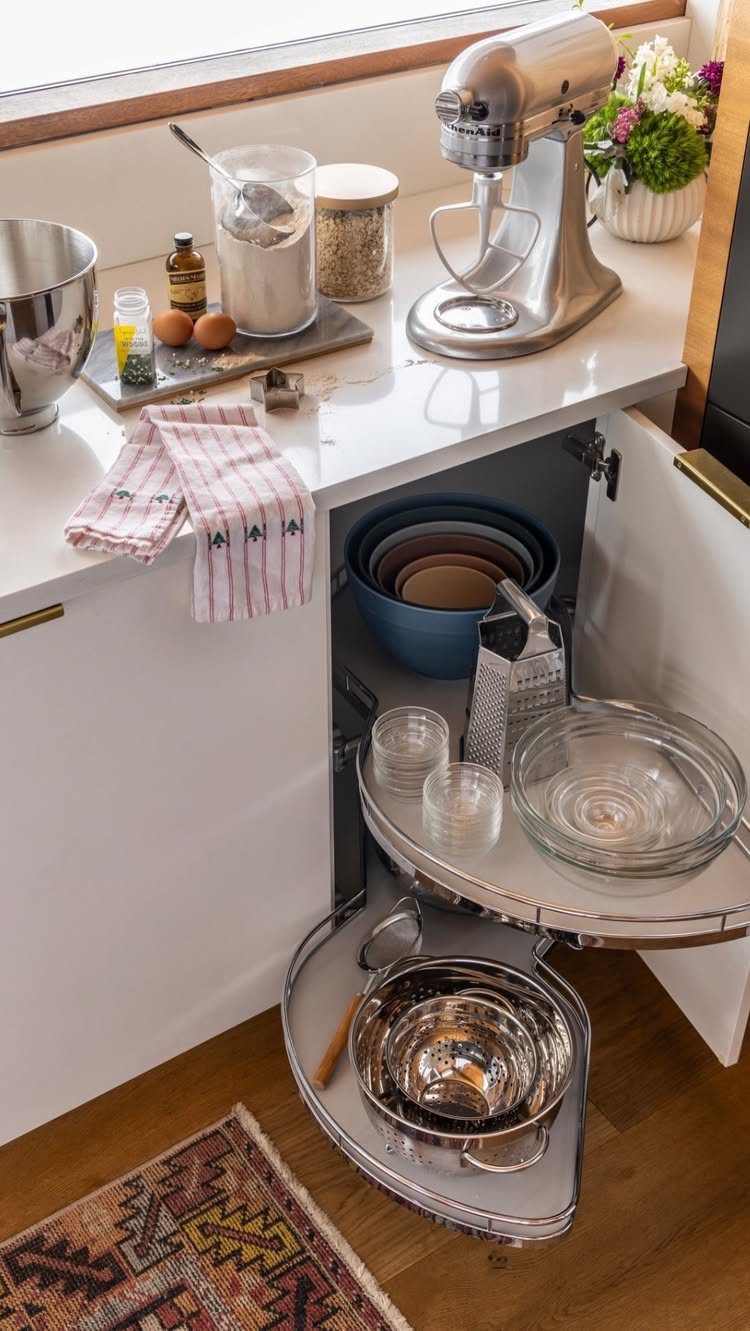
A full pull-out reset means emptying the cabinet entirely, wiping every surface, and rebuilding only with what belongs. I do this twice a year and still find expired packets and lids with no mates.
You have to pull everything out first to see what that awkward back space can actually hold. I toss duplicates, match containers to lids in one pile, and only then decide what system goes back in.
This costs nothing but an afternoon and suits anyone whose corner has become a drop zone. No organizer fixes what clutter broke; start here, then choose your hardware.
6. Corner Cabinet Drawers
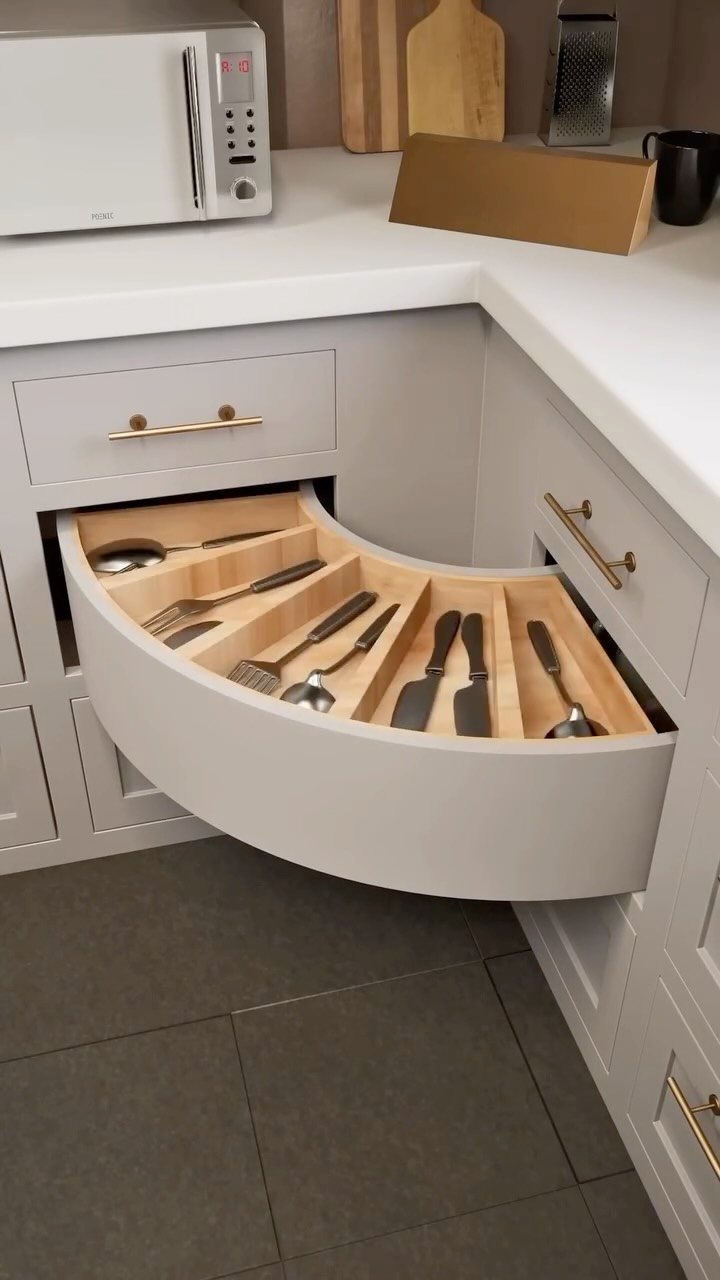
Corner drawers pull diagonally instead of straight back, turning dead space into a full bank of organized storage. The curved front follows the cabinet line so nothing reads as an afterthought.
You will need a cabinet shop or a dedicated drawer system; standard box drawers will not clear the opening. I have seen homeowners try to retrofit soft-close slides meant for straight runs, and the binding starts inside a month.
Ask the maker to confirm the slide hardware is rated for diagonal pull and that the drawer box is built to match, not just the face.
This one suits kitchens where every inch matters and the budget runs to custom work. If you are already replacing cabinets, the upcharge is modest.
In a retrofit, the cost can double compared to a pull-out shelf.
7. Full-Height Corner Pantry
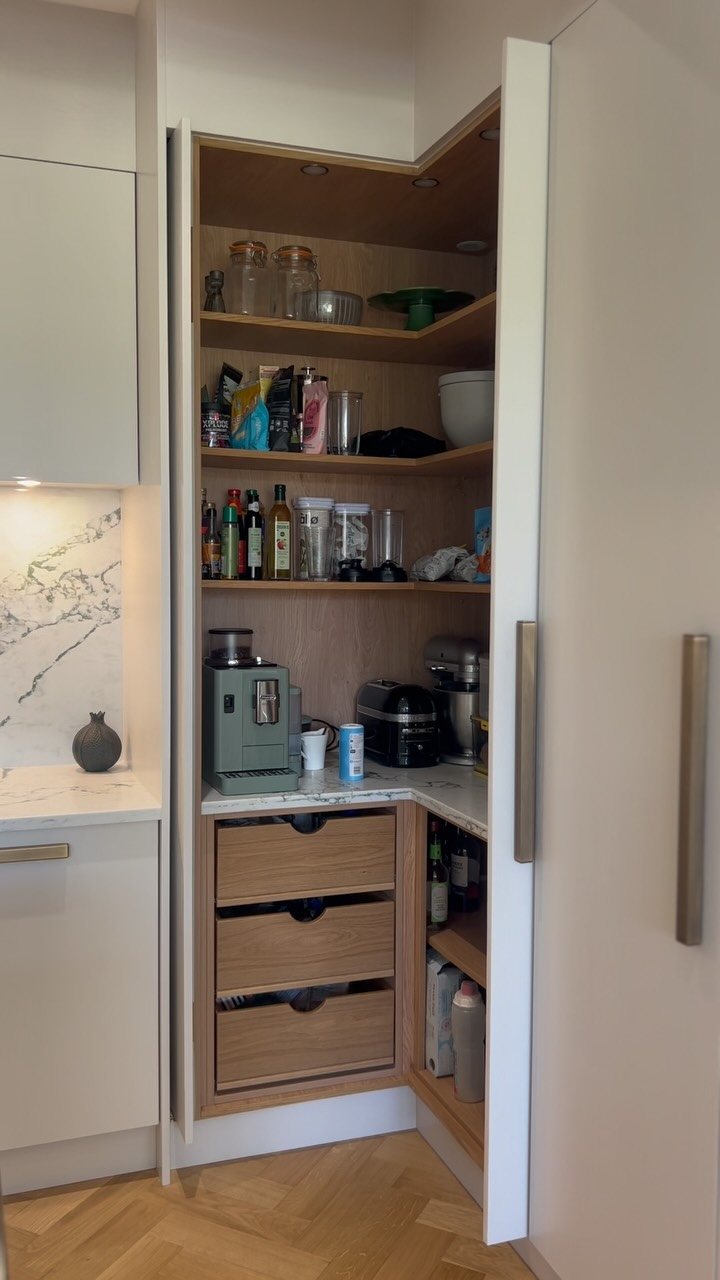
A full-height corner pantry treats the whole vertical corner as one tall cabinet with interior shelves and drawers, reachable through a single door.
The door swing is the detail that makes or breaks it.
A standard hinge on a corner door will block itself; you need a corner hinge set or a bi-fold door, and the hardware quality shows by year three when cheap hinges start sagging.
This trades the blind corner completely for one wide door and a narrow aisle in front. It works best when the kitchen layout leaves you clear floor space on the hinge side for the door to swing fully open.
Less than that, and you are dancing around an open door every time you reach for cereal.
8. Corner Cabinet Pull-Out Trash Bins
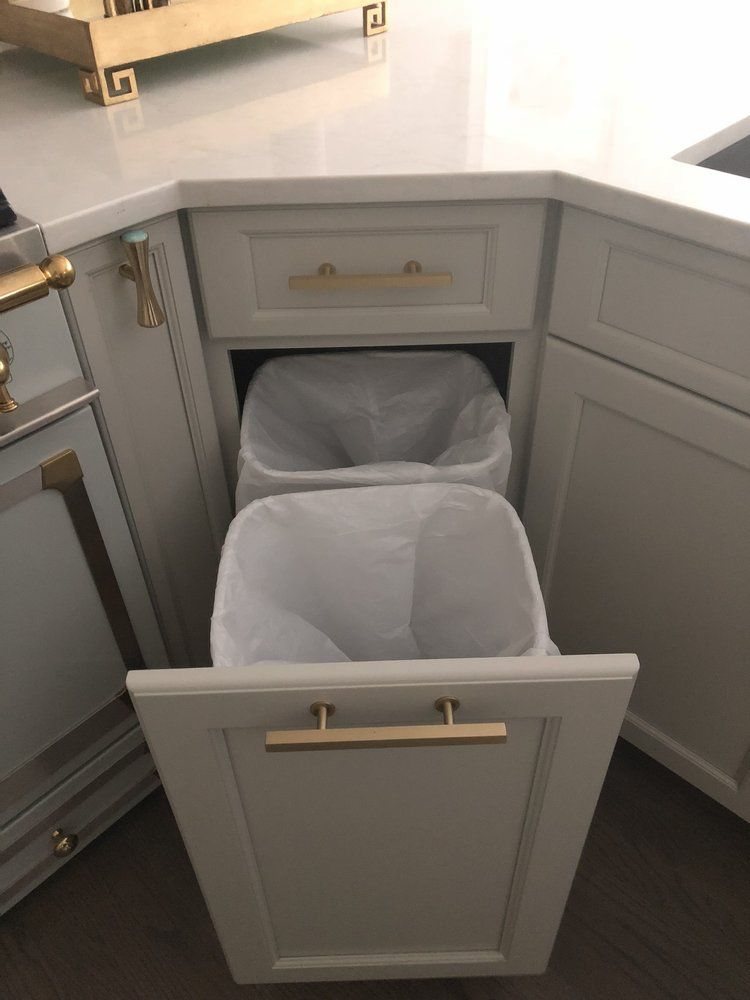
A deep corner drawer can swallow two full trash bins and slide back out of sight, which gets the garbage off the floor and the smell out of the room.
The drawer depth is what limits you. Corner base cabinets often run deep on the diagonal, yet standard pull-out hardware stops short of that full reach.
You need full-extension slides rated for the weight of two loaded bins, and the cabinet box must be built to take the load without racking.
I would spec heavy-duty slides rated for real weight; kitchen trash fills faster than you expect, and sticky drawers from underbuilt hardware are a daily annoyance.
This one wins for small kitchens where floor space is precious and you want the trash near the prep zone. The trade is losing that corner for anything else; you will not fit pots here too.
Maximizing Space in Small Kitchens
A small kitchen turns the corner cabinet from annoying into expensive, because lost space there is space you pay for twice somewhere else.
Lazy Susans and pull-out shelves handle the reach problem, but the real squeeze is usually vertical: standard shelves leave wasted headroom above cereal boxes or oil bottles that could stack another layer.
Measure the full interior height before you buy any organizer. I have seen people install beautiful pull-out hardware and still lose the top third to poor stacking.
If your corner sits near the stove, keep the heaviest system you can manage there. Hot pans migrate to the nearest open counter, and a corner you cannot reach becomes a landing zone for everything you meant to put away.
Custom Solutions for Awkward Shapes
Older homes, galley kitchens, and any cabinet built around a chimney or duct end up with angles that laugh at off-the-shelf organizers.
A woven tray cut to the floor shape becomes a sliding base you pull forward by hand. Fabric bins with some stiffness hold loose bottles against tipping when the geometry fights a turntable.
For sharper angles, rectangular plastic bins from a dollar store cut and glue into custom shapes; one owner bent the sidewalls to match a trailer cabinet that no retail organizer fit.
I would test any homemade bin empty before trusting it with glass. Gorilla glue sets hard but needs a full day; the cut edge wants sanding so it does not snag bags or hands.
Custom work takes an afternoon and costs little, which matters when the cabinet itself is the wrong size and replacing it is not on the table.
Importance of Visibility
The back of a corner cabinet goes dark in stages.
First you stop reaching for the cumin behind the olive oil, then you buy a second cumin because the first is invisible, and now you own duplicates and still cannot see either.
A full reset twice a year catches this before it compounds. Pull every item onto the counter, match lids to containers in one pile, and check dates on anything sealed.
The expired packets and mateless lids accumulate because no organizer exposes them; visibility fails before clutter begins.
Upper corners hide spices and extracts first because the light is worse and the reach is awkward. One tall bottle left careless blocks the whole view.
I treat the corner reset as maintenance, not inspiration. These systems work only when what sits in them is still what I meant to store.
Frequently Asked Questions
What are some good options for corner cabinets?
A lazy Susan works well for quick fixes you can take with you later, while pull-out shelves handle heavier pots and cast iron that strains other systems.
Tiered organizers suit upper corners where spices and small jars tend to disappear behind taller bottles.
Are corner cabinets still in style?
A corner cabinet that works beats one that sits empty, so I focus on making the one you already own function better. Renters and first-home owners usually inherit these spaces and need them to work, not disappear.