
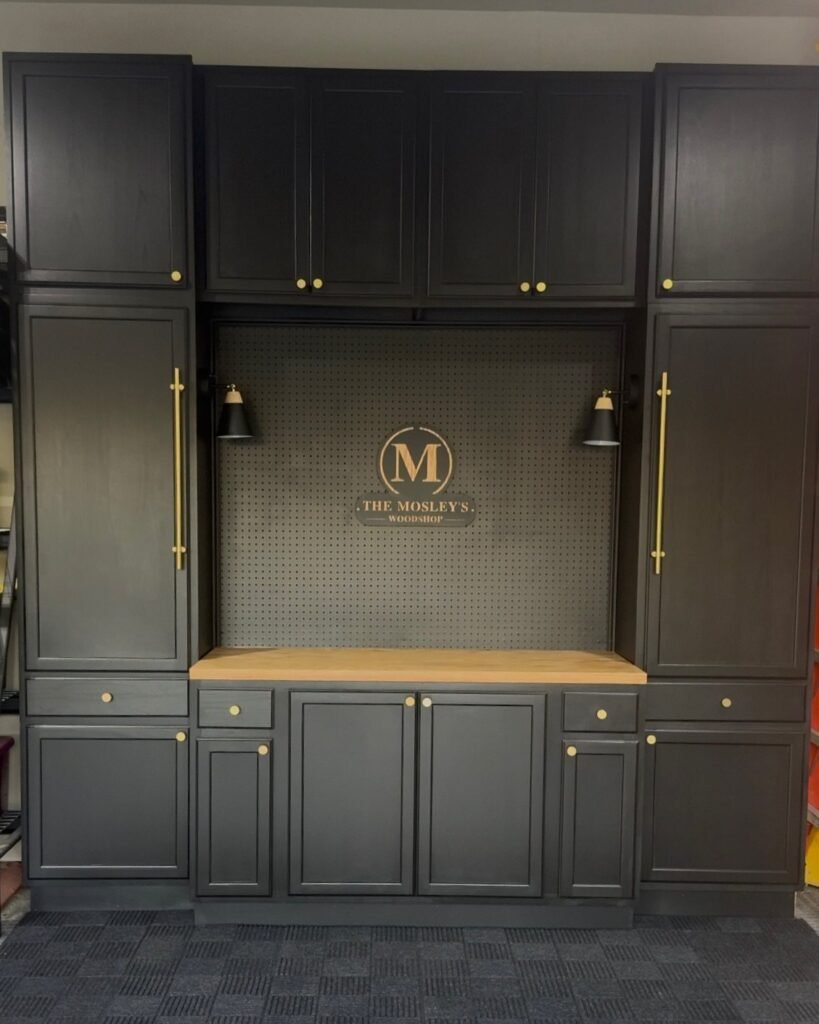
These ideas run from a Saturday with J-hooks to a full cabinet run that swallows most of a weekend budget, and the one that fits you depends on whether your car still parks inside or gave up that fight years ago.
A single slatwall panel can split into zones for hand tools and bikes, or a whole wall can disappear behind custom cabinets with metal legs just high enough for the plastic bins you already own.
1. Custom Cabinets
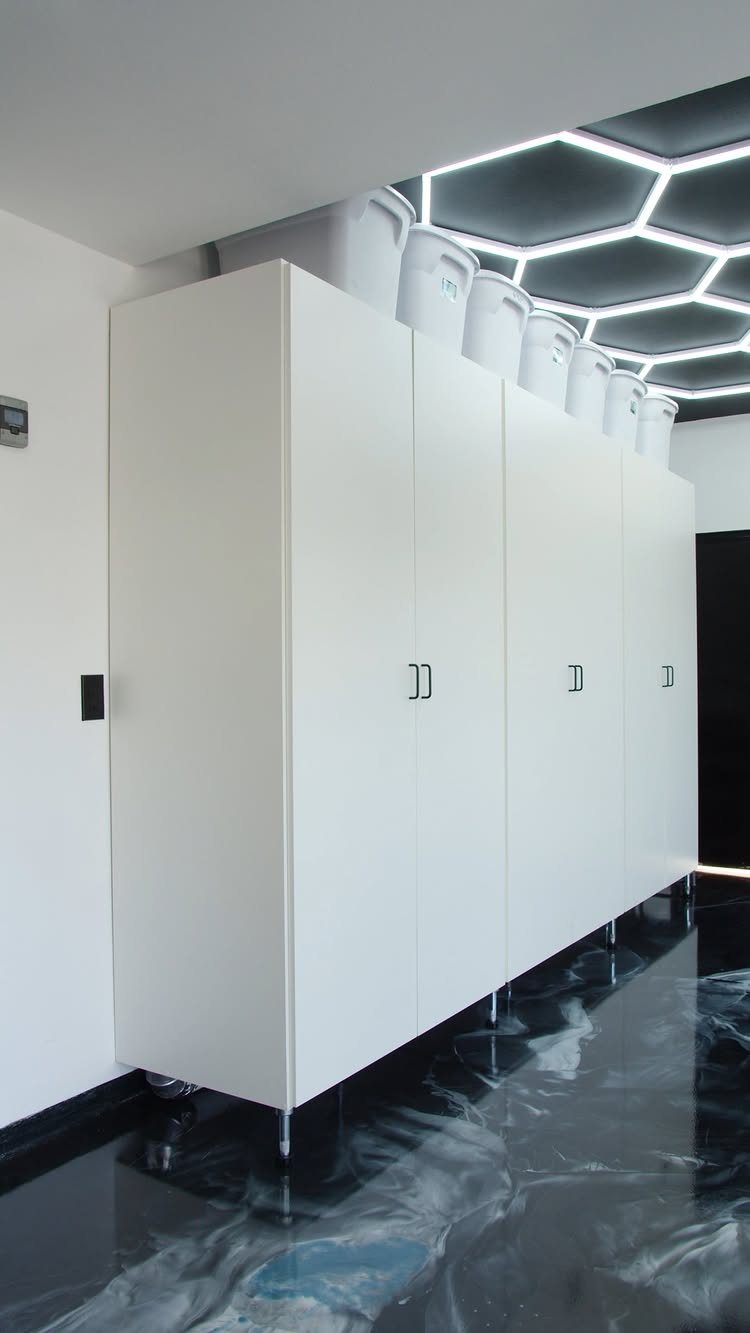
A full cabinet run turns dead wall into something that actually closes up.
I like metal legs for the gap underneath; the plastic bins you already own slide right in, and the floor stays visible so the space reads larger than it is.
White keeps it from feeling like a cave, though I’ve seen navy and charcoal hold up fine in brighter garages.
Epoxy flooring is the kind of upgrade that tends to happen alongside other work, so the cabinets become the single big spend. For a weekend budget, start with one tall unit and add matching pieces later.
This one wins if you store chemicals, paint, or anything that collects dust.
2. Slatwall Systems
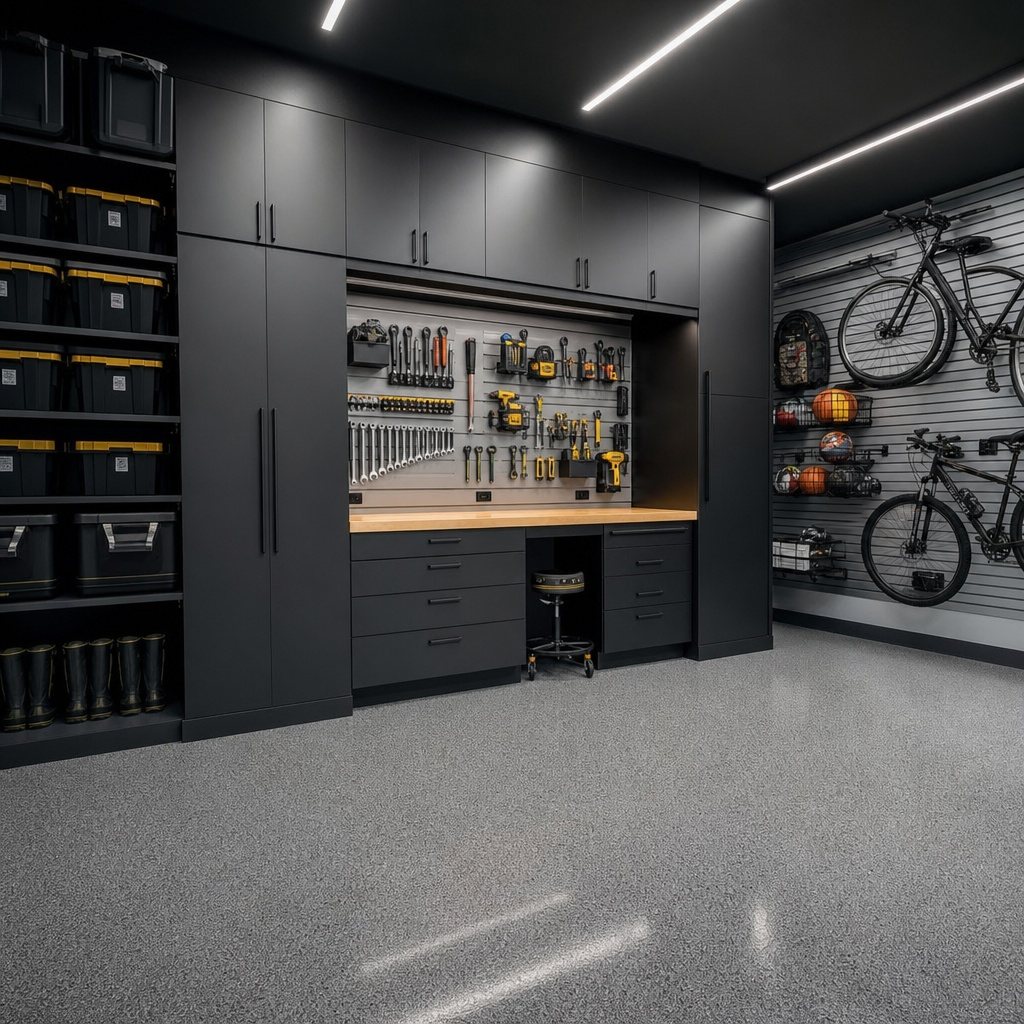
Slatwall gives you the wall back in increments. A single slatwall system can split into zones: hand tools above the bench, bikes and sports gear on the next panel over.
Hooks, baskets, and specialty holders swap in without tools, so the wall evolves as your stuff does. Mount high enough for bikes; lower puts handlebars in your face every time you walk past.
Dark slatwall works as a single light element, but pale grey or white reflects more and costs nothing extra. Budget extra time for your first panel if your studs are irregular or you are still learning the mount system.
This is the pick when your storage needs change season to season.
3. Wire Shelving
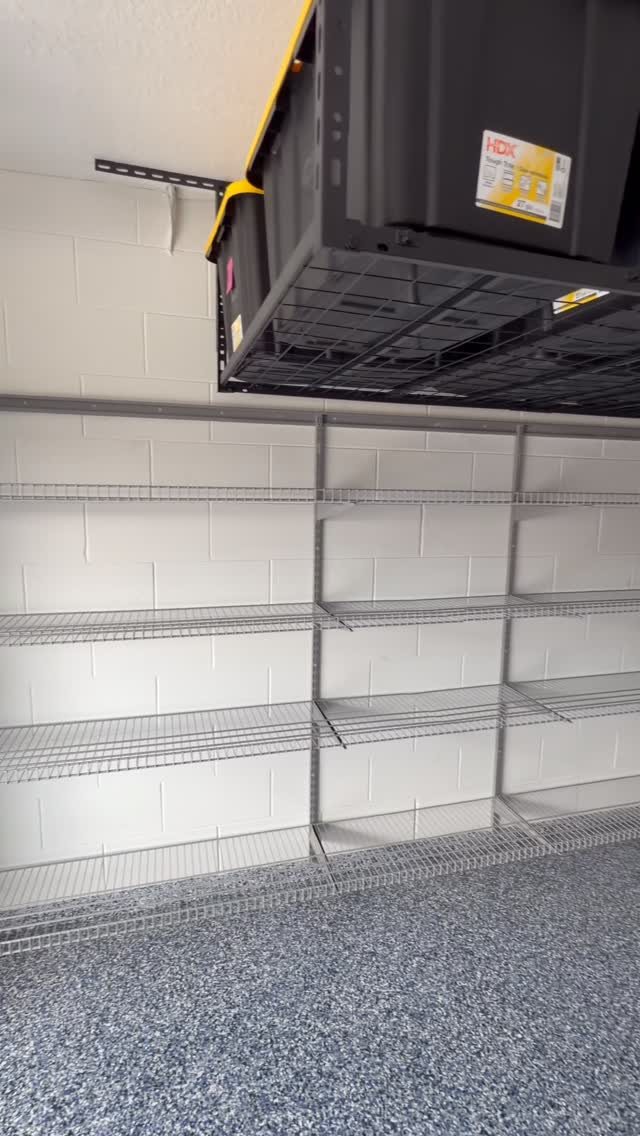
Wire shelving keeps boxes off concrete and in sight, which matters more than it sounds when you’re hunting holiday lights in November.
The right anchors let these mount straight to cinderblock, though finding studs in older block is its own project; a stud finder rated for masonry saves time and frustration. Depth is the choice that shapes everything.
A shallower depth fits most bins and leaves walkway clear; going deeper swallows bigger boxes but pushes you farther from the wall. I went deeper once and knocked my head until I moved the shelf.
4. Overhead Storage Racks
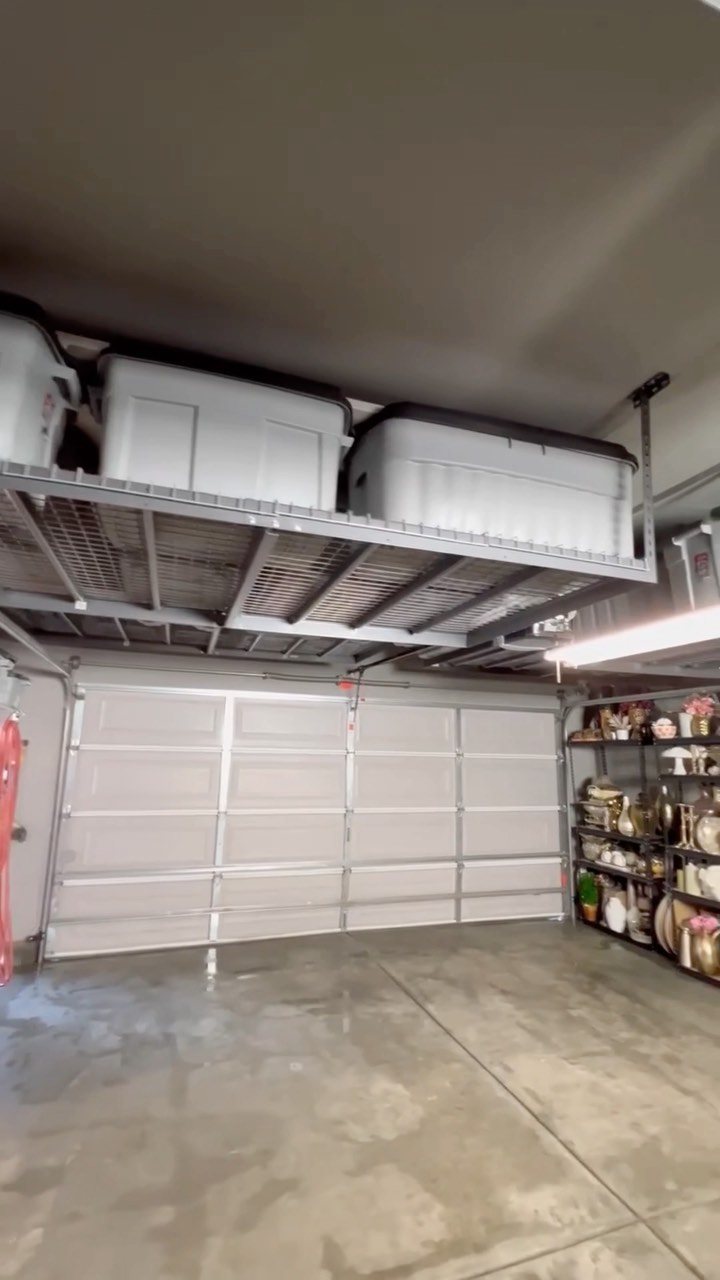
Ceiling racks eat the space your car never uses anyway. White totes filled with seasonal decoration are the classic use case for overhead racks: stored out of sight, down for one busy weekend.
Installation means hitting joists, not just drywall, and spreading weight across several of them; a 4-by-8 rack loaded with bins runs heavy.
Garage clearance varies, which leaves you ducking under loaded racks or not, depending on where you park and how tall you are. The spot over the garage door track works well, since no person stands there.
This is storage you build around, not storage you pass under daily.
5. Bike Hooks
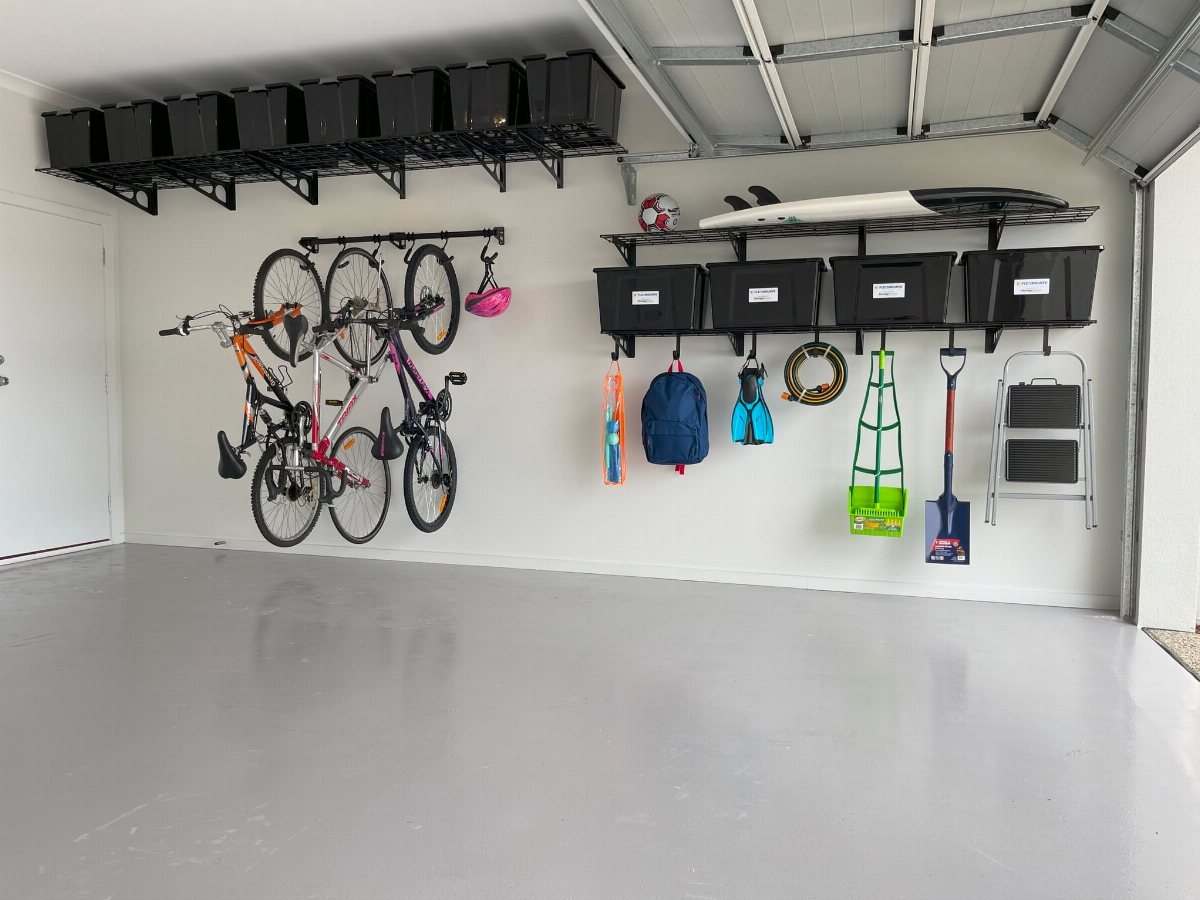
Vertical bike hooks let a wall do what the floor cannot. Bike hooks let you store several bikes in the width of one parked car, all accessible by lifting and rolling rather than heaving overhead.
Wall-mounted vertical storage means front wheel up, rear wheel down, bike hanging like a clock pendulum; the hook cradles the front tire, not the rim, so no spoke damage.
Handlebar width determines spacing, and handlebars vary: road bikes need less, kids’ bikes with streamers need more. Spacing tighter than standard still left me bumping grips; a little more room would have been safer.
Simple J-hooks are cheapest and fastest. Ceiling pulleys save more floor space but add moving parts; wall hooks are the weekend install.
6. Ladder Storage
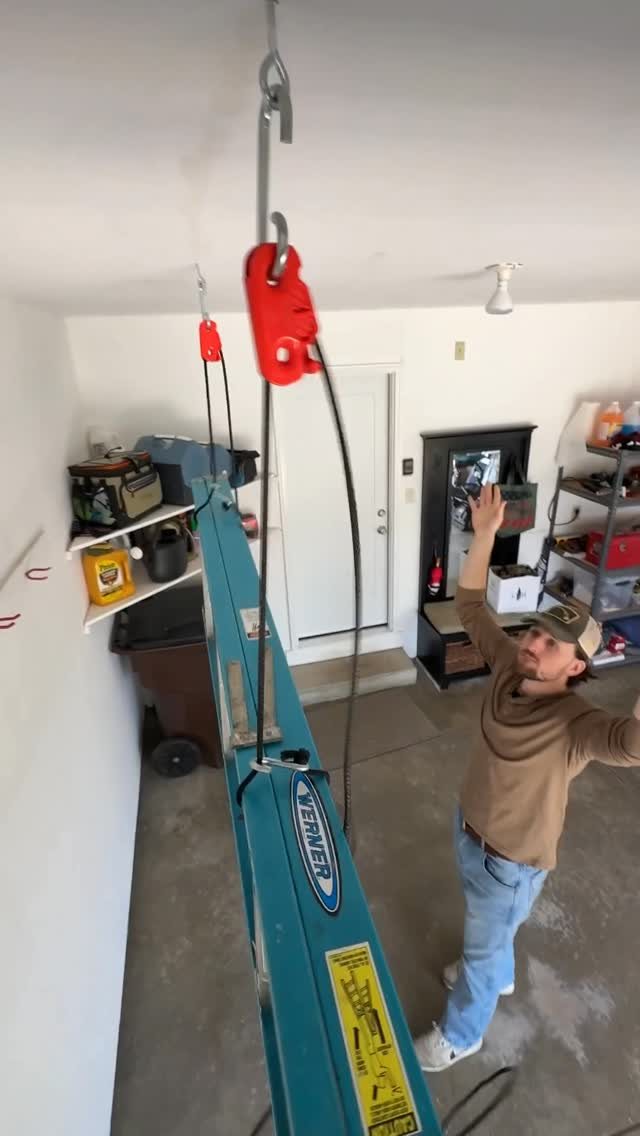
A ceiling pulley for your ladder buys back the corner where it always leaned and fell. Cable system hardware covers most residential ladders, with rated capacity that handles common extension and step models.
The real question is headroom: you need enough ceiling height that the stored ladder clears your open garage door, your vehicle, and you. Measure your ladder folded, add clearance for the hooks, and check against your tallest point of entry.
Offset from the door track works better than dead center, since the track itself takes up space you might not notice until install day.
This suits anyone with a single heavy ladder and no desire to wrestle it twice a week.
7. Hobby Zones
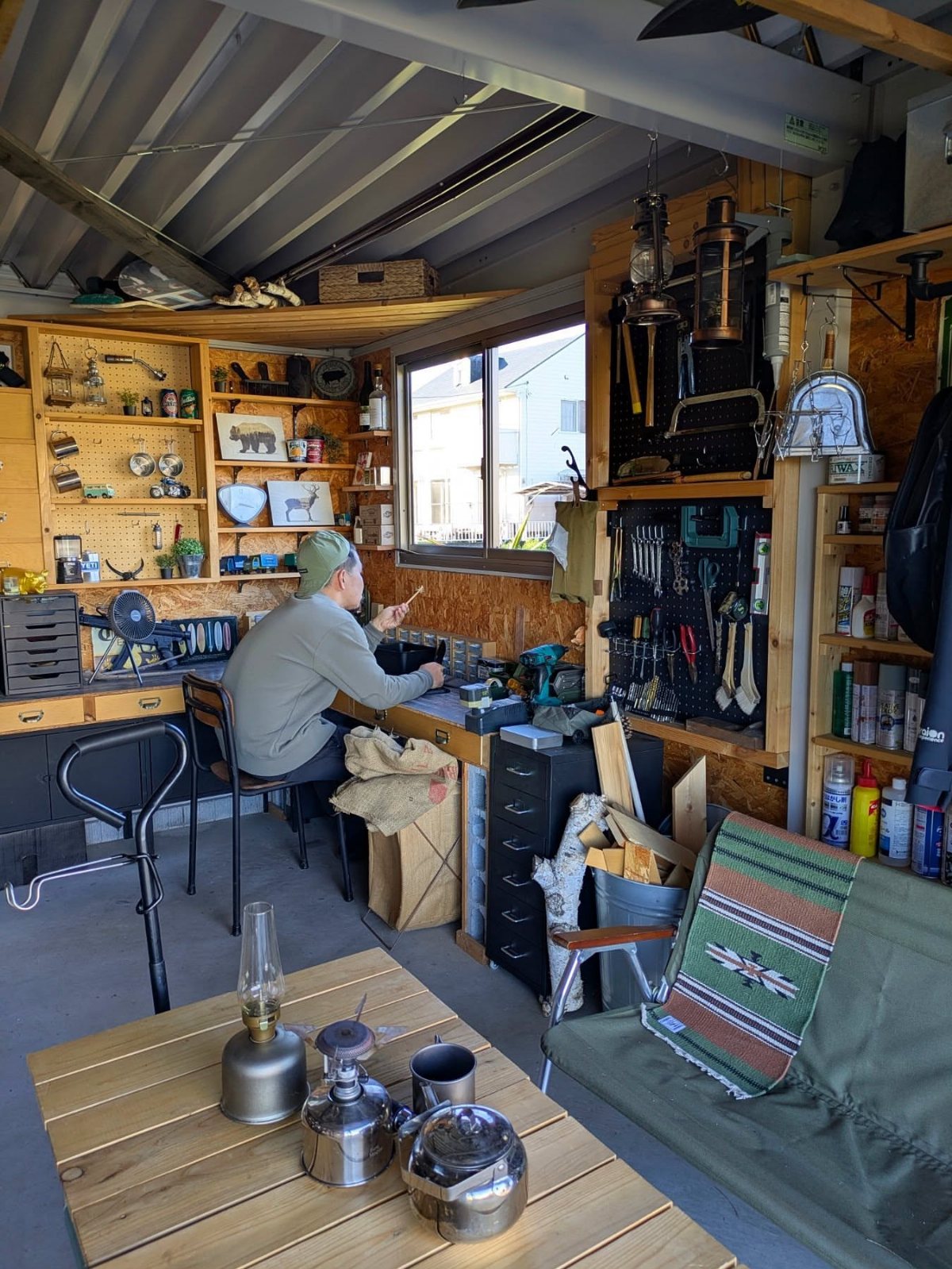
A corner of the garage kept just for the thing you actually do out there beats a workshop that never gets used.
Slatwall panels let you hang bins at eye level for whatever your hobby needs: fishing lures, paint tubes, bike tools, camping stoves. Adjustable hooks mean the same wall holds fly rods one season and grow lights the next.
A chair and a small table turn a corner of the garage into a place where you actually want to sit down and work.
Without a place to sit, you end up back in the house before the project gets going. With it, the garage becomes a room.
This suits anyone whose hobby gear currently lives in a closet inside, then migrates to the kitchen table, then annoys everyone. You lose some floor space that could have held the car or more storage.
For a one-car household, that matters. For two cars parked outside already, it is free space.
8. Mudroom in Garage
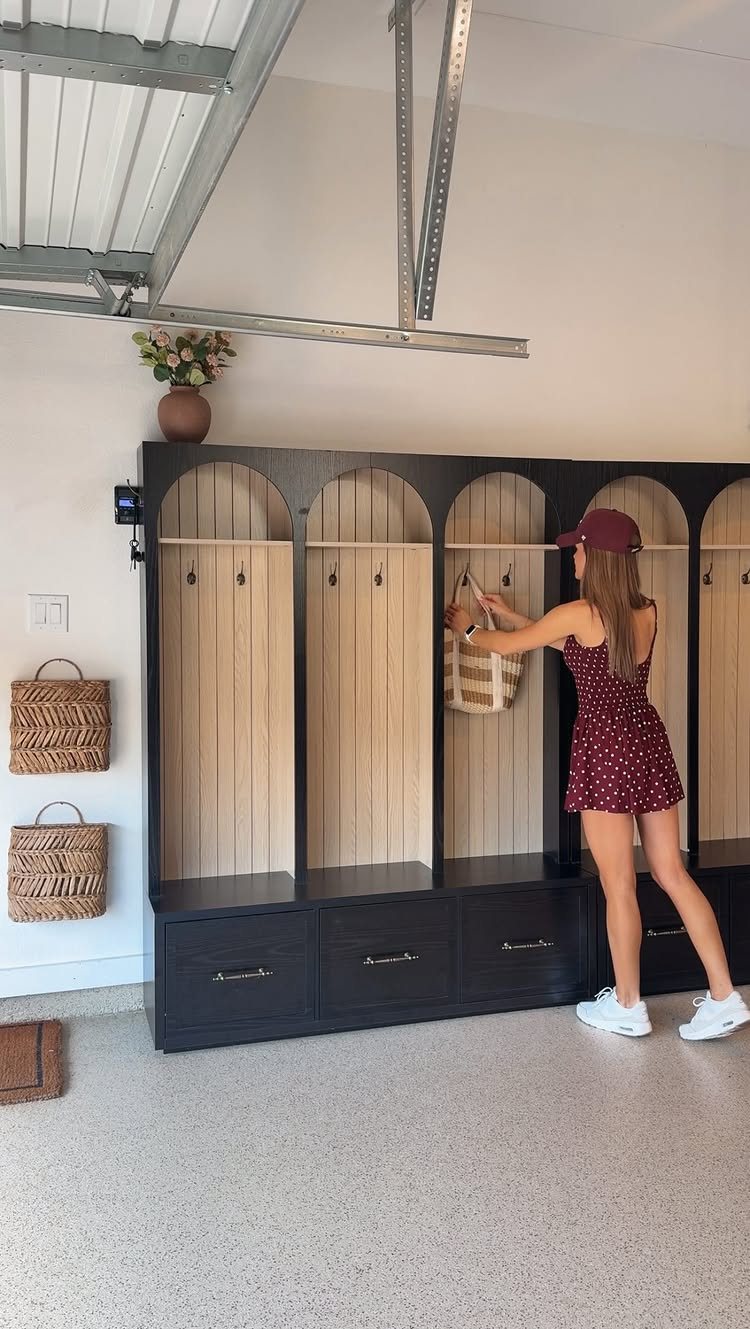
Built-in cubbies with hooks at standing height and drawers below keep boots, coats, and bags sorted before they reach the house. Individualized spaces keep one person’s rain boots from swallowing another’s.
A bench is non-negotiable. You will not sit on a ball or a tire to tie your shoes, not in February.
Seating, hooks, a spot for wet things below.
This idea wins for houses with no back hall, no coat closet near the door the family actually uses. The garage becomes the airlock, and the kitchen floor stays clean.
What you lose is wall space that could have held tools or shelves. For a family with young kids, that trade is easy.
For a garage that already stores bikes, lawn equipment, and holiday bins, measure twice.
Maximizing Floor Space
Floor space is the only metric that matters in a small garage. Every square foot you give to storage is one your car, your workbench, or your path to the house does not get.
Vertical storage is the move that keeps both. Shelves mounted high on the back wall hold bins you access twice a year; racks above the door track swallow the rest.
The floor stays open for what actually happens out there: parking, projects, walking through with groceries.
I would rather own fewer things stored well than more things stored poorly. A clear floor also means a clear view of what you have, which stops the duplicate purchases that fill garages in the first place.
Custom Solutions
Custom work makes sense when standard sizes fight your space. A cabinet run cut to fit a sloped garage roof line, or slatwall panels sized around an existing water heater, uses the geometry that off-the-shelf pieces ignore.
The process starts with measuring what you actually store now, not what you imagine storing someday. Width of your largest bin, height of your tallest paint can, depth of your bike pedals when the wheel hangs straight.
Those numbers drive the cut list.
CNC-cut panels from replenishable North American wood source give precision without the premium of full custom metalwork. A 3-D render before build lets you test drawer placement against how you actually move through the space.
I would pay for that step alone; moving a bank of drawers in software beats moving it in real life.
The best solution is different for every garage. Hobby gear, car priority, family traffic patterns.
No single product line covers all three.
Seasonal Storage
Seasonal items are the easiest load to get wrong. Out of sight becomes out of mind, then becomes buying a third string of lights because you cannot face checking what is up there.
White totes on overhead racks are the standard for a reason: visible, uniform, and sized to the rack so nothing teeters. Label the short side, not the lid; you read them from below.
One bin per holiday, one for summer camp gear, one for the patio cushions. Splitting by season beats splitting by room, since you pull everything at once.
Designated bins only work if the designation holds. I would rather write "Christmas" in marker than trust a color system I forget by March.
The rack over the door track is the right spot; you access it standing on the open tailgate, not daily.
Safety Considerations
Every mounted solution in a garage eventually holds more weight than planned. The bike hook that starts with one road bike ends with a trailer, a lock, and a helmet bag.
Plan for that.
Hitting joists, not drywall, is the rule for anything overhead. A stud finder rated for masonry saves time on block walls; guessing leaves you with pulled anchors and a rack on your car.
Spread load across multiple joists, even if the hardware says one point handles the weight. Distribution is what keeps the ceiling where it belongs.
Ceiling height varies, and so does what you can safely walk under. Measure your tallest household member, add the loaded rack depth, add the bin height.
The number that comes out determines where the rack goes, or whether it goes up at all.
The space above the door track stays clear of foot traffic, which matters because a full bucket in each hand leaves no room to duck.
A triathlete and mountain biker shares 8 of the best garage bike storage solutions.
Frequently Asked Questions
How can I organize my garage cheaply?
Wire shelving paired with the bins already stacked in your basement or closet gets you most of the way there without a trip to the store.
Mount wire shelves to cinderblock with masonry-rated anchors, and slide bins underneath cabinet legs if you add a single tall unit later.
What not to store in your garage?
Keep chemicals and paint inside closed cabinets, not open shelves, since dust and temperature swings hit everything out in the open. Cabinet storage works better than open shelves for anything chemical or paint-related that collects dust.
What is the best garage storage layout?
Split the wall into zones that match how you actually move through the space.
Hand tools live above the workbench, bikes and sports gear mount high enough that handlebars clear your head, and seasonal bins go overhead where the car never travels.
Is it cheaper to build or buy garage shelving?
Buy wire shelving for the fastest cheap fix, or start with one tall cabinet unit and add matching pieces later when the budget allows.
Building custom cabinets runs more than a weekend and tends to become the single big spend in any garage overhaul. Wire or a starter cabinet wins for a quick weekend project that does not eat your whole budget.