Bathroom shelves run from a $100 ladder rack you carry in yourself to a recessed niche cut into studs, with options like floating shelves, ladder shelves, and freestanding units that fit most budgets and timelines.
What decides which idea fits is whether you own the place and how long you plan to stay.
A freestanding over-the-toilet unit moves with you; a built-in niche with backlighting stays where you left it, and both sit alongside options like floating shelves, ladder racks, and corner shelves depending on your space.
1. Over-the-Toilet Storage
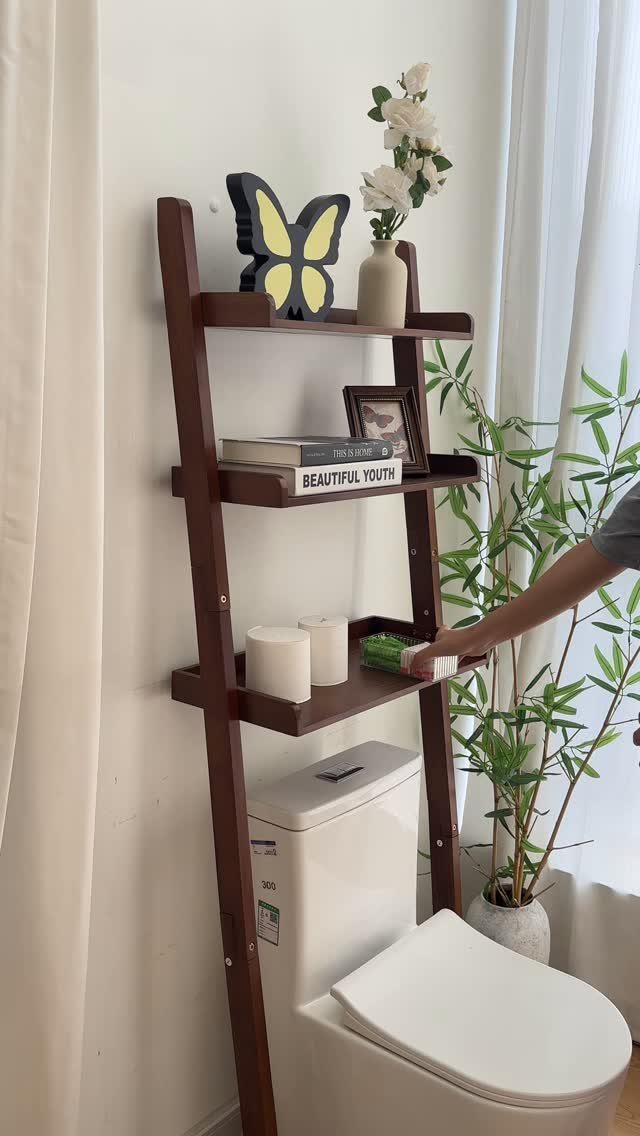
The space above a toilet tank is usually dead air, and an over-the-toilet unit turns it into storage without touching a wall. Freestanding ladder-style racks run $100–250, need a quick assembly with a screwdriver, and move with you when you leave.
Wall-mounted versions stay put and sit higher, which matters in a tight bathroom where standing up fast happens.
I’d go freestanding for a rental and mounted only if I owned the place and knew my ceiling height. Either way, leave enough clearance above the tank lid so the lid still lifts for repairs.
2. Floating Shelves
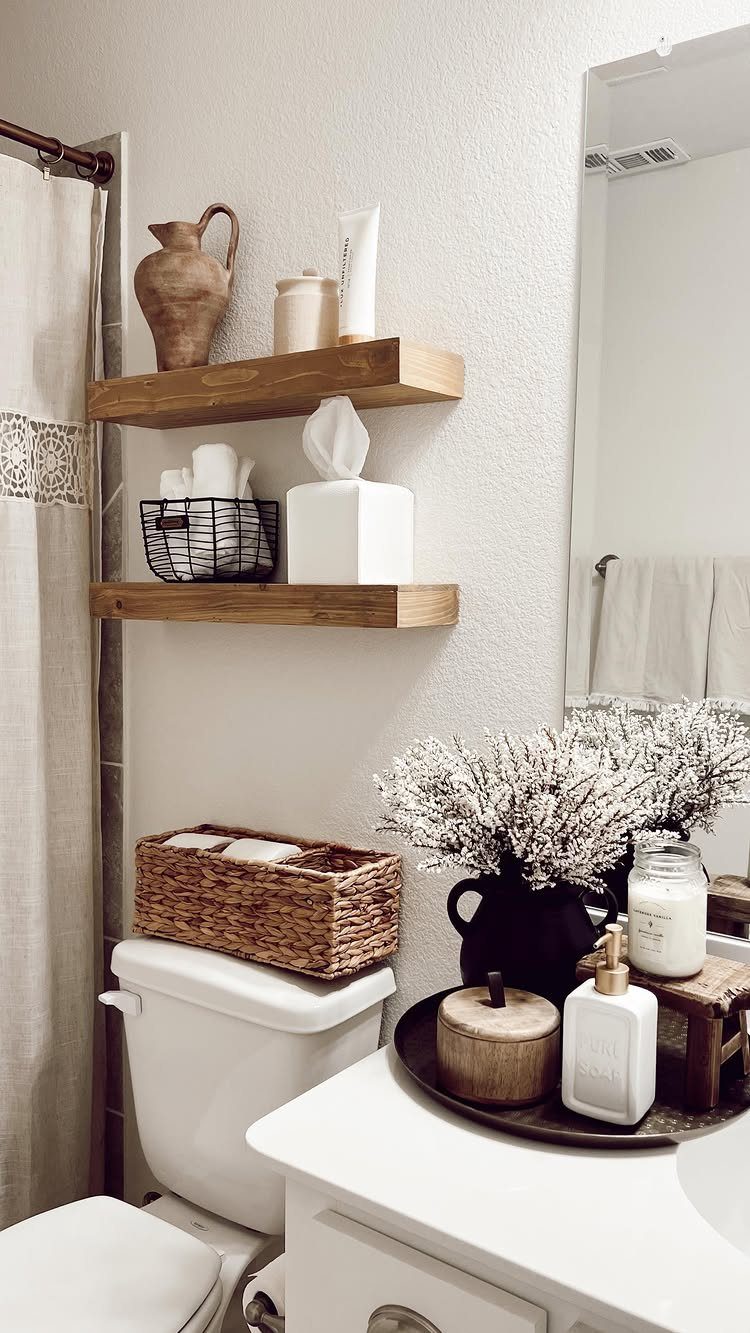
Floating shelves let you use wall space that cabinets would swallow.
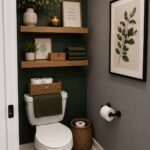
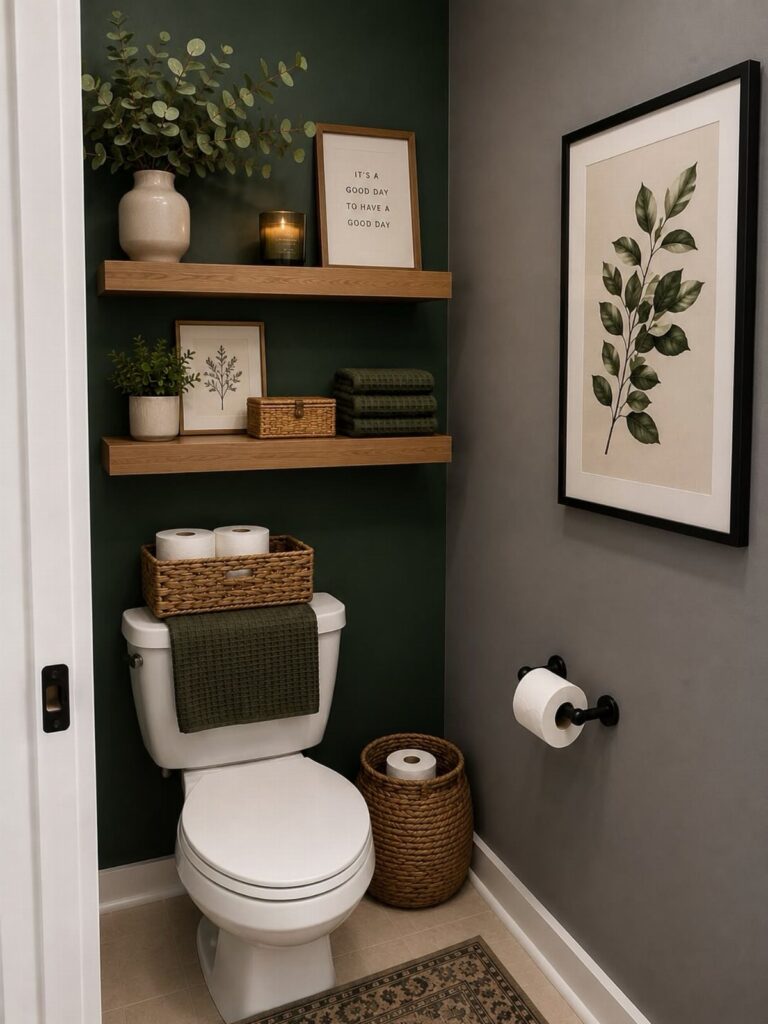
Two or three in a row, stacked with the rule of thirds in mind, give enough room for rolled towels, a small plant, and the box of tissues that otherwise lives on the tank.
Wood warms up a white bathroom fast. Glass reads cleaner but shows every water spot; I’d pick wood unless the room already runs dark.
Installation means finding studs or using heavy anchors, so budget an hour and a level. Live-edge boards cost more but need no styling, the grain does the work.
3. Under-the-Sink Storage
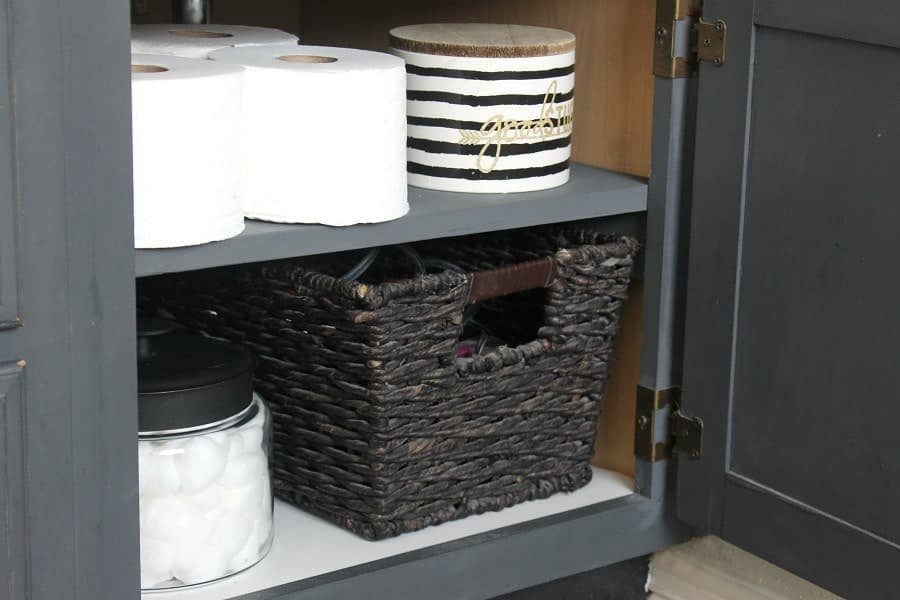
Under the sink hides the only deep storage most small bathrooms have, and it usually turns into a black hole of half-used bottles. A pull-out bin or stackable wire shelf fixes that; you want to reach the back without crawling.
I keep backup toilet paper and the hair dryer I use twice a week here, daily stuff stays at eye level.
A free-standing sink with an open shelf underneath skips the cabinet entirely and works fine if your towels are pretty enough to show. Woven baskets hide the rest.
4. Ladder Shelves
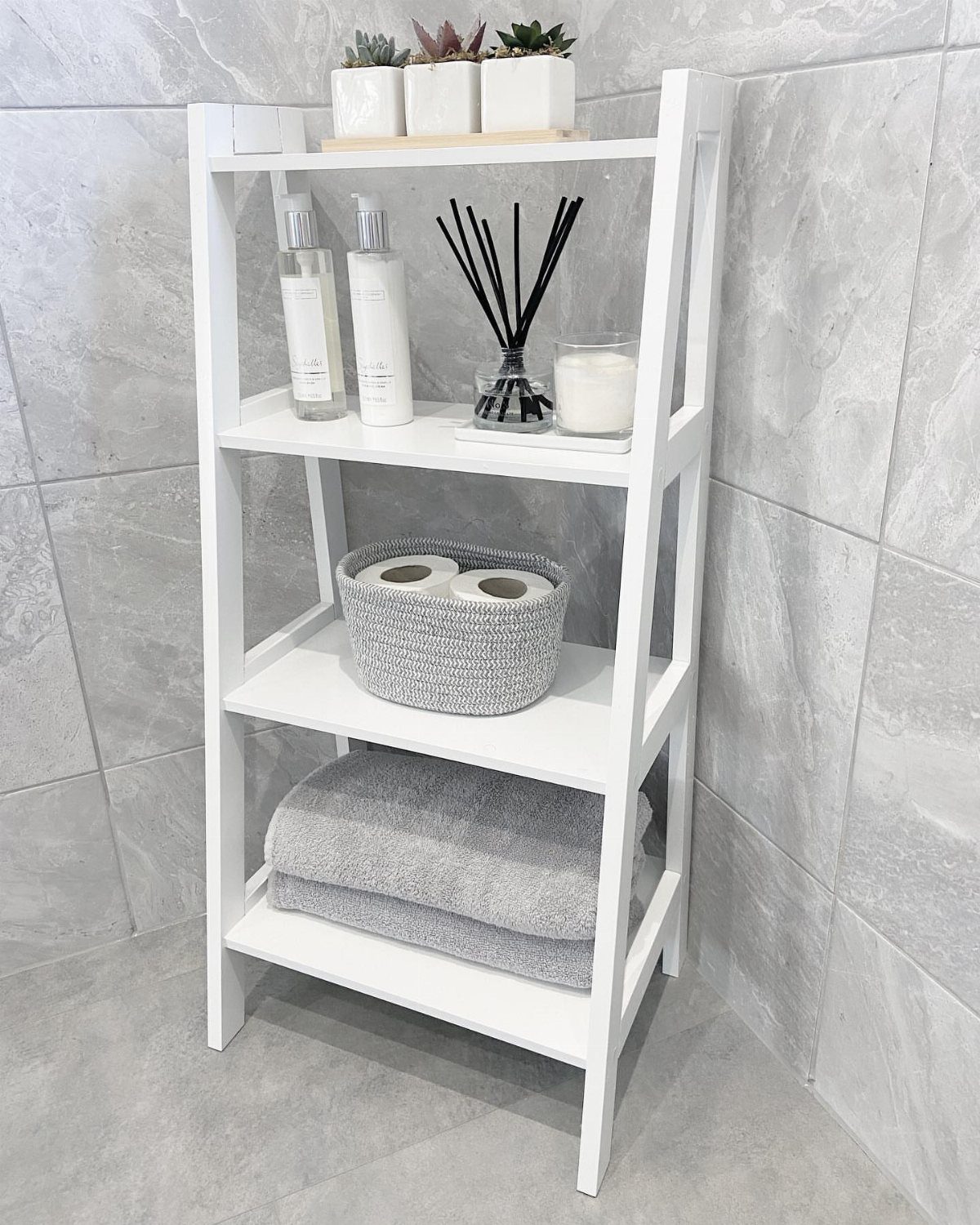
A ladder shelf leans against the wall and reads as furniture, not hardware. The rungs become tiers for folded towels, a basket of toilet paper, and the small plants that survive bathroom humidity.
White painted wood suits a modern grey bath the way raw oak suits something warmer. It takes no installation, which matters for renters, though the feet need rubber grips on tile.
Four tiers at roughly 18 inches wide fit most narrow gaps beside a vanity or between toilet and tub. I’d add one where a cabinet would block the light.
5. Transparent Shelves
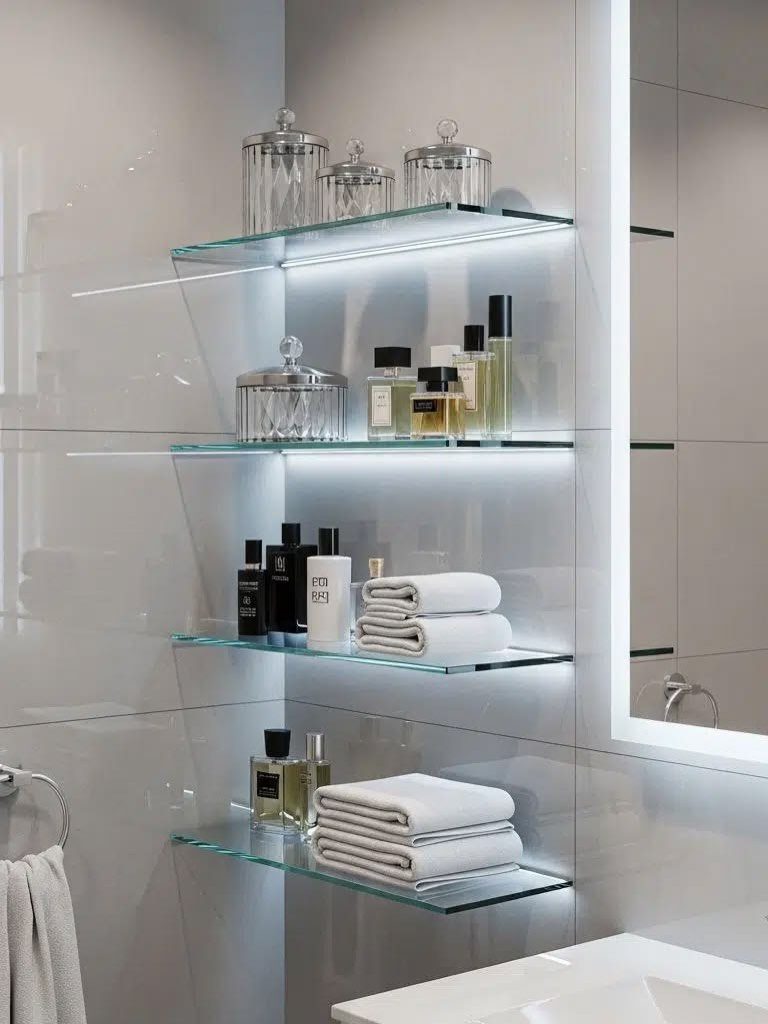
Glass or acrylic shelves almost disappear against tile, which keeps a small bathroom from feeling crowded. Under-shelf lighting turns storage into display but needs an outlet plan.
Glass chips and acrylic scratches, so I’d use acrylic if the shelf sits low where elbows hit, glass higher up where only eyes reach.
Either material needs invisible bracket hardware, which costs more than standard floating mounts and takes patience to level. Glass shelves open up a bath that otherwise feels walled in.
6. Three-Tier Shelves
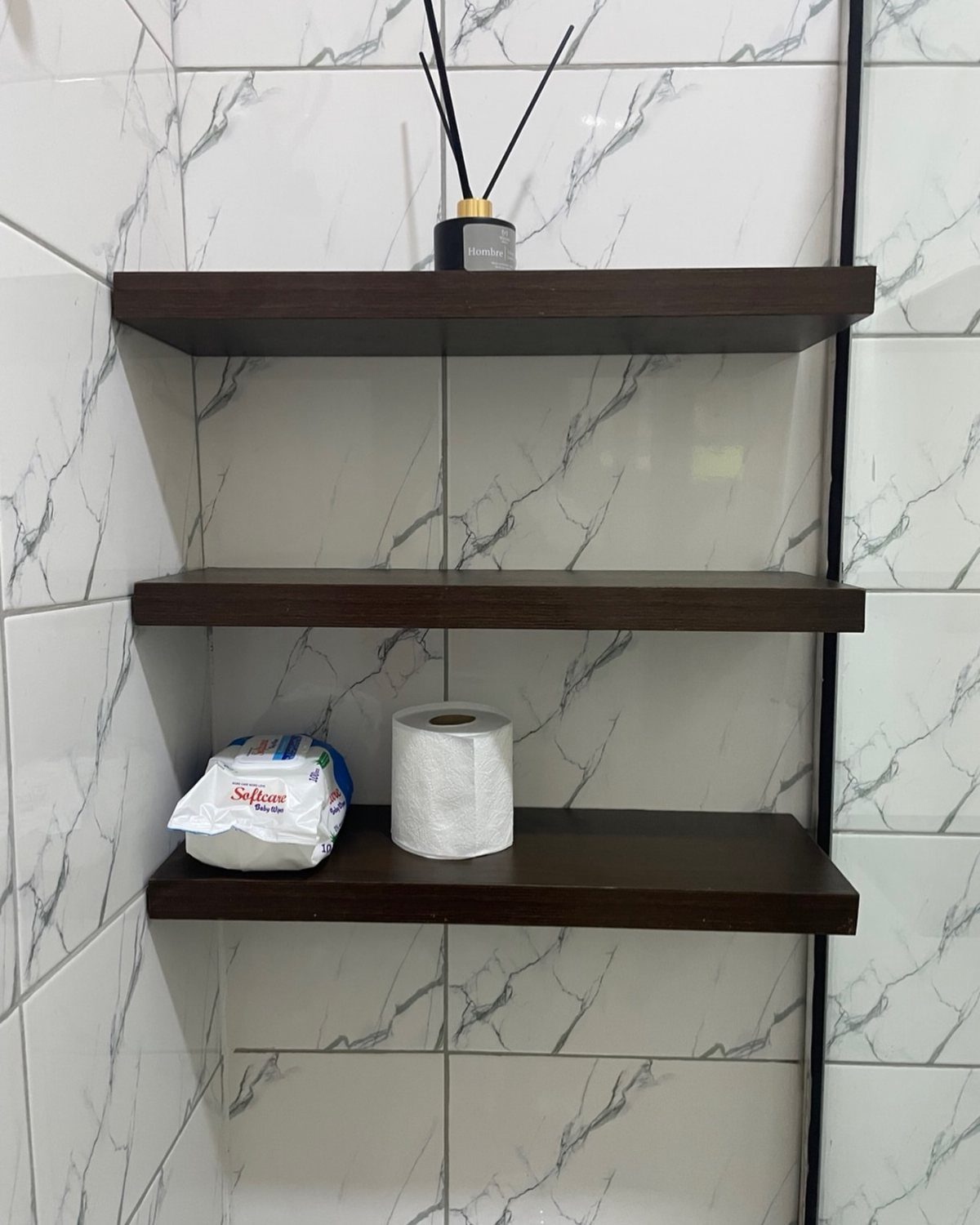
Three tiers in one unit, whether rope-hung or fixed to the wall, give you vertical storage without the depth that blocks door swings.
Dark wood in a marble niche gives a polished look, but the same idea works in metal over a towel bar or rope-suspended in a corner.
Wall-mounted versions need anchors rated for wet-wall weight. Freestanding three-tiers, sometimes called etageres, squeeze beside a pedestal sink where nothing else fits.
I’d pick rope and wood for a coastal bath, black metal for something tighter and more urban.
7. Shower Shelves
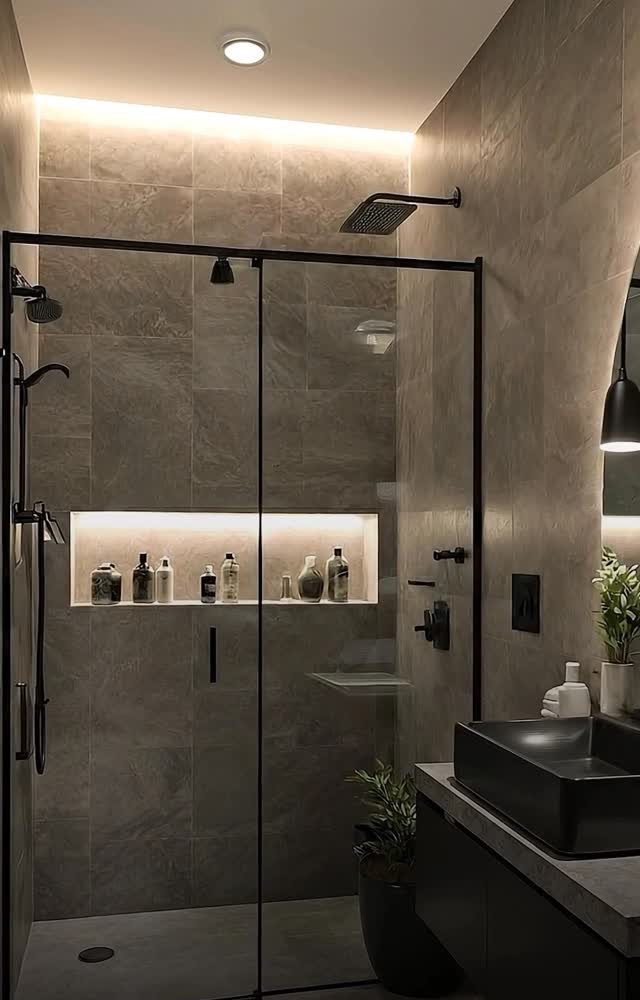
A shower niche keeps bottles off the floor and within arm’s reach. Glass or metal hold up to daily water exposure better than wood or standard paint.
If your shower has a stud bay that sits empty, a recessed niche costs more than a caddie but stays put. For renters or anyone avoiding tile work, a tension pole with adjustable shelves moves with you.
Cleaning around it takes longer; a built-in niche wipes down in one pass.
I’d go recessed if I owned the place and planned to stay long-term. Otherwise, a good caddie does the same job and leaves when you do.
8. Built-in Shelves
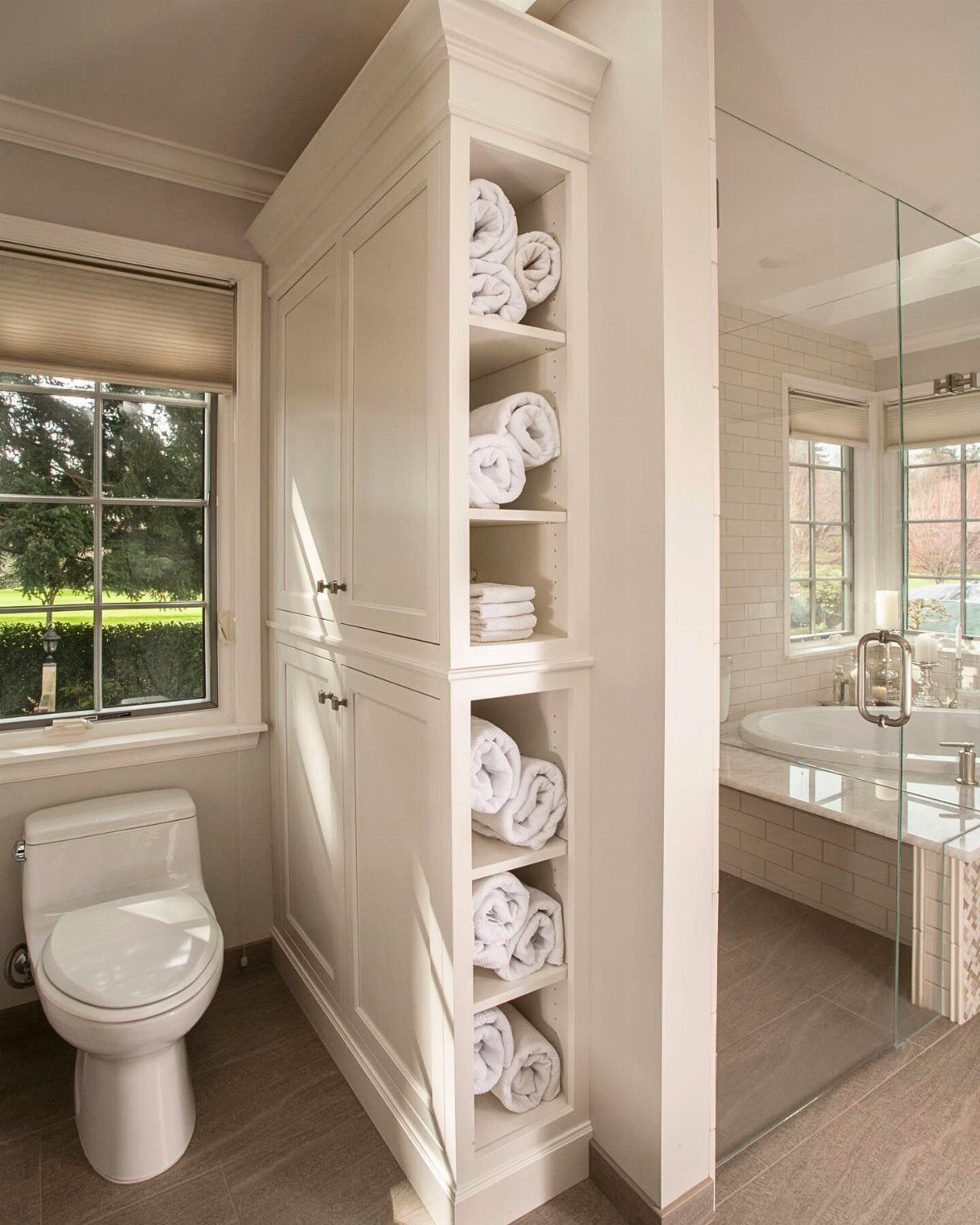
Built-ins look like they were always meant to be there because, well, they were.
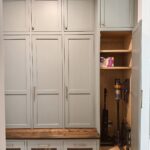
A tall cabinet with closed storage on one side and narrow open shelves on the other lets you hide clutter and still roll towels where they read as decor.
What you get depends on what your walls allow. An alcove between studs gives you shallow depth before you hit plumbing; a false wall built out from the real one buys more room but eats floor space.
Check whether your toilet or tub shares that wall before you cut.
This suits someone staying put long enough to justify the cost and mess. If you rent or might move, leaning shelves give a similar look without the commitment.
9. Small Closet Shelf
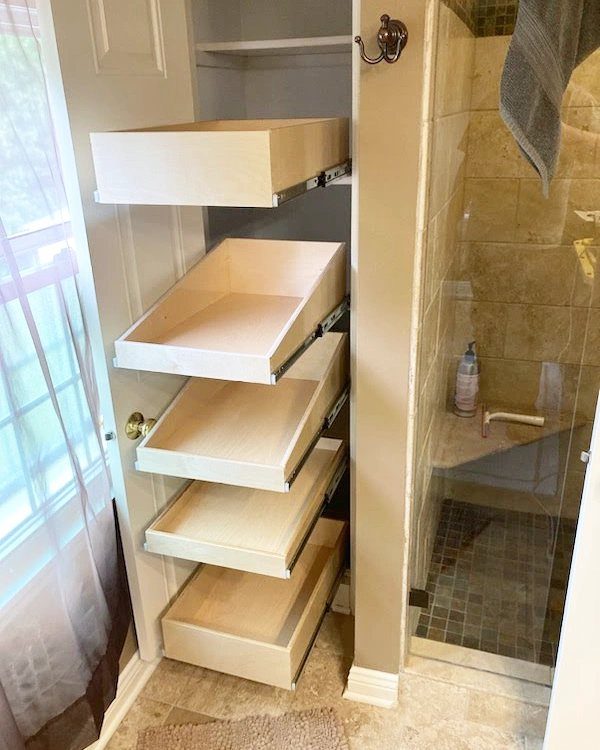
Five pull-out drawers in a narrow slot next to a shower: that is the whole idea, and it works because nothing sits so deep you forget it exists.
Light wood drawers work well, though the material matters less than the motion. Sliding out beats reaching back into a dark cabinet when you are wet or in a hurry.
You can build this into a stud bay or buy a ready-made unit sized to standard closet depth.
Either way, count what you actually store before you settle on drawer heights; one tall drawer for bottles and several shallow ones for cotton and soap beats identical slots that fit nothing well.
This is for the person who has a sliver of wall and wants every inch to work.
10. Corner Shelves
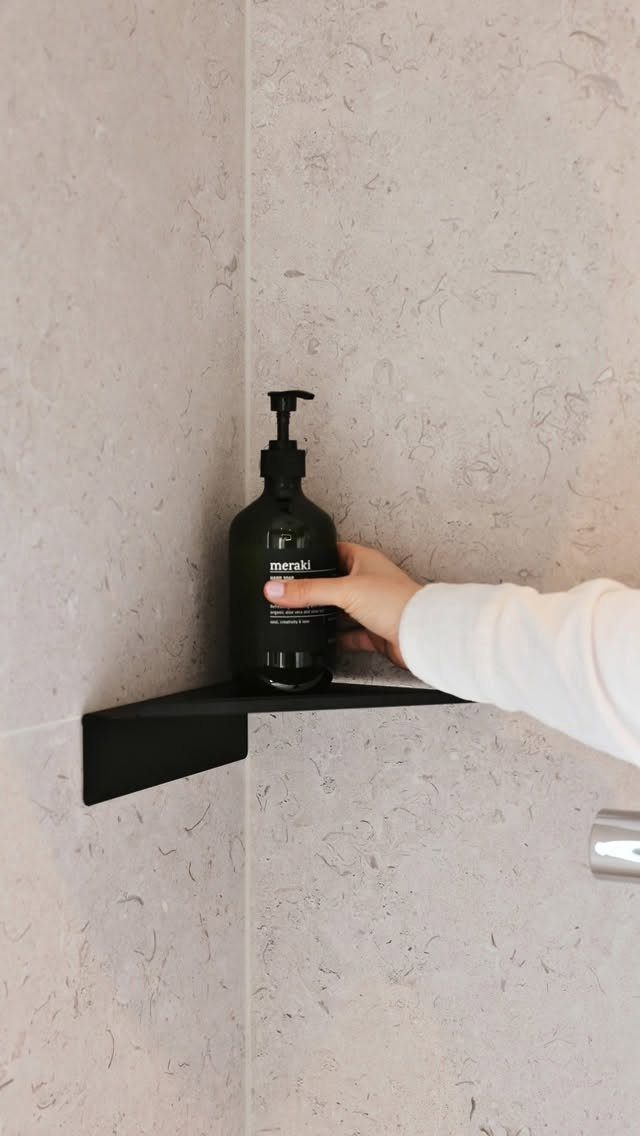
Corners collect dust and little else until you mount something meant for the angle. A triangular shelf turns that dead space into useful real estate for a single bottle or a small plant.
Water-resistant materials matter here more than anywhere else in the bathroom; a corner near the shower sees splash and steam even if it sits outside the curtain. Metal with a powder coat or solid surface materials hold up.
Wood can work if you oil it yearly and do not mind the patina.
Tension pole racks that stack three or four triangular shelves work in shower corners and move out when the lease ends. For a permanent install, one solid shelf at the right height beats two at the wrong ones.
11. Wall-Mounted Cabinets
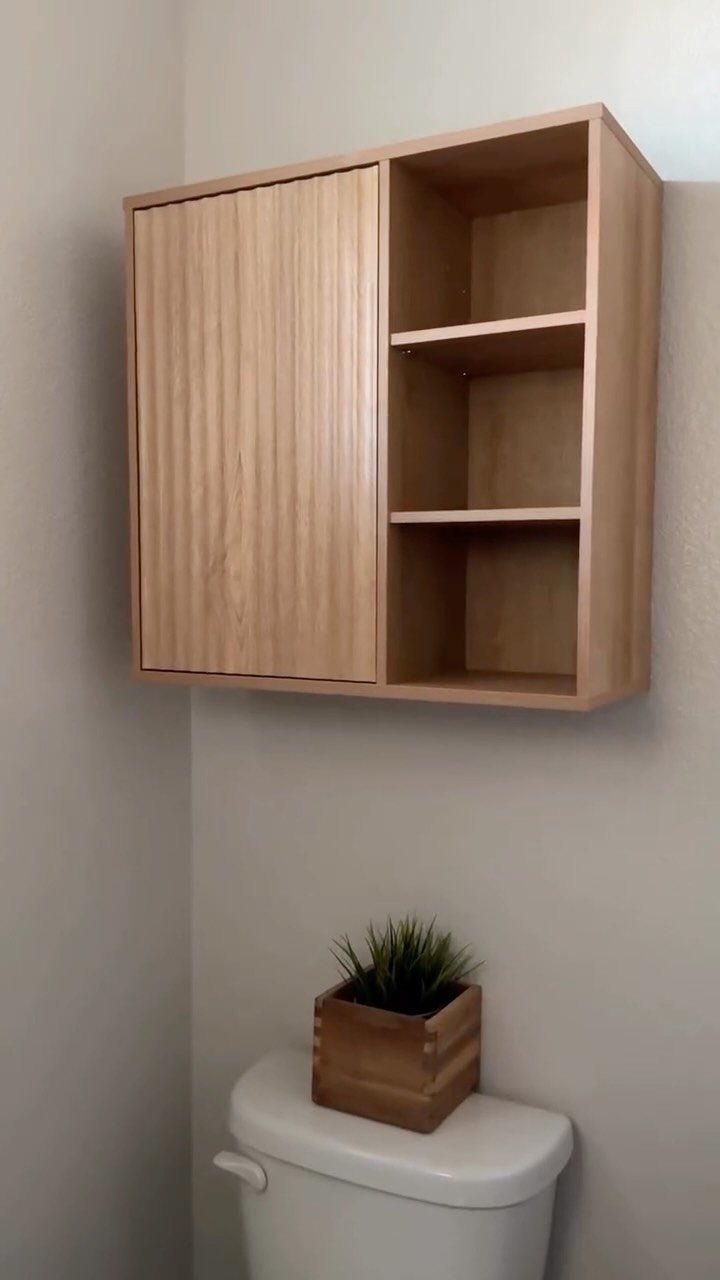
A wall-mounted cabinet above the toilet splits its face: closed storage on the left, open cubbies on the right.
That mix lets you stash the ugly stuff and still have a spot for the plant or the hand soap that looks good.
Installation means finding studs or using proper anchors; a cabinet loaded with bottles gets heavy fast. The open side needs editing, not stuffing, or it reads as clutter from the doorway.
I keep the closed side for backup toilet paper, first aid, and the skin care I do not need daily.
This works best in a small bathroom where floor space is gone but wall space above the tank sits empty.
If your toilet sits in a narrow water closet, measure the swing of the door before you buy; a cabinet that clears the tank but blocks the door is a mistake you make once.
12. Freestanding Bathroom Shelves
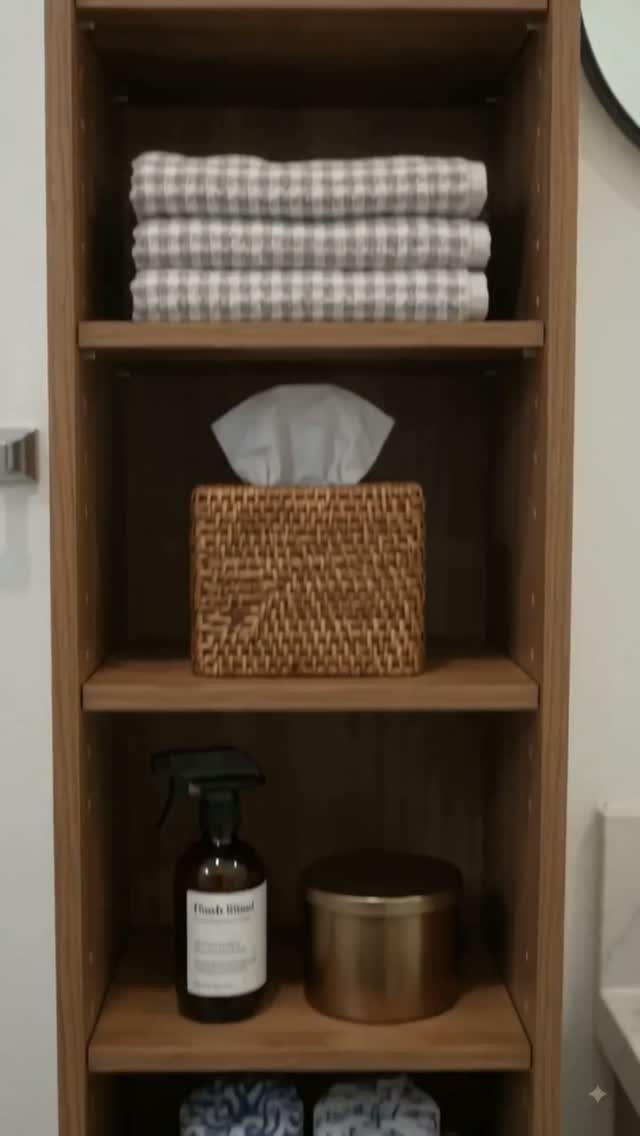
When walls are full of tile, towel bars, and the odd window, floor space might be all you have left.
A narrow freestanding unit stands on its own legs and holds towels, a tissue box, and the small stuff that otherwise covers the counter.
Wood warps in damp air unless it is sealed well; metal or powder-coated wire lasts longer but reads more industrial. A warm tone softens the bathroom, though that choice costs you the easy wipe-down of a glass or laminate shelf.
Move it when you clean. Freestanding shelves move when you bump them; a mounted unit stays put.
For renters or anyone who rearranges rooms on a whim, that mobility is the feature.
13. Bench Shelf
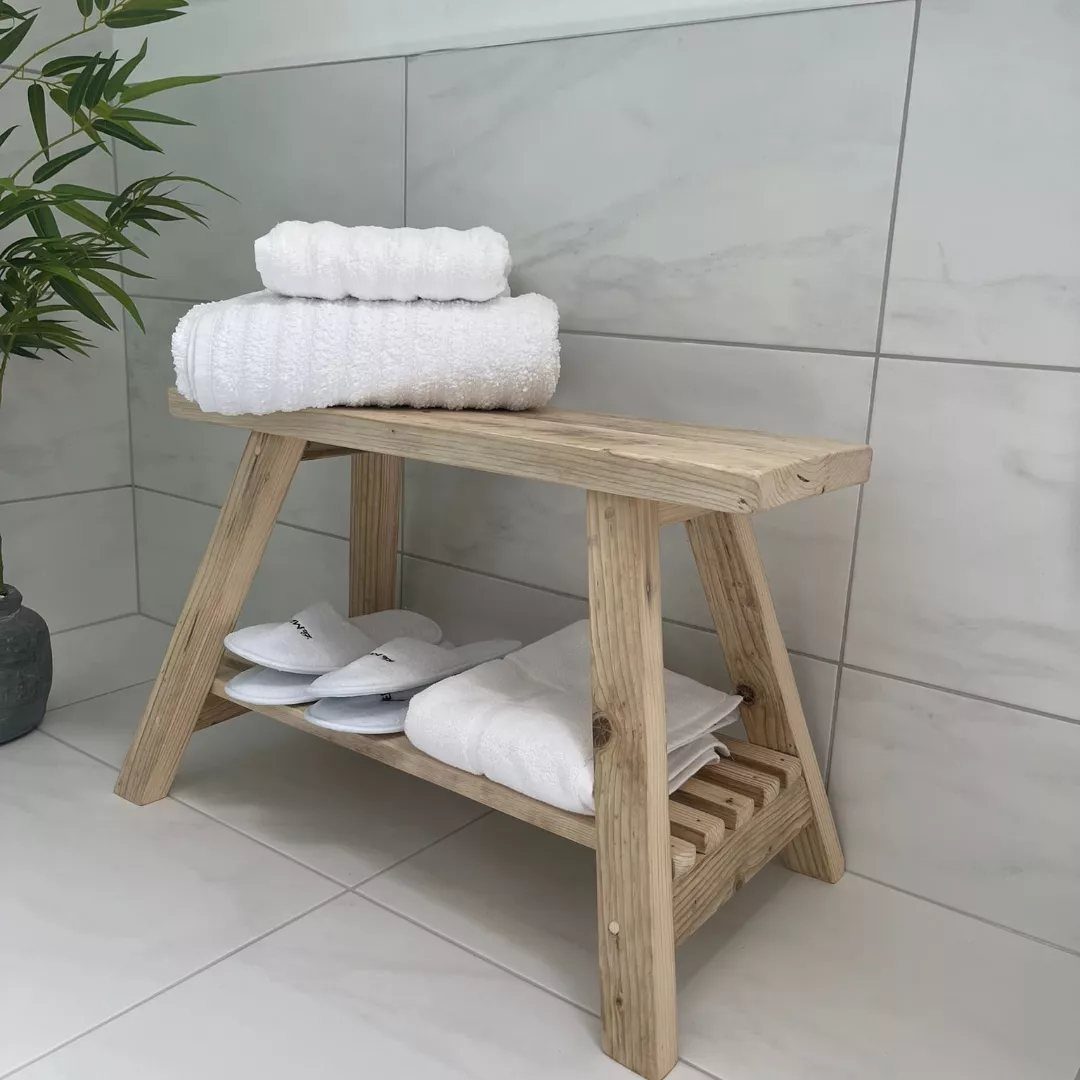
A bench with a slatted lower shelf turns one piece of furniture into two functions, which matters when the bathroom barely fits a vanity and a door swing.
A bench shelf in light wood gives you two levels for folded towels and a gap underneath for slippers, keeping the whole routine in one clean line against tile.
Look for a bench long enough to sit on while drying off or setting down clothes, with an open shelf below so damp towels air out. Teak or bamboo hold up to humidity without fuss.
I’d skip anything with a solid bottom panel; it traps moisture and starts smelling within a month.
This suits bathrooms that double as laundry stops or serve kids who need a perch for shoes. It trades away hidden storage for speed: everything visible, everything reachable in one motion.
14. Use a Vintage Element
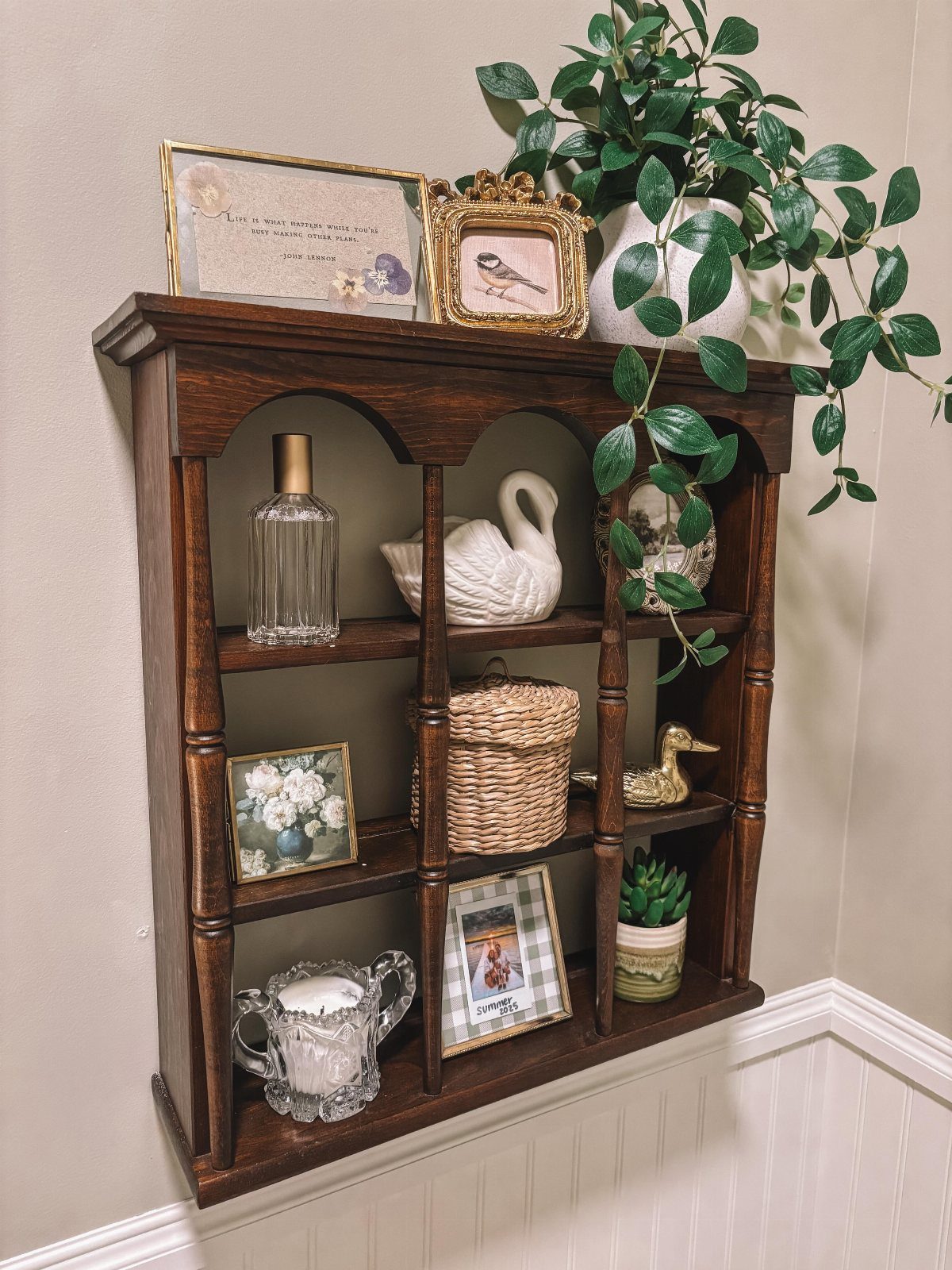
Repurposed display cabinets or small dressers mount above beadboard to give a bathroom something no big-box shelf can copy.
Arched cubbies in dark wood turn a shallow vintage cabinet into a set of miniature stages for whatever small pieces you collect: a figurine, a framed print, a trailing plant.
Hunt estate sales or Facebook Marketplace for a shallow cabinet so it does not crowd the sink; bring a tape measure and check it in place before you buy.
Strip the back panel if you need to run it flat against the wall, or leave it open and paint inside to match the room. Glass shelves from the original piece work for cotton balls or small bottles.
The risk is visual clutter. I’d limit each cubby to one color family, white and brass against dark wood, so it stays collected rather than crowded.
This idea wins for renters who can patch a few screw holes later and want the bathroom to feel considered, not assembled.
15. Create a Niche
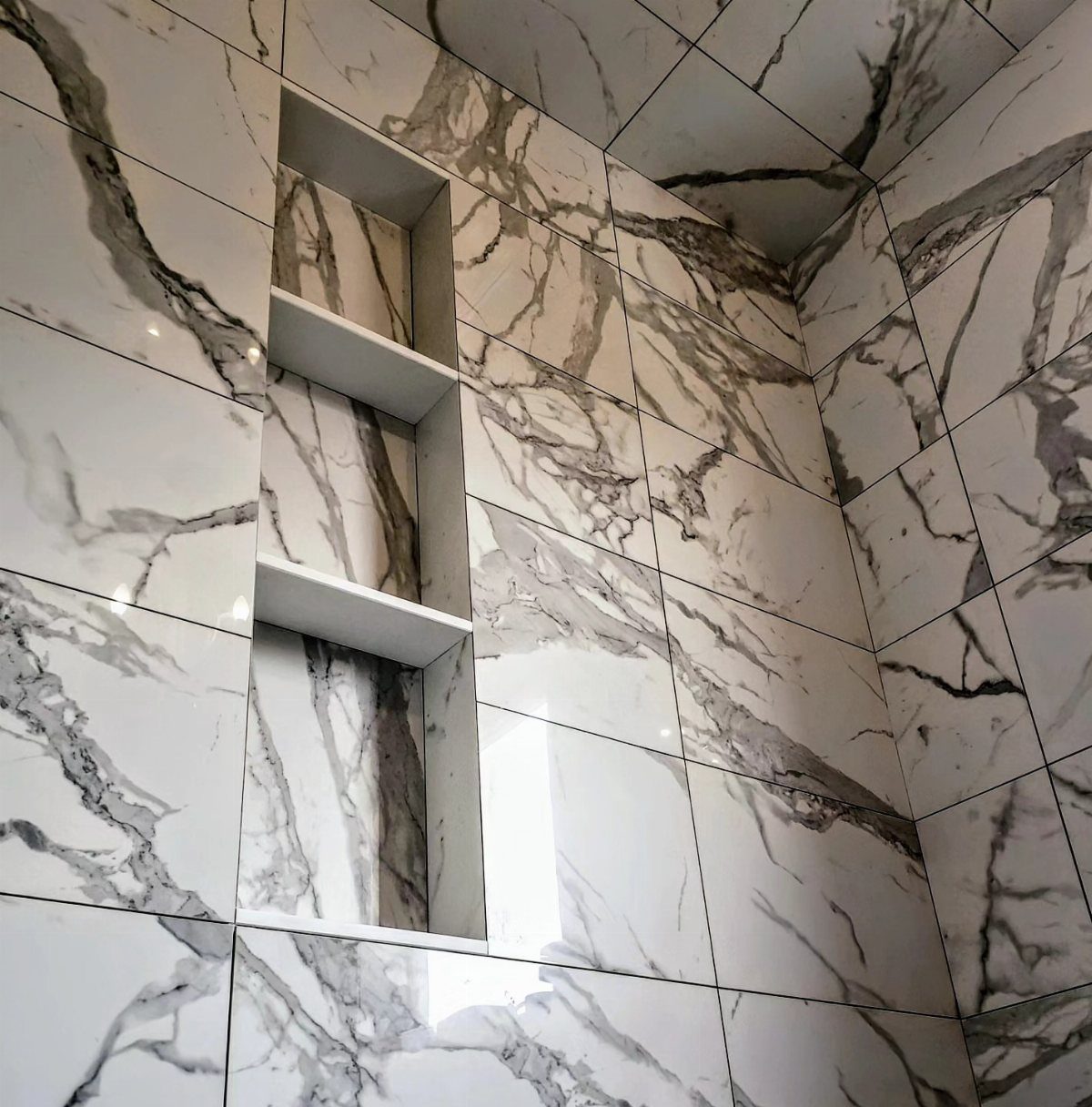
Recessed shelves carved into stud space turn wall thickness into storage that does not project an inch into the room.
A niche built in white marble tile across three tiers sits flush enough to read as original architecture, not something tacked on later.
Plan this during any tile job, not after. A plumber or tiler cuts the opening, lines it with backer board, and tiles the interior to match or contrast the surround.
Depth depends on your wall: a standard 2×4 wall limits how far back you can go, while 2×6 studs or a furred-out shower wall give you more room without stealing space from the room side.
Width and height are flexible; I like a tall vertical niche for shampoo bottles and a lower ledge for soap.
Grout the shelves with a slight pitch toward the drain so water runs out, not pools. This suits new builds and gut renovations only.
What you gain in built-in look you lose in flexibility; a niche stays where you put it, even when your bottles change shape next year.
16. Add Backlighting
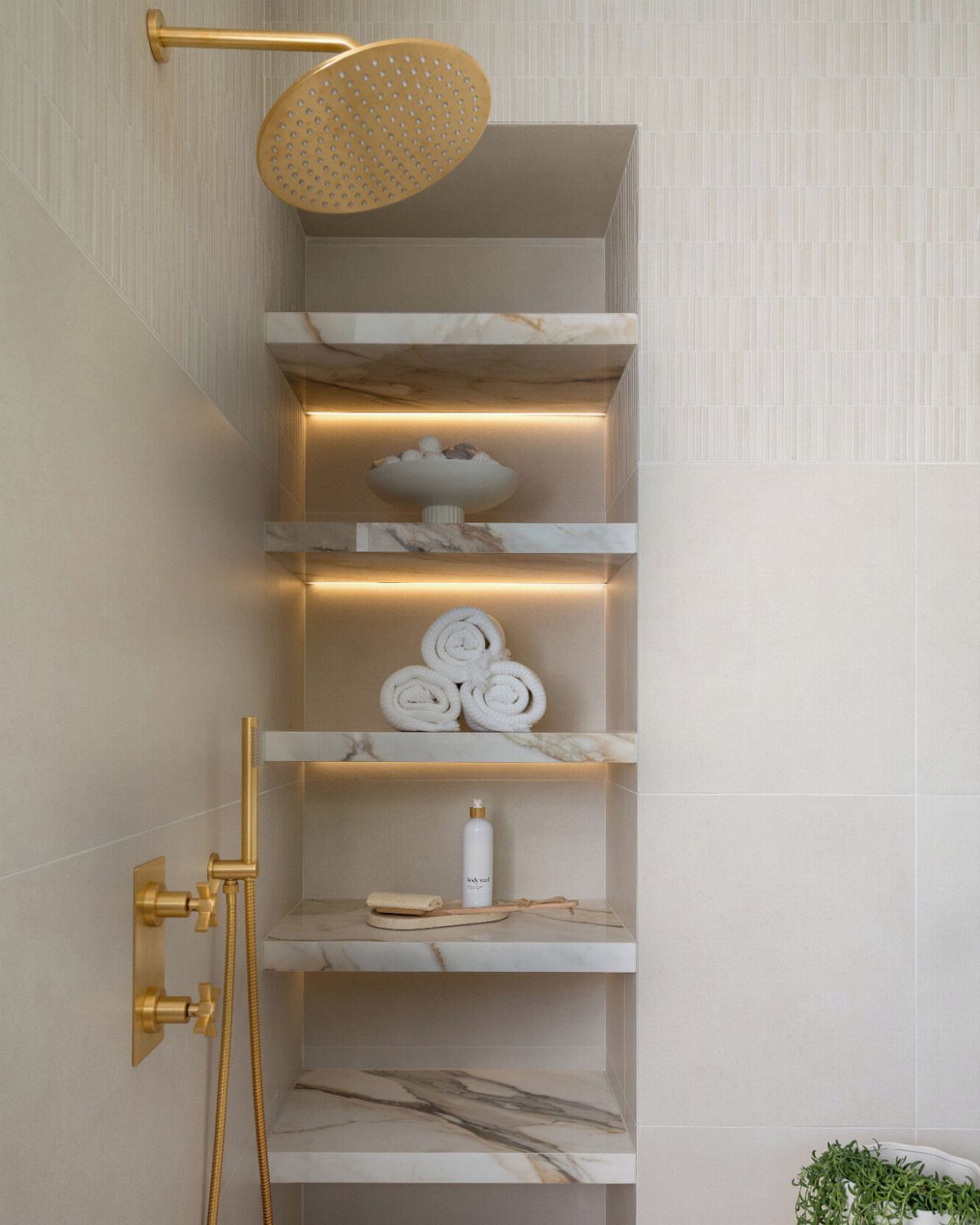
LED strips tucked behind marble shower shelves cast a warm glow that picks out texture and makes a dark bathroom feel intentional rather than dim.
Running the light along the back edge of a niche bounces it forward off stone and brass fixtures, so the glow comes from the surface rather than the source.
Use waterproof tape rated for wet locations, not leftover under-cabinet strips. A dimmer switch outside the shower lets you tune it for early morning or late night.
The effect works best with deeper colors; on all-white tile the light flattens everything and reads clinical.
I would wire this during renovation, not retrofit. Battery strips fail fast in steam, and outlet cords through grout lines look worse than no light at all.
A strip, driver, and electrician time add up fast if you are not comfortable with bathroom circuits; price the parts and the help before you commit.
That backlit glow turns a bathroom from the usual single ceiling fixture into something that feels considered, the way a good hotel does it.
17. Keep Linens Organized
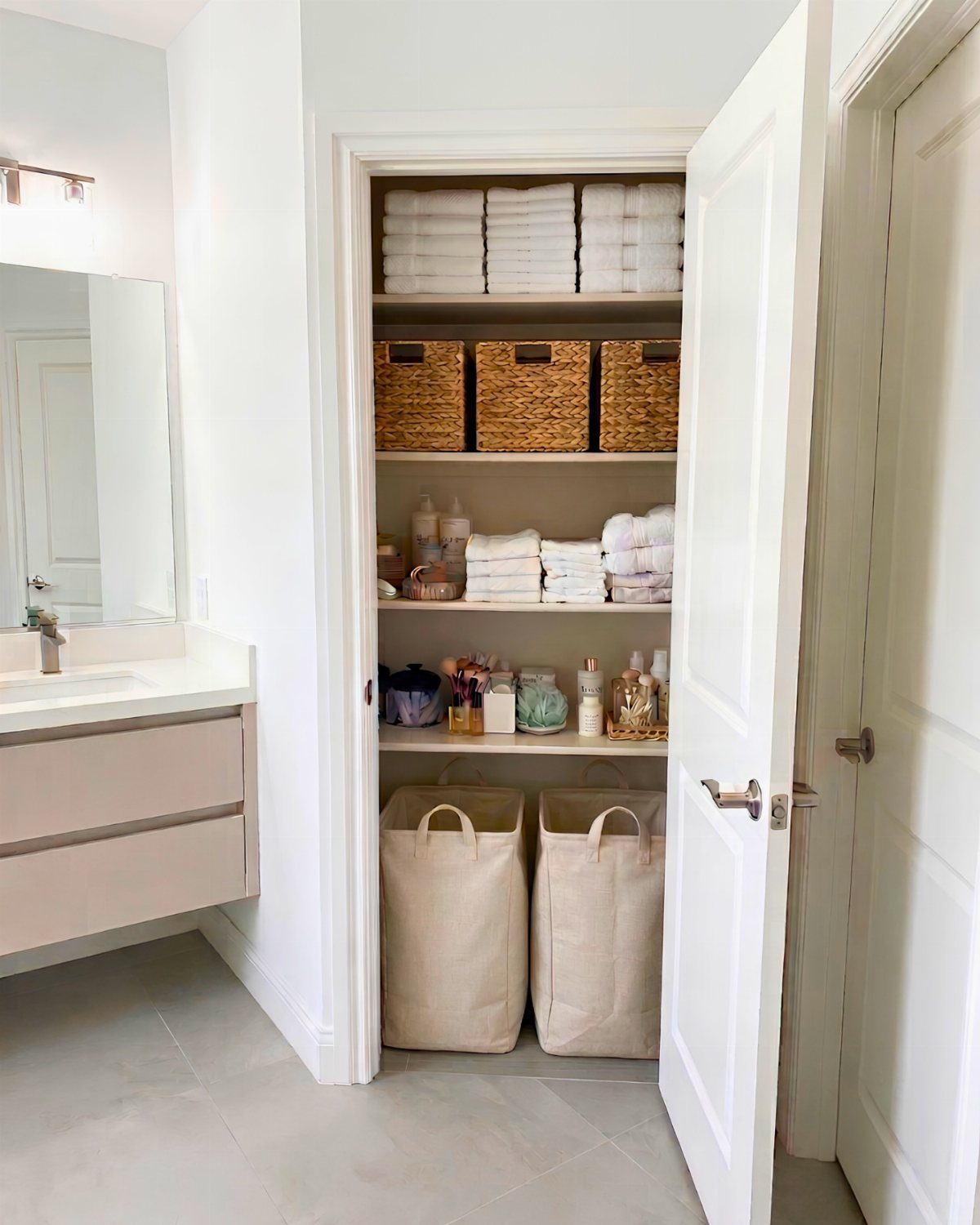
Open closet shelving keeps towels visible and reachable, which beats a stuffed linen closet where the bottom two sets go musty from disuse.
Stack white towels by size, add woven baskets for loose items, and park two hampers on the floor for sorting, and the whole linen routine stays in one zone.
Roll towels instead of folding flat; they stack deeper without toppling and look tidier when the pile shrinks. Chalkboard labels or simple embroidered tags on baskets keep hand towels, washcloths, and bath sheets sorted without opening every bin.
If the closet has a door, hooks on the back hold robes or a drippy swimsuit.
This demands discipline. I would not attempt it in a shared bathroom unless everyone agrees to the system, because one dropped wet towel undoes the whole effect.
It suits households that do laundry often enough to keep the stack rotating, and closets with deep enough shelves to hold a rolled towel without it pitching forward.
18. Wall-Mounted Wire Baskets
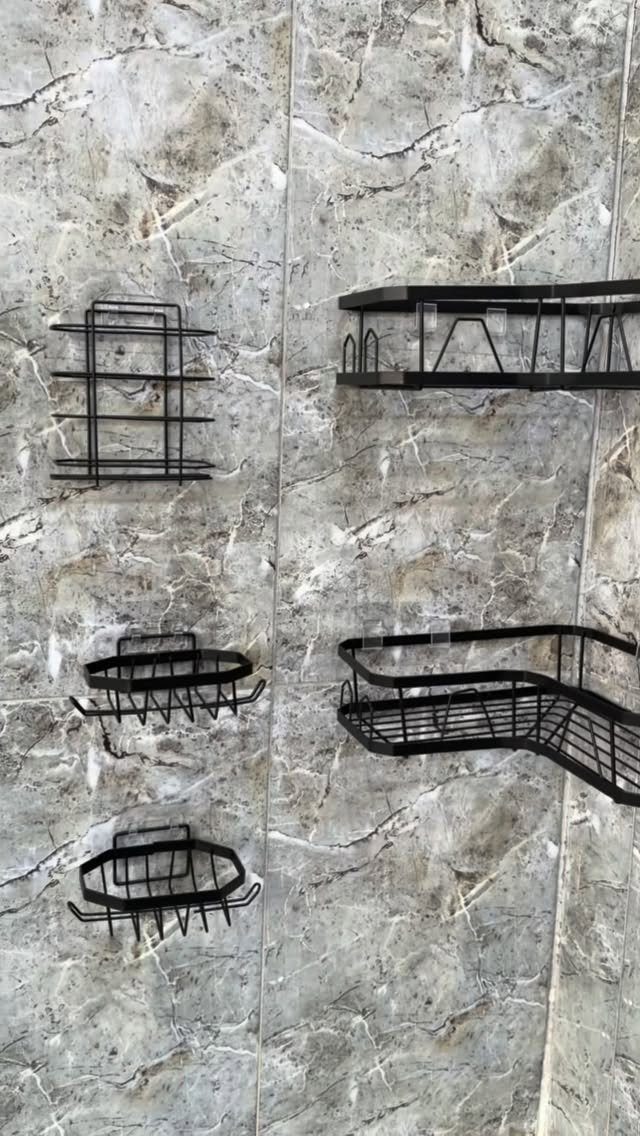
Wire baskets turn almost any wall into instant storage without a single hole if you use adhesive hooks, which matters when you are renting or just hate patching drywall.
Black wire against light stone reads as deliberate contrast rather than clutter when the baskets hang on simple clear hooks.
Cluster a few sizes together, one per item type: one for rolled washcloths, one for taller bottles, a corner-shaped piece for soap. Keep the finish consistent across the set; mixed metals go messy fast in a small room.
Best for renters or anyone who wants to rearrange without commitment. If your walls are painted drywall rather than tile, check that your adhesive hooks are rated for the weight and the humidity cycle.
19. Tension Pole Shower Caddy
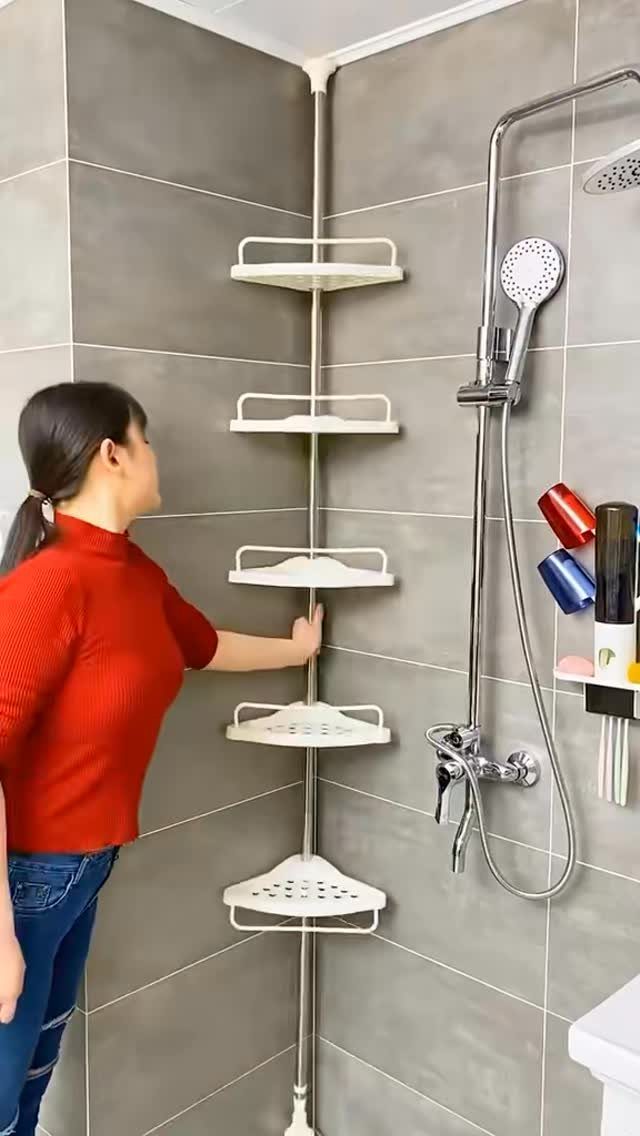
A tension pole caddy plants itself floor to ceiling with spring pressure, no drilling, no adhesive, no landlord negotiation.
A five-tier white caddy fills a shower corner that would otherwise stay empty air, and the adjustability matters more than it looks: bottles shrink at different rates, and a shelf that slides up or down keeps the tall conditioner from tipping.
I look for a finish that already matches the faucet and showerhead so the caddy looks like it belongs there. Chrome against chrome disappears; white against grey tile reads as calm.
Resin or coated metal holds up to daily wet-dry cycles better than bare steel.
Suits anyone in a rental or working with tile they do not want to drill. That vertical pole sits right in your sightline; in a narrow shower it can feel like something planted in the middle of the space.
For a cleaner look, a built-in niche is the permanent alternative.
20. Shelves with Brass Railings
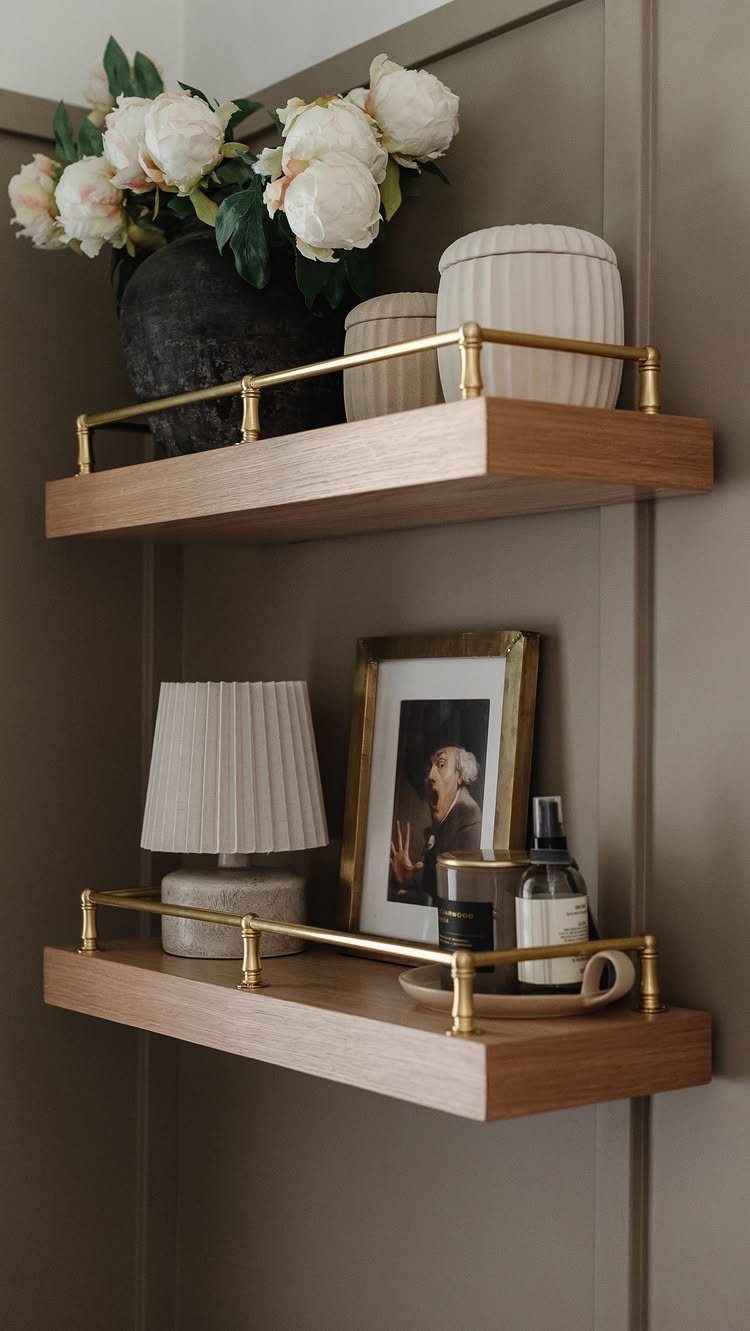
Brass railings across the front of floating shelves turn open storage into something that looks finished and keeps bottles from sliding.
Light wood against taupe wall warms up fast with brass railings, and the rail height catches a jar or frame without blocking the view.
Gallery rail hardware is simpler than it looks: a flat strip with uprights, screwed to the shelf face before you mount the shelf itself. Use brass screws, not mixed metal, or the detail goes cheap.
Best for someone who likes the open-shelf look but shares a bathroom with people who knock things over. It does not add privacy; toiletries stay visible.
For that, a wall-mounted cabinet with the same brass hardware carries the look further.
21. Picture Frame Shelf
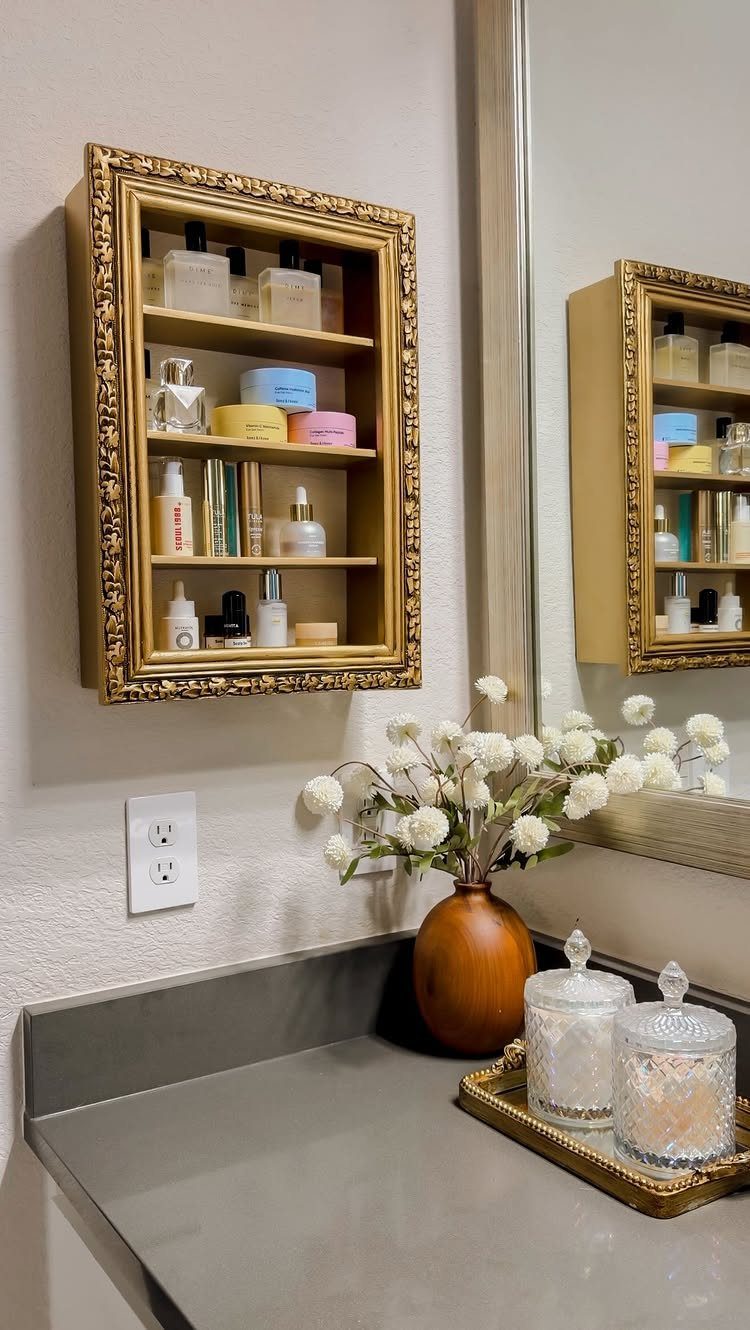
An ornate gold frame, stripped of its backing and glass, becomes a shallow shadow box for perfume bottles and the small jars that otherwise crowd a counter.
Mounting recessed or flush keeps the depth just enough for a skincare lineup without stealing walkway space.
Look for solid wood construction and molding deep enough to create a ledge; pressed tin or thin resin will flex under weight.
Paint if you must, but the gold against white or soft grey walls carries the vintage note without extra effort.
Suits someone with a few beautiful bottles worth displaying and a wall free of towel bars.
It does not hold much; if your routine runs to pump bottles and tall sprays, a standard shelf with a rail is the practical choice instead.
Mixing Functionality with Aesthetics
Styling bathroom shelves works best when the stuff you reach for daily also reads as intentional. Group objects in odd numbers, three jars or two baskets plus a plant, and keep the palette tight so the eye rests.
Mixing heights and textures, a tall ceramic vase beside a low woven tray, keeps the arrangement from going flat.
Live plants and small framed pieces warm up otherwise clinical surfaces.
The arrangement stays flexible. Nothing on a shelf is fixed, so you can shift objects as the seasons or your routines change.
Using Vertical Space Effectively
In a compact bathroom, every inch of wall above the toilet or beside the vanity counts; stack floating shelves high enough to clear the door swing but low enough to reach without a step.
A wall-mounted cabinet or medicine chest hides the less attractive essentials, medications and first aid, while keeping them off the counter. Vertical storage matters most in tight bathrooms, where one freestanding unit can block the whole traffic path.
Custom shelving systems can increase usable storage by up to 50% in tight layouts. The gain comes from fitting shelves to the actual wall dimensions rather than buying standard sizes and leaving gaps.
A well-organized bathroom is equally important as a stylish one. No amount of tasteful wallpaper or statement tiles will fix the fact that you need storage.
Decluttering Before Installation
Before you measure for new shelves, pull everything out and sort it. Half-used bottles, expired sunscreen, and the hair tool you replaced ages ago take up space that better storage will not fix.
Count what remains. One backup shampoo, not three.
A single spare toothpaste. The numbers tell you how deep your shelves need to be and how many tiers you actually use.
A three-tier unit looks wrong when two tiers sit empty, and a single shelf overflows fast if you guessed short.
This step costs nothing but an hour and some honesty about what you touch and what you forget.
Choosing Materials Wisely
Bathroom humidity ruins standard particleboard in a year or two.
Wood warps unless sealed well.
For shelves inside the shower or directly above a tub, stick to glass or metal.
Standard paint and untreated wood fail fast in daily steam, and replacing a shelf you just installed is the kind of mistake that teaches itself once.