
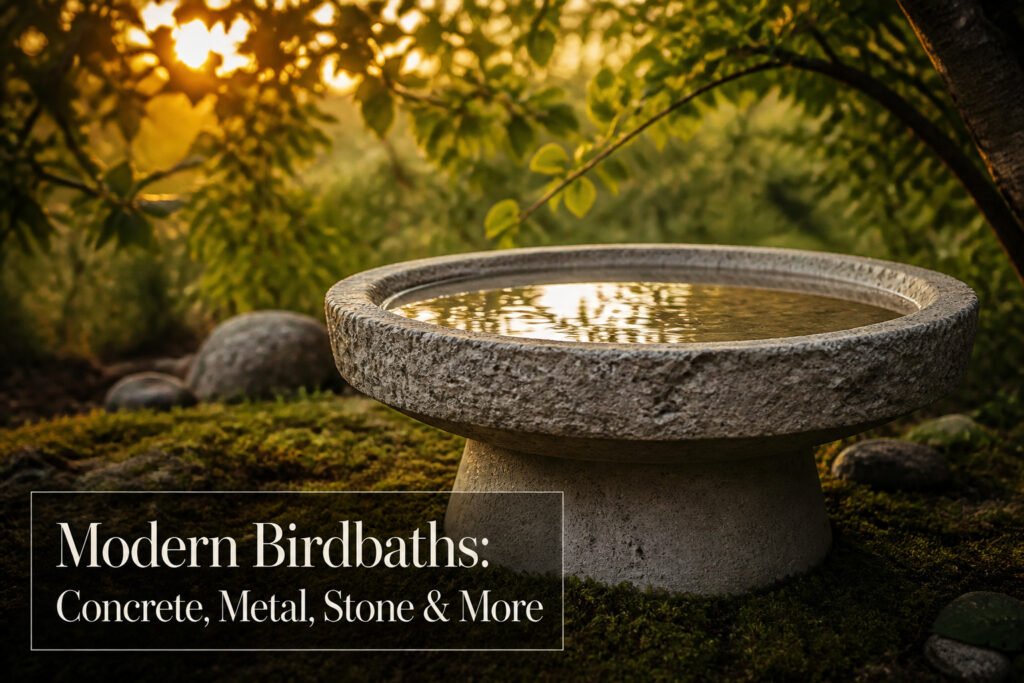
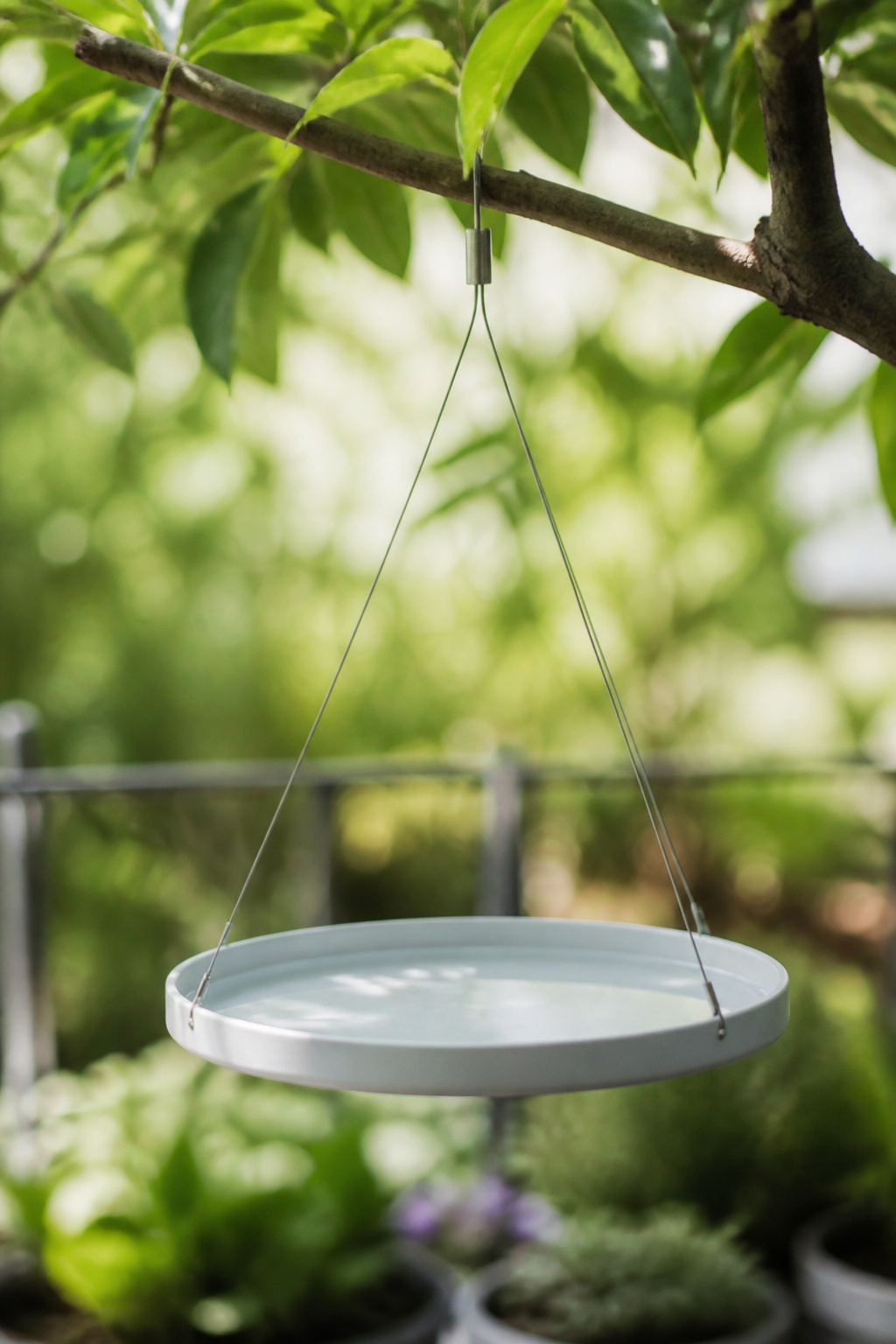
A modern birdbath is a deliberately simple water feature designed to read as garden sculpture rather than ornament. The catch is that birds ignore the sleek glazed bowls most people picture; they need rough concrete, raw stone, or textured terracotta underfoot to grip. The Eva Solo Hanging Birdbath out of Denmark solves this for balconies with no ground space: a shallow white disc that suspends from a branch, weighted with river rocks so it steadies without spoiling the clean line.
Concrete Bird Baths
Clean-lined concrete birdbaths read as sculpture rather than ornament, which is exactly what keeps a small yard from feeling cluttered. The material itself helps: concrete weathers evenly, holds steady in wind, and gives birds the textured grip they prefer over slick glazed surfaces.
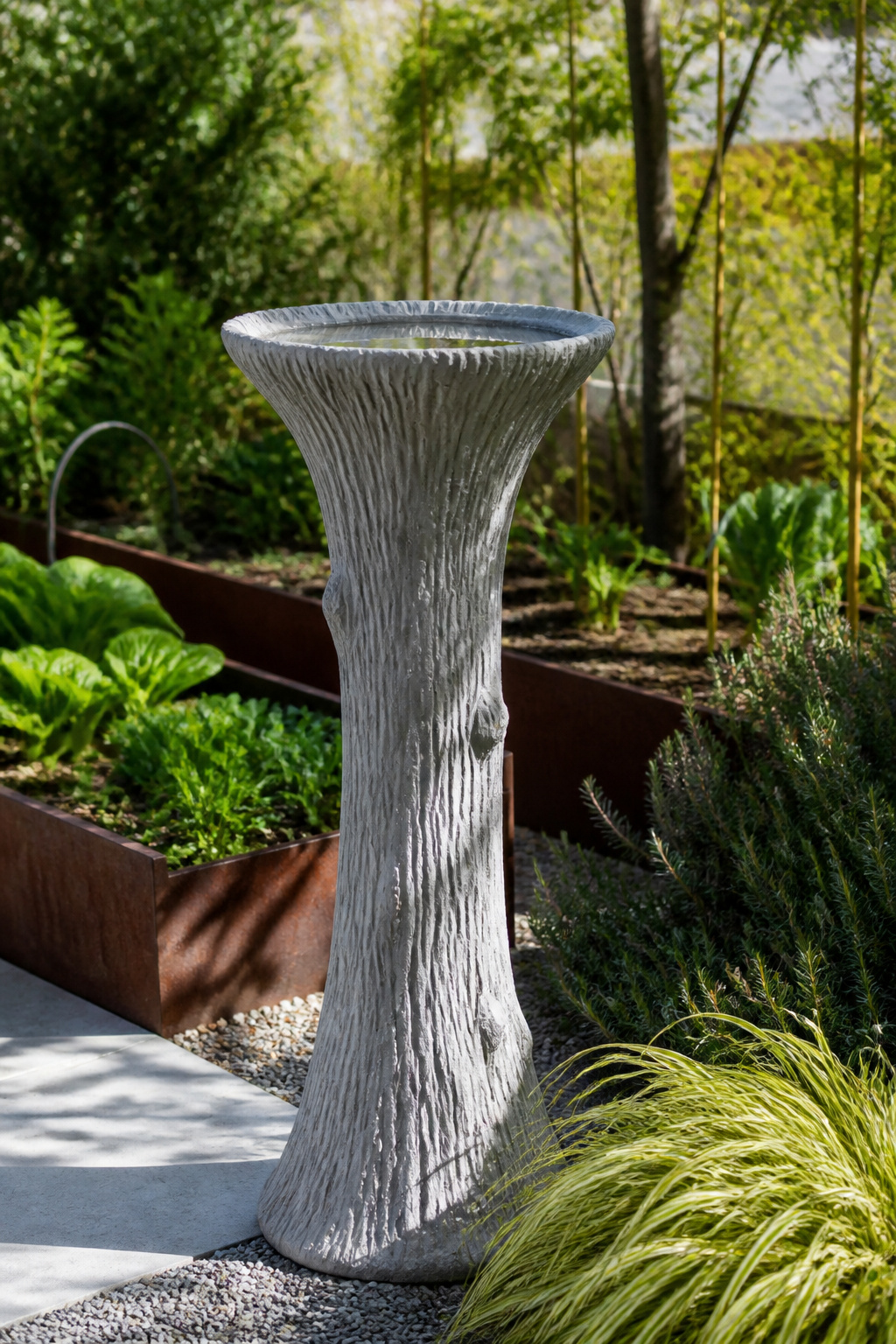
One piece that stands out is a tall fiber reinforced concrete birdbath shaped like a carved tree trunk. The textured surface runs the full height, so birds can perch at the rim or along the sides, and the vertical form draws the eye upward without eating ground space. Buyers who placed it near vegetable beds noted it stayed busy with visitors and held up to daily use.
For a contemporary garden, concrete works because it carries visual weight without fussy detail. A simple basin on a plain pedestal does the job; the tree-form version adds interest if you want one focal piece rather than several small accents. Either way, skip anything with applied color that tries to look like stone. The gray cures to its own quiet tone, and that restraint is what makes it modern.
Metal Bird Baths
Sculptural metal birdbaths read as contemporary art first, bird amenity second, which makes them the default choice for anyone whose garden already leans modern. The material holds thin, precise shapes that concrete or stone simply cannot; you get cantilevers, floating bowls, and wire frames that disappear against sky.
The Eva Solo Hanging Birdbath out of Denmark is the piece that comes up whenever someone asks how to put a birdbath on a balcony with no floor space. It suspends from a branch or bracket, a shallow white disc with a small lip to hold water. Because it moves, the maker suggests dropping in a few river rocks if the sway bothers you; the weight steadies the dish without spoiling the look.
Metal’s real limitation is thermal mass. A steel or aluminum bowl heats fast in direct sun and cools fast once the sun drops, so the water temperature swings more than birds prefer. Site a metal bath where it gets morning light and afternoon shade, or plan to refresh the water more often than you would with stone.
Stone Bird Baths
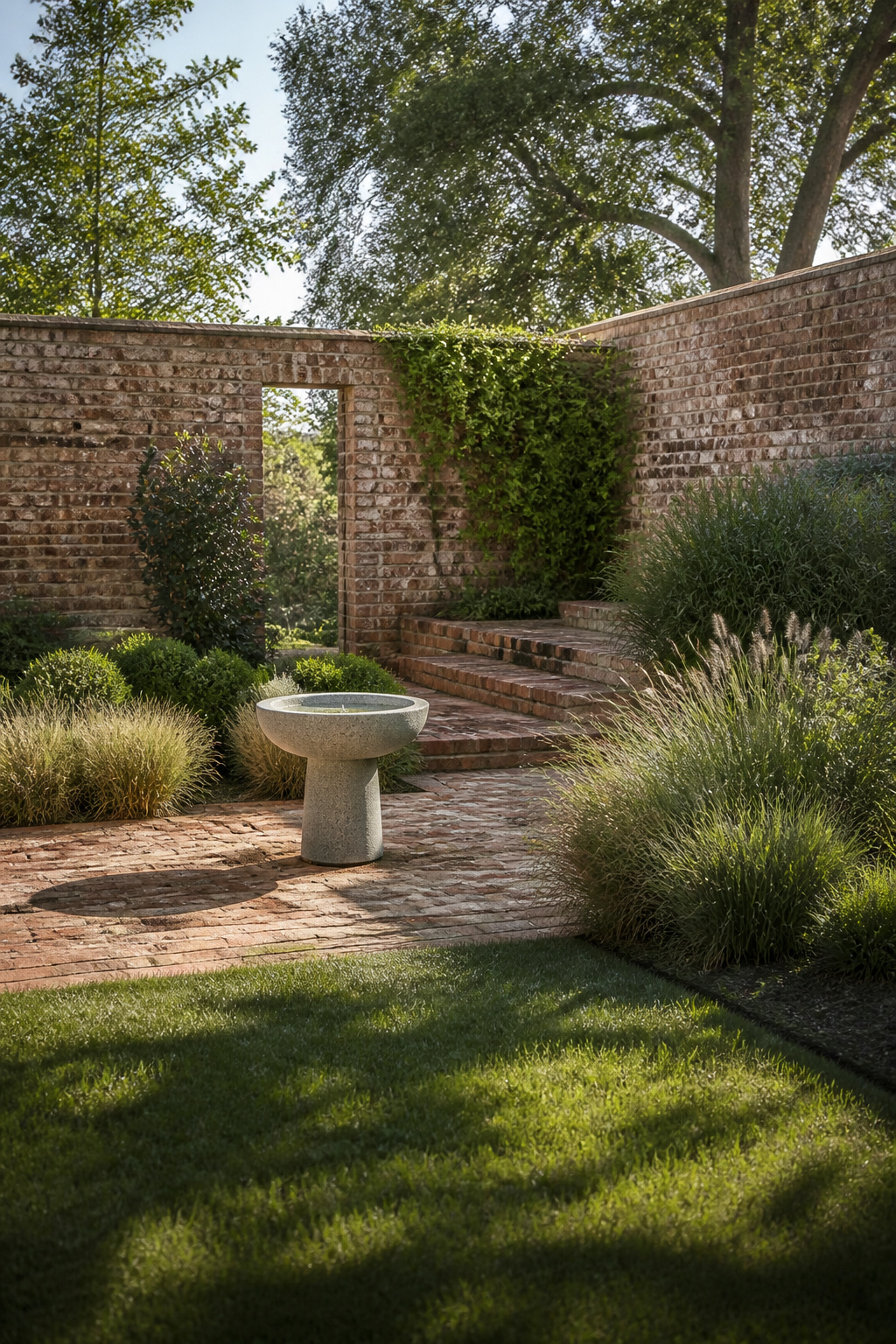
Natural stone reads as modern when the carving stays minimal. A smooth granite basin on a plain pedestal carries weight without ornament; the material itself becomes the statement. I keep coming back to a slate-and-sandstone combination I saw set against a brick patio, the stone left almost raw, the lines simple enough that it disappeared into the hardscaping until the water caught light.
Texture matters more than finish here. Margaret C. Brittingham, formerly at Pennsylvania State University, notes that birds prefer rough surfaces for traction, and unpolished stone delivers this naturally. Glazed pottery repels them; a chiseled basalt lip invites them to stay. The basalt bath I keep in mind sits low and wide, its surface left deliberately imperfect, the tool marks still visible.
Placement does the modern work that carving once did. Set a plain stone piece at the intersection of two sight lines, or let it repeat a wall material already in the garden, and it reads as intentional rather than rustic. The carved Victorian styles fight contemporary planting; a blocky granite form beside ornamental grasses reads as sculpture. One garden I studied paired a tall fibrecotta piece shaped like a hollowed trunk with vegetables, the rough texture echoing the utilitarian beds. The owner noted the birds used it heavily, and the shape held steady through wind.
Stone demands a level base more than lighter materials. Its mass is the advantage and the constraint: stable once placed, but not forgiving of a slope. I would spend the first hour on preparation, not placement, and let the weight do the rest.
Hanging Bird Baths
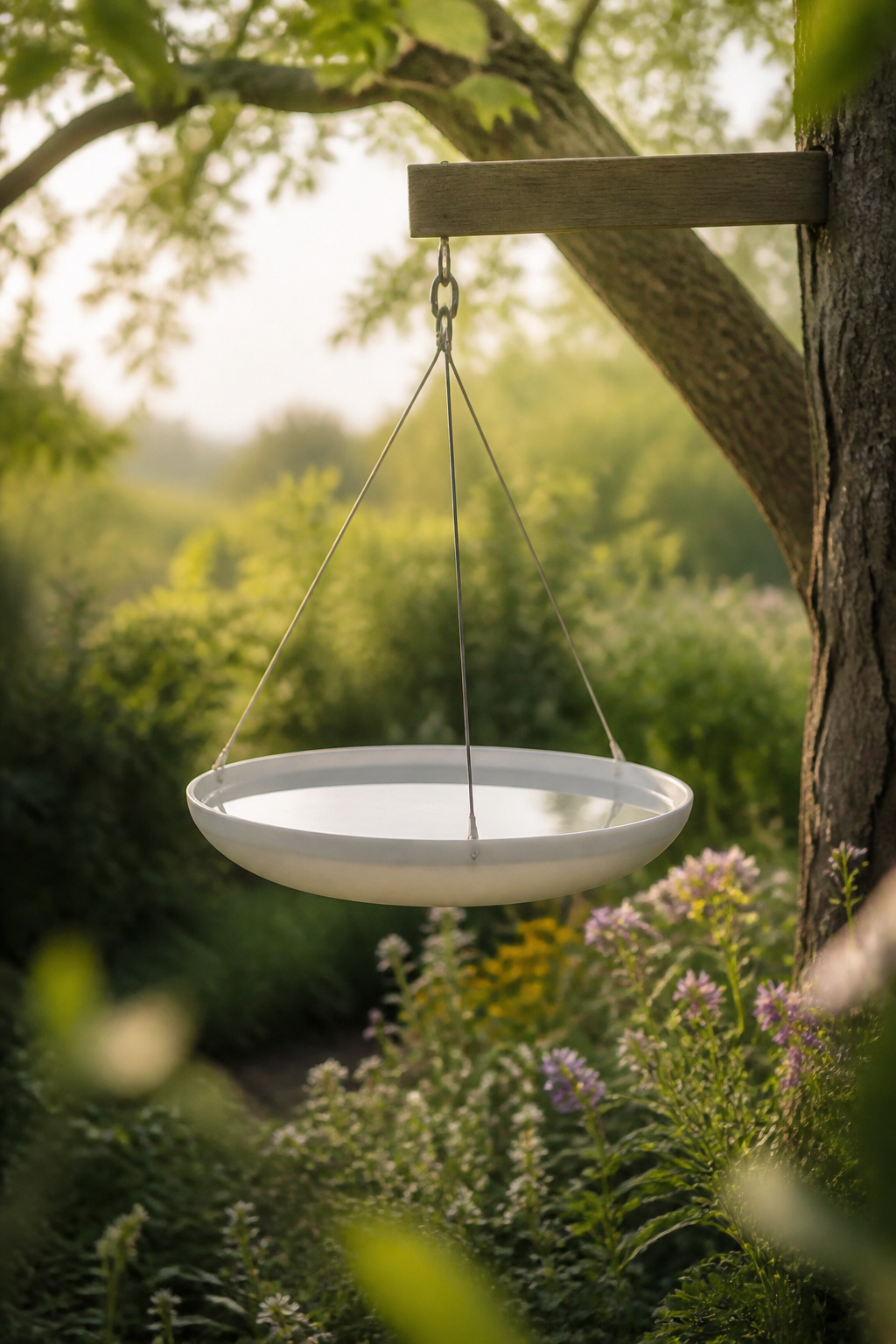
A hanging birdbath solves the problem of cats and raccoons that patrol ground-level basins, but the tradeoff is motion. Wind catches the bowl and the water sloshes, which sends most birds to steadier perches. The Eva Solo Hanging Birdbath, designed in Denmark, takes the Scandinavian approach of letting the object stay simple while you handle the physics. I have seen the same swaying issue on several suspended models, and the fix that actually works is adding river rocks to the bowl for ballast. The extra weight lowers the center of gravity without crowding the bath itself, and the stones double as landing grips for smaller birds that hesitate on slick surfaces. One mistake to avoid is overloading the chain or the branch above it; test the hang with dry weight first, then add water and stones to about half the bowl’s depth. A hanging bath works best in a semi-sheltered spot where a fence or building blocks the prevailing wind, not out in the open where it becomes a pendulum.
Heated Bird Baths
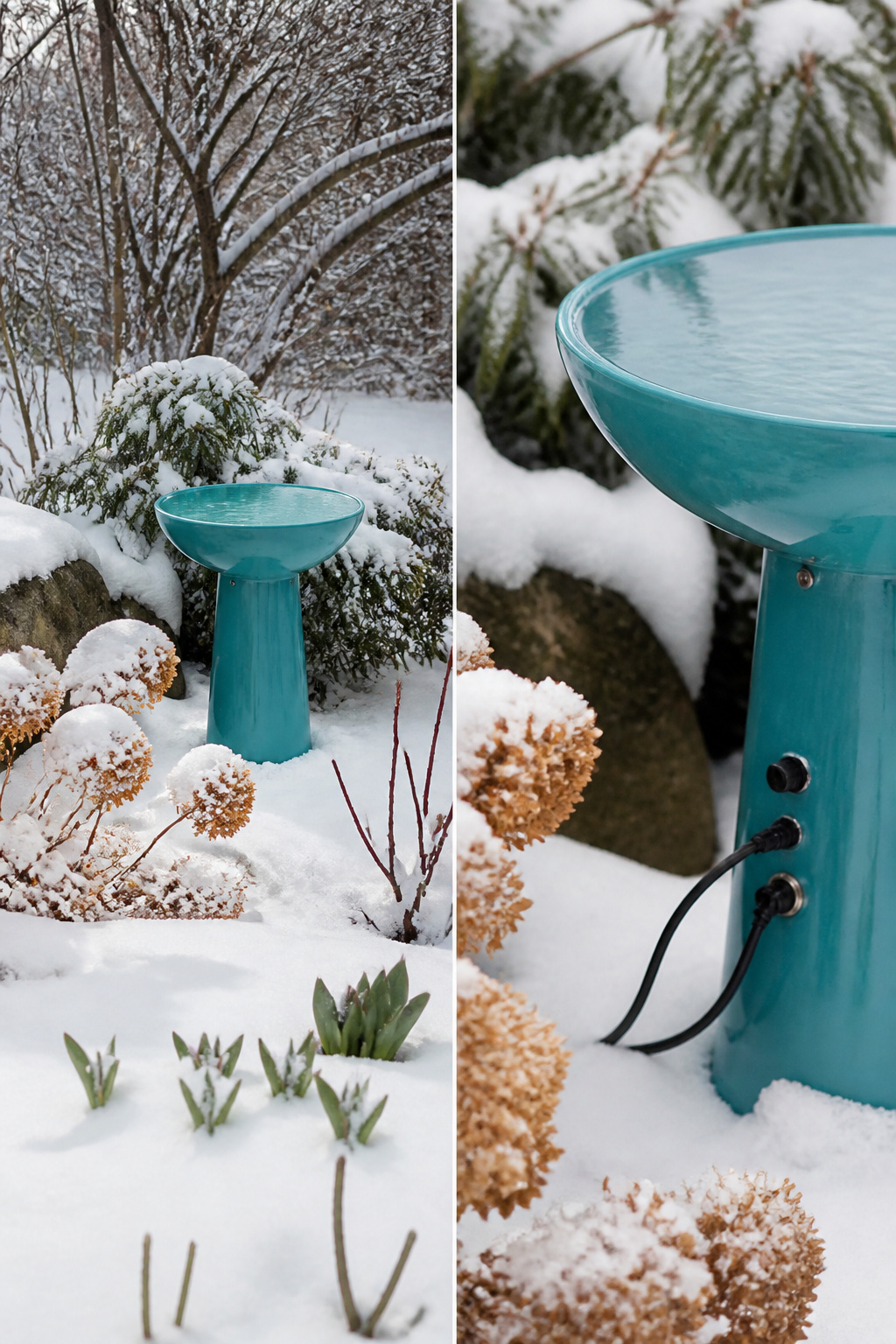
A heated birdbath carries modern birdbaths straight through winter instead of packing them away with the hose. I used to assume ice-free water meant fussing with extension cords and string lights looped around the basin, which works in a pinch but looks like an afterthought and stops working the moment the bulb blows.
The cleaner route is a bath built with the heater inside. Farm Innovators makes one in turquoise or orange that keeps water open even when the air drops well below freezing. The color itself reads modern, not rustic. Turquoise in particular sits well against snow and bare branches, and the orange option turns the bath into a deliberate accent rather than a utility piece you tolerate.
Placement still matters with heated models. A sheltered spot near shrubs gives birds cover from hawks and cuts wind exposure, which saves the heater from working harder than it needs to. The cord needs a ground-fault outlet, the same kind required for outdoor holiday lights, so plan the location by what your outlet map actually allows. A heated bath left dry will crack or burn out the element, so the daily refill habit does not pause just because the temperature dropped.
Bird Baths with Planters
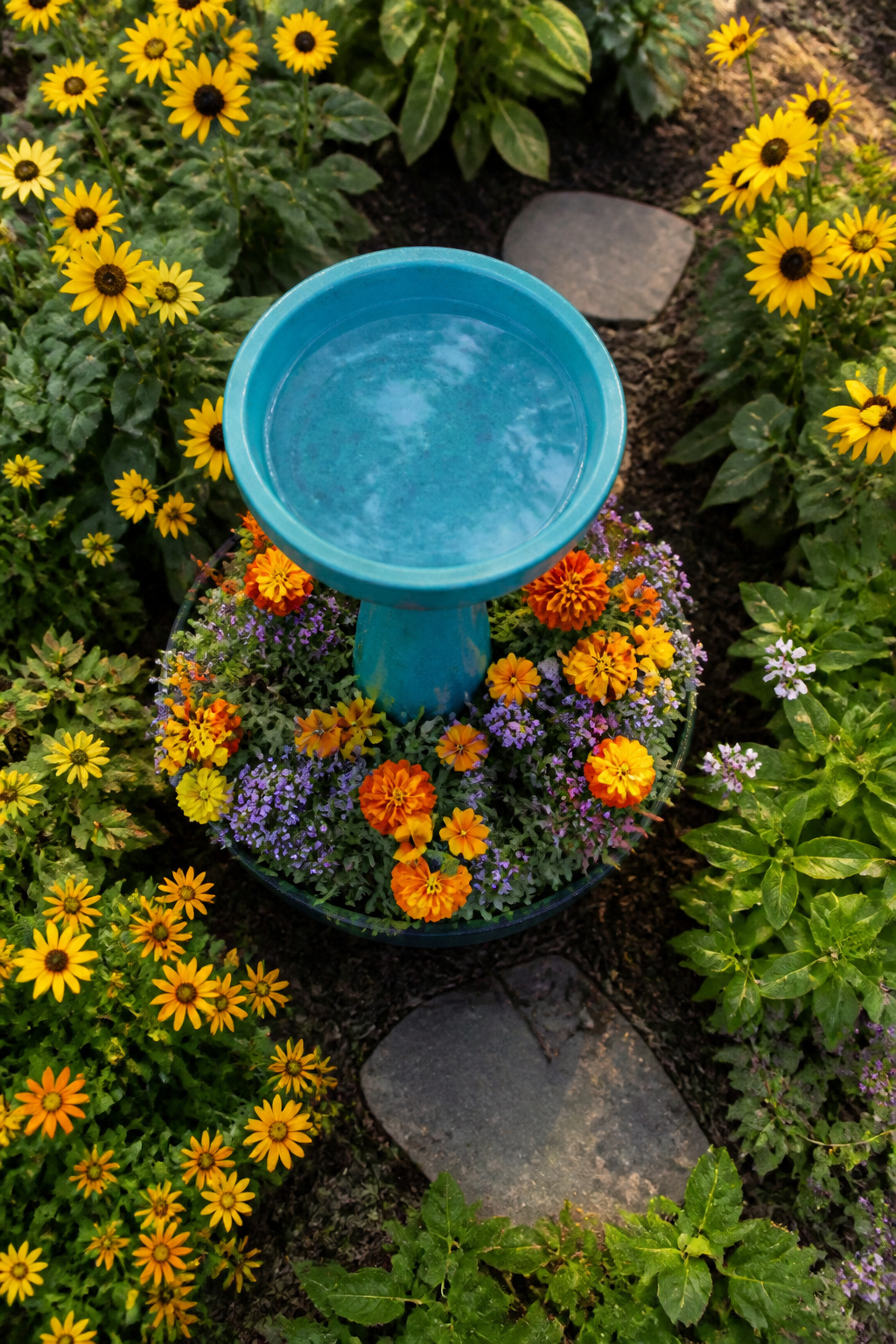
A birdbath that doubles as a planter buys you real estate in a small yard, and birds seem to prefer baths ringed with flowers they already recognize. Amaranths, marigolds, and sunflowers draw them in with seed, while red blooms near the basin can tip hummingbirds toward stopping.
The resin 3-in-1 feeder, planter, and birdbath stacks all three functions in one pedestal: feed goes in the top bowl, water sits below, and flowers root in the base planter. Birds eat, drink, bathe, and pick through blooms in a single visit, which matters if your goal is actually seeing birds rather than owning a decorated yard.
A teal pedestal model with a lantern hanging over the basin carries a 3.9-star rating from just over 300 reviewers. One buyer built it into a butterfly garden and noted it worked as the anchor piece. The planter base needs the same drainage attention you’d give any container, or you are running two maintenance routines instead of one.
Bird Baths with Feeders
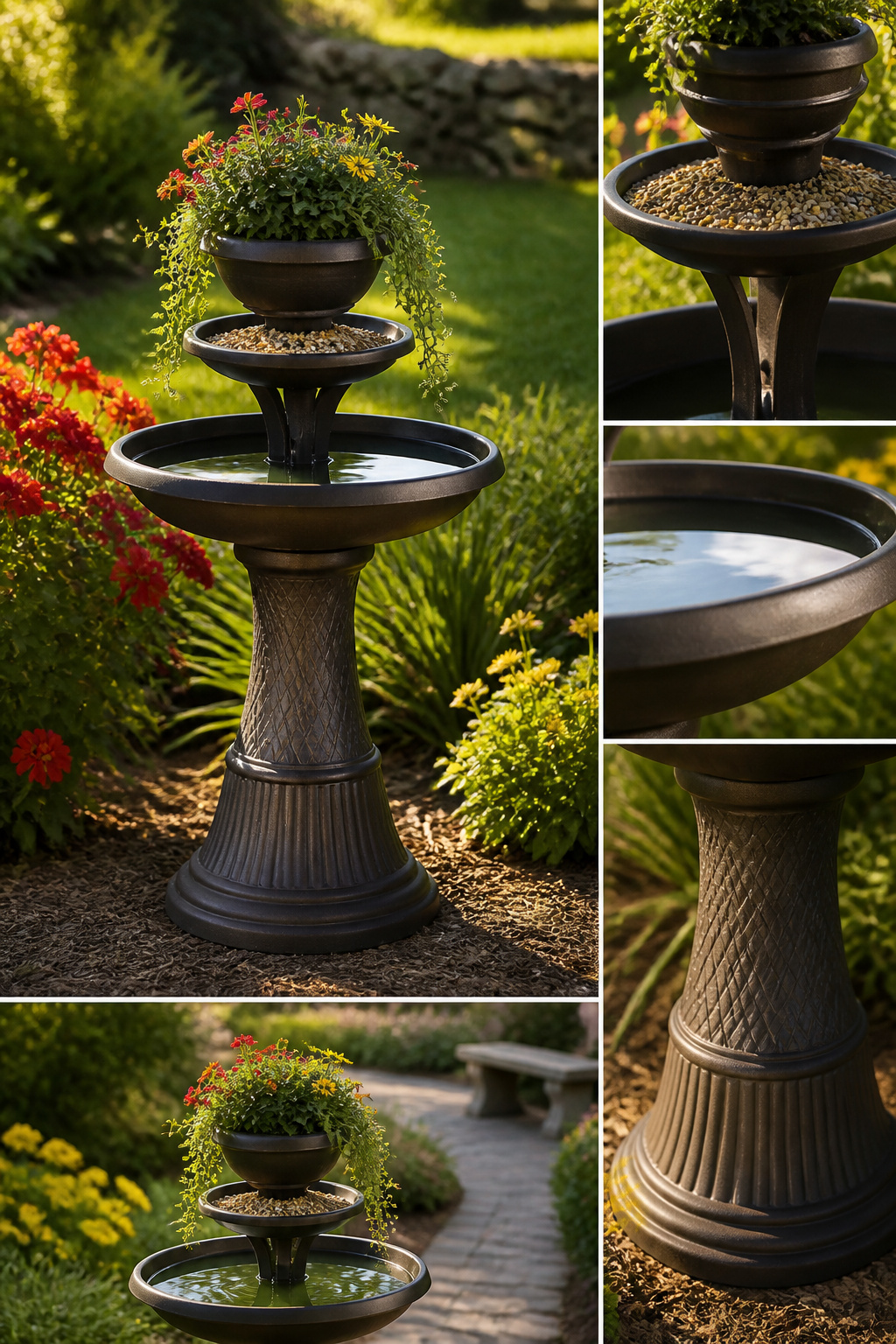
Birds that find both food and water in one spot tend to stay longer and return more often. The resin 3-in-1 feeder, planter, and birdbath works this idea into a single piece: seed goes in the bowl above the bath, flowers drop into the planter below, and birds get three reasons to linger instead of one. You can tilt the mix toward the species you actually want by filling the feeder with a seed blend that draws sparrows and chickadees, both of which pick aphids off garden plants. Skip mixes heavy on sunflower or corn if loud blue jays and European starlings have taken over your yard before, since the feeder gives them a stage too. For anyone who wants variety without committing to a single combination, the Ashman Deluxe Premium Bird Feeding Station stakes into grass and runs four separate feeders off one pole, so you can swap one out when the mix stops working.
Textured Bird Baths
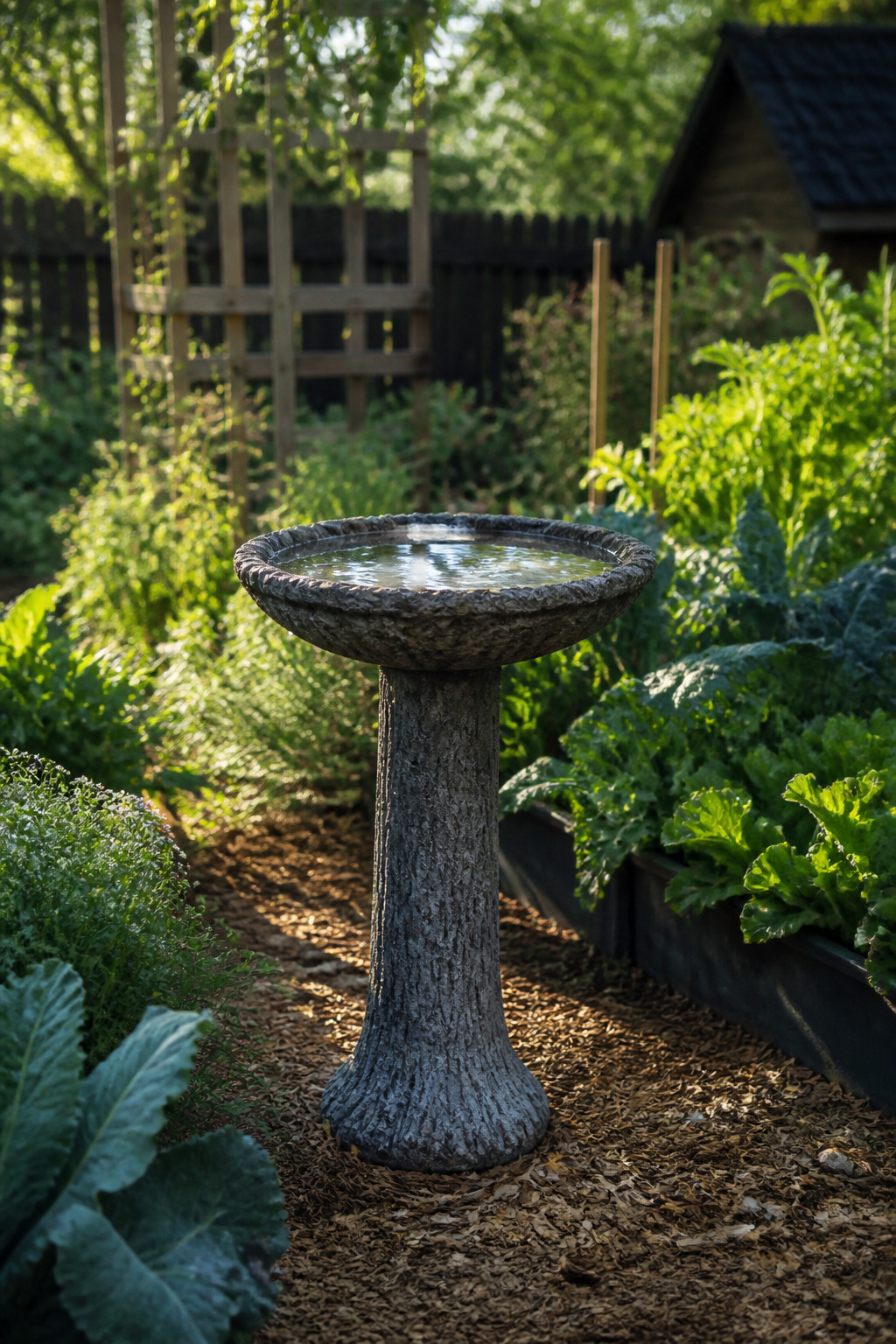
Concrete and terracotta birdbaths have a rough surface that gives birds something to grip. Margaret C. Brittingham, formerly a wildlife resources professor at Pennsylvania State University, told Homes & Gardens that birds avoid slick glazed pottery or smooth plastics in favor of these textured materials. The rough finish means less effort to stand and no slipping while drinking.
A textured surface doubles as the garden’s statement piece. The Tall Fiber Reinforced Concrete Birdbath takes this further with a carved tree texture running its height. Birds perch on the textured lip, and buyers have rated it highly for the shape. One noted it looks nice in the vegetable garden, stays sturdy, and sees steady use from local birds.
Where to Place a Birdbath
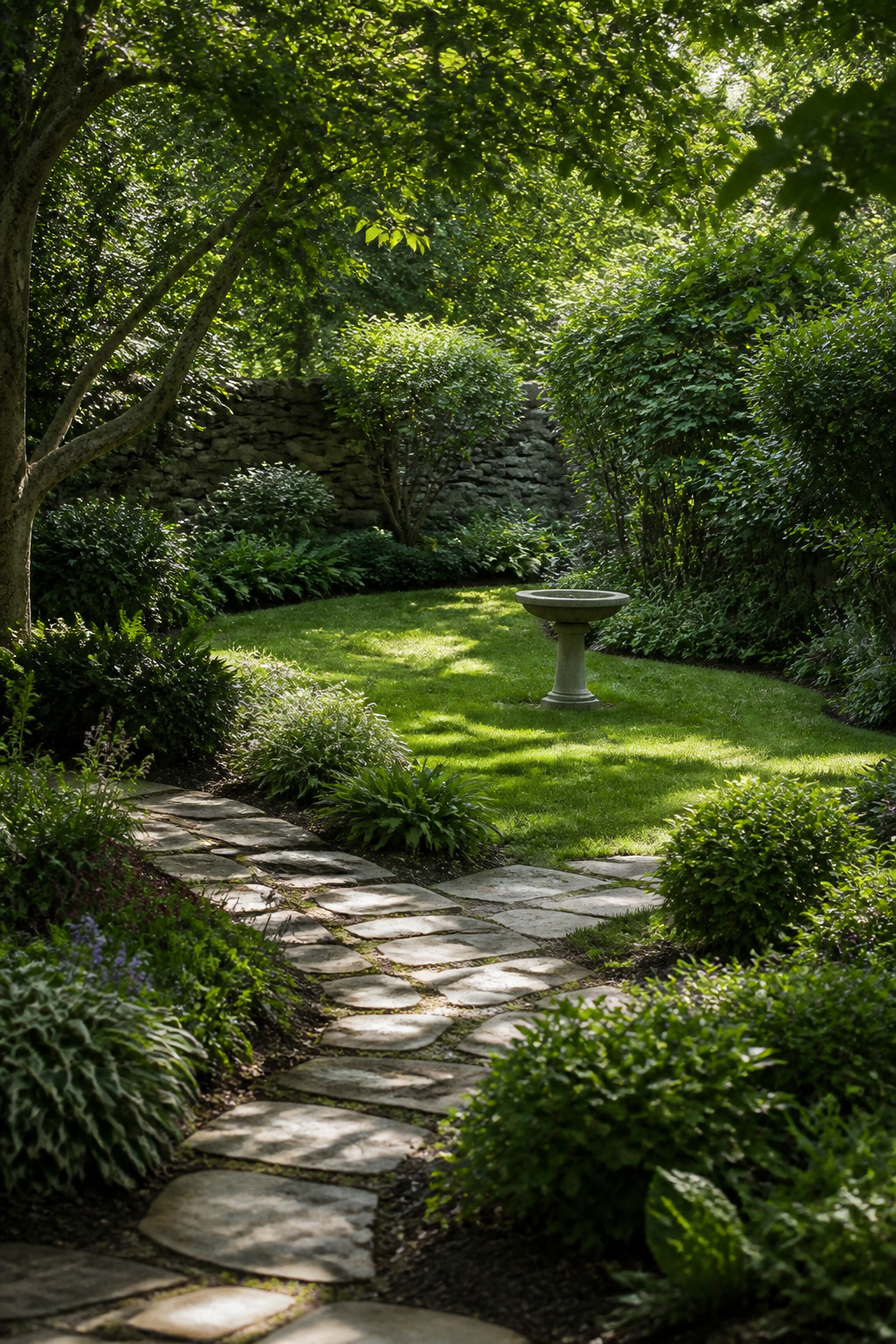
Full shade slows evaporation enough that you are refilling less often through July, and the water stays cool enough that birds actually use it instead of passing over. I learned that the hard way with a shallow bowl I set in the middle of a patio, which went from full to bone dry in a single afternoon and never attracted more than one grackle at a time.
The trickier balance is cover. Birds need an escape route, but dense shrubs right against the bath turn it into an ambush site. A deciduous tree roughly ten feet from thicker plantings gives them the sight lines they want: open air overhead, a quick flight path to branches, and enough distance that a cat cannot spring from hiding. I have seen setups where the bath sits tucked inside a hydrangea, and while the photos look charming, the birds in those shots are usually just drinking, not bathing. They want to feel exposed enough to spot danger, not so exposed that they are the danger’s first choice.
Pedestal baths get most of the attention, but a ground-level dish underneath that same hydrangea pulls in ground-feeders the raised ones miss. Keep it within hose reach. A bath you have to cross the yard to refill gets cleaned less, and stale water undoes every placement choice you made.
Keeping the Water Clean
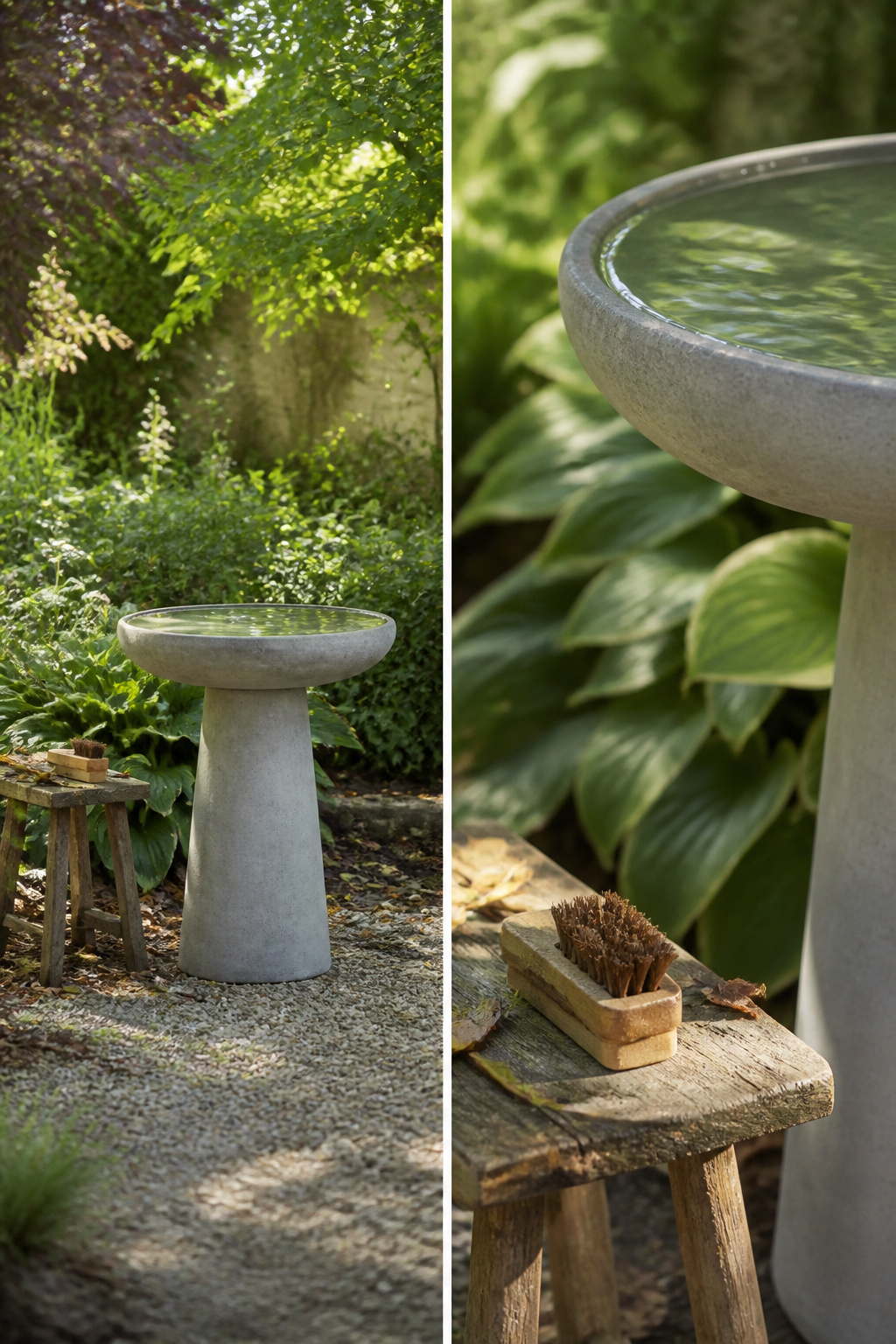
Stagnant water turns a birdbath from a refuge into a hazard. Heat and sunlight breed algae fast, and mosquitoes finish the cycle in as little as a week. The birds that do show up risk picking up bacteria that spread between species at shared water sources.
Fresh water every other day keeps the worst of it at bay, though shallow bowls in full sun sometimes need a daily refill. Once a week, a vinegar solution of nine parts water to one part vinegar scrubs off the slick green film before it stains. A stiff eco-friendly dish brush works the corners without scratching concrete or metal finishes. Rinse it well afterward; birds taste the residue more than we do.
Skip the bleach. It works faster, but trace chemicals linger in porous stone and seep into the next fill. Vinegar does the same job without that risk, and the birds keep coming back.
What Brings Birds In
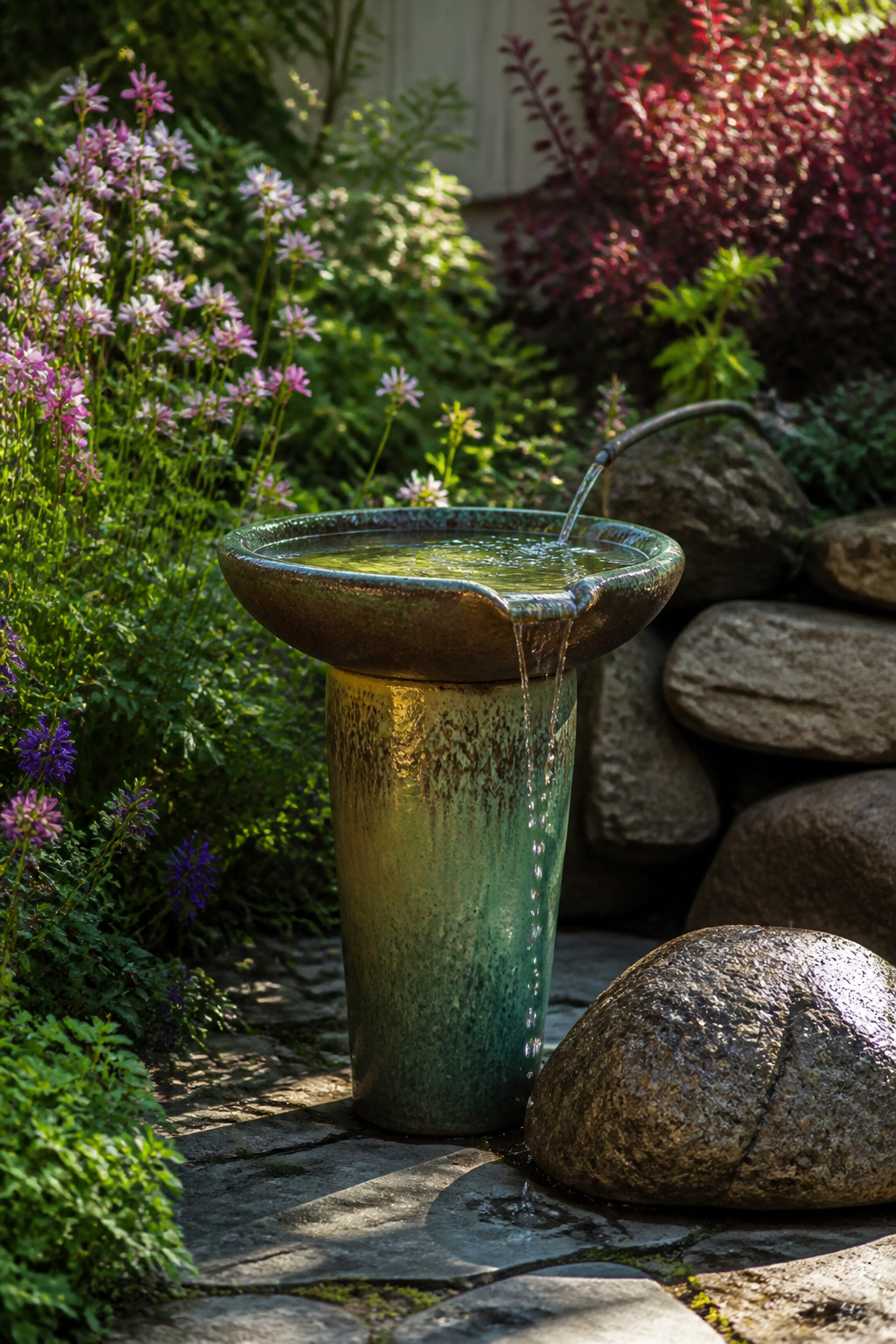
Birds find still water eventually, but moving water pulls them in faster. Scientists still debate why the sound and sight of running water draws birds so reliably, yet the behavior itself is settled. A dripper tube that releases water continuously turns a passive bath into something birds investigate within hours rather than days. The Rocky Mountain Ground Level Bird Bath with Dripper Tube works on this principle, and buyers report sparrows "going wild" under the spray, with birds sometimes fighting over access once word spreads.
Depth matters as much as motion. A gradually sloping basin from one to three inches accommodates species of different sizes, letting each wade to its comfort level. Flat-bottomed baths can achieve the same range with rocks added inside, though built-in slopes save the trouble.
Texture completes the invitation. Glossy glazed pottery and smooth plastics leave birds slipping and wary; concrete, terracotta, or a stone-like finish gives their feet purchase. The Tall Fiber Reinforced Concrete Birdbath, shaped like a hollowed tree trunk, lets birds grip the rim securely while drinking. One buyer noted it became "well used by my avian friends" in a vegetable garden setting.
Frequently Asked Questions
What are the best materials for modern birdbaths?
Concrete, metal, and stone are the strongest choices for a contemporary look. Concrete weathers evenly and gives birds the textured grip they prefer over slick surfaces. Metal holds thin, precise shapes like cantilevers and floating bowls that read as sculpture. Stone carries visual weight with minimal carving, especially a smooth granite basin on a plain pedestal.
How often should I change the water in my birdbath?
Refill the bath every other day, though shallow bowls in full sun may need a daily top-off. Once a week, scrub with a solution of nine parts water to one part vinegar to remove algae before it stains. Skip bleach; trace chemicals linger in porous materials and birds taste residue more than humans do.
What features attract birds to a birdbath?
Moving water pulls birds in fastest, whether from a dripper tube or a continuous trickle. A gradually sloping basin from one to three inches lets species of different sizes wade to their comfort level. Textured surfaces like concrete or unpolished stone give birds secure footing, while slick glazed pottery repels them.