Cost swings with the carpentry: a plaster finish that mimics concrete or a stock white cabinet with a trim kit sits at the low end, while custom built-ins with the TV and fire recessed flush into the wall cost the most.
What decides your pick is whether the TV can go above an electric fire at all: read the manufacturer’s instructions for your exact model first, because they override any rule of thumb about heat or height.
1. Integrated Shelving
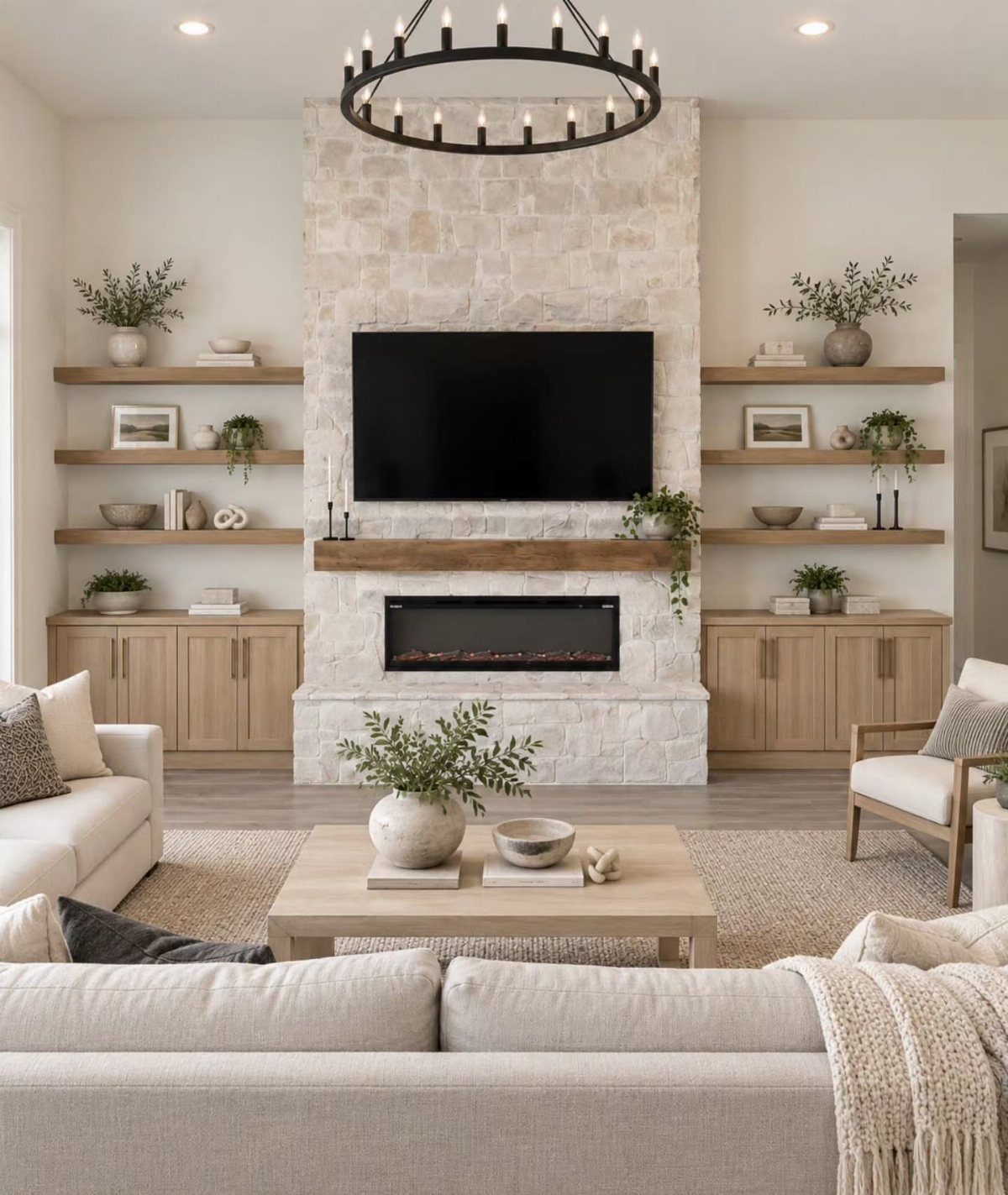
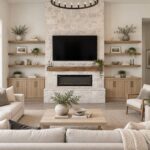
Built-ins on both sides of the chimney breast give an electric fire something a freestanding unit can’t: a reason to sit flush.
Because electric flames need no flue, the stone surround, TV and shelving can all be planned as one piece of carpentry.
Shelves flanking the TV also keep a large screen from dominating the wall. I’d put books and a few vases on them and keep the closed cabinets below for cables and remotes.
Plan the TV height before the carpenter builds anything.
2. Media Wall with TV
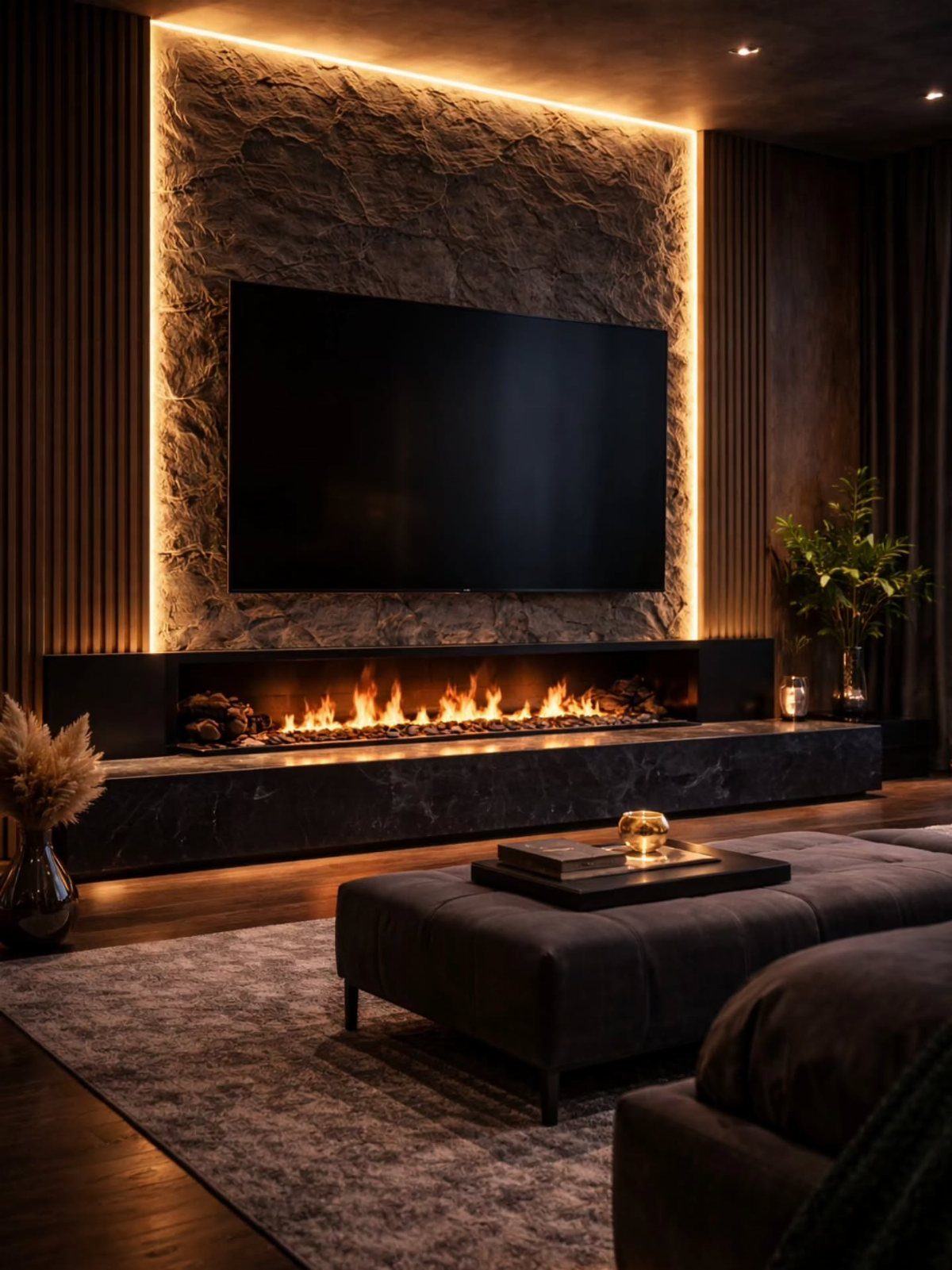
A long, linear firebox under a big TV makes the wall read as one wide band, and that width is what sells it.
Pairing a textured stone face with a plain dark rug and ottoman keeps the wall as the focus.
I’d choose a fire close to the TV’s width so the two line up. Run the power and HDMI cables behind the wall before any finish goes on; fixing them afterward means opening it up.
3. Float the Fireplace
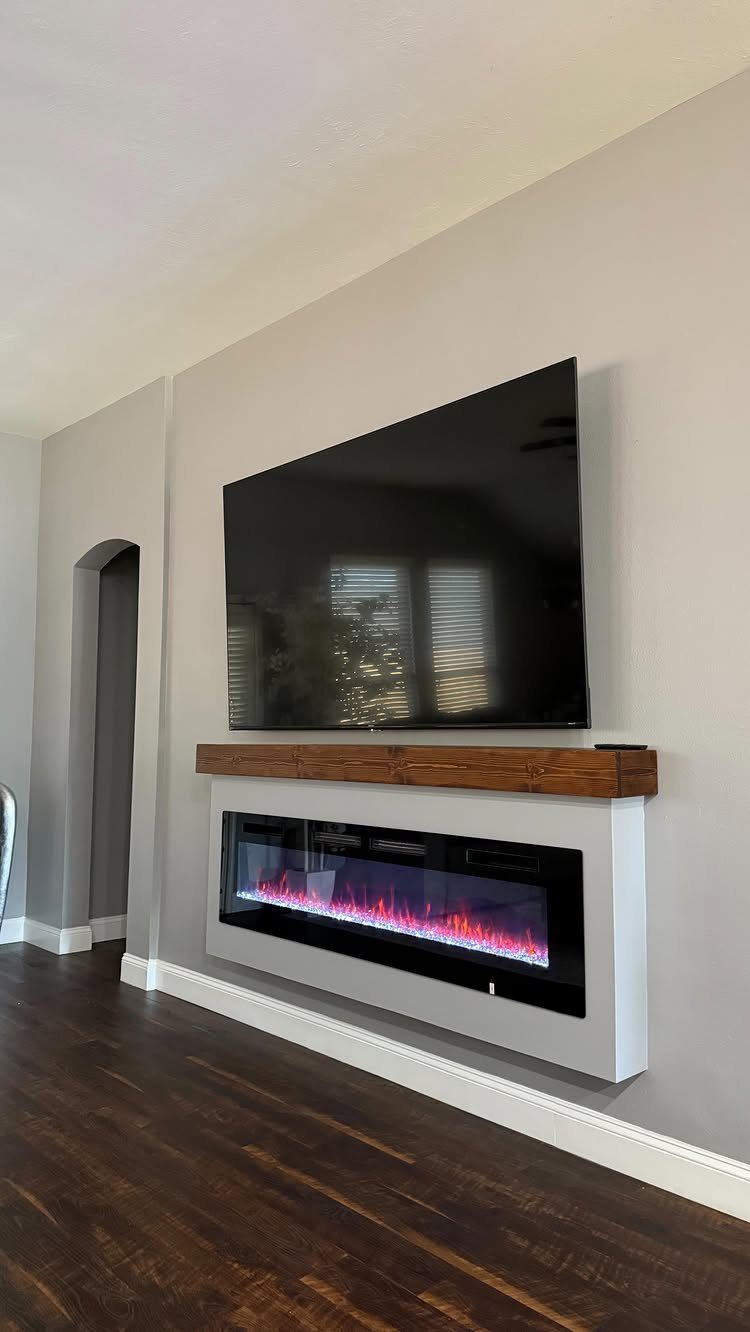
Lifting the fire off the floor makes a room feel lighter, and a wall-mounted electric unit is the easiest way to do it.
A wooden mantel between the fire and the TV adds a ledge and a break between the two.
Against grey walls and dark floors, the warm wood and orange flames carry the color. Mount the fire first, then place the TV above the mantel so the screen sits at a comfortable viewing height.
4. Concrete Finish
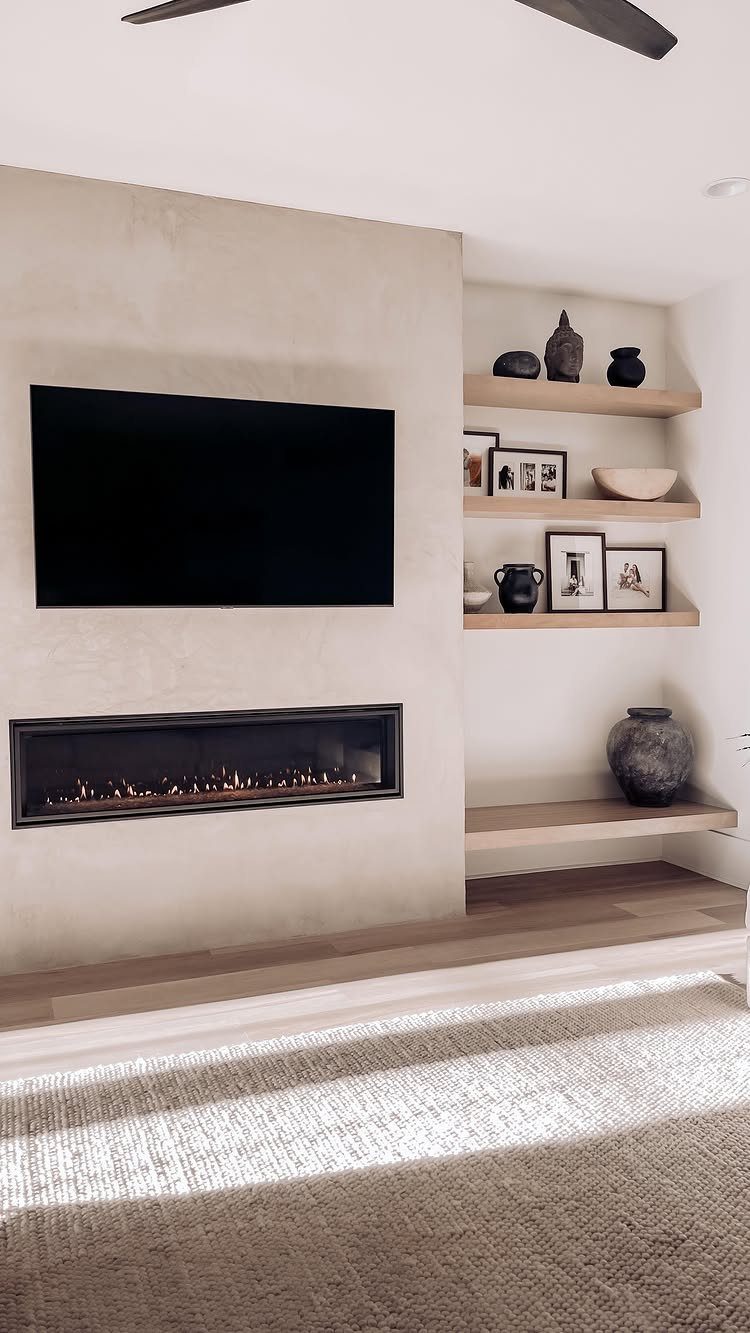
A concrete-look finish suits a slim electric fireplace because both stay flat and quiet. With the TV above, the wall becomes one gray surface, and the flames supply the only warmth.
Wooden shelves beside it, like the ones here, soften that coolness. If real concrete sounds heavy for a weekend job, a concrete-effect plaster or panel is the version I’d try on a budget.
5. Stone Fireplace Wall
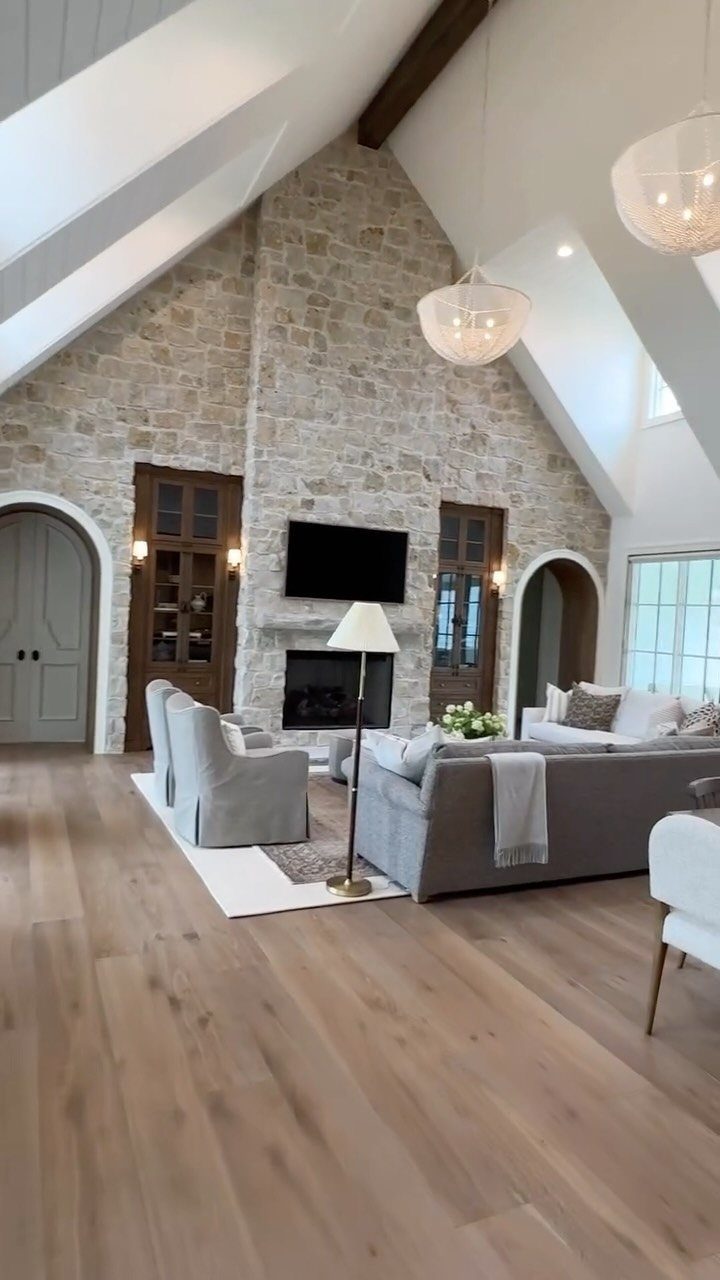
A long linear firebox is the right shape for a big stone wall, since it spreads the flame across the stone instead of lost in it.
Stacked stone pairs well with a TV mounted above because the texture stops a dark screen from looking stark.
Keep the furniture neutral, as in this room, and let the stone do the work. The wall needs to be sturdy enough to hold both the fire and the TV.
6. Seamless Flush Finish
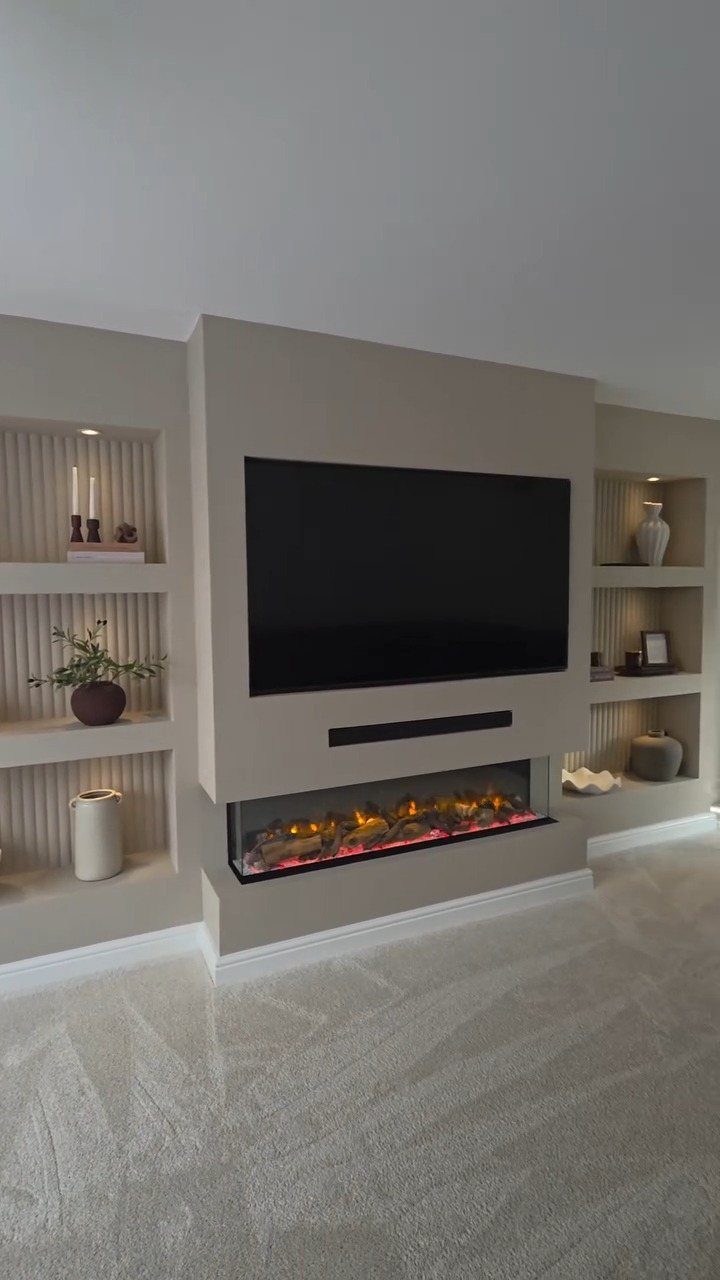
Setting both the TV and a linear electric fire flush into the wall removes every edge that would otherwise catch the eye. Painting the unit and shelving one soft color finishes the effect.
This is cabinetry work, so expect it to cost more than a surface-mount setup. I’d choose it only if you want the wall to look built rather than assembled, and plan the recesses before building.
7. Slimline Media Wall
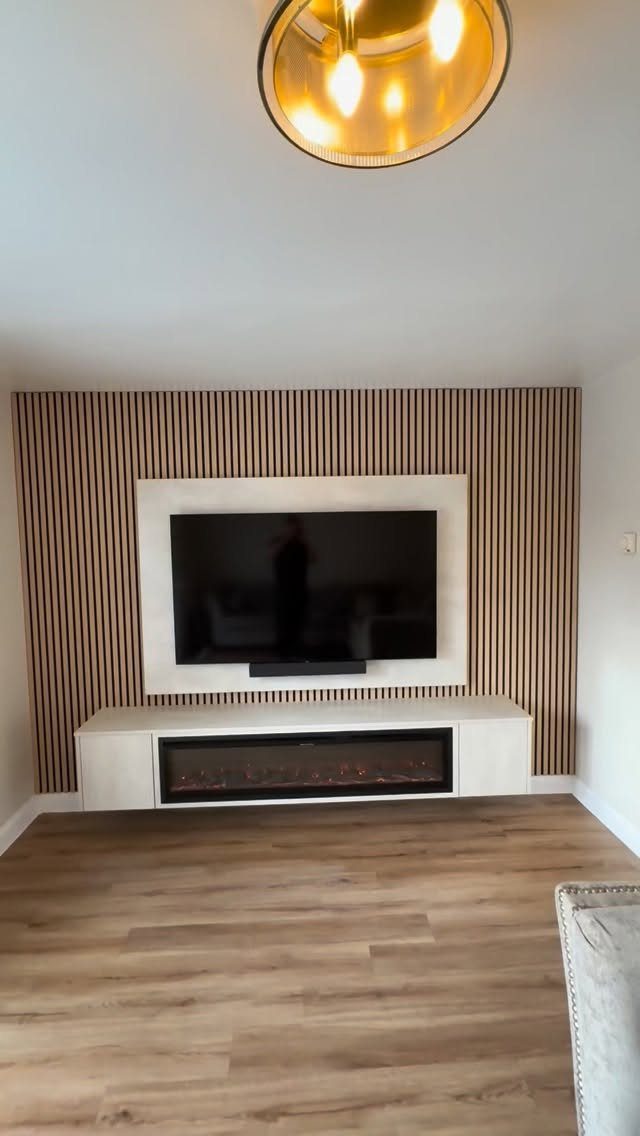
A slim-depth electric fire is what makes a built-in media wall work in a smaller room.
With no flue and no deep firebox, the unit sits inside a shallow panel and gives back the floor space a chunkier surround would take.
White panelling keeps it light, and the wood slats beside it add warmth without crowding the wall.
Check the depth of the fire before building the panel around it.
8. Black and White Fireplace Wall
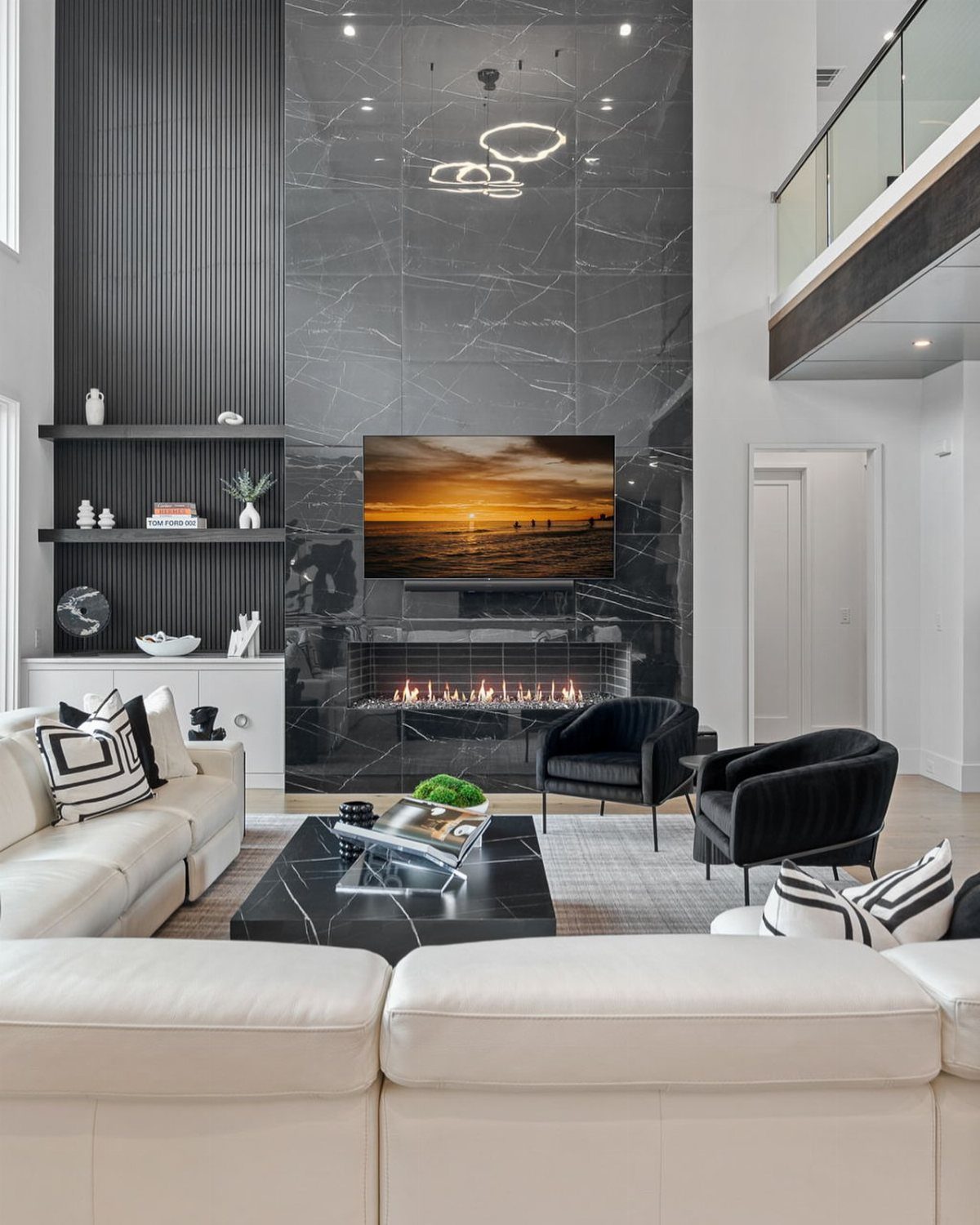
Black marble and white upholstery do the coordinating here, and the electric fire is the piece that ties the two together.
A linear unit set into the dark stone reads as part of the wall, with the flames glowing against the black.
I’d repeat the black in small doses elsewhere: armchairs, a coffee table, frames. A black TV screen disappears into this kind of wall instead of fighting it.
For a budget version, marble-look panels or porcelain slabs get you the same effect.
9. Chunky Wood Mantel
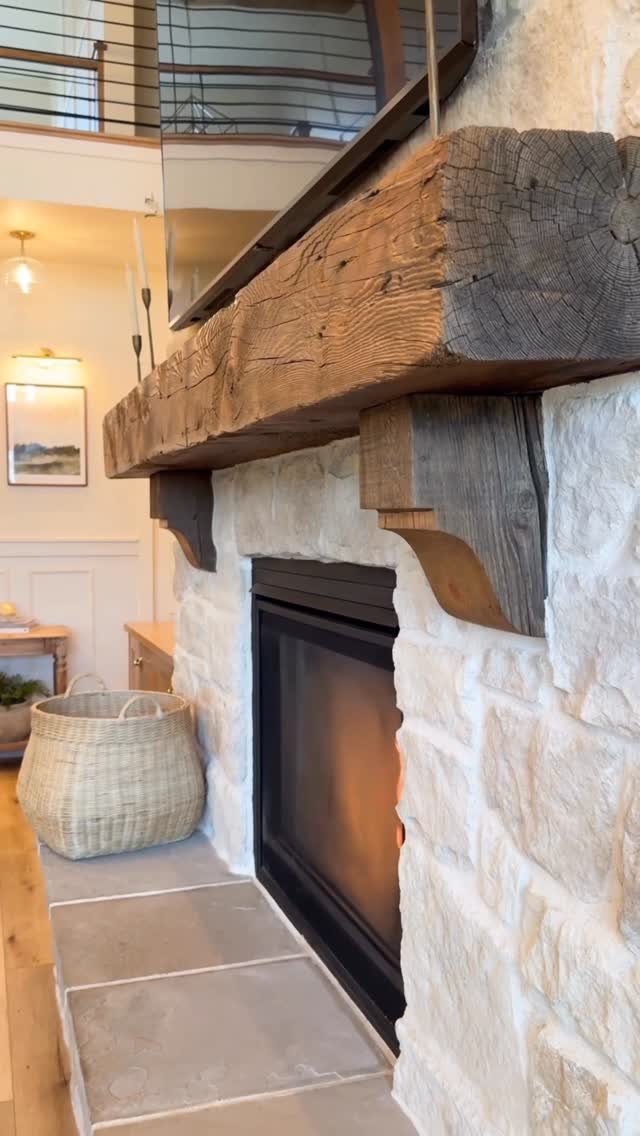
A thick wooden beam above a stone fireplace gives the wall its weight. Over an electric fire it works as a shelf and a visual break before the TV begins, so the screen doesn’t sit right on the flames.
Pick a rough, heavy-looking beam, because a thin board looks lost on stone. I like to leave the grain visible and skip heavy stain.
Anchor it into studs or masonry, and fit the mantel before the TV so you can judge where the screen should go.
10. Wide Modern Fireplace
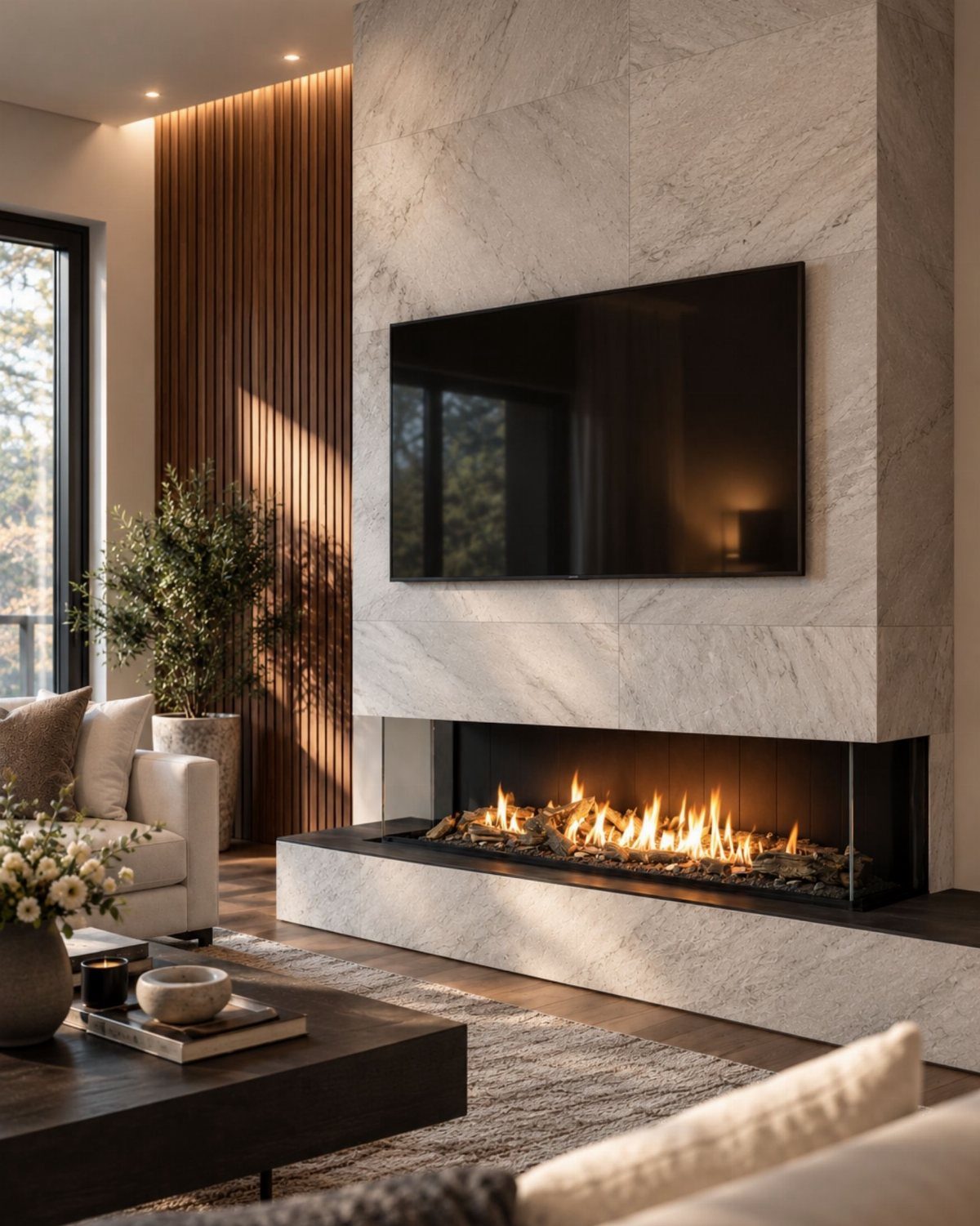
Width does the balancing in a setup like this. A large flat-screen looks top-heavy over a narrow fire, so choose a linear electric unit that runs close to the screen’s width and the 2 read as a pair.
Measure your TV first, then shop for a fire to match; it’s easier than the other way around.
A wide unit costs more than a standard one, so budget for that early.
11. All-Black Fireplace Wall
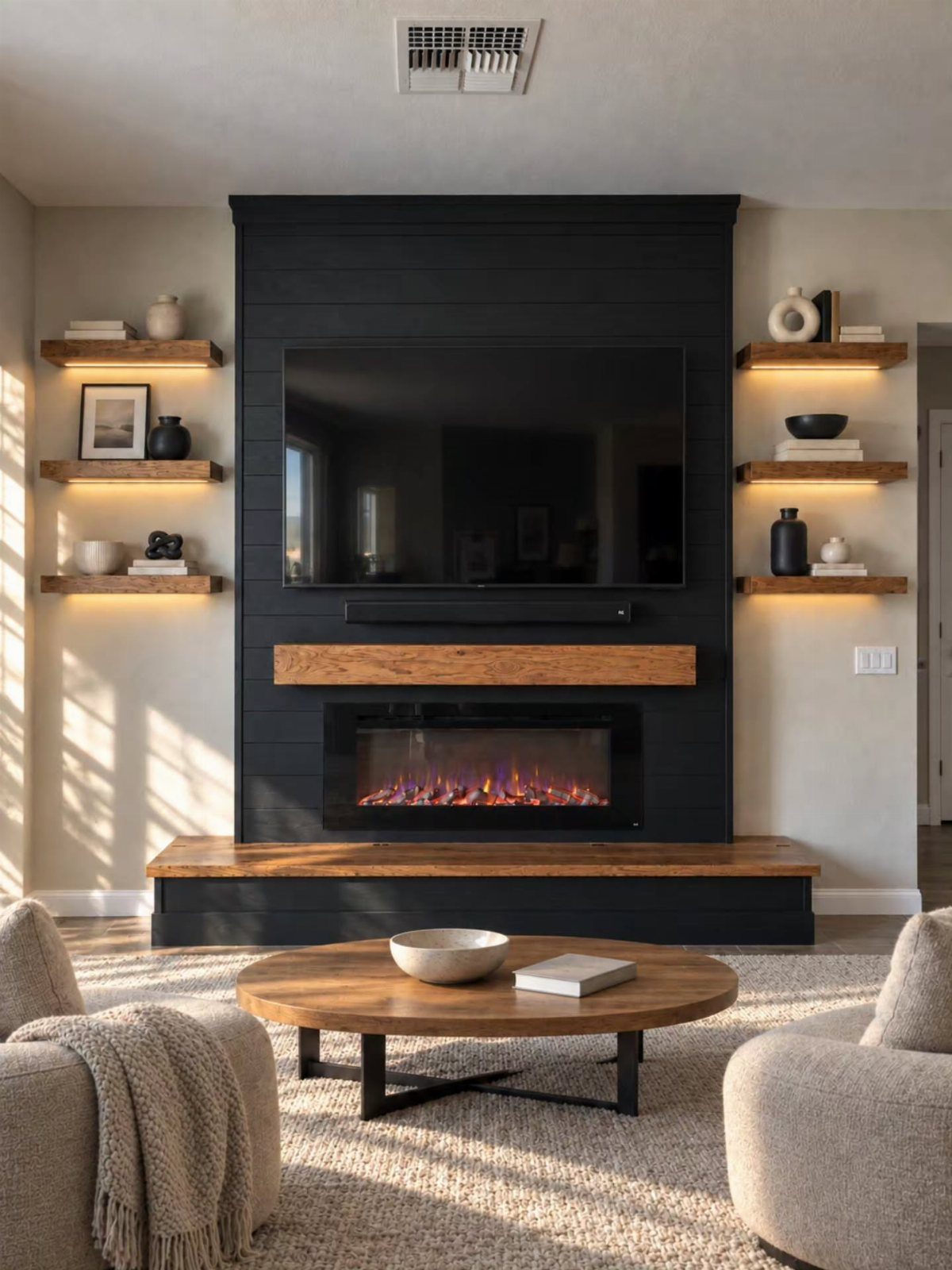
Black shiplap gives an electric fire something to glow against, and the flames look brighter for it. With the TV on the same dark surface, the screen blends into the wall when it’s off.
Warm wood breaks up all that black. I’d keep the mantel and floating shelves in the same tone, and let beige chairs lift the room so it doesn’t feel heavy.
Shiplap panels are a workable weekend project, and painting them black is the cheapest part of the whole wall.
12. Marble Fireplace with TV
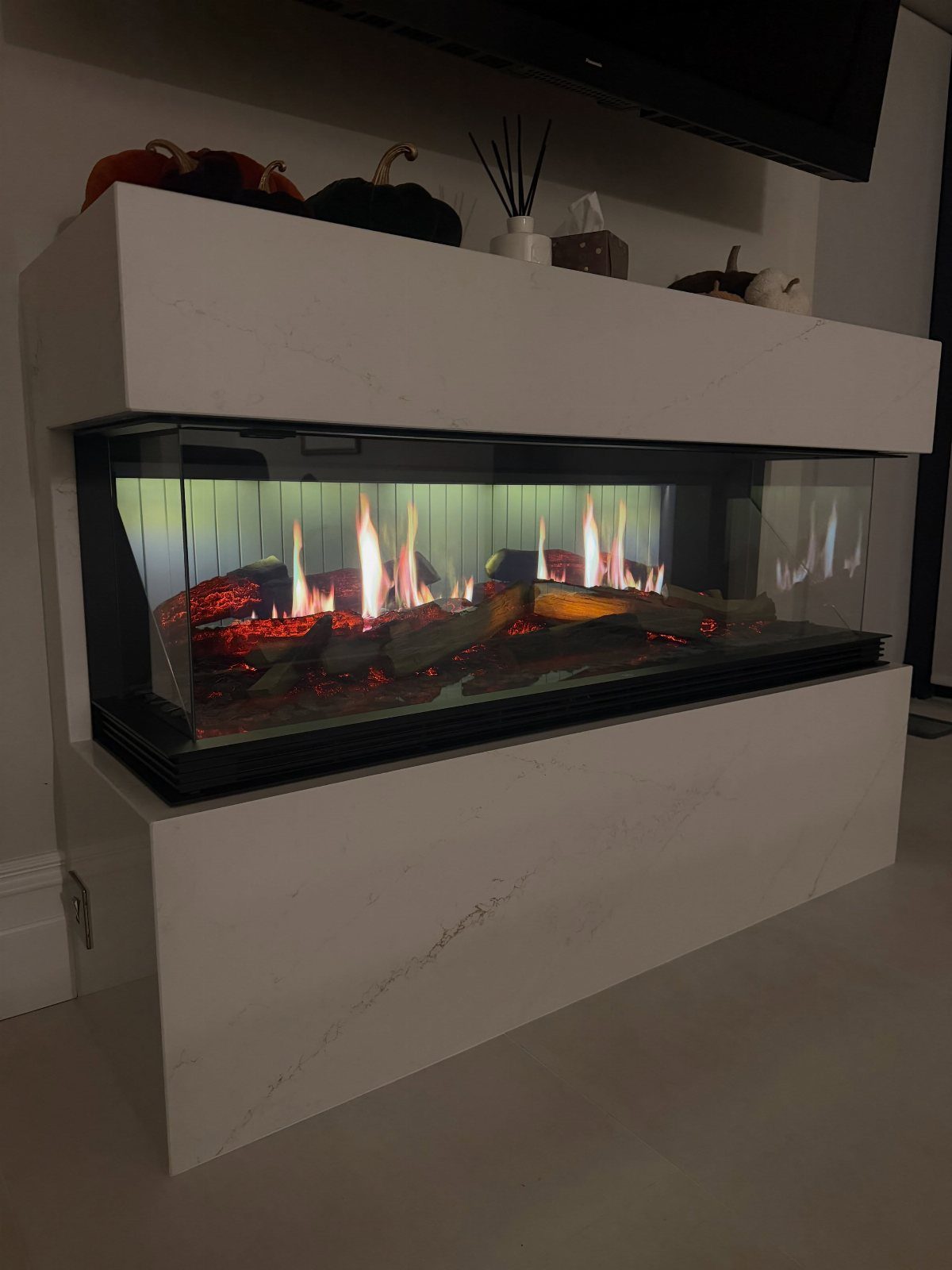
A white marble-effect electric fireplace with a long glass firebox gives you the stone look without the weight. Orange flames stand out best against a pale surround, and a low-profile unit leaves room above for a TV.
The top ledge is useful, and I’d treat it as a seasonal shelf. Pumpkins in fall, greenery in winter, a diffuser year-round.
Marble-effect keeps the cost well under real stone, though the finish is only as good as the unit, so check the surface in person if you can.
13. Brick Fireplace Wall
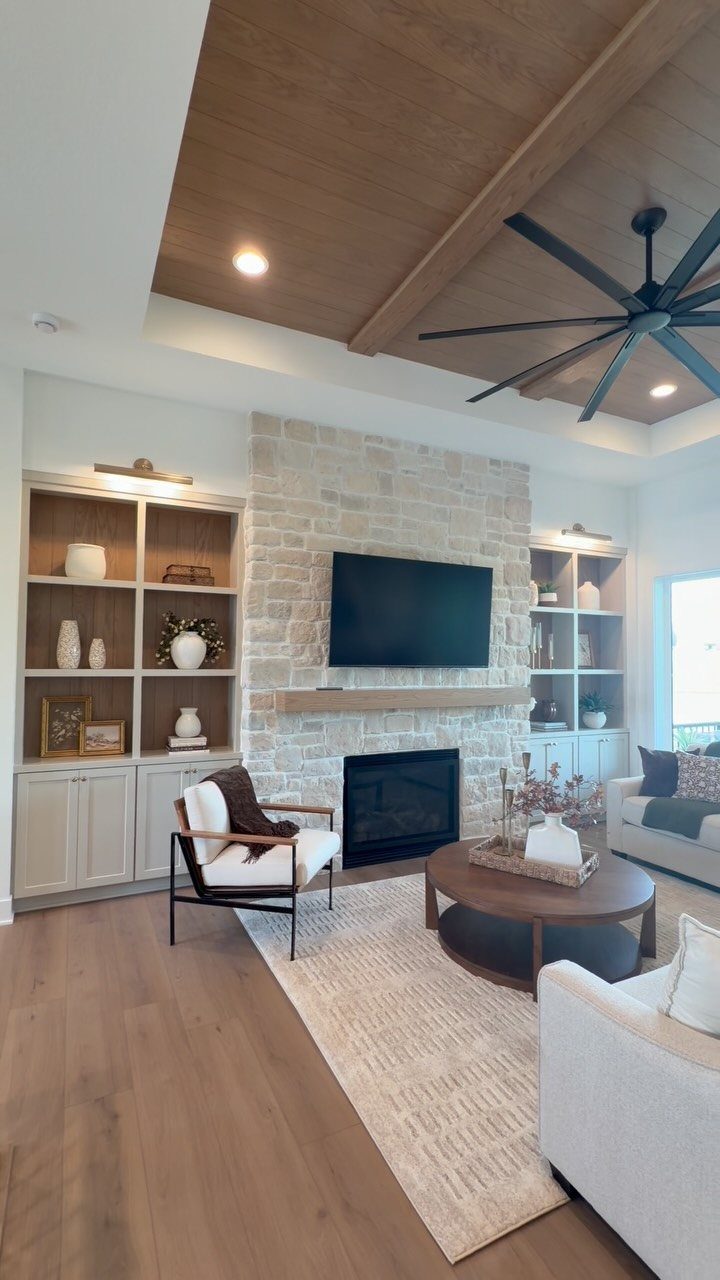
Light brick gives an electric fireplace a textured backdrop that a flat painted wall can’t, and it keeps a mounted TV from looking like a black hole on the wall.
Pale stone or brick-look cladding in a warm neutral also brightens a room under a wooden ceiling.
Brick-look panels are the budget route, and they hang the same way a real veneer does. I’d keep the armchairs and table simple so the wall stays the focus.
Mount the fire and the TV into a wall that can carry both.
14. Textured Neutral Wall
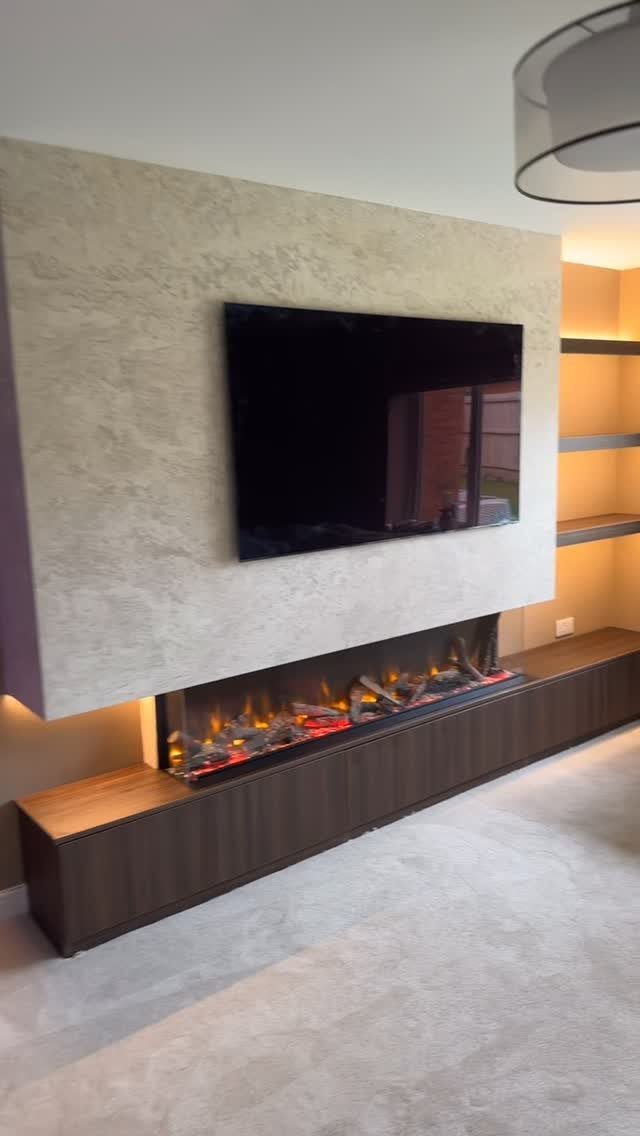
A soft, textured finish on the wall turns a plain TV-and-fire arrangement into something with depth. Plaster-look texture in a light tone reads calm, and a long linear fire below it spreads warmth across the wall’s width.
Dark wood along the base grounds all that pale surface and doubles as storage for cables and a streaming box. I’d pick a wood a few shades darker than the floor so the base looks deliberate.
Finish the texture before the fire and TV go on; touching it up around them is a headache.
15. TV Above Low Fireplace Console
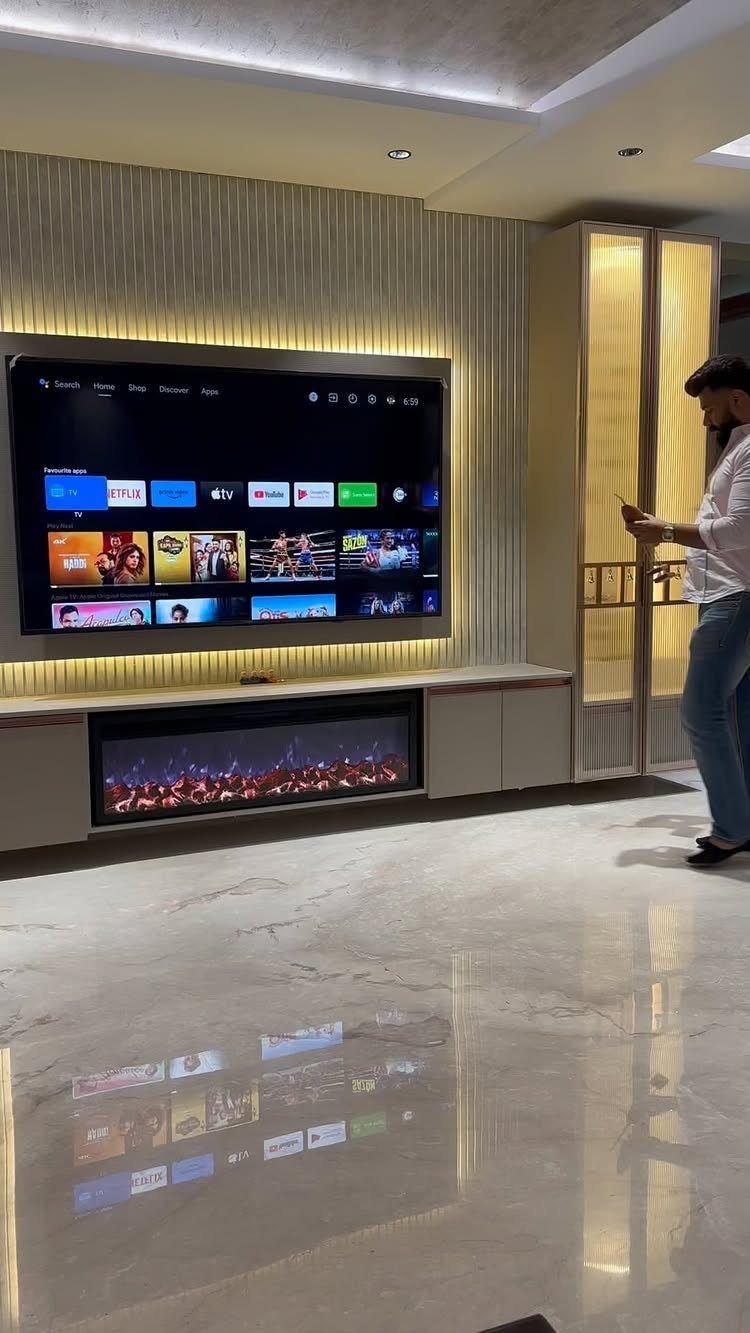
A low white console with a linear fire built in keeps the whole setup near the floor, so the TV can sit closer to eye level than it does over a tall surround.
Panelling behind adds shadow lines that make a plain wall look finished.
I’d choose this for a room where you sit low and watch often, since a lower screen is easier on the neck. Buy the console and fire as one unit if you can, so the vents and trim line up.
Mount the TV after the console is in place and level.
16. Backlit Fireplace Wall
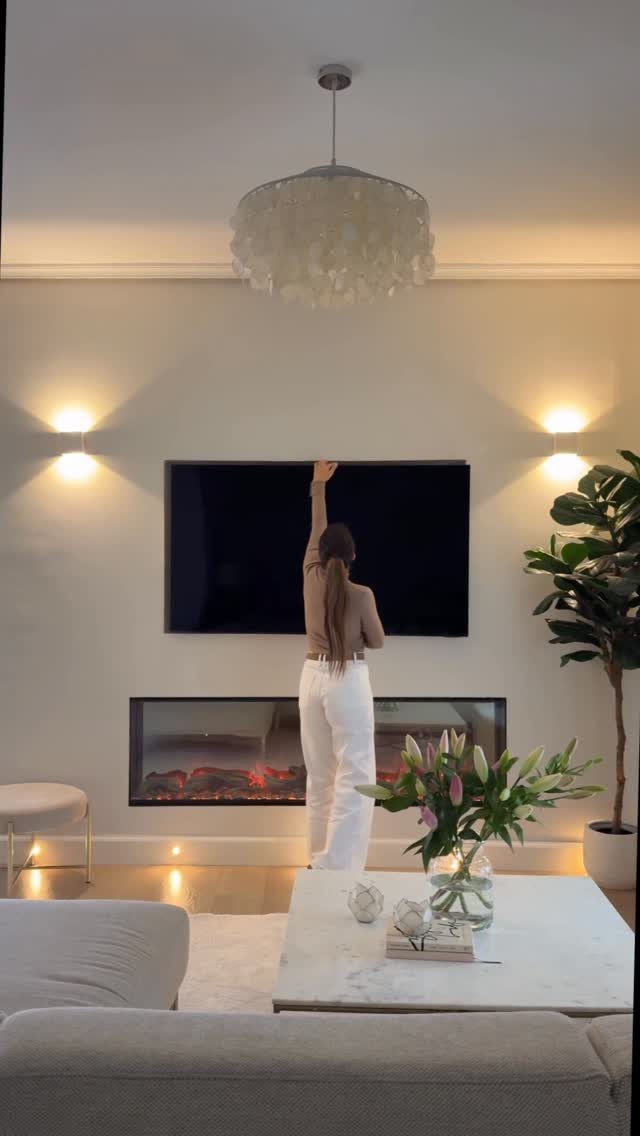
Wall sconces on either side of the screen give a fire-and-TV wall light of its own, so the room doesn’t depend on the flames or an overhead fixture after dark.
Paired with a clean, pale wall, the glow adds depth without clutter.
Plan the wiring before any finish goes up.
Hardwired sconces need power run inside the wall, and plug-in versions need a cord path you can hide. I’d lean toward warm bulbs so the light matches the flames instead of fighting them.
Keep the lighting off the screen’s glare line.
17. Frame TV Media Walls
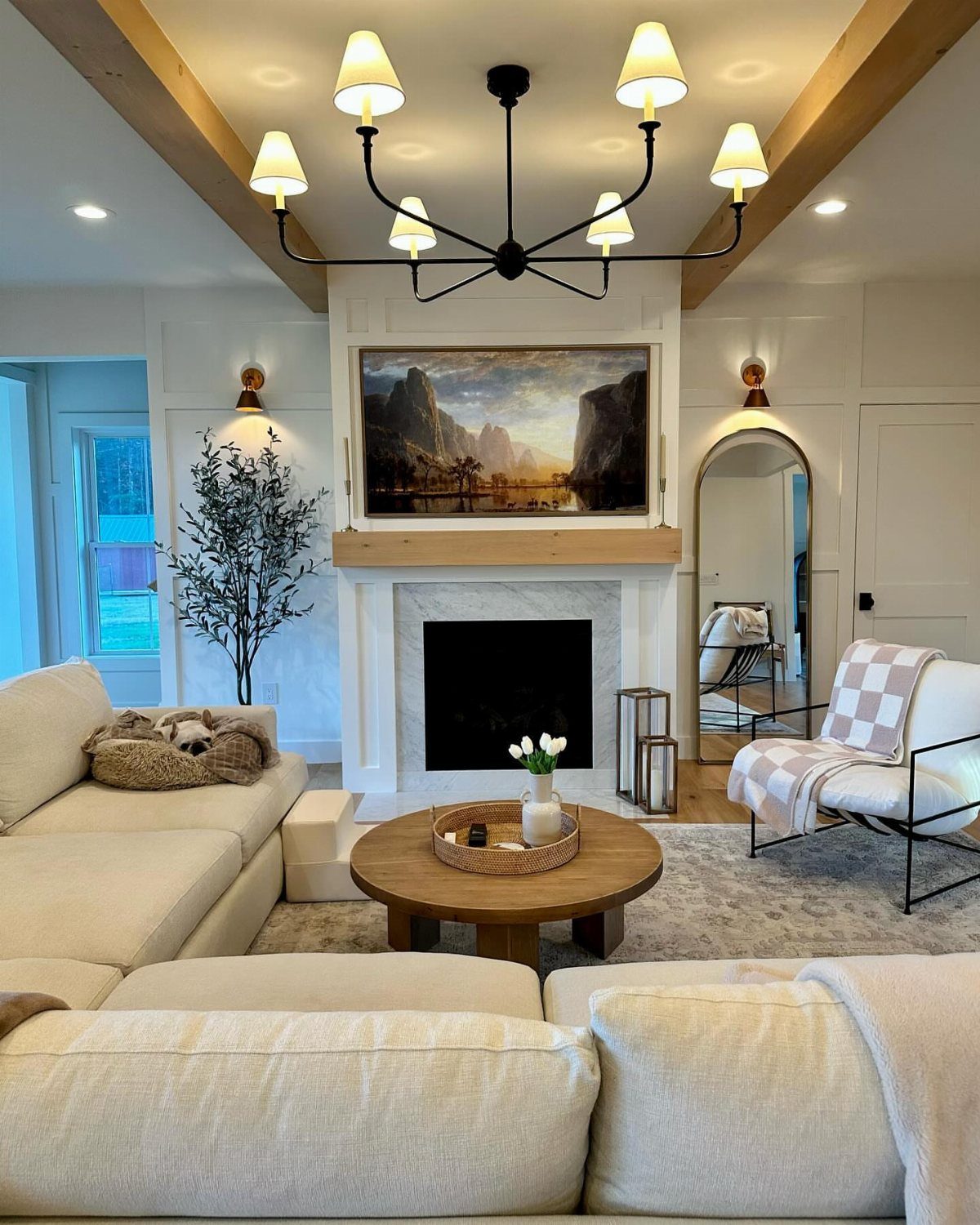
A Frame TV earns its price on a fireplace wall because it turns into artwork when switched off, which is most of the day.
Above a white mantel, the screen can show a painting instead of a black rectangle, and the fire below keeps the room feeling lived in.
It costs more than a standard TV, so I’d choose it only if the screen sits in a spot you see constantly, like the main living room.
Pick a piece of art with calm colors so it doesn’t compete with the mantel.
Leave room for a mantel arrangement under the screen.
18. Minimalist Floating Designs
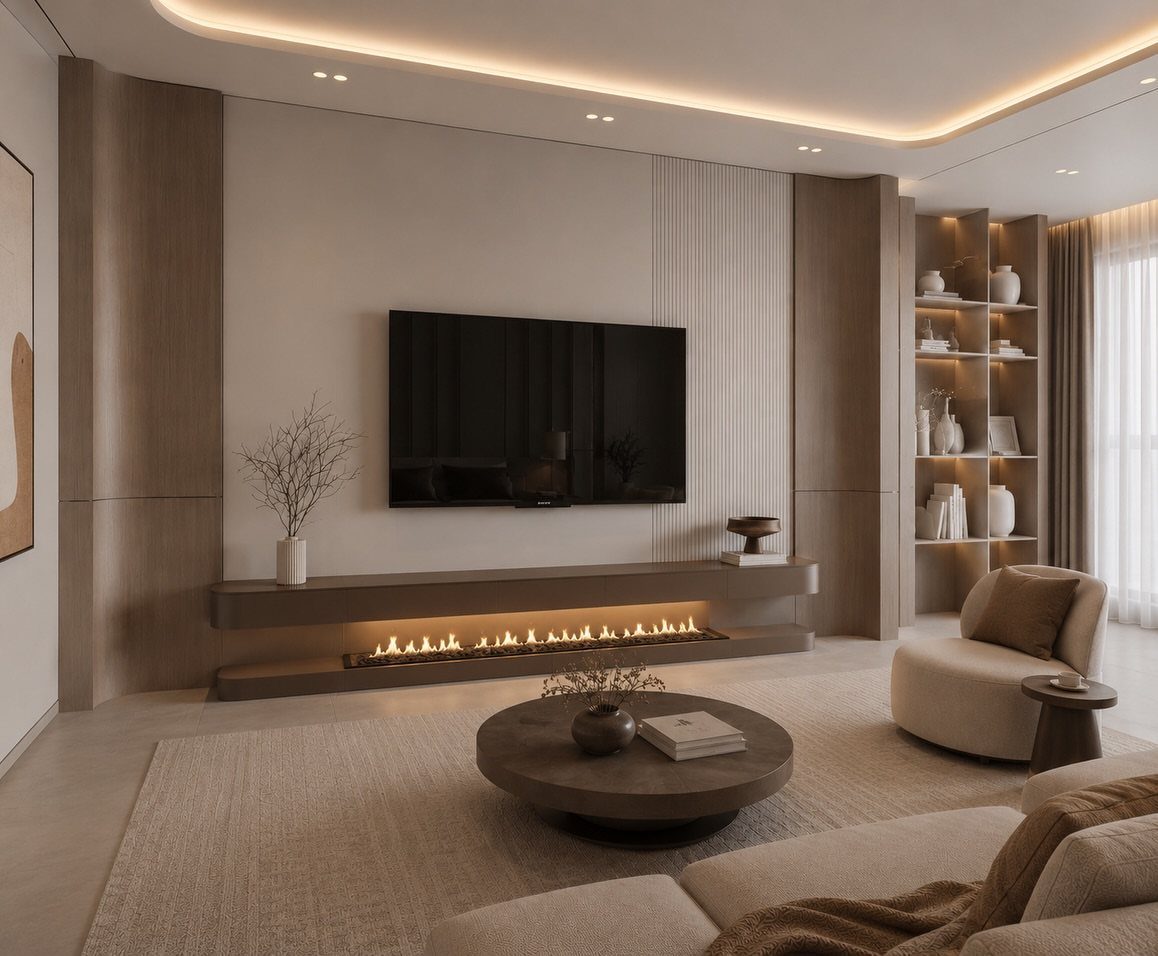
A floating fire on a wall-hung shelf, with the TV right above it, clears the floor and leaves a clean line of sight along the whole wall. Fewer pieces on the ground means a small room looks bigger.
I’d keep everything else quiet: a round coffee table, a neutral sofa, nothing tall near the wall. Hide the cables inside the wall or a slim channel, because exposed wires ruin the effect fast.
The shelf and the fire both hang from the wall, so locate studs first and anchor into them.
19. Wood Panelled Media Walls
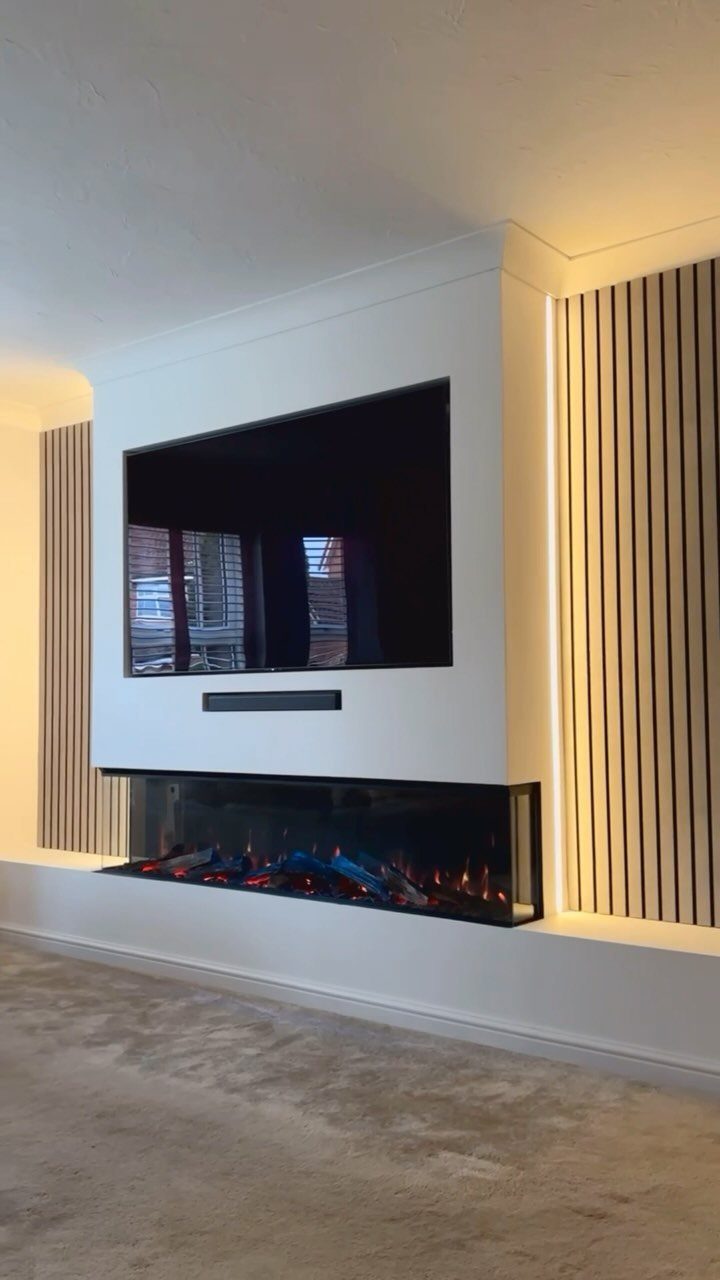
Vertical wood slats beside a white center panel give a television a warm frame, and the lighting built into them washes the wall in a soft glow after dark. Wood against white keeps a carpeted room from feeling cold.
I’d choose slats over solid wood sheets because the gaps catch light and shadow, and slatted panels are sold ready to mount, which suits a weekend job. Keep the central structure plain so the TV and fire stay the focus.
Run the wiring for the lights before the panels go up.
20. Bespoke Cabinetry
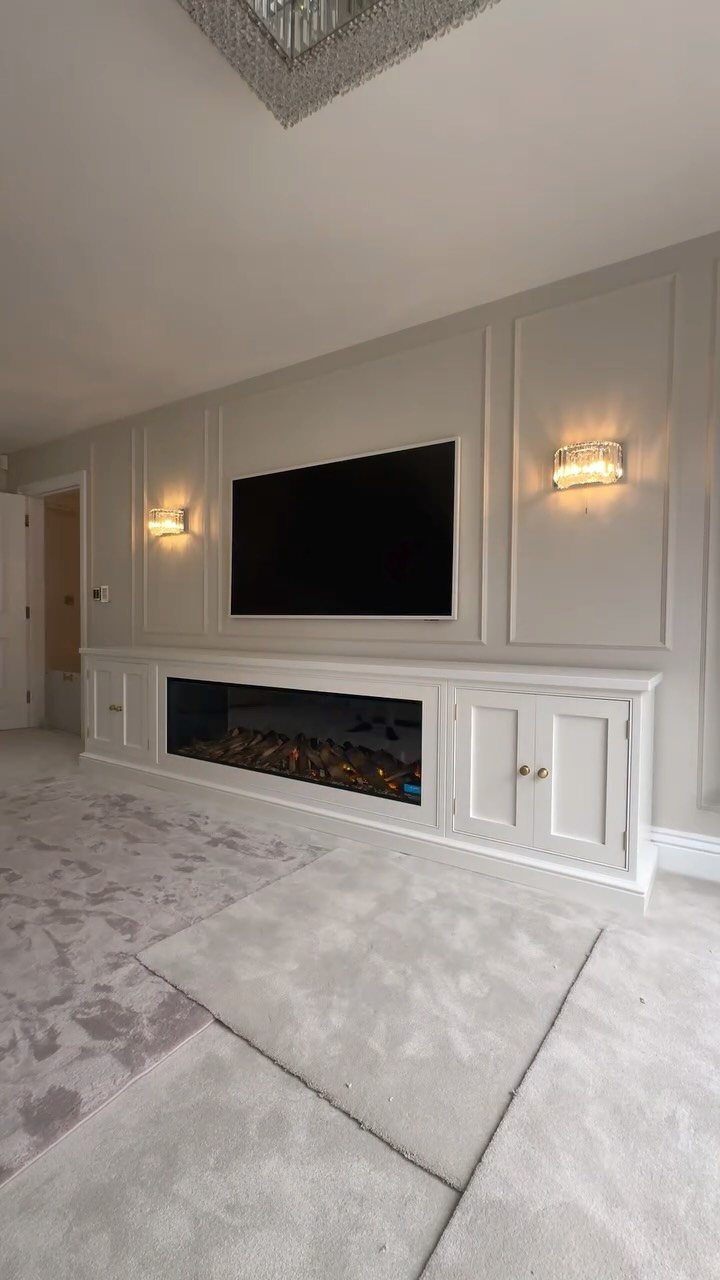
Custom cabinetry is the version to pick if you want a TV wall that stores things, not just displays them.
Closed cupboards in white hold cables, game consoles and extra throws, and they hide the clutter a mounted screen tends to attract.
I’d treat sconces on either side as the finishing touch: they add light without crowding the cabinet fronts.
Expect this to cost the most of any option, since the carpentry is made to fit your wall. For a lower price, stock white cabinets with a trim kit can imitate the same built-in look.
Measure the wall before anything gets ordered.
TV and Fireplace Proportions
Designers split on the ideal: some like a TV 5–8 inches narrower than the fire, others prefer equal widths. Either way, avoid a screen wider than the firebox, since it ends up dominating the wall.
If you’re torn, I’d go with the narrower TV. It leaves a visible edge of fireplace on each side, and that reads as a frame instead of a collision.
Pick a TV that matches the style, too. A thin, modern screen looks right over a sleek linear unit and a bit odd over an ornate surround.
TV Mounting Height and Heat
Your manufacturer’s instructions for that exact model override any rule of thumb, so read them before you drill.
Height matters for your neck as much as for heat. A screen mounted high above a fire can be uncomfortable to watch, so I’d choose a tilting mount that angles the picture down toward the seating area.
Gas fireplaces are a different case. A few models ship with built-in heat management that permits a TV just 12 inches over the opening with no mantel, though that only holds when the install matches the manufacturer’s exact spec sheet.
Don’t borrow that clearance for a gas fire without checking.
With Heat & Glo’s heat management technology, TVs can be placed as close to the fireplace as 12 inches without a mantel.
Frequently Asked Questions
Is it okay to have a TV above an electric fireplace?
Yes, as long as the manufacturer’s instructions for your exact fireplace model allow it. Electric flames need no flue and give off far less heat than a gas or wood fire, which is why this pairing works so well.
A wall that can carry both units is the starting point, and a mantel in between gives you a ledge plus a visual break between fire and screen.
How do you style a fireplace with a TV above it?
Choose a linear electric fire close to the TV’s width, then add texture around it, such as stacked stone, brick-look panels or plaster-look paint, so a dark screen doesn’t look stark.
A wood mantel or beam between the 2 gives a visual break and a spot for seasonal décor. Keep the furniture simple and let the wall be the focus.
Can I plug my TV and electric fireplace into the same outlet?
Dedicated outlets are the safer choice.
Putting each on its own outlet keeps you from overloading a single circuit. Run the power and HDMI cables behind the wall before any finish goes on, since fixing them afterward means opening it up.
How high should the mantel be above an electric fireplace?
Leaving 12 inches between the fireplace and the mantel is the cautious rule, but check the instructions for your specific unit first. Studs or masonry should hold it, particularly if you’re hanging a heavy wood beam.
Are TVs over fireplaces still in style?
Yes, when the wall is planned as one composed piece. Stone or brick texture, a mantel, built-in shelving or a Frame TV that displays art when switched off all keep the screen from looking like a black rectangle.