
The best apartment decor ideas share one trait: they look permanent while leaving zero trace. That matters because most leases ban "permanent changes" without ever defining the term, and a single pulled paint chip can cost your deposit.
The $89 bedroom still looks better six months later than the $340 living room did on day one. The difference was mixing thrift finds with one solid piece touched daily, rather than buying a matching set that aged into a shrug.
1. Layered Lighting
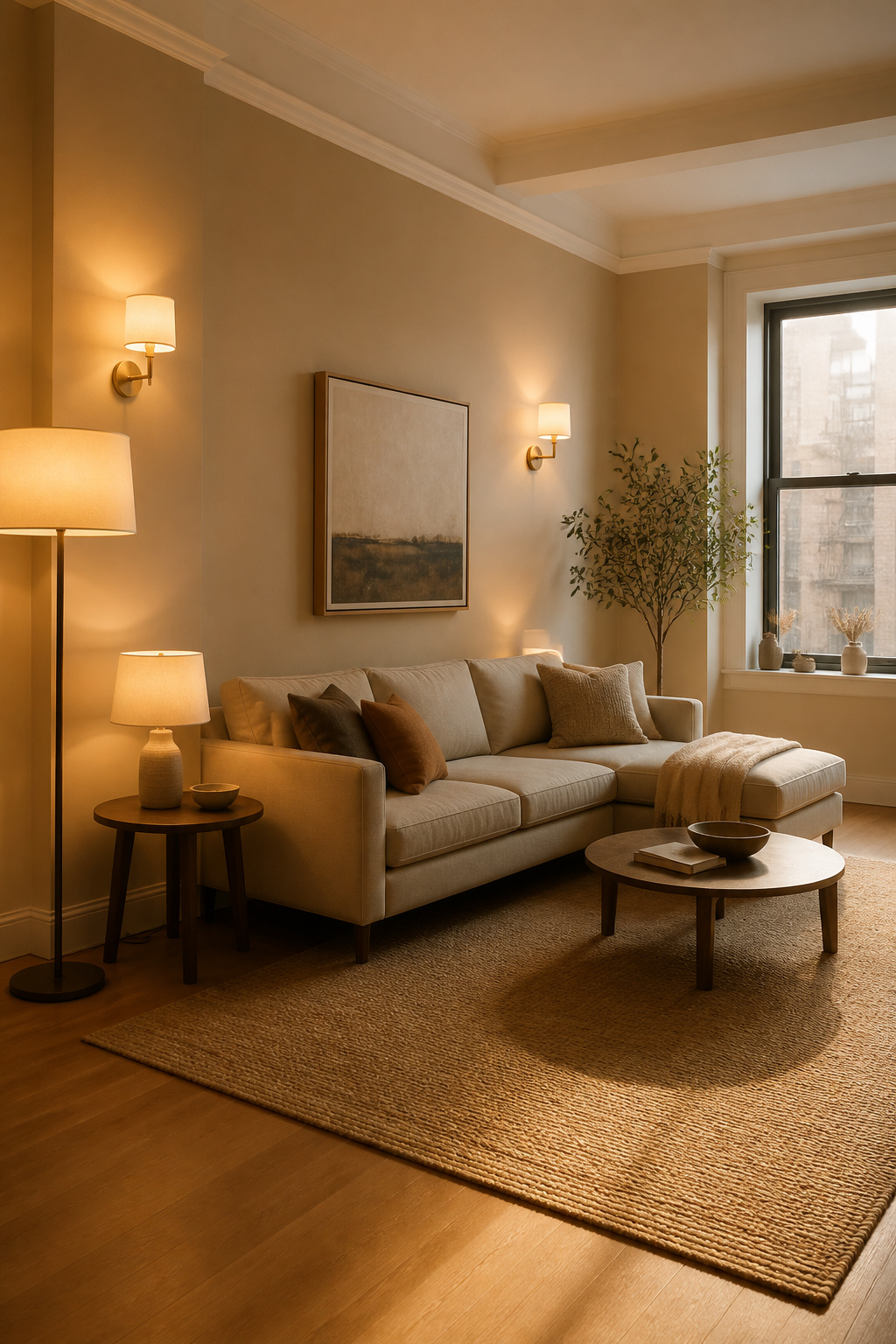
Most apartments hand you a single overhead fixture that makes every room feel like a waiting area. The fix is layering light without touching the wiring, which matters when your lease says no changes.
Floor lamps, table lamps, sconces, and wall-mounted fixtures at different heights do the work instead. I start with a floor lamp in the darkest corner, add a table lamp where I actually sit, and plug-in sconces or battery wall lights finish the edges. No hardwiring, no deposit risk.
Color temperature is where I burned myself twice. The first lamp I bought read "warm white" but clocked in at 4000K, which lit my living room like a clinic hallway. The second swung too far, to 2200K, and everything looked orange after sunset. Now I match bulbs to 2700K across every fixture, or the layers fight each other instead of blending.
2. Removable Wallpaper
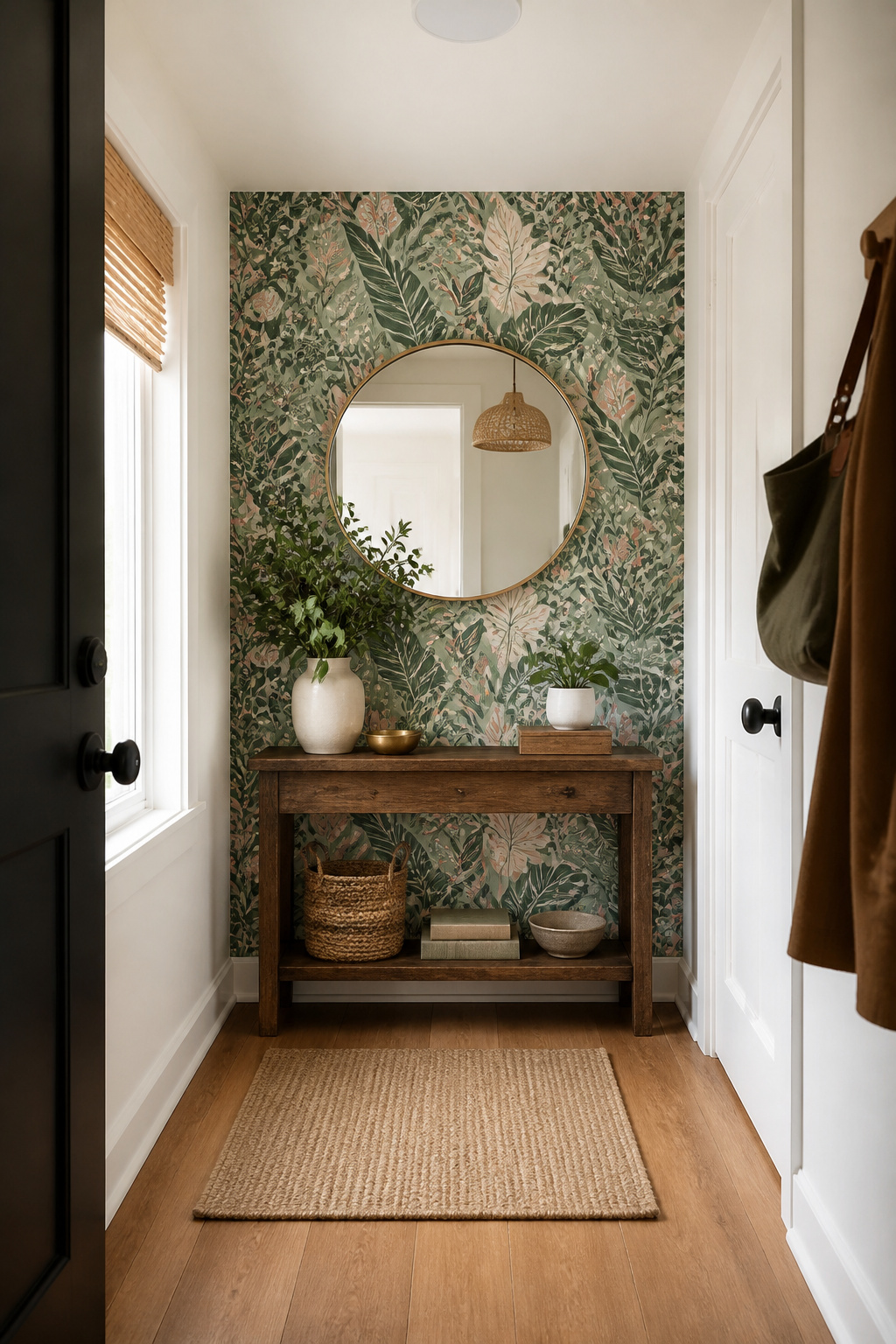
Peel-and-stick wallpaper lets you build an accent wall in a bedroom, define a breakfast nook, or wake up a small entryway without a single drop of paint. The backing paper is the part nobody talks about until it is too late. Leave that paper on while you position the strip, using it as a sliding surface to nudge the pattern straight before the adhesive ever touches the wall. I learned this after trying to reposition a panel half an hour into the job, the glue already setting and the paper torn in my hand. The strip stuck crooked and I lost the seam match. The paper is not packaging to rip off early; it is the tool that buys you those extra seconds to get the line right. Once the strip is down, peel the backing away in one slow motion and smooth from the center out. No residue comes up when you move out, which matters more than the pattern itself if the deposit is on the line.
3. Gallery Walls
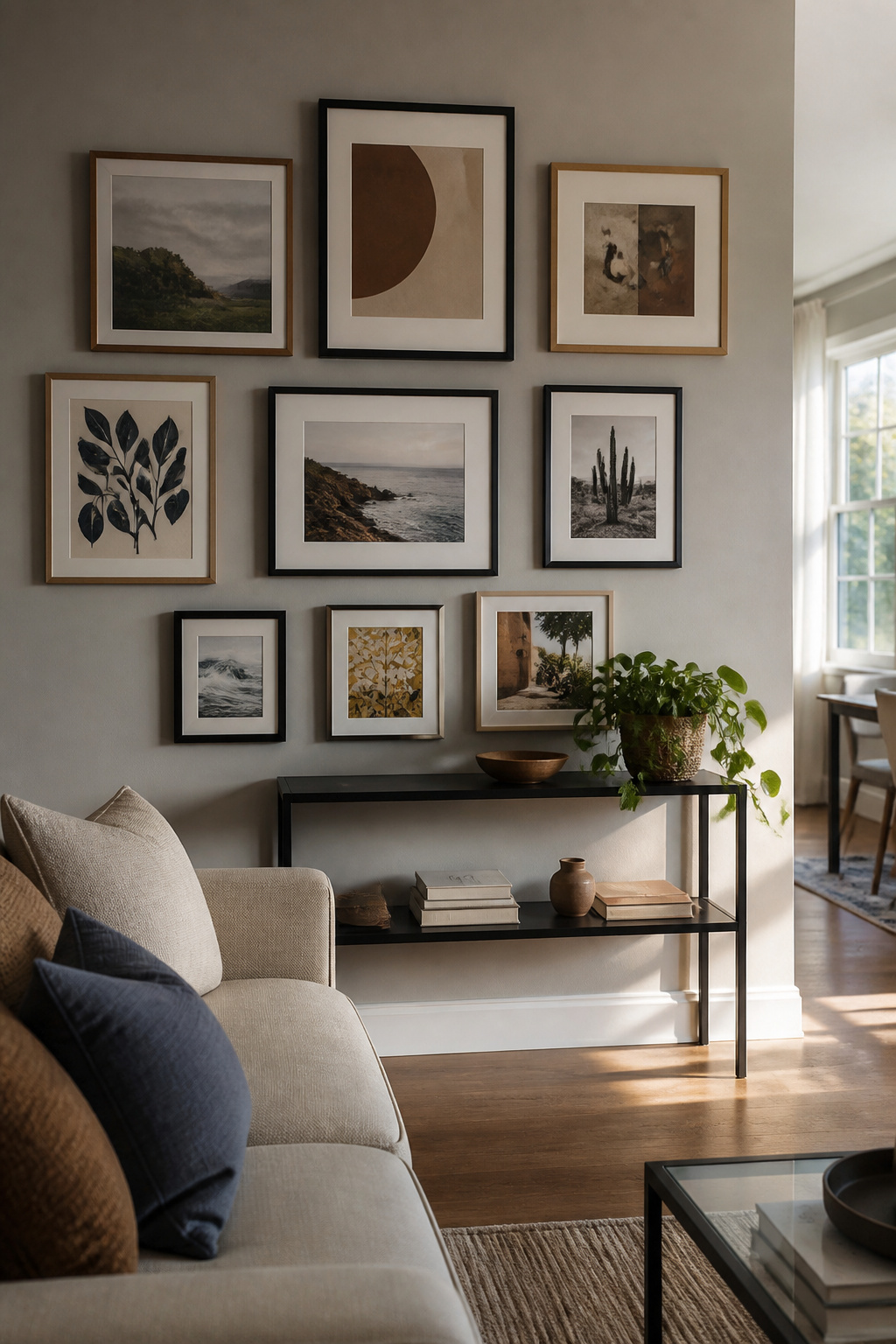
A blank wall in a rental is a chance to build something that actually feels like yours. Gallery walls do that faster than almost anything else, and the frames come down when the lease ends.
The hanging method matters more than the art. Command strips and 3M hooks are the standard recommendation for renters who want their deposit back, and they work until they don’t. The weight limit printed on the package is a ceiling, not a target; a hook rated for five pounds will hold five pounds in ideal conditions, which your textured apartment wall is not. Spread the load across more points than the math suggests you need.
My first attempt looked like a scatter plot because I treated the wall as a surface to cover rather than a composition to build. Start with one piece at eye level and build outward in a rough rectangle, keeping two to three inches between frames. Step back after every third piece. The gap that looks even from two feet away reads as a chasm from the sofa.
Personal photos mixed with prints or thrifted art keep the wall from feeling like a hotel installation. The eclectic look works when the frames share one element (all wood, all black, all thin metal) even if the contents diverge.
4. Multi-Functional Furniture
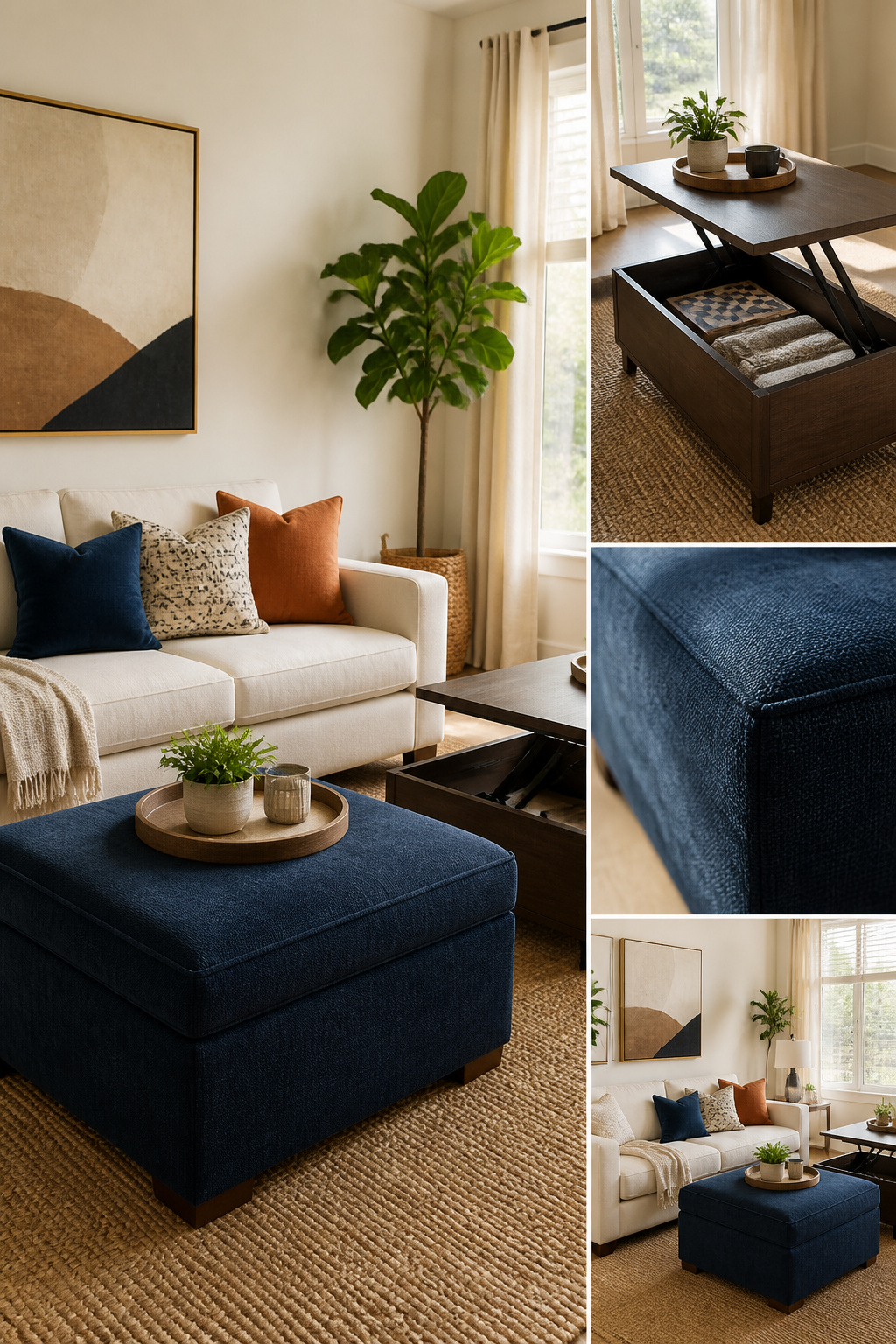
A storage ottoman hides blankets, remotes, and the mail you meant to sort three days ago. Mine held winter blankets for three years, and the lid doubled as a footrest, a tray table, and once an impromptu seat when friends outnumbered chairs.
Lift-top coffee tables pull the same trick at a different height: the surface rises to sofa level for working dinner, and the cavity beneath swallows board games, charging cables, anything that used to live on the floor.
"A sofa bed is a winner for making a living space double up as a guest room."
The point is one piece earns back the floor space a separate guest room would steal. I bought a sleeper sofa once that weighed 180 pounds. Two friends and a furniture dolly got it up two flights, and it outlasted the lease. Weight that heavy means measuring the stairwell first, not just the doorframe. Sleeper chairs stretch smaller than a twin mattress, enough for one guest without commanding a wall. The tradeoff is mattress thickness: open the mechanism in the store and lie on it before you commit.
5. Indoor Plants

Greenery makes even the smallest apartment feel fresher, but the wrong plant turns into a guilt trip fast. My first attempt was a Boston fern on the bathroom counter. It looked lush for about five days, then dropped fronds until I was vacuuming brown confetti every morning. Ferns need humidity and consistent moisture, and most rentals have dry winter air that shrivels them no matter how often you mist.
The snake plant I bought next survived a full month without water while I was away over the holidays. It sat in a cheap ceramic pot from a hardware store and looked no different when I returned. That tolerance for neglect is what makes it worth the space. A snake plant facing a north window still grows slowly; a south window speeds it up, but it will not die in either.
Direction matters more than square footage. My living room windows face east, so only morning light reaches them. I learned to keep the snake plant there and move anything flowering closer to the sill. If you are not sure what you face, check where sunlight actually lands at 9 a.m. versus 3 p.m. A trailing pothos can hang from a clothes rail to divide a studio space, and you can take the whole divider down when you want the room open again.
6. Accent Rugs
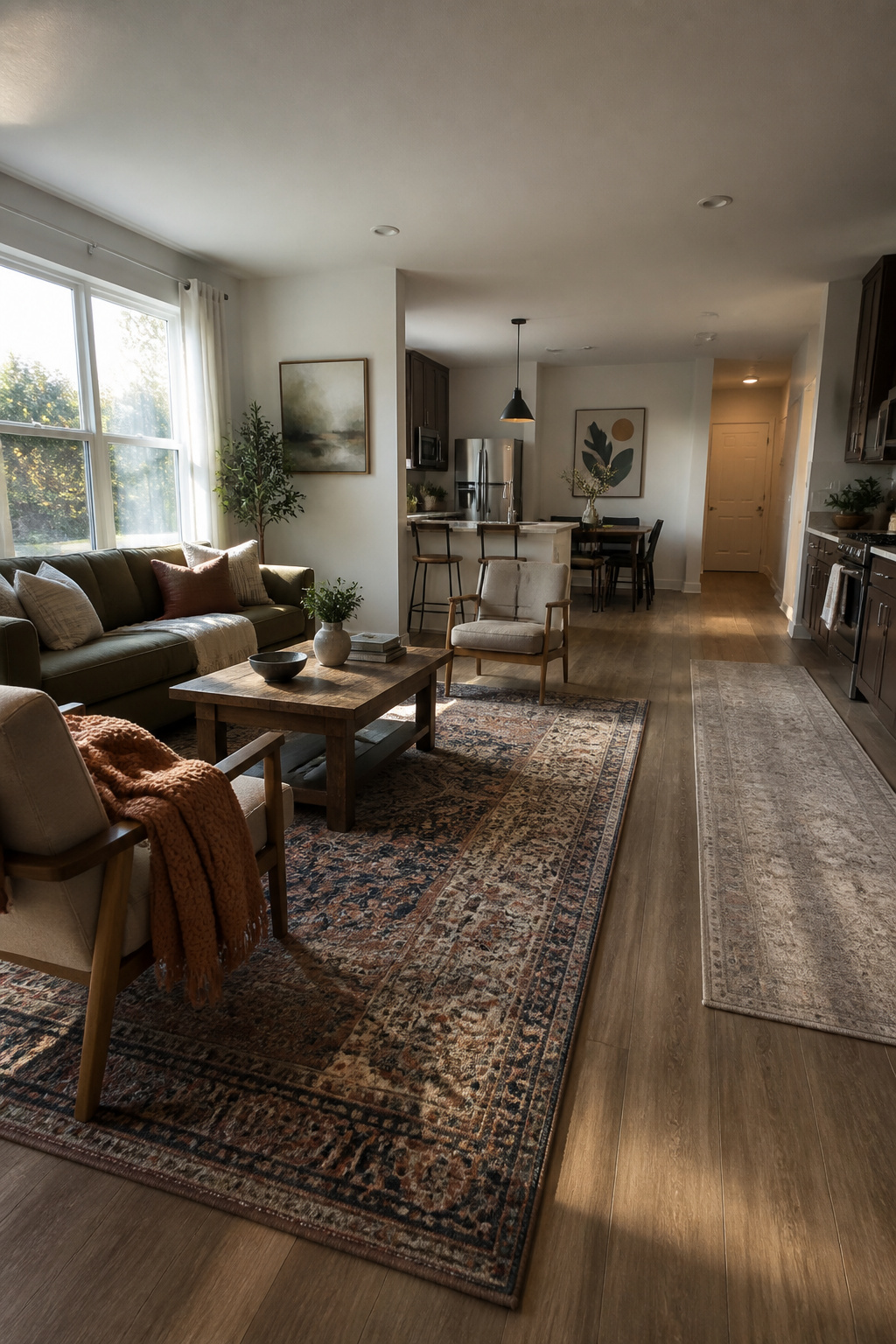
A rug does more work in a rental than most furniture. It carves a living area out of a studio floor, softens the echo off bare walls, and travels with you when the lease ends. The trick is sizing it right.
I learned this with a 5×7 rug in a 10×12 room. The website photo showed it floating under a coffee table with generous border on every side. In my space, the edges landed awkwardly midway under the sofa legs, too small to anchor the seating area, too large to read as an accent. The tape measure would have told me what the staged image could not: a 5×7 covers less than a third of that floor, and the remaining expanse of laminate swallowed it whole.
Runner rugs solve a different problem. In a narrow galley kitchen or a straight-shot hallway, they draw the eye the length of the space instead of across its width. The effect is elongation without construction; the floor becomes the path. Layering one over a larger flatweave, or running two parallel under a long console, builds the same depth that stacked throws give a bed. The vinyl runners from Spicher and Company start around $39 if you need something wipe-clean near a door. The checkered woven shag at $99 adds texture that reads warmer in photos, which matters when your living room is also your Zoom background.
For zone definition in a single room, the rug should extend at least to the front legs of every piece it ties together. Anything smaller is a bath mat pretending to be architecture.
7. Personal Items as Decor
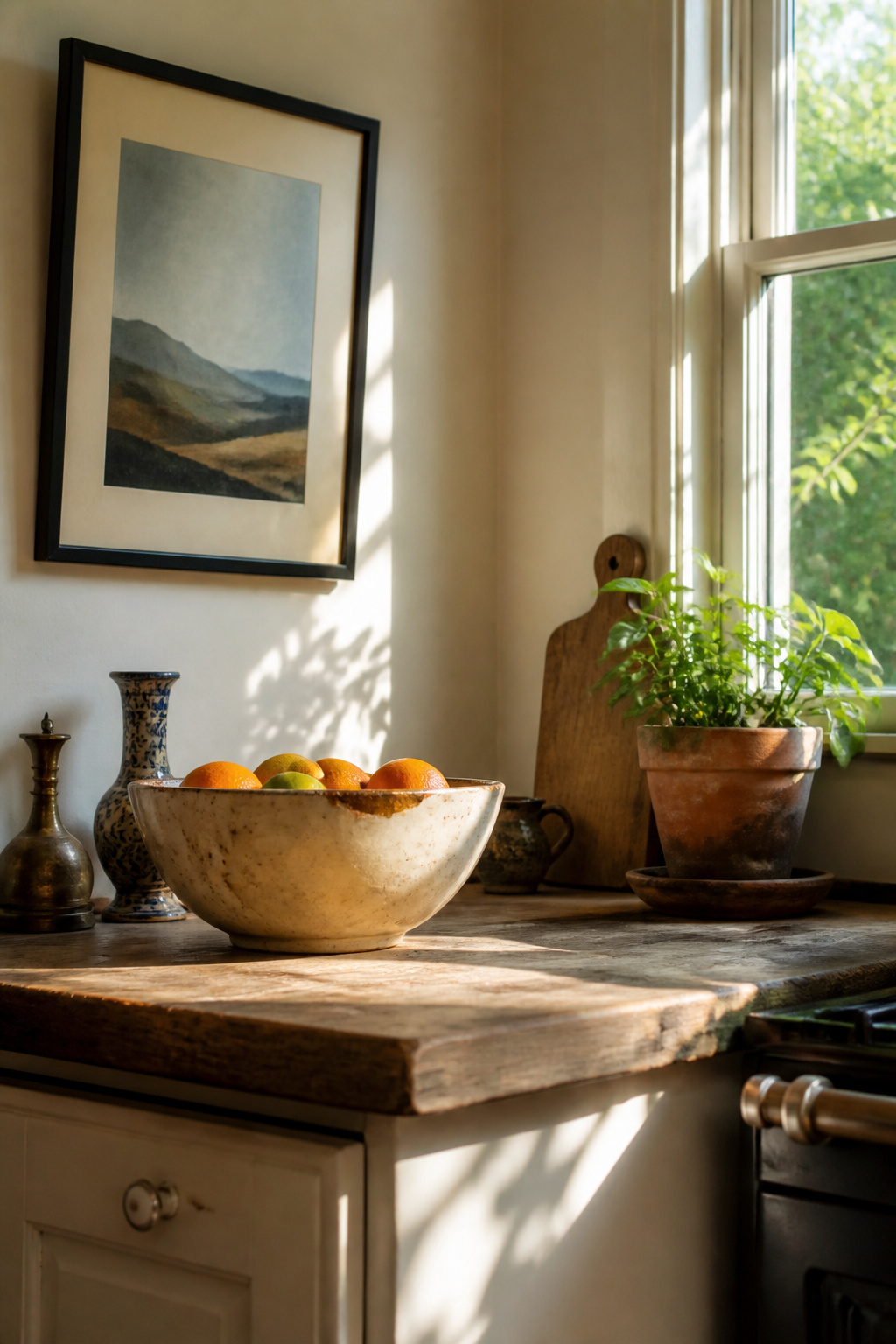
The ceramic bowl my grandmother brought back from a trip sits on the kitchen counter now, holding nothing but the afternoon light. It is chipped on one rim and the glaze has gone cloudy in patches, which is exactly why it works. New ceramics with that weathered look cost forty or fifty dollars; this one only cost me the decision to stop hiding it in a cabinet.
A concert poster I framed myself hangs slightly crooked in the hallway. I measured the wire wrong, hung it anyway, and three months later the tilt still makes me remember the show more clearly than any level frame would. The crooked frame stayed because straightening it would have turned the memory into decoration.
Personal items earn their place when you let them keep their flaws. A flea-market trinket beside a store-bought vase, a stack of worn paperbacks mixed with new ones: the contrast keeps either from looking staged. The sources that rank for apartment decor ideas all hit the same note. Forget the Pinterest-perfect minimalism. The spaces that feel lived in are the ones that actually are.
8. Smart Storage Solutions
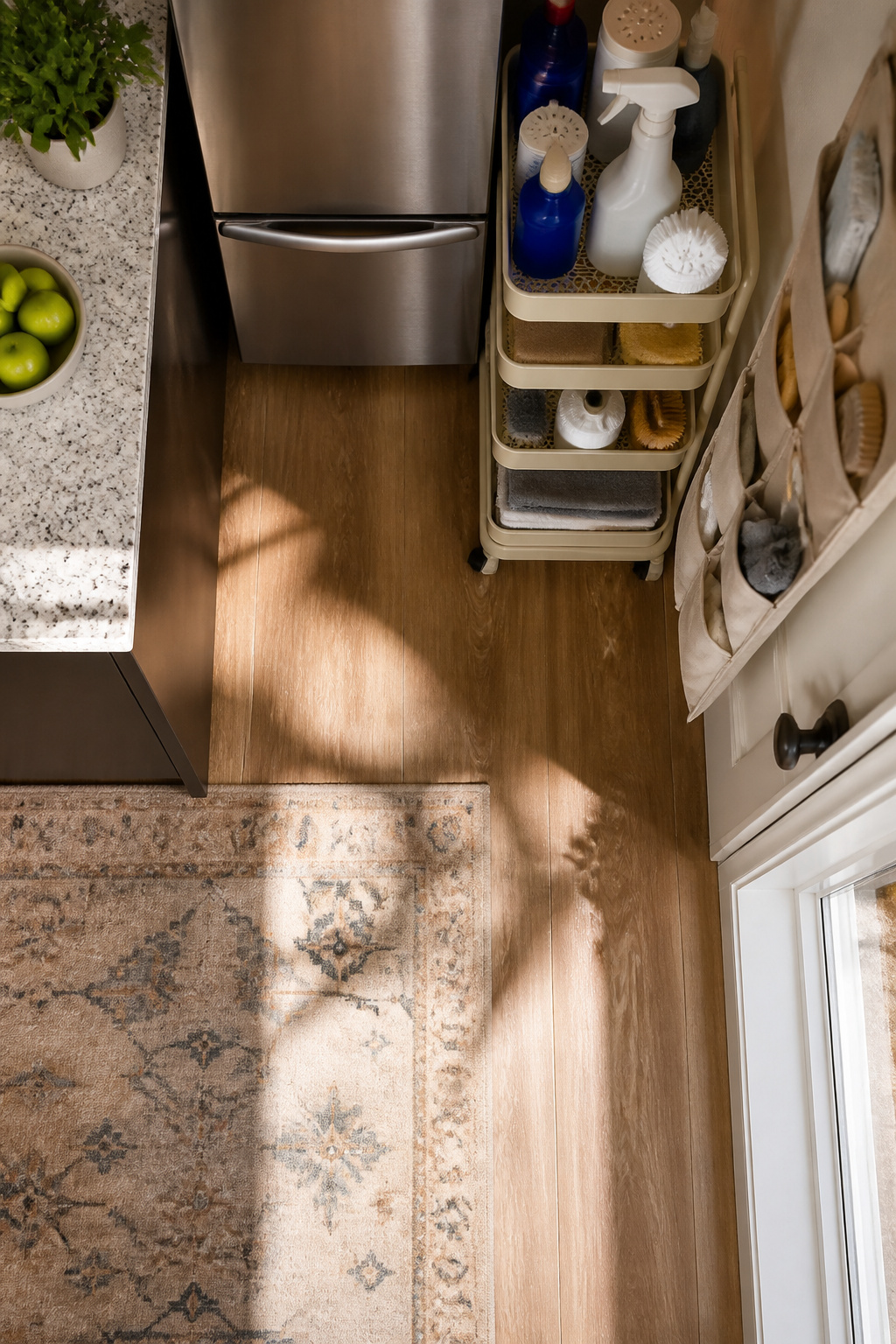
Vertical space is where renters actually gain square footage without a lease violation. The over-door organizer I hung in my last apartment stayed up three years, held everything from cleaning supplies to extra shoes, and left zero holes to patch. The tension rod I tried for a window herb garden fell twice before I admitted a spring-loaded rod is not a shelf and moved the pots to the cart instead.
The three-tier rolling cart was the workaround that stuck. Sywhitta makes one for $24.97 that slots into the gap beside a fridge or toilet; the Amazon Basics version at $36.37 is sturdier if you load it with bottles or books. Yamazaki’s slim cart at $145 runs narrower for tight hallways, though for weekend-project money that gap matters.
For actual shelving, wall-mounted units need landlord sign-off, but they turn dead air above a desk or sofa into storage that reads as intentional. Brass brackets and glass keep it from looking like a dorm room; modular boxes let you hide what you do not want to display. I measured floor to ceiling at 11 PM without a level, eyeballed the bracket spacing, and spent the next six months noticing the left side sat an eighth-inch lower. Rent a stud finder. Use the level.
9. Soft Textures
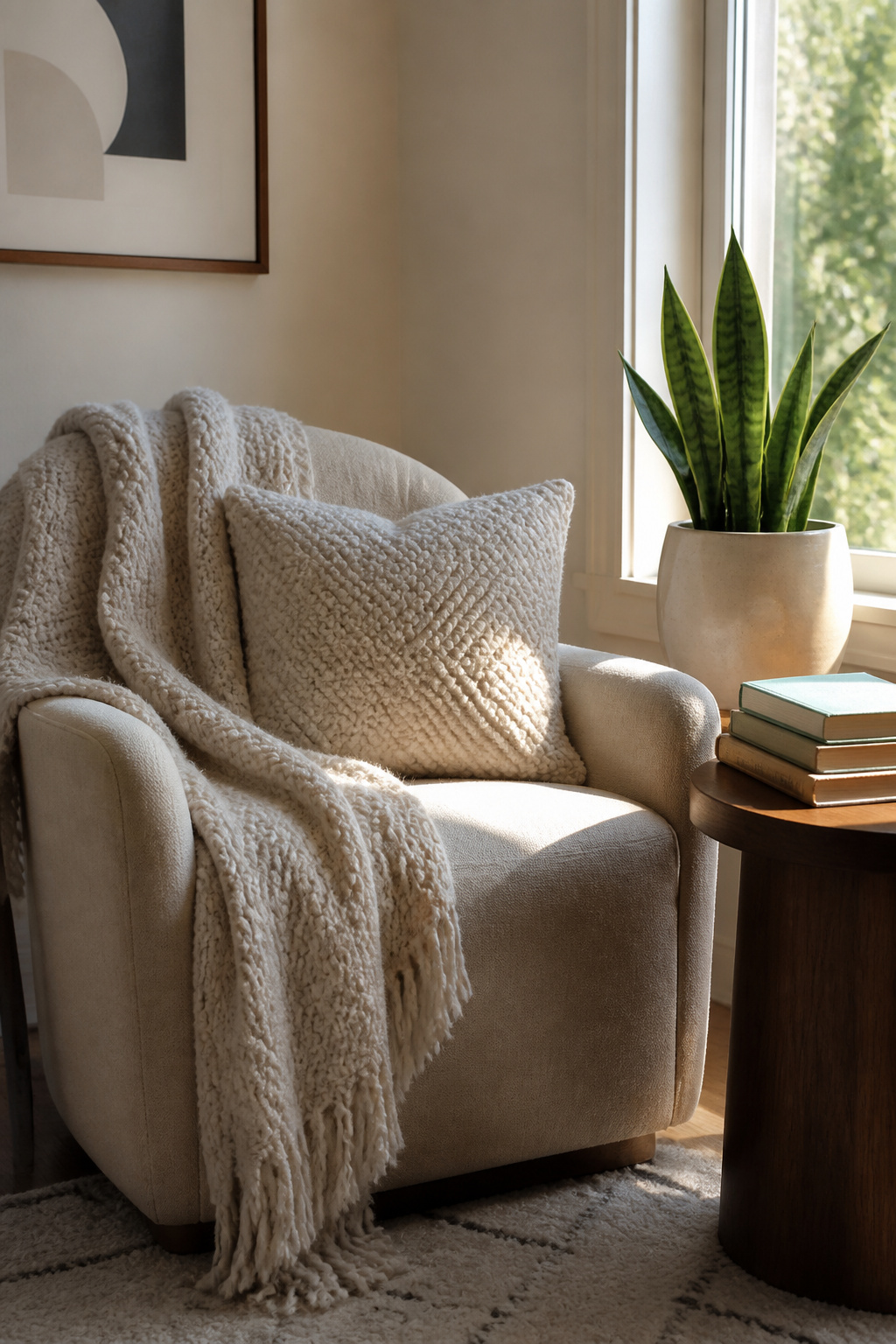
Smooth ceramics on a shelf read as cold until something nubby sits beside them. I mix a glazed planter with a cushion in a loose bouclé weave, and the contrast does more than either texture alone. The same rule holds for throws. An acrylic blanket I ordered two years back pilled inside a month, the surface turning fuzzy and cheap in a way washing only worsened. The linen throw I hesitated over cost nearly twice as much, but the weave has softened without fraying, and the drape looks intentional rather than tired. For renters, textiles are the fastest layer to swap out when a space feels flat. A cotton weave folded over a reading chair gives you something to reach for without committing to new furniture. Layering matters more than matching. Linen curtains against a chunky knit mini throw, or that same smooth ceramic against a nubby decorative cushion, builds warmth the eye travels to. The budget lands where you use it most: one quality piece you touch daily beats three that age badly by spring.
10. Colorful Accents

A red throw pillow taught me the hard way that color needs a plan, not just enthusiasm. I spotted it on clearance, brought it home, and watched it fight with my blue-gray sofa, the warm wood of the coffee table, even the green of a nearby plant. Nothing in the room asked for that red, so it shouted instead of accented.
Two accent colors, maximum. That is the rule I adopted after the pillow went back to the store. Pick a pair that already live in your space, maybe pulled from a rug or a piece of art you own, and let every colorful thing you add answer to one of them. A mustard bowl on the shelf, a dusty blue pillow, a small vase that repeats one of those tones. The restraint reads as intention; three or four colors in a small apartment just reads as noise.
Small items carry the color so you do not have to. A framed print, a ceramic dish, a stack of books with the spines turned out. When the lease ends, they all fit in a box, and the walls stay untouched.
What Renter-Friendly Actually Means
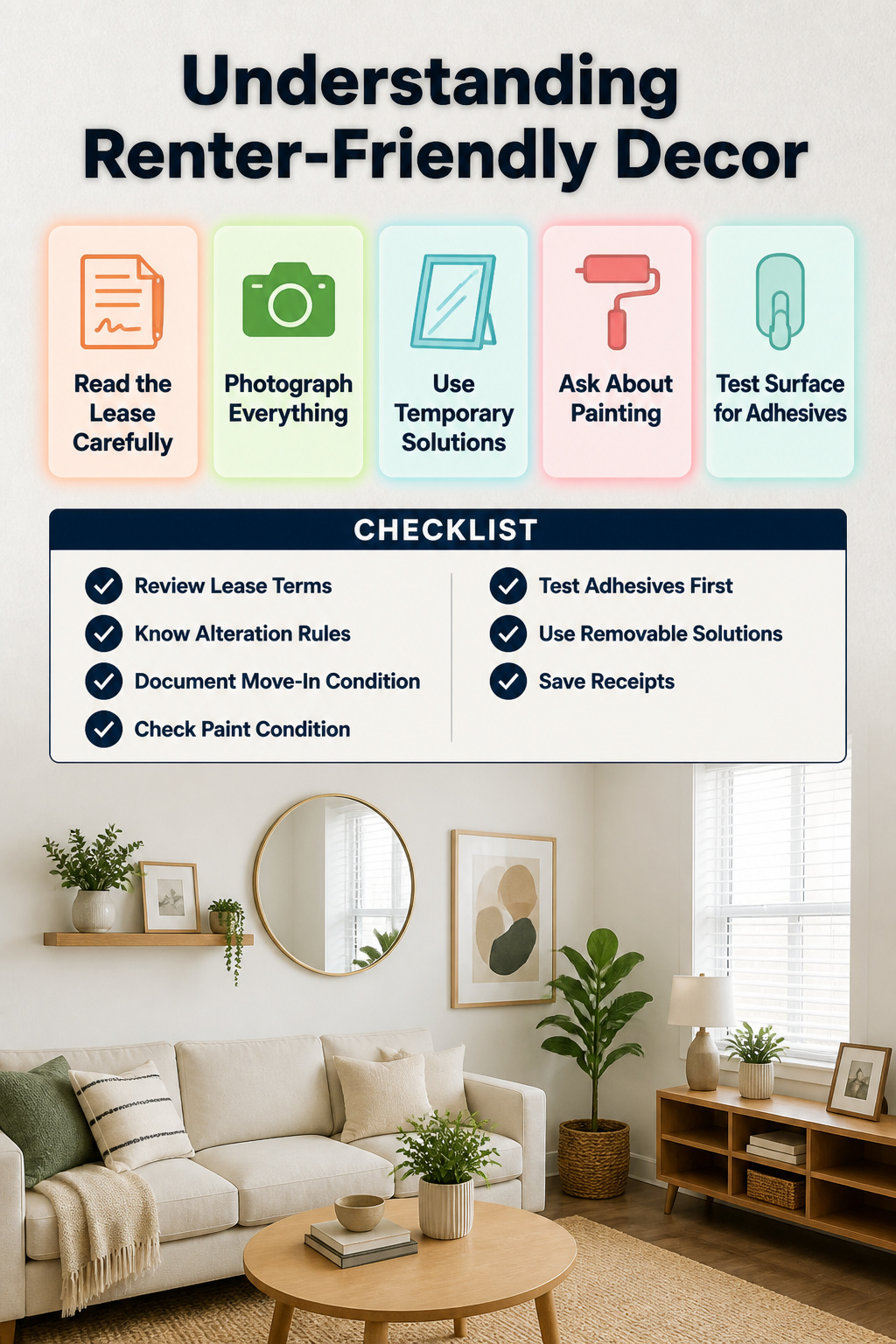
The term "renter-friendly" gets thrown around on product labels, but the real test is what your actual lease says about alterations. Most agreements ban "permanent changes" without defining the word, so a Saturday afternoon with Command strips can still cost you a deposit if a strip pulls paint or leaves adhesive residue. Before I hang anything, I photograph every wall, baseboard, and window frame on move-in day. Timestamped shots are the only proof that a scuff or nail hole predated your gallery wall.
Peel-and-stick wallpaper and adhesive hooks work only when the surface underneath is sound. Old latex paint, the kind that powders under a fingernail, will lift with the strip. The same goes for removable wallpaper over flat paint in a humid bathroom; the seam curls, you tug to fix it, and a palm-sized patch comes with. Ask your landlord directly about painting, even in a neutral. Some welcome it, some require professional color-matching on move-out, and that second condition turns a $40 Saturday into a $400 headache. Command strips and leaning mirrors keep your options open, but the real renter-friendly move is reading the lease for weasel words before you buy a single roll.
Budgeting for a Weekend Project
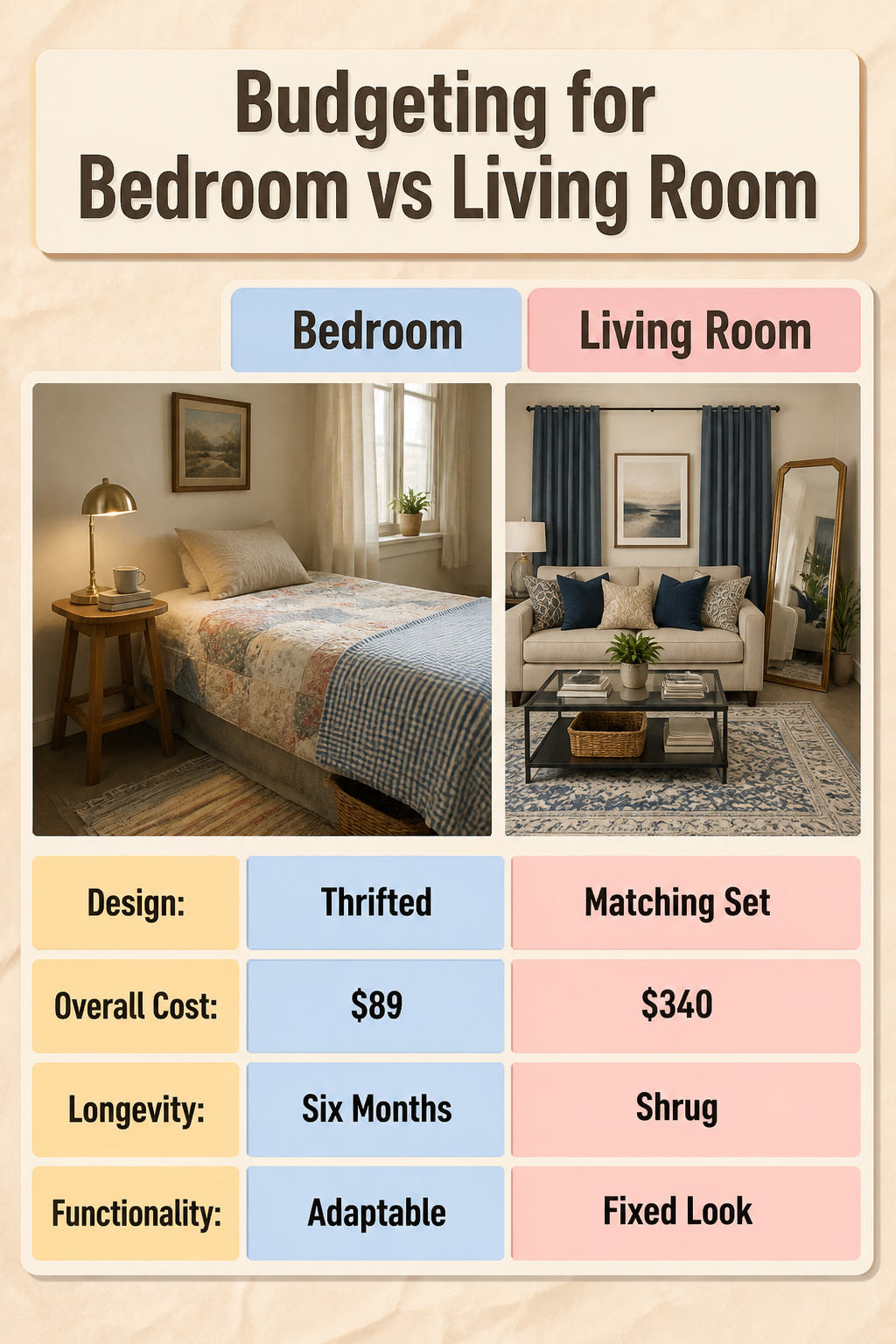
The $340 living room looked better on day one. The $89 bedroom still looks better now, six months later, and that gap keeps widening.
The bigger budget went to a matching set: new curtains, a coordinated rug, a full-length mirror with a frame that matched the curtain rods. Everything arrived the same week, went up the same Saturday, and photographed clean for the group chat. By October the rug showed every coffee drip, the curtains hung too heavy for the cheap rod hardware, and the matching frame looked like a rental catalog threw up in one corner. Nothing was bad enough to replace, so nothing changed, and the whole room aged together into a shrug.
The $89 bedroom came from three thrift stops and one hardware-store run. The quilt was $14, faded in a way that hid new stains. A $22 brass lamp needed ten minutes with contact cleaner. The splurge was $38 for a solid wood stool used as a nightstand; everything else sat on it or hung from existing nails. Mixing price points only works when the expensive piece is the one you touch every day, and that stool took the morning coffee, the midnight water glass, the book stack without wobbling. The cheap pieces moved around as needs shifted. The lamp migrated to the desk when winter made that corner too dim. The quilt folds back in summer and looks intentional against a $6 striped blanket.
Thrift stores reward patience and a phone full of measurements. I carry the window width, the wall space between door and closet, the maximum bulb height for the existing socket. The lamp that reads as quirky in the aisle reads as wrong when the shade grazes the ceiling. Hardware stores fill gaps thrift cannot: wall anchors, extension cords in actual white instead of orange, replacement switches for lamps with good bones and bad wiring.
DIY projects land best where mistakes do not matter. A painted side table can be repainted. A reupholstered seat can be re-reupholstered. Wall treatments in a rental cannot, which is why this section stays off the walls and on the moveable pieces. The $89 room wins because every item earned its place through use, not through arriving together.
Maximizing Square Footage
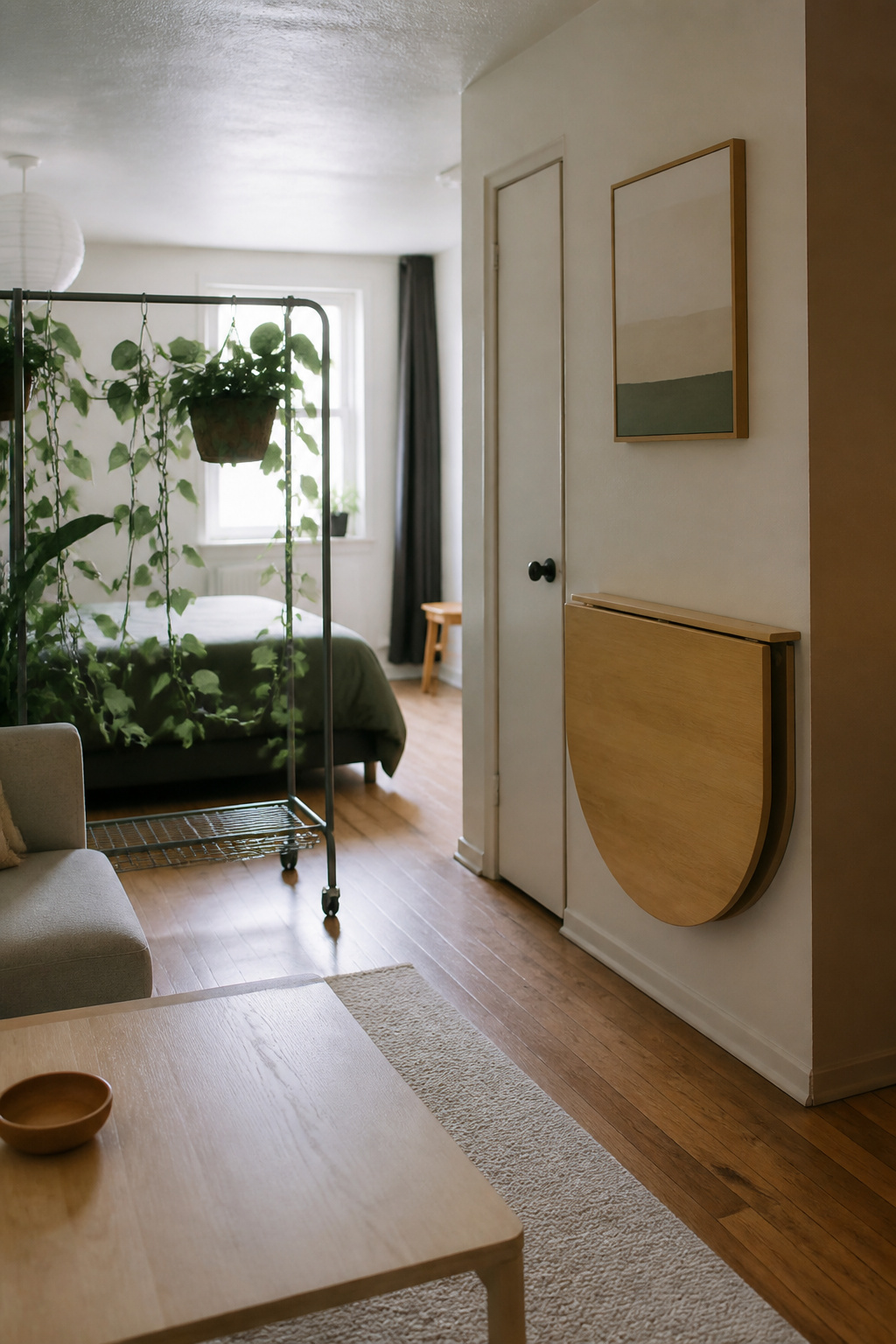
The folding table I kept behind my bedroom door cost about forty dollars secondhand and ate up zero floor space when I wasn’t eating at it. That gap, the six or eight inches most doors leave against a wall, is dead territory in a lot of rentals. A 30-inch drop-leaf table, legs folded, slid right in there and came out only for meals or laptop work. Murphy beds came up in every search, but the installed units started around two thousand dollars and required drilling into studs I didn’t own. For a one-year lease, the math never worked.
Vertical storage gets the press, yet the real squeeze in a studio is horizontal: the bed claims the room’s center and everything else orbits it. I found the cleanest fix was defining zones with what I already had. A clothes rail on casters, trailing pothos wrapped around the crossbar, split my sleeping area from the living space without a single screw in the ceiling. It moved in ten minutes when I wanted the room open again, and the plants did more to soften the boundary than any fabric screen.
Chairs that slot fully under a table save roughly the footprint of four extra seats. My neighbor measured her existing table, found a secondhand pair two inches lower in seat height, and gained back the walking lane her old set had blocked. The measurement matters more than the match.
Scent as a Layer of Decor

Scent finishes a room the way baseboard trim finishes a wall: you notice when it is missing. Vanilla, sandalwood, cedar, and lavender all ground a space, pulling it from staged to lived-in. Candles are the obvious route, and for a year I burned a soy number that tunneled so badly the wick drowned in its own wax pool. Half the jar went to waste before I gave up. Reed diffusers looked safer until my cat batted one off a side table, oil seeping into the grout for a week. Now I run a small electric diffuser with those same cedar and lavender notes, set on a shelf above tail height. The scent moves through the apartment without the fire hazard or the spill risk, and the refills cost less than replacing a tunneled candle every month.
Frequently Asked Questions
How can I maximize my apartment space?
Choose furniture that serves more than one purpose. A sofa bed doubles a living space as a guest room, a storage ottoman hides blankets and remotes, and a lift-top coffee table swallows board games while rising to sofa level for working dinner. One piece earning back floor space beats a separate room you do not have.
What are some renter-friendly decor ideas?
Use peel-and-stick wallpaper, Command strips for art, plug-in sconces, and multi-functional furniture. The real test is what your lease says about alterations; photograph every wall on move-in day so timestamped shots prove a scuff predated your gallery wall. Peel-and-stick products work only when the surface underneath is sound, so check old paint before you buy.
How do I decorate a small apartment without cluttering it?
Use vertical wall space, layer soft textures like cotton throws or linen blankets, and choose furniture that multitasks. A clothes rail on casters trailing pothos can split a studio sleeping area from living space without a single screw, and moves in ten minutes when you want the room open again.