Modern planters are vessels updated for current use: clean geometry, engineered materials, and sizing meant for apartments as much as yards. The catch is that "modern" covers everything from a one-dollar terra cotta pot with two coats of paint to a custom-color fiberglass composite built to order with a three-year warranty. Jay Scots ships its premium composite line in twenty colors light enough to carry up three flights alone, which is exactly why they have become the default for anyone moving pots without help.
Large Fiberglass Planters
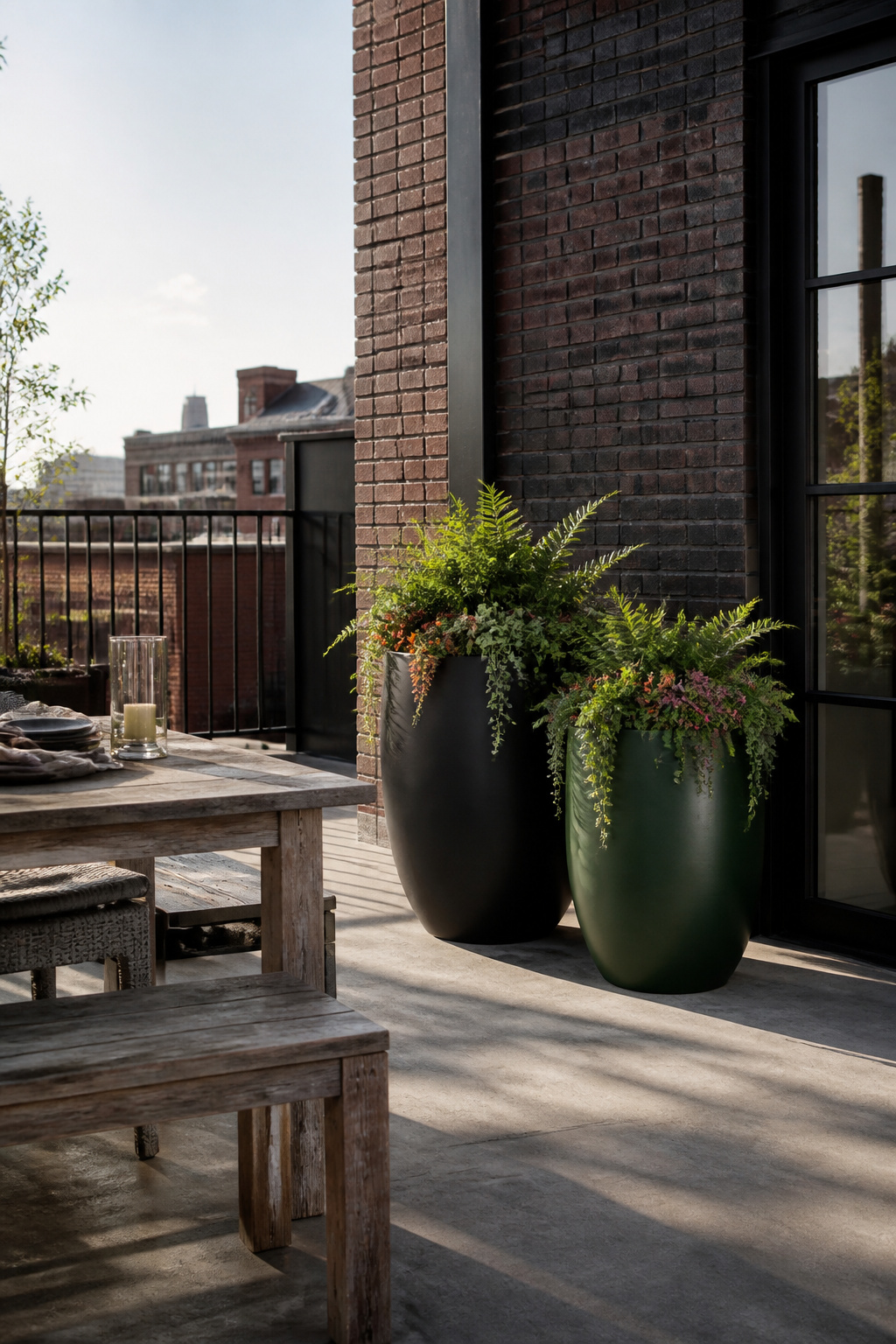
Large fiberglass planters have become the quiet workhorse of modern outdoor design, and after watching a neighbor wrestle a concrete bowl up three flights of stairs, I finally understood why. Premium composite fiberglass weighs a fraction of stone or concrete, yet holds up to UV exposure and freeze-thaw cycles without cracking or fading.
Jay Scotts handcrafts these planters with a 3-year warranty backing the construction, which matters more than it sounds when you’re dropping real money on a vessel meant to last. The material works indoors and out without modification, and the finish options run to 20 colors and textures painted to order. That range is what draws in commercial designers and architects, who need matching sets across hotel lobbies, rooftop bars, and courtyards without the lead times of custom metalwork.
For a weekend project on a few hundred dollars, the entry point sits higher than terra cotta or wood. The payoff is not replacing a cracked pot after one hard winter.
DIY Geometric Planters
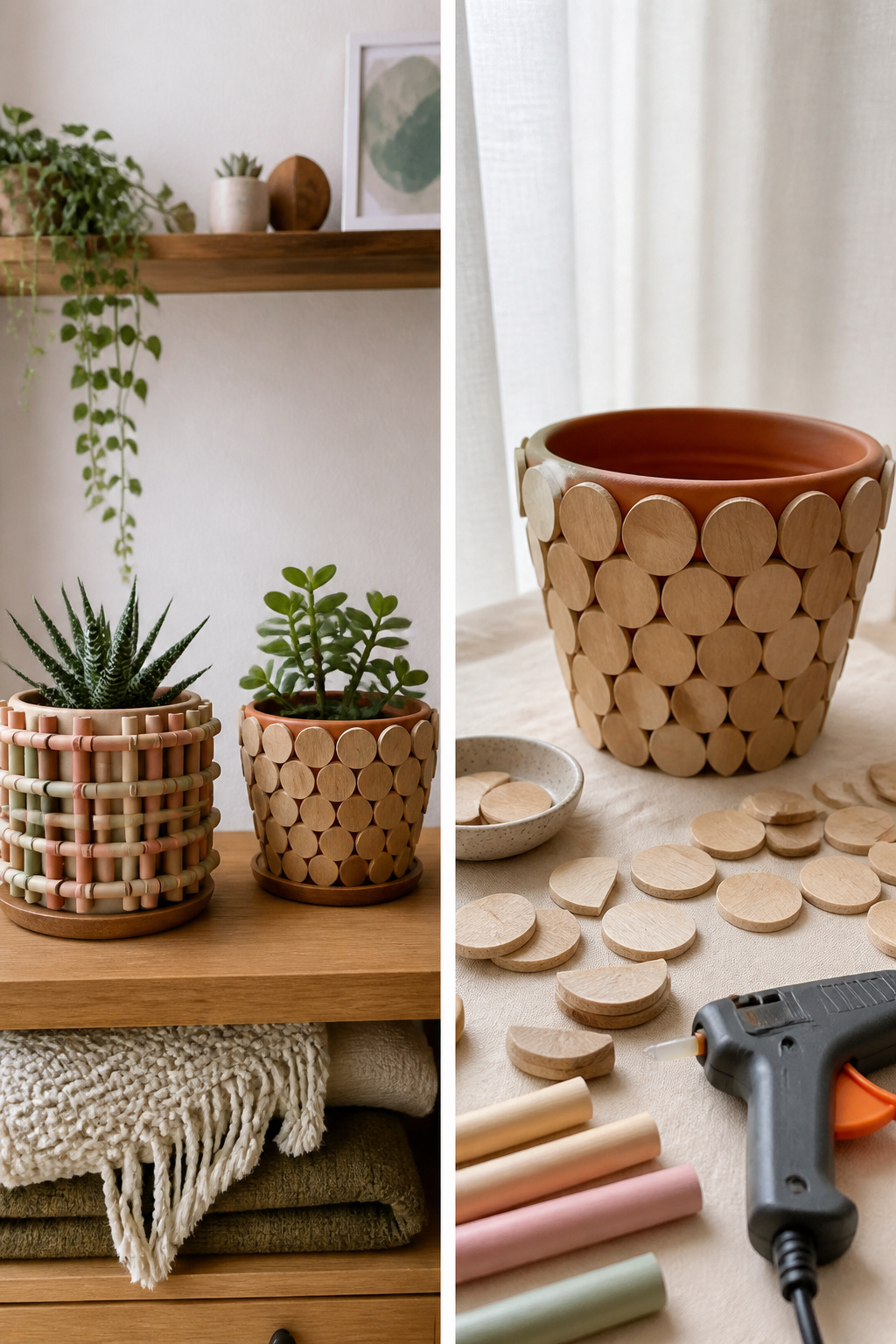
Geometric planters give you the clean lines of modern design without the boutique markup. Ceramic pots work as the base for one style: four wooden dowels at 1/2 inch wide get glued in a grid across the top, turning a simple cylinder into something that reads custom. Paint matters here, and the sources list ten colors that layer well together, from warm pinks like Beloved Pink and Shy Smile into greens like Corn Stalk and Sparkling Brook.
Wood circles build a second version. Fifteen half-round wood circles at 1 inch cover a terra cotta pot in a honeycomb or offset brick pattern, held with Gorilla Clear Glue. The half-round profile catches light and casts tiny shadows that read as texture from across the room.
For orchids specifically, the dowel-grid ceramic works better indoors than the wood-circle terra cotta. The gaps between dowels let air move across the roots, which epiphytes need more than soil-bound plants. The terra cotta-with-circles style still functions indoors, but that pairing suits succulents or anything that tolerates a slower dry-down.
Terra Cotta Planters
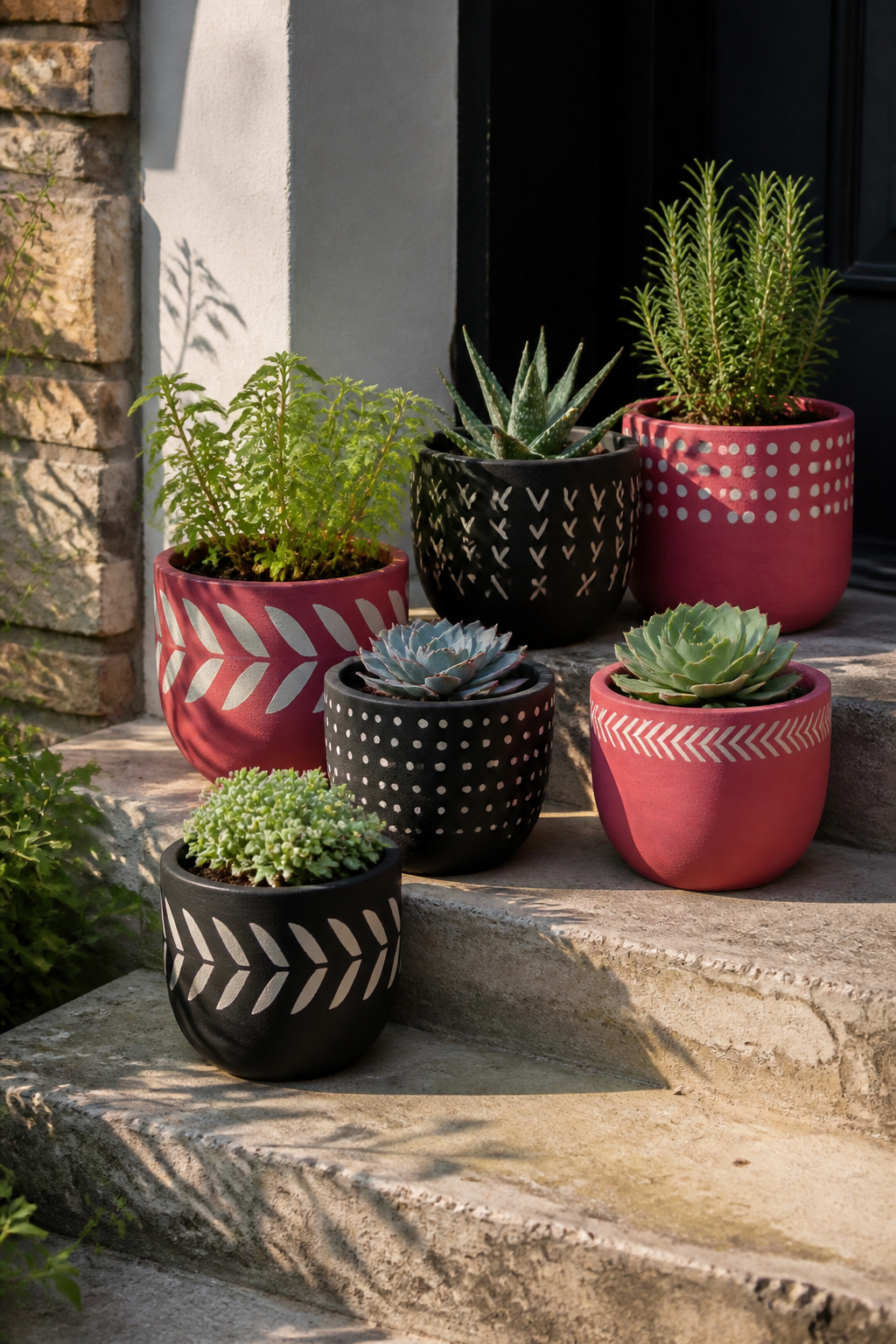
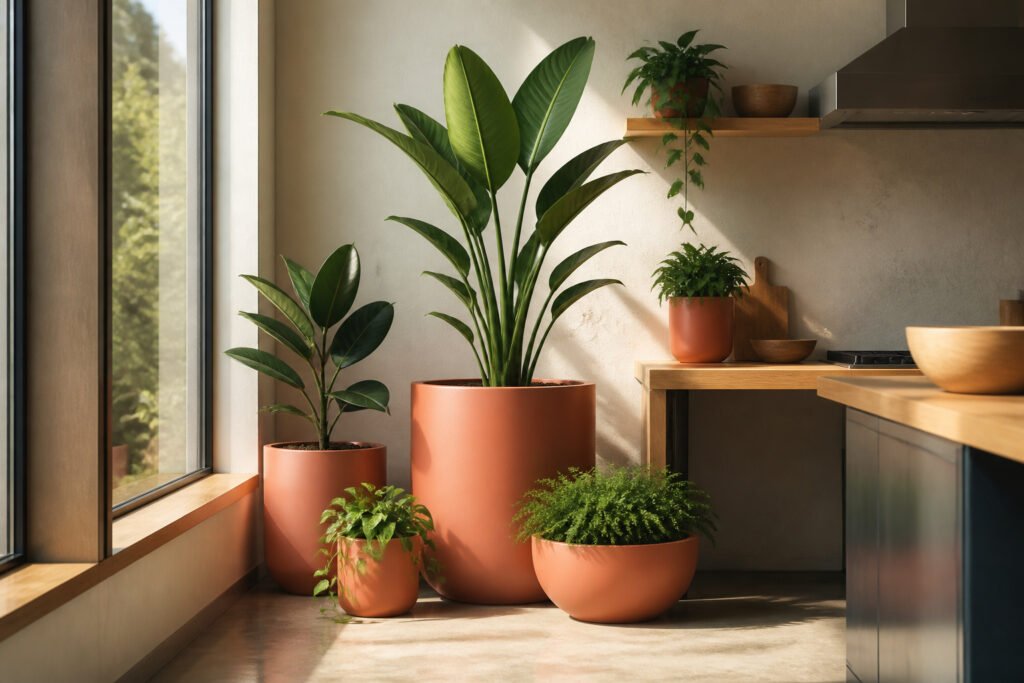
Terra cotta lands in modern design for the same reason it never really left: it costs almost nothing and takes paint without a fight. A basic pot runs about a dollar, which matters when you are filling a patio or staging a rental and need ten of them. The raw clay reads traditional, but two coats of something saturated, like a deep rose or a flat black, pushes it somewhere else entirely.
The trick is in the prep. Glue on a thin strip of split wood around the rim first, let it dry two hours, then paint. That one band of texture breaks up the cylinder just enough that the finished piece stops looking like what grew your grandmother’s geraniums. Faux plants work fine in these, though a handful of real dirt packed around the base sells the illusion better than moss or stones.
Weight is the real limit. Terra cotta cracks if it freezes while wet, so it stays seasonal in cold zones, and a tall specimen in a twelve-inch pot becomes immovable fast. For a weekend project under a hundred dollars, though, a painted terra cotta cluster on a concrete stoop or balcony railing gives you the most visual change for the least cash.
Stacked Wood Ring Planters
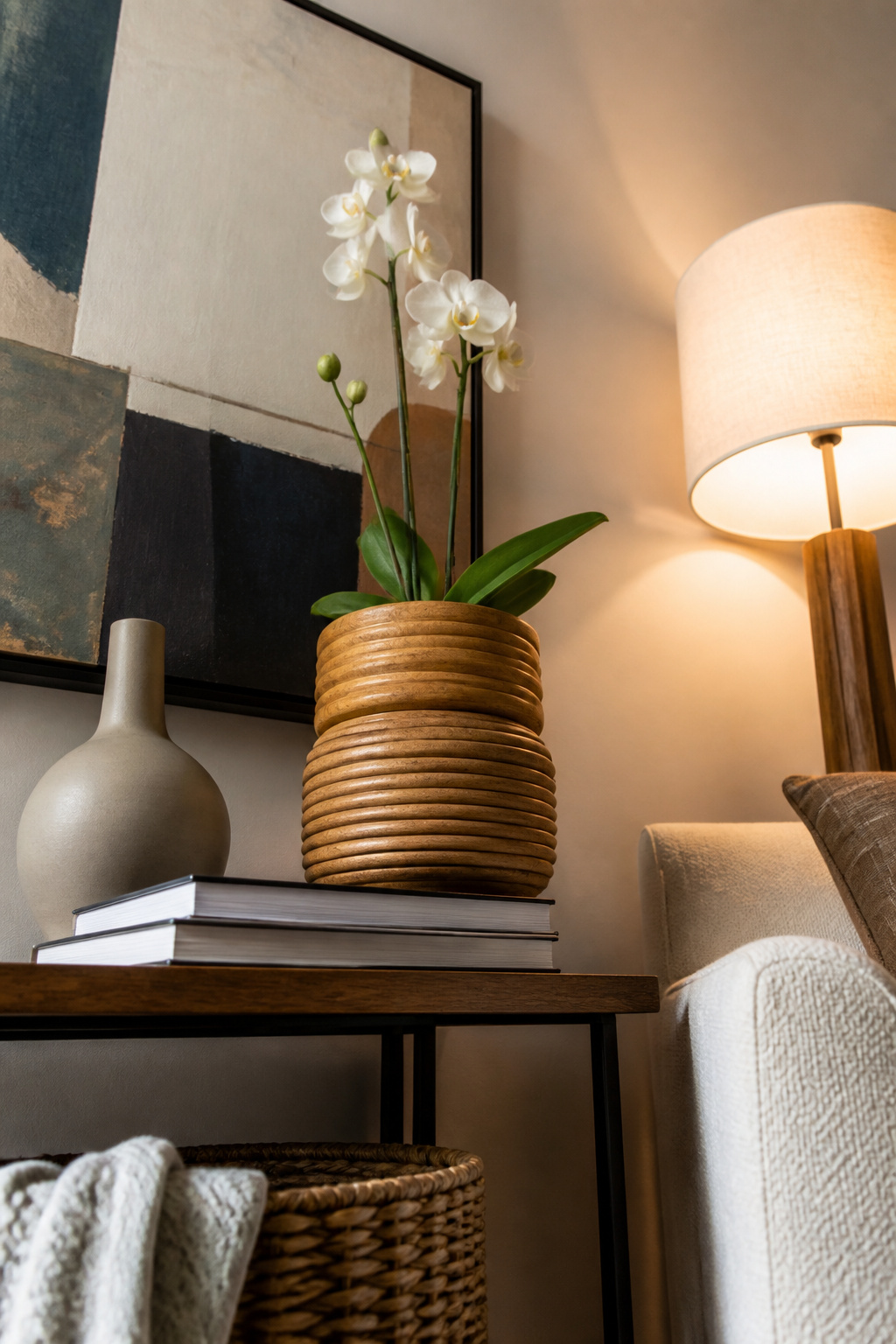
Stacked wood ring planters borrow a trick from boutique retailers and adapt it to weekend hands. The build starts with wood rings in two sizes, 3.7 inches and 2.7 inches across, stacked and bonded with clear glue until they form a hollow column. A plastic nursery pot slips inside the finished shell, so the wood never sits wet against soil. That gap between decorative exterior and functional liner is what keeps the rings from warping after the second watering.
Orchids work especially well here. Their roots want air and drainage, and the narrow stacked rings echo the vertical habit of a blooming spike without crowding it. The stepped silhouette reads as modern without going fully geometric, and the natural grain softens what might otherwise feel too constructed on a shelf or side table. Paint is optional; the source build used a color called Mirador, but raw wood left outdoors will silver unevenly, which is its own look if you expect it.
For renters, the payoff is weight. Empty, these move easily. Filled, they stay put without the floor load of ceramic or concrete. The trade is durability: glued joints in end grain take abuse poorly, so this is a planter you carry inside before hard frost rather than gamble on year-round exposure.
Materials That Hold Up
Fiberglass planters, especially the premium composite type, have become the default for anyone moving pots around alone. Jay Scotts builds them to order in twenty colors, and the material itself is UV-stable, weather-resistant, and light enough that one person can shift a substantial planter without a hand truck. That same lightness makes them less ideal in high wind unless you ballast them properly.
Ceramic and terra cotta share a fragility problem. Drop a fired clay pot on concrete and you have shards; freeze-thaw cycles crack the unglazed ones from the inside. Terra cotta’s porous wall does let roots breathe, which matters for succulents and citrus, but the water that passes through stains decks and rots wood rails underneath. Indoors, the weight keeps tall specimens from tipping; outdoors, the weight makes them miserable to reposition.
Wood planters warm up a modern space in a way resin never quite manages. The catch is maintenance: even cedar and redwood eventually check and split without regular sealing, and direct soil contact accelerates rot. Lining the box with plastic buys a few seasons, not a decade.
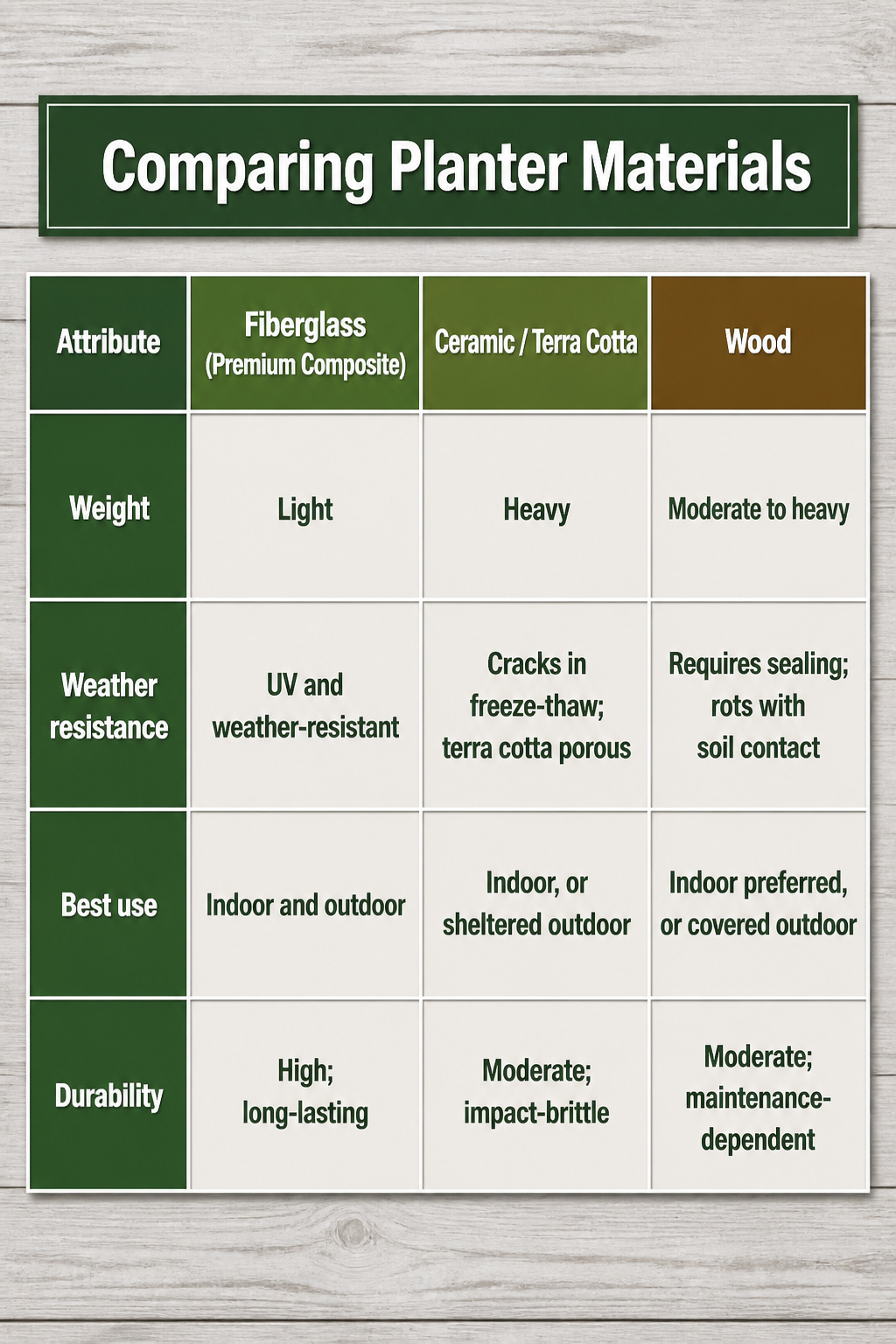
| Attribute | Fiberglass (Premium Composite) | Ceramic / Terra Cotta | Wood |
|---|---|---|---|
| Weight | Light | Heavy | Moderate to heavy |
| Weather resistance | UV and weather-resistant | Cracks in freeze-thaw; terra cotta porous | Requires sealing; rots with soil contact |
| Best use | Indoor and outdoor | Indoor, or sheltered outdoor | Indoor preferred, or covered outdoor |
| Durability | High; long-lasting | Moderate; impact-brittle | Moderate; maintenance-dependent |
For a renter who might relocate the same planter from a patio to a living room, fiberglass is the only material that does not force a choice between the two. Order it in a color that works for both spaces and you skip the second purchase entirely.
Color and Size Customization
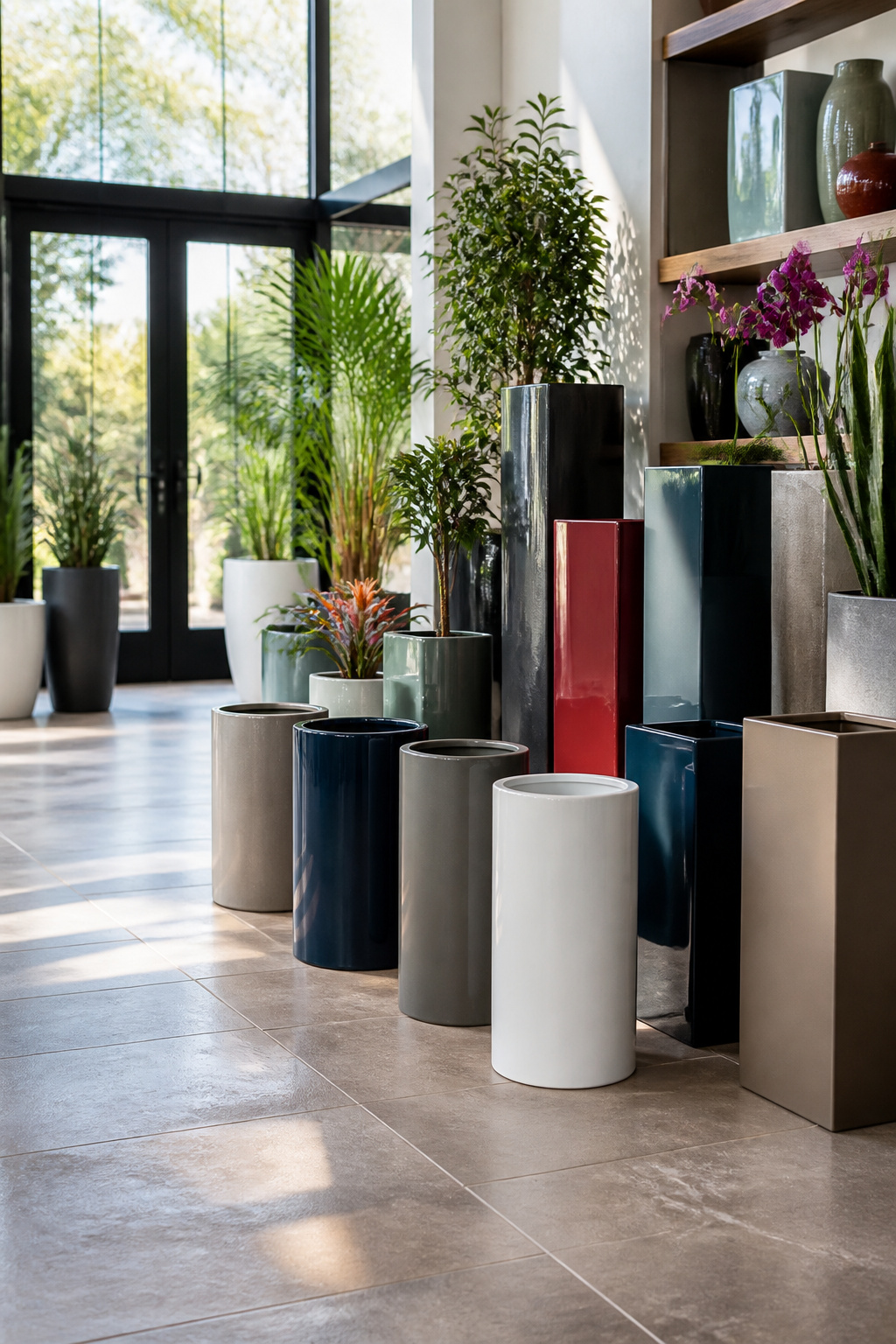
Manufacturers like Planters Etc let you pick from 20 colors and finishes before you settle on a size or shape, which means a modern planter can match a door paint or a patio tile instead of fighting it. Tall planters over 32 inches sit alongside rectangular ones in the same palette, so the choice is less about what is available and more about what your space actually needs.
That factory route protects the investment with a 3-year warranty, but it is not the only way to get a custom look. DIY builds trade the color catalog for freedom in geometry: three-sided, hexagonal, or whatever angle fits a corner the store never measured. A weekend of cutting and sealing lets you set the dimensions to the inch and the color to the exact leftover exterior paint from last summer’s fence. The catch is time and the learning curve. A manufactured planter arrives ready to plant; a DIY version arrives when you finish it, and the finish is only as good as your patience with a brush.
Indoor and Outdoor Placement
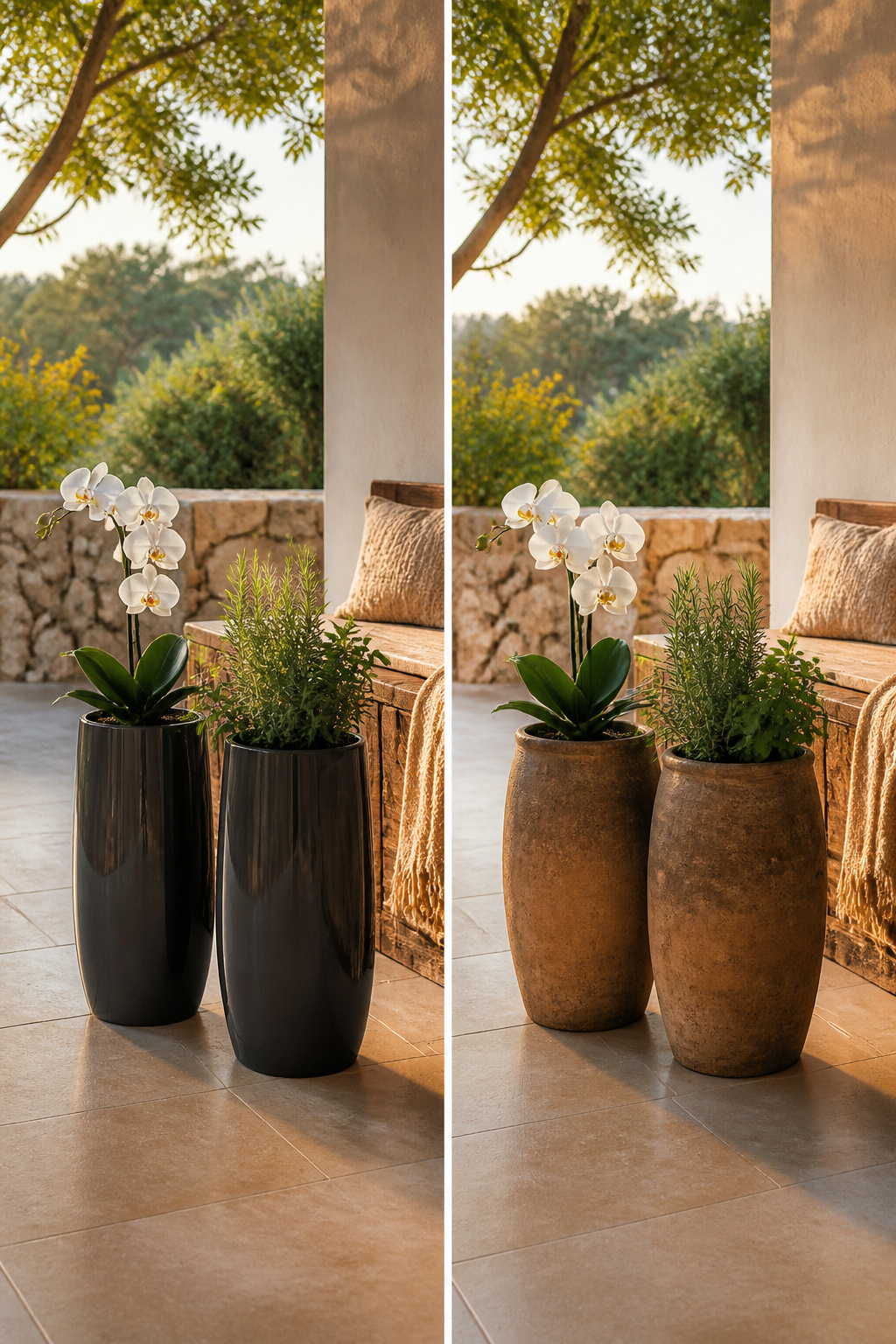
Fiberglass planters handle both settings without much fuss. The composite material is lightweight enough to move through a doorway solo, and the weather resistance means a pot that spent summer on the patio can winter indoors without cracking.
Drainage decides more than material. Outdoor planters need holes that actually empty, not decorative indentations, or roots sit in water after rain. Indoor use demands a matching saucer, or you’ll trade root rot for floor damage.
Orchids in modern indoor planters need particular care. Water once weekly to avoid root rot, and use a water meter to check soil moisture before you pour. The ideal temperature range runs 60–75 degrees Fahrenheit. Without drainage holes, that orchid is living in a swamp no matter how stylish the pot looks.
Terra cotta breathes, which helps dry-loving herbs outdoors but means faster water loss on a hot balcony. Indoors, that same porosity raises humidity slightly around the plant, sometimes useful, sometimes mold-adjacent.
Geometric and wood planters each have limits I would not push past dark-stained cedar for outdoor wood, and geometry with sharp interior angles makes repotting a fight.
Frequently Asked Questions
What materials are modern planters made of?
Premium composite fiberglass is the standout material for modern planters, weighing far less than stone or concrete while holding up to UV exposure and freeze-thaw cycles without cracking. Ceramic, terra cotta, and wood each have their own roles: terra cotta costs almost nothing and takes paint well, wood warms up a space but needs maintenance, and ceramic offers clean lines but shares terra cotta’s brittleness.
Can I customize the color of my planter?
Yes. Jay Scotts builds premium composite fiberglass planters to order in 20 colors and finishes, so you can match a door paint, patio tile, or corporate palette exactly. Custom colors are also available upon request by contacting the manufacturer directly.
How long does it take to receive my order?
Once your order is placed, the manufacturer will provide an estimated delivery date. Shipping is included on all orders.
How do you take care of orchids in modern planters?
Water orchids once weekly; more water leads to root rot. Check soil moisture with a water meter before pouring, keep temperatures between 60 and 75 degrees Fahrenheit, and always use a pot with drainage holes. The dowel-grid ceramic style works better than sealed designs because gaps between dowels let air reach epiphyte roots.
Are modern planters suitable for commercial use?
Yes. Designers and architects use fiberglass planters in hotels, rooftop bars, courtyards, and lobbies worldwide. The 20-color catalog and matching sets across sizes and shapes let commercial projects maintain consistency without the lead times of custom metalwork. A 3-year warranty backs the construction.