Garden inspiration in 2026 runs from a $35 strand of fence lights to a full outdoor kitchen that swallowed a summer budget and three weekends before it became espaliered apple trees. What decides which idea is yours is how much of the work you want to do yourself, and whether you can wait a year before touching the soil at all. The light that looks perfect in March may disappear behind an oak leafing out in June; the author learned that after planting tomatoes in what seemed like a sunny corner.
1. Vertical Gardens
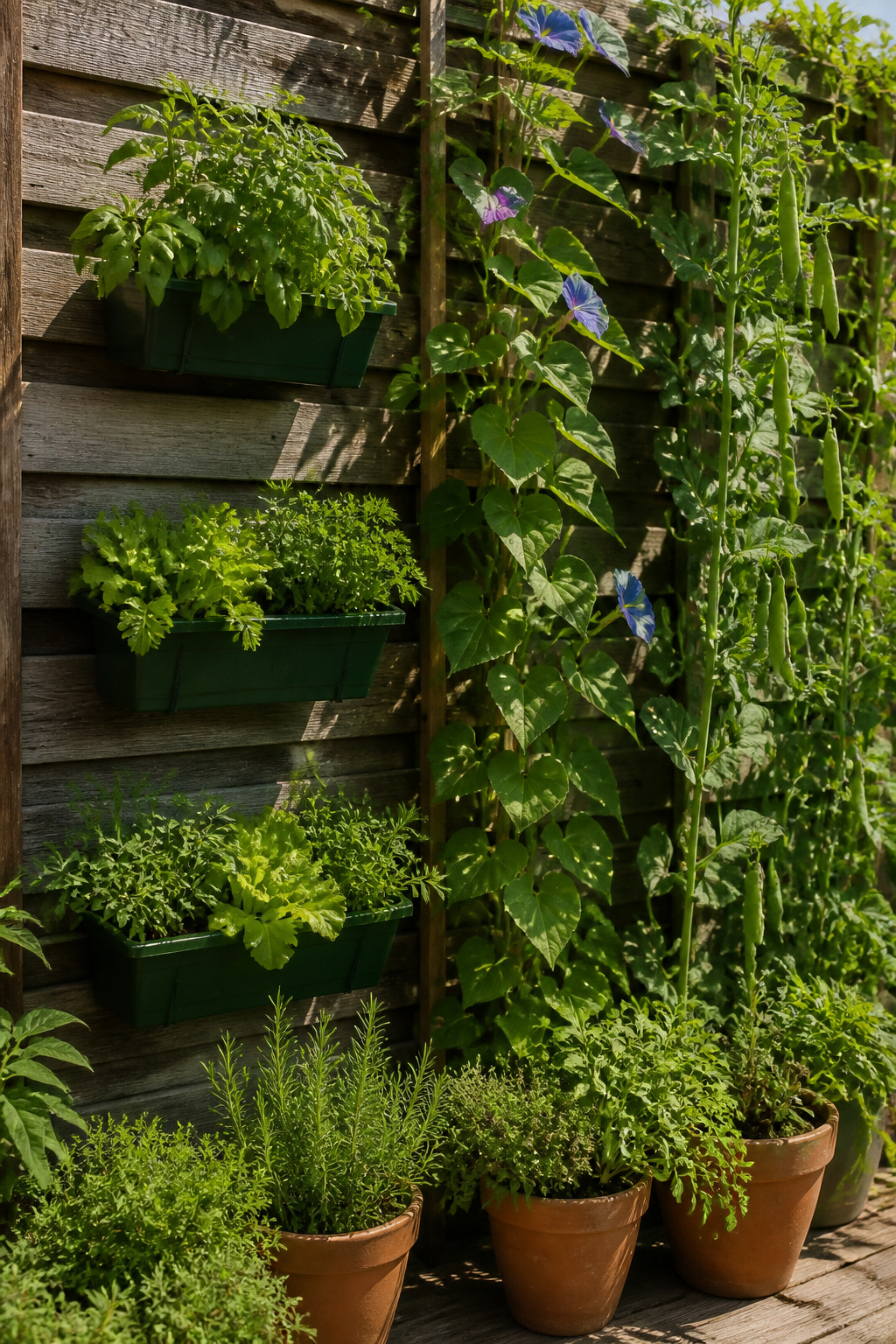
Wall-mounted planters, trellises, and hanging pots turn a fence or bare wall into growing space without a single shovel stroke. For renters who cannot dig, this is the closest thing to a garden bed: screw a panel trellis into existing siding or lean it against a railing, and vining plants do the rest. Pole beans, cucumbers, and sugar snap peas climb the same structure that morning glories or clematis would, so edible and ornamental plants share one vertical surface instead of competing for square footage.
A green wall kit fixed to a fence can hold herbs, salad leaves, and bedding plants in pockets that read as color blocks from across the yard. The mix works practically too. Marigolds tucked between tomatoes on a trellis help keep pests away, a pairing that costs nothing extra and saves the leaves you actually want to eat. When the lease ends, the planters come down and the holes are spackle-sized, if there are any at all.
2. Edible Gardens
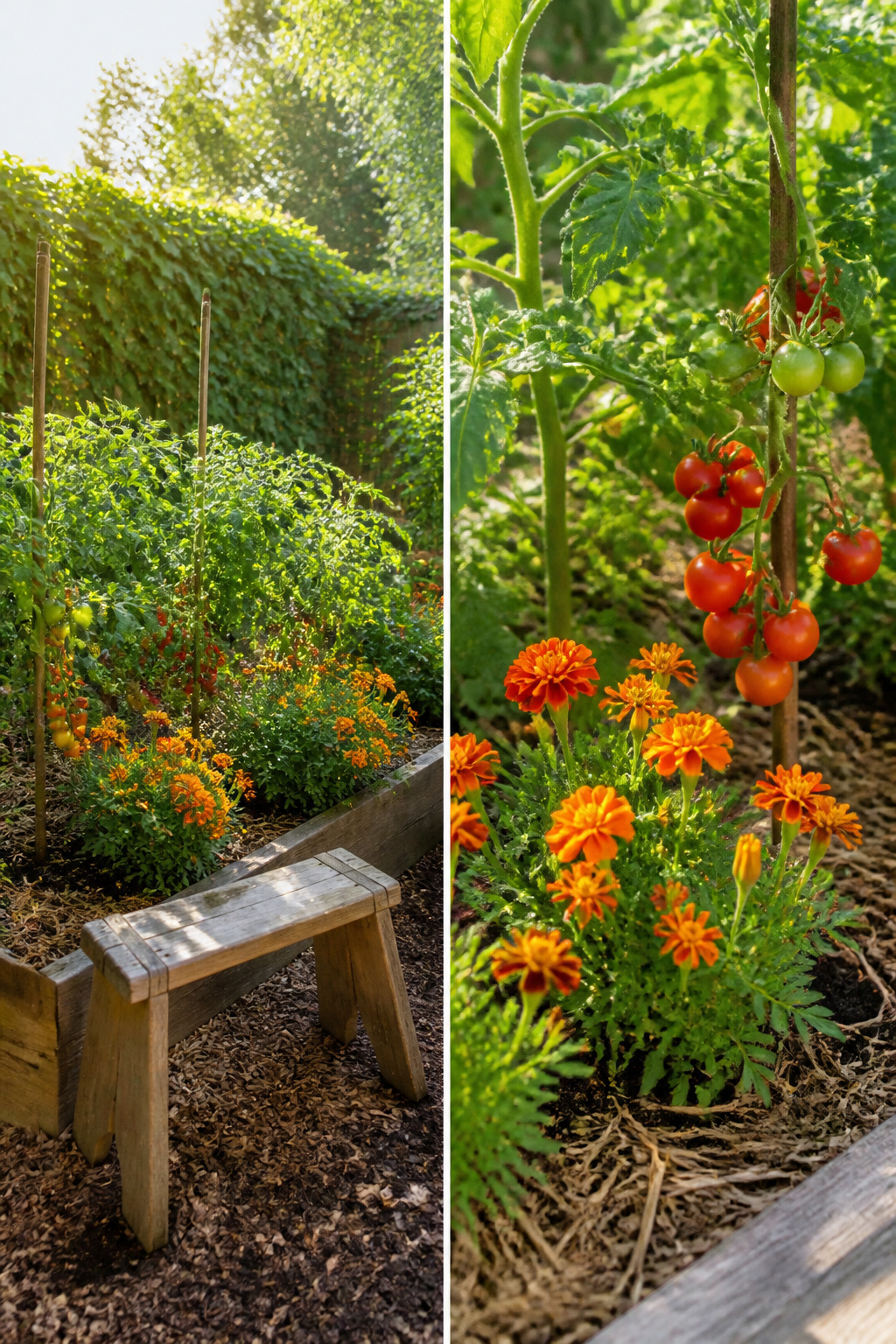
Mixing vegetables, fruits, and herbs with ornamental flowers turns a plain food patch into something you actually want to look at from the kitchen window. The French potager style does exactly this: edible and ornamental plants share one bed, so the space reads as a garden first and a grocery source second.
The practical payoff is companion planting. Marigolds planted among tomatoes repel certain pests while the tomatoes put on fruit, and the combination looks intentional rather than like a vegetable plot that gave up. Most edibles need about six hours of direct sun daily to produce well, so a south- or west-facing spot matters more than fussy spacing charts.
I tried basil threaded through a row of zinnias one summer, figuring both liked heat and the zinnias would draw pollinators. The basil grew flat and leggy, shaded by zinnia foliage that got bushier than expected. Tomatoes with marigolds at the corners is the combination I’d repeat; the height difference works, and the marigolds stay manageable without stealing light. A sunny bed with that pairing and a mulch layer over the soil handles most of a two-person salad habit through August with no more maintenance than deadheading spent blooms.
3. Themed Gardens
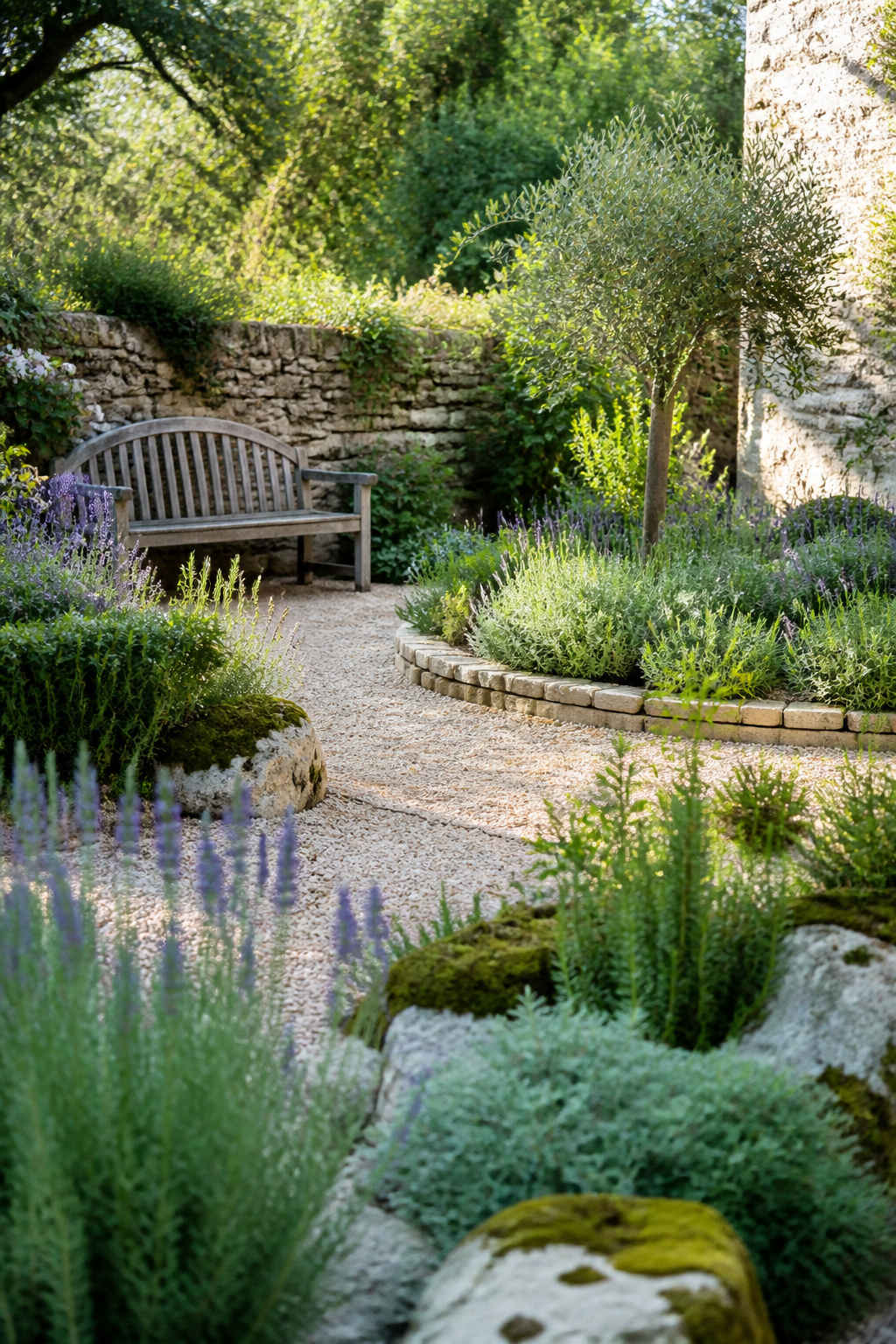
A theme cuts the paralysis faster than any other decision I made starting out. Walking into a nursery with a Japanese zen garden in mind, I knew I needed raked gravel, a few mossy stones, and something evergreen to hold structure through winter. The list wrote itself. No drifting toward bright annuals that would scream against the quiet.
Mediterranean oases work the same way. Lavender, rosemary, and silvery-leaved plants that shrug off dry spells once established. The look comes from the palette, not from expensive hardscaping.
What surprised me was the hours this saved. My first border took three weekends of second-guessing; the themed corner took an afternoon of confident buying. A narrow plant list beats a wide one when your budget is a few hundred dollars and your timeline is Saturday morning to Sunday evening. The constraint is the feature.
4. Small Space Solutions
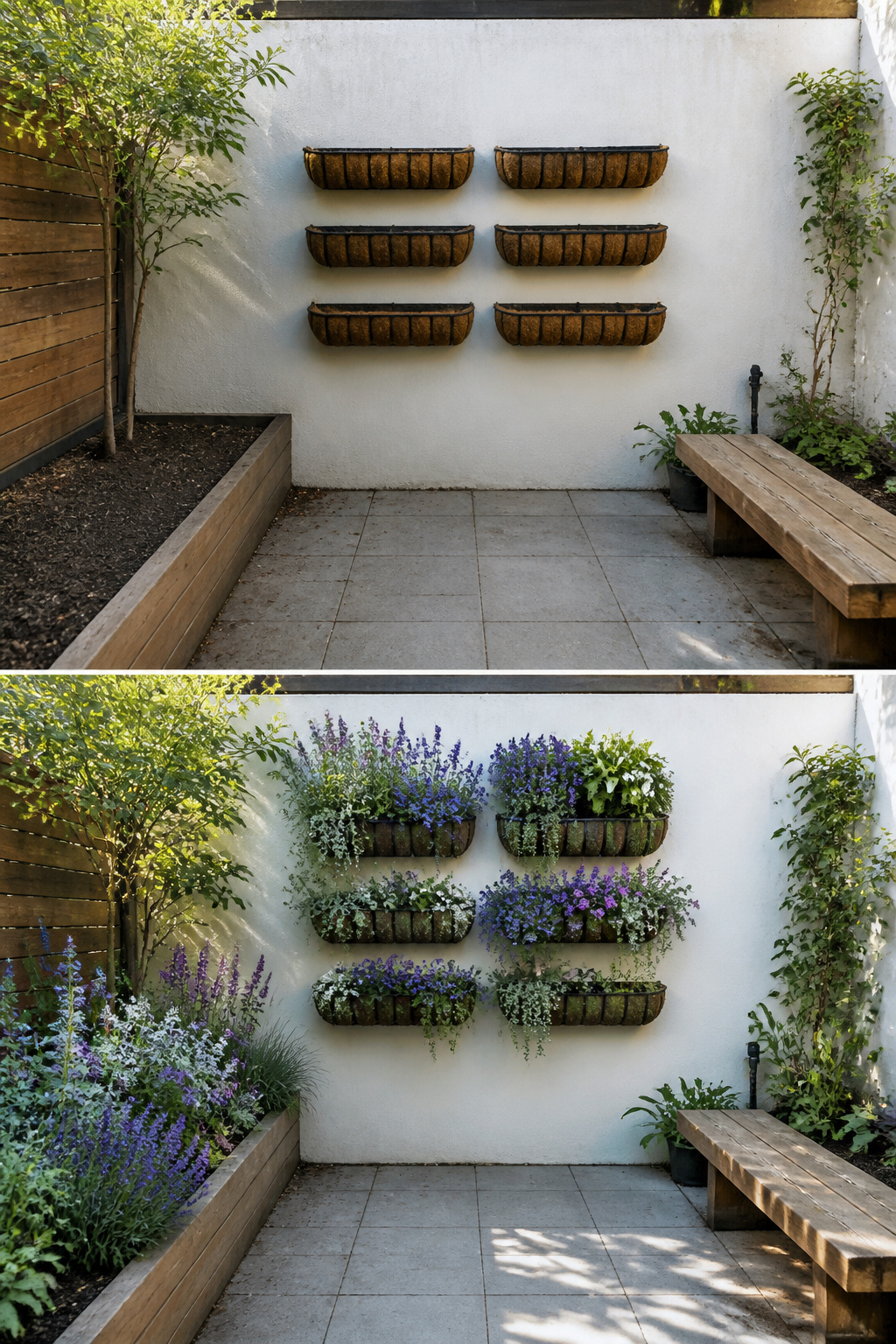
Vertical space changes everything in a small yard. Wall-mounted planters, trellises, and hanging pots along a fence or patio wall draw the eye upward and free the ground for walking or seating. I have watched a single green wall make a narrow strip behind a garage feel like a room rather than a corridor.
Raised beds help too, not just for drainage but for the clean edges they create. A defined rectangle of soil reads as intentional and contained, which keeps the surrounding area feeling open. The trick is limiting the planting palette to cooler colors: blues and purples recede visually, so the space behind them seems to stretch further away than it really is. Hot reds and oranges do the opposite, jumping forward and shrinking the yard.
Dividing the garden with a screen, a low hedge, or even a change in bed height adds another layer. When you cannot see the whole space at once, you walk through it differently, and the memory of what is around the corner makes the square footage feel larger than the tape measure says.
5. Water Features
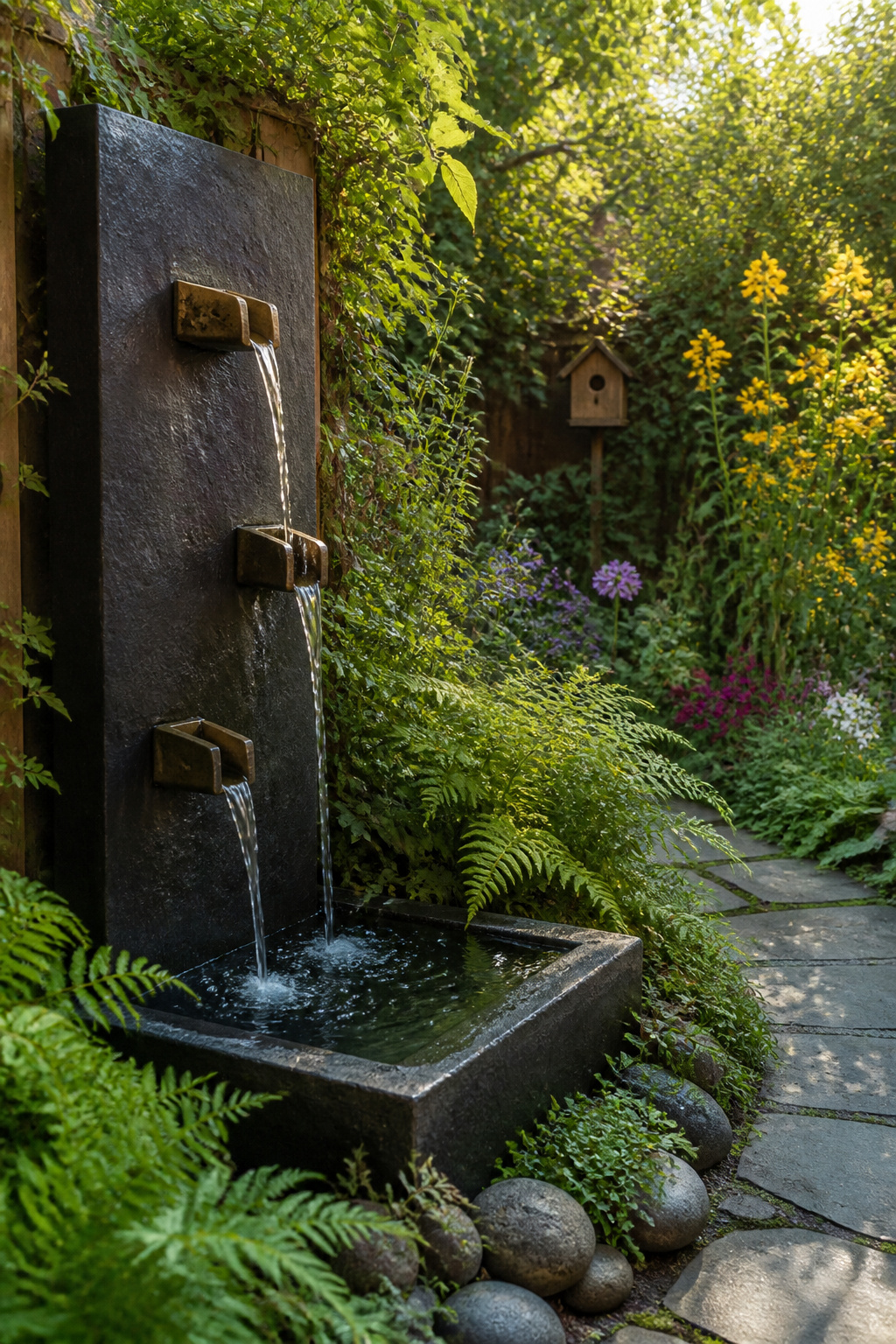
Water does more to settle a garden than almost anything else. A small fountain tucked against a fence or wall runs on a recirculating pump that plugs into any outdoor outlet, and the whole assembly sets down in an afternoon without trenching for plumbing. After six months, the real maintenance is algae film on the basin, which a scrub brush and white vinegar handle in ten minutes, and the occasional top-off when evaporation runs low. Hard water leaves scale on the pump intake; pulling it apart takes five minutes and saves the motor from burning out. A pond sounds romantic but the standing water breeds mosquitoes, demands a filter, and in my reading turned into a weekend project that needed weekends all summer. A simple wall fountain or bubbling urn gives the sound and the atmosphere without the biology experiment. Renters can take it with them, and first-home owners can upgrade later if the habit sticks.
6. Lighting Ideas
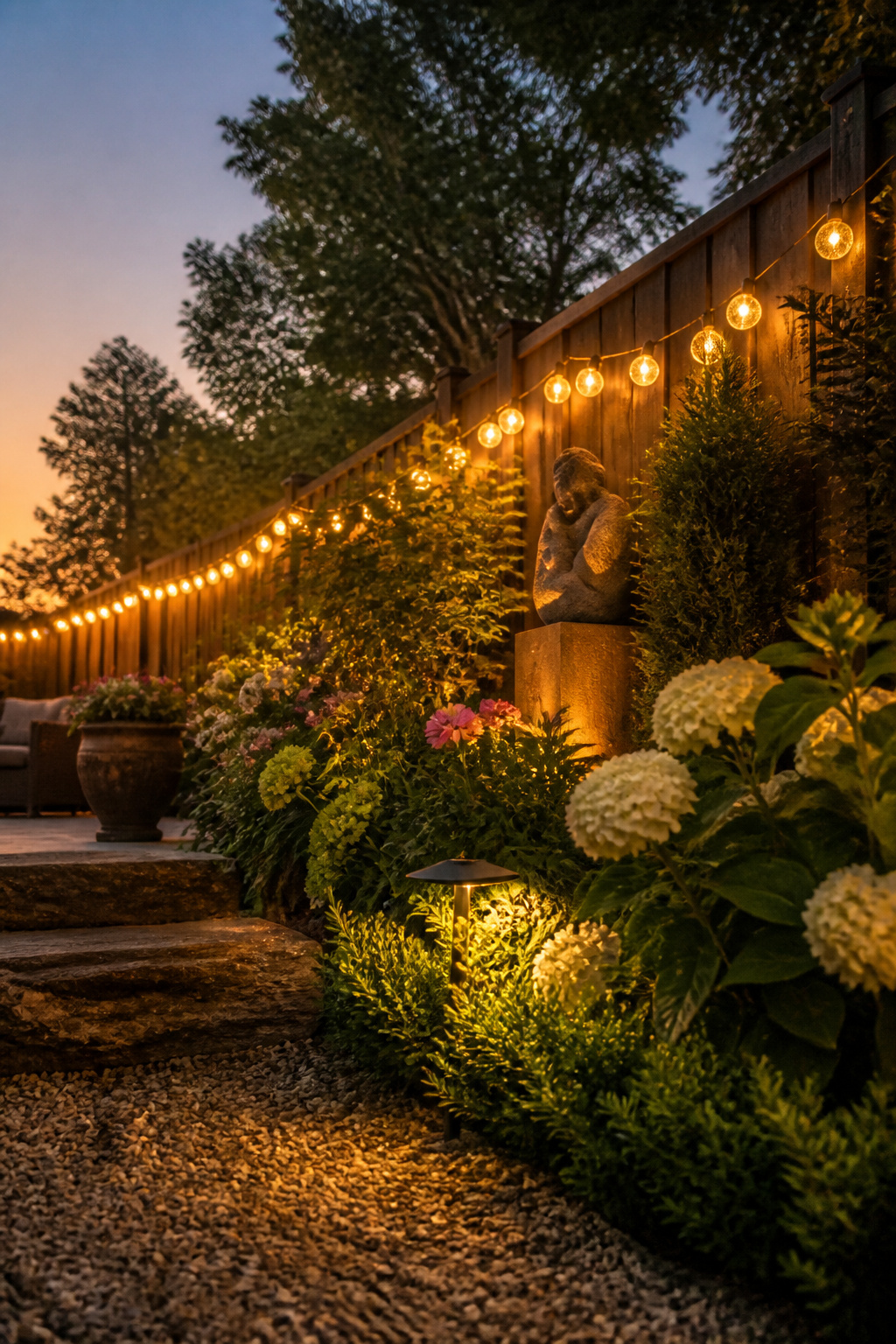
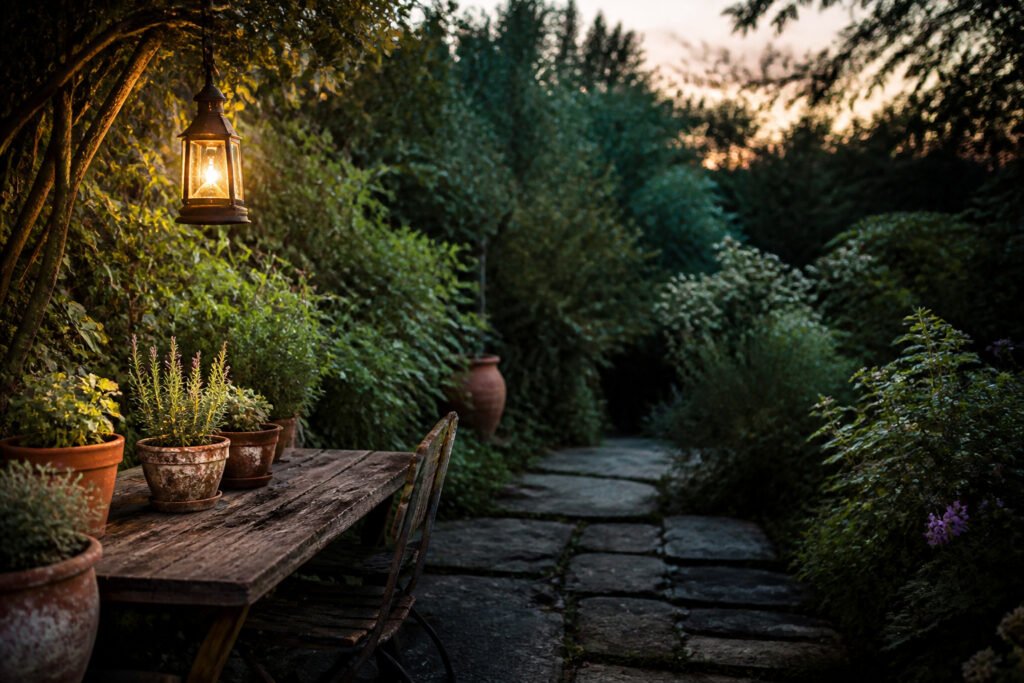
String lights give the quickest return for the least work. Last season I ran a set of waterproof globe lights along the back fence, the kind with a warm yellow glow rather than bright white, and the difference between 7 p.m. and 8 p.m. out there was the difference between a yard and a room. The solar panel had to sit on the south-facing fence cap, angled to catch unobstructed sun until about 3 p.m.; any shadow from the maple and the lanterns died by nine.
Cost ran about $35 for a 25-foot strand. Solar-powered spotlights for the ground would have added another $20–$40, but the fence lights alone handled the ambient layer, and for a weekend project that is the layer that matters. Stick to yellow-toned bulbs if moths and early-rising birds use your garden; the cooler whites scatter them.
7. Native Plant Gardens
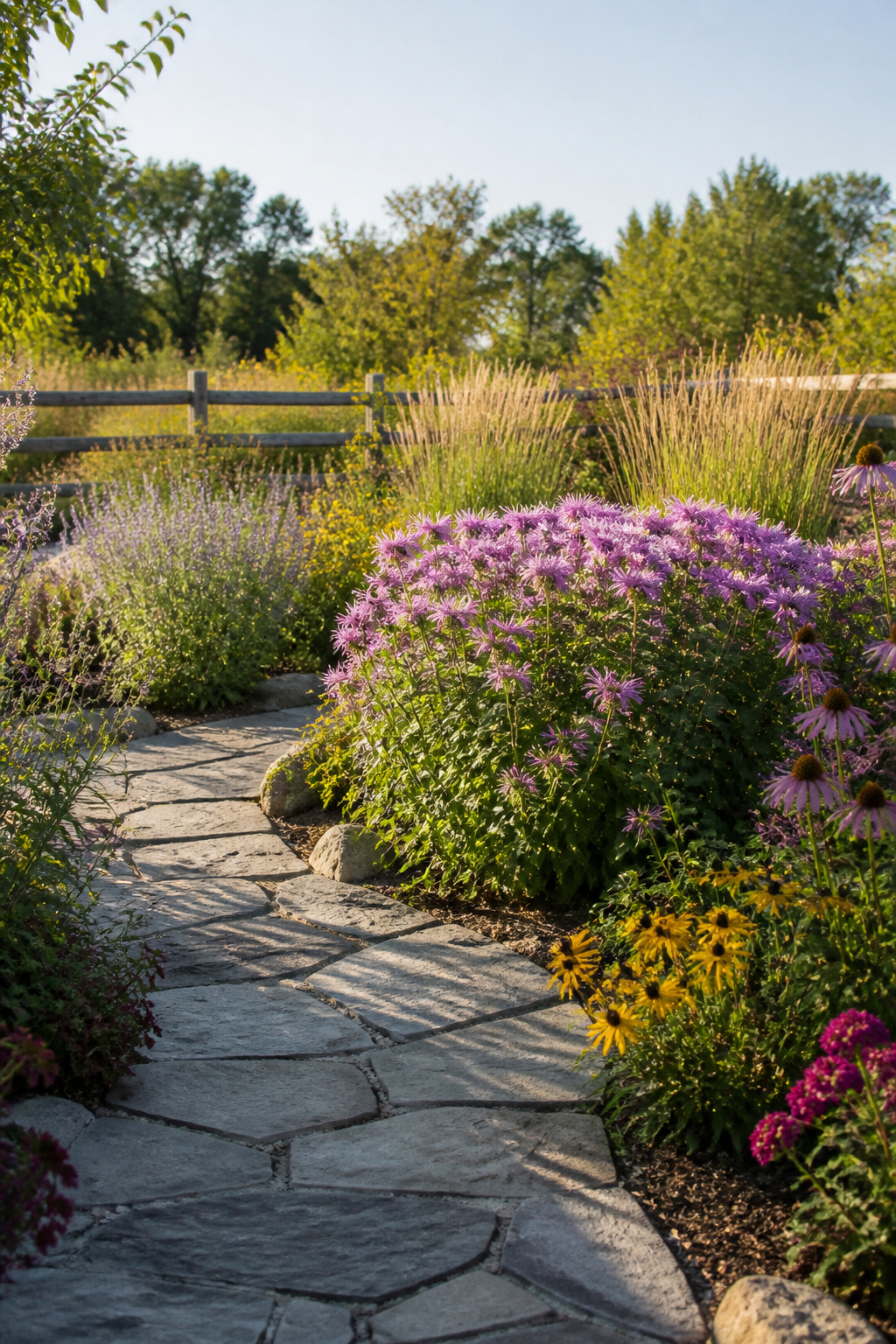
A native plant garden starts with the simple bet that what grew in your area before lawn culture arrived already knows how to live there. Less water, fewer pests, and no wrestling with soil the plant never wanted are the returns on that bet. I came to it slowly, after watching a bed of imported perennials wilt through one July too many while the wild bergamot I had ignored along the fence line kept its color and drew a steady traffic of bumblebees. That bergamot, Monarda fistulosa, was my first deliberate native planting. The bees arrived within days, but the monarchs I had hoped for never showed; the milkweed I added the next season fixed that, but the bergamot alone was not the single-plant pollinator buffet I had imagined. Native gardening asks for patience and some reading, not just good intentions.
8. Outdoor Living Areas
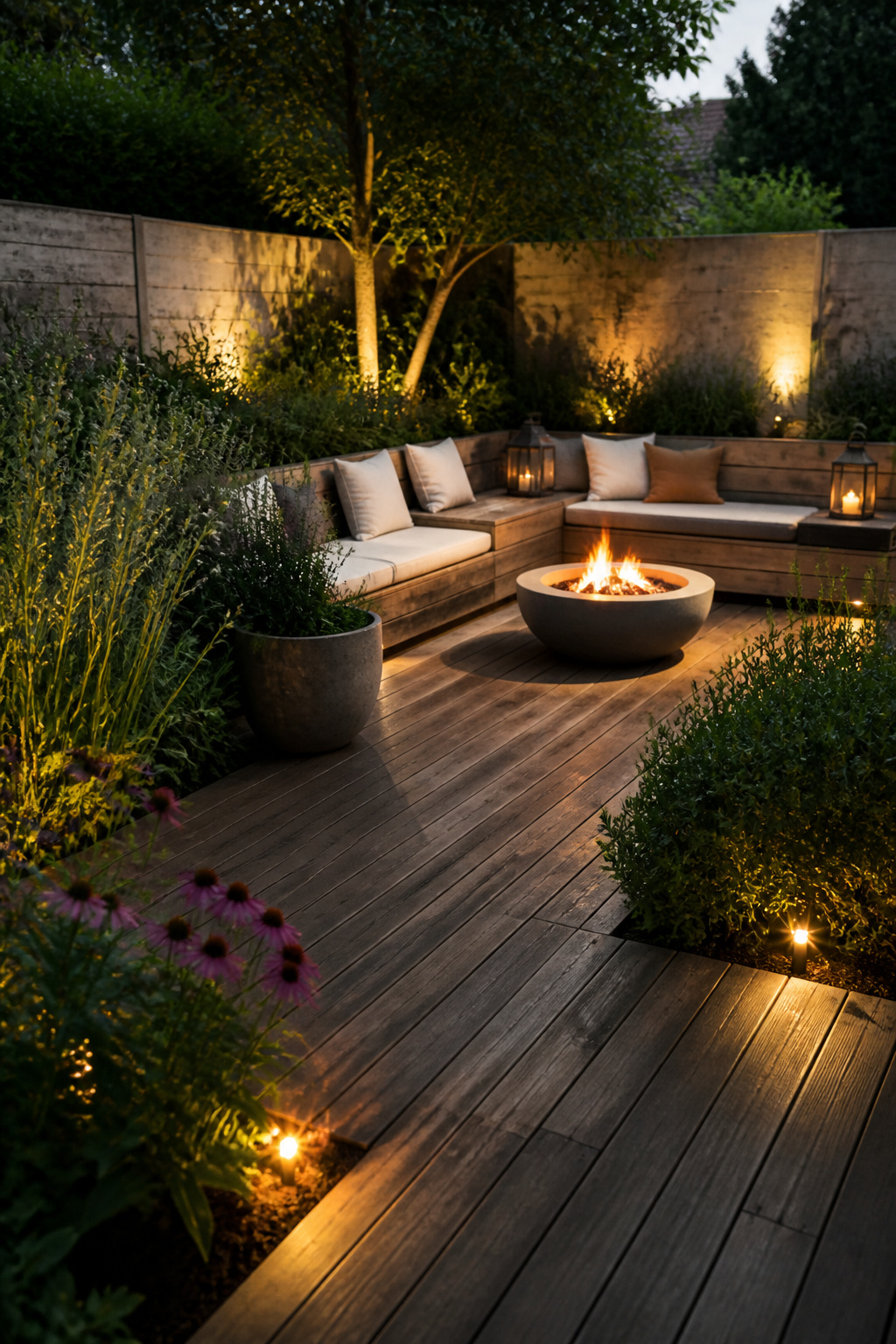
A patio or deck only earns its keep if you actually sit on it. I learned that the year I poured a twelve-by-sixteen concrete slab and then realized I had no shade, no seating plan, and basically baked out there through July. Gravel pathways between beds help, but for real garden living you need a defined spot to stop working and start enjoying.
Built-in seating against a boundary wall saves the space a freestanding set eats up, and in a small yard that matters more than the Pinterest look of a centered dining table. A corner bench with storage underneath doubles as the place you stash cushions and hoses. Fire pits work best when the seating wraps them; the heat reaches everyone, and the conversation actually flows instead of everyone staring in one direction.
Bigger borders around your seating area make the whole garden feel larger than it is. Generous planting depth, even at the expense of some lawn or paving, gives you that enclosed, almost room-like quality. Tiny beds lined up like soldiers just emphasize how small the space is.
I skipped the deck that year and went back to concrete with a pergola overhead. The mistake was treating the surface as the project instead of the experience.
9. Container Gardening
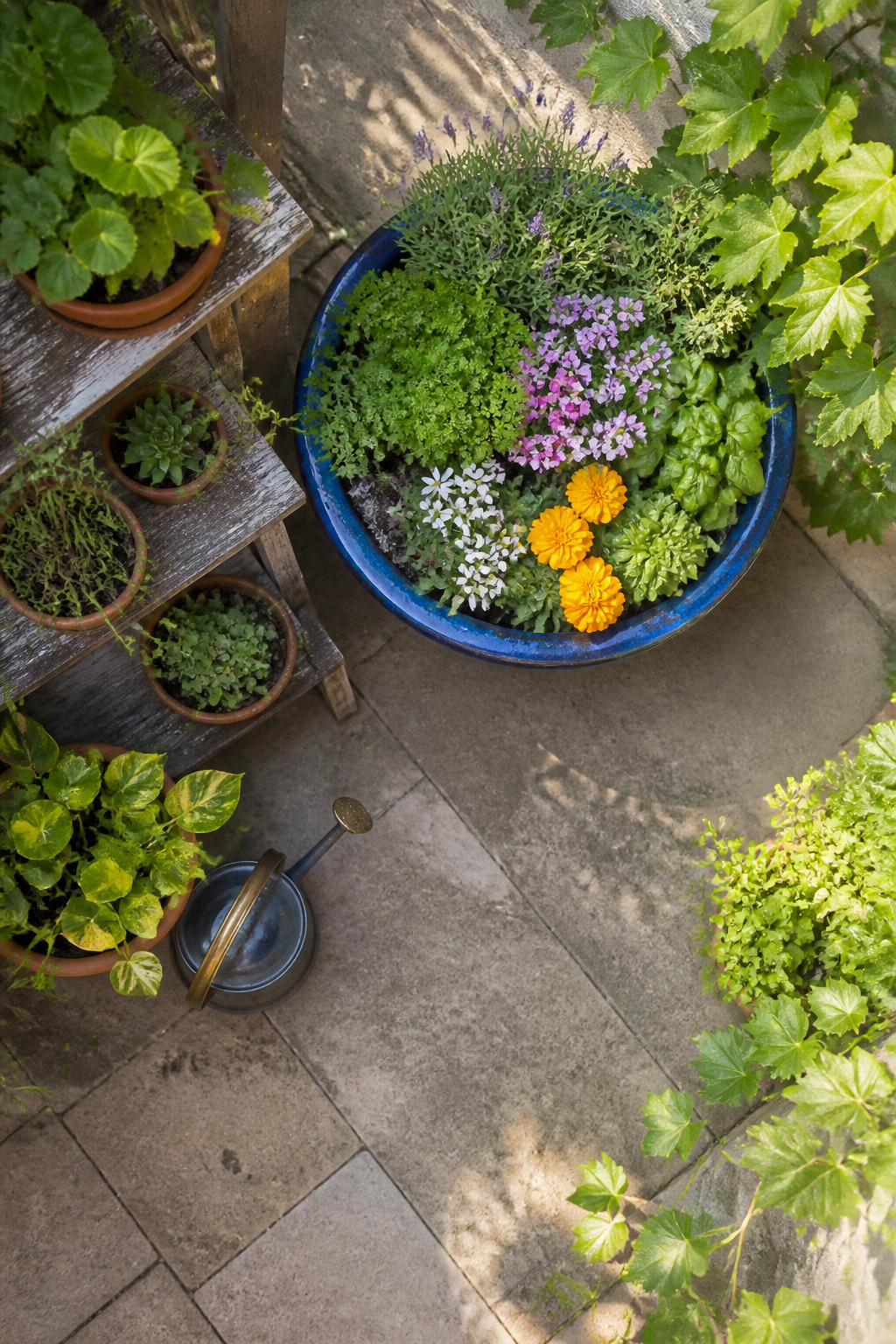
A single large container beats a cluster of small pots for impact on a rental patio. I learned that the hard way after three years of rearranging a crowded shelf of 6-inch terra-cotta pots that dried out at different rates and always looked half-empty. A 14-inch glazed ceramic pot changed the routine entirely. The glaze cut evaporation enough that I watered every three days instead of daily, and the mass of soil buffered temperature swings that had fried roots in thinner plastic. The one that outgrew it fastest was a determinate tomato started as a nursery six-pack; by August the root ball had cracked the drainage hole and the whole pot tipped in a wind gust. Herbs and compact annuals like phlox stayed manageable all season, but anything with a taproot needs more depth than the shelf-friendly diameters suggest. Wall-mounted planters or a vintage shelf can help organize the smaller stuff if you are working with a narrow balcony, though I would still anchor the shelf itself rather than trust a railing clamp once the soil is wet.
10. Garden Decor
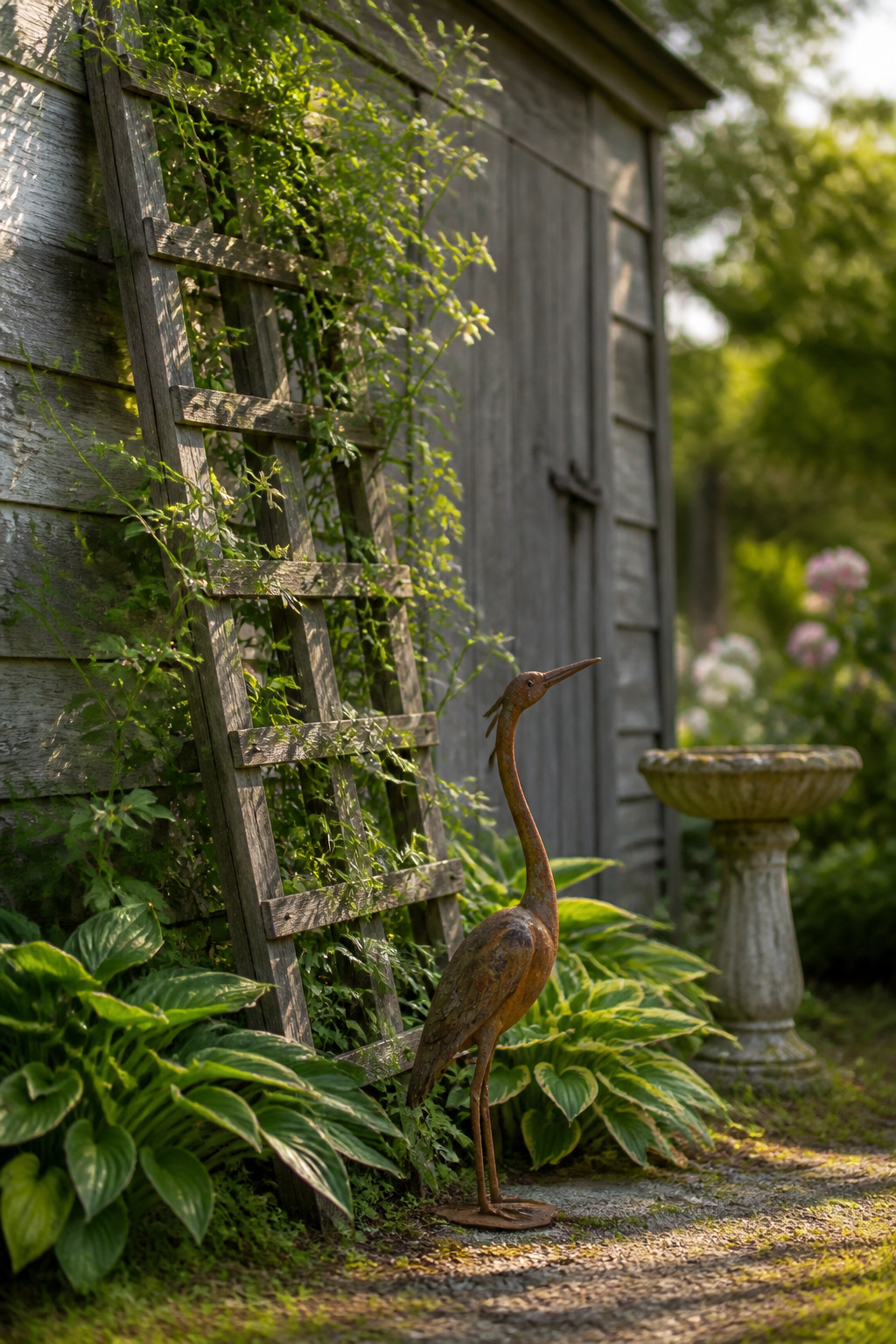
A plain cedar trellis against the garage wall cost me about thirty dollars in lumber and an afternoon with a miter saw. The wood grayed to the color of old barn siding by October, which looked intentional until the bottom rung started bowing from a Clematis montana that grew heavier than I expected. Metal trellises hold up better for anything perennial and do not need restaining, though they cost twice as much and the black ones get hot enough to scorch tendrils in July afternoon sun.
Bird baths work best when you commit to cleaning them. Mine, a concrete bowl on a short pedestal I found at a yard sale for eight dollars, went green with algae in three weeks and sat empty for most of August. The birds came back only after I started dumping and scrubbing it weekly, which is more maintenance than the garden itself.
The piece that actually earned its spot was a rusted steel heron a neighbor was throwing out. Free, roughly four feet tall, and already pocked with oxidation that keeps spreading. After one winter the legs settled an inch into soft ground and it leans slightly left, like it is mid-stride through the hostas. That slight tilt makes it look placed by someone with taste rather than someone who dragged it from a curb.
What I Skip and What Grows Instead
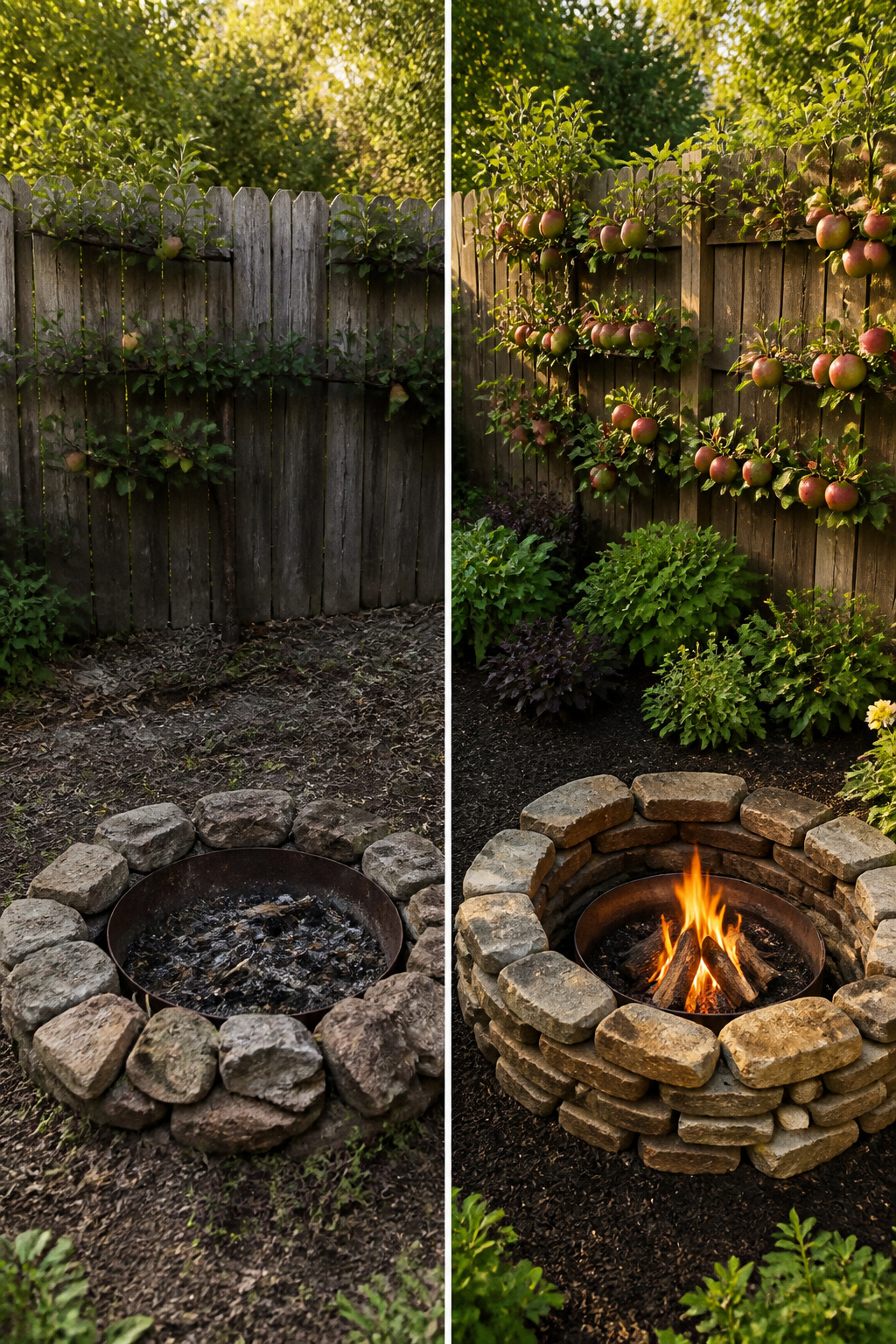
A full outdoor kitchen with built-in appliances ate most of a summer budget and three weekends before I gave up on the masonry. The grill still works fine on a paver pad, and the wall space I had framed for cabinets now holds espaliered apple trees on wire. Five years in, those trees produce more fruit than I have patience to process, and the vertical training keeps the walkway clear where cabinet doors would have swung into traffic.
Fire pit kits with steel rings look finished in the box but tend to rust through in two seasons where I live. I swapped the second one for a ring of dry-stacked fieldstone wide enough to perch on, no mortar, no metal. The stones came from a farmer clearing a fencerow for the price of hauling them off. Moving them took one Saturday with a borrowed trailer and a neighbor’s teenager. The seating is cooler in July, warmer in October, and one rock shifts out of place every spring from frost heave. Fifteen minutes resets it.
How I Order These Projects
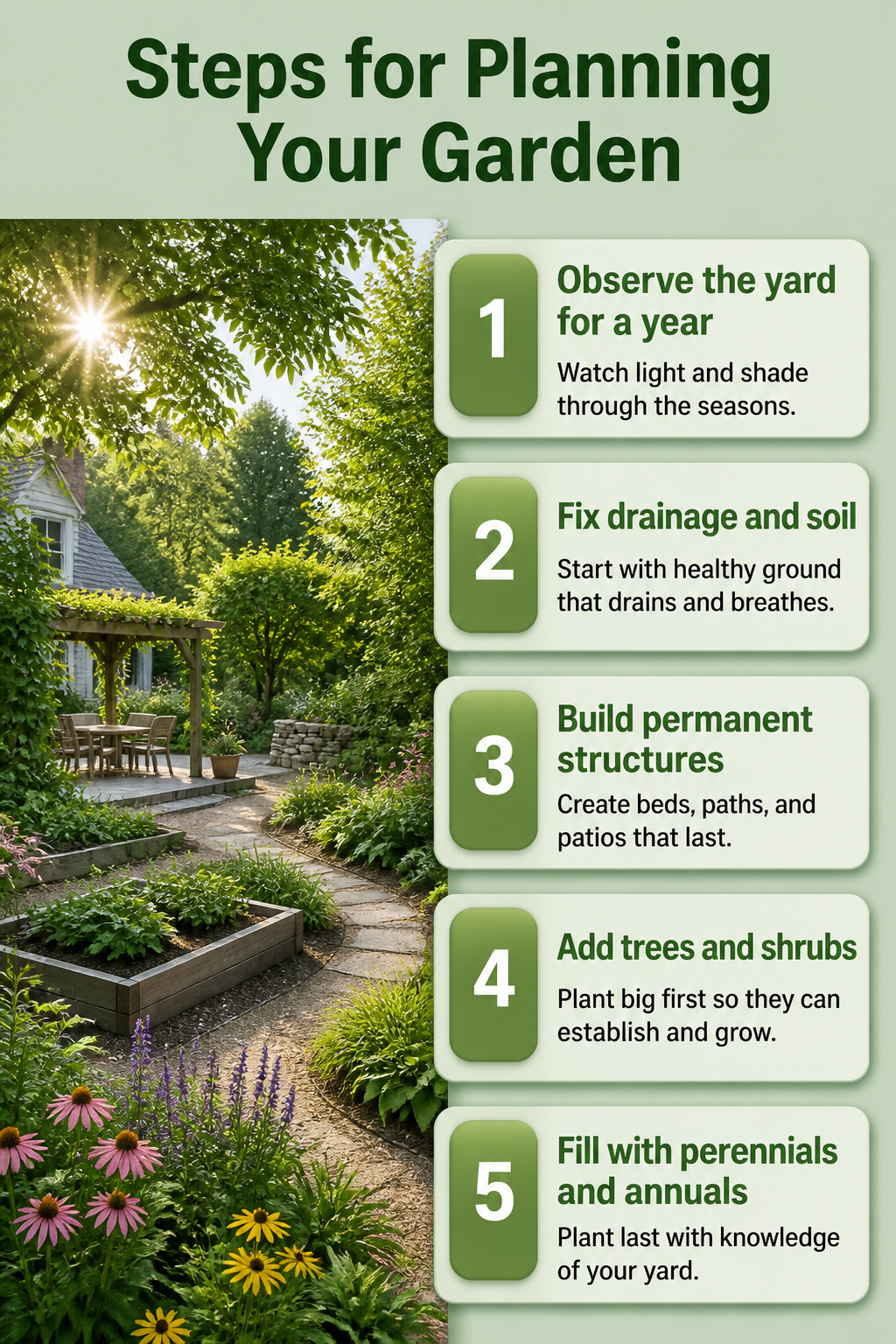
- Watch the yard for a full year before you touch it. Light shifts with the seasons, and the spot that bakes in July might sit in shade by October. I learned this after planting tomatoes in what looked like a sunny corner, only to find the neighbor’s oak leafed out and swallowed the light by June.
- Fix drainage and compacted soil first. Nothing else works on ground that pools for days or stays hard as a driveway. A broadfork rental and a load of compost run about $80 together, and that labor pays back for every plant that follows.
- Build permanent structure next: raised beds, paths, a small patio. These define where you walk so you are not compacting planting areas later.
- Add trees and large shrubs after hardscape, before the perennials. They take years to fill in, and you want them settled before you plant around their mature spread.
- Fill with perennials and annuals last. By then you know where the dry spots stay dry and where the afternoon sun lingers long enough for vegetables to fruit.
Plants for Tight Budgets and Tighter Spaces
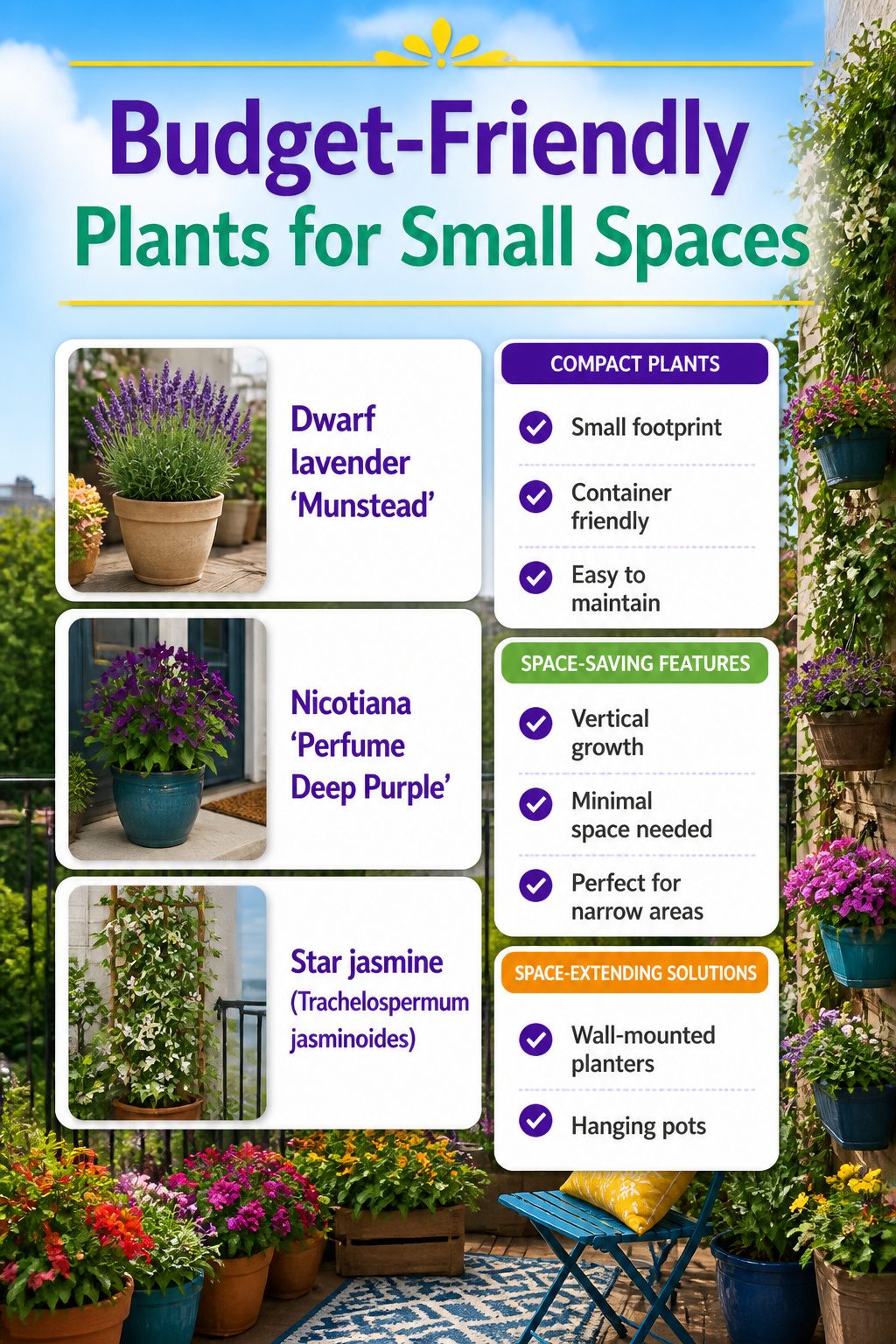
Compact varieties hit harder in small spaces because every leaf sits where you can see it. These three have replaced larger alternatives in my own planning after watching standard sizes outgrow their welcome by year two.
- Dwarf lavender ‘Munstead’ stays under 18 inches and thrives in containers that full-size hedges would crack. The same fragrance, none of the woody legginess that needs annual hacking back.
- Nicotiana ‘Perfume Deep Purple’ delivers evening scent from a 12-inch footprint. Standard nicotiana flops to three feet and sags across pathways; this one stands neat enough for a pot by the door you actually use.
- Star jasmine (Trachelospermum jasminoides) climbs vertical surfaces rather than colonizing ground plane. On a balcony railing or narrow trellis, it gives the effect of a fragrant hedge without the square footage.
Wall-mounted planters and hanging pots extend these further. The jasmine in particular turns a bare fence into the green wall that a border planting would demand ten feet to achieve.
Frequently Asked Questions
What are the best plants for a small garden?
Compact varieties hit harder in small spaces because every leaf sits where you can see it. Dwarf lavender ‘Munstead’ stays under 18 inches and thrives in containers, while Nicotiana ‘Perfume Deep Purple’ delivers evening scent from a 12-inch footprint without flopping across pathways. Star jasmine climbs vertical surfaces to give the effect of a fragrant hedge without demanding ground space.
How can I make my garden look bigger?
Draw the eye upward with wall-mounted planters, trellises, and hanging pots along fences or walls. Limit your planting palette to cooler colors like blues and purples, which recede visually and stretch the space behind them. Divide the garden with screens or changes in bed height so you cannot see everything at once; the memory of what is around the corner adds perceived square footage.
What are some ideas for a themed garden?
A Japanese zen garden needs raked gravel, mossy stones, and something evergreen for winter structure. A Mediterranean oasis relies on lavender, rosemary, and silvery-leaved plants that tolerate dry spells once established. The theme itself narrows your plant list, which saves hours of second-guessing at the nursery and keeps the budget closer to a few hundred dollars.