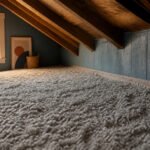

The right home decor idea depends on whether you own the walls or sign a lease. Renters lose out on built-in banquettes and paste wallpaper, but peel-and-stick prints and freestanding benches deliver the same effect without the deposit risk. Even painted floors, which sound permanent, can be done with porch enamel that survives until the next tenant wants the wood bare again.
1. Have a Cohesive Palette
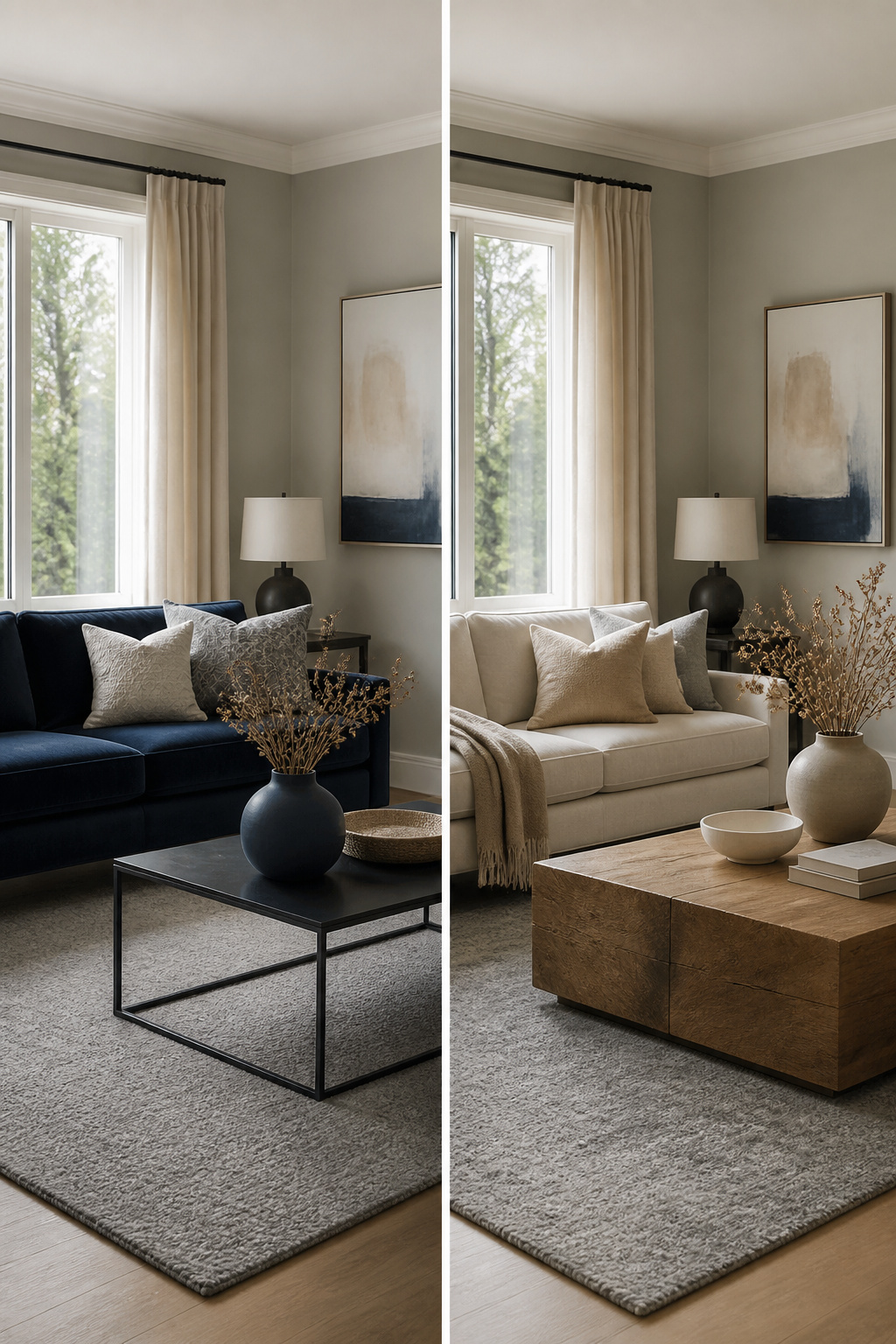
A room feels pulled together when the same two or three colors show up again and again, not when every piece introduces something new. That scattered, bought-over-time look comes from exactly this: a blue lamp, a rust pillow, a green vase, each one fine on its own but competing for attention once they share a shelf. Limiting yourself to a tight palette of two or three core colors stops that fight before it starts. The repetition lets your eye move calmly across the space instead of resetting at every object. I learned this the hard way in my first apartment, where a charcoal sofa, navy chair, and black bookshelf somehow all read as different moods. Picking one neutral and two accents you actually like, then running them through pillows, frames, even book spines, costs nothing extra and takes an afternoon to sort.
2. Mix Natural and Manmade Elements
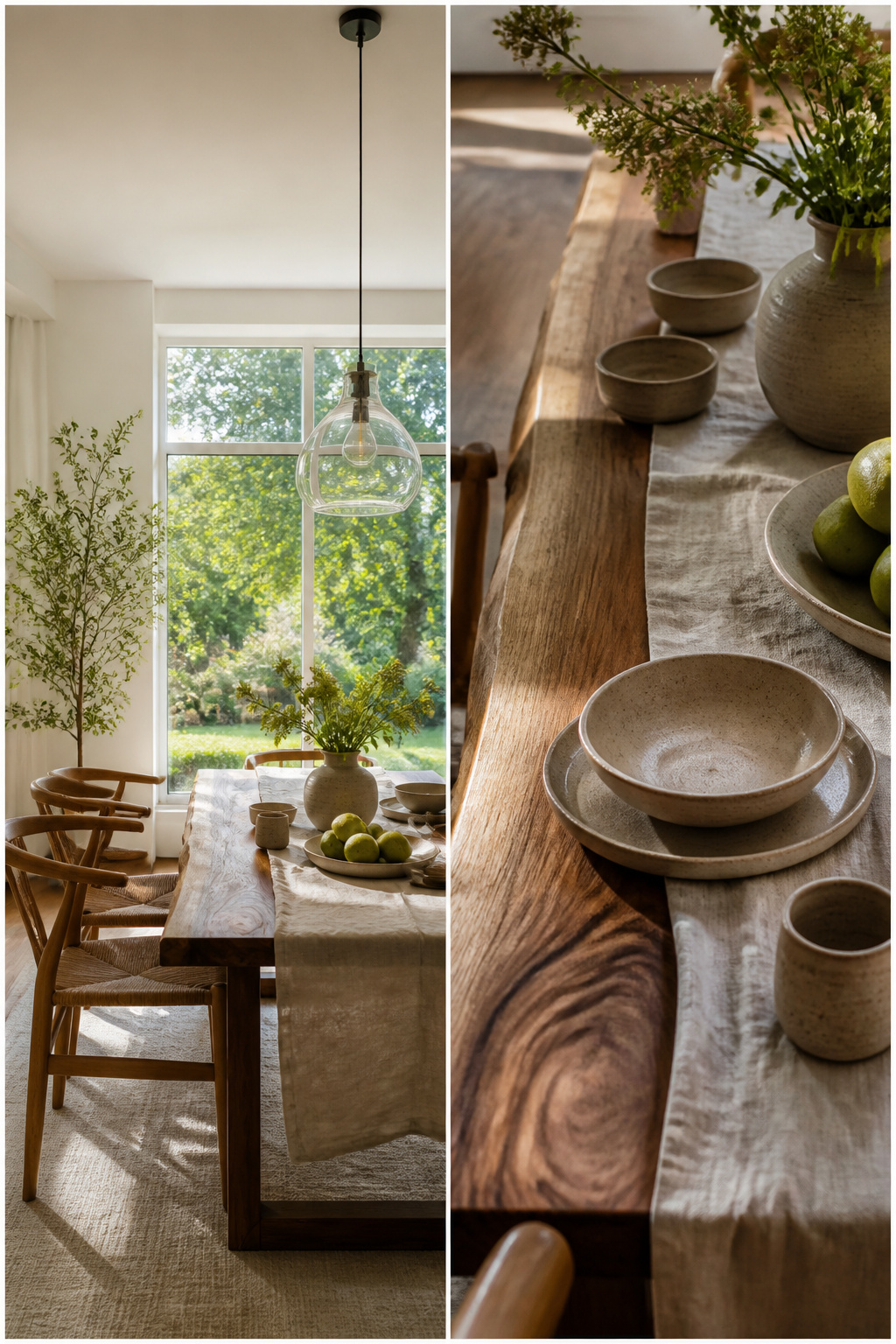
Raw wood against painted drywall gives a room tension that matching finishes never quite reach. A live-edge shelf mounted on a flat white wall works because the eye keeps moving between the two: the organic line of the bark, the straight edge of the trim below it. The contrast reads as intentional, not unfinished.
Linen works the same way against metal or glass. A rumpled linen throw on a powder-coated steel chair softens the industrial note without hiding it. Stone on laminate counters, rough ceramic on a high-gloss table, they all follow the same rule. One element needs to read as shaped by hand or time, the other as machined.
The mistake is piling too many raw pieces together and losing the dialogue. One natural anchor per manufactured surface keeps the balance legible. Two live-edge shelves flanking a painted fireplace start to look like a theme park of rusticity. Let the manufactured ground the room; let the natural piece be the exception that gets noticed.
3. Use a Banquette for Cozy Dinners
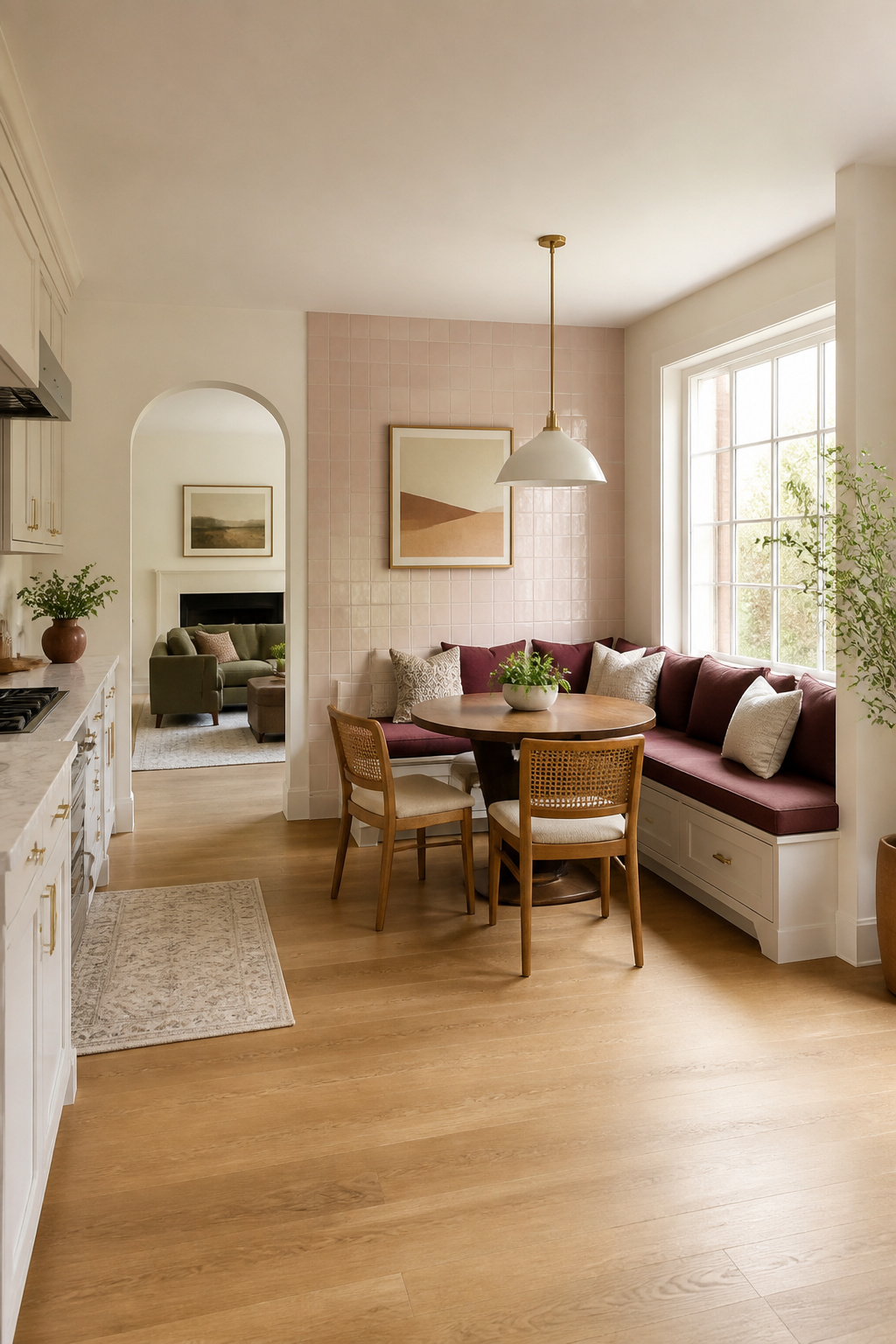
A banquette tucks against the wall and frees up the floor space standard chairs eat on all four sides. The typical depth runs 18 to 20 inches, which sits a few inches shallower than most dining chairs. That difference matters in a narrow kitchen or a dining corner where every inch of walkway counts.
Built-in benches look intentional and add storage underneath if you hinge the seat, but a freestanding bench you bolt together in an afternoon does the same job for a fraction of the cost and moves with you. What sold me on the idea, reading through enough small-dining makeovers, was how the back-against-wall setup changes the feel of the room. Diners face each other across the table instead of staring at a wall, and the whole arrangement pulls inward like a booth at a good diner.
The tradeoff is getting in and out. One long bench means someone in the middle has to slide, so leave at least 24 inches of table overhang on the end if you can, or break the banquette into two shorter pieces with a gap in the middle.
4. Cocoon with Curtains
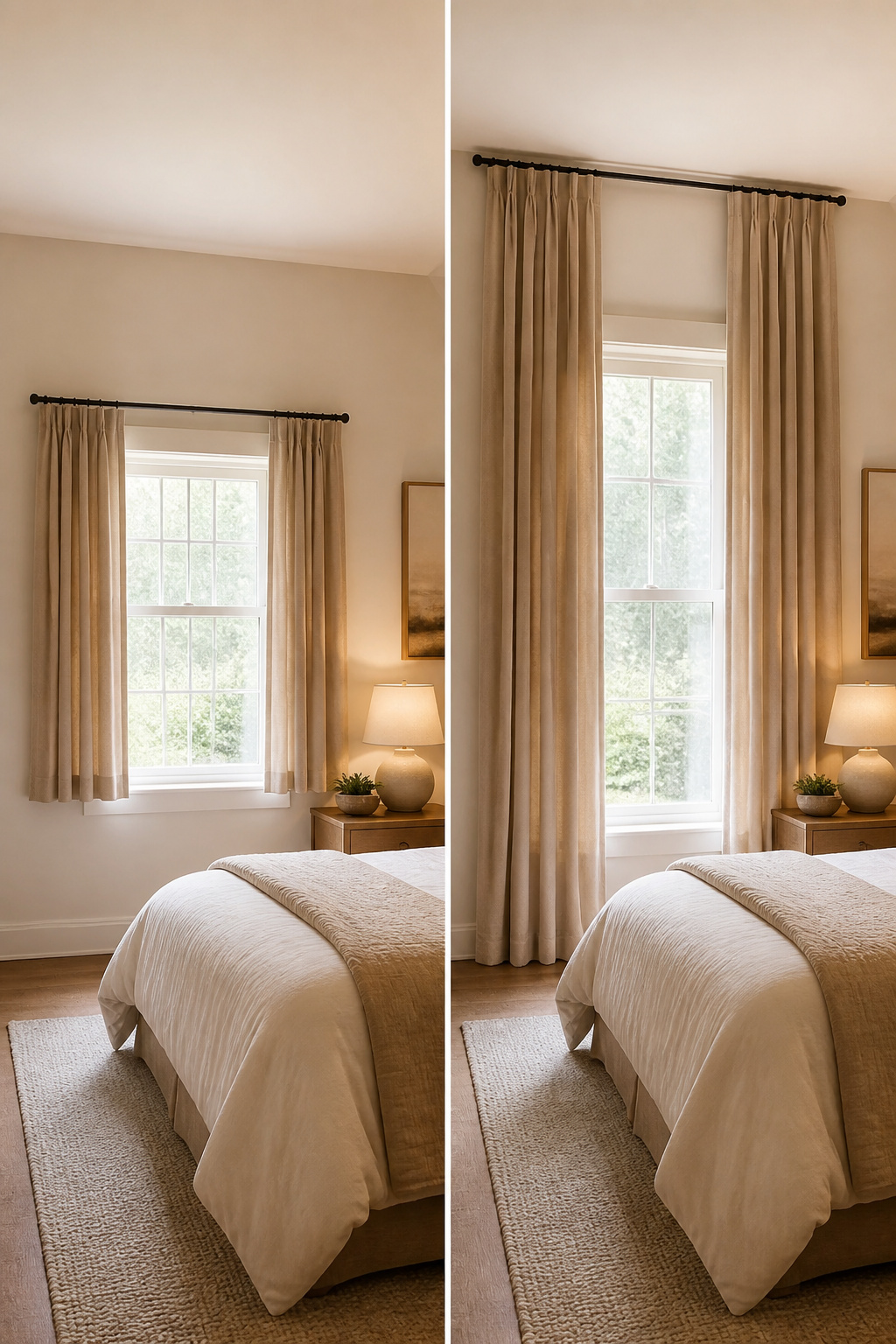
The fastest way to make a room feel smaller is to hang the curtain rod right at the window frame. I see it all the time in rentals and first apartments, including my own years back. The rod sits six inches above the glass, the panels stop at the sill, and the whole wall shrinks inward.
Curtains look better when they frame the window instead of hugging it. Mount the rod a good foot above the frame, maybe more if you have the wall space, and let the panels hang wide enough that they stack on the wall, not in front of the glass. The eye reads the full span as window, and the room itself feels wrapped in rather than boxed out.
Ceiling height sets the limit. In an eight-foot room, two to four inches below the crown is usually the sweet spot; anything higher and the panels start looking like they are trying to escape. Fabric choice matters less than placement here, though heavier material does the cozy work once the rod is in the right spot.
5. Layer Your Rugs
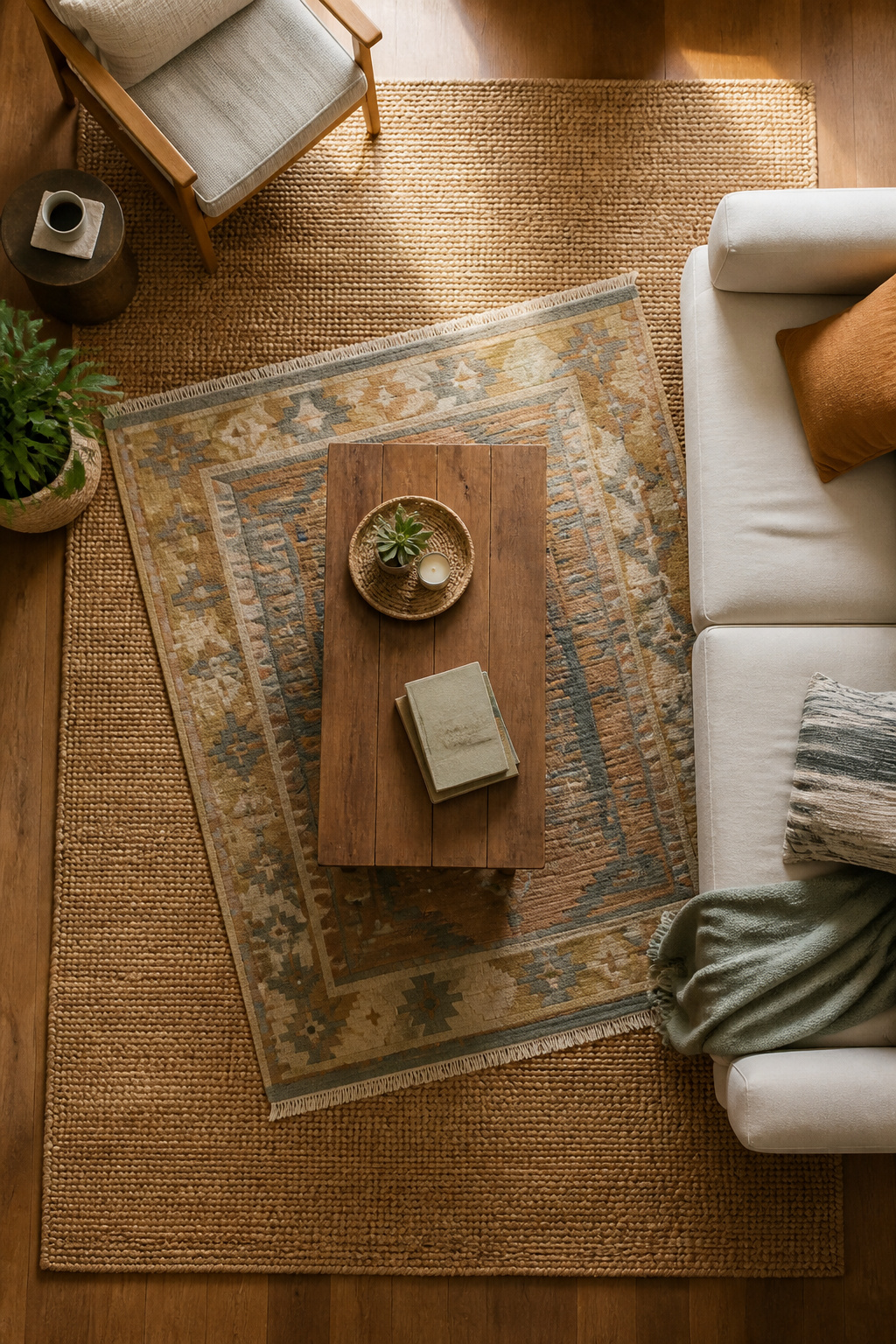
A natural-fiber rug large enough to anchor a living room runs more than most weekend budgets want to spend on a single piece. The fix is stacking a smaller patterned rug on top, which costs less and gives you the texture of two surfaces underfoot. The base rug should sit 12 to 18 inches larger on all sides so the edge shows like a frame. I have seen this layered look go wrong when the top rug is centered like a postage stamp; angling it slightly, as you would with a throw on a sofa, keeps the arrangement from looking too deliberate. Jute or sisal works well underneath because it wears hard and reads as neutral territory. The patterned layer on top is where the color lives, and replacing it later costs far less than swapping out an entire room-size weave.
6. Paint the Floors
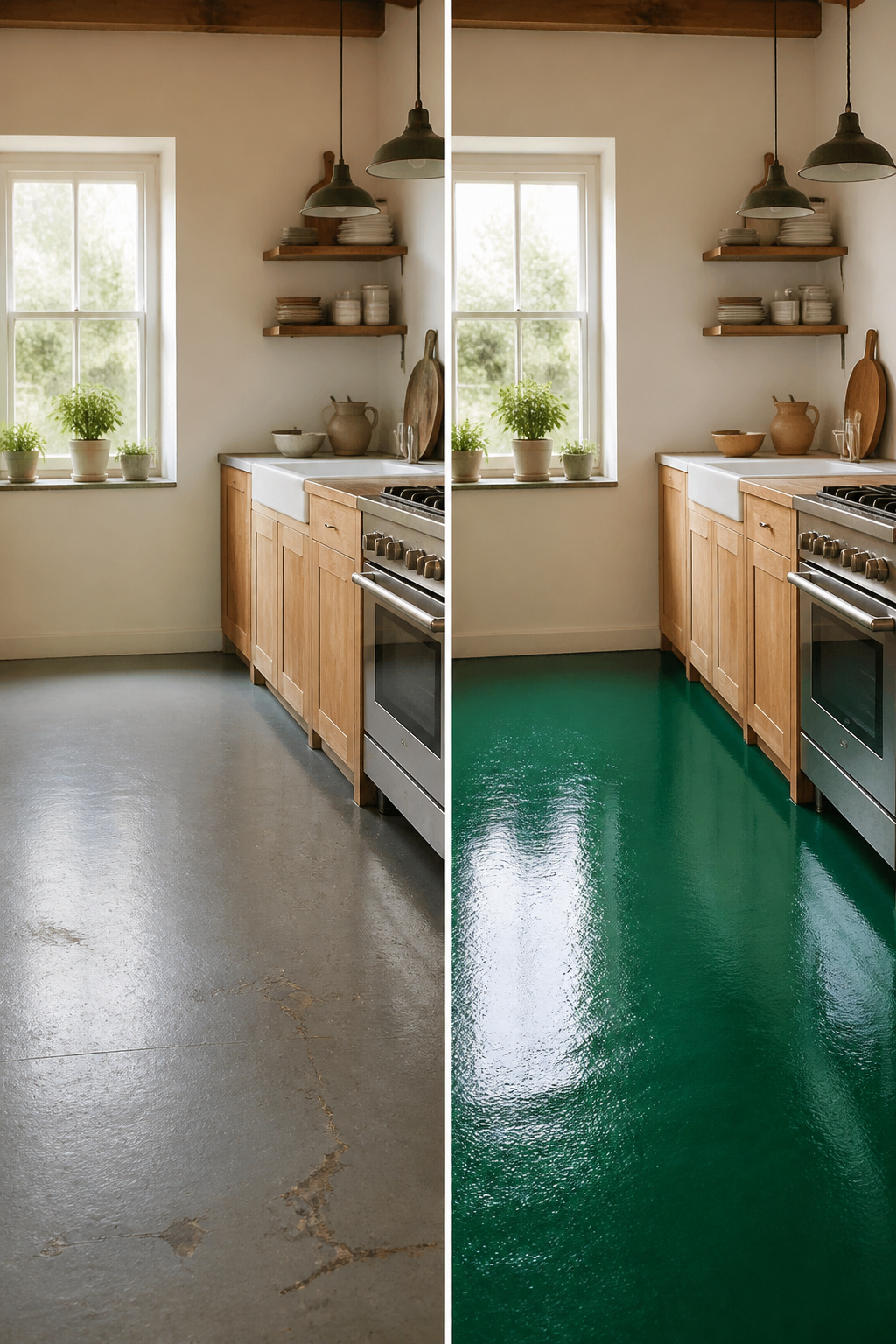
A painted floor costs a fraction of refinishing and covers gouges, water stains, and the kind of patchy wear that sanding only exposes. I learned this after renting a cottage with heart pine floors someone had shellacked repeatedly; the grain was buried under amber layers no drum sander could reach without chewing through half the board. The landlord had rolled on a deep green porch and floor enamel instead, and it held up to three years of muddy boots and dragging chairs without chipping at the edges where oil-based latex would have failed.
Porch and floor enamel is the only paint grade that survives this job. The alkyd resins cure harder than wall paint, and the finish resists the abrasion that turns standard latex into scuff marks within a month. A solid color reads as intentional, almost like linoleum; stencils need a steadier hand but cost no more in materials, just in taping time. Either way, the real savings are in skipping the sander rental and the days of dust.
7. Embrace Awkward Architecture
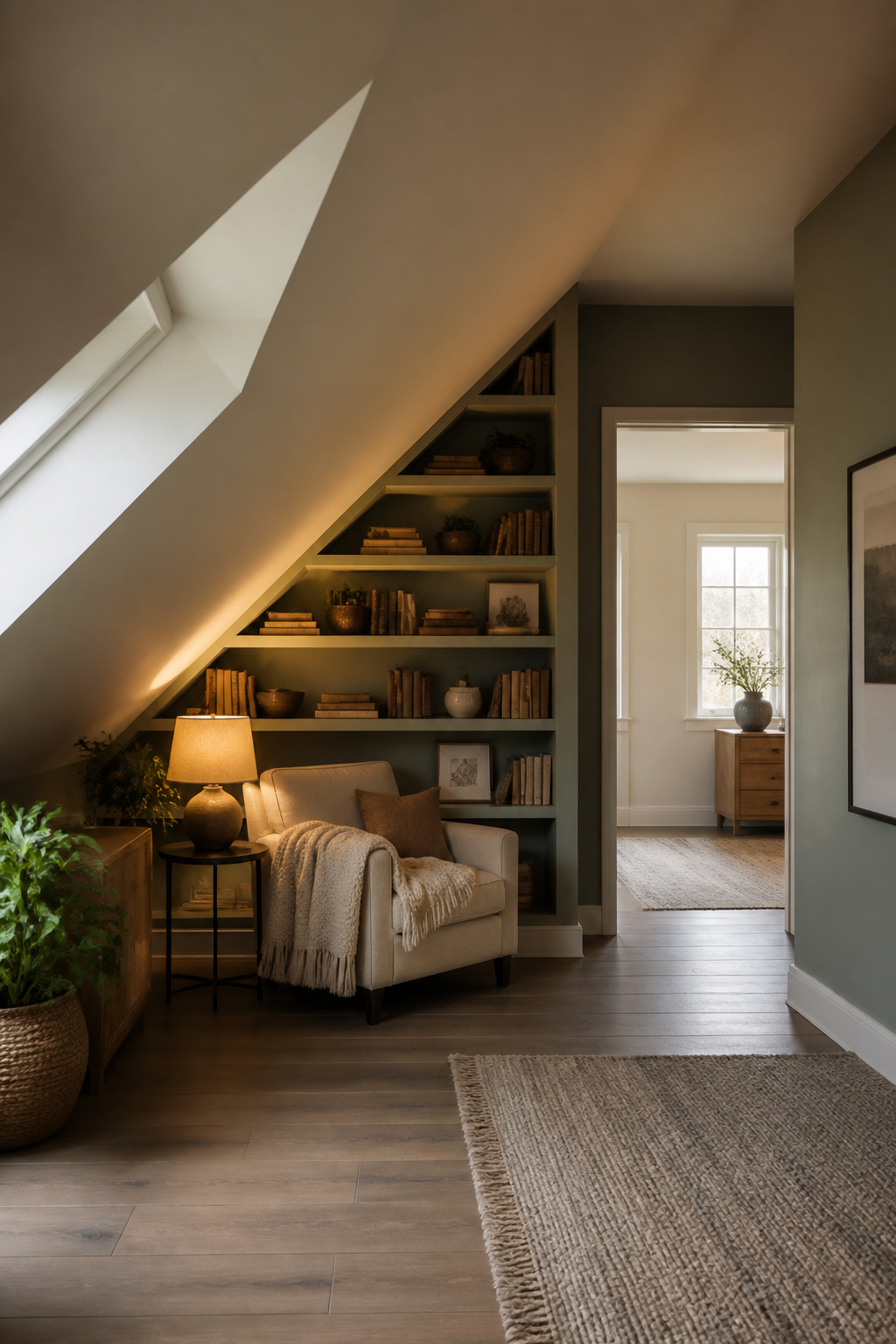
The first apartment my partner and I rented together had a dormer ceiling so low I cracked my head on it the morning we moved in. Most people would have stuck a lamp in the corner and tried to ignore it. We turned it into the only spot in the place anyone wanted to sit.
A slanted ceiling works best when you follow the angle rather than fight it. Built-in shelving that mirrors the pitch turns dead space into storage that actually feels intentional. Designer Alexander Reid took the same approach with a turret room, installing bookcases on each angled wall so the odd shape became a small library instead of a liability. The family uses it as a gathering spot now, which is more than most boxy rooms can claim.
If you are dealing with a bulkhead or soffit, treat it as a frame rather than a flaw. A narrow ledge along the face gives you display space for books or plants, and painting it the same color as the wall keeps the line clean. Pattern-drenching the whole ceiling is another route, though it reads more statement piece than quiet solution. For a weekend project with leftover lumber and a single gallon of paint, the ledge wins.
8. Swap Out Decorative Elements Seasonally
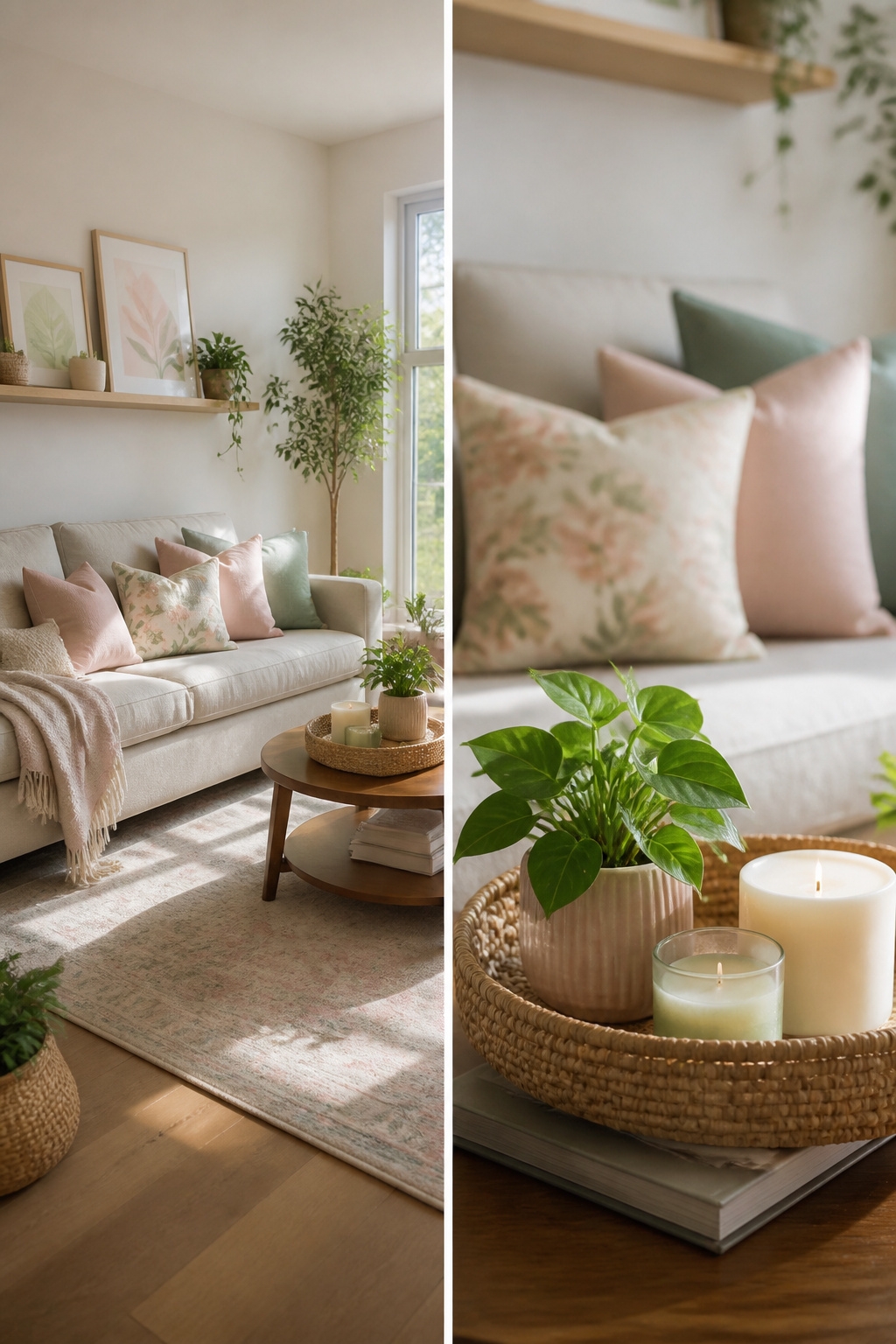
The fastest way to make a room feel current is to swap out pillows, throws, and the small stuff as the light changes outside. Darker, warmer tones read cozy once the leaves drop; brights feel right when the days stretch long again. You do not need to repaint or buy furniture to get there.
The part that makes this actually happen is the bin system. Mine sit on a closet shelf, each labeled with the season it holds: one for fall and winter, one for spring and summer. When I swap, everything goes out or in at once, and the whole switch takes under an hour. Nothing gets lost in the back of a linen closet, and I am not rediscovering a mustard pillow in March and wondering where the rest went.
9. Add Lighting
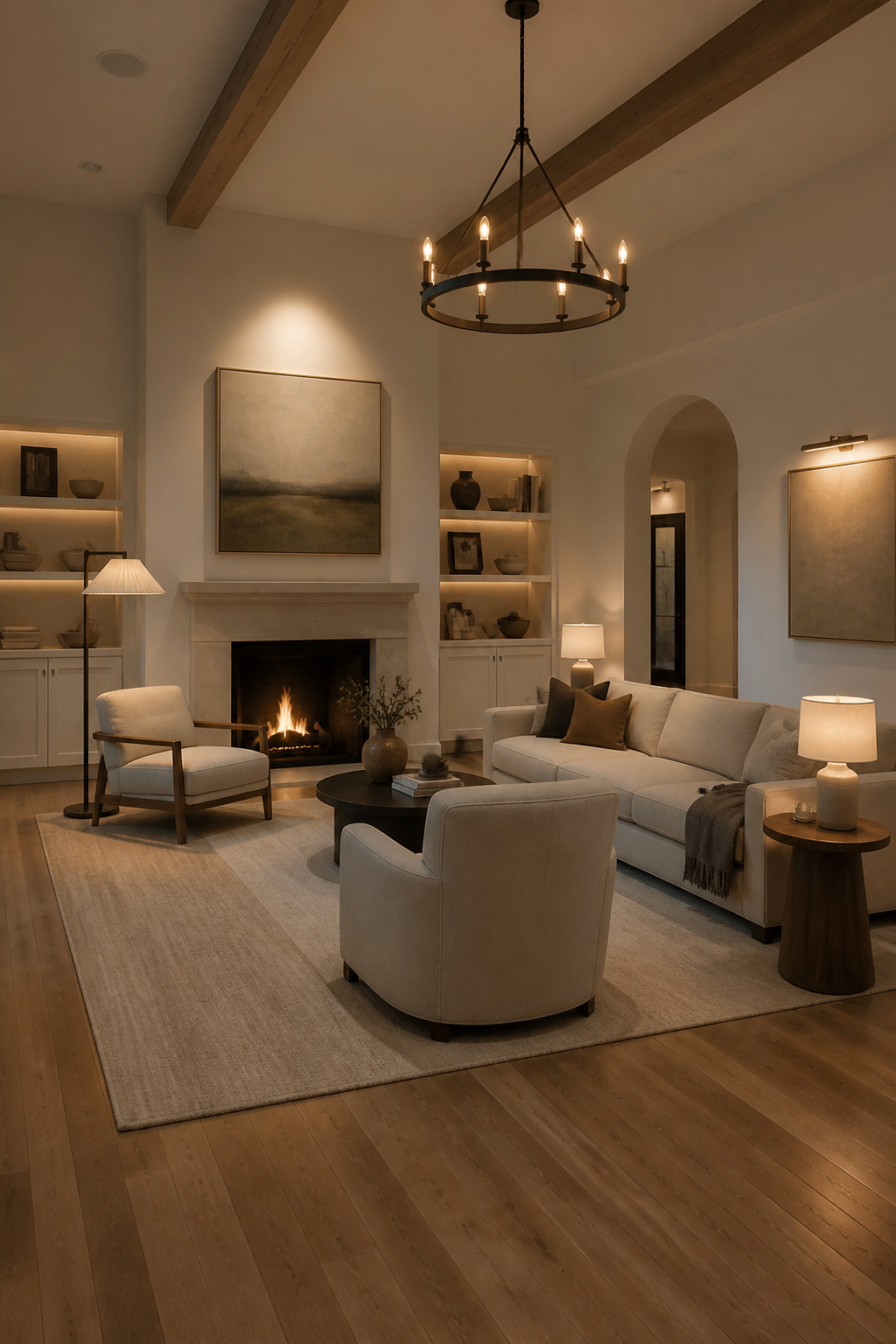
A single overhead fixture flattens every room into the same flat glare. What works is three layers running at different intensities: ambient light at 1,500–3,000 lumens for overall visibility, task lighting at 400–800 lumens where you actually use your hands, and accent light below 400 lumens to pull the eye toward a plant or a piece of art you want noticed.
I learned this the hard way in my first apartment, where one ceiling dome made every evening feel like a waiting room. A floor lamp near the reading chair and a small uplight behind the fiddle-leaf fig fixed what the overhead broke. Smart bulbs help more than I expected. Set the ambient layer to 2700K after dinner, drop the task lights to ten percent, and the same room inches toward something that actually feels like evening.
The mistake most people make is buying one big fixture and thinking the job is done. Two smaller sources at different heights do more comfort than one powerful one ever will.
10. Use Plants for Decoration
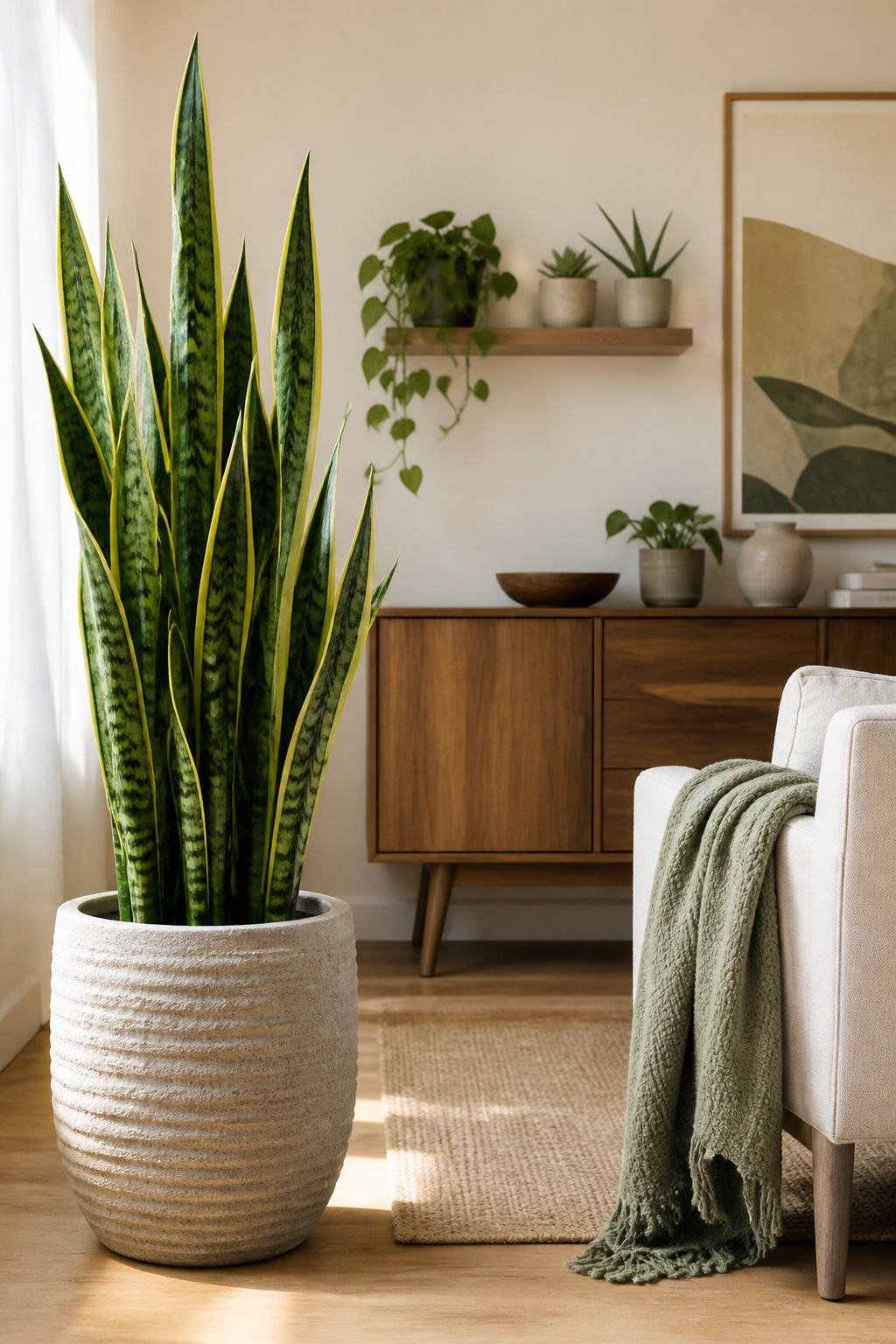
Succulents and cacti are the low-maintenance entry point that makes plant decoration stick when you are not sure you will remember to water. A small cactus on a windowsill survives weeks of neglect and still reads as intentional decor, not a cry for help. Once that habit holds, leafy plants add the fuller green that softens a room’s edges. I started with a ZZ plant and a snake plant because both forgave irregular water and low light, and both outlasted a fiddle leaf fig that demanded more attention than I gave it. The air-cleaning claim gets repeated often enough that I notice it less than the calm a room gains from living things in the corners.
11. Create a Gallery Wall
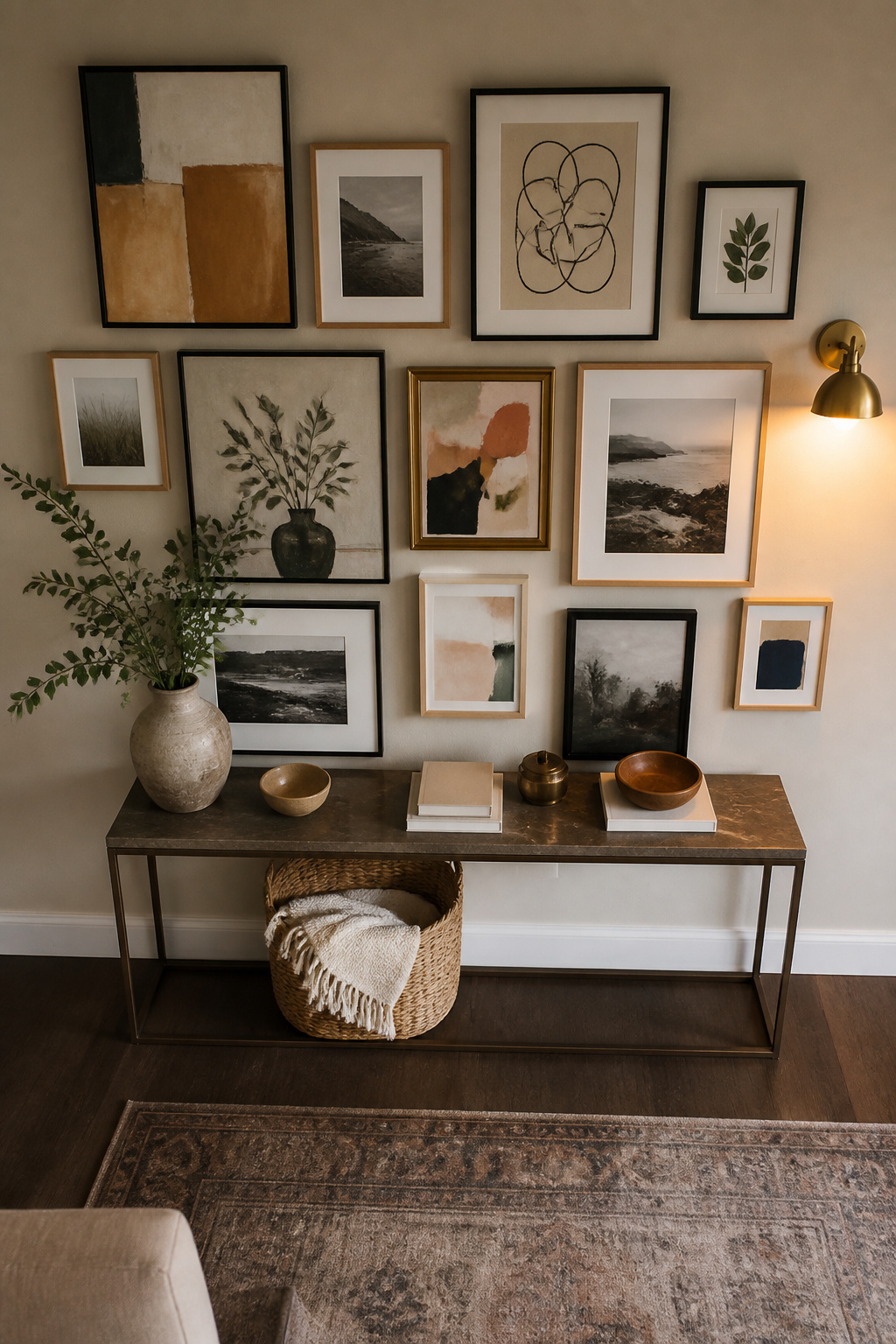
A gallery wall only looks effortless when the spacing is deliberate. The first time I tried one, I hammered nails straight into the plaster and stood back to find the frames clustered like a crooked smile. Now I lay every piece on the floor first, moving them around until the rhythm feels right, then transfer that arrangement to the wall with painter’s tape marking each frame’s edge before a single hole gets made.
Two to three inches between frames gives the grouping cohesion without crowding; any tighter and the pieces compete, any looser and they read as scattered singles. The sources split on exact spacing, with one suggesting up to four inches works for smaller items. My preference lands at the narrow end for frames under eleven by fourteen, wider for anything larger that needs more breathing room.
The tape trick matters most for renters. Those blue or green strips peel off clean and let you step back to check alignment from the sofa, not with your nose against drywall. When the layout holds up to that distance, the nails go in once.
12. Incorporate Mirrors
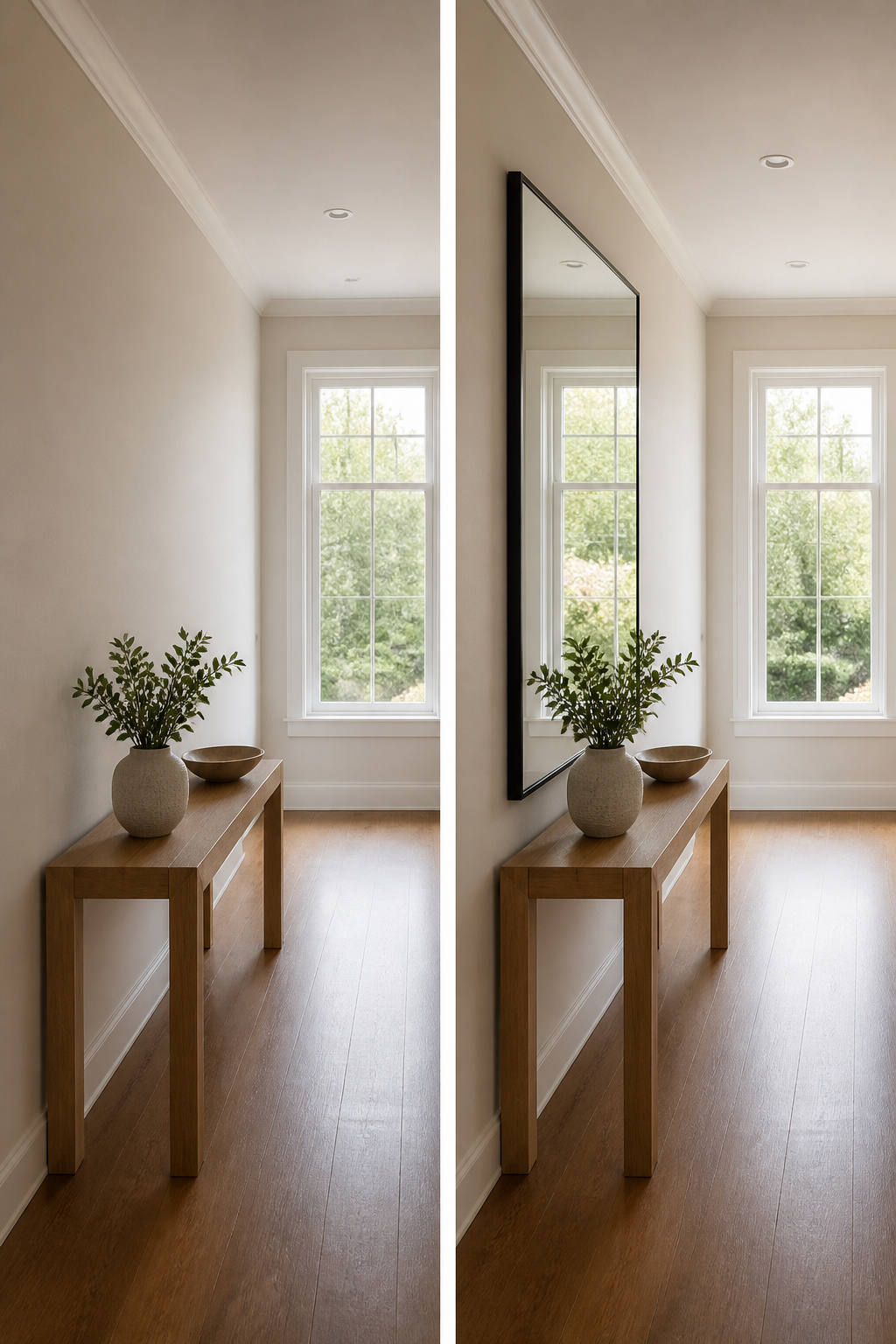
A mirror hung opposite a window does the work of another window entirely. The reflected light bounces deep into a room that otherwise goes dark by mid-afternoon, and the doubled view tricks the eye into reading the space as larger than its walls actually allow. In a hallway barely three feet across at my last rental, I mounted a 30-by-40-inch rectangular mirror directly facing the front door’s sidelight. The difference was immediate; the corridor stopped feeling like a tunnel you rushed through and started reading as an actual entry.
The sizing matters more than the frame. Go too small and it reads as decorative, too large and the reflection turns disorienting. For narrow passages, a simple rectangle hung at standing eye level works better than anything ornate or circular, which draws attention to itself instead of the space it opens up. Position matters too; even a few inches off-center from the light source costs you the full effect, so measure twice and hang once.
13. Use Decorative Trays
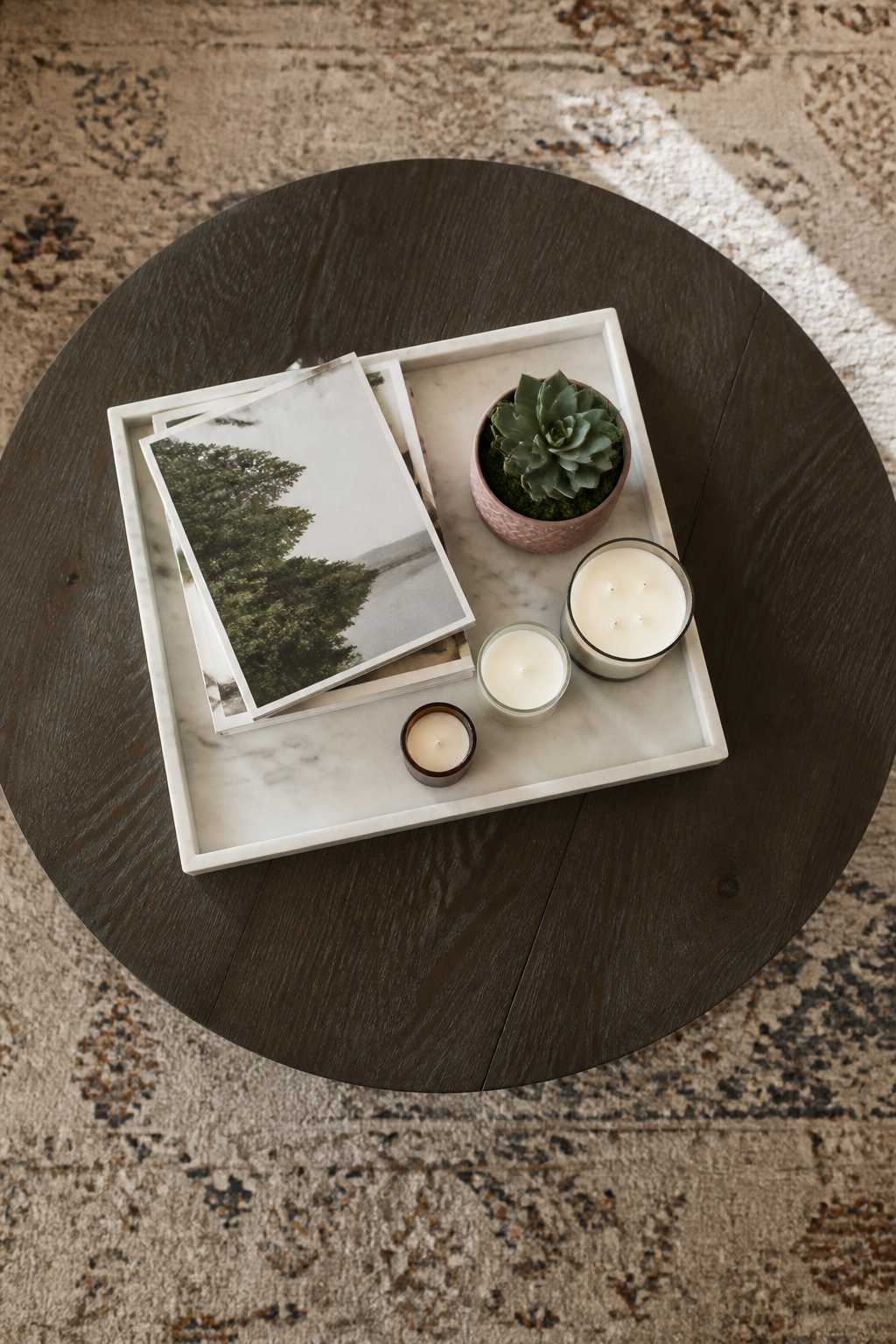
A tray turns random objects into something that looks intentional, which is exactly what a coffee table covered in remotes and half-melted candles needs. I started using one after watching my own living room surface slowly swallow every small item that entered the house. The change was immediate: a shallow marble rectangle from West Elm gathered the candle, its wick cutter, and a small catchall dish into one corner, and suddenly the table looked designed rather than inherited from a busy week.
The same move works on dressers and nightstands where daily clutter accumulates without a system. Corral remotes, loose jewelry, or that collection of hand creams into a single contained space. Grouping by material helps: something green, something metal, something with height. The tray provides the boundary; your eye supplies the order.
14. Refresh with Throw Pillows
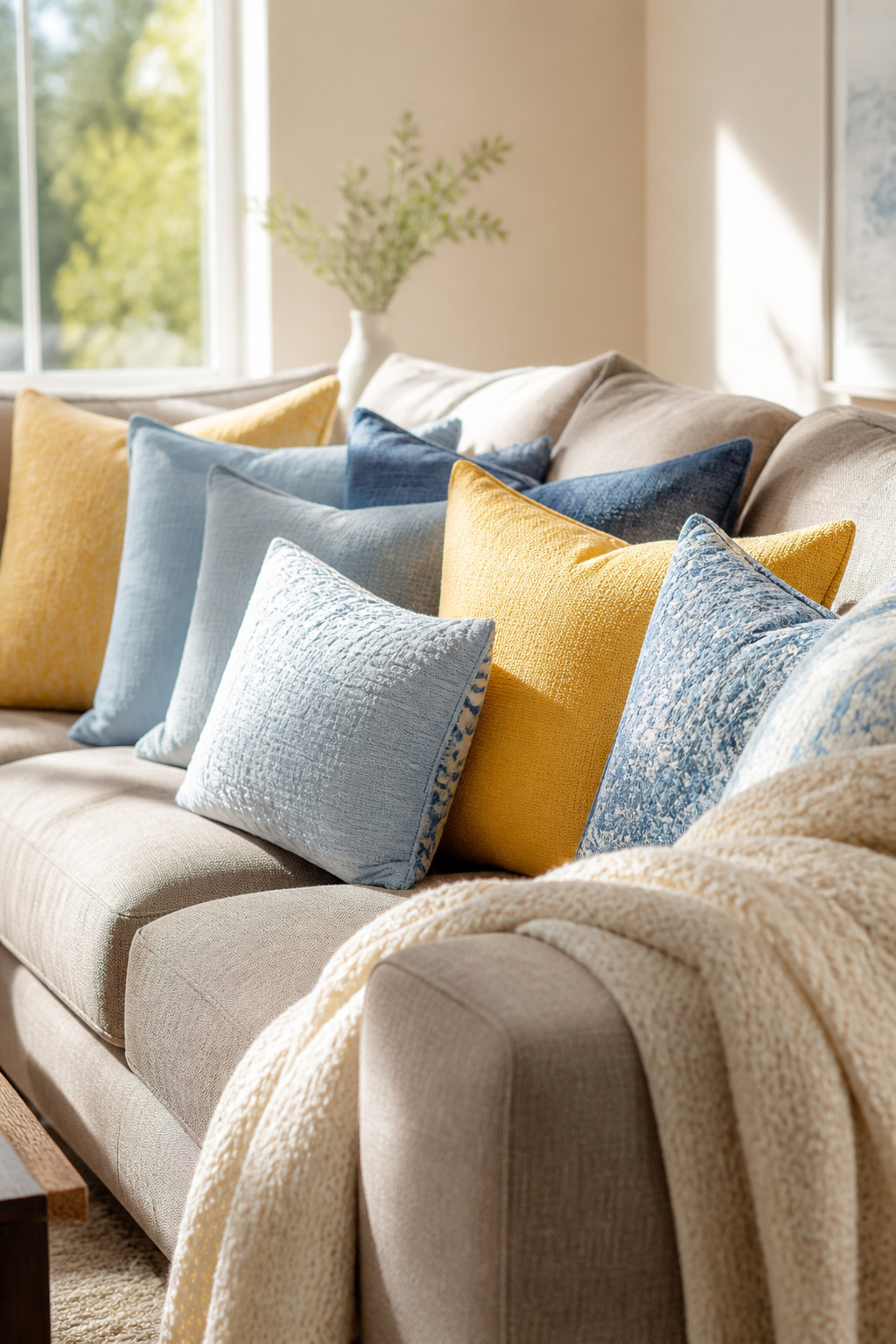
The fastest room change I know is swapping throw pillow covers. Keep the inserts, pull on new linen ones, and the sofa reads completely different by sundown. A set of covers runs roughly $20–$40 where full pillows with inserts can push $50–$80 for the same look. The linen ones from Miulee get mentioned for holding color without that stiff, boardroom feel.
I store off-season sets flat in vacuum bags slid under the bed. They take up maybe two inches of height, and the covers come out ready to use without a trip to the dry cleaner. Buy covers only, not inserts, and this stops being a once-a-year splurge and becomes something you actually rotate.
15. Rearrange Furniture
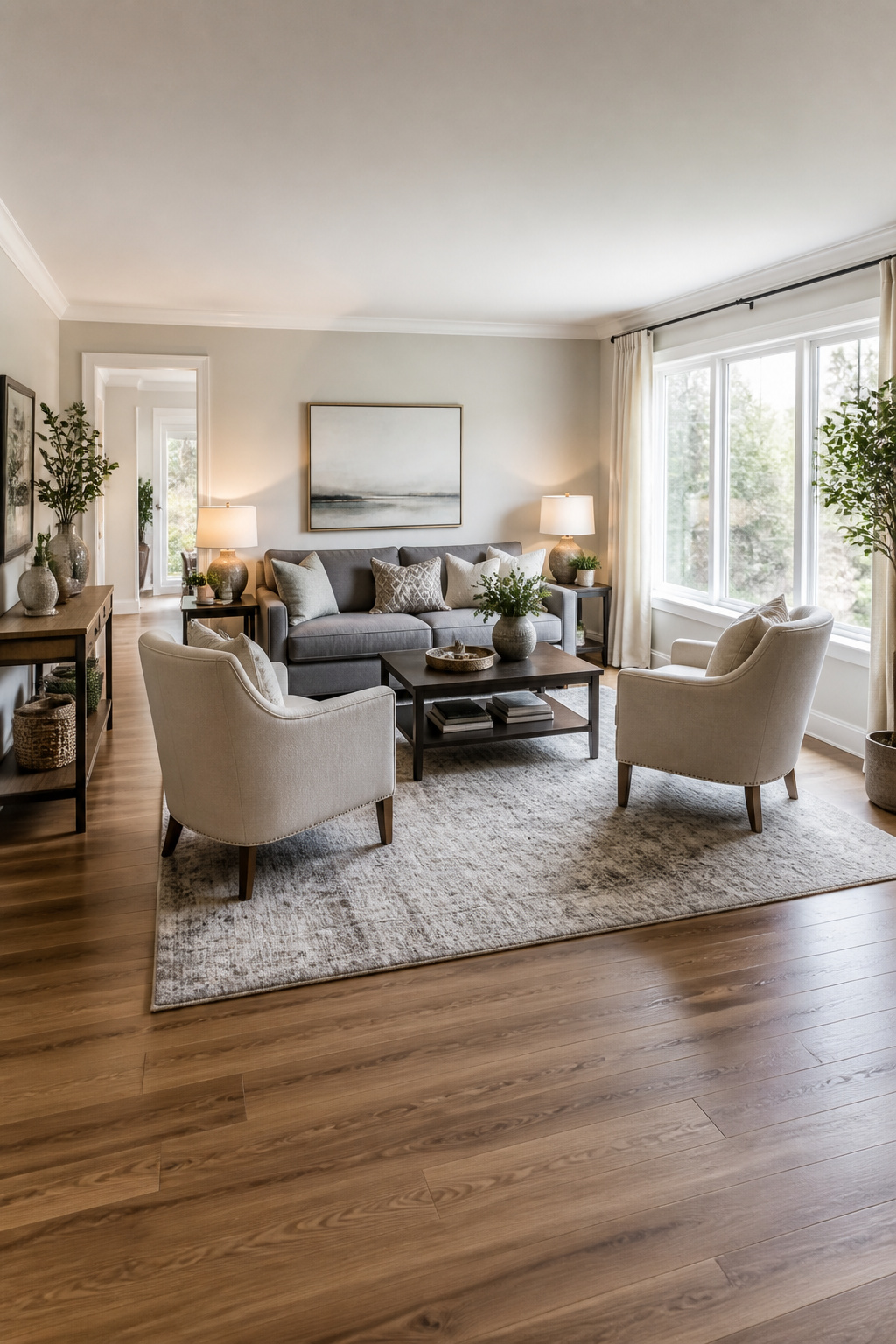
The first time I pulled a sofa off the wall, the room felt smaller for about ten minutes. Then my sister sat down across from me, and we could actually hear each other without leaning in. That is the test: about 3.5–4 feet between facing seats puts voices in normal range instead of broadcast volume.
U-shaped layouts work best for this, with a sofa and two chairs bracketing a coffee table, or the H-shape variation with two chairs set square across from the sofa. Small rooms benefit most from floating furniture, since the gap behind pieces reads as usable depth rather than dead perimeter. Keep the walking lanes open, though; conversation zones only function if you can reach a seat without squeezing between backs and walls.
16. Use Accent Wallpaper
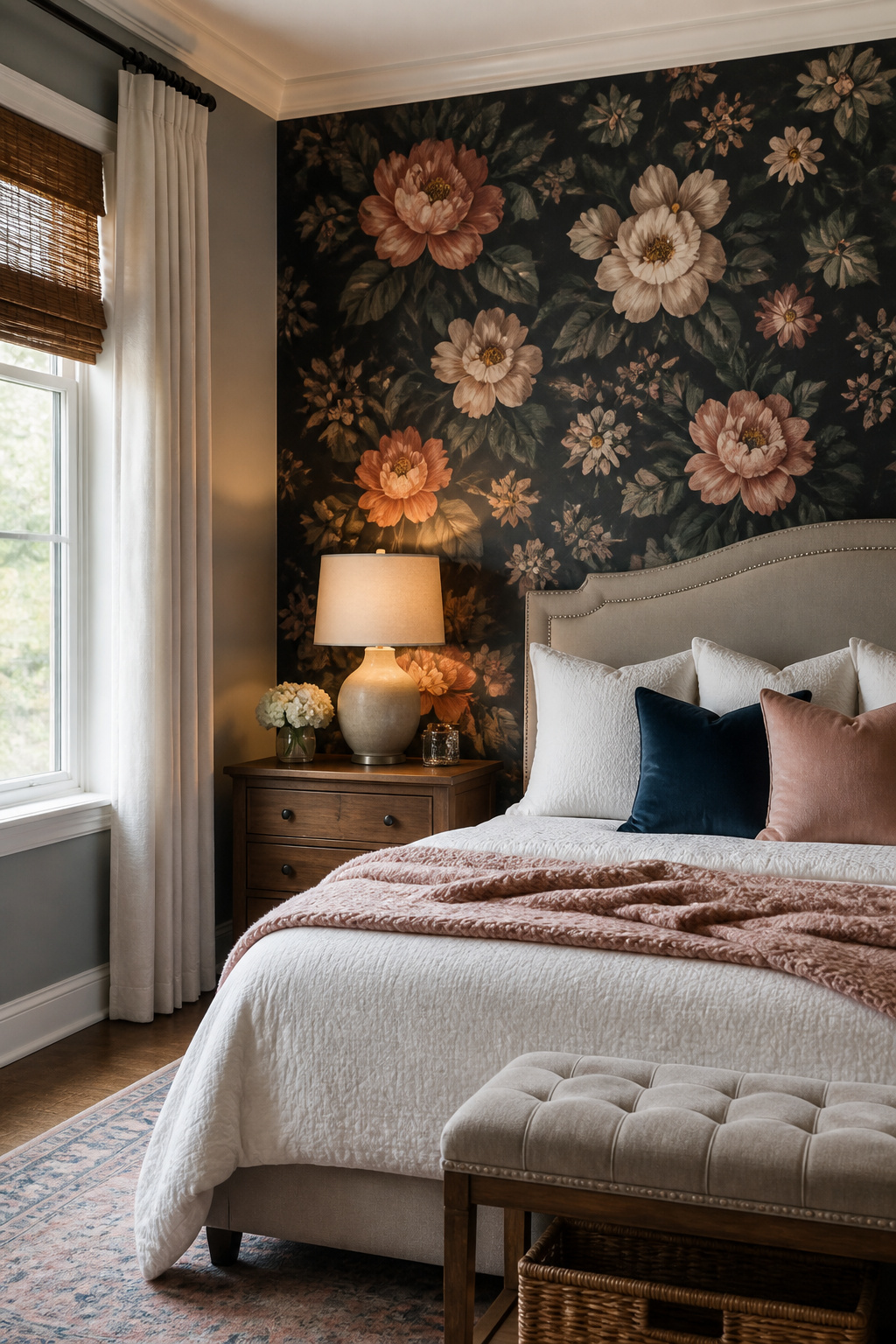
Wallpaper on a single wall gives you the pattern payoff without the commitment of a full room. An accent wall behind a bed or sofa reads as intentional; the same print wrapping every surface can feel like the inside of a gift box. For smaller impact, the backs of shelves or the inside of an alcove take a bold print without overwhelming the space.
Renters have it easier now than a few years ago. Peel-and-stick wallpaper goes up dry and lifts off again when the lease ends, no steamer or wall damage. Traditional paste wallpaper still works for anyone staying put, but the removable versions have closed the gap on pattern selection.
For a standard 8-foot accent wall, you need roughly two standard-width rolls, or about 28 square feet of paper after pattern matching. Order a roll extra if the repeat is large; the leftover beats coming up short on the last strip.
17. Incorporate Textured Fabrics
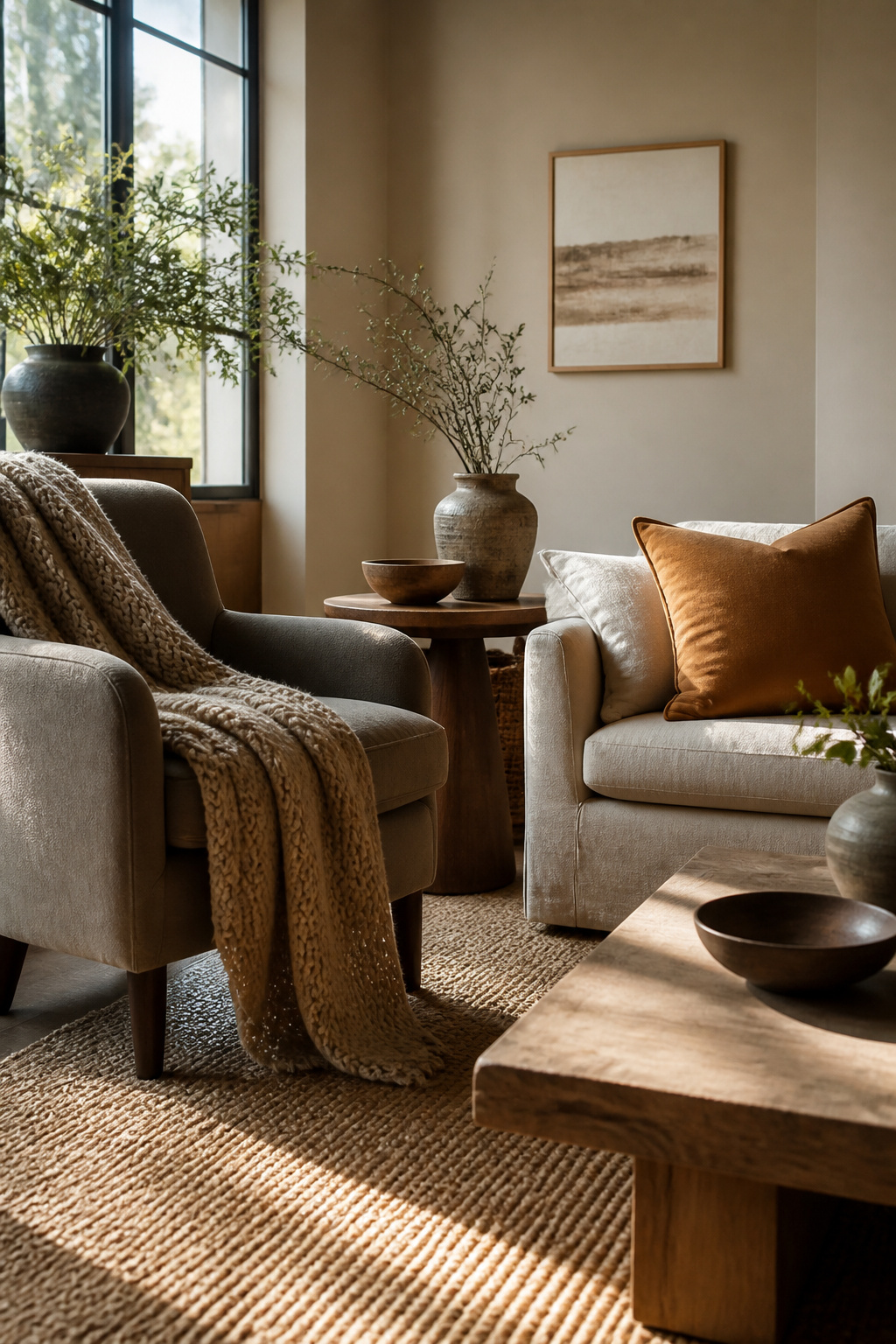
A flat color scheme reads like a waiting room no matter how expensive the paint. Texture does the work of pattern without the visual noise, and the materials matter more than the colors you pair them in.
In my living room last winter, I ended up with a combination that accidentally worked: a raw linen sofa cover, a single chunky wool throw in a shade almost identical to the linen, and a small velvet pillow in the same family but two tones deeper. The wall behind them is painted the color of dry grass. Nothing clashes because nothing truly differs, yet the room stopped feeling like a catalog page the moment the velvet caught light differently than the wool. The woven jute rug underneath grounds it all with something rougher.
The mistake most people make is treating texture as an afterthought, the thing you add once the big pieces are bought. Buy the wool or the velvet first, then match the wall to it, not the other way around. Paint is easier to change than a sofa, and a good textile under your hands every day is worth building around.
If you rent, start with throws and pillow covers. They travel to the next apartment, and they let you test whether you actually like living with bouclé before you commit to a chair in it.
18. Utilize Vintage Items

A room built entirely from new catalog pieces feels sterile the moment you walk in. One or two older items break that flatness and give the eye somewhere interesting to rest.
I find most of mine at estate sales and the occasional church basement rummage sale, not curated vintage shops. Last spring I paid $18 for a brass desk lamp that a boutique would have priced at $90. The cord was frayed near the plug, which is exactly why it was cheap and exactly why I checked it before handing over cash. Always test the mechanism, the wiring, and whether drawers actually slide before you commit. A stuck drawer on a $30 side table becomes a $75 repair fast.
Condition matters less for decorative objects than for anything with moving parts. A chipped ceramic vase still holds flowers; a wobbly chair needs real work. I pass on upholstery unless I am ready to spend twice the purchase price on new fabric and labor. Solid wood with scratched finish is different. Ten minutes with a $7 can of feed wax and an old t-shirt usually brings it back to something worth displaying.
19. Create Functional Spaces
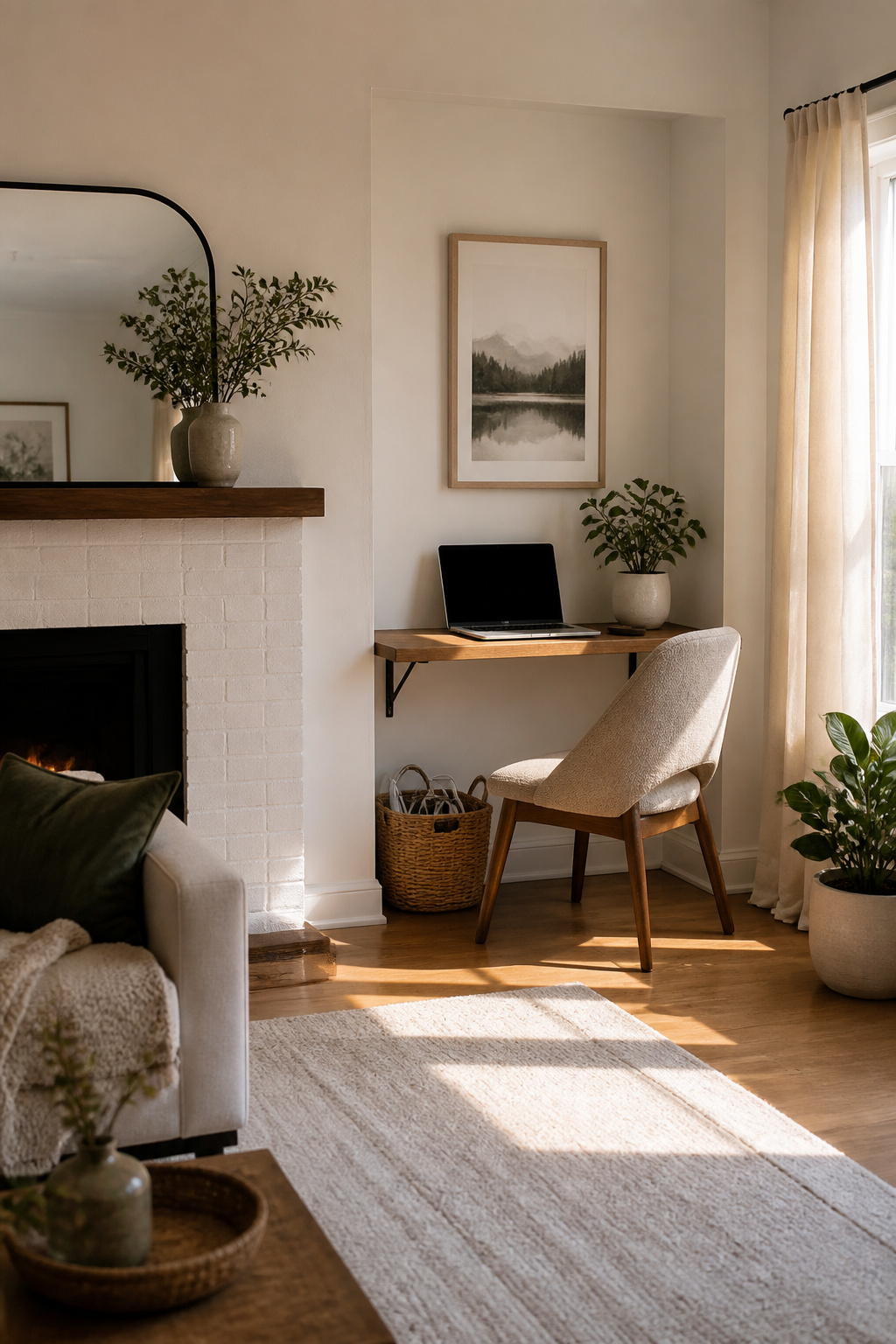
A dead corner in the living room, the kind formed where a sofa meets a wall at an awkward angle, usually collects a leaning lamp and a stack of magazines that slide. I turned mine into a charging station last winter after watching cords migrate across every other surface in the house. The triangle of available floor space was roughly 24 inches on each leg, enough for a small wall-mounted shelf at desk height and a narrow basket underneath for the power strip itself.
The shelf cost about thirty dollars unfinished; I stained it to match the baseboards so it would read as built-in rather than afterthought. Four USB ports and two outlets cover daily use for two people, with cable clips screwed to the underside keeping cords from dangling visibly. The basket below hides the strip and the slack, and because everything lives in the corner, the arrangement does not compete with the room’s actual furniture.
Pet feeding areas work on the same footprint. A raised station with silicone mats underneath keeps bowls from sliding and contains the water that dogs especially track. For a mini office, the same 24-inch triangle fits a floating desk at 20 inches deep, shallow enough that the chair tucks in without blocking the walkway behind it. The mistake I made on my first attempt was going too deep; 30 inches trapped anyone walking past.
20. Organize with Uniform Containers
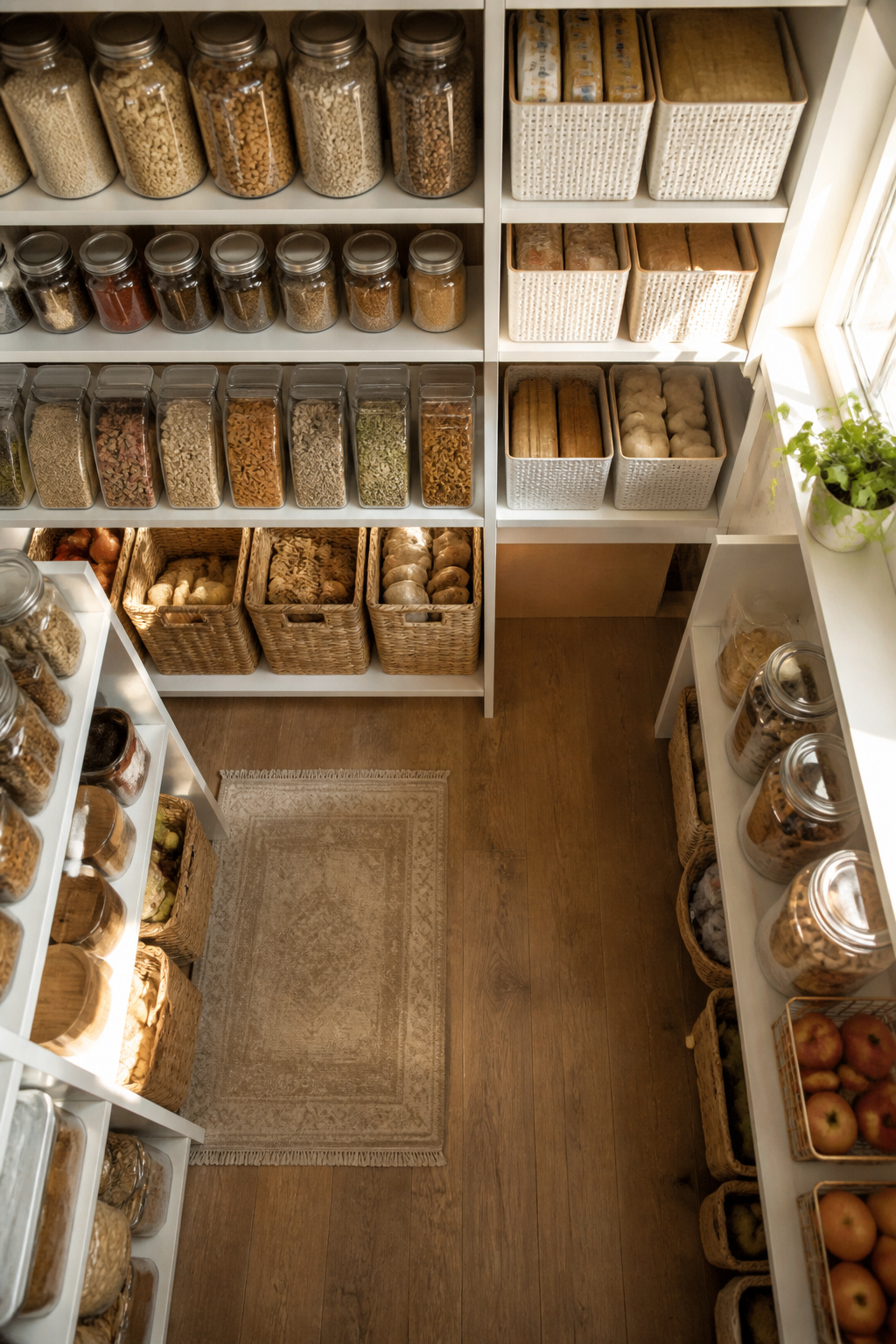
Open shelves and wire racks look busier than they are because every container shouts a different color and shape. Matching baskets, bins, or jars compress that noise into one quiet plane. I first tried this with a set of Aozita bathroom canisters I found online, swapping out the mismatched vitamin bottles and cotton-ball bags that had colonized the counter. The before look cost nothing and looked like it: functional, but with that medicine-cabinet energy that spreads to every shelf in sight. The canisters ran about twenty dollars for the set, which felt steep until I realized the same logic worked in three other rooms. Spray paint does the same job for less if you already own the baskets. A gray base coat with white stenciled numbers turns a donate-pile find into something that reads intentional on a closet shelf or pantry row. The trick is committing to one material across the whole surface: all glass, all woven, all painted metal. Mixing finishes, even matching ones, breaks the calm you’re buying.
What Seasonal Decor Actually Costs

A full seasonal swap runs steeper than most Pinterest boards suggest. Last fall I tallied up what it actually took to switch out textiles, a few tabletop pieces, and the mantel arrangement: roughly three hundred to six hundred dollars per season, spread across a couple weekends of hunting and hauling. That was buying mostly secondhand and discount-store stock, not the boutique throws that populate the inspiration photos.
The real cost is the storage between rotations. By year three, the bins and the shelf space they demand cost almost as much as the decor itself. My advice after four years of this cycle: pick two seasons to commit to fully, let the others get a single bowl of pinecones or a swapped pillow. Spring and winter carry the most visual payoff for the effort; summer and fall can coast on what is already out.
Three Light Sources Every Room Needs
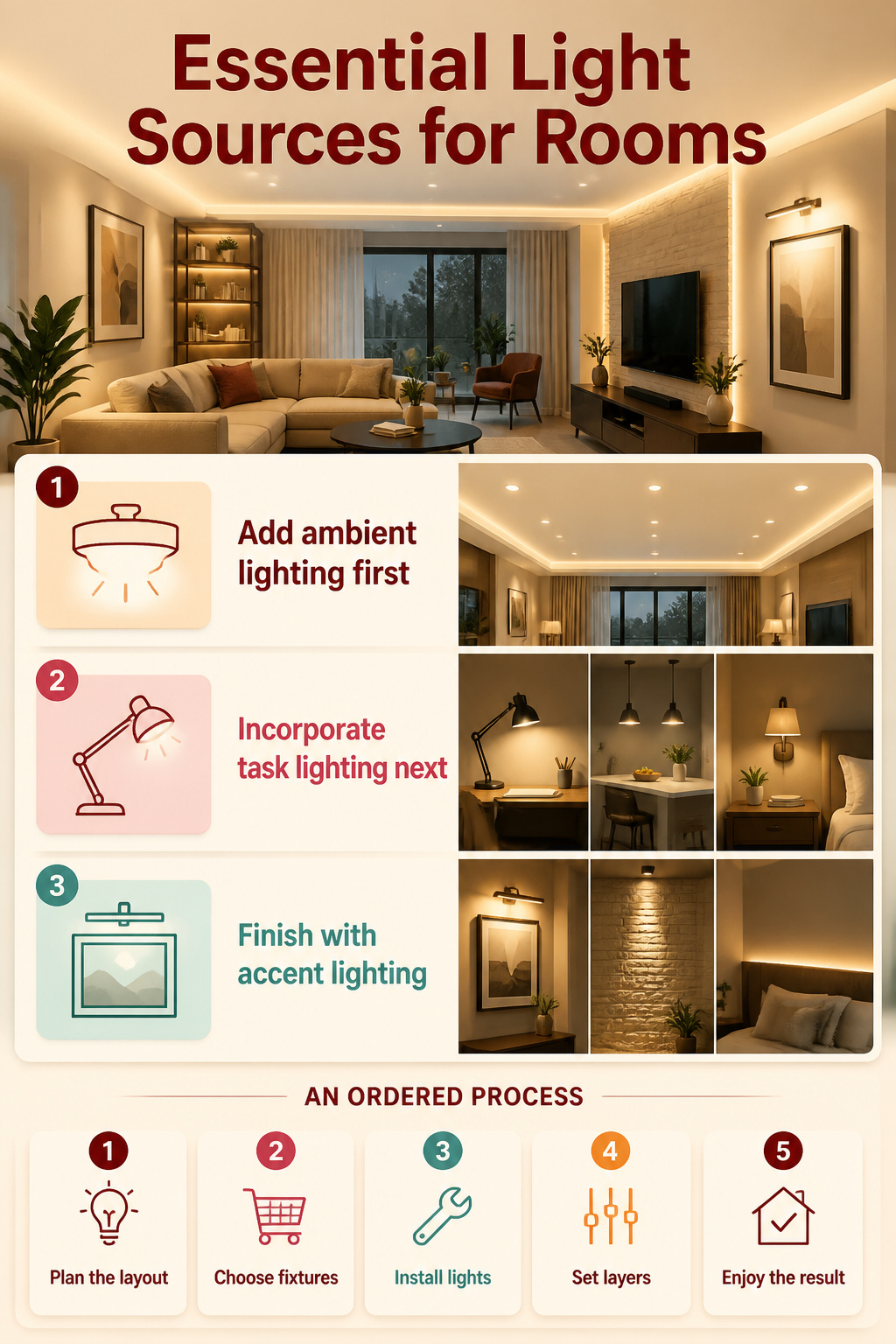
Ambient lighting is the base layer, usually a ceiling fixture or a row of recessed cans that wash the whole room in enough light to move around safely. I used to think one bright overhead did the job until I tried reading in a room lit only that way; the shadows pool everywhere and nothing feels settled. Task lighting fills in where the ambient light falls short: a swing-arm lamp at a desk, pendants dropping low over a kitchen island, bedside sconces that let one person read while the other sleeps. The rule I follow now is that any place you sit to do something needs its own light source, not the ceiling’s secondhand glow. Accent lighting is the last layer and the easiest to skip, which is why most rooms look flat. Picture lights, a narrow-beam can grazing a textured wall, or LED strips tucked behind a headboard, these draw the eye to one thing and let everything else recede. The three together give a room actual depth, not just brightness.
Plants I Killed and What I Learned
Every list of home decor ideas includes a fiddle-leaf fig or a trailing pothos, but nobody mentions the funeral procession. The first plant I ever bought for a shelf, a calathea with purple undersides, curled its leaves into brown tubes within three weeks. I had watered it on a Tuesday schedule, same as my laundry, and the roots rotted while the tops dried to paper. Overwatering kills faster than drought because it happens out of sight.
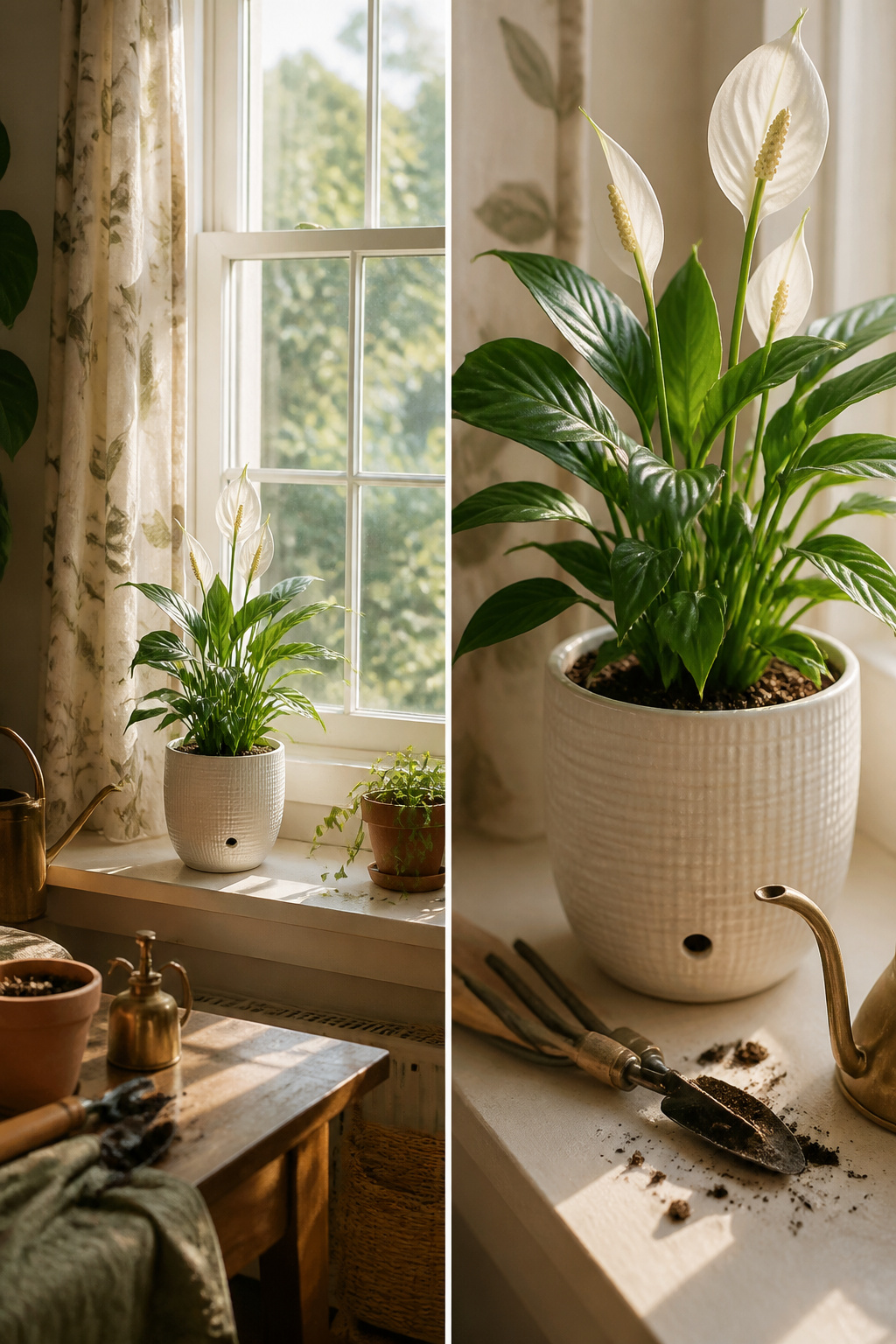
A small succulent in a ceramic pot with no drainage hole sat on my desk for two months looking fine, then collapsed into mush in forty-eight hours. The soil had been wet at the bottom the entire time. Now any container I use for plants needs a hole, or the plant stays in its nursery pot slipped inside the decorative one. That trick costs nothing and saves the plant.
The peace lily I bought for a dark bathroom corner never flowered again after the first white spathe faded. It lived, technically, but grew thin and pale over a year of slow decline. I moved it to a windowsill with indirect morning light, and the new leaves came in thick and green within a month. Light matters more than the tag suggests, especially for plants sold as "low light tolerant," which usually means "will survive low light, not thrive."
Rearrange a Room in One Afternoon
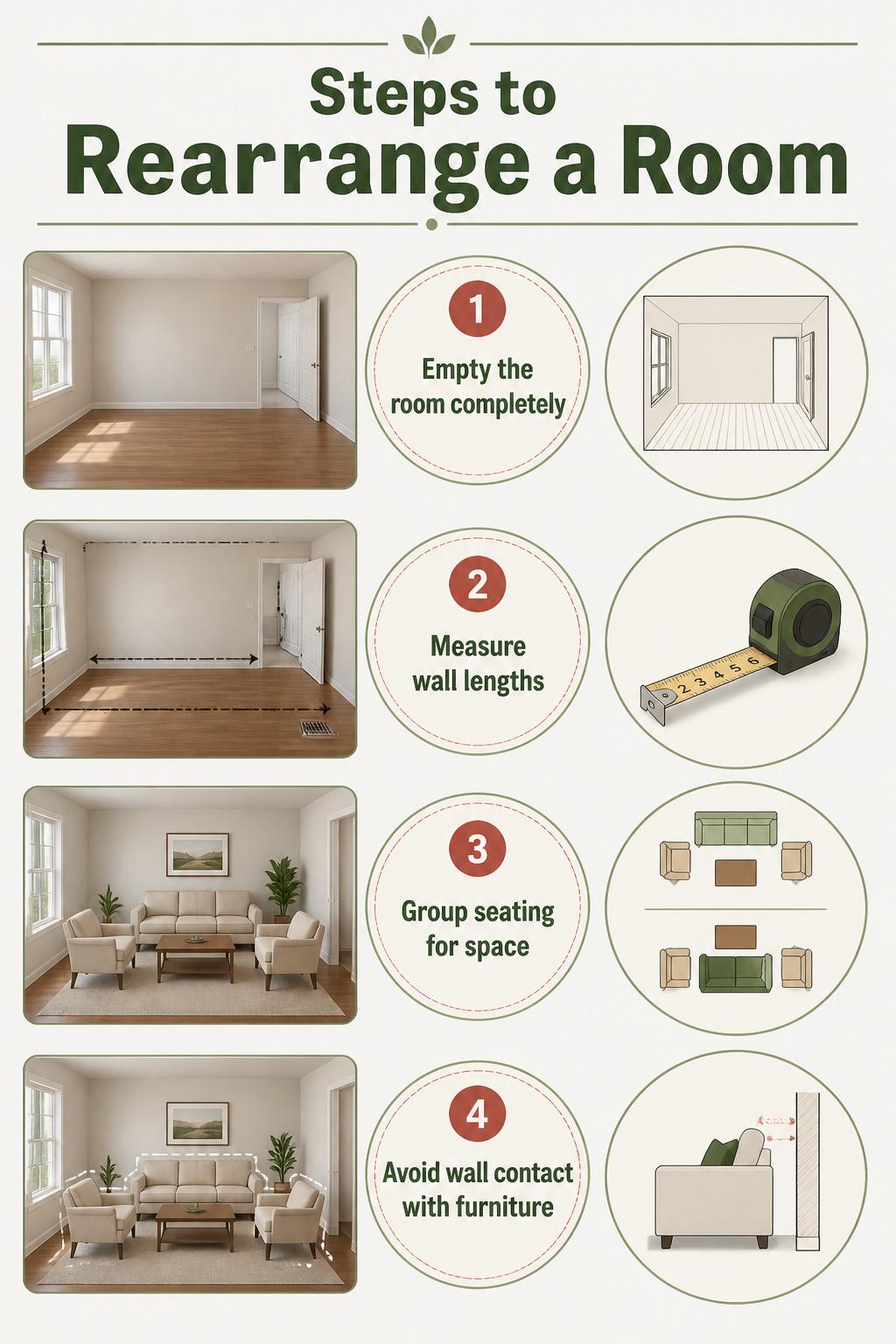
The only way to see what a room can actually do is to pull everything out. I learned this after fighting one awkward office layout for weeks, moving the desk an inch at a time while the old arrangement kept dictating where I thought furniture had to live. Empty the room completely if you can manage it, or at least drag every piece into the hall. The empty floor is the only place where real measurements happen.
Walk the perimeter with a tape measure and note the wall lengths, but more importantly mark where doors swing, where vents sit, and how many feet of straight path you need to walk without zigzagging. The usual sitting area works as either a U shape, sofa and two chairs facing off across a coffee table, or an H, sofa placed directly across from two chairs with the table centered between them. Group the seats closer than feels natural at first; it reads as more space, not less, and keeps the walkways around the grouping open.
Resist the wall. The couch does not need to kiss the drywall. Pull it into the room even six inches and the whole arrangement breathes differently. Once the heavy pieces are placed, walk every route you’d actually use on an ordinary evening. If you have to sidestep, it is still wrong.
When Textiles Wear Out
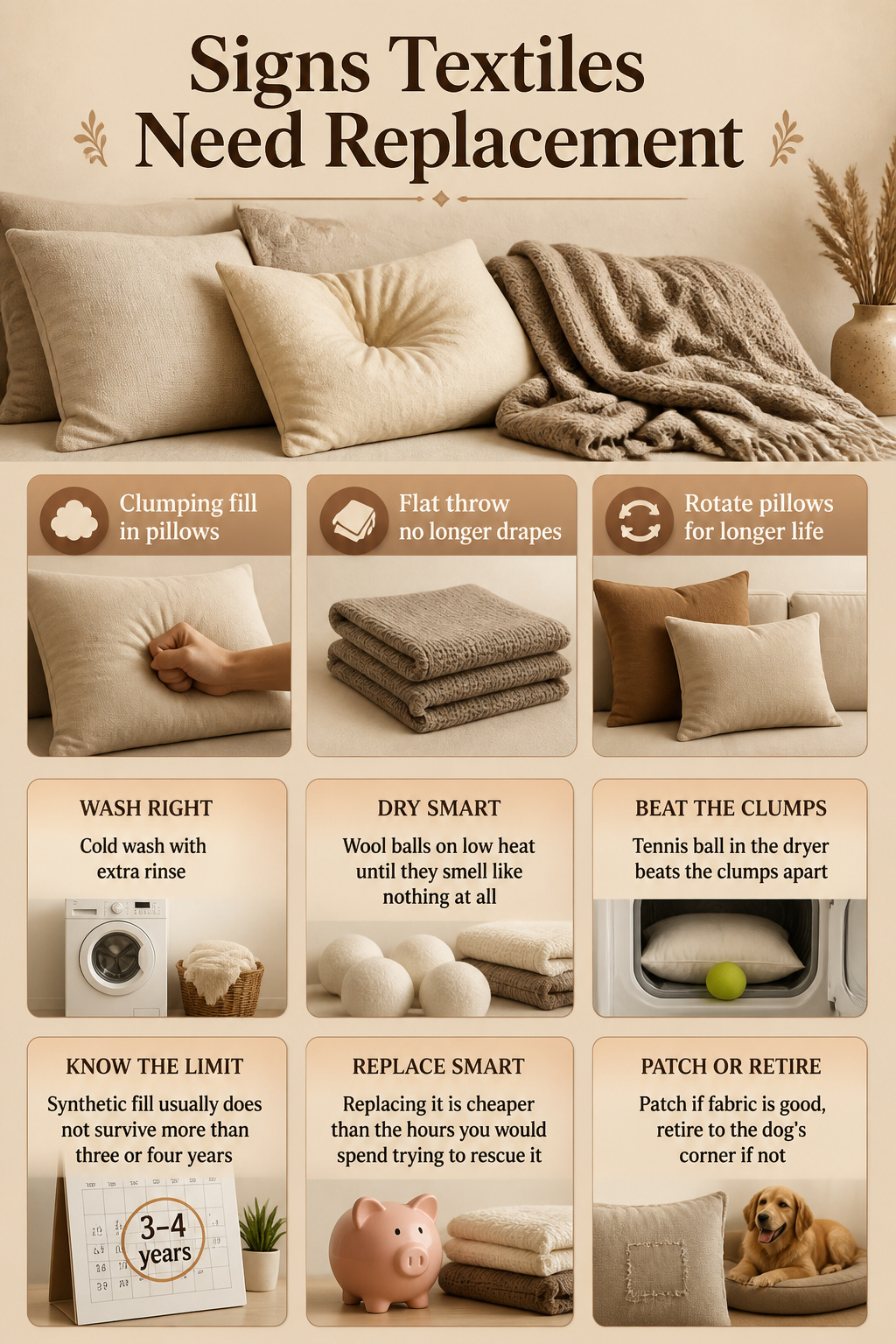
Pillows and throws go flat in ways you can feel before you can see. The fill clumps or the down stops springing back when you punch it, and that is the moment most people keep using it anyway. A cushion that stays dented after you stand up has stopped doing its job. The same with a throw that no longer drapes, just folds.
I wash mine on cold with an extra rinse, then dry them with wool balls on low heat until they smell like nothing at all. Detergent residue is what turns fill gritty over time. For down, a tennis ball in the dryer beats the clumps apart. Synthetic fill usually does not survive more than three or four years of this no matter how careful you are, and replacing it is cheaper than the hours you would spend trying to rescue it.
The cycle in my house runs about every eighteen months for the pieces that get daily use. The ones on the guest bed last longer because they are mostly decorative. Rotating which pillows sleep on the sofa versus the bed doubles the useful life of both sets without costing anything. When a cover frays at the seam, I patch it if the fabric is still good and retire it to the dog’s corner if it is not.
Frequently Asked Questions
What are some easy home decorating ideas?
Swap throw pillows, rearrange furniture, and add a plant or two. These take an afternoon and cost little, but they change how a room feels without buying new furniture or painting walls.
How can I decorate my home on a budget?
Shop your own rooms first, moving items from one space to another so old pieces read as new. Add DIY projects like painting floors with porch and floor enamel instead of refinishing, or spray-paint mismatched baskets for uniform storage containers. Estate sales and rummage sales yield solid brass lamps and wood pieces for a fraction of boutique prices if you test wiring and mechanisms first.
What colors should I use for home decor?
Limit yourself to two or three core colors repeated throughout a room, choosing one neutral and two accents you actually like. For seasonal swaps, shift toward dark warm tones in fall and winter and bright colors in spring and summer, changing out pillows and throws rather than repainting.