
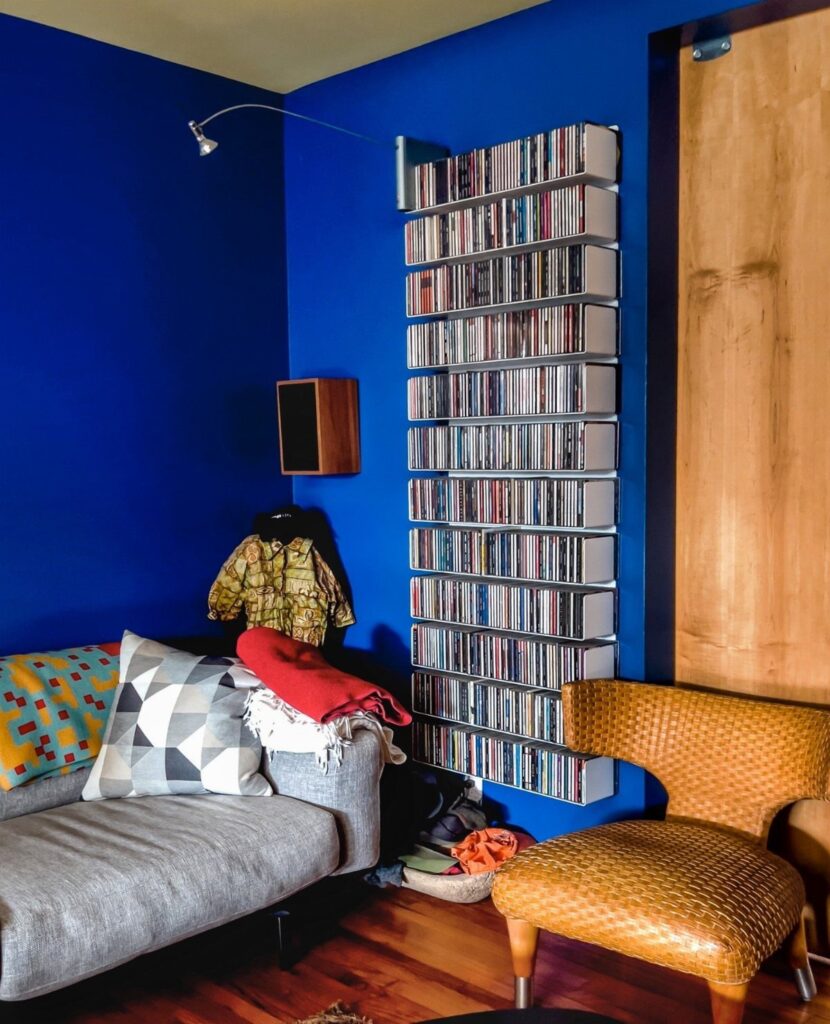
These ideas run from a visor organizer that clips onto a car’s sun visor to a drawer cabinet that hides the whole collection behind a closed front, with sunburst racks, glass towers and Lego builds in between.
Where the discs need to live decides the pick: out on a wall as decor, tucked inside a piece of furniture, or within reach in the car.
Renters get the most from the wall options, since hanging CDs on wall brackets leaves only a few small holes to patch when the lease ends.
1. Floating CD Shelves
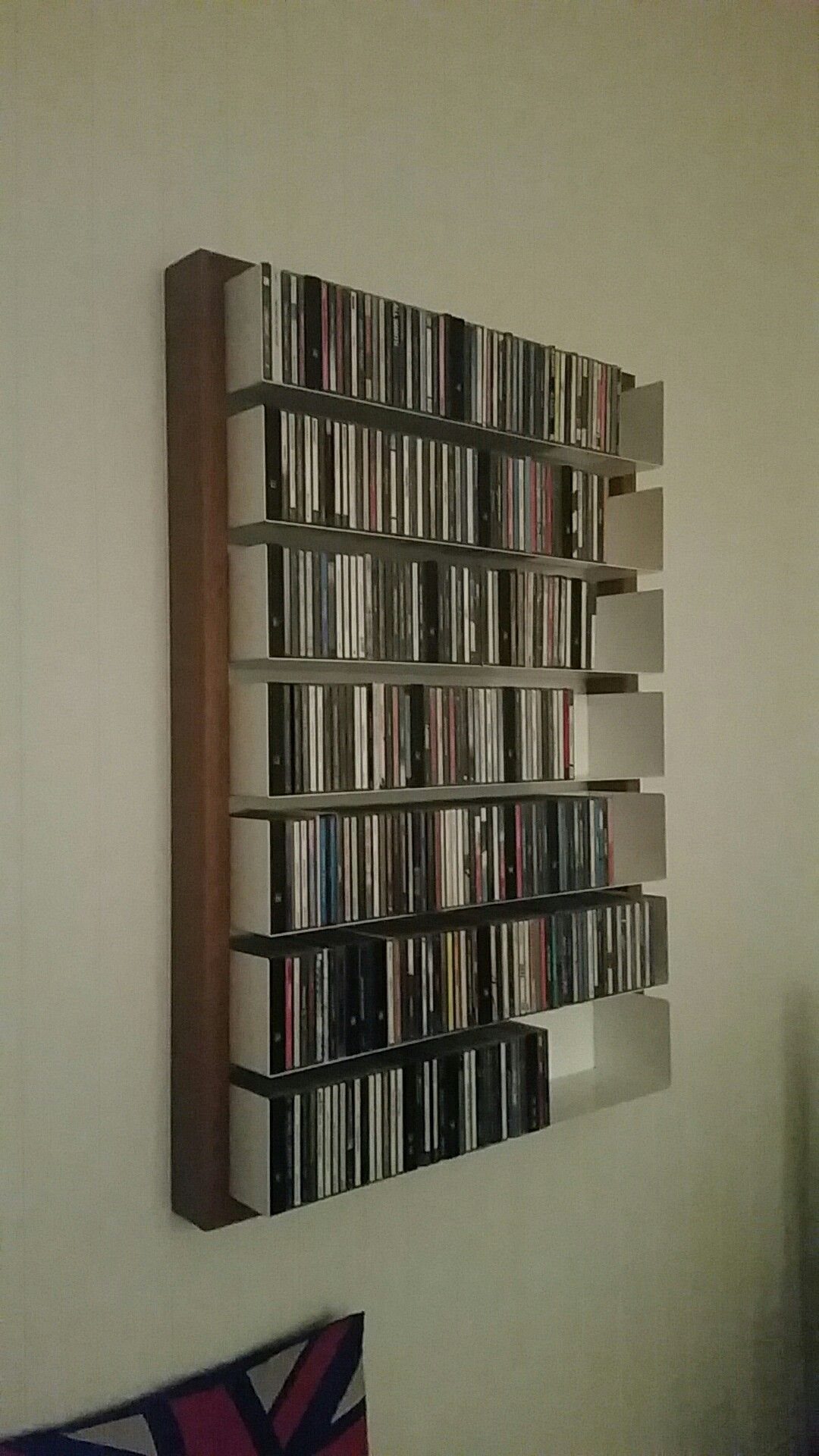
7 rows of CDs on plain wooden shelves turn a bare wall into the storage itself, and the white backdrop keeps the spines from fighting with anything else in the room.
Floating shelves free up floor space, which suits renters with small rooms. Mount each one into studs or use proper wall anchors, since discs add up in weight faster than you’d expect.
Turning a few covers outward breaks up the rows and gives you a spot for whatever you’re playing this week.
2. Wall-mounted CD Rack
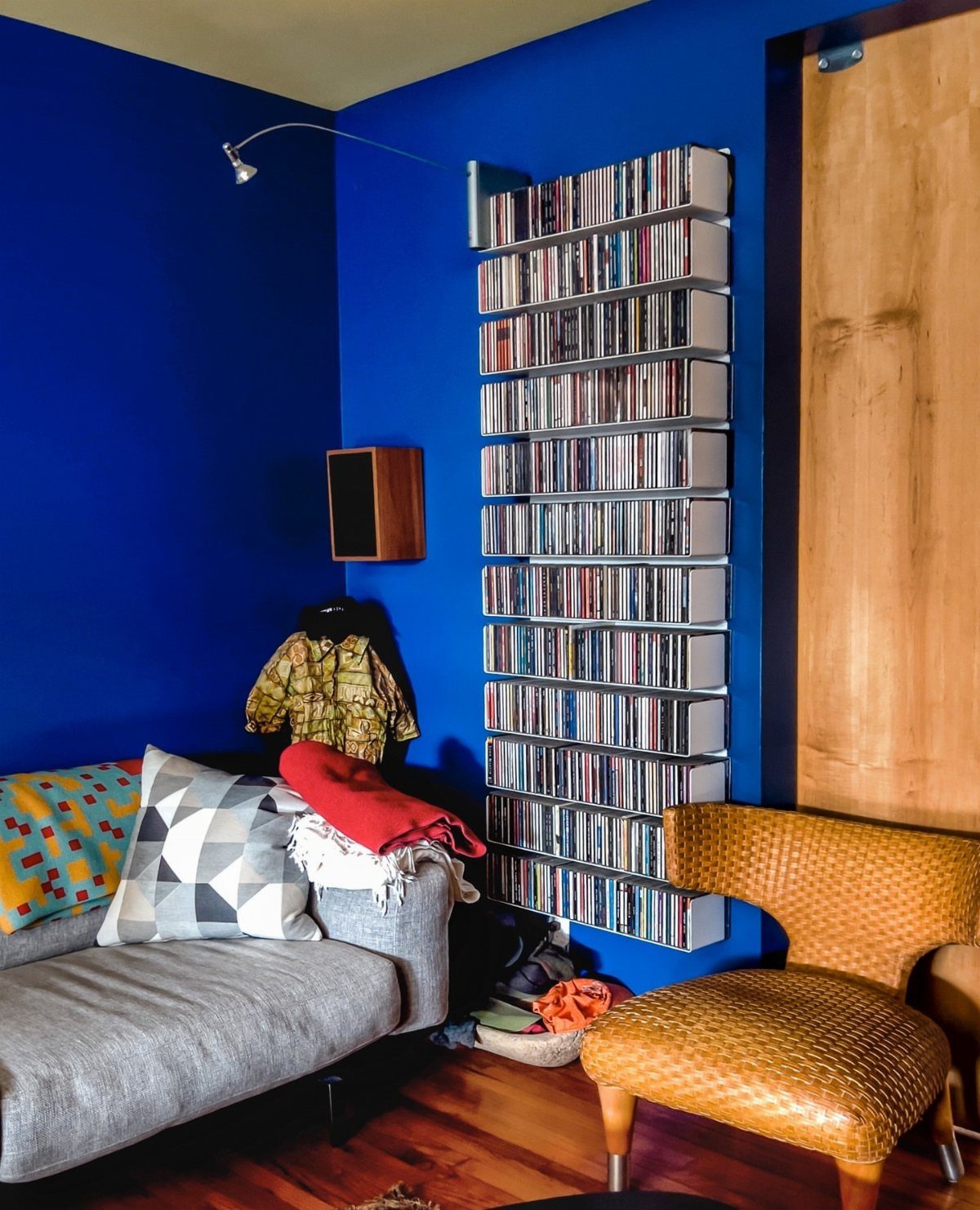
Narrow slots are what make a wall-mounted rack work: each disc sits upright, so a tall, slim rack holds a large collection on a few inches of wall depth.
I like how a bright wall color makes the spines read as a pattern instead of clutter. If your walls are plain, a rack like this becomes the focal point beside a sofa or door.
Pick one with slots sized for jewel cases, and anchor it well, because a full rack is heavy.
3. Glass Shelf Tower
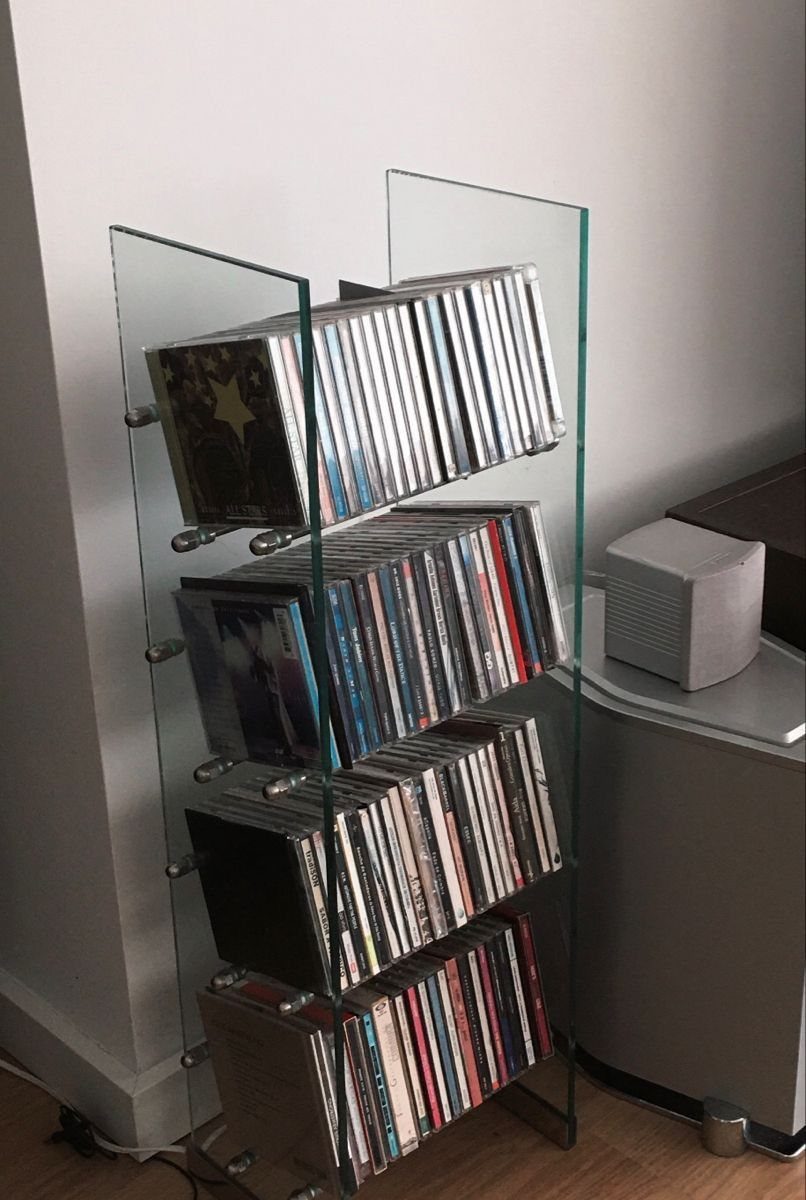
Glass shelves held by metal brackets stack into a slim vertical tower, and the see-through surfaces keep a wall of jewel cases from feeling heavy.
Standing it next to a speaker, against white, makes a tidy listening corner. Space the shelves a little taller than a jewel case so you can slide discs out easily.
Glass shows dust and fingerprints, so expect to wipe it down now and then. That’s the price of the airy look, and I think it’s worth it.
4. Sunburst CD Rack
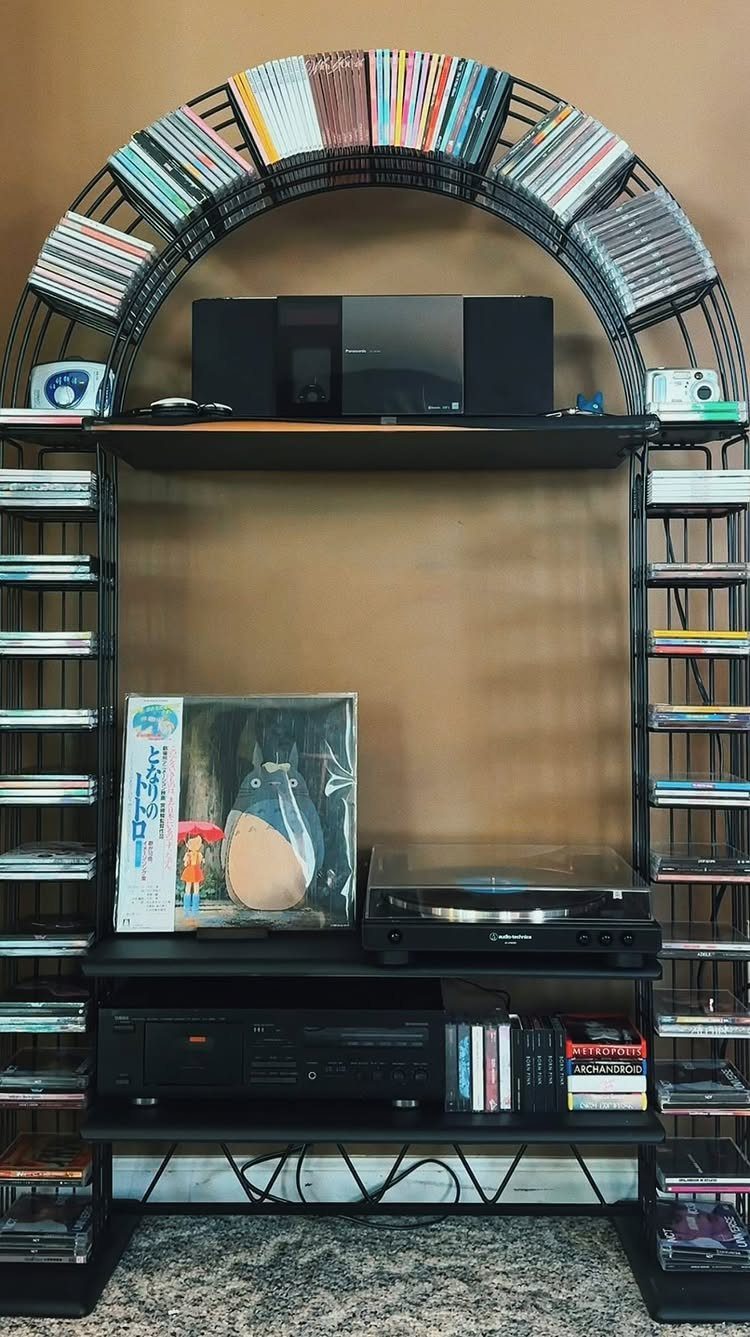
A sunburst rack is the one option here that works as decor before it works as storage: circular metal frames hold discs so they radiate outward like rays.
Black metal looks sharp against a warm brown wall. Used as the top of a media shelving unit, it leaves lower shelves free for a record player or other gear.
Fewer discs fit than in a straight rack, so I’d use it for favorites and keep the rest elsewhere.
5. Long Wall Shelves
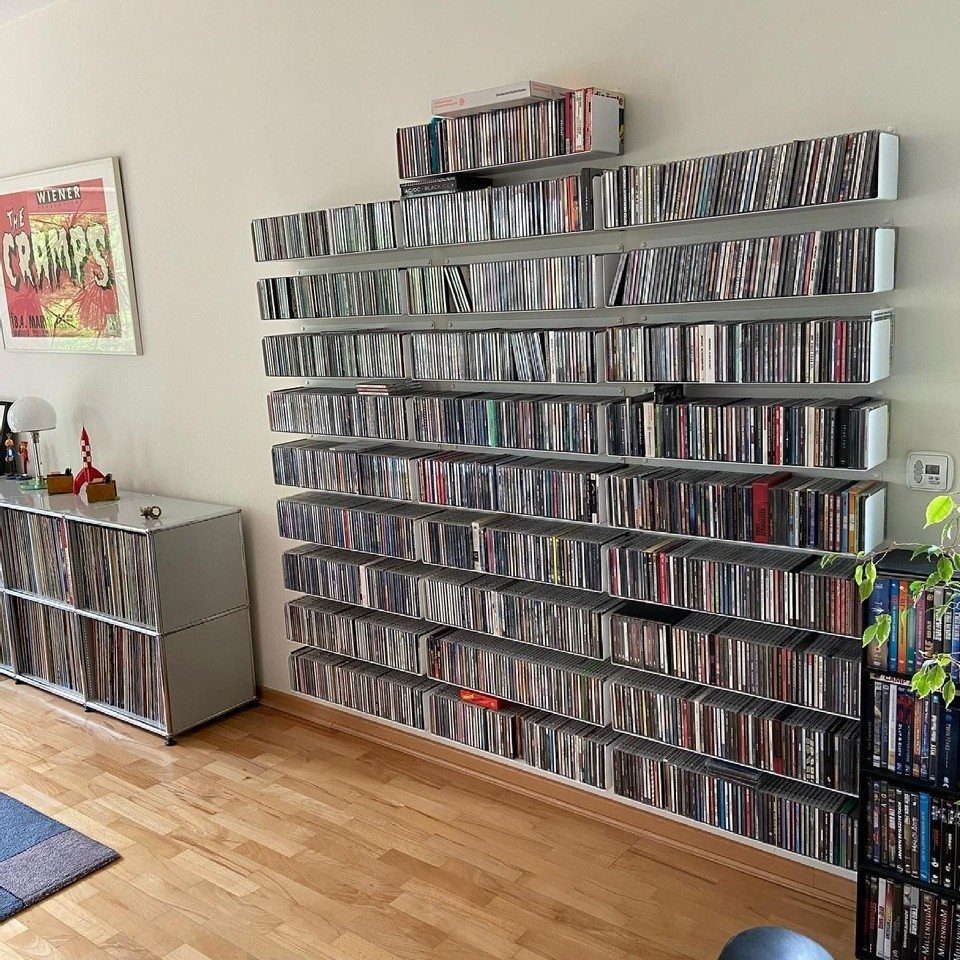
Run several long shelves in parallel and a whole wall becomes one continuous library, with CDs standing upright along each board.
Painting the shelves to match the wall, as in white on white, keeps the focus on the discs. Leave room between rows so you can pull a case out without a struggle.
This suits big collections best. Pair it with a small cabinet for overflow, and use any leftover wall for a poster.
6. CD Storage Cabinet
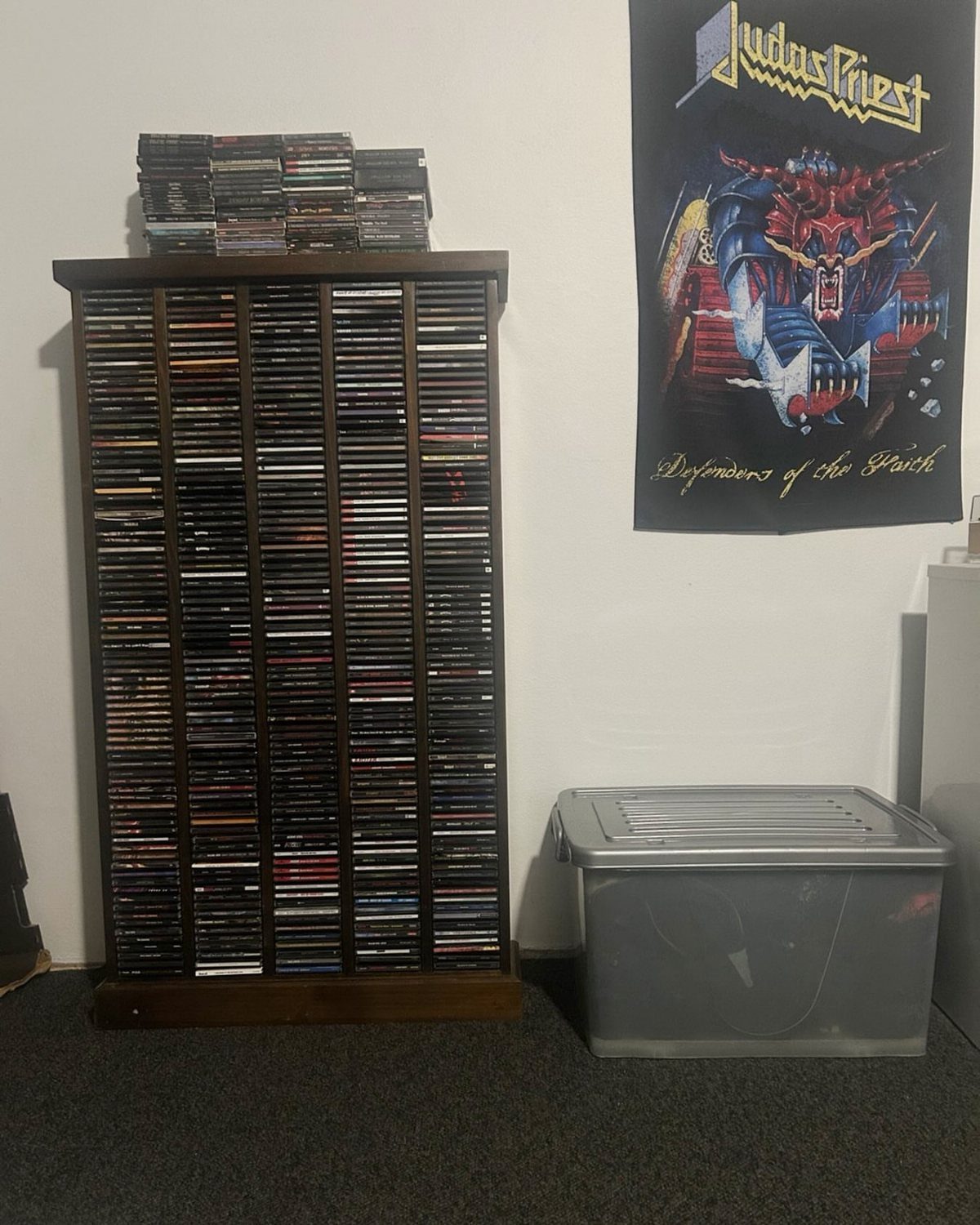
A tall wooden cabinet sorts discs into divided sections, which makes it the most contained choice on this list: everything sits in one piece of furniture you can move.
The top surface is useful too, though I’d keep stacks there short so nothing slides off. Sorting by genre or artist within each section makes finding a disc quick.
It takes floor space, so it fits a room with a free wall better than a tight one.
7. Clear Acrylic Display
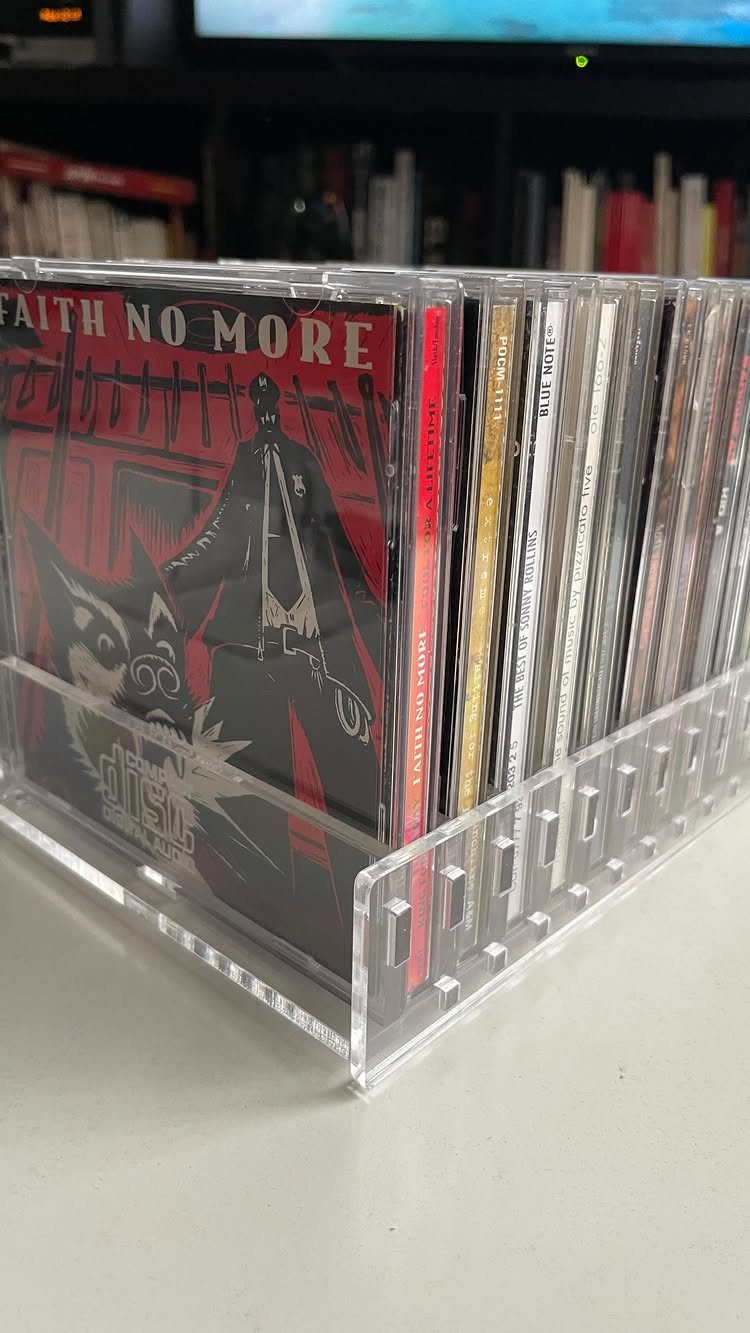
Clear acrylic disappears behind the covers, so the artwork does all the decorating. Each disc faces outward, which turns a few favorites into a small display you can read from across the room.
A white surface keeps the look clean, and a rack this size sits happily on a desk or a bookshelf ledge.
I’d use it for current rotation rather than a whole collection, since only a handful of discs fit at once.
Acrylic scratches, so wipe it with a soft cloth.
8. CD Visor Organizer
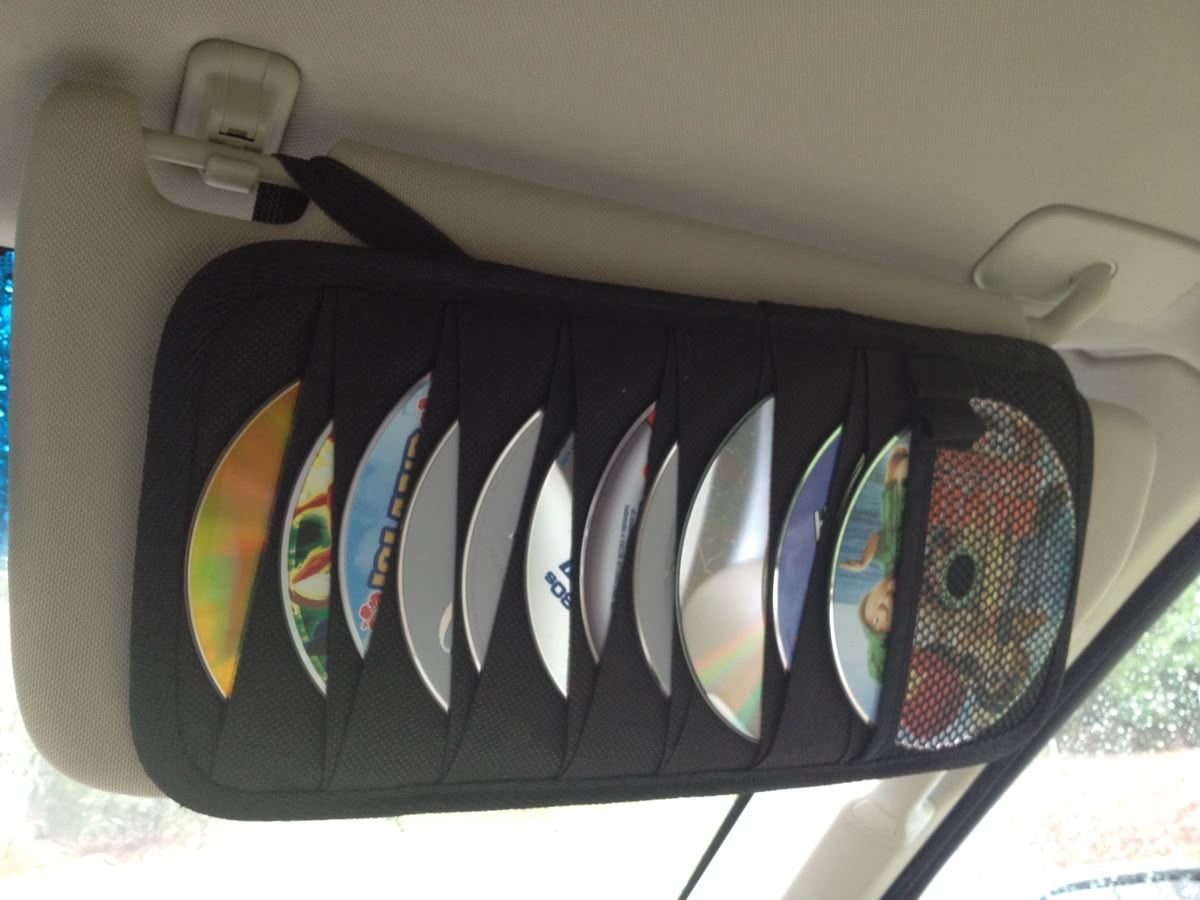
A fabric organizer that clips onto a sun visor puts discs within arm’s reach without taking up a seat, a console or a glove box.
Black fabric against a beige visor stays low-key, and the sleeves hold several discs at once.
Load it with the albums you actually play on drives, not the whole shelf. Swapping a disc while stopped is easy; doing it at speed is not, so I’d pick the next disc before pulling out.
Check that the visor still flips up and down freely once the organizer is on.
9. CD Sleeves on Wall
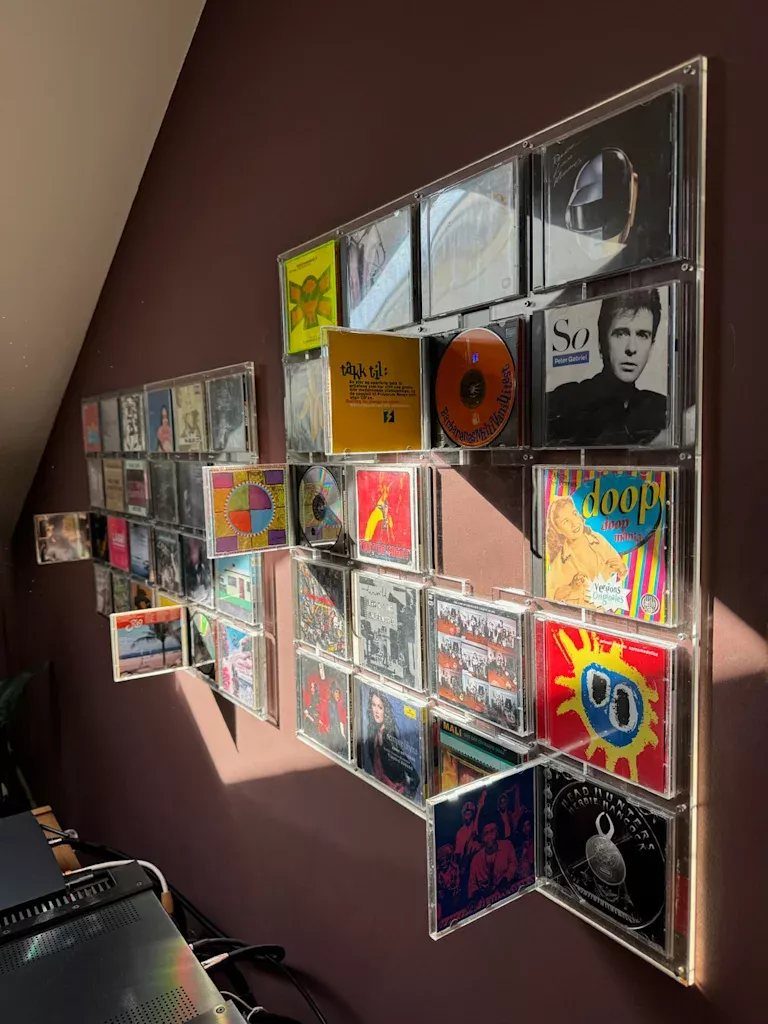
Clear plastic sleeves lined up in a grid turn a wall into a mosaic of cover art, and a deep wall color like dark red makes the covers pop.
Sleeves are far thinner than jewel cases, so a big collection takes surprisingly little depth.
Lay the whole grid on the floor first, then measure and mark before you fasten anything. Keeping the gaps between sleeves equal matters more than the exact spacing you pick.
Once the discs are out of their cases, store the jewel cases elsewhere so booklets and trays stay safe.
10. CD Art Display
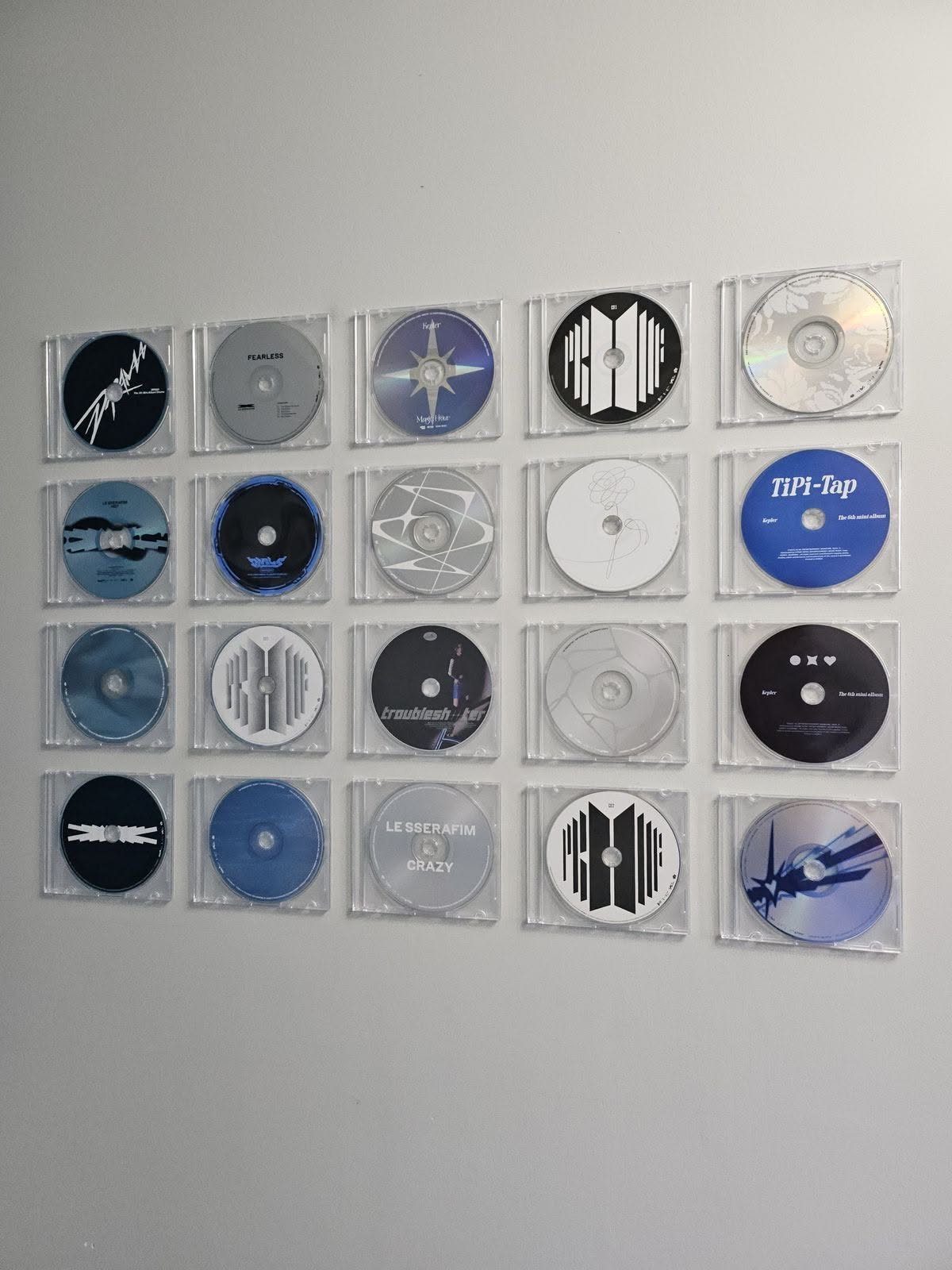
Empty or finished-with cases become artwork when clear acrylic brackets hold them flat to the wall, so the covers float without frames.
A neat grid on a plain white wall, 4 rows of 5, reads as one deliberate piece instead of a pile of cases.
Choose covers by color and mood, since the wall rewards a consistent palette. Mark the grid with painter’s tape and a level before drilling, which keeps rental walls to a few small holes.
Swap in a new cover whenever you tire of the old one.
11. Lego CD Rack
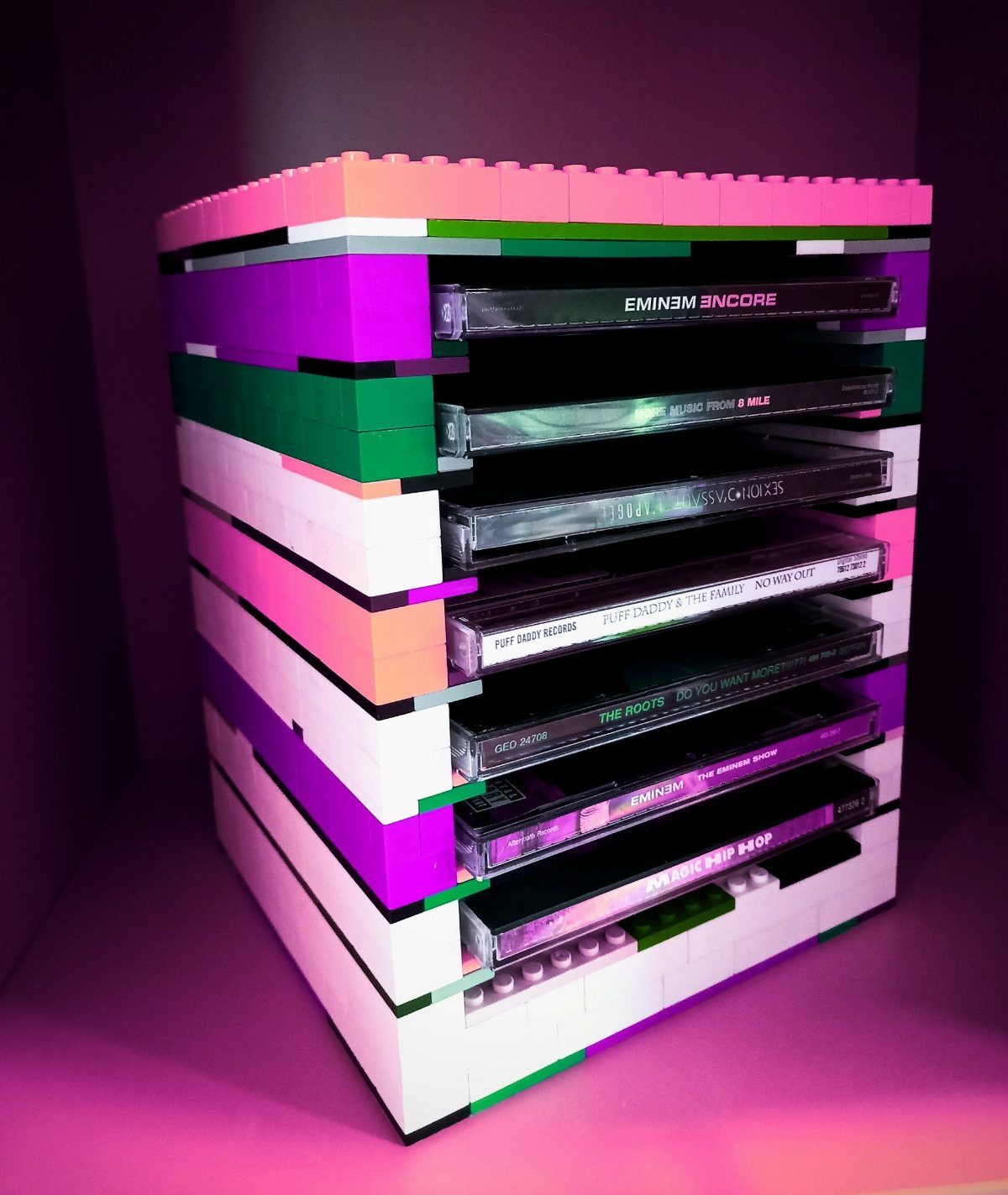
Because the bricks snap together, you size the shelves to your cases as you go.
Test with a jewel case at each level before you stack the next layer, so the openings fit. Lego is cheap to adjust: pull a row off and rebuild if the fit is off.
I’d keep it to a small stack of favorites. Tall, loaded builds can wobble.
12. CDs on Wall Brackets
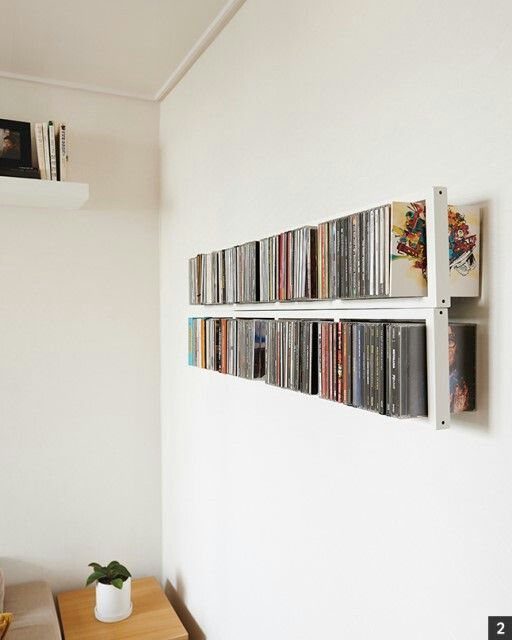
L-shaped metal brackets are the leanest way to hang CDs: each bracket’s short lip catches the bottom of a row, so 2 rows can sit stacked on a wall with no case or frame around them.
White brackets on a white wall nearly vanish, which leaves the spines as the only color in the room. I’d pick this for a small space where a shelf or tower would feel bulky.
Hang the upper row at a height you can reach without a stool. Check that each bracket is screwed in firmly, since a row of cases pulls down on the lip.
13. CD Drawer Cabinet
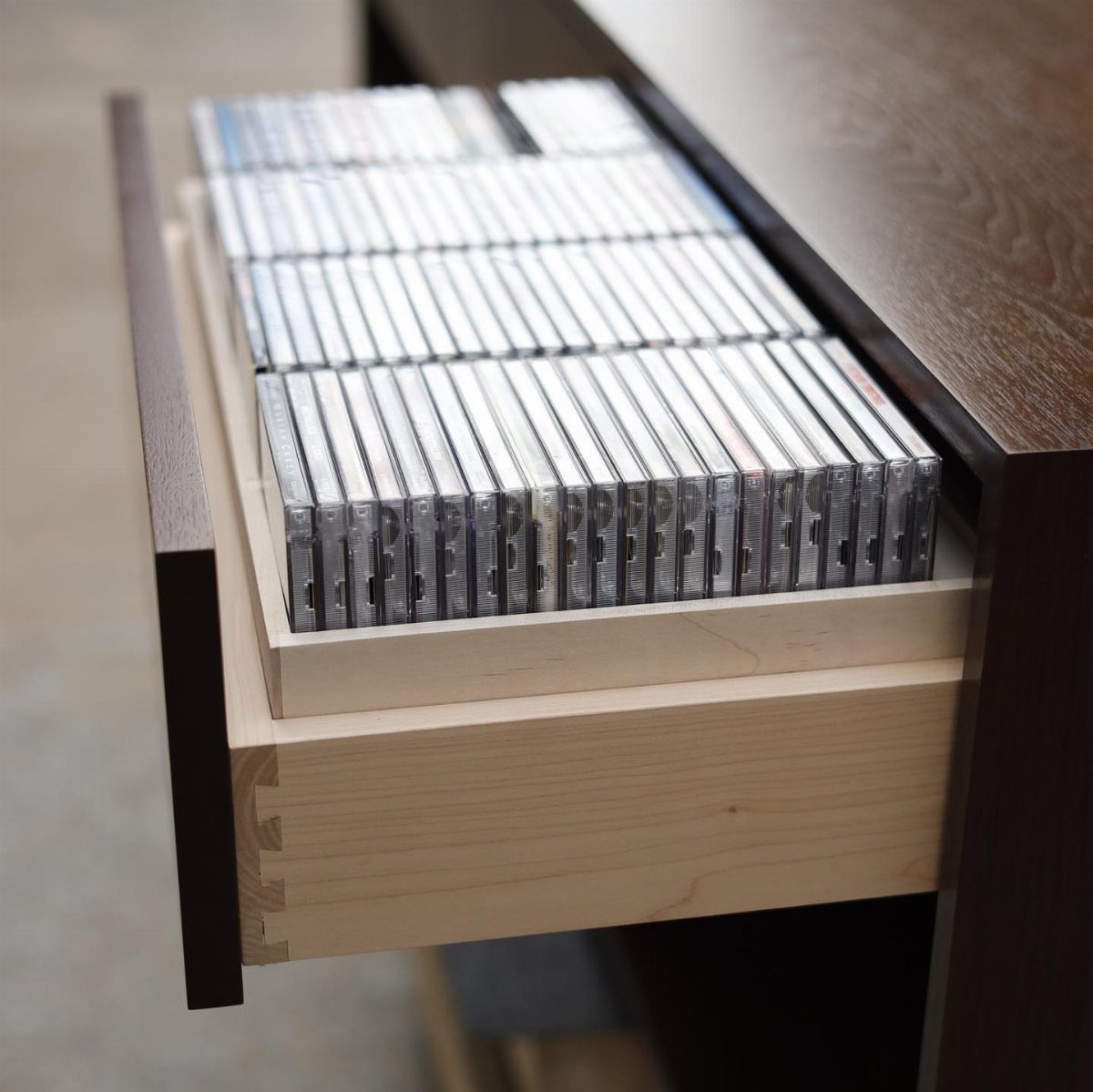
Hiding CDs in a drawer keeps the whole collection out of sight, and a pull-out drawer holds jewel cases upright in rows, so you can flip through spines the way you would in a record crate.
In a dark wood cabinet, the closed front looks like ordinary furniture, which suits renters who want a tidy room without a visible wall of discs. Pulling the drawer fully open lets you read every row at once.
I’d keep each row to one artist or genre so you never have to dig. Leave a finger of slack at the end of each row so cases tilt out easily.
Frequently Asked Questions
What is the best way to store DVDs and CDs?
For a big collection, long wall shelves or a tall wooden cabinet with divided sections hold the most.
Parallel shelves turn a whole wall into one library with discs standing upright on edge, while a cabinet keeps everything in one movable piece of furniture.
What are some unconventional storage ideas?
A sunburst rack with circular metal frames that fan discs outward works as wall decor, and L-shaped brackets can hold 2 rows of CDs with no case or frame at all.
You can also snap together a Lego rack sized to your jewel cases, or clip a fabric organizer to a car sun visor.
Clear plastic sleeves in a grid turn cover art into a wall mosaic, which also uses far less depth than jewel cases.
What is the best CD storage for a small space or a rental?
For a small space or a rental, wall brackets take up the least room: a short lip catches the bottom edge of each row, and white ones on a white wall almost vanish.
A slim wall-mounted rack also works, since upright slots hold a lot of discs on a few inches of depth.
Either one keeps floor space free, and a level plus painter’s tape for marking keeps the holes in a rental wall to a minimum.