
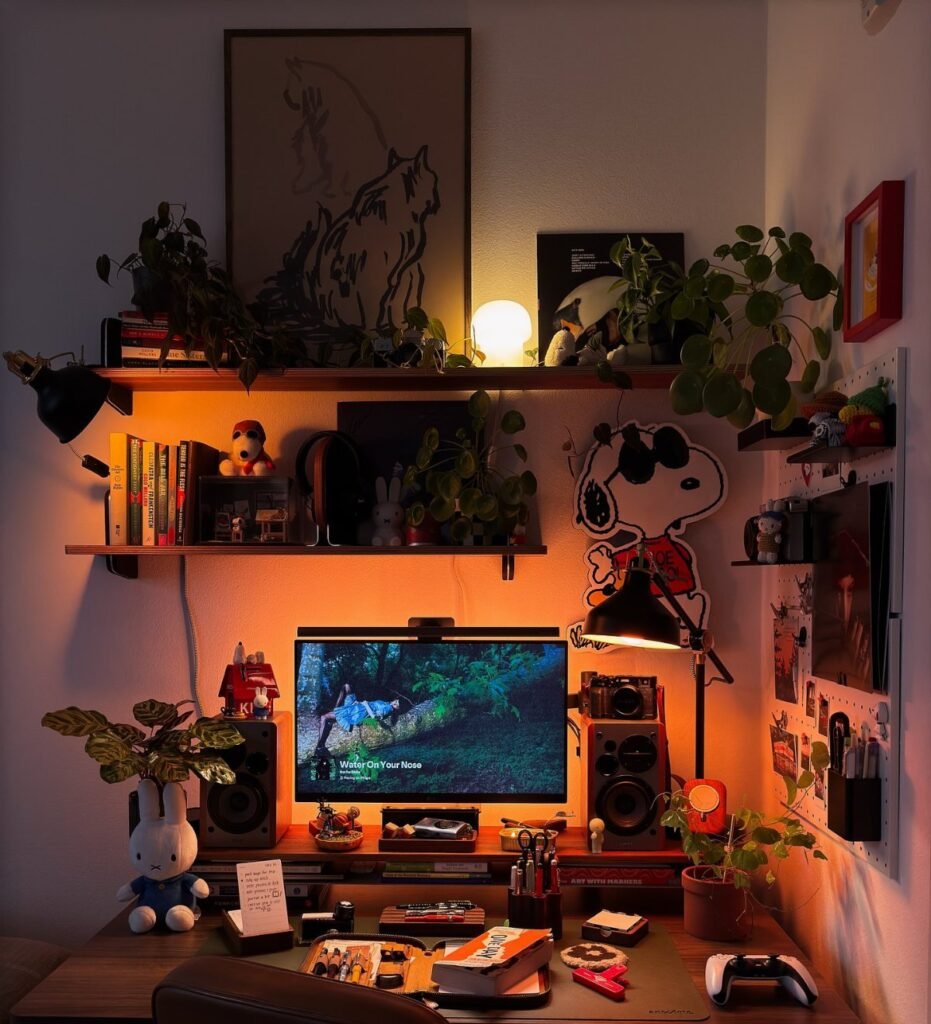
The ideas below include a small gallery wall and a few desk essentials, and the right one depends on whether your desk serves long focused sessions or scattered bursts between other tasks.
Someone who clears the surface after each use needs wall-mounted solutions; the person who stays put all morning benefits most from the small pleasures that sit within arm’s reach, like succulents in a ceramic pot or a warm-toned lamp that signals evening.
1. Use Plants or Flowers
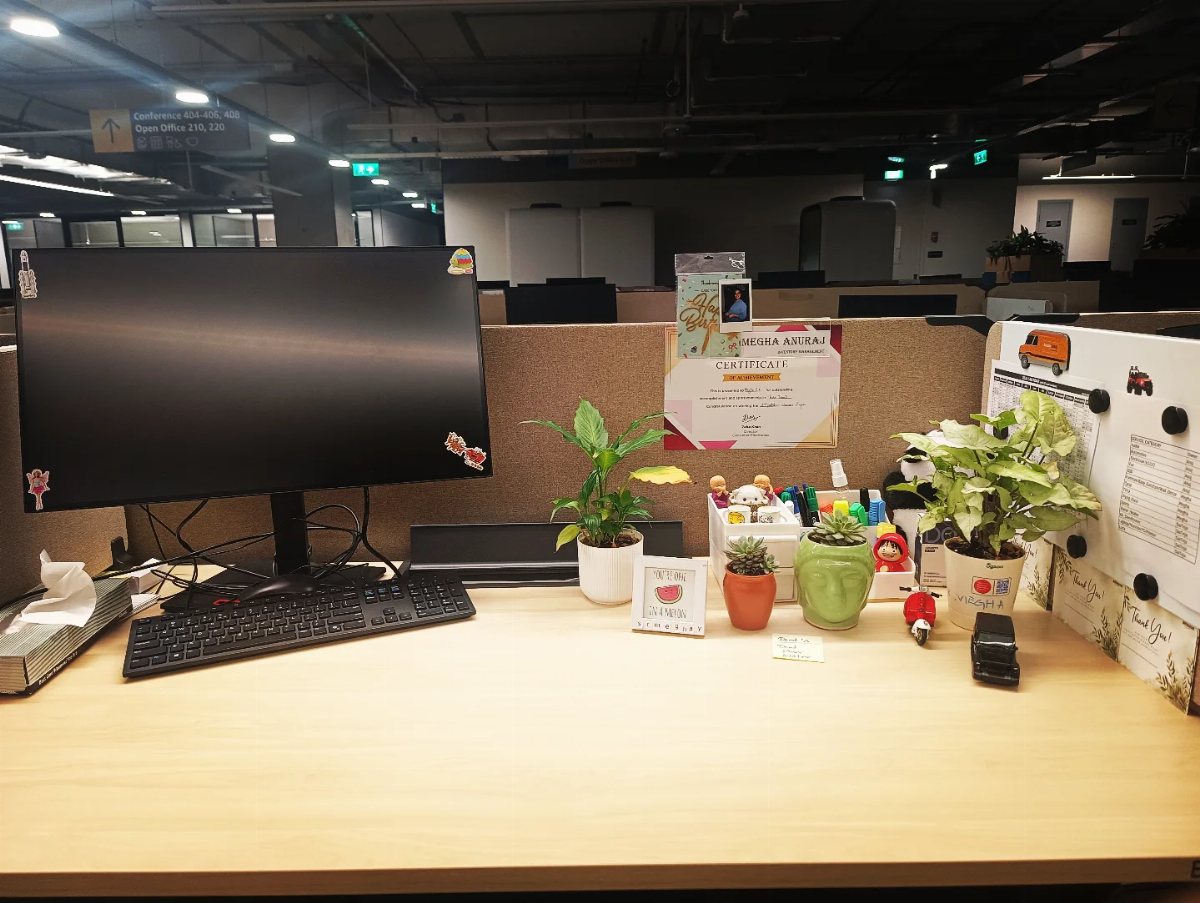
Succulents run cheap and need less care than most houseplants; three in a small pot still look intentional. I keep mine in a small ceramic pot near my monitor, where the green catches my eye during long calls.
No window? A desk lamp with a daylight bulb set to 5000K mimics what they need.
Snake plants and pothos forgive low light too, though they run a few dollars more.
Skip the daily flower habit unless that ritual itself calms you. The steady, living thing suits this reader better than a recurring expense.
2. Organize with Storage Solutions
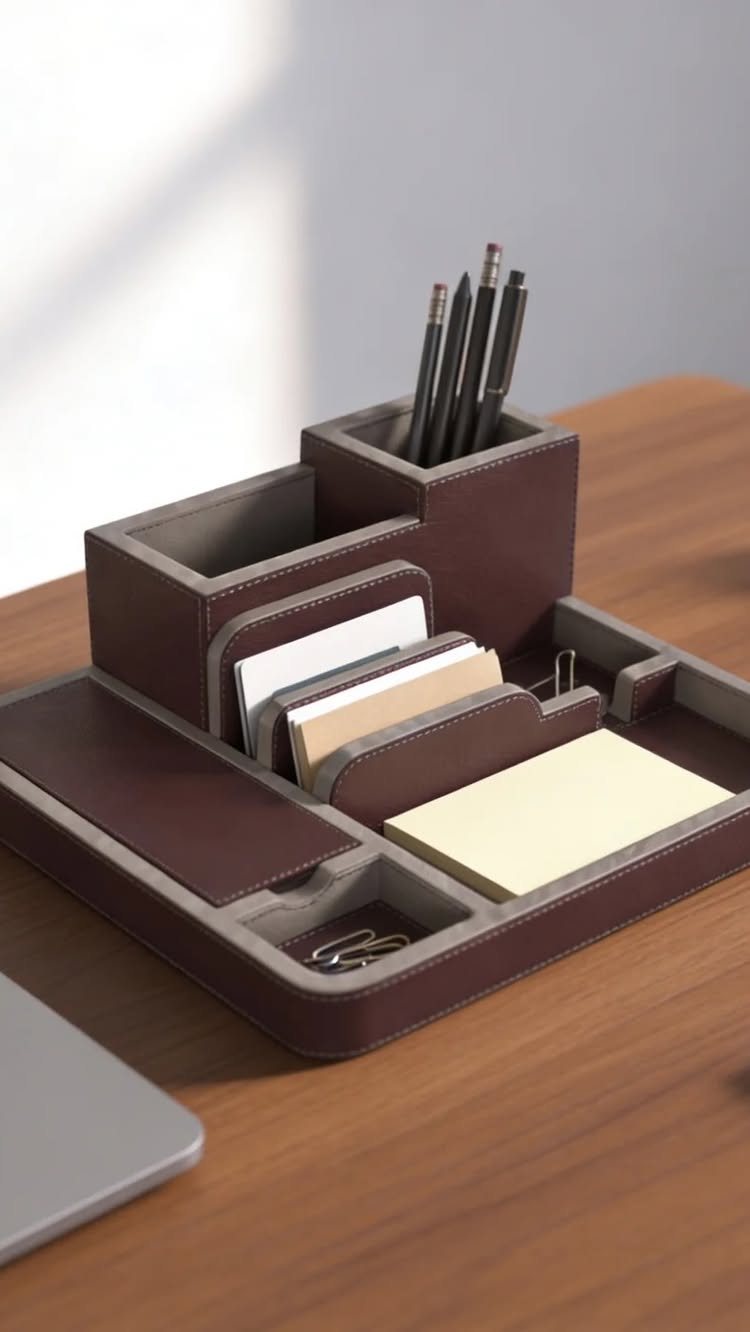
A basic desk organizer from any home goods store handles daily clutter; add a lidded box for paperwork you can’t file immediately. The system collapses without that second piece: visible clutter migrates to whatever surface remains.
Match the tray to your desk tone, or deliberately contrast it. Either reads intentional; mismatched plastic reads temporary.
3. Use Lighting to Set the Mood
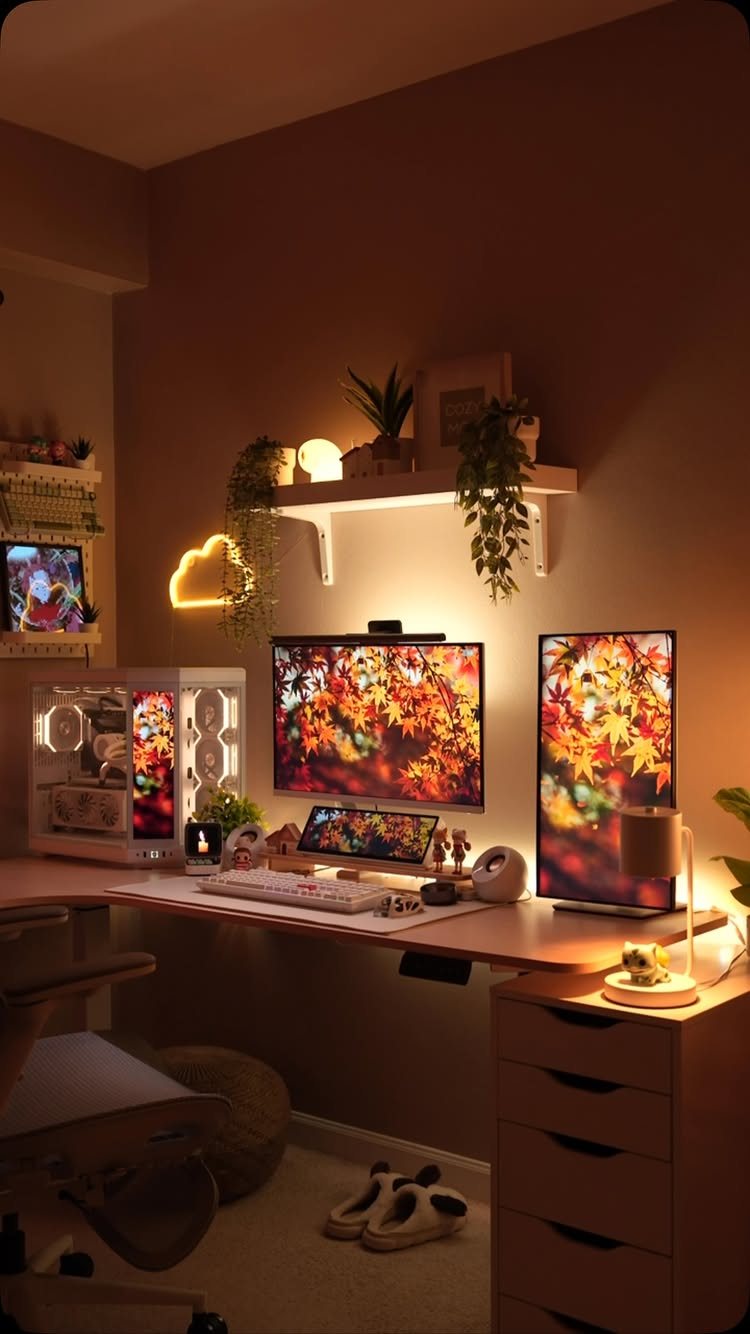
Warm light after dark protects your eyes and your sense of the hour. Warm-toned neon, around 2700K, signals evening to your brain even while you finish one more email.
Daylight-balanced lamps serve the morning side of a desk, especially in basement offices or winter months when natural light quits early. I run mine on a smart plug that fades up at sunrise.
Monitor backlighting works as decoration, not task lighting; pair it with something brighter for actual work. Add it if your setup already handles task lighting; skip it if you’re buying your first lamp.
4. Personalize Your Workspace
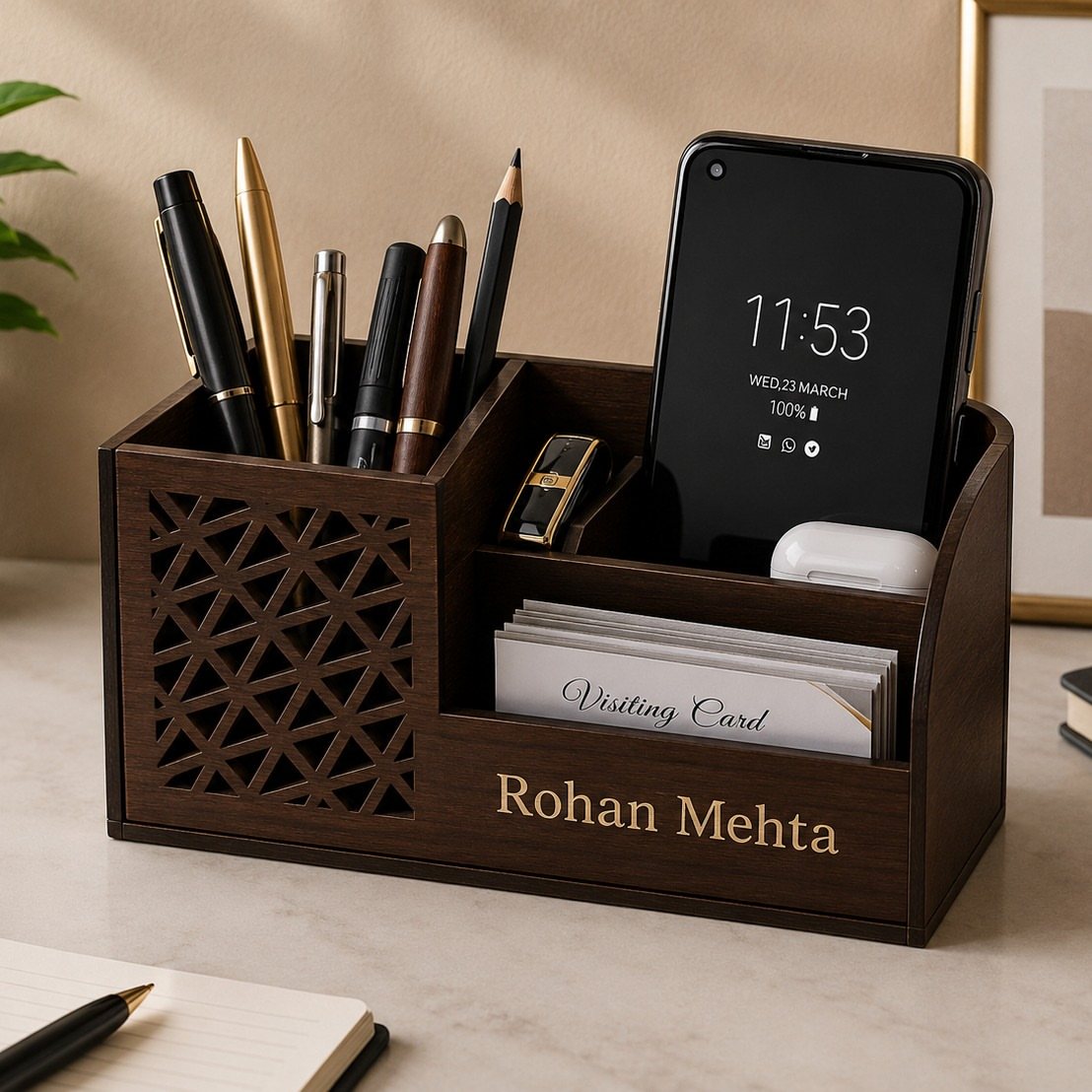
An engraved name on a desk organizer turns a generic object into territory. Dark wood paired with clean script reads professional without corporate sterility.
I added a small framed photo of my dog and a stone picked up on a memorable hike. Two personal items max, or the desk becomes a shrine and storage suffers.
Custom stationery works the same way: a monogrammed notebook signals this space is yours in a shared office where nothing else can.
Custom engraving or printing costs less than most people guess and turns a mass-market piece into something that actually belongs to you.
5. Incorporate Art and Inspiration
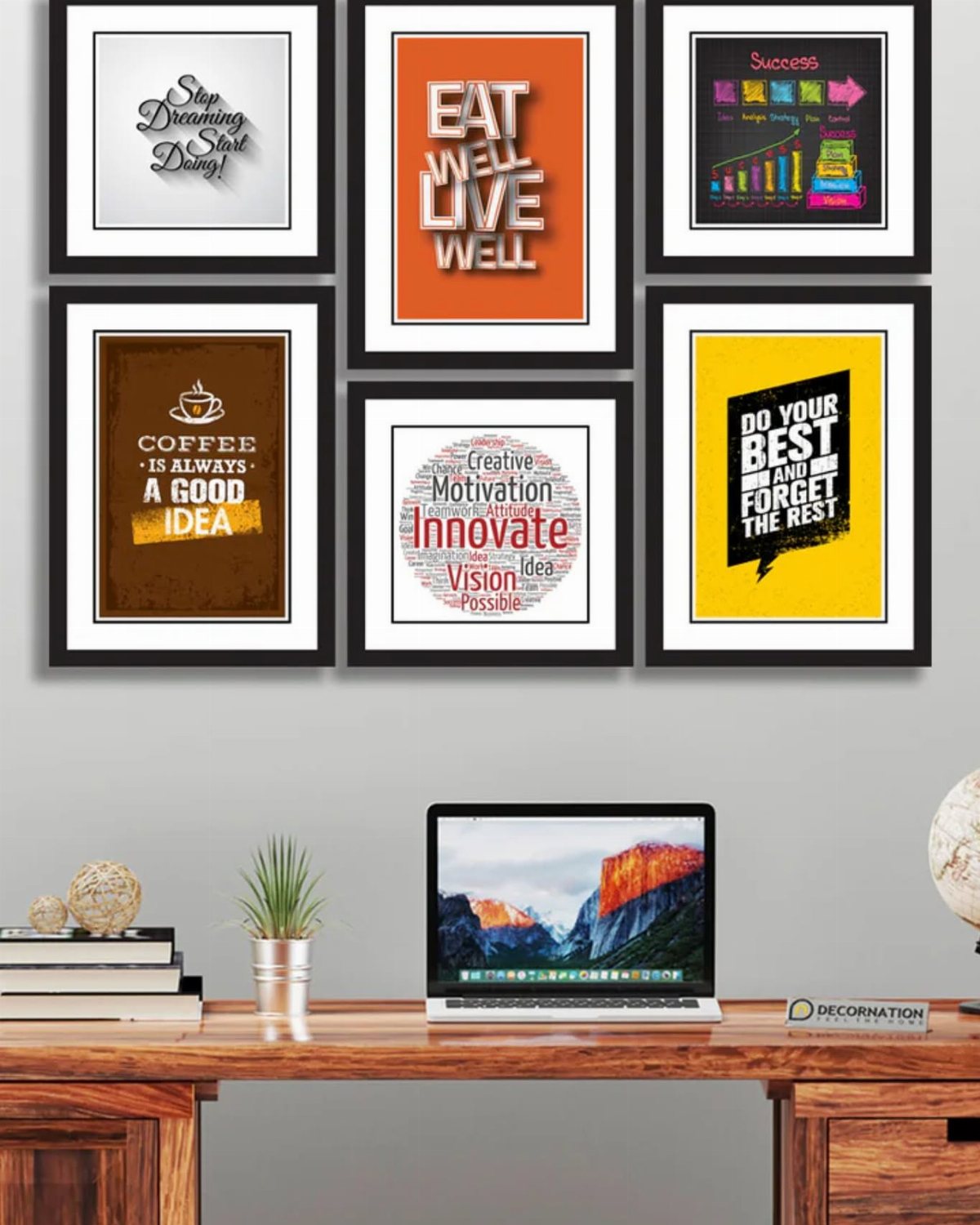
Six framed quotes above a desk create a gallery wall that fills vertical space cheaply. A small unframed print runs cheap; black frames unify mismatched art into a single statement.
I rotate my wall seasonally, storing out-of-season pieces behind the current set. Swapping art seasonally resets attention without buying new.
One large piece works better for narrow desks where the wall is broken by shelving. The gallery approach suits wide, uninterrupted space above a dedicated workspace.
6. Incorporate Color

Labeled storage in matching colors shows the scheme was chosen, then hunted down, not accidental accumulation.
One accent color, say lavender, with everything else matching or neutralizing it, keeps a desk from looking like a clearance rack. The discipline sounds restrictive but saves money, since impulse purchases now have a test to pass.
Pastel schemes read softer than primary brights, which can fatigue during long work sessions. Choose based on whether your desk serves concentrated tasks or creative bursts.
7. Choose a Theme That Inspires You
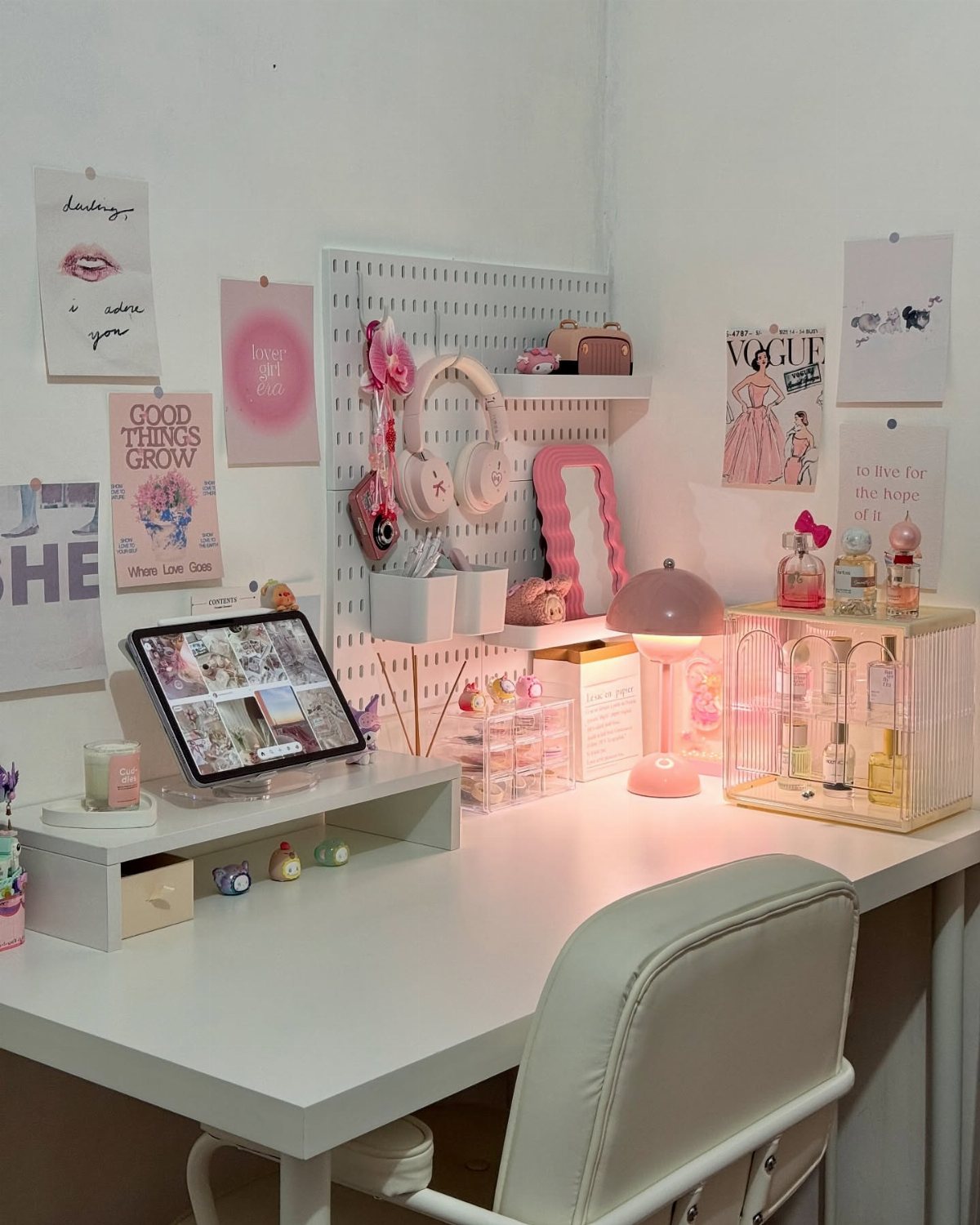
Thread one color through your lamp, headphones, wall art, and storage so the whole desk reads as intentional. That repetition turns a random collection into a space that feels intentional.
Pick one color, one motif, or one mood and thread it through enough items that the eye picks up the pattern. Floral works with a small bud vase, a botanical print, and a notebook cover.
Zen needs clean lines, a single neutral, and one natural material like wood or stone. The restriction actually makes choosing easier; you shop faster and the result looks planned, not scattered.
This trades variety for calm. If you thrive on visual energy, skip it and mix instead.
8. Incorporate a Calendar
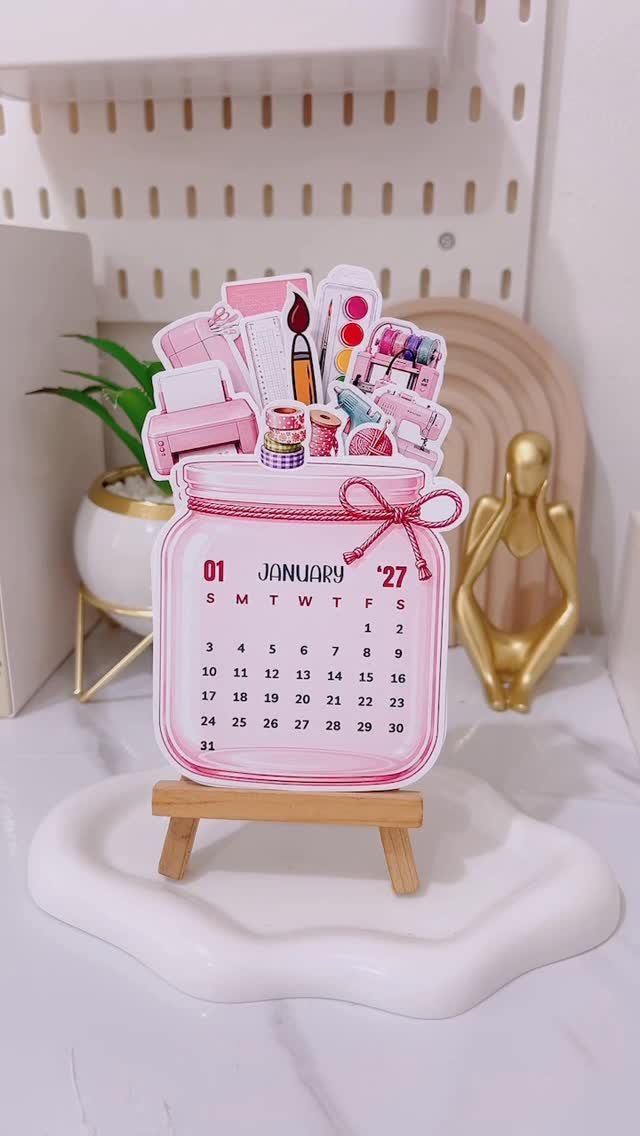
A desk calendar shaped like a jar, propped on a tiny easel, turns scheduling into something you want to look at. The date sits at eye level without the digital pull of a phone screen.
Paper calendars work best for people who need to see the whole month at once. A desk pad or a small standing version keeps deadlines in peripheral vision.
For daily tasks, a weekly notepad or a desk pad with room for to-dos adds more granularity without opening an app.
The catch: you have to write in it. If that habit never stuck, this becomes decoration that pretends to be organization.
9. Aesthetic Stationery
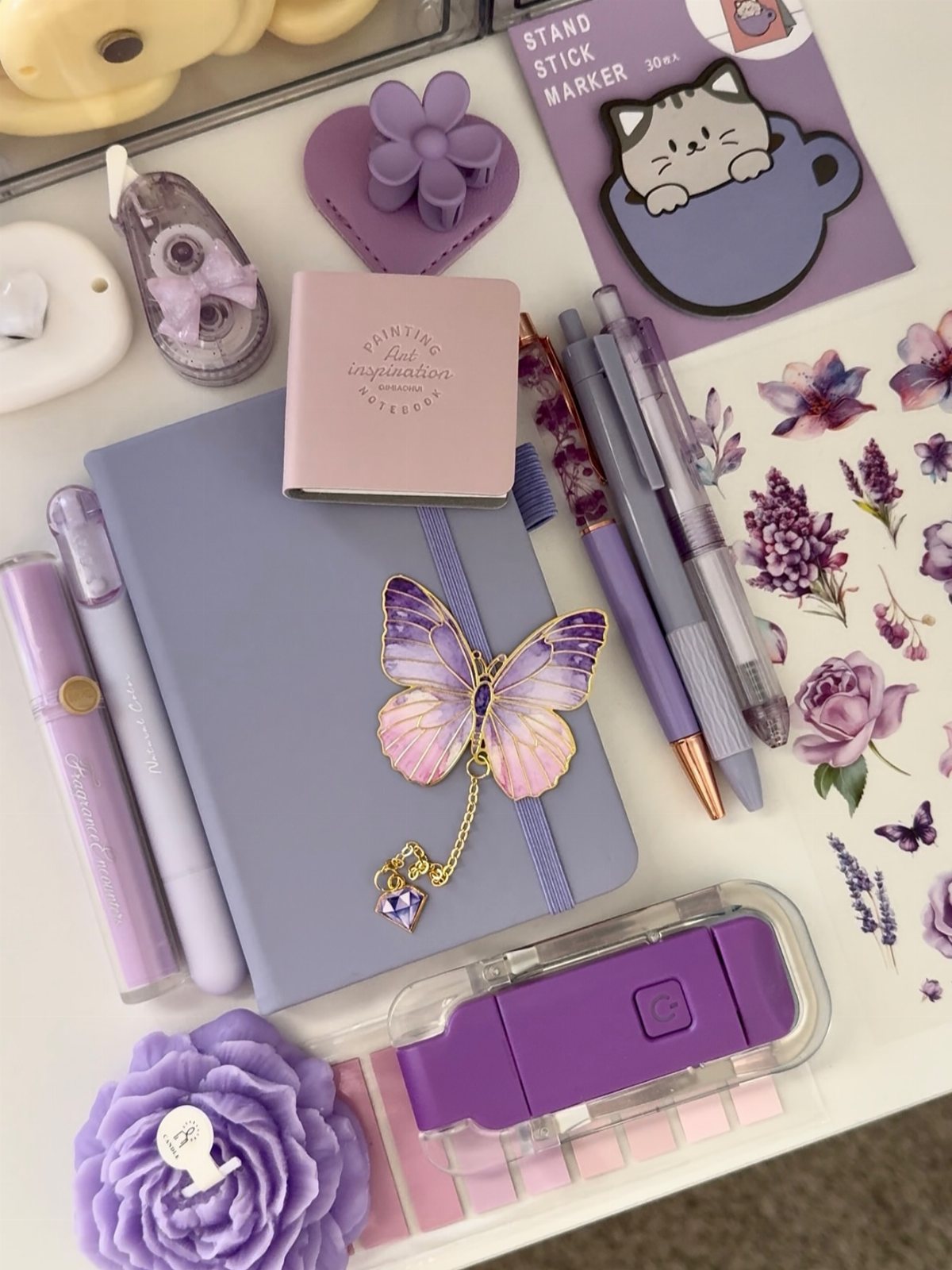
Purple pens, a butterfly clip, a flower-shaped candle: matching your tools to a color you like makes the work itself slightly less tedious.
The visual change is immediate and the cost stays low; a coordinated set of pens and a notebook is one of the cheapest upgrades you can make.
Start with one color family and replace items as they run out. Highlighters, sticky notes, and washi tape all come in spectrum packs now.
A pen that writes smoothly and looks right on your desk beats a perfect set you never touch.
This suits people who spend hours at a desk and need small pleasures to break the monotony. It does nothing for the person who works in scattered bursts and clears the desk after each one.
10. Chic Picture Frames
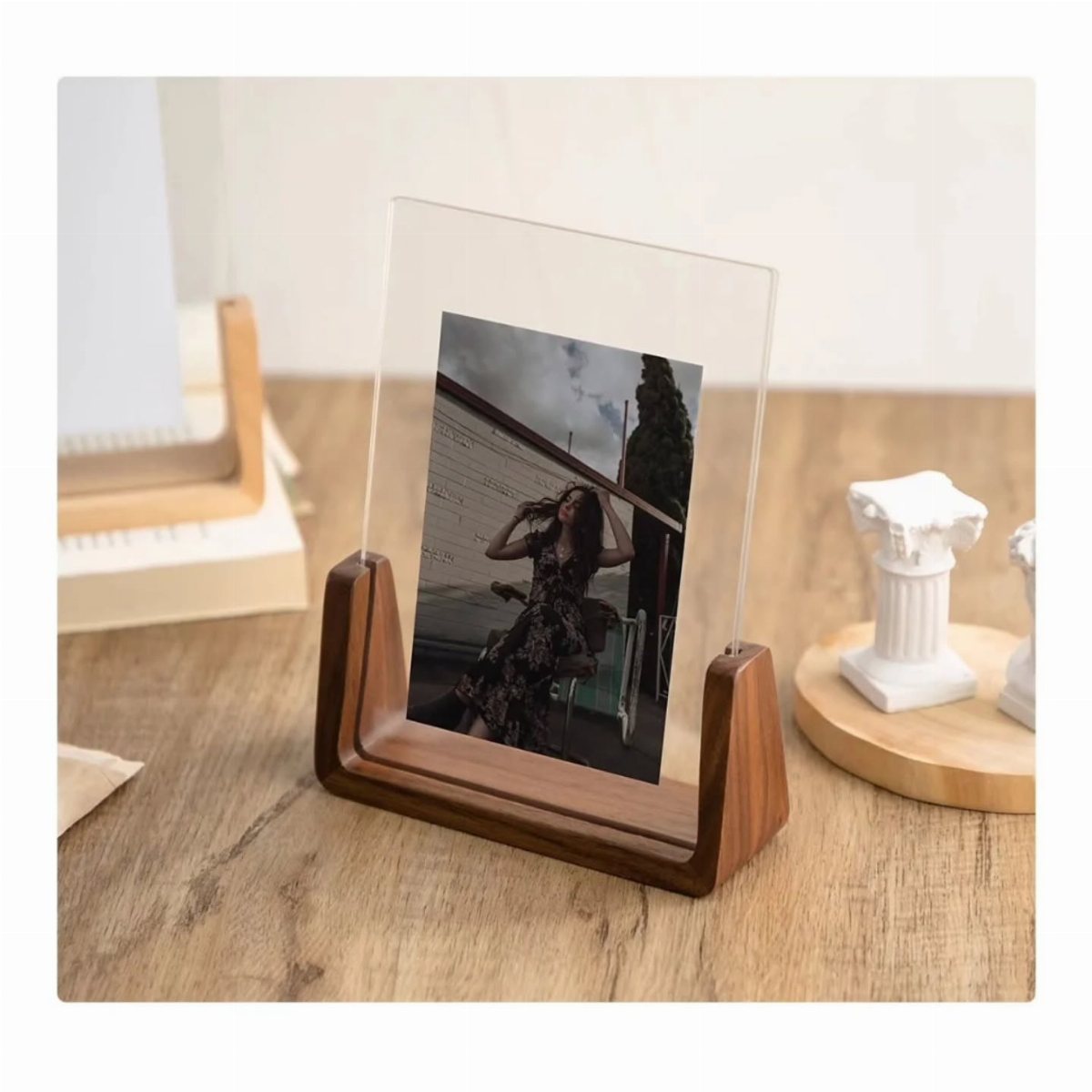
One or two frames on a desk humanize a workspace without the clutter of a full gallery wall.
Choose photos that reward repeated looking: a face you miss, a place you want to return to, a moment that still makes you pause. The frame should protect without competing.
This works when you have the surface space. On a shallow desk, a frame crowds your work area and a wall-mounted option or a digital rotation makes more sense.
11. Inspiration Pinboards
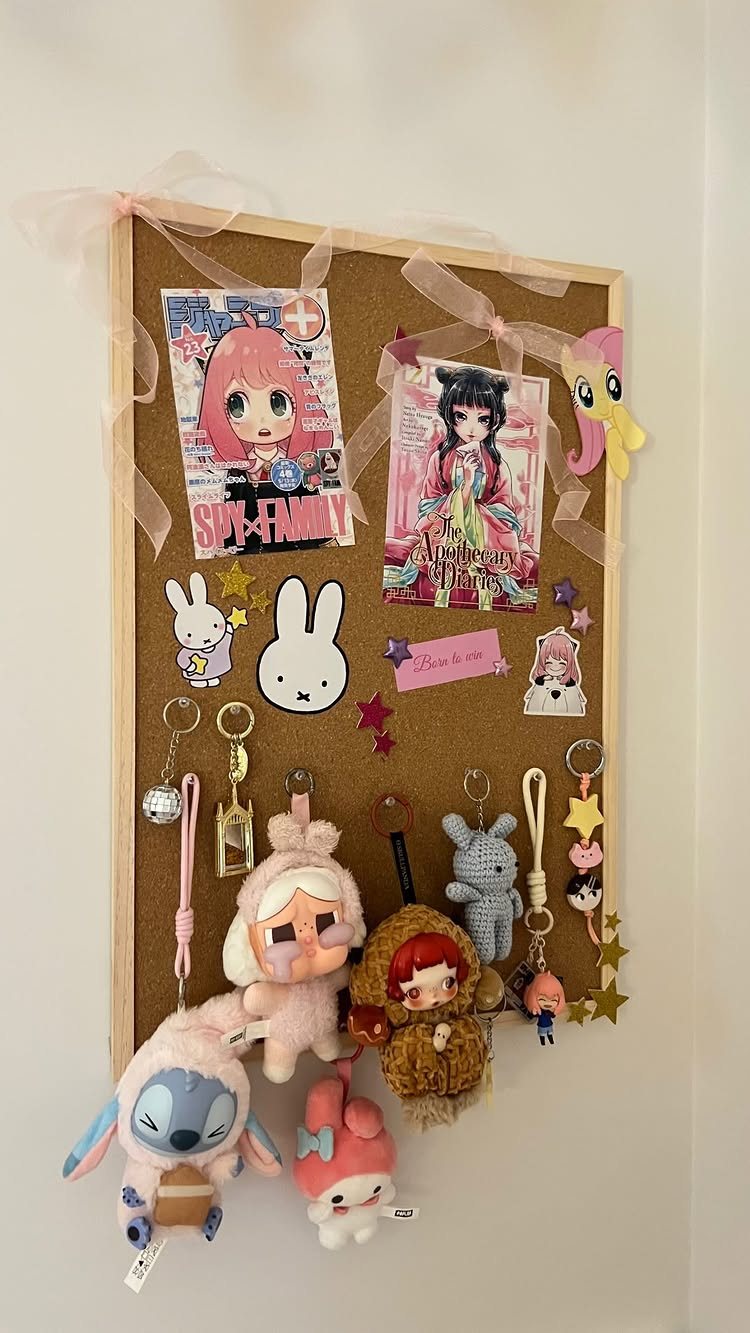
A corkboard hung above a desk collects what a drawer would hide: a print that made you laugh, a ribbon from something finished, a reminder you need to see daily. The pins let you change it in seconds.
Use it as a mood board for a project in progress, or as a rotating display for small things that do not belong anywhere else.
A pinboard can carry plush keychains and stickers or a neater grid of postcards and typed quotes; either works if it matches how you actually use the space.
The risk is visual noise. Limit it to one board, keep a margin of empty cork, and clear anything older than a season.
Importance of Desk Organization
Wall bins and files keep active projects within reach without adding to surface clutter. Papers stay visible enough to find, contained enough to look deliberate.
A lidded box handles the overflow, but the wall-mounted piece matters more: it protects work space while keeping current files at hand. I would not run a desk without both, since loose stacks migrate to whatever flat surface remains.
Creating a Comfortable Workspace
A comfortable chair and adequate lighting matter more than any decorative object. A chair that holds up through a long afternoon matters as much as a lamp that keeps your eyes from tiring and the afternoon from slipping away.
A sherpa throw adds warmth without demanding attention, and a candle after hours signals the day is closing even if work continues.
Research ties indoor plants to measurable productivity gains, and practical pieces like pinboards or decorative boxes serve both form and function. The goal is a space where sitting down feels tolerable, even enjoyable, rather than a sentence to endure.
Benefits of Plants in Workspace
Living plants reduce stress and increase well-being in measurable ways. A trio of succulents costs little and demands almost nothing; the green alone changes how a workspace feels.
Fresh flowers daily are not required. Something low-maintenance and alive does the same psychological work without the recurring expense or the guilt of wilting stems.
The research on productivity gains from indoor plants is solid enough that I would not dismiss it as mere decoration.
Using Color in Decor
Gray, black, and maroon desks come standard and read cold. A chosen color, carried through lamp, pot, pen holder, and paper sorter, turns that default into something planned.
Pens and markers sorted into one holder keep the color story going, especially when the holder itself picks up a shade from the room.
The discipline of one color family speeds shopping and tests every impulse purchase: does this belong, or does it break the rule?
Bright accessories add dimension while they clear clutter.
Frequently Asked Questions
How can I decorate my desk nicely?
Start with one living element, like a small succulent in a ceramic pot, and one storage piece that actually fits your clutter.
Add a second personal item, maybe a framed photo or a stone from a memorable trip, but stop at two or the surface becomes a shrine.
A tray that picks up your desk finish, or one that deliberately goes against it, looks like a choice instead of leftover clutter.
What are the latest desk decor trends?
Greenery that forgives low light, like snake plants and pothos, has replaced high-maintenance options. Aesthetic stationery in one color family, purple pens and butterfly clips, turns cheap tools into small daily pleasures.
What are some good desk decor items?
A lamp dialed to 5000K mimics daylight well enough for morning focus, which matters when your office is below grade or the sun sets before five.
A lidded box paired with a basic desk organizer handles the paperwork you cannot file immediately. For walls, six small black-framed quotes fill vertical space cheaply, or one large piece suits narrow desks broken by shelving.
What are some cool desk decorations I can use?
A corkboard hung above your desk collects prints, ribbons, and reminders that a drawer would hide, and you can change it in seconds.
Warm-toned neon around 2700K, or a smart plug that fades your daylight lamp up at sunrise, adds atmosphere without extra effort.
A desk calendar built like a jar on a miniature easel makes Monday morning less grim, but only if you are the type to actually ink in the dates.