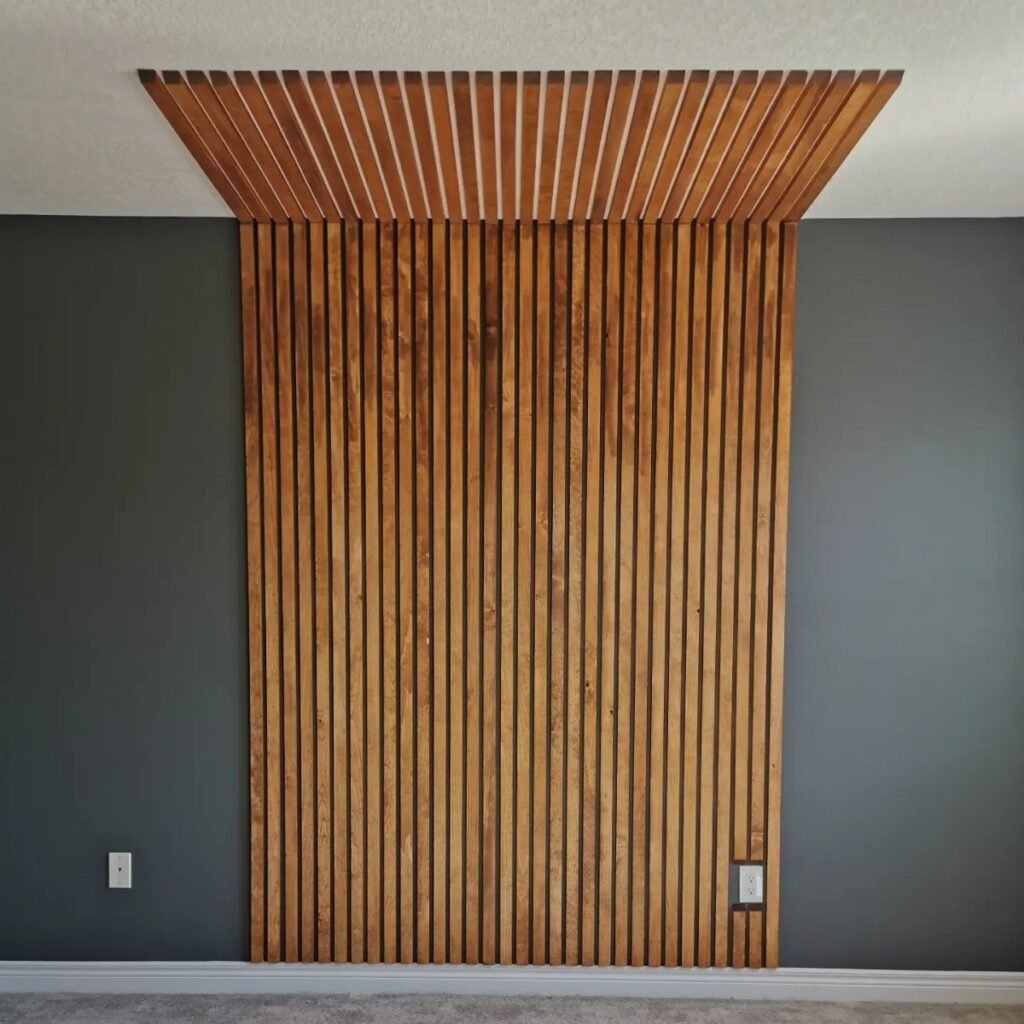
These ideas range from a quick Saturday project with adhesive and panels to builds that need more room and planning than most renters have.
The deciding factor is how much wall you control and how much time you want to spend.
1. Barnwood Accent Wall
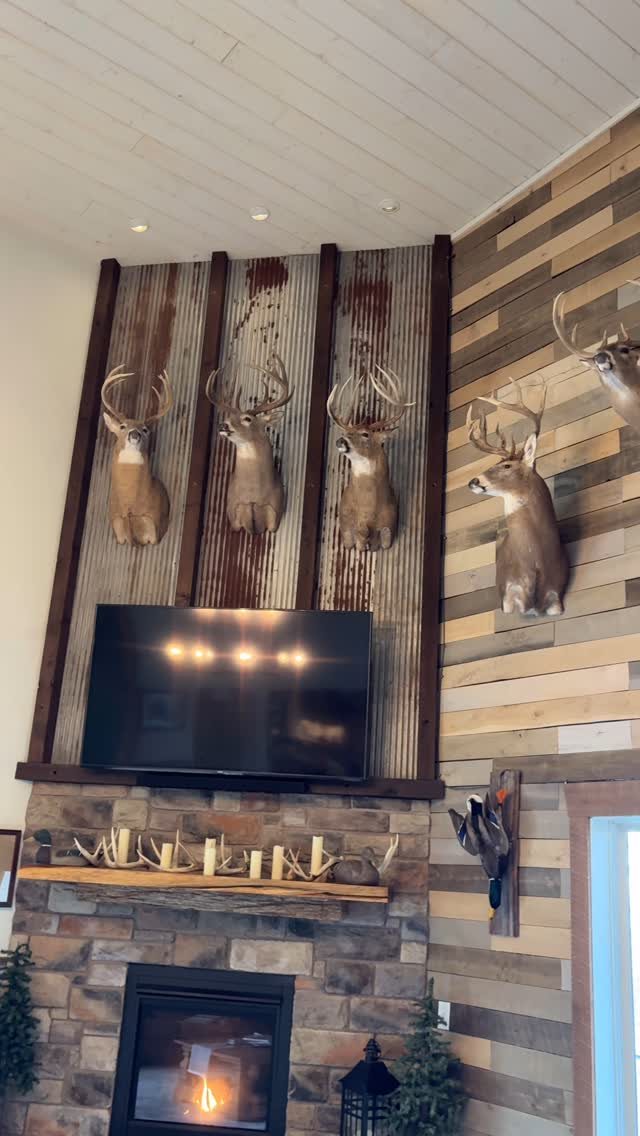
Reclaimed barnwood gives a room instant warmth without the hunt for antique lumber. Most big-box stores now carry new planks milled to look weathered, so a Saturday and a few hundred in material gets you a full wall.
Horizontal boards keep the install simple; a herringbone pattern takes longer but hides uneven cuts better. Either way, a brad nailer and construction adhesive handle most of the work.
I’d leave the wood unfinished if the room gets good light, or seal it with a matte poly to keep dust from settling in the grain.
This one suits renters in houses with forgiving landlords, since the planks pop off with minimal patching. Skip it if your trim is already busy; the texture competes.
2. Modern Wall Accents
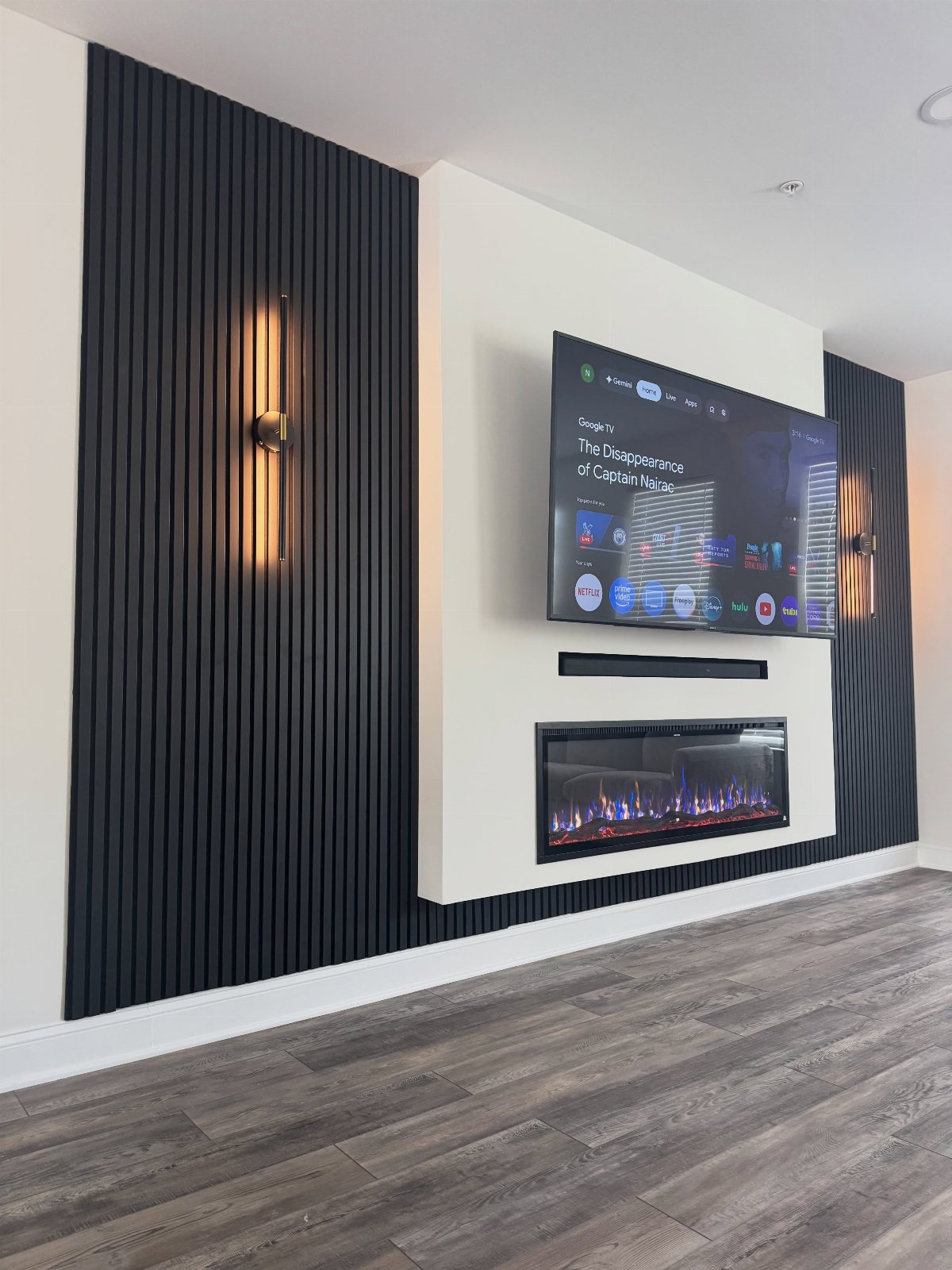
Vertical black slats work best flanking a fireplace or another focal point; they frame it instead of becoming one themselves.
You can buy ready-made slat panels now, or rip down 1x2s and space them with painter’s tape for consistency. Paint before installing; brushing between fixed slats is tedious.
Sconces set into the gaps between slats need electrical run before the boards go up, so plan that first or commit to plug-in fixtures.
I like this best in rooms with some hard surfaces already, concrete or leather or metal, where the linear pattern echoes other clean lines. In a soft, cushioned space it can read cold.
3. Blue Wall Accents
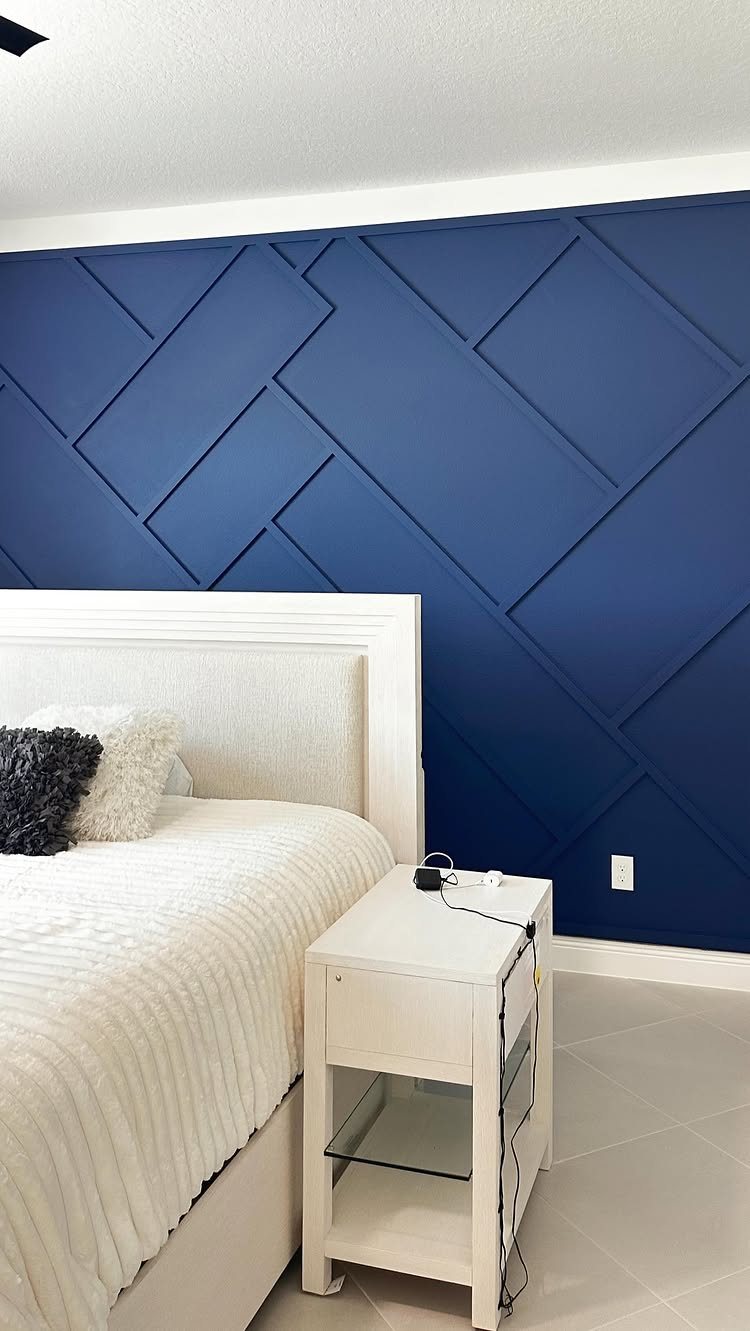
Navy behind a bed works like a built-in headboard that stretches the whole wall. Geometric trim is just 1x3s cut and nailed into overlapping rectangles, then painted the same shade so the shadow does the work.
Flat paint hides the joints between wood and drywall; satin or eggshell catches the light on the trim planes. One quart of deep base covers the wall, another quart for the wood.
If your room faces north, I’d go a shade lighter than true navy or the wall goes flat black by afternoon.
This is the entry point for color-shy decorators. Blue reads as neutral in most light, and pairing it with white bedding does half the calming work.
4. Herringbone Accent Wall
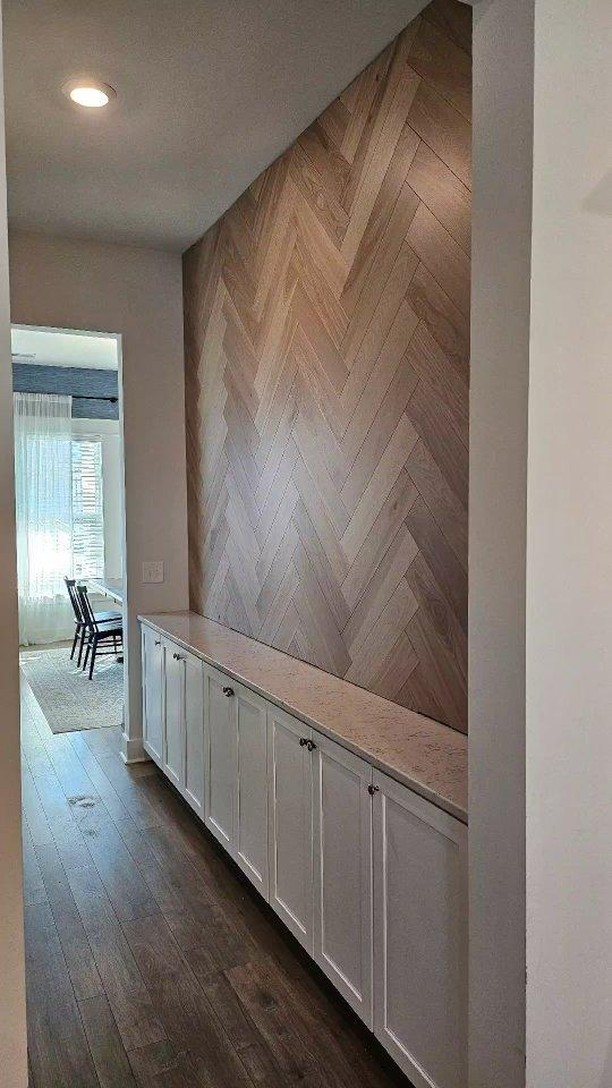
Herringbone reads formal in marble or parquet, but in light wood it just reads intentional. The pattern chevrons at an angle, so every end cut is identical; that repetition saves time once you set the first row.
Start with a level line dead center, work outward, and expect to lose a chunk of your material to the zigzag edges.
Herringbone works best above built-ins or another feature that already breaks up the wall; baseboards and crown get complicated fast with all those angles.
Tile versions exist for bathrooms, and paint plus tape fakes it for almost nothing. I’d pick real wood for a hallway you pass through daily, where the grain rewards slowing down.
5. Accent Wall for Entertainment Spaces
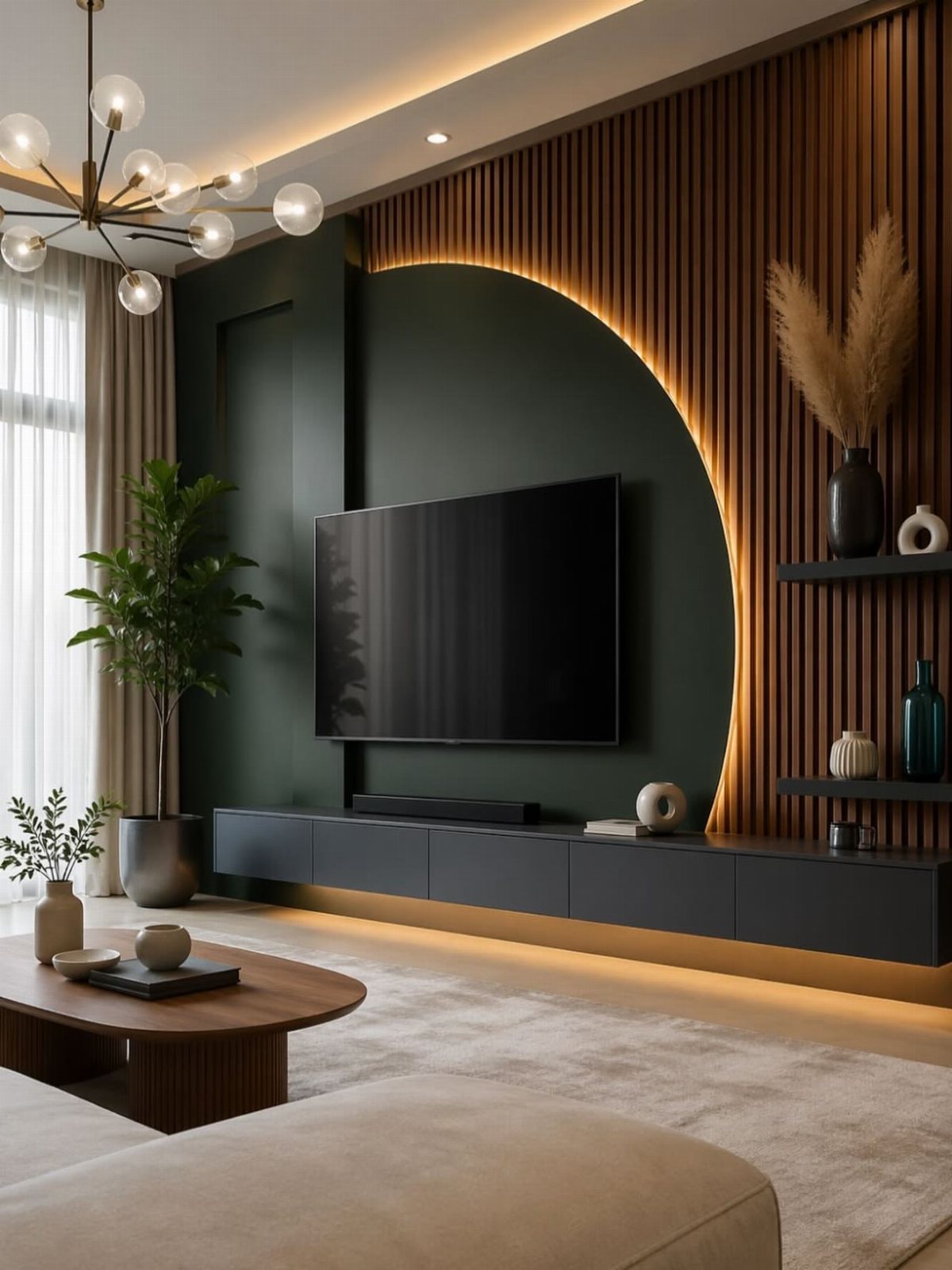
A curved accent wall behind the TV solves two problems at once: it frames the screen and softens a boxy room.
The photo uses dark green with backlit vertical slats, which turns the wall into a nightlight when the set is off.
Plan for cable routing before you build the curve; retrofitting is miserable. The floating console keeps the floor clear, but any low cabinet works if you notch the back panel.
LED strip lighting behind the slats is cheap and takes about a half-hour.
This one demands space. In a narrow room, the curve steals walking room, so check your floor plan before committing.
For tighter basements, I’d flatten the arc and keep the backlighting.
6. Deep, Dramatic Statement Wall
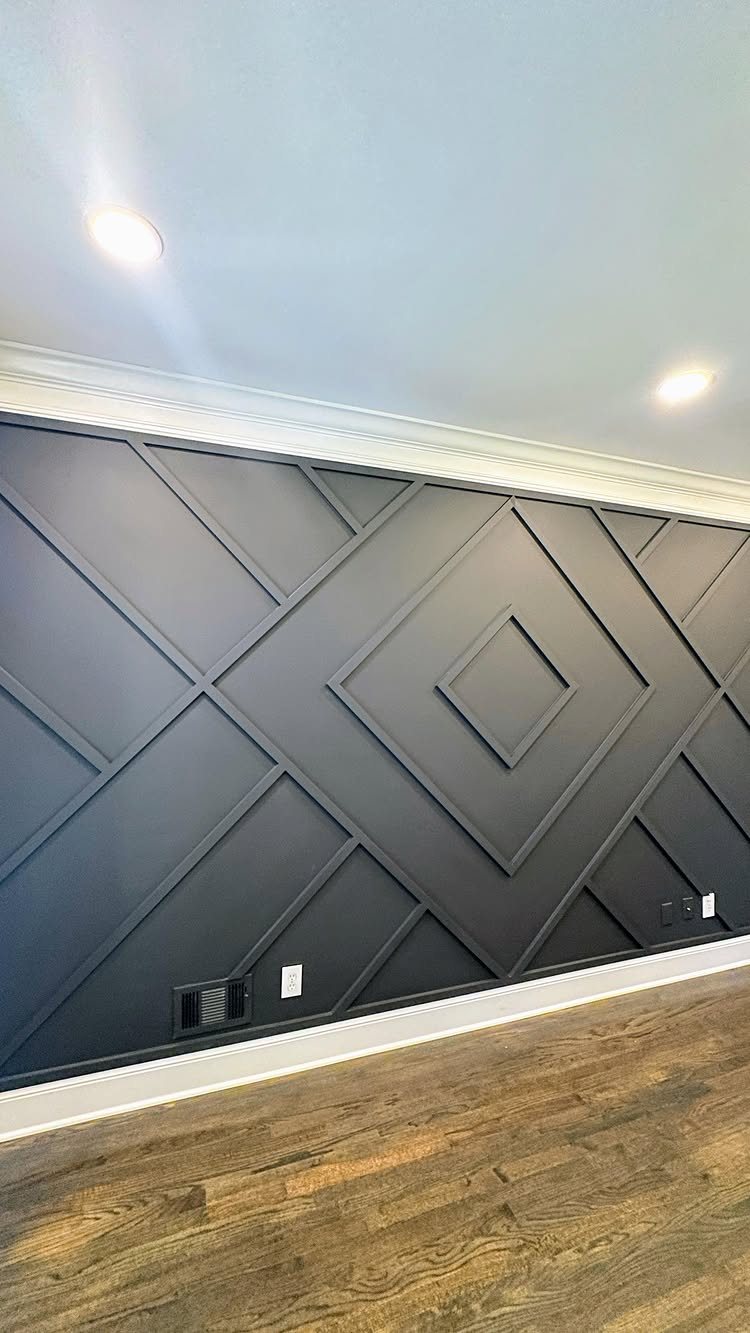
Charcoal with raised molding gives you the depth of wainscoting without the heritage baggage. Diamonds built from standard baseboard stock, mitered and glued in place, then painted wall-and-trim as one surface, read as texture rather than busy pattern.
Satin finish is the move here: it bounces window light around so the wall never goes flat black. Position it opposite a window or glass door and the geometry catches sun at different hours.
Latex enamel on the trim, regular wall paint behind it; the sheen difference does the modeling.
This trades airiness for drama. In a room with low ceilings or few windows, I’d halve the molding coverage or the wall swallows the furniture.
Accent Walls in Small Spaces
A single accent wall in a tight room does more than add color; it gives the eye somewhere to land so the rest of the space can recede. Choosing which wall earns the attention matters most.
I always pick the one the furniture already faces, usually where a bed or sofa sits, never the wall you walk parallel to. That sideways glance makes the room feel narrower.
Vertical treatments help more than horizontal ones here. Slats or boards running floor to ceiling stretch the height; stripes or stacked paneling do the same.
Dark colors work fine in small rooms if you keep them to that one plane and leave adjacent walls light. The depth reads as shadow, not enclosure.
In a studio or open plan, an accent wall behind the sleeping or seating zone replaces a room divider without stealing floor space. Paint it, slat it, or add thin molding; just keep it shallow or the walkway shrinks.
Frequently Asked Questions
What is the rule for accent walls?
One wall should carry the weight so the room still breathes. A dark navy wall behind a bed reads like a built-in headboard; vertical slats on either side of a fireplace frame the flame without fighting it.
The accent wall works best where your eye already lands naturally.
What is trending for accent walls?
Blue reads as neutral now, especially navy behind beds with white bedding. Half-height treatments are popular for renters, pairing washable lower paint with removable wallpaper above.
Curved walls with backlighting and raised molding in charcoal are also showing up in entertainment spaces.
Is implementing an accent wall advisable for a small living room?
Yes, with restraint. A blue wall behind the bed or sofa gives focus without crowding.
Skip curved walls in narrow rooms; the arc steals walking room. Flattened arcs or flat treatments with backlighting work better in tight basements.
Should the accent wall be behind the TV or the sofa?
Behind the TV if you want the screen framed and the wall to double as a nightlight with backlighting. Behind the sofa for gatherings, since that’s the wall most visible to seated guests.